
Two statements are given in the question below as Assertion (A) and Reasoning (R). Read the statements and choose the correct option.
Assertion (A): The Egyptian Civilisation steadily declined.
Reasoning (R): The Nile River changed its course.
- Only (A) is true and (R) is false.
- Both (A) and (R) are true and (R) is the correct explanation for (A).
- Both (A) and (R) are true but (R) is not the correct explanation for (A).
Answer
Both (A) and (R) are true but (R) is not the correct explanation for (A).
Explanation — The main reason for the decline of the Egyptian Civilisation was foreign invasions and internal revolts which weakened the civilisation.
Clothes of the people in the Egyptian Civilisation was generally made up of:
- cotton.
- papyrus.
- flax.
Answer
flax.
The person occupying the highest position in the social structure in ancient Egypt was:
- the priest.
- the Pharoah
- the craftsman.
Answer
the Pharoah
Reason — As the Egyptians believed that their kings or Pharoah were the descendents of Gods, the Pharoah was not only the head of the state, but also God's representative on Earth.
............... was the God of underworld and resurrection.
- Orisis
- Re
- Isis
Answer
Orisis
Choose one option to match the items given in Column A with those in Column B.
| A | B |
|---|---|
| 1. Felucca | i. reeds |
| 2. Papyrus | ii. Pharoah |
| 3. Herodotus | iii. Small boat with a triangular sail |
| 4. Tutankhamun | iv. Greek historian |
- 1-ii, 2-i, 3-iv, 4-iii
- 1-iii, 2-i, 3-iv, 4-ii
- 1-iv, 2-iii, 3-ii, 4-i
Answer
1-iii, 2-i, 3-iv, 4-ii
............... owned the agricultural lands in the ancient Chinese Civilisation.
- Serfs
- King
- Nobles
Answer
Nobles
Two statements are given in the question below as Assertion (A) and Reasoning (R). Read the statements and choose the correct option.
Assertion (A): Education in the Chinese Civilisation was restricted to the privileged groups.
Reasoning (R): The language had no alphabet.
- Both (A) and (R) are true and (R) is the correct explanation for (A).
- Both (A) and (R) are true but (R) is not the correct explanation for (A).
- Only (A) is true and (R) is false.
Answer
Both (A) and (R) are true and (R) is the correct explanation for (A).
Explanation — The Chinese script has no alphabets and each word or phrase had a separate symbol. This script was difficult to learn. Therefore, education was restricted to the priveleged groups.
Choose the correct option to complete the table.
| Jainism | Buddhism |
|---|---|
| Vardhamana Mahavira | Gautama Buddha |
| ? | Tripitakas |
- Angas
- Jataka
- Gomateshwar
Answer
Angas
Read the statements and choose the correct option.
Assertion (A): Common people could understand and follow the teachings of Mahavira.
Reasoning R: Mahavira preached in Prakrit.
- Both (A) and (R) are true and (R) is the correct explanation for (A).
- Both (A) and (R) are true but (R) is not the correct explanation for (A).
- Only (A) is true and (R) is false.
Answer
Both (A) and (R) are true and (R) is the correct explanation for (A).
Explanation — Prakrit was the language of the masses. Since Mahavira preached in Prakrit, common people could understand and follow his teachings.
The Buddha gave his first sermon at:
- Sarnath.
- Takshila.
- Bodhgaya.
Answer
Sarnath.
With reference to the Harappan Civilisation, answer the following questions:
- Why is the Harappan Civilisation known by two different names?
- Which features of Harappan town-planning impress you the most? Give reasons.
- Write a note on the Harappan script.
Answer
The Harappan Civilisation is also known as Indus Valley Civilisation. It is known as Indus Valley Civilisation because most of the sites in the initial phase of excavation were situated near the valley of the river Indus and its tributaries. Historians also refer to it as the Harappan Civilisation, since Harappa was the first city to be unearthed.
Some of the most impressive features of Harappan town-planning were:
- Well-planned Drainage System — Every house was connected to the main drainage line. Drains were covered and cleaned regularly. This shows a high level of civic sense and concern for hygiene.
- Grid-pattern Layout — There were well-developed roads. The main roads ran parallel to each other. Smaller streets intersected the main roads at right angles. The entire city was divided into rectangular blocks or grids. The corners of the roads were rounded off for easy movement of carts. This shows advanced knowledge of urban planning and civil engineering.
The Harappan script is believed to be of pictographic writing. The script seems to have 250 to 400 pictographs. Writing was from right to left. The Harappan writing can be seen in inscriptions found on seals, copper tablets, bronze implements, and small objects made of terracota and stone.
Between c. 3200 BCE and 500 BCE, Mesopotamia saw the rise of many powerful kingdoms and empires and the growth of important cities. In this context, answer the following questions:
- What does the word 'Mesopotamia' mean? How does it relate to the Fertile Crescent?
- Why is Mesopotamia also referred to as 'cradle of civilisation'?
- What do you know about the Mesopotamian burial habits?
- Why did the Mesopotamian Civilisation decline and eventually disappear?
Answer
Mesopotamia, in Greek means the land 'between rivers'. It lay in the triangular valley between the rivers, the Tigris and the Euphrates. This area falls within the region known as the Fertile Crescent because it extends to the Persian Gulf in the form of a crescent.
Due to the large number of kingdoms and cultures that flourished in this region, Mesopotamia is also referred to as the Cradle of Civilisation.
The discovery of objects such as weapons, ornaments and vessels in the excavated graves suggest that the Mesopotamians believed in life after death.
The Mesopotamian Civilisation declined because of natural forces. The soil became less fertile, and people lost their means of livelihood and moved away. Some historians also mention invasions by the Hittites of Anatolia. In the end, sandstorms buried the civilisation under the desert.
Study the given picture and answer the following questions.

- Which part of the Harappan city do you think the picture depicts? Give a reason for your answer.
- What was used to make the buildings in the picture?
- With the help of the picture, explain why Harappan cities were very well-planned.
Answer
The given picture depicts the Great Bath at Mohenjodaro. It is a large rectangular structure resembling a swimming pool with galleries and dressing rooms at the side. It is located west of the river Indus in the Larkhana district of Sind.
Baked bricks were used to make the buildings in the picture.
The Harappan cities were very well-planned due to the following reasons:
- Grid-pattern Layout — As seen in the picture, the main roads ran parallel to each other. Smaller streets intersected the main roads at right angles. The entire city was divided into rectangular blocks or grids. The corners of the roads were rounded off for easy movement of carts. This shows advanced knowledge of urban planning and civil engineering.
- Well-planned Drainage System — Every house was connected to the main drainage line. Drains were covered and cleaned regularly. This shows a high level of civic sense and concern for hygiene.
Some historians argue that the Indo-Aryans originated from among a group of people in Central Asia, who spoke Indo-European languages. When the population of people who spoke Indo-European languages increased, a group of people were forced to, migrate from Central Asia. This group of people, which entered India came to be called the Indo-Aryans.
- Which region did the Indo-Aryans originate from?
- Which group of languages were spoken by the Indo-Aryans?
- Why did the Indo-Aryans migrate towards the Indian subcontinent?
- Do all historians agree with the point of view given in the paragraph?
Answer
It is believed that the Indo-Aryans originated from among a group of people in Central Asia.
The Indo-Aryans spoke Indo-European languages and an ancient form of Sanskrit.
When the population of people who spoke Indo-European languages increased, a group of people were forced to migrate from Central Asia to new lands. This group of people entered Indian subcontinent and settled in Sapta-Sindhu.
No, not all historians agree with this point of view. Some believe that the Indo-Aryans were indigenous to India or migrated from different regions. There are multiple theories about their origin.
State whether the following statements are true or false. Correct the false statements.
- The Buddha placed the jina higher in importance than God.
- Svetambaras were the followers of Jainism who wore no clothes.
- Buddhism split into two branches—Mahayana and Hinayana.
Answer
False
Correct Statement — Mahavira placed the jina higher in importance than God.False
Correct Statement — Digambaras were the followers of Jainism who wore no clothes.True
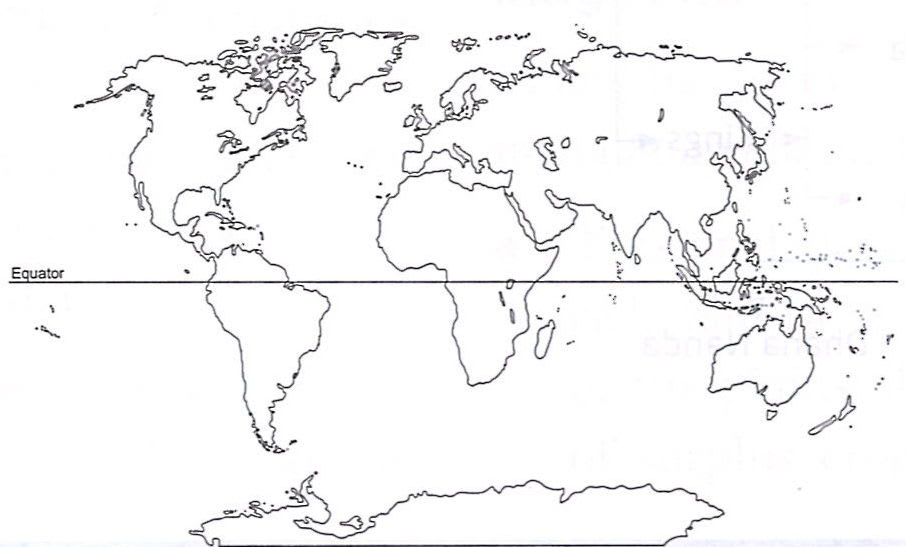
Mark the Harappan, Mesopotamian and Egyptian Civilisations on the given outline map of the world.
Answer
Harappan, Mesopotamian and Egyptian Civilisations are marked on the world map below:
