
Which letters of English alphabet have two lines of symmetry?
Answer
The letters H, I, O and X can be folded into two coincident parts about a vertical line through their middle as well as about a horizontal line through their middle.
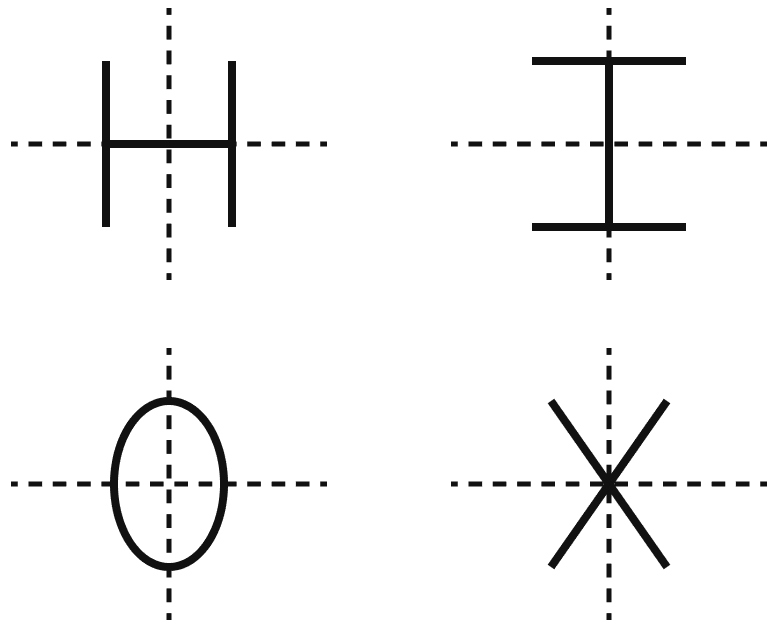
Hence, the letters H, I, O and X have two lines of symmetry, shown dotted in the figure above.
Which letters of English alphabet have no line of symmetry?
Answer
The letters A, B, C, D, E, H, I, K, M, O, T, U, V, W, X and Y are symmetrical about a vertical line or a horizontal line (or both).
The letters F, G, J, L, N, P, Q, R, S and Z cannot be folded into two coincident parts about any line.
Hence, the letters F, G, J, L, N, P, Q, R, S and Z have no line of symmetry.
Construct a ΔABC in which AB = BC = CA. Draw all the lines of symmetry of the triangle. How many lines of symmetry does the triangle have?
Answer
Let us take each side of the triangle as 4.5 cm.
Steps of construction:
Draw BC = 4.5 cm.
With B as centre and radius 4.5 cm, draw an arc.
With C as centre and the same radius, draw another arc which cuts the previous arc at the point A.
Join AB and AC.
Draw the bisectors of ∠A, ∠B and ∠C, meeting BC, CA and AB at the points D, E and F respectively.
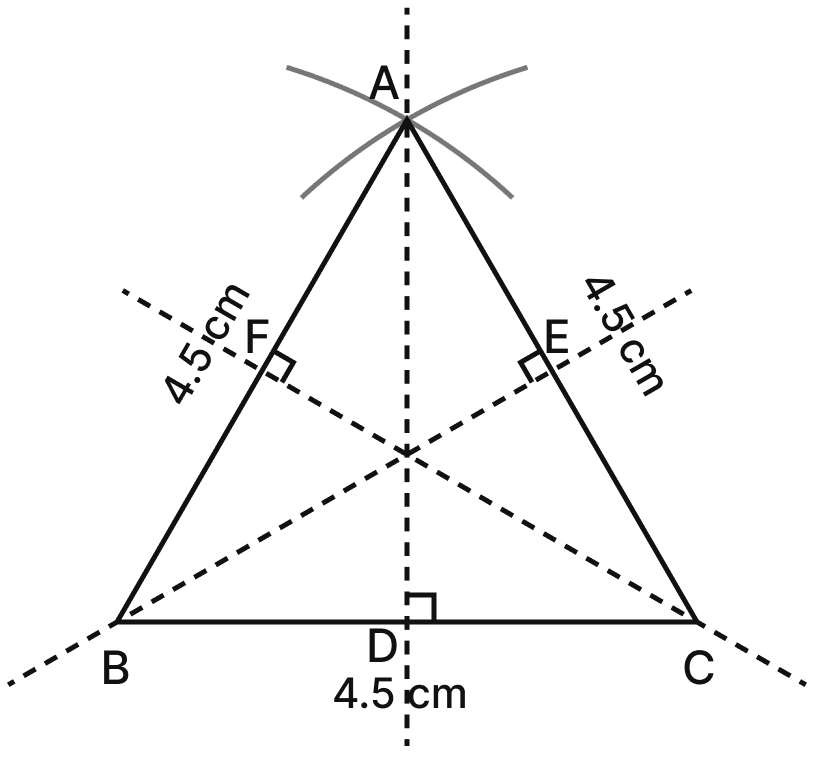
AB = BC = CA ⇒ △ABC is equilateral.
An equilateral triangle has three lines of symmetry, which are the bisectors of the angles of the triangle. So, AD, BE and CF are the lines of symmetry of △ABC. They are shown dotted in the figure above.
Hence, ABC is the required triangle and it has 3 lines of symmetry.
Construct a ΔABC in which AB = AC = 5 cm and BC = 4.5 cm. Draw all its lines of symmetry. How many such lines are there?
Answer
Steps of construction:
Draw BC = 4.5 cm.
With B as centre and radius 5 cm, draw an arc.
With C as centre and the same radius, draw another arc which cuts the previous arc at the point A.
Join AB and AC.
Draw the bisector of ∠A, meeting BC at the point D.
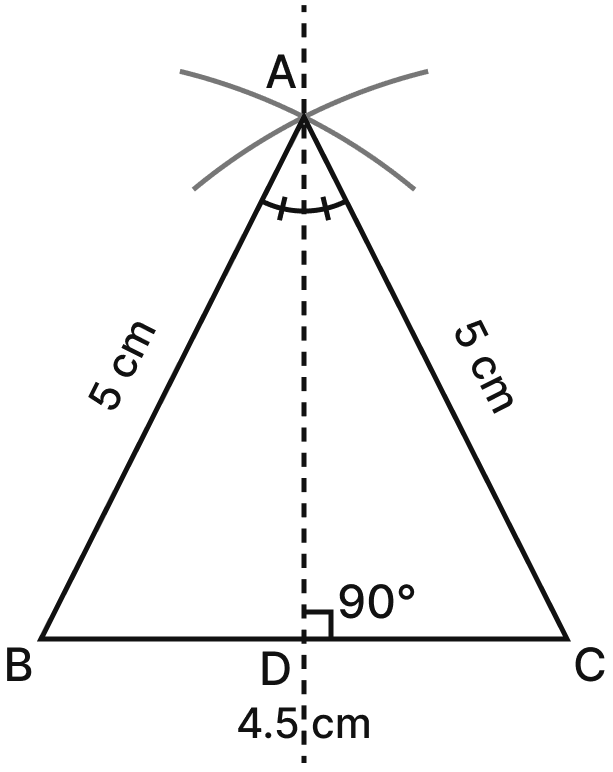
AB = AC ⇒ △ABC is isosceles.
The line of symmetry of an isosceles triangle is the bisector of the angle included between the equal sides. So, AD, the bisector of ∠A, is the only line of symmetry of △ABC. It is shown dotted in the figure above.
Hence, ABC is the required triangle and it has only 1 line of symmetry.
Draw a square of side 4 cm. Draw all lines of its symmetry.
Answer
Steps of construction:
Draw AB = 4 cm.
At A, construct ∠BAX = 90°.
From AX, cut off AD = 4 cm.
With B as centre and radius 4 cm, draw an arc.
With D as centre and the same radius, draw another arc which cuts the previous arc at the point C.
Join BC and DC.
Join AC and BD.
Draw the perpendicular bisector of AB, cutting AB at E and CD at G.
Draw the perpendicular bisector of AD, cutting AD at H and BC at F.
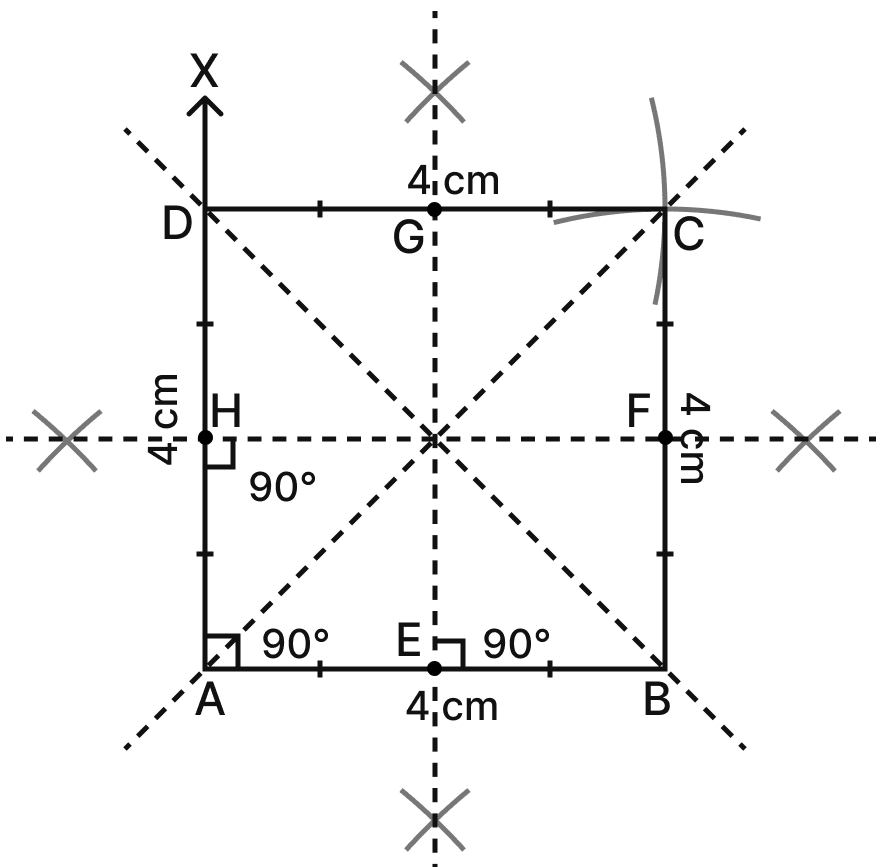
ABCD is a square of side 4 cm, in which E, F, G and H are the mid-points of AB, BC, CD and DA respectively.
A square has four lines of symmetry, which are its diagonals and the lines joining the mid-points of its opposite sides. So, AC, BD, EG and HF are the lines of symmetry of the square ABCD. They are shown dotted in the figure above.
Hence, ABCD is the required square and it has 4 lines of symmetry, namely AC, BD, EG and HF.
Which of the following are true statements?
(i) A scalene triangle has no line of symmetry.
(ii) An equilateral triangle has three lines of symmetry.
(iii) An isosceles triangle has two lines of symmetry.
(iv) A regular hexagon has 6 lines of symmetry.
(v) None of the letters J, F, N, G has a line of symmetry.
Answer
(i) In whatever manner we fold a scalene triangle, the two parts of the figure do not coincide. So, a scalene triangle has no line of symmetry.
So, statement (i) is true.
(ii) An equilateral triangle has three lines of symmetry, which are the bisectors of the angles of the triangle.
So, statement (ii) is true.
(iii) An isosceles triangle has only one line of symmetry, which is the bisector of the angle included between the equal sides.
So, statement (iii) is false.
(iv) A regular hexagon has 6 lines of symmetry, namely the 3 lines joining its opposite vertices and the 3 lines joining the mid-points of its opposite sides.
So, statement (iv) is true.
(v) None of the letters J, F, N and G can be folded into two coincident parts about any line.
So, statement (v) is true.
Hence, the statements (i), (ii), (iv) and (v) are true.
Draw a line of symmetry for the following:
Answer
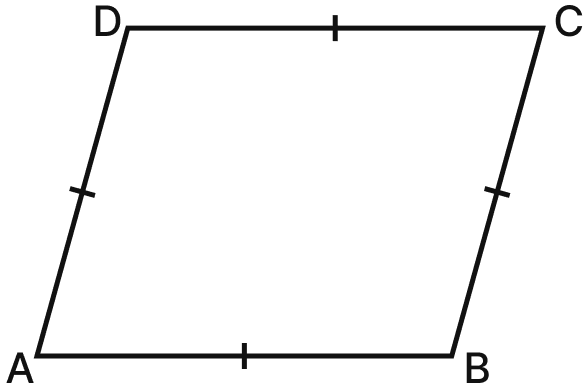
The given figure ABCD is a rhombus, as all its sides are equal. A rhombus is symmetrical about each of its diagonals. On folding it about the diagonal AC, the two parts of the figure coincide.
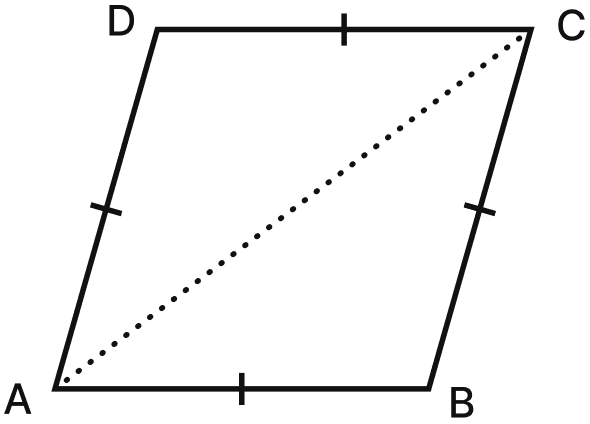
Hence, the diagonal AC is a line of symmetry of the given figure, shown dotted in the figure above.
Draw a line of symmetry for the following:
Answer
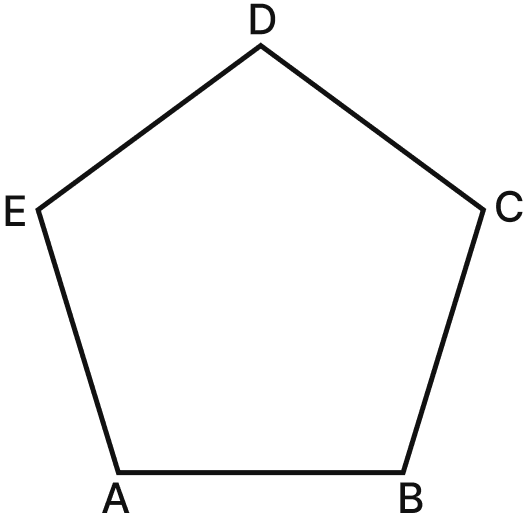
The given figure ABCDE is a pentagon symmetrical about the line joining vertex D to the mid-point of side AB. On folding it about the line joining the vertex D to the mid-point of the opposite side AB, the two parts of the figure coincide.
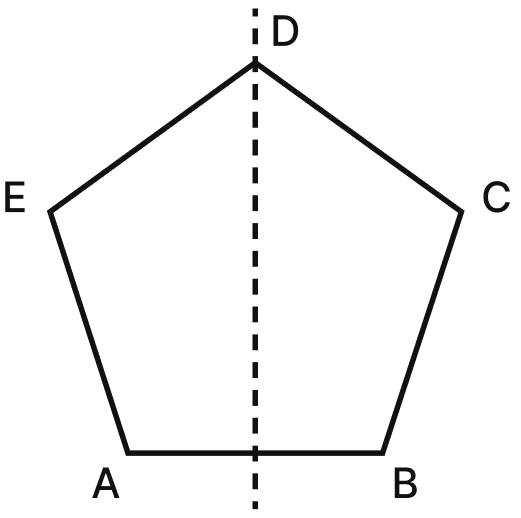
Hence, the line joining D to the mid-point of AB is a line of symmetry of the given figure, shown dotted in the figure above.
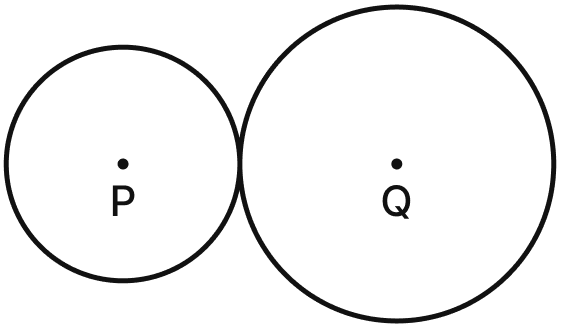
Draw a line of symmetry for the following:
Answer
The given figure is made up of two unequal circles with centres P and Q, touching each other. On folding it about the line passing through the centres P and Q, the two parts of the figure coincide.
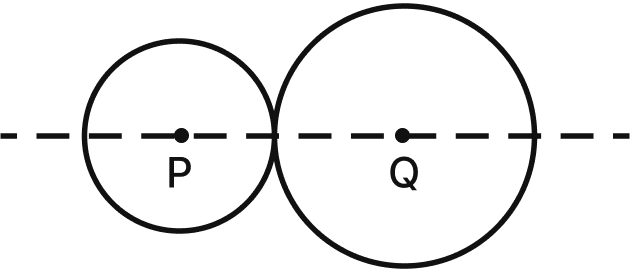
Hence, the line passing through the centres P and Q is a line of symmetry of the given figure, shown dotted in the figure above.
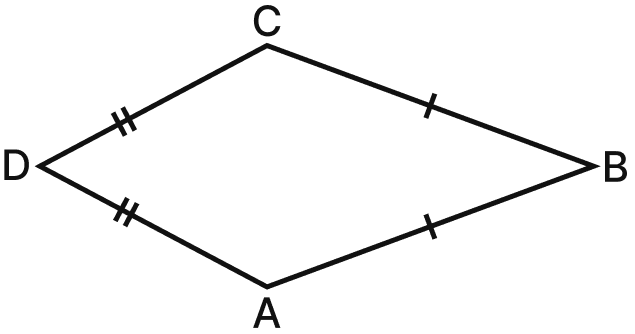
Draw a line of symmetry for the following:
Answer
In the given figure ABCD, DA = DC and BA = BC. On folding it about the diagonal DB, the vertex A coincides with the vertex C and the two parts of the figure coincide.
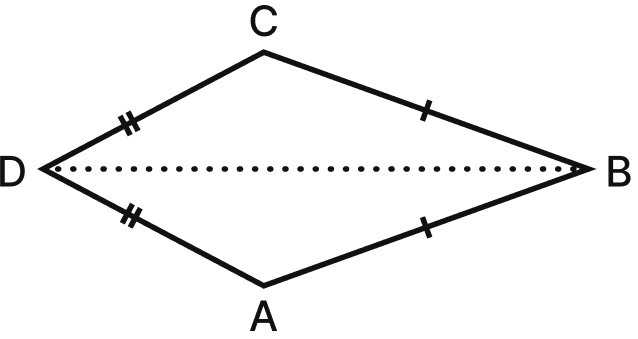
Hence, the diagonal DB is a line of symmetry of the given figure, shown dotted in the figure above.
Draw a line of symmetry for the following:
Answer
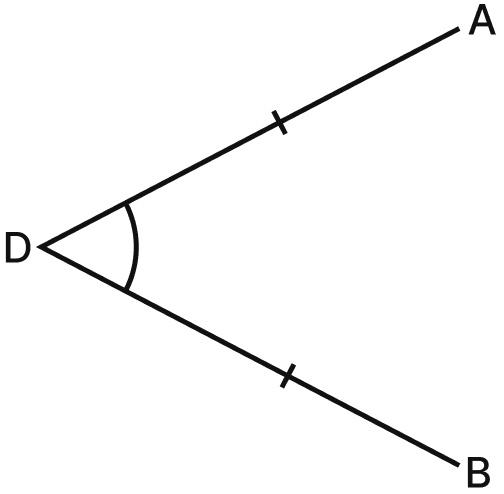
The given figure is ∠ADB with equal arms DA and DB. The line of symmetry of an angle is the bisector of the angle.
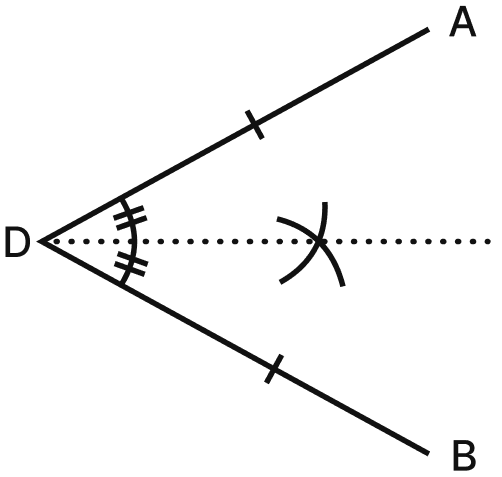
Hence, the bisector of ∠ADB is a line of symmetry of the given figure, shown dotted in the figure above.
Draw a line of symmetry for the following:
Answer
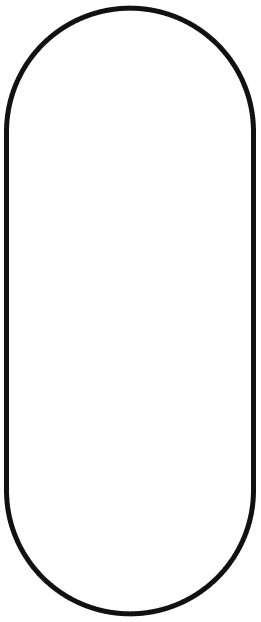
The given figure is made up of two equal parallel line segments whose ends are joined by two equal semi-circles. On folding it about the line joining the mid-points of the two parallel line segments, the two parts of the figure coincide.
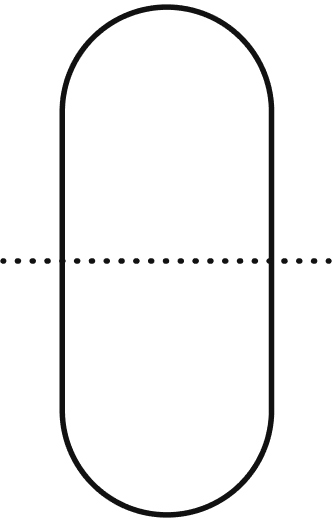
Hence, the line joining the mid-points of the two parallel line segments is a line of symmetry of the given figure, shown dotted in the figure above.
Draw a line of symmetry for the following:
Answer
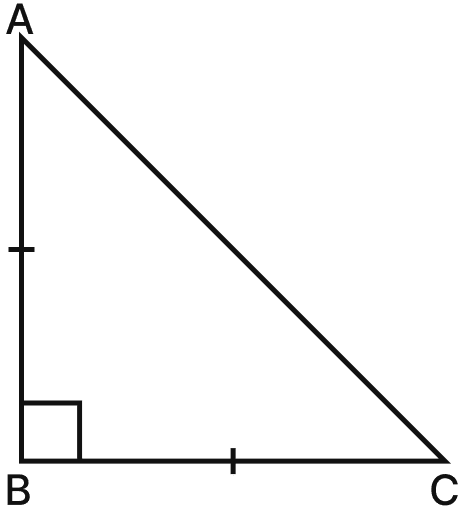
The given figure is a right angled triangle ABC in which ∠B = 90° and AB = BC, i.e., it is an isosceles right angled triangle. The line of symmetry of an isosceles triangle is the bisector of the angle included between the equal sides.
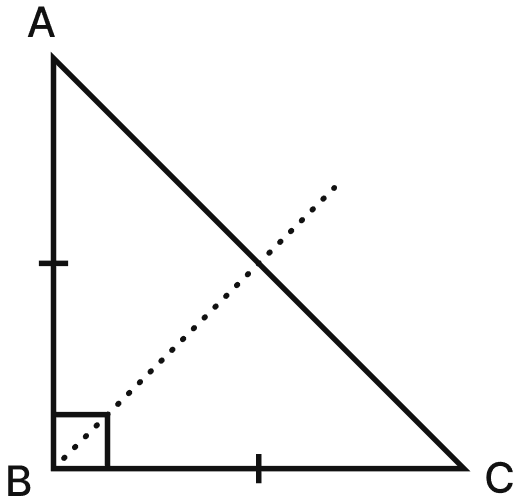
Hence, the bisector of ∠B is a line of symmetry of the given figure, shown dotted in the figure above.
Draw a line of symmetry for the following:
Answer
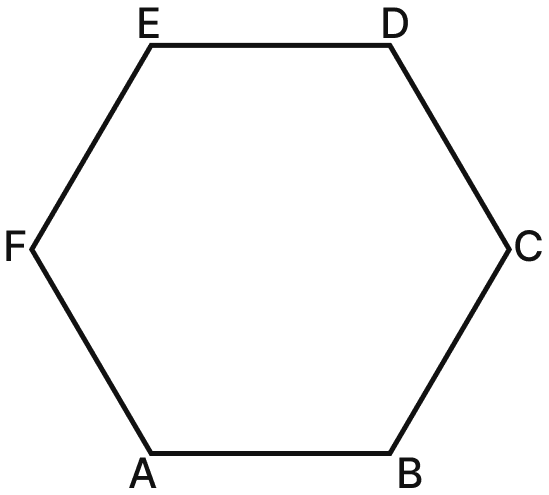
The given figure ABCDEF is a regular hexagon. On folding it about the line joining the mid-points of its opposite sides ED and AB, the two parts of the figure coincide.
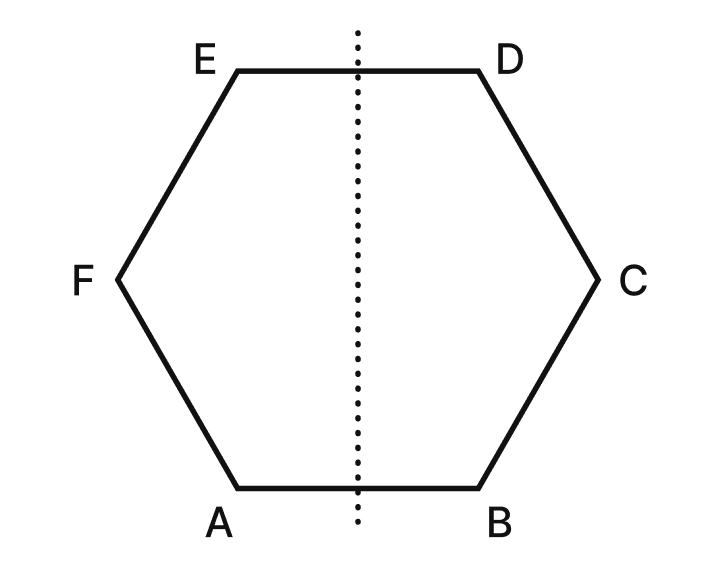
Hence, the line joining the mid-points of ED and AB is a line of symmetry of the given figure, shown dotted in the figure above.
Find the line of symmetry of the segment of a circle.
Answer
A segment of a circle is the region bounded by a chord and the arc cut off by it. On folding it about the perpendicular bisector of the chord, the two parts of the figure coincide.
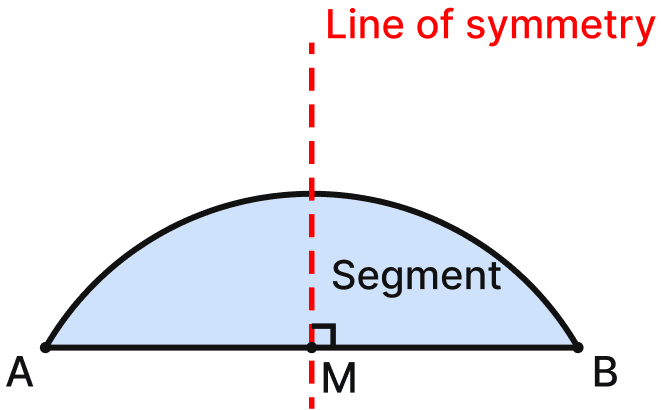
Hence, the line of symmetry of the segment of a circle is the perpendicular bisector of the chord that bounds the segment.
Find the line of symmetry of the sector of a circle.
Answer
A sector of a circle is the region bounded by two radii and the arc between them. The two radii are equal and form an angle at the centre. On folding the sector about the bisector of this angle, the two parts of the figure coincide.
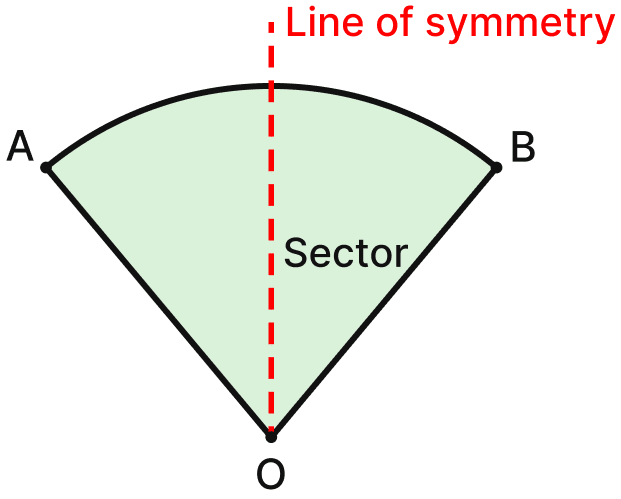
Hence, the line of symmetry of the sector of a circle is the bisector of the angle formed by the radii that bound the sector.
Find the line of symmetry of the arc of a circle.
Answer
Let AB be an arc of a circle. On folding it about the perpendicular bisector of the line segment AB joining the ends of the arc, the two parts of the arc coincide.
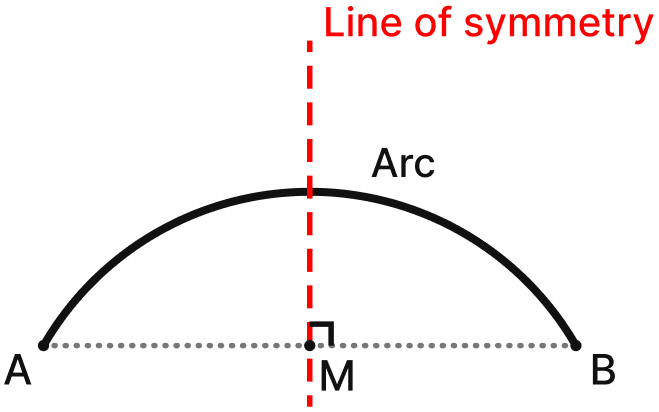
Hence, the line of symmetry of the arc of a circle is the perpendicular bisector of the line segment joining the ends of the arc.
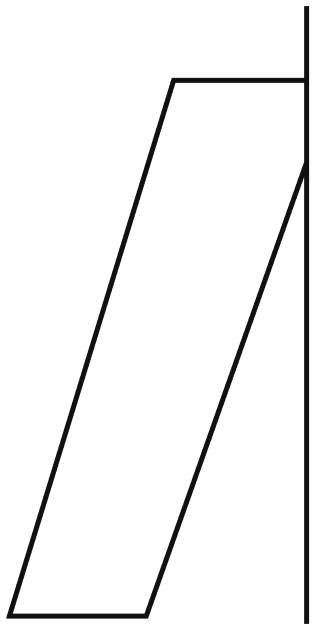
Complete the following picture by drawing an exactly same pattern on the other side of the line.
Answer
To complete the picture, we find the image of each end point of the given part in the given line, by drawing a perpendicular from the point to the line and cutting off an equal length on the other side, and then join the image points in the same way as in the given part.
On drawing the same pattern on the other side of the line, the completed picture is that of a pair of trousers, as shown below :
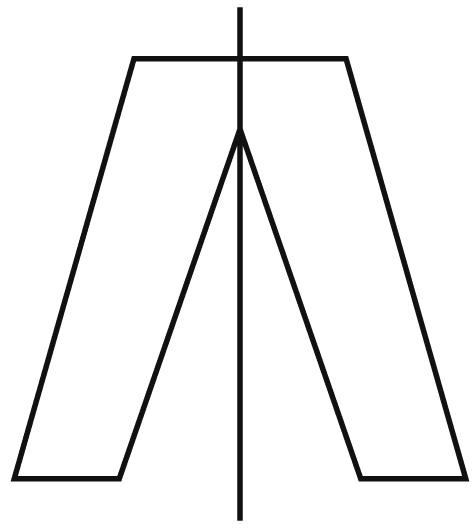
Hence, the completed picture is symmetric about the given line.
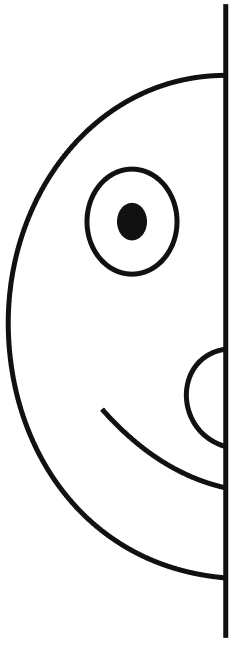
Complete the following picture by drawing an exactly same pattern on the other side of the line.
Answer
To complete the picture, we find the image of each point of the given part in the given line, by drawing a perpendicular from the point to the line and cutting off an equal length on the other side, and then join the image points in the same way as in the given part.
On drawing the same pattern on the other side of the line, the completed picture is that of a smiling face, as shown below :
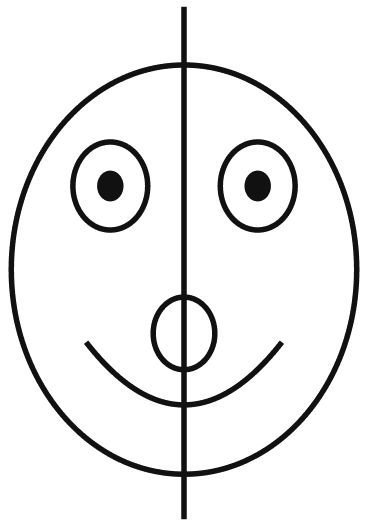
Hence, the completed picture is symmetric about the given line.
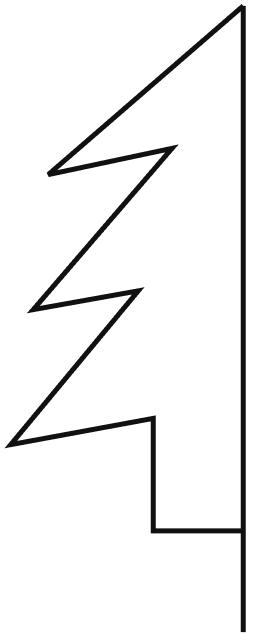
Complete the following picture by drawing an exactly same pattern on the other side of the line.
Answer
To complete the picture, we find the image of each end point of the given part in the given line, by drawing a perpendicular from the point to the line and cutting off an equal length on the other side, and then join the image points in the same way as in the given part.
On drawing the same pattern on the other side of the line, the completed picture is that of a tree, as shown below :
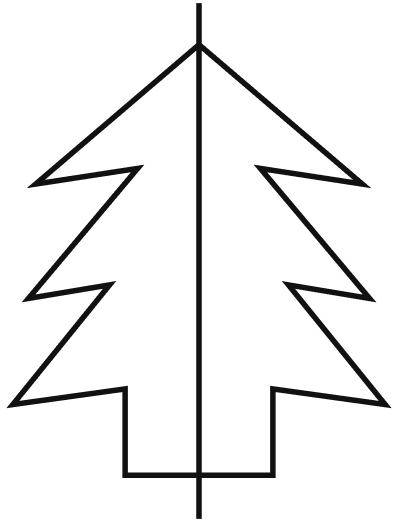
Hence, the completed picture is symmetric about the given line.
Complete the following picture by drawing an exactly same pattern on the other side of the line.
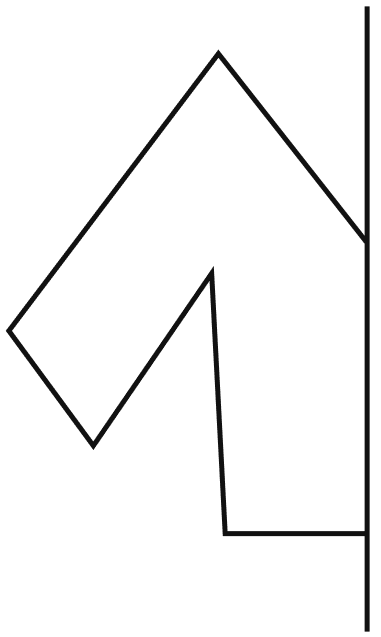
Answer
To complete the picture, we find the image of each end point of the given part in the given line, by drawing a perpendicular from the point to the line and cutting off an equal length on the other side, and then join the image points in the same way as in the given part.
On drawing the same pattern on the other side of the line, the completed picture is that of a shirt, as shown below :
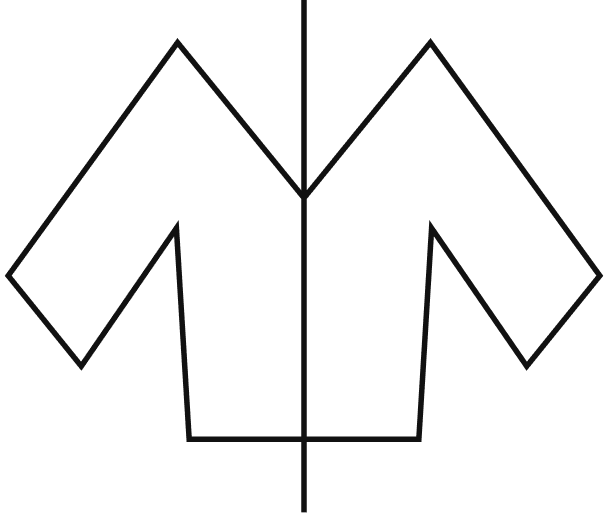
Hence, the completed picture is symmetric about the given line.
Complete the following picture by drawing an exactly same pattern on the other side of the line.
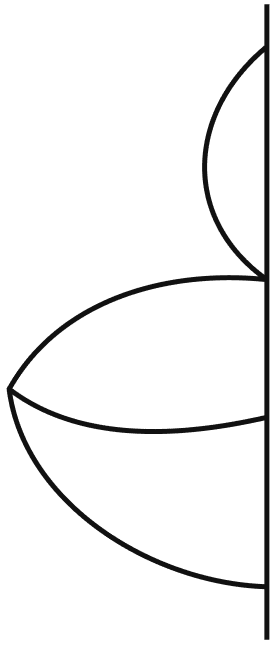
Answer
To complete the picture, we find the image of each point of the given part in the given line, by drawing a perpendicular from the point to the line and cutting off an equal length on the other side, and then join the image points in the same way as in the given part.
On drawing the same pattern on the other side of the line, the completed picture is that of a lamp (diya) with its flame, as shown below :
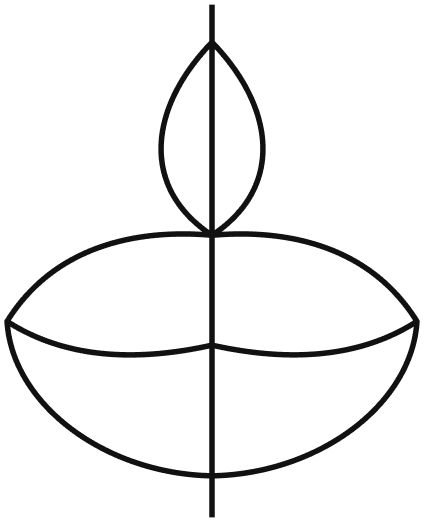
Hence, the completed picture is symmetric about the given line.
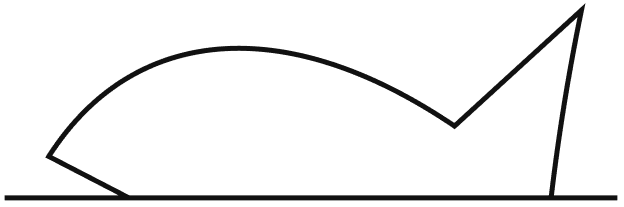
Complete the following picture by drawing an exactly same pattern on the other side of the line.
Answer
To complete the picture, we find the image of each point of the given part in the given line, by drawing a perpendicular from the point to the line and cutting off an equal length on the other side, and then join the image points in the same way as in the given part.
On drawing the same pattern on the other side of the line, the completed picture is that of a fish, as shown below :
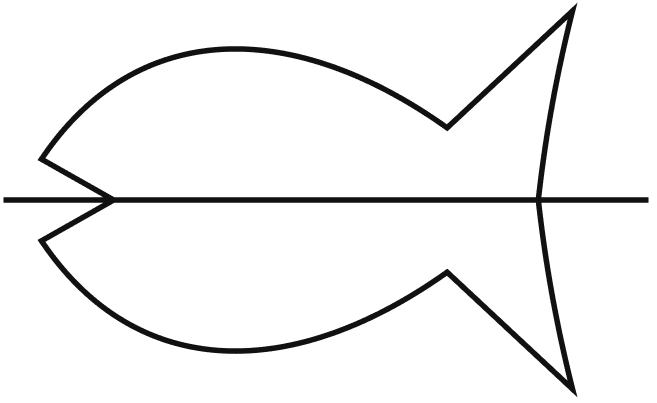
Hence, the completed picture is symmetric about the given line.