
Two examples of energy resources that are abundant and unlimited are ............... .
- solar and thermal energy
- thermal and geothermal energy
- wind energy and biogas
- natural gas and petroleum
Answer
wind energy and biogas
Reason — Renewable resources such as wind and biogas exist in abundance in nature and never get exhausted, so both are unlimited. The other pairs each include a non-renewable resource — thermal energy comes from coal, while natural gas and petroleum are fossil fuels that are limited in occurrence — so those options cannot be described as abundant and unlimited.
An energy resource that cannot be sustained in the future ............... .
- coal
- natural gas
- wind
- geothermal
Answer
coal
Reason — Coal is a non-renewable fossil fuel that is limited in nature and takes millions of years to form again; once exhausted, it cannot be regenerated, so it cannot be sustained in the future. Wind and geothermal are renewable resources that exist in abundance and never get exhausted.
Note — Natural gas is also non-renewable, so option 2 is technically valid. Coal is the expected answer.
A type of coal that has the highest carbon content.
- bituminous
- anthracite
- peat
- lignite
Answer
anthracite
Reason — Anthracite has over 85 per cent carbon content, the highest of all grades of coal. Bituminous has 75 to 85 per cent carbon, lignite 60 to 70 per cent and peat less than 60 per cent, so none of them exceeds anthracite.
The oldest coalfield of India is ............... .
- Jharia
- Raniganj
- Bokaro
- Ramagundam
Answer
Raniganj
Reason — The oldest coalfield in India is at Raniganj, spread over West Bengal and parts of Jharkhand. Jharia, Bokaro and Ramagundam are other coalfields of India but none of them is the oldest.
Two oil-producing countries of west Asia are ............... .
- Indonesia and Sumatra
- India and Thailand
- Iran and Iraq
- Saudi Arabia and the USA
Answer
Iran and Iraq
Reason — Amongst the West Asian countries, Kuwait, Saudi Arabia, Iran and Iraq deserve special mention as oil producers, and both Iran and Iraq lie in West Asia. Option 4 pairs Saudi Arabia with the USA, which is not a West Asian country, and the countries in the other pairs lie outside West Asia altogether.
Match Column I with Column II and select the correct answer using the codes given below:
| Column I | Column II |
|---|---|
| A. Odisha | 1. Gujarat |
| B. Bassein | 2. oldest coalfield |
| C. Ankleshwar | 3. Hirakud |
| D. Raniganj | 4. offshore oilfield |
- A-3, B-1, C-4, D-2
- A-1, B-3, C-4, D-2
- A-2, B-4, C-1, D-3
- A-3, B-4, C-1, D-2
Answer
A-3, B-4, C-1, D-2
Reason — Hirakud is the dam on the Mahanadi in Odisha (A-3); Bassein is an offshore oilfield (B-4); Ankleshwar is an onshore oilfield in Gujarat (C-1); and Raniganj is the oldest coalfield of India (D-2). Only option 4 matches all four pairs correctly.
Which of the following are true about multipurpose dams?
- They may lead to widespread siltation and result in clogging.
- They cause widespread deforestation.
- Construction often cause soil erosion.
- all of the above
Answer
all of the above
Reason — Multipurpose river valley projects lead to deforestation as large areas need to be cleared, their constructional activities often lead to soil erosion, and they may cause widespread siltation that results in the clogging of dams. Since all three statements are among the disadvantages of such projects, the correct option is 'all of the above'.
The major oil fields are in these states. Choose the correct states/union territory from the following:
- Rajasthan and Himachal Pradesh
- Kashmir and Punjab
- Assam and Gujarat
- Bengal and Bihar
Answer
Assam and Gujarat
Reason — Assam and Gujarat have several onshore oilfields — for example, Digboi in Assam and Ankleshwar in Gujarat. The other states listed are not associated with major oilfields of India.
Complete the relationship.
renewable sources of energy : ............... :: non-renewable sources of energy : limited in occurrence
- occurs abundantly
- occurs sparsely
- occurs barely
- occurs scantly
Answer
occurs abundantly
Reason — Just as non-renewable resources are limited in occurrence, renewable resources occur abundantly in nature. Sparsely, barely and scantly all mean scarce or in small amounts, which is the opposite of how renewable resources occur, so they do not complete the relationship.
Which of the following was used for the first time to generate electricity in the 19th century?
- thermal power
- nuclear power
- hydropower
- sunlight
Answer
hydropower
Reason — In the 19th century, hydropower was used for the first time to generate electricity. Atomic (nuclear) energy emerged only decades later, so it does not fit the 19th-century timeframe, and the question specifically asks about the resource first used to generate electricity at that time.
On which river is Jog Falls in Karnataka?
- the Ganga River
- the Krishna River
- the Sharavathi River
- the Godavari River
Answer
the Sharavathi River
Reason — Jog Falls, which is a good source of power in Karnataka, is on the Sharavathi River. The Ganga, Krishna and Godavari are not associated with Jog Falls.
Select the disadvantage of a multi-purpose river valley project.
- maintains water supply throughout the year
- helps in soil conservation
- leads to widespread siltation
- provides cheap electricity
Answer
leads to widespread siltation
Reason — A multipurpose project may lead to widespread siltation that results in the clogging of dams, which is a disadvantage. Maintaining water supply throughout the year, helping in soil conservation and providing cheap electricity are all advantages of such a project, not disadvantages.
Which region of India has a high potential of producing solar energy?
- mountains
- desert regions
- plateau regions
- plains
Answer
desert regions
Reason — The desert region of India has a high potential of producing solar energy to meet the rising energy consumption, as sunlight there is direct and abundant and solar panels are largely used in such regions. Mountains, plateaus and plains are not noted for such high solar potential.
Which of the following is the cleanest coal and burns without much smoke and ash?
- bituminous
- peat
- lignite
- anthracite
Answer
anthracite
Reason — Anthracite is the cleanest coal and it burns without much smoke and ash, so it is used for both domestic and industrial purposes. Bituminous, peat and lignite have lower carbon content and do not burn as cleanly.
In which state was the first-ever oil well dug in India?
- Assam
- Manipur
- Meghalaya
- Nagaland
Answer
Assam
Reason — Digboi in Assam is associated with the first-ever oil well dug in India. Manipur, Meghalaya and Nagaland are not associated with the first oil well of the country.
How can we contribute to conserving energy?
- No use of public transport.
- Use petrol and diesel.
- Use incandescent bulbs.
- Switch off electricity when not in use.
Answer
Switch off electricity when not in use.
Reason — Switching off electricity when not in use saves energy and helps conserve it. The recommended measures are greater use of public transport (not avoiding it), using CNG instead of petrol and diesel, and replacing incandescent bulbs with CFL or LED lights — so the other three options work against energy conservation.
Assertion (A): The use of natural gas is becoming more and more popular.
Reason (R): Natural gas can be found in association with petroleum or on its own.
- Both (A) and (R) are true but (R) is not the correct explanation for (A).
- Both (A) and (R) are true and (R) is the correct explanation of (A).
- (R) is true but (A) is false.
- (A) is true but (R) is false.
Answer
Both (A) and (R) are true but (R) is not the correct explanation for (A).
Explanation — A is true, as natural gas is becoming more popular and more and more public transport vehicles in Indian cities are being converted to run on it. R is also true, as natural gas can be found by itself or in association with petroleum. However, natural gas is becoming popular because it is one of the cleanest, safest, cheapest and non-polluting forms of energy, not because of where it is found. Hence, R does not correctly explain A.
Assertion (A): Today all metropolitan cities are choking with vehicular emissions.
Reason (R): Greater use of public transport and use of bicycles and electric trams wherever feasible.
- Both (A) and (R) are true but (R) is not the correct explanation for (A).
- Both (A) and (R) are true and (R) is the correct explanation of (A).
- (R) is true but (A) is false.
- (A) is true but (R) is false.
Answer
Both (A) and (R) are true but (R) is not the correct explanation for (A).
Explanation — A is true, as all metropolitan cities today are choking with air pollutants due to vehicular emissions. R is a true statement, being a recommended measure to conserve energy and reduce pollution. However, greater use of public transport is a way to reduce emissions, not a cause of the cities choking, so R does not explain A.
Assertion (A): Water is a source of clean energy.
Reason (R): Water is inexhaustible.
- A is true, but R is false.
- A is false, but R is true.
- Both A and R are true, but R is not the correct explanation of A.
- Both A and R are true, and R is the correct explanation of A.
Answer
Both A and R are true, but R is not the correct explanation of A.
Explanation — A is true, as water is a source of clean energy, free from pollution. R is also true, as water is inexhaustible since water that is once used may be recycled and reused. However, being inexhaustible is a separate property from being clean and does not make water clean, so R does not correctly explain A.
Assertion (A): Solar energy is clean and does not pollute the atmosphere.
Reason (R): Solar energy is not a reliable source of energy.
- A is true, but R is false.
- A is false, but R is true.
- Both A and R are true, but R is not the correct explanation of A.
- Both A and R are true, and R is the correct explanation of A.
Answer
Both A and R are true, but R is not the correct explanation of A.
Explanation — A is true, as solar energy is clean and does not pollute the atmosphere. R is also true, as solar energy is not a reliable source of energy on cloudy days and during winter months. However, the reliability of solar energy has nothing to do with its cleanliness, so R does not correctly explain A.
Assertion (A): Natural gas is cheap and non-polluting.
Reason (R): Natural gas is a non-renewable fossil fuel.
- A is true, but R is false.
- A is false, but R is true.
- Both A and R are true, but R is not the correct explanation of A.
- Both A and R are true, and R is the correct explanation of A.
Answer
Both A and R are true, but R is not the correct explanation of A.
Explanation — A is true, as natural gas is cheap and non-polluting. R is also true, as natural gas is a non-renewable fossil fuel. However, being a non-renewable fossil fuel does not explain why natural gas is cheap and non-polluting, so R does not correctly explain A.
Give reason — Snow-fed rivers are better harnessed for hydroelectric power generation.
Answer
For hydroelectric power generation, the river should be perennial so that a continuous supply of electricity can be ensured. Snow-fed rivers flow throughout the year as they are fed by melting snow, whereas rain-fed rivers may dry up in the dry season. Hence, snow-fed rivers are preferable and can be better harnessed for hydroelectric power generation.
Give reason — The initial cost of hydroelectric power generation is very high.
Answer
Setting up a hydroelectric project requires the building of large dams and reservoirs across rivers. The construction of these dams and reservoirs is very expensive. Hence, the initial cost of hydroelectric power generation is very high, though in the long run the project proves to be cost-effective.
Give reason — Deserts and islands are ideal for solar and wind power generation.
Answer
Desert regions receive direct and abundant sunlight and have long daylight hours, which make them ideal for producing solar energy. Islands are surrounded by open seas and generally receive strong, steady coastal winds that can turn wind turbines effectively. Hence, deserts and islands are ideal for solar and wind power generation respectively.
Give reason — Petroleum is sent to the refineries from the oilfields.
Answer
Petroleum, also known as crude oil, has to be drilled out of sedimentary rock beds in its raw form, in which it cannot be used directly. Therefore, it is sent through pipelines from the oilfields to the refineries, where it is processed into usable fuels such as petrol, diesel and kerosene, and into by-products.
Give reason — Natural gas in the form of CNG is often preferred over diesel as a vehicular fuel.
Answer
Natural gas can be used in the form of compressed natural gas (CNG), which is one of the cleanest, safest and most useful forms of energy, and is cheap and non-polluting. More and more public transport vehicles in Indian cities are being converted to run on CNG because it is eco-friendly and is a cheaper alternative. Hence, CNG is often preferred over diesel as a vehicular fuel.
Give reason — Fossil fuel minerals are less popular nowadays in spite of being energy efficient.
Answer
Fossil fuel minerals such as coal and petroleum are the most energy-efficient mineral resources. However, their reserves are limited and are gradually getting depleted, and they release greenhouse gases on burning, thus polluting the environment. Because they are exhaustible and polluting, there is a need to conserve them and replace them with environment-friendly energy. Hence, fossil fuel minerals are becoming less popular nowadays in spite of being energy efficient.
Give reason — Coal-based thermal power plants cause air pollution.
Answer
In coal-based thermal power plants, coal is burnt to generate electricity. On burning, coal releases greenhouse gases and leaves a lot of ash. These emissions pollute the surrounding air. Hence, coal-based thermal power plants cause air pollution.
Give reason — Petroleum is the most energy-efficient resource.
Answer
Petroleum releases a large amount of energy when burnt and is therefore regarded as a highly energy-efficient resource. It is an indispensable fuel for the transportation and aviation industries and yields petrol, diesel and kerosene. It is also used to process by-products such as plastics, synthetic fibres and lubricants.
Give reason — There is an urgent need to save energy.
Answer
Energy is indispensable for the development of a nation and there is a growing demand for energy in all sectors such as agriculture, industry, transport, communication, business and housing. At the same time, fossil fuel minerals are gradually getting exhausted. Therefore, to ensure their sustainability and to meet future needs, there is an urgent need to save energy.
Define the following terms:
a. renewable sources of energy
b. non-renewable sources of energy
c. liquid gold
Answer
a. Renewable sources of energy — Natural resources such as sunshine, wind, tides, ocean waves, biogas and the heat of the Earth's interior (geothermal heat) that exist in abundance in nature, will never get exhausted and can be reused, are called renewable sources of energy.
b. Non-renewable sources of energy — Energy resources that get exhausted on utilisation and cannot be regenerated or replenished are called non-renewable sources of energy. Coal, petroleum and natural gas are such resources.
c. Liquid gold — Petroleum is better known as 'liquid gold' because of its high value in the world market, as it is an indispensable fuel for the transportation and aviation industries.
How did the Industrial Revolution bring about a change in the pattern of energy consumption over the globe?
Answer
At the very onset of civilisation, physical power was used to perform most activities, and later human beings discovered the uses of wood and water as sources of energy. During the Industrial Revolution, coal became the basis of industrial power. With the large-scale production of goods, a huge amount of power resources was needed. Petroleum then served as a fuel for transport and industries, and thereafter hydroelectric power was introduced to meet the growing energy demands. Decades later, the world witnessed the emergence of atomic energy. In this way, the Industrial Revolution changed the pattern of energy consumption from human physical power, wood and water to the large-scale use of coal, petroleum, hydroelectricity and atomic energy.
Enumerate the chief differences between renewable and non-renewable sources of energy. State three examples of each.
Answer
The chief differences between renewable and non-renewable sources of energy are:
| Renewable sources of energy | Non-renewable sources of energy |
|---|---|
| Renewable resources occur abundantly in nature. | Non-renewable resources are limited in occurrence. |
| They are clean and hence non-polluting. | They mostly pollute the atmosphere. |
| They can be reused. | Once used, they are lost for ever. |
| They are abundantly available in nature and thus cheap. | They are available in limited quantity and are hence expensive sources of power. |
| They are not localised and can be harnessed even in remote, far-flung places. | They occur at fixed locations. |
Three examples of renewable sources of energy: solar energy, wind energy and hydro (water) energy.
Three examples of non-renewable sources of energy: coal, petroleum and natural gas.
Give two reasons why there is an urgent need to rely more on renewable energy resources.
Answer
There is an urgent need to rely more on renewable energy resources for the following two reasons:
- Non-renewable resources such as coal and petroleum are gradually getting exhausted and their reserves are limited, so they cannot meet the growing energy demands of the future.
- Non-renewable resources release greenhouse gases on burning and pollute the environment, whereas renewable resources are clean and non-polluting.
Explain how water is used as a source of energy.
Answer
Water is used as a source of energy in the form of hydroelectric power. Hydropower refers to the power obtained from the energy of falling water or fast running water. Water falling from a height on a turbine rotates it, and the kinetic energy of the falling water is converted into mechanical energy. A hydroelectric generator connected to the turbine by shafts and gears then converts this mechanical energy into electrical energy. Areas with natural waterfalls have large potential for hydroelectric power generation, and often large dams are built across rivers with the water made to fall over the dam.
What are the prerequisites for harnessing a river for a hydroelectric power project?
Answer
The prerequisites for harnessing a river for a hydroelectric power project are:
- The river should be perennial so that a continuous supply of electricity can be ensured; thus, snow-fed rivers are preferable to rain-fed ones.
- The climate should be such that the river does not freeze during winter months; tropical regions with heavy rainfall are ideal.
- Natural waterfalls in hilly areas are often preferred as they reduce installation costs substantially, since the need for building dams is eliminated.
State some of the major uses of solar power.
Answer
Some of the major uses of solar power are:
- Solar power is used for lighting streets, homes and lighthouses in ports, and for operating traffic signals.
- It is used to heat water in cold countries and to heat ovens.
- Solar cookers, solar batteries and solar-powered watches are widely used.
- Spacecraft also use solar energy.
- Modern energy-efficient school buildings, banks and other commercial buildings use solar energy for heating and lighting.
How does a wind turbine create electricity? What does a wind farm consist of?
Answer
In a wind turbine, wind moves the blades that are attached to a turbine, which in turn is connected to a generator. This generates electrical energy from wind power. For the successful generation of power, wind should blow at a steady speed of at least 20 km per hour.
A wind farm consists of a cluster of windmills used for the large-scale generation of power.
Name some countries where wind energy is popular. Where in India is wind energy utilised the most?
Answer
Some of the countries that lead in the production of wind energy are China, USA, Brazil, India, Germany, Spain, UK and Canada.
In India, wind energy is utilised mostly in the coastal areas such as Tamil Nadu, Andhra Pradesh, Gujarat, Maharashtra and the Lakshadweep Islands.
Enumerate some disadvantages of harnessing wind energy.
Answer
Some disadvantages of harnessing wind energy are:
- The availability of wind energy is not constant.
- Wind farms are very localised because they require open areas with strong and steady winds.
- Initial costs of setting up a wind farm are huge.
- The rotating blades of a wind turbine are a threat to birds.
Describe the conditions that lead to the formation of coal.
Answer
Coal is formed from dead plant matter that accumulated in swampy areas and became buried beneath layers of sediment. Increasing heat and pressure acted on the buried plant matter. Over millions of years, it gradually changed into coal.
Classify coal according to its carbon content. State one characteristic feature of each grade of coal.
Answer
Coal is graded according to its carbon content into four types:
- Anthracite (over 85 per cent carbon) — It is the cleanest coal and burns without much smoke and ash, so it is used for both domestic and industrial purposes.
- Bituminous (75 to 85 per cent carbon) — It is used for the generation of thermal electricity and mostly in the iron and steel making industry.
- Lignite (60 to 70 per cent carbon) — It is used for various purposes including the production of thermal power, where other varieties of coal are not available.
- Peat (less than 60 per cent carbon) — It is of no major use because of its low carbon content.
What are the chief fuels derived from petroleum?
Answer
Petrol, diesel and kerosene are the chief (major) types of fuel derived from petroleum.
Name some by-products of petroleum that we use in our daily life.
Answer
Some by-products of petroleum that we use in our daily life are plastics, synthetic fibres and lubricants.
Name two offshore and two onshore oilfields in India. Which is the oldest oilfield of our country?
Answer
Two offshore oilfields — Mumbai High and Bassein.
Two onshore oilfields — Digboi (in Assam) and Ankleshwar (in Gujarat).
The oldest oilfield of our country is Digboi in Assam, which is the first ever oil well dug in India.
Enumerate the various needs served by a multipurpose river valley project.
Answer
A multipurpose river valley project serves the following needs:
- Electric power generation — Water is a renewable source of energy; it is non-polluting and provides cheap electricity.
- Flood control and soil conservation — Dams and barrages are built to regulate the flow of the river, which helps to prevent floods and also helps in soil conservation.
- Irrigation — Irrigation canals from the barrages benefit farming.
- Navigation — Water storage and supply are maintained by dams and reservoirs throughout the year, which helps in navigation purposes as well.
- Pisciculture — Water stored in the reservoir can be utilised for fisheries, which can develop as an important economic activity.
- Tourism — Beautiful parks and gardens can be made around the dams, encouraging tourism.
Mention an alternative to petroleum as a source of fuel for vehicles.
Answer
Compressed natural gas (CNG) is an alternative to petroleum as a source of fuel for vehicles. More and more public transport vehicles in Indian cities are being converted to run on CNG because it is eco-friendly and is a cheaper alternative.
State any three ways in which you as an individual can contribute in the conservation of energy resources. Exchange the list with your partner.
Answer
Three ways in which I as an individual can contribute to the conservation of energy resources are:
- Switch off electricity when not in use, checking my room before leaving it, both at school and at home.
- Use public transport, bicycles, electric vehicles or a car pool instead of an individual car wherever feasible, to reduce fuel use and vehicular emissions.
- Replace incandescent bulbs with CFL bulbs or LED lights and use maximum daylight in rooms, as these save a lot of energy.
Look at the given picture and answer the following questions.
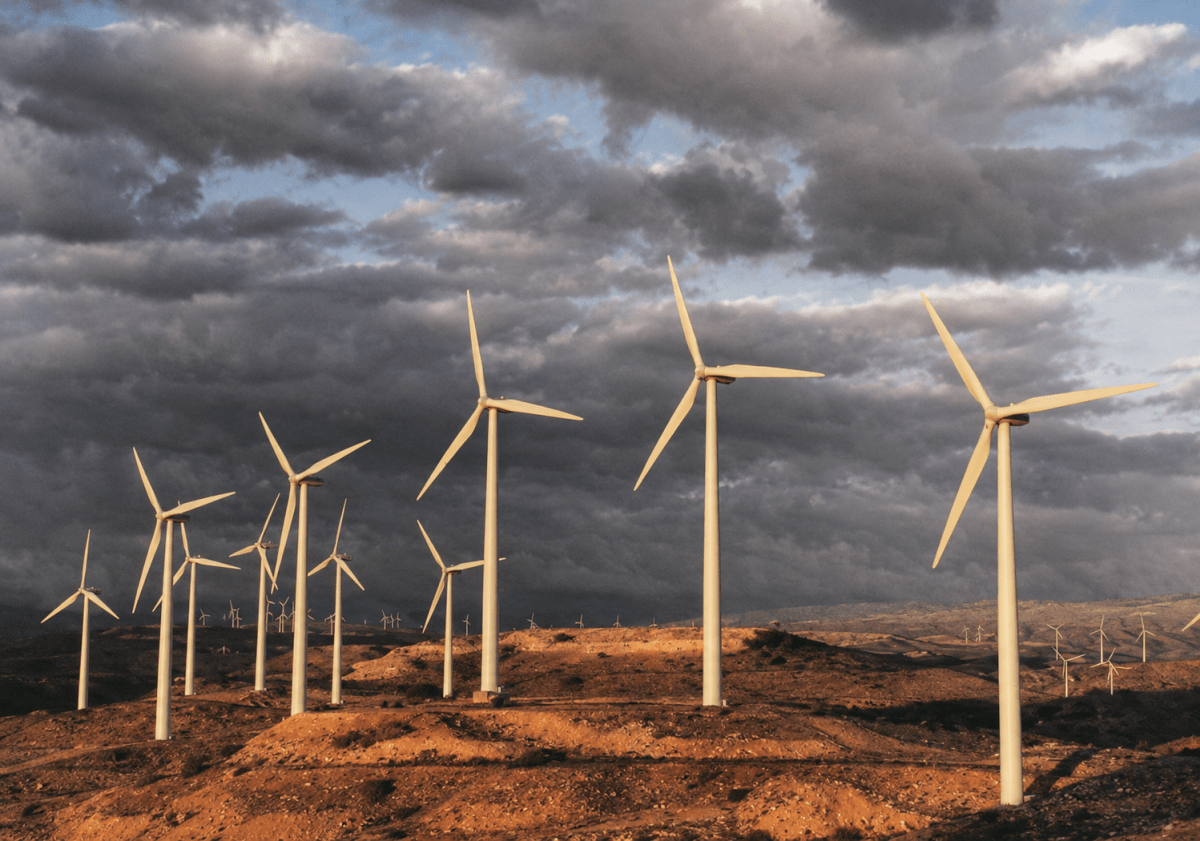
a. What type of energy is generated here?
b. State one advantage of this form of energy.
c. State one disadvantage of this form of energy.
Answer
a. Wind energy (wind power) is generated here, using a wind farm made up of a cluster of wind turbines (windmills).
b. One advantage of this form of energy is that wind is a green or clean source of energy and is abundantly available in nature.
c. One disadvantage of this form of energy is that the availability of wind energy is not constant.
Read the passage given below and answer the questions that follow:
Power resources such as minerals are limited in nature. Once exhausted, they cannot be renewed or replenished. These minerals are termed as non-renewable resources. On the other hand, natural resources such as the sunshine, wind, tides, ocean waves, biogas and the heat of the Earth's interior (geothermal heat) exist in abundance in nature and will never get exhausted. They can also be reused. Hence, they are more reliable and are called renewable energy resources.
(a) Name the power resources, which are depleting fast.
(b) Why do you think some natural resources are sustainable? Mention any three points.
(c) Name the natural resources that are sustainable.
Answer
(a) Power resources such as minerals, that is, the non-renewable resources like coal, petroleum and natural gas, are depleting fast.
(b) Some natural resources are sustainable because:
- They exist in abundance in nature and will never get exhausted.
- They can be reused.
- They are clean, non-polluting and more reliable.
(c) The natural resources that are sustainable are sunshine (solar energy), wind, tides, ocean waves, biogas and the heat of the Earth's interior (geothermal heat).
On a map of India mark and name the following:
i. a thermal power station in Odisha
ii. a hydroelectric power station in Karnataka
iii. A state that has immense potential for solar energy production.
iv. The river that has the Krishnaraj Sagar Dam.
v. The state where the Nagarjuna Sagar Dam is located.
vi. an offshore oil field in the Arabian Sea
vii. an oil field in Assam
viii. one thermal power station in Jharkhand
ix. A region where wind energy is harnessed.
x. A river harnessed for power generation in Punjab.
Answer
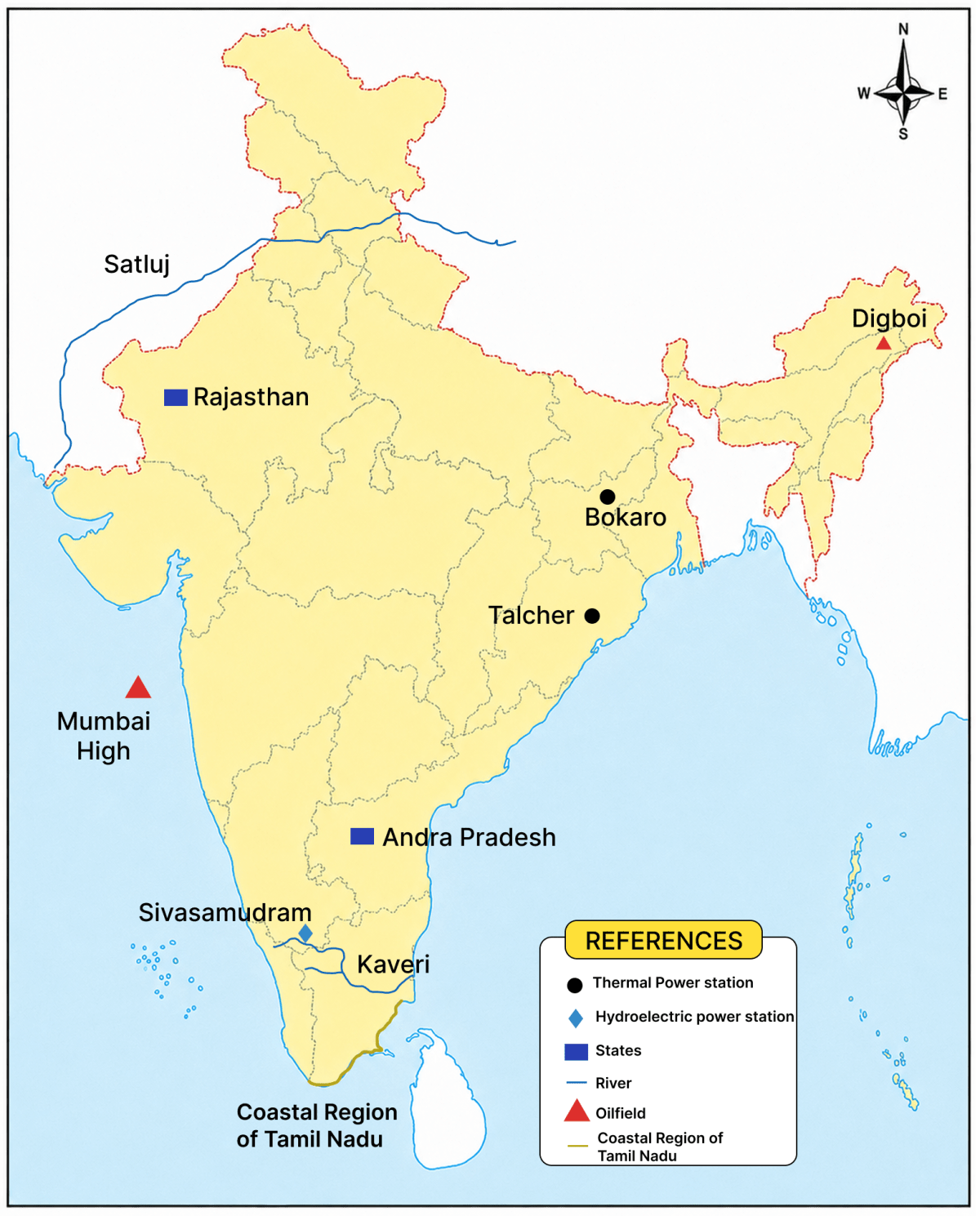
i. Talcher Thermal Power Station in Odisha
ii. Sivasamudram Hydroelectric Power Station in Karnataka
iii. Rajasthan as a state with immense potential for solar energy production
iv. the Kaveri River, on which the Krishnaraj Sagar Dam is situated
v. Andhra Pradesh, with Nagarjuna Sagar marked on the Andhra Pradesh-Telangana border
vi. Mumbai High, an offshore oilfield in the Arabian Sea
vii. Digboi oilfield in Assam
viii. Bokaro Thermal Power Station in Jharkhand
ix. the coastal region of Tamil Nadu, where wind energy is harnessed
x. the Sutlej River, harnessed for power generation in Punjab
On a map of the world shade the following areas:
i. The country which is the largest producer of coal.
ii. A country in North America that has rich reserves of oil.
iii. An oil-producing nation in west Asia.
iv. A country that leads in wind energy generation in Europe.
v. A country which is one of the highest coal-producing regions in Europe.
Answer
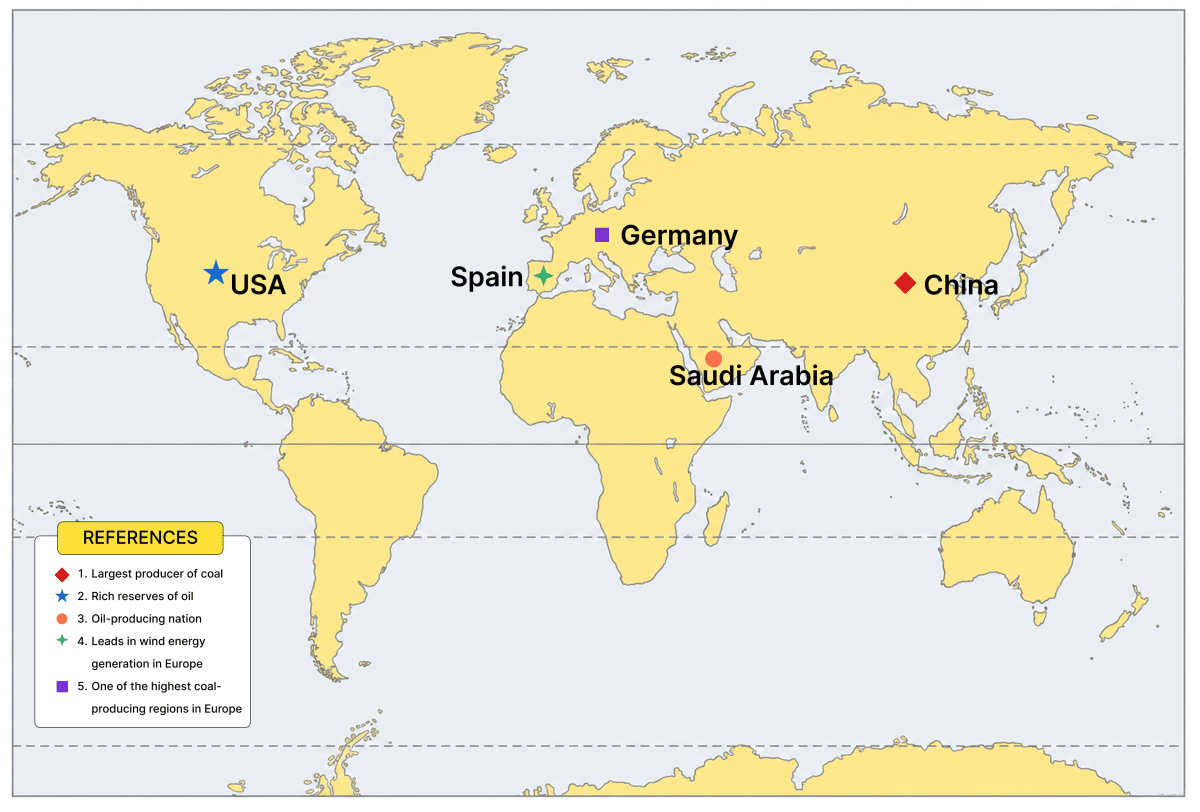
i. China - the largest producer of coal
ii. USA - a North American country with rich oil reserves
iii. Saudi Arabia - an oil-producing nation in West Asia
iv. Spain - a leading producer of wind energy in Europe
v. Germany - one of the major coal-producing countries of Europe
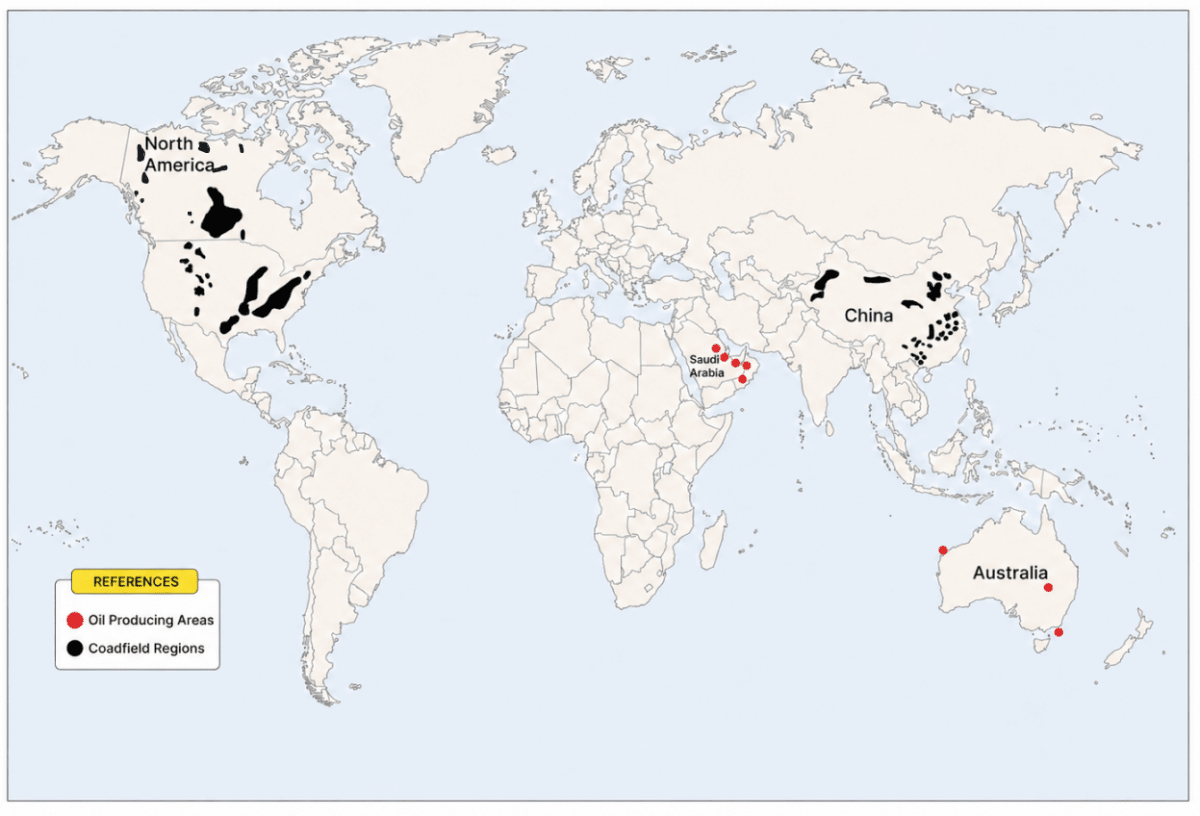
On an outline map of the world, shade the following areas.
i. major oilfields of Australia
ii. major oilfields of Saudi Arabia
iii. major coalfields of North America
iv. major coalfields of China
Answer
The shaded areas of major oilfields and coalfieds are shown below on an outline map of the world:
On an outline map of India, locate and label the following.
i. a hydroelectric power station in Odisha
ii. Tehri Dam
iii. the Kaveri River
iv. a thermal power station in Tamil Nadu
v. one coalfield in Jharkhand
vi. Digboi oilfield
Answer
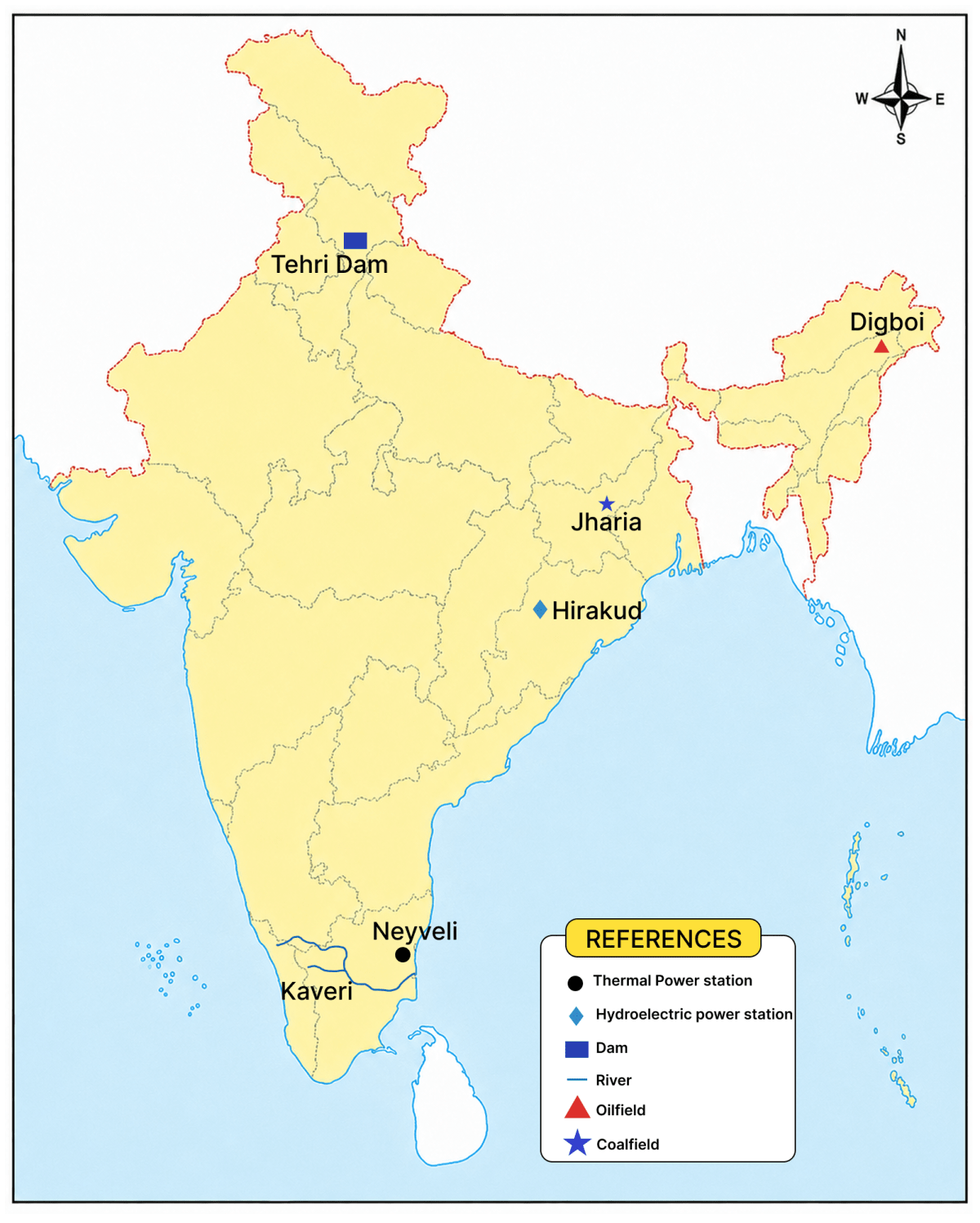
i. Hirakud Hydroelectric Power Station in Odisha
ii. Tehri Dam in Uttarakhand
iii. the Kaveri River in southern India
iv. Neyveli Thermal Power Station in Tamil Nadu
v. Jharia coalfield in Jharkhand
vi. Digboi oilfield in Assam