
These were the number of dynasties that ruled in the Delhi Sultanate period:
- Four
- Five
- Six
Answer
Five
Reason — There were five dynasties that ruled India between 1206 CE and 1526 CE, starting with the Slave dynasty, followed by the Khalji, Tughlaq, Sayyid and Lodi dynasties.
Complete the given mind map.
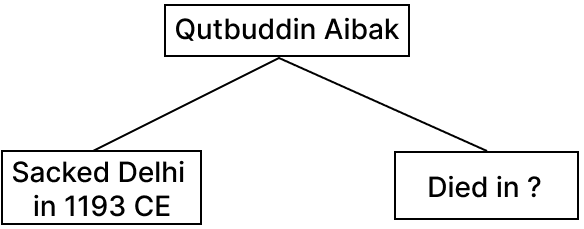
- 1200 CE
- 1205 CE
- 1210 CE
Answer
1210 CE
Reason — Qutbuddin Aibak died in an accident in 1210 CE, while he was playing chaugan, a kind of polo on horseback.
Why did the nobles oppose the rule of Raziya Sultan? Choose the most appropriate option.
- She was incompetent.
- She had too much pride.
- She was a woman.
Answer
She was a woman.
Reason — When Iltutmish died in 1236 CE, the nobles of the court refused to have a woman as the sultan. They disregarded the deceased sultan's nominated successor and raised Ruknuddin Firuz Shah to the throne instead.
The band of forty nobles who wanted Aram Shah to be the Sultan were known as the ............... .
- chahalgani
- Peshawari
- patwari
Answer
chahalgani
Reason — After Aibak's death, the chahalgani, or the forty Turkish nobles, wanted Aram Shah to be the new sultan. They were a group of administrative and military nobles who exerted considerable influence on the sultans.
Balban's Tomb was the first medieval structure to have this feature:
- Dome
- Calligraphy
- Floral motives
Answer
Dome
Reason — Balban's tomb is considered to be the first structure in medieval India which comprised a dome and an arch. This style of architecture eventually became a mark of all later medieval Indian buildings, such as the Taj Mahal.
Qutbuddin Aibak : Slave Dynasty :: Firuz Shah Tughlaq : ...............
- Khalji Dynasty
- Tughlaq Dynasty
- Sayyid Dynasty
- Lodi Dynasty
Answer
Tughlaq Dynasty
Reason — Just as Qutbuddin Aibak was a ruler of the Slave Dynasty, Firuz Shah Tughlaq was a ruler of the Tughlaq Dynasty (1320 CE–1414 CE).
The fall of Razia Sultan occurred primarily because:
- She was a woman ruler in a male-dominated nobility.
- She lacked military skills.
- She tried to invade Bengal.
- She converted to Buddhism.
Answer
She was a woman ruler in a male-dominated nobility.
Reason — The Turkish nobles (chahalgani) found it offensive to have a woman as the sultan. Her appointment of Jamaluddin Yakut, an advisor of African descent, to high office further ignited the jealousy of the Turkish nobility, leading to her overthrow.
During a history debate, Namita argued that the construction of the Quwwat-ul-Islam Mosque began under the first Mamluk Sultan. Who supports her claim?
- Balban
- Iltutmish
- Qutbuddin Aibak
- Razia Sultan
Answer
Qutbuddin Aibak
Reason — Qutbuddin Aibak was the first sultan of the Slave (Mamluk) Dynasty. He initiated the construction of Delhi's earliest Islamic monuments, the Quwwat-ul-Islam Mosque and the Qutb Minar.
This minaret was not only a victory tower but also part of a mosque called Quwwat-ul-Islam. This statement is true for:
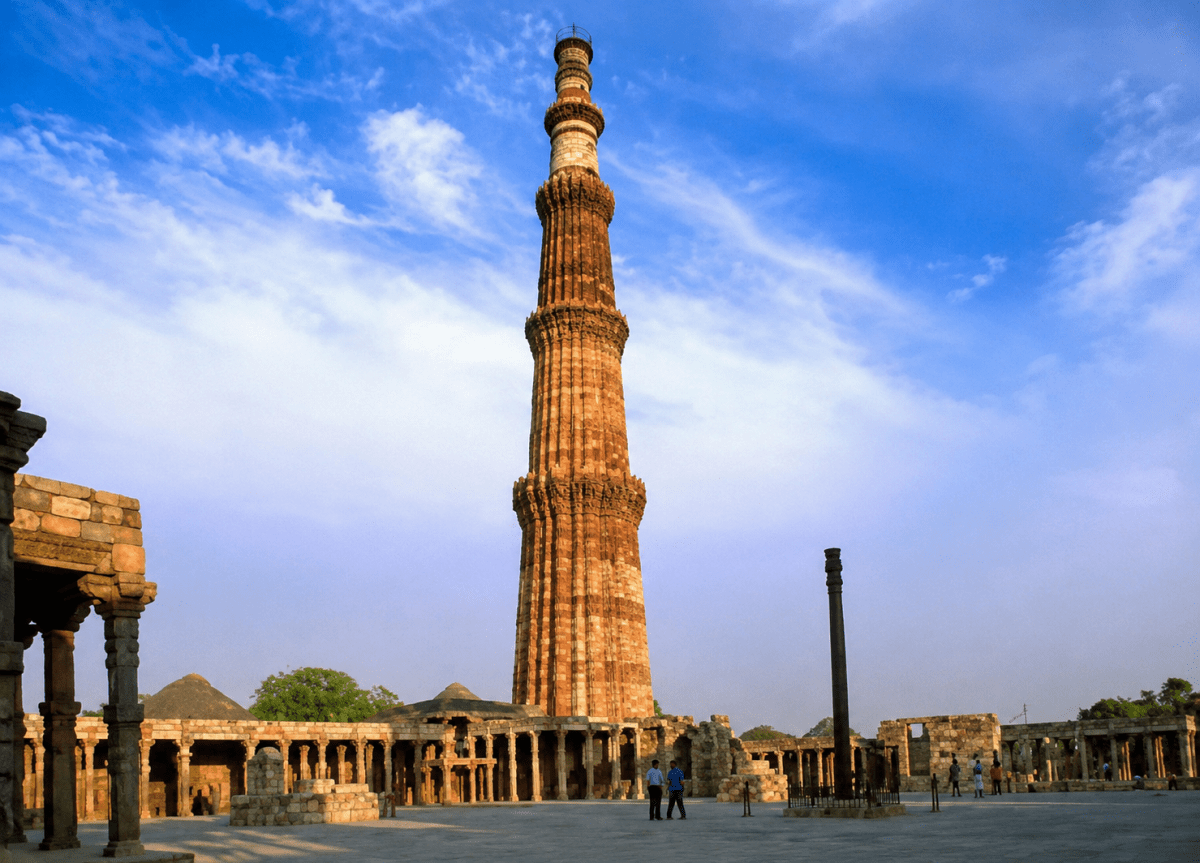
- Qutb Minar
- Charminar
- Alai Minar
- Feroz Shah's Lat
Answer
Qutb Minar
Reason — The Qutb Minar's foundation was laid by Qutbuddin Aibak in 1199 CE, along with the Quwwat-ul-Islam Mosque, of which it forms a part. It stands as the highest tower in India and is part of the Qutb complex, a UNESCO World Heritage Site.
Assertion (A): Razia Sultan faced strong resistance from the Turkish nobles (Chahalgani).
Reason (R): She appointed an Abyssinian slave, Yakut, to high positions, angering the Turkish aristocracy.
- A is true, but R is false.
- R is the reason for A.
- Both A and R are false.
- Only R is true, and A is false.
Answer
R is the reason for A.
Explanation — Both the Assertion and Reason are true. Razia Sultan's appointment of Jamaluddin Yakut, an advisor of African descent, to a high office ignited the jealousy of the Turkish nobility (chahalgani). This was one of the primary reasons for the resistance she faced, which eventually led to her being overthrown.
Assertion (A): Iltutmish faced several problems consolidating his position after ascending the throne.
Reason (R): He had to suppress rebellions, expel rivals like Nasiruddin Qubacha, and manage the Khalji governor of Bengal.
- A is true, but R is false.
- R is the reason for A.
- A is false, but R is true.
- Both A and R are false.
Answer
R is the reason for A.
Explanation — Both the Assertion and Reason are true. After ascending the throne, Iltutmish faced multiple challenges — he had to suppress a rebellion of the amirs near Delhi, expel Nasiruddin Qubacha (the governor of Multan) from Lahore, and bring the Khalji governor of Bengal, Ali Mardan, to submission. These problems indeed explain why his consolidation of power was difficult.
Write the approximate dates for each of the following.
- The reign of Qutbuddin Aibak
- The reign of Iltutmish
- The reign of Raziya Sultan
- The reign of Balban
Answer
- The reign of Qutbuddin Aibak: c.1206 CE – c.1210 CE
- The reign of Iltutmish: c.1210 CE – c.1236 CE
- The reign of Raziya Sultan: c.1236 CE – c.1239 CE
- The reign of Balban: c.1266 CE – c.1287 CE
Was it a correct decision for Iltutmish to place his daughter on the throne of Delhi instead of one of his sons? Give reasons to support your answer.
Answer
Yes, it was a correct decision for Iltutmish to place his daughter Raziya on the throne of Delhi instead of one of his sons. The reasons are as follows:
- Iltutmish's sons were incompetent and not suitable for the responsibilities of ruling a kingdom.
- Raziya, on the other hand, was well-educated and adept in military tactics. She was trained to lead an army and administer a kingdom in times of necessity.
- Raziya became an expert archer and horse rider by the age of 13, and even accompanied her father on military expeditions as a teenager.
- The chronicler Minhaj-i-Siraj himself acknowledged that Raziya was far more qualified and able as a ruler than her brothers.
Hence, despite the opposition of the chahalgani, Iltutmish made a fair and wise decision by choosing the most capable successor based on merit rather than gender.
'Balban believed in the theory of divine right of kingship.' What does the divine right of kingship mean?
Answer
The divine right of kingship means the belief that a king derives his authority and right to rule directly from God, and not from the people or any worldly power. According to this theory, the king is considered to be the deputy or representative of God on Earth, and his actions and decisions are seen as sacred and not to be questioned. Balban considered himself as the deputy of God on Earth. To reflect this belief, he organised his court along the pattern of the Persian royal court and introduced the Persian customs of sijdah (prostration before the king) and paibos (kissing the feet of the king in the court).
Qutbuddin Aibak established the Slave Dynasty in India. In this context, answer the following questions:
- Which other name is this dynasty known by?
- How did Qutbuddin Aibak become the sultan of Delhi?
- Which game was Qutbuddin Aibak playing when he met with an accident and died?
- Who did the chahalgani want as the new sultan after the death of Qutbuddin Aibak?
Answer
- The Slave Dynasty is also known as the Mamluk Dynasty. The word 'Mamluk' means 'slave' in Arabic.
- Qutbuddin Aibak was a Turkish slave who served under Muhammad Ghori. Under Ghori's command, he sacked Delhi in 1193 CE and was responsible for executing and consolidating Ghori's conquests in northern India. He was given independent charge of the territorial gains from the Indian campaigns. After a brief power struggle following Muhammad Ghori's death in 1206 CE, Qutbuddin succeeded in establishing himself as the sultan of Delhi.
- Qutbuddin Aibak was playing chaugan, a kind of polo on horseback, when he met with an accident and died in 1210 CE.
- The chahalgani (the forty Turkish nobles) wanted Aram Shah to be the new sultan after the death of Qutbuddin Aibak.
Read the paragraph and answer the questions that follow.
Iltutmish succeeded in establishing a strong administrative control over his empire. He minted gold and silver coins. Moreover, he encouraged the writing of Islamic classics. Iltutmish added three storeys to the Qutb Minar, and also built his own tomb with red sandstone in Delhi. He built waterworks, mosques and other amenities in Delhi, in order to make it a fitting seat of the government.
- Which fact in the passage suggests that Iltutmish cared for the basic amenities to be made available to the people?
- What was Iltutmish's contribution towards the building of the Qutb Minar?
- What architectural works did Iltutmish undertake? Why?
Answer
- The fact that Iltutmish built waterworks, mosques and other amenities in Delhi suggests that he cared for the basic amenities to be made available to the people.
- Iltutmish's contribution towards the building of the Qutb Minar was that he added three storeys to it.
- Iltutmish undertook several architectural works. He added three storeys to the Qutb Minar, built his own tomb with red sandstone in Delhi, and constructed waterworks, mosques and other amenities in Delhi. He did this in order to make Delhi a fitting seat of the government.
What title did Iltutmish get on his accession to the throne?
Answer
Iltutmish was given the title Altamash or Iltmash on his accession to the throne, which later changed to Iltutmish.
In which year did the Mongols appear on the banks of the Indus for the first time?
Answer
The Mongols appeared on the banks of the river Indus for the first time in 1221 CE.
Who ascended the throne after the death of Nasiruddin Mahmud?
Answer
Ghiyasuddin Balban ascended the throne after the death of Nasiruddin Mahmud. Balban had earlier ruled the state as the regent of Nasiruddin, the youngest son of Iltutmish, and after Nasiruddin's death, he declared himself the sultan of Delhi.
Which ruler of the Delhi Sultanate broke up the chahalgani?
Answer
Ghiyasuddin Balban was the ruler of the Delhi Sultanate who broke up the chahalgani, the most important group of forty nobles in the court.
Who brought an end to the Slave dynasty?
Answer
Jalaluddin Firuz Khalji brought an end to the Slave dynasty by capturing the throne in 1290 CE.
Write about Balban's achievements.
Answer
Balban's achievements include the following:
- He ruled with an iron fist and broke up the chahalgani, the most important group of forty nobles in the court, thus curbing the power of the nobility.
- He brutally crushed the revolts of the Jats and Rajputs, and tried to establish peace and order in the country.
- He built new forts to protect the empire from Mongol invasion and repaired the old forts between the area around the river Indus and the city of Delhi.
- He believed in divine kingship and considered himself as the deputy of God on Earth. He organised his court along the pattern of the Persian royal court and introduced the Persian customs of sijdah (prostration before the king) and paibos (kissing the feet of the king).
- He restored internal peace and took steps to improve the defence of the north-west frontier to thwart Mongol invasions.
- He was a patron of learning and promoted architecture and Islamic culture. His tomb is considered to be the first structure in medieval India which comprised a dome and an arch.
This picture is of Genghis Khan, a Mongol leader.
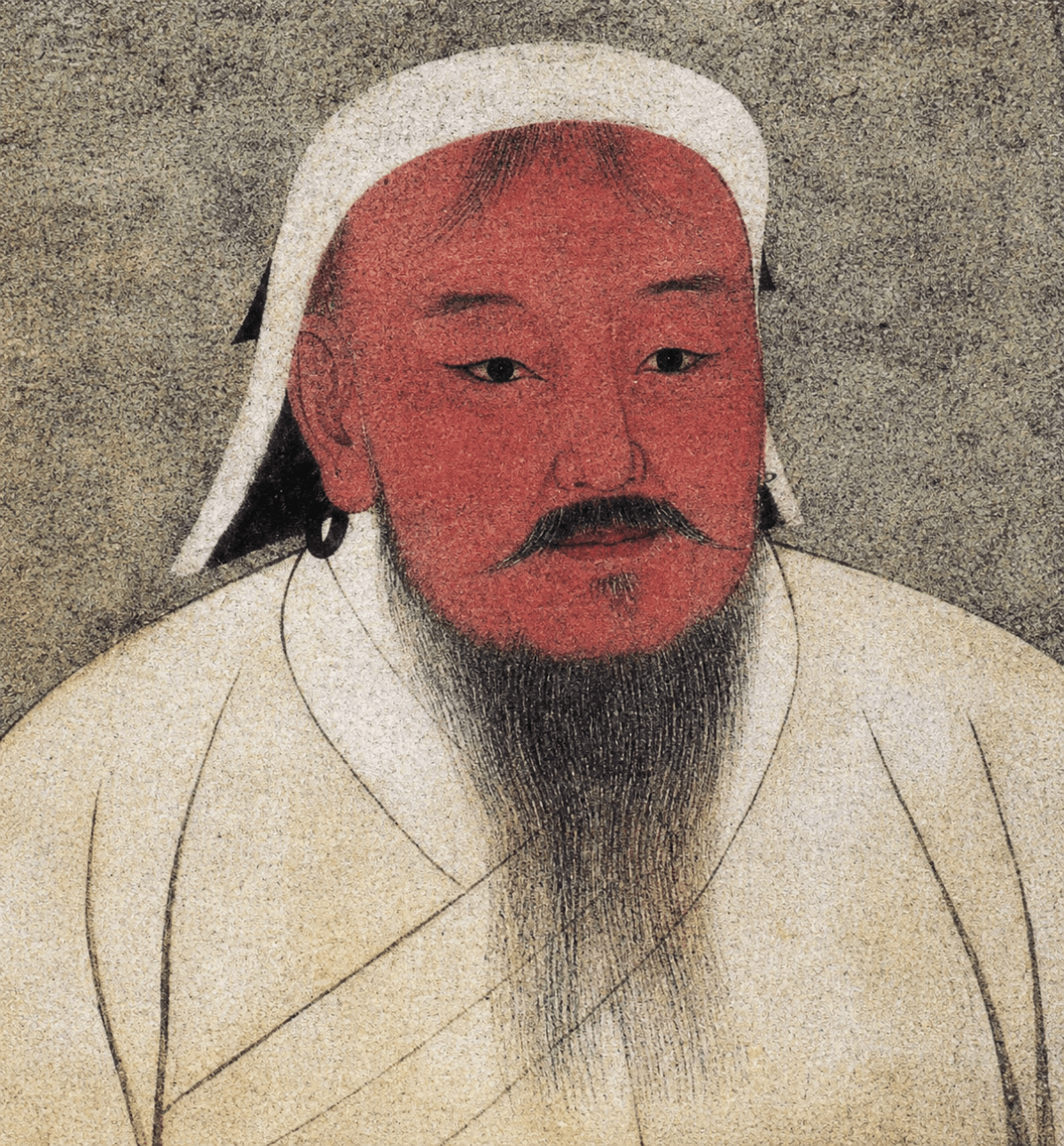
a. During whose rule did the Mongols appear for the first time in India?
b. The son of which Sultanate ruler was killed by the Mongols? Find out.
Answer
a. The Mongols appeared for the first time in India during the rule of Shamsuddin Iltutmish. They appeared on the banks of the river Indus in 1221 CE.
b. The son of Ghiyasuddin Balban, Prince Muhammad, was killed by the Mongols in 1285 CE while defending the north-west frontier of the Delhi Sultanate against Mongol invasions.
This image portrays the first and only woman to rule the Delhi Sultanate, facing strong opposition from the Turkish nobles (Chahalgani).
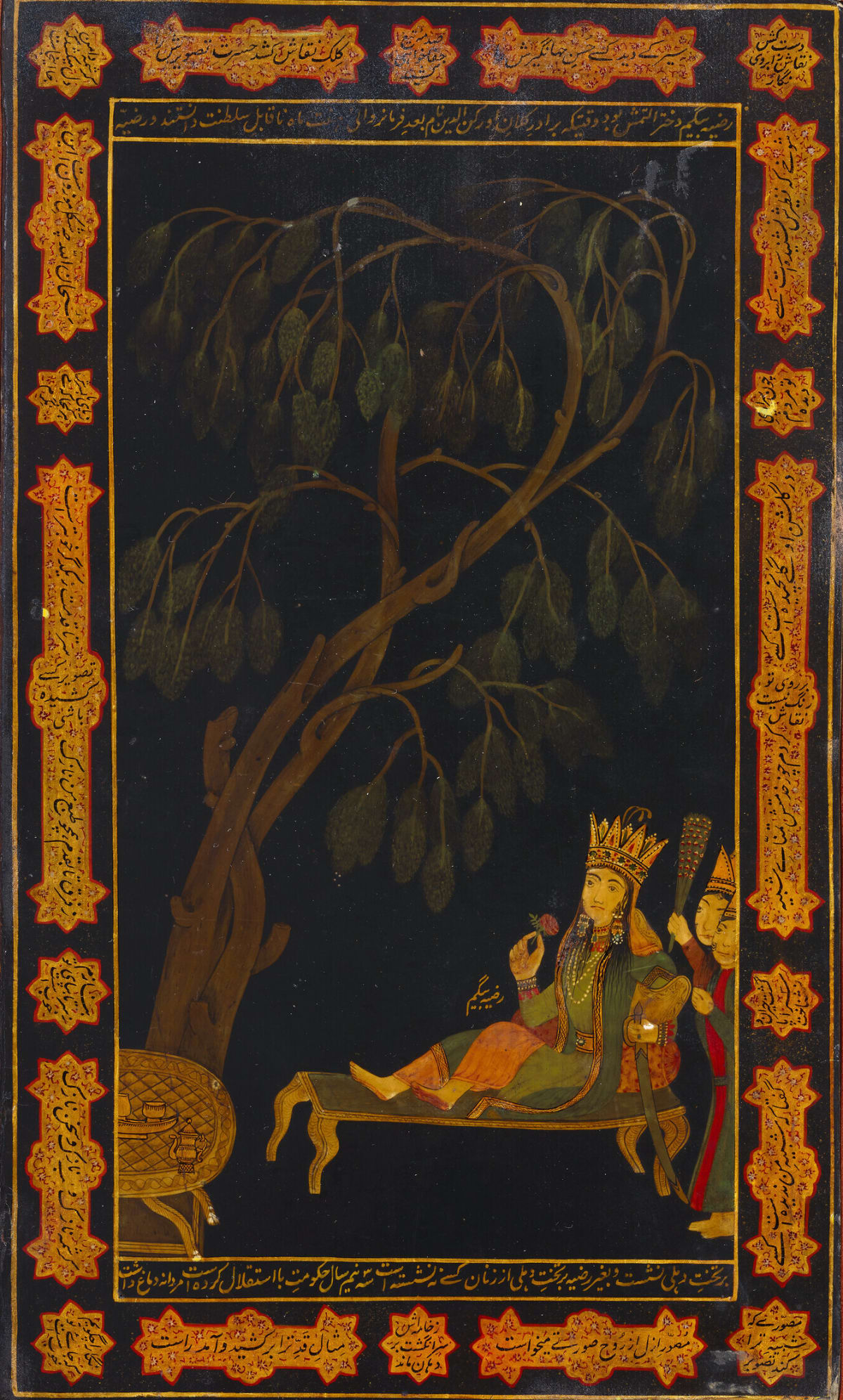
a. Identify the ruler in the picture and mention her period of reign.
b. Why was her rise to the throne unusual in the context of medieval India?
c. Explain one major challenge she faced from the Turkish nobles (Chahalgani).
Answer
a. The ruler in the picture is Raziya Sultan. Her period of reign was from c.1236 CE to c.1239 CE.
b. Her rise to the throne was unusual in the context of medieval India because medieval India was a male-dominated society, and Raziya was the first and the only woman sultan in India. Although Iltutmish had nominated her as his successor due to her abilities, the chahalgani considered it offensive to have a woman as the sultan. It was deemed to be against the social order ordained by God at that time.
c. One major challenge Raziya faced from the Turkish nobles (chahalgani) was their resentment over her appointment of Jamaluddin Yakut, an advisor of African descent, to a high office. This ignited the jealousy of the Turkish nobility, and they eventually overthrew her, placing her brother Muizuddin Bahram Shah on the throne.
The Qutb Minar, a towering minar of red and buff sandstone, stands as the highest tower in India. Its foundation was laid by Qutbuddin Aibak in 1199 CE, with his successor Shamsuddin Iltutmish adding three more storeys. Later, Firuz Shah Tughlaq carried out repairs and added the fifth and final storey in 1368 CE. The minar, along with its surrounding area, is a UNESCO World Heritage Site, containing magnificent ancient and medieval monuments, such as the Iron Pillar of Delhi, Quwwat-ul-Islam Mosque, Alai Darwaza, Tomb of Iltutmish and Alai Minar. The minar is adorned with intricate Islamic calligraphy and has projected balconies supported by ornate stone brackets.
Based on the case study answer the following questions:
a. Which two sultans of the Mamluk dynasty were involved in the initial construction and addition of storeys to the Qutb Minar?
b. What distinctive decorative feature adorns the Qutb Minar, as described in the text?
Answer
a. The two sultans of the Mamluk dynasty involved in the initial construction and addition of storeys to the Qutb Minar were Qutbuddin Aibak, who laid the foundation of the minar in 1199 CE, and Shamsuddin Iltutmish, who added three more storeys to it.
b. The Qutb Minar is adorned with intricate Islamic calligraphy as its distinctive decorative feature. It also has projected balconies supported by ornate stone brackets.