
Read the given paragraph and answer the questions that follow.
Sujata was excited to take part in her school's science fair. She chose to make a project on magnetism and electricity. First, she tested the properties of a magnet using paper clips and nails. She learnt that magnets attract certain materials and that like poles repel while unlike poles attract, which is called the law of magnetism.
To show the magnetic field, she sprinkled iron filings around a bar magnet and watched them form patterns. Next, Sujata made an electromagnet by wrapping wire around an iron nail and connecting it to a battery. When current flowed, the nail attracted pins, and when she turned off the current, the magnetism disappeared.
She also added an electric bell to her project using the electromagnet. At first, she connected it in a series circuit, but it didn't work well. So, she changed it to a parallel circuit, and the bell rang clearly. Sujata explained how conductors like copper let electricity flow and insulators like plastic keep us safe.
Her project was a success, and Sujata was proud of learning how electricity and magnetism are connected.
- How did Sujata use iron filings to show the magnetic field around a bar magnet, and what did she observe?
- What is the law of magnetism that Sujata learnt while testing the properties of a magnet?
- How did Sujata create an electromagnet, and what change did she notice when the current was turned off?
- Why did Sujata replace the series circuit with a parallel circuit in her electric bell experiment?
- What examples of conductors and insulators did Sujata use in her project, and why are they important in a circuit?
Answer
Sujata sprinkled iron filings around a bar magnet placed on a sheet of paper and tapped the paper gently. She observed that the iron filings arranged themselves in a definite pattern of curved loops, crowding mostly near the poles. This pattern showed the magnetic field around the bar magnet.
The law of magnetism states that like poles of two magnets repel each other, while unlike poles attract each other.
Sujata made an electromagnet by wrapping wire around an iron nail and connecting it to a battery. When the current flowed, the nail behaved like a magnet and attracted pins. When she turned off the current, the nail lost its magnetism, so the magnetism disappeared.
Sujata replaced the series circuit with a parallel circuit because components connected in parallel work independently of one another. Thus, the electric bell could operate properly without being affected by the other components of the circuit.
Sujata used copper as a conductor and plastic as an insulator. They are important in a circuit because a conductor like copper allows the electric current to flow through the wires, while an insulator like plastic does not allow current to flow and so keeps us safe from electric shocks.
Circle the word that does not belong to other words given alongside it.
- Magnet, Iron, Paper, Steel
- Battery, Resistor, Electric bell, Chalk
- Series circuit, Parallel circuit, Closed circuit, Magnetic pole
- North pole, South pole, Attraction, Electric current
- Electromagnet, Iron Nail, Plastic, Wire
Answer
- Paper
Reason — Magnet, iron and steel are related to magnetism and can be attracted by a magnet, whereas paper is a non-magnetic material. - Chalk
Reason — Battery, resistor and electric bell are electrical components used in a circuit, whereas chalk is not an electrical component. - Magnetic pole
Reason — Series circuit, parallel circuit and closed circuit are all types of electric circuits, whereas a magnetic pole is a part of a magnet. - Electric current
Reason — North pole, south pole and attraction are all related to magnets and magnetism, whereas electric current is related to electricity. - Plastic
Reason — Electromagnet, iron nail and wire are directly associated with making an electromagnet, whereas plastic is an insulating material.
Match the columns.
| Column A | Column B |
|---|---|
| 1. Magnet | (a) Used to connect electrical components |
| 2. Electromagnet | (b) Temporary magnet made using electricity |
| 3. Electric bell | (c) Has north and south poles |
| 4. Conductor | (d) Made of a material that allows current |
| 5. Electric circuit | (e) Works with the help of an electromagnet |
Answer
| Column A | Column B |
|---|---|
| 1. Magnet | (c) Has north and south poles |
| 2. Electromagnet | (b) Temporary magnet made using electricity |
| 3. Electric bell | (e) Works with the help of an electromagnet |
| 4. Conductor | (d) Made of a material that allows current |
| 5. Electric circuit | (a) Used to connect electrical components |
Answer in one or a few word(s).
- Give an example of natural magnets.
- Define magnetic field.
- How are magnetic materials different from non-magnetic materials?
- Write two uses of electricity in daily life.
- Name two types of electric cell.
Answer
- Lodestone (magnetite).
- The magnetic field is the space around a magnet where its magnetic force can be experienced by nearby magnetic objects.
- Magnetic materials get attracted by a magnet, whereas non-magnetic materials do not get attracted by a magnet.
- To light our house and to cook food.
- Primary cell and secondary cell.
Write the correct word(s) in the given blanks.
- A ............... is a device that is used to detect the presence of electric current.
- The path along which the electric current flows is called an ............... .
- Current electricity is produced because of the flow of electric charges through a ............... .
- A/An ............... is a simple device with electromagnet as its major component.
- The uniformly wound coil of a long insulated copper wire in the form of a cylinder is known as a ............... .
Answer
- A galvanometer is a device that is used to detect the presence of electric current.
- The path along which the electric current flows is called an electric circuit.
- Current electricity is produced because of the flow of electric charges through a conductor.
- An electric bell is a simple device with an electromagnet as its major component.
- The uniformly wound coil of a long insulated copper wire in the form of a cylinder is known as a solenoid.
Write True or False for the following statements.
- The materials that are found in nature and possess the inherent property of attracting iron objects like lodestone are called artificial magnets.
- The magnetic strength of a magnet is maximum at the poles and minimum at the centre.
- The magnetic field around a magnet increases with distance.
- The direction of magnetic lines of force is from south pole to north pole of a magnet when observed outside the magnet.
- The magnetism of the soft iron is not permanent and is lost as soon as the flow of current is stopped.
Answer
- False
Corrected Statement — The materials that are found in nature and possess the inherent property of attracting iron objects like lodestone are called natural magnets. - True
- False
Corrected Statement — The magnetic field around a magnet decreases as the distance from the magnet increases. - False
Corrected Statement — The direction of magnetic lines of force is from north pole to south pole of a magnet when observed outside the magnet. - True
"Repulsion is a true test for magnetism." Briefly explain this statement.
Answer
A magnet attracts magnetic materials as well as the unlike pole of another magnet. So, attraction alone cannot prove whether an object is a magnet. However, repulsion takes place only between the like poles of two magnets, and only a magnet can repel another magnet. Therefore, repulsion is a sure (true) test for magnetism.
List the properties of an electromagnet.
Answer
The properties of an electromagnet are:
- The magnetism of soft iron is not permanent. As soon as the flow of current is stopped, the soft iron loses its magnetism.
- The magnetic field of an electromagnet can be changed when required. The strength of the electromagnet depends on the nature of the material of the core, the total number of turns of the coil and the strength of the current passing through the coil.
What are conductors and insulators?
Answer
Conductors are the materials that allow electrons (electric current) to flow through them. All metals are good conductors, for example, copper.
Insulators are the materials that do not allow electrons (electric current) to flow through them, for example, plastic.
Write the important components of an electric bell.
Answer
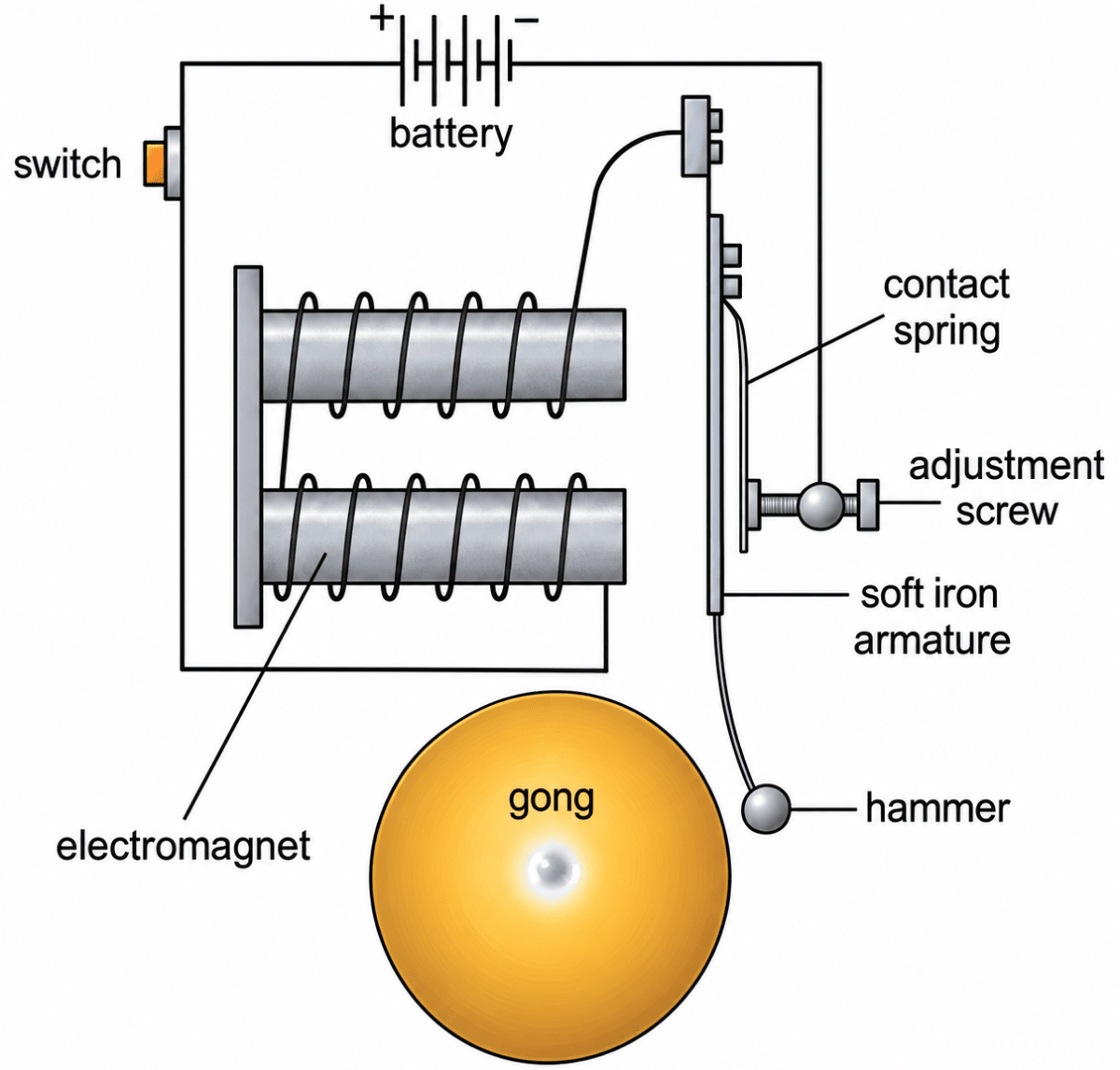
The important components of an electric bell are an electromagnet, a soft iron armature, a battery, a contact spring, an adjustment screw, a hammer, a gong and a switch.
What precautions should be taken while connecting an electric circuit?
Answer
The following precautions should be taken while connecting an electric circuit:
- Always check the electrical connections properly and ensure they are tight.
- Never touch the electric circuit with wet hands.
- Make sure that the wires are properly insulated.
List the properties of a magnet.
Answer
A magnet has the following properties:
- Attractive property — A magnet attracts magnetic materials like iron, steel, cobalt and nickel towards itself.
- Directive property — When suspended freely in the horizontal direction, a magnet always comes to rest in the north-south direction. The north-seeking pole points towards the geographical north and the south-seeking pole points towards the geographical south.
- Property of co-existence of poles — When a magnet is broken into pieces, each piece behaves as a bar magnet having a north and a south pole. A single pole cannot be isolated.
- Magnetic strength — The magnetic strength of a magnet is maximum at the poles and minimum at the centre.
- Attraction and repulsion — Like poles of a magnet repel each other and unlike poles attract each other.
Write the uses of an electromagnet.
Answer
Some uses of an electromagnet are:
- It is used for making strong and permanent magnets.
- It is used for lifting and transporting heavy iron objects like plates and iron scrap from one place to another.
- It is used for removing iron dust from wounds.
- It is used for deflecting the electronic beam in television.
- It is used for loading furnaces with iron.
- It is used by doctors for detecting and treating various ailments.
- It is used in electric motors, loudspeakers, generators and electric bells.
Differentiate between a permanent magnet and an electromagnet.
Answer
| Permanent magnet | Electromagnet |
|---|---|
| It retains its magnetism for a long time. | It is a temporary magnet and behaves like a magnet only as long as current flows through it. |
| Its magnetic strength is fixed and cannot be changed. | Its magnetic strength can be changed by changing the current or the number of turns of the coil. |
| Its magnetism cannot be switched on or off. | Its magnetism can be switched on or off using a switch. |
| It is usually made of steel. | It has a core of soft iron. |
How does an electric bell work?
Answer
An electric bell works on the magnetic effect of current using an electromagnet. When the circuit is complete and the current passes through the coil, the electromagnet starts behaving like a magnet and attracts the soft iron armature. The hammer connected to the armature moves towards the electromagnet and hits the gong, producing sound.
As the armature is pulled towards the electromagnet, it loses contact with the adjustment screw, so the circuit breaks. The electromagnet then gets demagnetised, and there is no more attraction. The armature moves back to its original position and touches the screw again, completing the circuit. As long as the switch is pressed, this process is repeated and the bell keeps ringing.
What are the components of a dry cell?
Answer
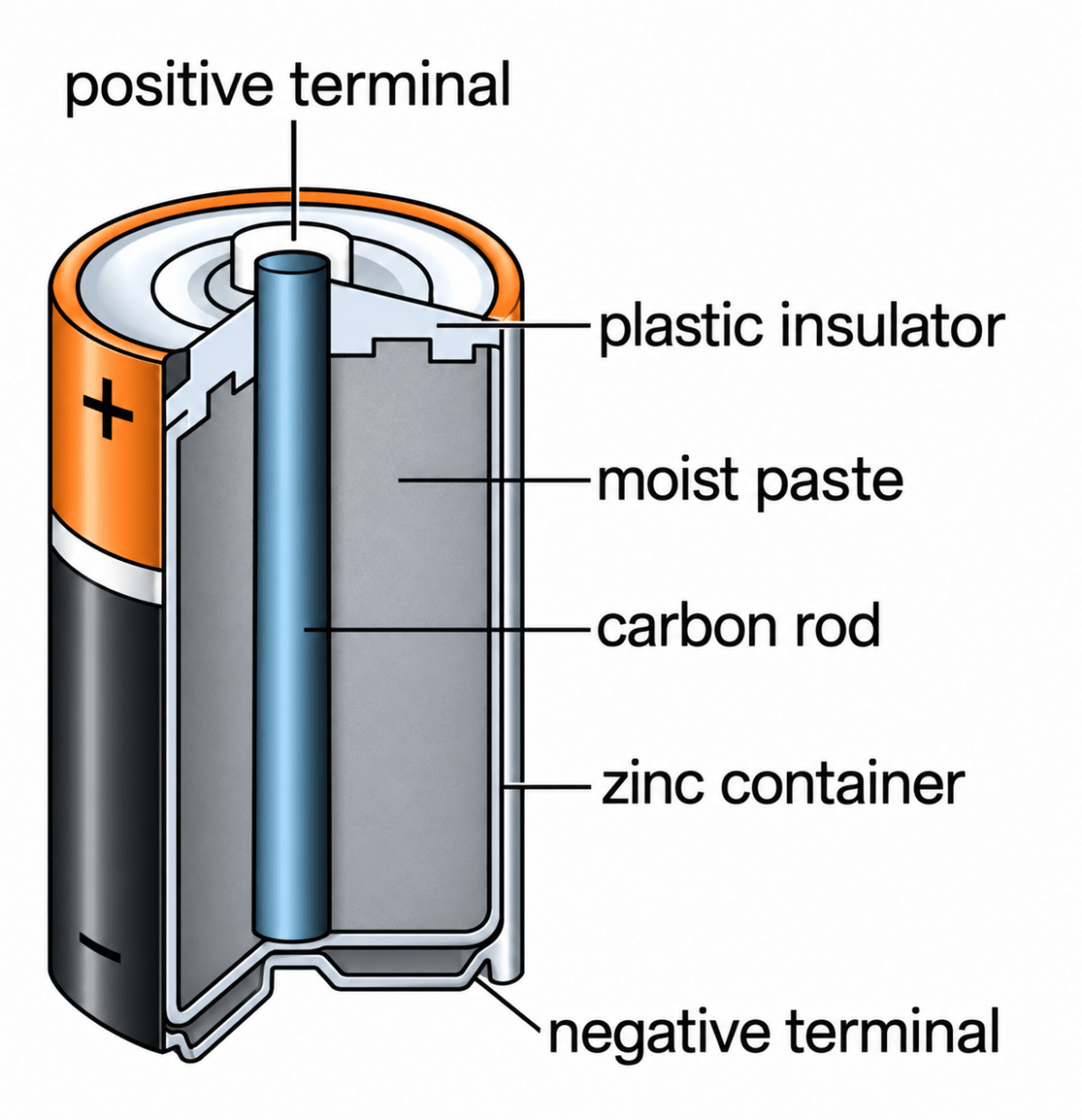
A dry cell consists of the following components:
- A zinc container that holds the electrolyte. The base of the container acts as the negative electrode (negative terminal).
- A carbon rod with a brass cap placed at the centre of the cell, which acts as the positive electrode (positive terminal).
- The carbon rod is dipped in a paste of manganese dioxide (MnO2) contained in a muslin bag.
- A moist paste of ammonium chloride (NH4Cl) is used as the electrolyte, which surrounds the muslin bag.
- The outer body of the zinc container is covered with a thick plastic insulation.
Read the given case study and answer the questions that follow.
Meera was excited about her school science fair. She decided to make a model of an electric bell using an electromagnet. She started by learning about magnets. She found that a magnet can attract iron, nickel, and cobalt. She also learnt about the law of magnetism — that opposite poles attract and like poles repel.
Her father showed her how a magnetic field is present around a magnet. They used iron filings to see the field. Next, Meera made an electromagnet. She wrapped a wire around a nail and connected it to a battery. When she switched on the electric current, the nail became a magnet. This was electromagnetism. She used this electromagnet in her electric bell model. When she pressed a switch, electricity flowed through the circuit, the electromagnet pulled the hammer and the bell rang. She was thrilled.
- What materials can a magnet attract?
- What is the law of magnetism?
- How can we see the magnetic field around a magnet?
Answer
A magnet can attract magnetic materials like iron, steel, cobalt and nickel.
The law of magnetism states that like poles of two magnets repel each other, while unlike (opposite) poles attract each other.
We can see the magnetic field around a magnet by placing a bar magnet on a sheet of paper, sprinkling iron filings around it and tapping the paper gently. The iron filings arrange themselves in a definite pattern of curved loops, which shows the magnetic field around the magnet.
Read the given information carefully and answer the questions that follow.
Earth is a magnet. Scientists do not fully understand why, but they think the movement of molten metal in Earth's outer core generates electric currents. The currents create a magnetic field with invisible lines of force flowing between Earth's magnetic poles.
The geomagnetic poles are not the same as the North and South Poles. Earth's magnetic poles often move, due to activity far beneath Earth's surface. The shifting locations of the geomagnetic poles are recorded in rocks that form when molten material called magma wells up through Earth's crust and pours out as lava. As lava cools and becomes solid rock, strongly magnetic particles within the rock become magnetised by Earth's magnetic field. The particles line up along the lines of force in Earth's field. In this way, rocks lock in a record of the position of Earth's geomagnetic poles at that time.
Strangely, the magnetic records of rocks formed at the same time seem to point to different locations for the poles. According to the theory of plate tectonics, the rocky plates that make up Earth's hard shell are constantly moving.
Source: https://education.nationalgeographic.org/resource/magnetism/
- How does Earth work as a magnet?
- Why do magnetic poles of the Earth shift their locations?
- How does Earth's magnetic field help people find their way around?
Answer
The movement of molten metal in Earth's outer core is thought to generate electric currents. These currents create a magnetic field, with invisible lines of force flowing between Earth's magnetic poles. In this way, the Earth behaves like a giant magnet.
The magnetic poles of the Earth shift their locations because of activity far beneath Earth's surface, associated with the movement of molten material in Earth's interior.
Earth's magnetic field makes the magnetic needle of a compass come to rest in the north-south direction. By showing the north and south directions, the compass helps people find their way around and navigate.
Explain why an electric bell does not ring when placed in a circuit with a broken battery connection, even if the switch is on.
Answer
An electric bell works with the help of an electromagnet, which becomes magnetic only when current flows through its coil. If the battery connection is broken, the circuit becomes incomplete (an open circuit), so no current flows through it even when the switch is on. Without current, the electromagnet does not become magnetic and cannot attract the armature. As a result, the hammer does not strike the gong, and the bell does not ring.
Determine the best material to use as a wire for an electric circuit among copper, plastic, wood, and aluminium. Justify your choice.
Answer
Copper is the best material to use as a wire for an electric circuit.
A wire must be a good conductor so that the electric current can flow through it easily. Out of the four materials, plastic and wood are insulators and do not allow current to flow through them, so they cannot be used. Copper and aluminium are both metals and good conductors, but copper is an excellent conductor and is most commonly used for making wires. Therefore, copper is the best choice.
Design a circuit where some bulbs work in parallel and some in series, and explain how the flow of current and brightness would vary across different parts of the circuit.
Answer
We can connect two bulbs (A and B) in parallel with each other, and then connect this parallel combination in series with a third bulb (C), a battery and a switch.
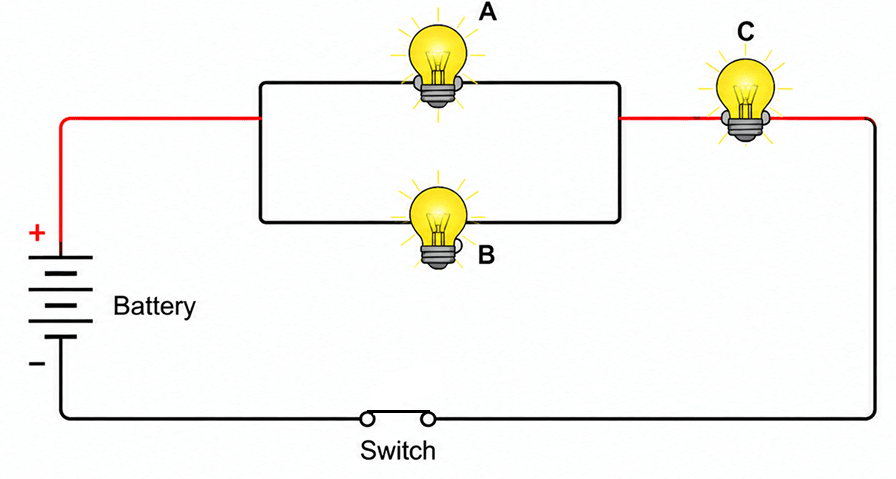
- In the series part (bulb C): The whole current of the circuit flows through bulb C, as it lies on the single main path. If bulb C fuses, the main path breaks and the entire circuit stops working, so all the bulbs go off.
- In the parallel part (bulbs A and B): The current divides into two separate paths, one through bulb A and the other through bulb B. As they have a common positive and a common negative terminal, they work independently. If one of them fuses, the other keeps glowing.
- Brightness: Assuming all three bulbs are identical, bulbs A and B will have the same brightness because the current divides equally between their parallel branches. Bulb C carries the total current before it divides and will glow brighter than A and B.
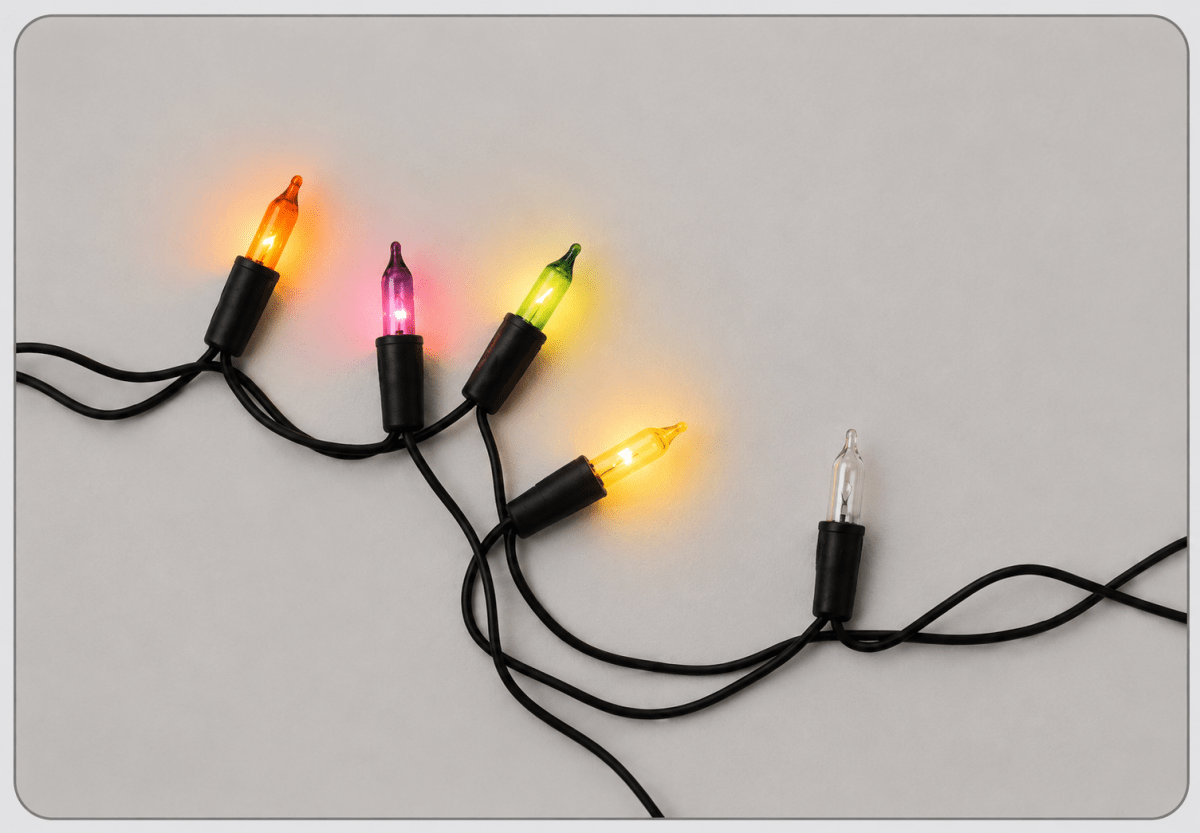
In Diwali lights, when one bulb fused, all others stopped working. But in a string with a different connection, the rest kept glowing even if one bulb went off.
- Why do some circuits stop working if one part breaks?
- Make a series and a parallel circuit with two bulbs.
- Remove one bulb in each type. What happens?
- What is the difference between series and parallel circuits?
Answer
Some circuits stop working because they are connected in series. In a series circuit, all the components lie on a single path. If any one part, like a bulb, breaks or fuses, the path becomes incomplete, the circuit breaks and no current flows. As a result, all the other components also stop working.
To make a series circuit, connect the two bulbs one after the other along a single path with a battery and a switch. To make a parallel circuit, connect the two bulbs on separate paths so that they have a common positive terminal and a common negative terminal with the battery.
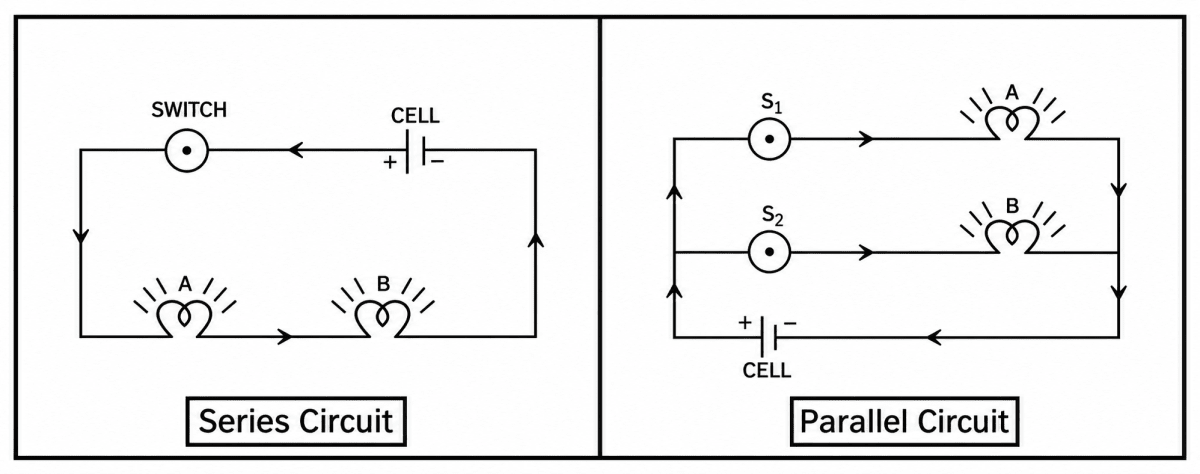
In the series circuit, removing one bulb breaks the single path, so the other bulb also stops glowing. In the parallel circuit, removing one bulb does not affect the other path, so the other bulb keeps glowing.
The difference between series and parallel circuits is:
| Series circuit | Parallel circuit |
|---|---|
| The components are connected one after another on a single path. | The components are connected on separate paths with a common positive and a common negative terminal. |
| If one component fails, all the others stop working. | If one component fails, the others keep working. |
| The bulbs glow dimmer as they share the electricity. | The bulbs glow at their full brightness. |
Wrap insulated copper wire around an iron nail. Connect both ends of the wire to a battery. Now bring the nail near paper clips. Then disconnect the battery and try again.
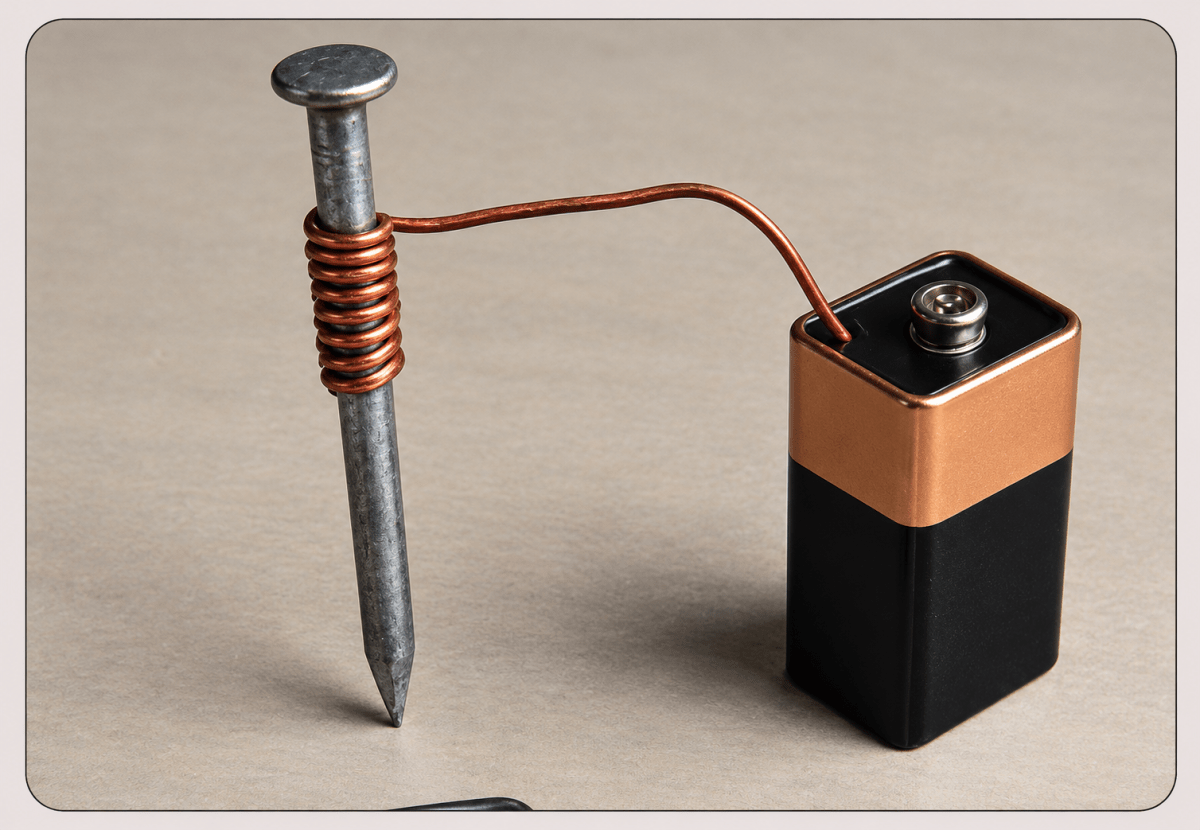
- What happened to the paper clips when the current flowed through the wire?
- Did the nail remain magnetic after disconnecting the battery?
- What does this tell you about electromagnetism?
- What is importance of a switch in an electric circuit?
Answer
When the current flowed through the wire, the iron nail behaved like a magnet (it became an electromagnet) and attracted the paper clips.
No. As soon as the battery was disconnected and the current stopped flowing, the nail lost its magnetism and the paper clips fell off.
It tells us that an electromagnet is a temporary magnet. It behaves like a magnet only as long as the current flows through the coil and loses its magnetism when the current stops. This is the magnetic effect of electric current.
A switch is used to make (close) or break (open) an electric circuit. It allows us to start or stop the flow of current, so that we can switch electrical devices on and off whenever needed.
Make a simple electric circuit using a battery, bulb and wires. Leave a gap in one of the wires and test different materials by placing each in the gap one at a time. Try materials such as a metal spoon, plastic ruler, pencil and paper. Observe whether the bulb lights up with each material.
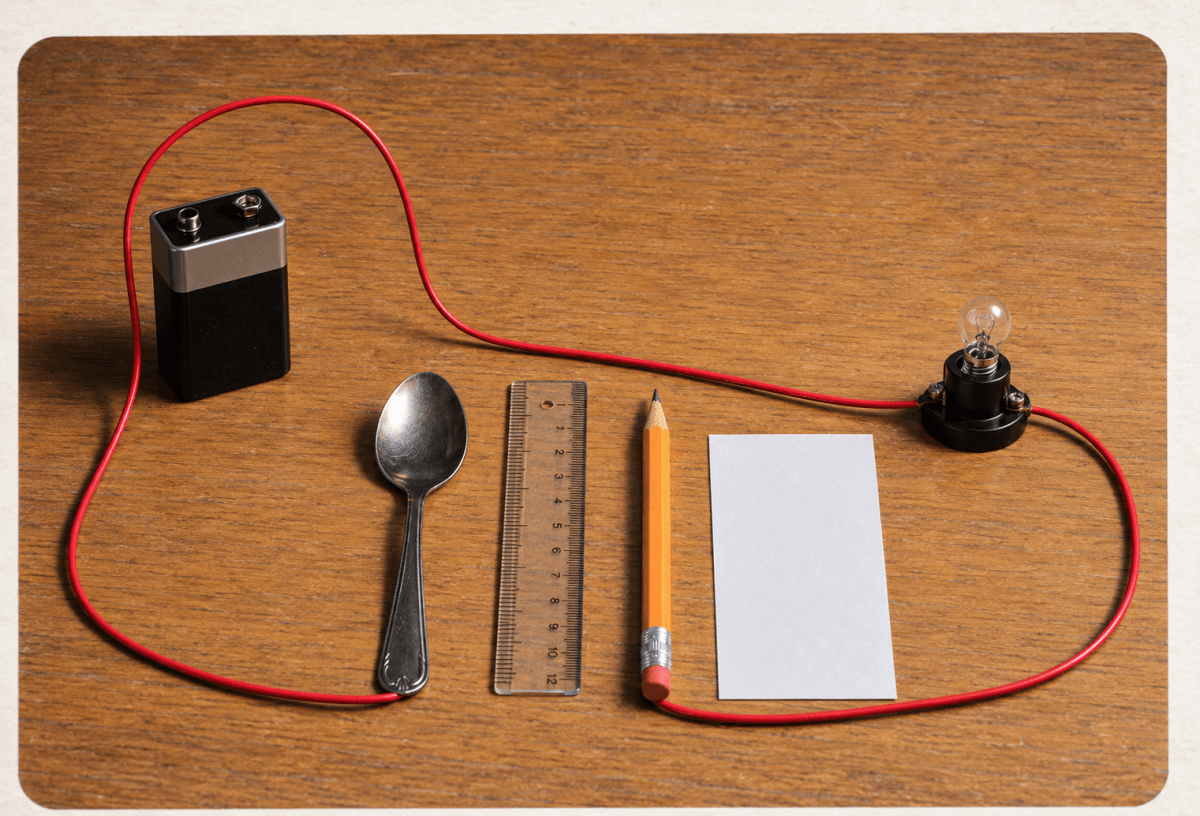
- Which materials allowed the bulb to glow?
- What are conductors?
- What are insulators?
- What are the main components of an electric circuit?
Answer
The materials that are conductors allowed the bulb to glow, that is, the metal spoon and the pencil lead (graphite). The plastic ruler and the paper did not allow the bulb to glow, as they are insulators.
Conductors are the materials that allow electrons (electric current) to flow through them. All metals are good conductors, for example, copper and silver.
Insulators are the materials that do not allow electrons (electric current) to flow through them. They have very few free electrons, for example, plastic, rubber and wood.
The main components of an electric circuit are a source of current (a cell or a battery), a device that uses the current (such as a bulb), connecting wires and a switch (key).
Resistors are materials that reduce the flow of electric current in a circuit. They help control the amount of current so that electrical devices do not get damaged. Different materials have different resistance levels.
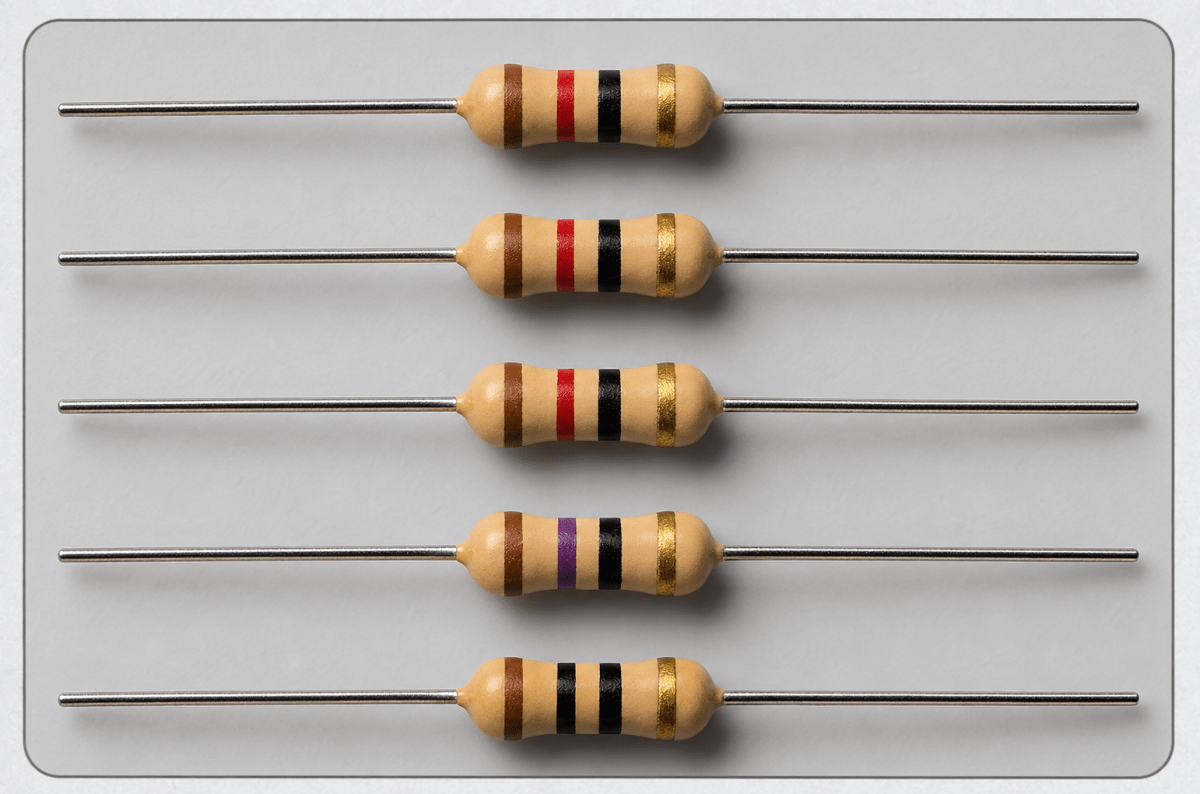
- What is the function of a resistor?
- Why do devices need resistors?
- Do all materials have the same resistance?
- Is a resistor good or bad for an electric circuit? Explain.
Answer
The function of a resistor is to limit or regulate the flow of electric current in a circuit.
Devices need resistors to control the amount of current flowing through them. This ensures that the devices receive only a safe amount of current and do not get damaged.
No, all materials do not have the same resistance. Different materials have different resistance levels.
A resistor is good for an electric circuit. By limiting and controlling the flow of current, it protects the electrical devices from too much current and prevents them from getting damaged.
Fill in the blanks.
- The region around a magnet where its influence can be felt is called the ............... .
- Like poles of a magnet ............... each other, while unlike poles ............... each other.
- The magnetic effect of electric current was discovered by ............... .
- The SI unit of electric current is ............... .
- The north pole of a suspended magnet always points towards the ............... direction.
Answer
- The region around a magnet where its influence can be felt is called the magnetic field.
- Like poles of a magnet repel each other, while unlike poles attract each other.
- The magnetic effect of electric current was discovered by Hans Christian Oersted.
- The SI unit of electric current is ampere (A).
- The north pole of a suspended magnet always points towards the north direction.
Write True or False.
- Natural magnets are stronger than artificial magnets.
- A soft iron core increases the strength of an electromagnet.
- Electric current flows from positive to negative in actual electron flow.
- In a parallel circuit, the total resistance is less than the resistance of any individual branch.
- Non-metals are generally good conductors of electricity.
Answer
- False
Corrected Statement — Artificial magnets are stronger than natural magnets, as natural magnets have an irregular size and weak strength. - True
- False
Corrected Statement — In actual electron flow, electrons flow from negative to positive; only the conventional current is taken from positive to negative. - True
- False
Corrected Statement — Non-metals are generally poor conductors (insulators) of electricity, while metals are good conductors.
Match the columns.
| Column A | Column B |
|---|---|
| 1. Primary cell | (a) Hans Christian Oersted |
| 2. Magnetic poles | (b) Flow of charge |
| 3. Electromagnetism | (c) Can be recharged |
| 4. Electric current | (d) Co-exist in pairs |
| 5. Secondary cell | (e) Dry cell |
Answer
| Column A | Column B |
|---|---|
| 1. Primary cell | (e) Dry cell |
| 2. Magnetic poles | (d) Co-exist in pairs |
| 3. Electromagnetism | (a) Hans Christian Oersted |
| 4. Electric current | (b) Flow of charge |
| 5. Secondary cell | (c) Can be recharged |
State two properties of a magnet.
Answer
Two properties of a magnet are:
- Attractive property — A magnet attracts magnetic materials like iron, steel, cobalt and nickel towards itself.
- Directive property — When suspended freely, a magnet always comes to rest in the north-south direction.
What is meant by the magnetic field of a magnet?
Answer
The magnetic field of a magnet is the space around the magnet where its magnetic force can be experienced by nearby magnetic objects.
Why is soft iron preferred over steel for making electromagnets?
Answer
Soft iron is preferred over steel for making electromagnets because its magnetism is temporary. It becomes magnetic when current flows through the coil and loses its magnetism when the current is stopped. Thus, the electromagnet can be switched on and off as required.
Differentiate between conductors and insulators with one example each.
Answer
Differences between conductors and insulators (with examples):
| Conductors | Insulators |
|---|---|
| Materials that allow electrons (electric current) to flow through them. | Materials that do not allow electrons (electric current) to flow through them. |
| They have a large number of free electrons. | They have a very small number of free electrons. |
| Example: copper | Example: plastic |
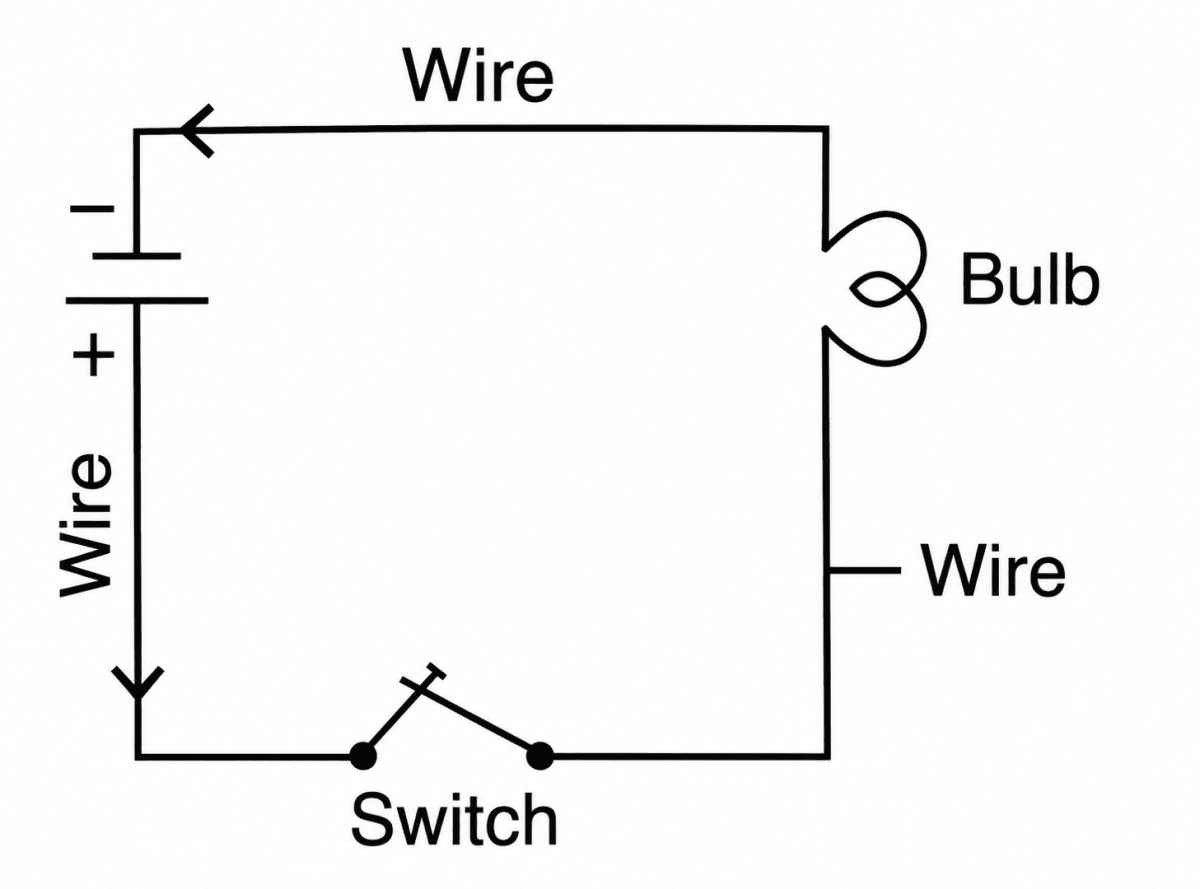
Draw a simple circuit diagram showing a cell, switch, bulb and connecting wires.
Answer
The circuit diagram showing a cell, switch, bulb and connecting wires is shown below:
Explain how you would show that unlike poles attract and like poles repel each other.
Answer
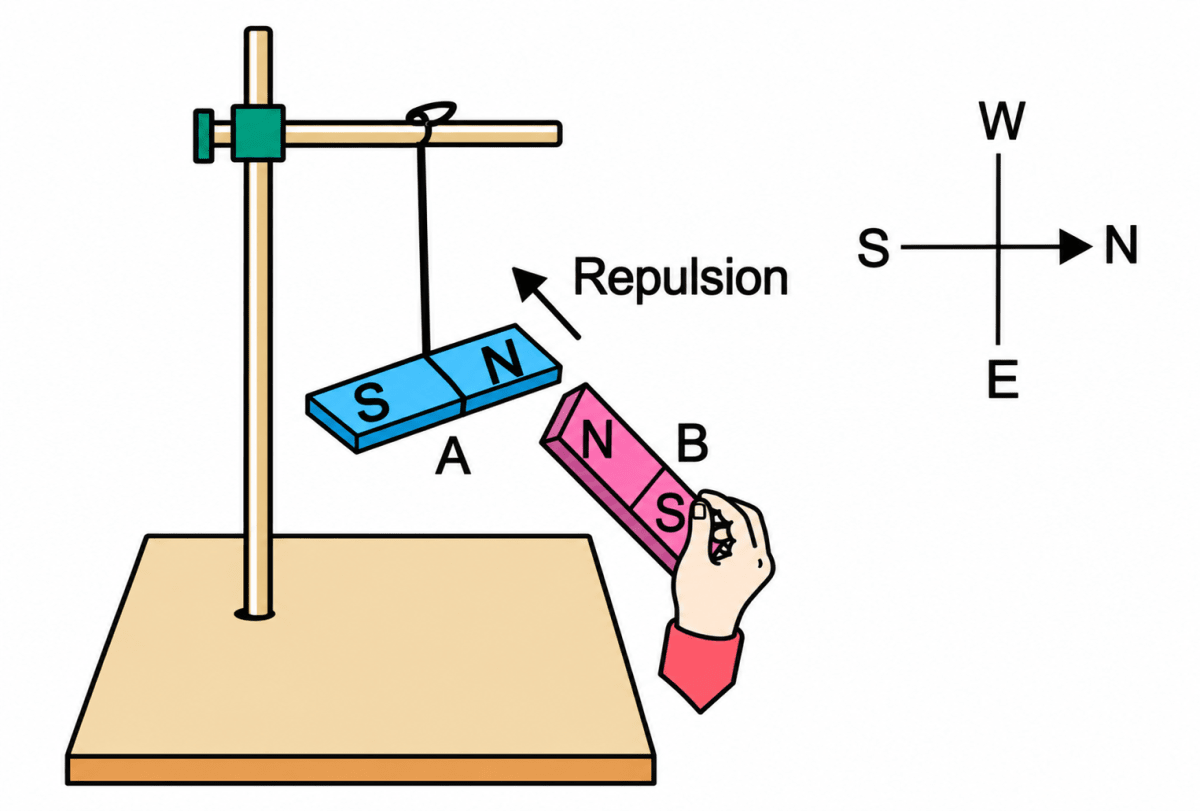
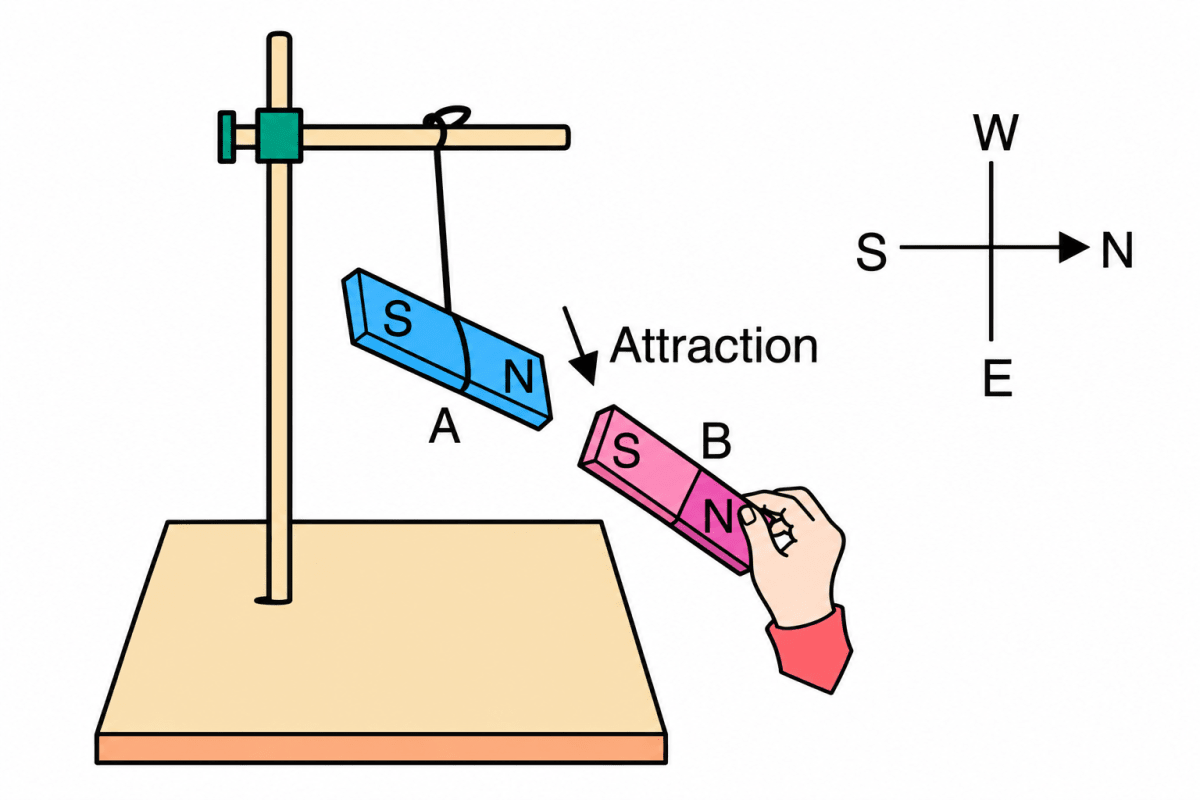
To show this, we take two bar magnets and suspend or place one of them so that it can move freely.
When the north pole of one magnet is brought near the north pole of the other magnet (like poles), the magnets push away from each other. The same happens when two south poles are brought close. This shows that like poles repel each other.
When the north pole of one magnet is brought near the south pole of the other magnet (unlike poles), the magnets pull towards each other. This shows that unlike poles attract each other.
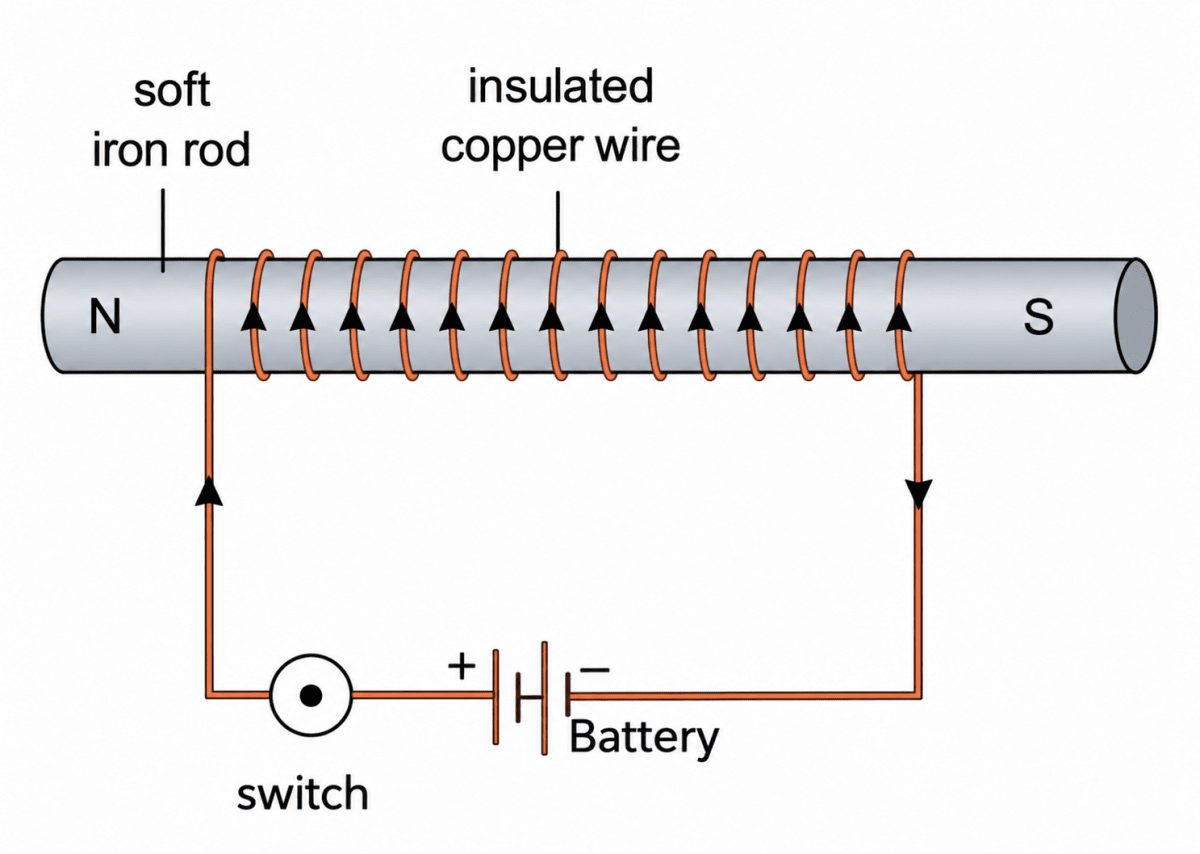
Describe the construction and working of a simple electromagnet. Mention its two uses.
Answer
Construction: A simple electromagnet is made by winding an insulated copper wire around a soft iron rod (or nail). The two free ends of the wire are connected to a cell or a battery through a switch.
Working: When the switch is closed and the current passes through the coil, the soft iron core starts behaving like a magnet and attracts magnetic materials such as iron pins or paper clips. When the current is stopped, the soft iron core loses its magnetism and stops attracting these materials. Thus, an electromagnet behaves like a magnet only as long as the current flows through the coil.
Two uses:
- It is used for lifting and transporting heavy iron objects and iron scrap.
- It is used in electric bells.
Distinguish between a series circuit and a parallel circuit. Give advantages and disadvantages of each.
Answer
Differences between a series circuit and a parallel circuit are:
| Series circuit | Parallel circuit |
|---|---|
| The components are connected one after another on a single path. | The components are connected on separate paths with a common positive and a common negative terminal. |
| The same current flows through all the components. | The current divides into different paths. |
| If one component fails, all the others stop working. | If one component fails, the others keep working. |
| The bulbs glow dimmer as they share the electricity. | The bulbs glow at their full brightness. |
Advantages and disadvantages of a series circuit:
- Advantage: It is simple to make and requires less wire.
- Disadvantage: If one component fails, the whole circuit stops working, and the appliances do not work to their full capacity (the bulbs are dimmer).
Advantages and disadvantages of a parallel circuit:
- Advantage: The appliances work independently, each gets the full voltage, and the failure of one does not affect the others. This is why household wiring is done in parallel.
- Disadvantage: It is more complex and requires more wire.
Explain the difference between primary and secondary cells with suitable examples.
Answer
Differences between primary and secondary cells are:
| Primary cells | Secondary cells |
|---|---|
| These cells cannot be recharged. | These cells can be charged and reused again. |
| Once the energy is used up, the cell has to be discarded. | They can be used a number of times after recharging. |
| They are not called storage cells. | They are also called storage cells. |
| Example: dry cell | Example: storage battery (accumulator), such as a car battery |
Discuss the role of magnets and electromagnets in daily life and in industries.
Answer
Magnets and electromagnets are very useful in daily life and in industries.
Role of magnets:
- Due to their directive property, magnets are used in a compass to find directions.
- They are used to hold the doors of refrigerators and almirahs closed.
- They are used in loudspeakers and in many toys.
Role of electromagnets:
- They are used in electric bells, electric motors, loudspeakers and generators.
- In industries, they are used in cranes to lift and transport heavy iron objects and iron scrap from one place to another.
- They are used for loading furnaces with iron.
- They are used by doctors for removing iron dust from wounds and for detecting and treating various ailments.