
Matter is made of tiny particles called atoms, an idea first suggested by Democritus long ago. Scientists like John Dalton later explained that matter is made of atoms arranged differently in solids, liquids and gases. The kinetic Theory, developed by Maxwell and Boltzmann, says these particles are always moving - the hotter they get, the faster they move. when matter changes state, like melting or boiling, particles gain or lose energy to rearrange. Scientists like Joule and Clausius helped explain this. Graphs show that temperature stays constant during these changes while particles use energy to change state.
Answer
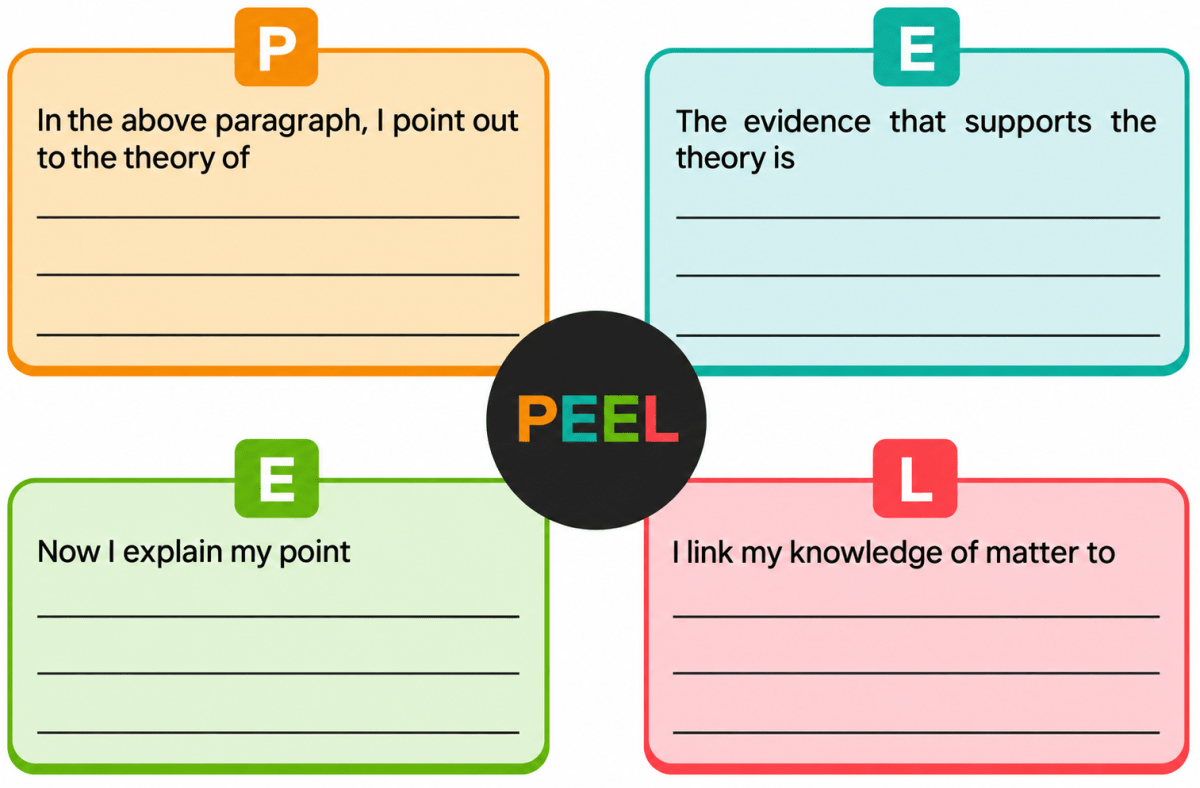
P - In the above paragraph, I point to the kinetic theory of matter.
E - The evidence that supports the theory is that graphs show temperature stays constant during state changes (like melting or boiling). This indicates that the thermal energy being added is used to rearrange the particles rather than raise the temperature.
E - Now I explain my point: matter is made of constantly moving atoms. According to Maxwell and Boltzmann's kinetic theory, the hotter these particles get, the faster they move. During a change of state, the gained or lost energy alters the arrangement of these particles in solids, liquids, or gases.
L - I link my knowledge of matter to everyday observable changes of state, such as ice melting into water or water boiling into steam, and how thermal energy affects the physical state of a substance.
Read the given paragraph and answer the questions that follow.
It was a warm summer afternoon when Pratibha decided to do a simple science experiment in her kitchen. She took out three items from the freezer: an ice cube, a frozen chocolate bar and a small container of frozen juice. She placed them on a plate and set a timer. As she waited, she recalled what her teacher had explained in class about the kinetic theory of matter.
"All matter is made up of tiny particles that are always moving," her teacher had said. "In solids, the particles are tightly packed and only vibrate. In liquids, they move around more freely, and in gases, they are far apart and move very fast."
Pratibha watched the ice cube first. It began to melt slowly. She knew this meant the particles in the solid ice were gaining energy and moving more freely, turning into liquid water. The chocolate bar softened, and the frozen juice turned into a sweet liquid. She realised they were all undergoing a change in state due to the heat in the room.
Later, Pratibha drew a graph in her notebook to show the change in state. She made sure to include a flat line where the temperature stayed the same even though the heat energy was still being added. "That's the part where bonds are breaking," she whispered to herself proudly, "just like the particles separating in my melting ice."
Pratibha smiled. A simple experiment had helped her understand so much about matter particles and how they behave.
- What experiment did Pratibha perform, and what materials did she use for it?
- What did Pratibha recall about the kinetic theory of matter while watching her experiment?
- Describe how Pratibha understood the change in state when the ice cube melted. What was happening to the particles?
- Why did Pratibha draw a flat line in her graph, and what did it represent in terms of particle behaviour?
- How did this experiment help Pratibha understand the molecular arrangement in solids, liquids and gases? Explain briefly.
Answer
Pratibha placed an ice cube, a frozen chocolate bar, and frozen juice on a plate to observe the change of state of matter caused by heat. She set a timer to watch them melt.
Pratibha recalled that all matter is made up of tiny particles that are always moving. In solids, the particles are tightly packed and only vibrate; in liquids, they move around more freely; and in gases, they are far apart and move very fast.
When the ice cube melted, Pratibha understood that the particles of the solid ice were gaining energy and moving more freely, which turned the solid ice into liquid water. The heat in the room supplied energy to the tightly packed particles, increasing their motion so that they could move past one another in the liquid state.
Pratibha drew a flat line to show the part where the temperature remained constant even though heat was continuously supplied. This flat portion represents the change of state, where the heat is used to break intermolecular forces instead of increasing the temperature.
By watching the frozen items melt, Pratibha could see the particles change from a tightly packed, only-vibrating arrangement (solid) to a more freely moving arrangement (liquid). This helped her understand that particles are closely packed in solids, more loosely packed and free to move in liquids, and far apart and fast moving in gases.
Circle the word that does not belong to other words given alongside it.
- Solid, Liquid, Gas, Wood
- Particles, Energy, Motion, Shadow
- Melting, Freezing, Boiling, Glowing
- Graph, Temperature, Heat, Poem
Answer
Wood
Reason — Solid, Liquid and Gas are the states of matter, while wood is a particular solid substance.Shadow
Reason — Particles, Energy and Motion are related to the kinetic theory of matter, while a shadow is not a property of matter particles.Glowing
Reason — Melting, Freezing and Boiling are processes of change of state, while glowing is not.Poem
Reason — Graph, Temperature and Heat are related to the study of change of state, while a poem is not.
Match the columns.
| Column A | Column B |
|---|---|
| 1. Solids | (a) Particles are far apart and move freely |
| 2. Gas | (b) Particles are tightly packed and only vibrate |
| 3. Boiling | (c) Process where liquid changes to gas |
| 4. Kinetic theory of matter | (d) Shows state change without temperature increase |
| 5. Flat portion of heating graph | (e) Explains that particles of matter are always moving |
Answer
| Column A | Column B |
|---|---|
| 1. Solids | (b) Particles are tightly packed and only vibrate |
| 2. Gas | (a) Particles are far apart and move freely |
| 3. Boiling | (c) Process where liquid changes to gas |
| 4. Kinetic theory of matter | (e) Explains that particles of matter are always moving |
| 5. Flat portion of heating graph | (d) Shows state change without temperature increase |
Answer in one or a few word(s).
- Name the smallest unit of matter.
- What is an element?
- Give two examples of liquids.
- In which process does a liquid change into its solid state by liberating heat energy?
- Name the force that molecules of matter always exert on each other.
Answer
Atom
An element is a substance which cannot be subdivided into two or more simpler substances by any physical or chemical means.
Water and mercury
Freezing (or solidification)
Intermolecular force
Write the correct word(s) in the given blanks.
- A/An ............... is the smallest unit of an element.
- In a/an ..............., molecules are always in continuous random motion.
- ............... is the state of matter in which the constituent molecules are not very closely packed.
- The process of change of liquid state to its vapour state at a constant temperature is called ............... .
- ............... is the process by which a gas changes into its solid state, without changing to its liquid state.
Answer
An atom is the smallest unit of an element.
In a gas, molecules are always in continuous random motion.
Liquid is the state of matter in which the constituent molecules are not very closely packed.
The process of change of liquid state to its vapour state at a constant temperature is called boiling (vaporisation).
Deposition is the process by which a gas changes into its solid state, without changing to its liquid state.
Write True or False for the following statements.
- Evaporation is the process in which a substance in vapour or gaseous state changes to its liquid state at a constant temperature.
- The change of a substance from one physical state to another is known as change of state.
- Solid is the state of matter in which the constituent molecules are very loosely packed.
- The force of attraction that exists between similar kinds of molecules is called force of adhesion.
- The molecules of matter always exert an attractive force on each other which is known as intermolecular force.
Answer
False.
Corrected Statement — Evaporation is the process in which a substance in its liquid state changes to its vapour or gaseous state at any temperature below its boiling point.True.
False.
Corrected Statement — Solid is the state of matter in which the constituent molecules are very tightly (closely) packed.False.
Corrected Statement — The force of attraction that exists between similar kinds of molecules is called force of cohesion.True.
Find errors in the given sentences and correct them.
- In a gas, molecules are always in continuous random motion, which means that they move along a fixed defined path, but not a continuous zigzag motion.
- The force of attraction that exists between different types of molecules is called force of cohesion.
- The force of attraction between molecules decreases, if the molecules are close to each other (i.e. less intermolecular distance) and it increases, if molecules are far apart (i.e. more intermolecular distance).
- The intermolecular distance between the molecules of liquids like water and mercury is less than that in solids.
- Solidification is a physical process that involves the change of state from a solid to a liquid on absorption of heat.
Answer
In a gas, molecules are always in continuous random motion, which means that they do not move along a fixed defined path, but move in a continuous zigzag motion.
The force of attraction that exists between different types of molecules is called force of adhesion.
The force of attraction between molecules increases if the molecules are close to each other (i.e. less intermolecular distance) and decreases if the molecules are far apart (i.e. more intermolecular distance).
The intermolecular distance between the molecules of liquids like water and mercury is more than that in solids.
Solidification is a physical process that involves the change of state from a liquid to a solid on the liberation (release) of heat.
Give reason — In a graph showing the change of state, the temperature remains constant during melting and boiling.
Answer
During melting and boiling, the heat energy supplied to the substance is used to do work against the intermolecular forces of attraction (to break the forces holding the molecules together) and not to raise the temperature. Hence, the temperature remains constant until the change of state is complete.
Give reason — Liquids take the shape of the container but do not have a fixed shape of their own.
Answer
Liquids have weaker intermolecular forces and larger intermolecular spaces than solids, so their molecules can move freely. Therefore, liquids have no fixed shape and take the shape of the container in which they are kept.
Give reason — When a solid is heated, it changes into a liquid at a constant temperature.
Answer
On heating a solid, its molecules gain kinetic energy and vibrate more vigorously. At the melting point, they acquire enough energy to overcome the intermolecular forces of attraction and become free to move. The supplied heat is used to overcome these forces rather than to raise the temperature, so the solid changes into a liquid at a constant temperature.
Give reason — Gases can be compressed easily, but solids cannot.
Answer
In gases, the intermolecular distance is large and the intermolecular forces are almost negligible, so the molecules can easily be pushed closer together on compression. In solids, the intermolecular distance is very small and the molecules are tightly packed, leaving no room for them to come closer, so solids cannot be compressed easily.
Give reason — According to the kinetic theory of matter, particles in a gas move faster than in a solid.
Answer
In a gas, the intermolecular forces are almost negligible and the molecules are free to move in continuous random (zigzag) motion, so they possess large kinetic energy and move very fast. In a solid, the molecules are tightly held by strong intermolecular forces and can only vibrate about their fixed positions, so they have the least kinetic energy and move slowly. Hence, particles in a gas move faster than in a solid.
Differentiate between force of cohesion and force of adhesion.
Answer
| Force of Cohesion | Force of Adhesion |
|---|---|
| The force of attraction that exists between similar kinds of molecules. | The force of attraction that exists between different types of molecules. |
| Example: the force of attraction between molecules within water, mercury, wood and glass. | Example: the force of attraction between water and a glass surface (water sticking to glass). |
What is fusion?
Answer
Fusion (or melting) is the physical process that involves the change of state from a solid to a liquid on the absorption of heat. The temperature does not change during the process of fusion. For example, ice changes into water at 0°C.
Define vaporisation.
Answer
Vaporisation (or boiling) is the process of change of a liquid state to its vapour state at a constant temperature. The fixed temperature at which a liquid changes to its gaseous state is called its boiling point. For example, water changes into steam at 100°C.
How is boiling different from evaporation?
Answer
| Boiling | Evaporation |
|---|---|
| It is a fast process. | It is a slow process. |
| It occurs at a specific fixed temperature. | It occurs at all temperatures. |
| It takes place throughout the mass of the liquid. | It takes place at the surface of the liquid. |
| The temperature of the surroundings remains constant. | It causes a fall in the temperature of the surroundings. |
Give an explanation of sublimation as per kinetic theory.
Answer
Some solids such as dry ice and camphor have very weak intermolecular forces of attraction between their particles. On heating, their molecules gain enough energy to overcome these intermolecular forces and become completely free of each other. Due to this, the solid changes directly into the vapour (gaseous) state without passing through the liquid state, and the process of sublimation takes place.
Write the main postulates of the kinetic theory of matter.
Answer
The main postulates of the kinetic theory of matter are:
Matter is made up of atoms or molecules. These particles are very small, of the order of 10-8 to 10-10 metre, and cannot be seen with unaided eyes.
The molecules of matter are in a state of continuous random motion and move in all directions in a zigzag manner.
The average kinetic energy of particles is directly related to the temperature of the substance; on heating, kinetic energy increases and on cooling, it decreases.
The molecules of matter always exert an attractive force on each other, known as the intermolecular force. It is of two types — force of cohesion (between similar molecules) and force of adhesion (between different molecules).
There is a space between the molecules of a substance called the intermolecular distance. The intermolecular force of attraction is inversely proportional to the intermolecular distance — it increases when the molecules are close together and decreases when they are far apart.
What are solids? Write the characteristics of solids.
Answer
Solid is the state of matter which is composed of atoms (molecules) packed tightly together. Table, chalk, book and wood are some examples of solids.
Characteristics of solids:
- The intermolecular distance between the molecules of solids is very small as the molecules are tightly packed.
- The intermolecular force is very strong due to the closeness of the molecules.
- Solids have a fixed shape and size because of the strong intermolecular forces that bind the molecules together.
- Solids cannot be compressed easily as the intermolecular distance is very small.
- Solids have a definite volume.
- Solids expand very little on heating due to the strong molecular attraction.
- Solids are hard and rigid, although some solids like metals can be beaten into sheets.
- The molecules in solids do not flow but only vibrate about their fixed mean positions.
Differentiate between the characteristics of the states of matter.
Answer
| Solids | Liquids | Gases |
|---|---|---|
| The molecules are tightly packed, i.e. the intermolecular distance is very small. | The molecules are not very tightly packed, so the intermolecular distance is moderate. | The molecules are very loosely packed, i.e. the intermolecular distance is large. |
| The intermolecular forces are the strongest. | The intermolecular forces are moderate. | The intermolecular forces are the weakest. |
| Solids have a fixed shape and size and a definite volume. | Liquids have a definite volume but not a fixed shape. | Gases have neither a definite shape nor a definite volume. |
| The molecules do not move but only vibrate about their mean position. | The molecules can move anywhere within the boundary of the container and are not fixed. | The molecules move freely and are in a state of continuous random motion. |
Explain condensation with the help of examples.
Answer
Condensation is the process in which a gas or vapour changes into a liquid at a constant temperature.
Example: Water droplets form on the outside of a cold glass because water vapour in the air cools down and changes into liquid water.
What is evaporation? Name the factors that affect the rate of evaporation of a liquid.
Answer
Evaporation is the process in which a substance changes from its liquid state to its gaseous state at any temperature below its boiling point. For example, sweat evaporates from our body by taking heat from it, giving us a cooling sensation.
The factors that affect the rate of evaporation of a liquid are:
- Presence of wind
- Temperature of the surroundings
- Area of the exposed surface
- Presence of moisture in the air
- Nature of the liquid
- Temperature of the liquid
Read the given case study and answer the questions that follow.
One chilly morning, Amita saw her mother boiling water to make tea. As she watched, tiny bubbles started forming at the bottom of the kettle and slowly rose up. Steam began escaping from the spout. Curious, Amita recalled her science class where she had learned that water changes state when heated. She noticed the water didn't boil instantly — the temperature slowly increased until it reached a point where bubbles formed steadily. She remembered that this was called the boiling point, and her teacher had shown them a heating curve graph in class. The graph had flat parts where the temperature stayed constant during a change of state.
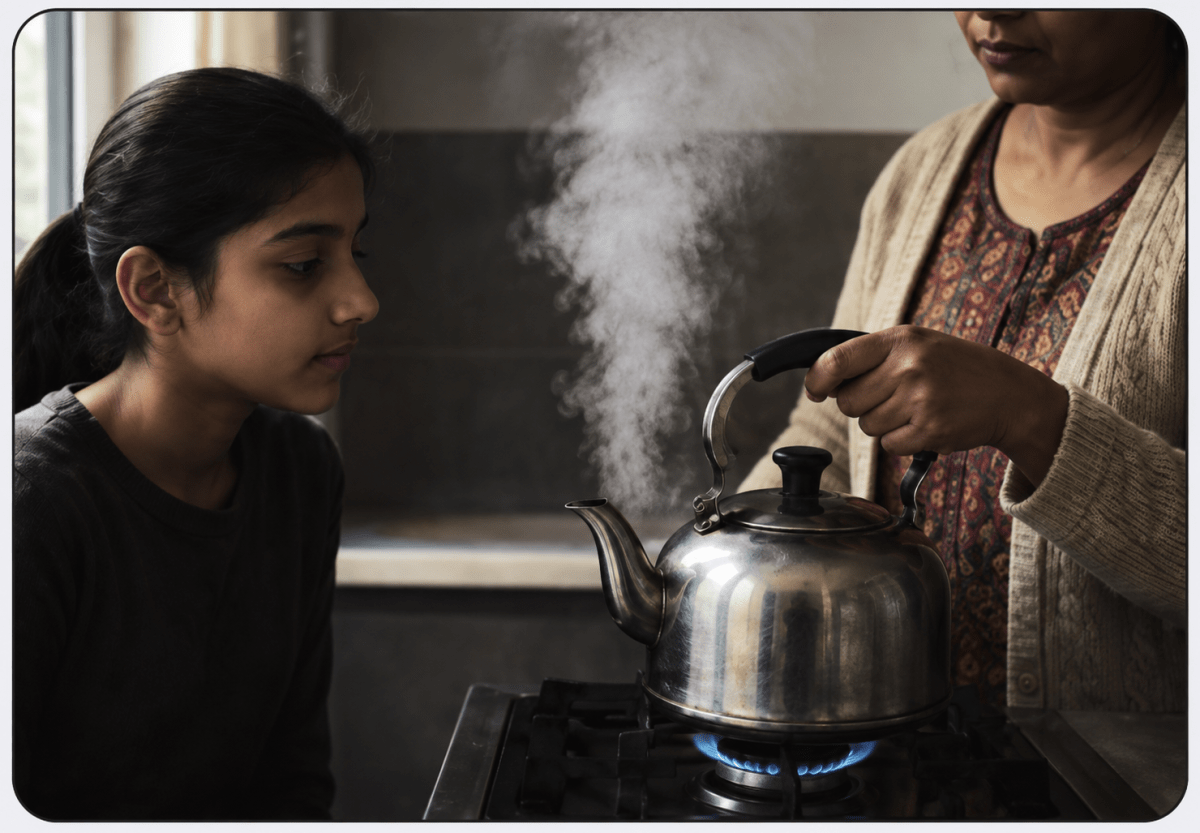
Later, she kept some water in a glass and placed it in the freezer. After a few hours, it became solid ice. She touched it and remembered how particles in solids are tightly packed, and in liquids, they move freely. Her curiosity helped her connect the boiling, freezing, and particle behaviour she observed in everyday life.
- What change of state did Amita observe while her mother was boiling water? Explain the particle behaviour during this process.
- Why did Amita observe a flat part on the heating curve during boiling, even though heat was still being added?
- What does the formation of steam from boiling water tell us about the molecular arrangement in gases?
- When Amita froze water in a glass, how did the molecular arrangement and motion of particles change from liquid to solid?
- Using the kinetic theory of matter, explain why the temperature must rise before water starts boiling.
Answer
Amita observed boiling (vaporisation) — the change of water from its liquid state to its gaseous state (steam). During this process, the water molecules gain kinetic energy on heating and move more vigorously. At the boiling point (100°C), they acquire enough energy to overcome the intermolecular forces of attraction, and vapour formation takes place throughout the liquid.
During boiling, the heat being supplied is used to do work against the intermolecular forces of attraction to separate the molecules and change the liquid into vapour, and not to raise the temperature. Therefore, the temperature remains constant and a flat part is seen on the heating curve until all the water changes into steam.
The formation of steam shows that in the gaseous state the molecules are very loosely packed, with large intermolecular distances and almost negligible intermolecular forces. The molecules become free to move and spread out into the available space, which is why steam escapes and fills the surrounding air.
On freezing, the water lost heat, so its molecules lost kinetic energy and moved slower. The molecules came closer together and the intermolecular distance decreased, while the intermolecular force of attraction increased. The freely moving molecules of the liquid became tightly packed and fixed in position, vibrating only about their mean positions, forming solid ice.
According to the kinetic theory, liquid molecules need enough kinetic energy to overcome intermolecular forces and change into the gaseous state. When water is heated, its temperature rises until it reaches the boiling point. At this point, the molecules have sufficient kinetic energy to overcome the intermolecular forces, and the water starts boiling.
Read the given information carefully and answer the questions that follow.
Three states of matter are commonly found on Earth: solid, liquid, and gas. These states take on forms that are easily observable, whether it's a coffee mug, the coffee inside it or the steam rising from it. You may also know about the fourth state of matter: plasma, which is found in sources like lightning, neon bulbs, and stars, including the sun.
In 1995, researchers made the ground-breaking discovery that there is a fifth state of matter: Bose-Einstein Condensates (BECs). Essentially, BECs are formed when particles are cooled to near absolute zero, causing them to coalesce into a single quantum object that acts as a wave in a relatively large packet.
Source: https://science.nasa.gov/biological-physical/stories/the-fifth-state-of-matter/
- Which is the fifth state of matter?
- How is it different from others?
- Where do we find plasma?
- What is its use?
Answer
The fifth state of matter is Bose-Einstein Condensates (BECs).
BECs are formed when particles are cooled to a temperature near absolute zero, causing them to coalesce (join together) into a single quantum object that behaves like a wave in a relatively large packet. This is unlike the common states of matter (solid, liquid and gas), whose particles do not behave as one single quantum entity.
Plasma is found in sources such as lightning, neon bulbs, and stars, including the sun.
Plasma is used in devices such as neon bulbs and other lighting, which glow due to plasma.
A heating graph shows a flat line between solid and liquid. Why doesn't the temperature rise during this time?
Answer
During this part, the solid is melting into a liquid. The heat supplied is used to do work against the intermolecular forces of attraction, to free the molecules from their fixed positions, and not to increase their kinetic energy. Since the temperature depends on the kinetic energy of the molecules, it does not rise, and a flat line is seen on the graph until all the solid has melted.
Water boils at 100°C, but it can evaporate below this temperature. Can you compare boiling and evaporation using particle behaviour?
Answer
In boiling, the whole liquid is heated to its boiling point (100°C for water), so all the molecules gain enough kinetic energy to overcome the intermolecular forces and change into vapour throughout the mass of the liquid. In evaporation, only the molecules at the surface of the liquid that have higher kinetic energy can overcome the pull of the other molecules and escape as vapour; this can happen at any temperature below the boiling point, which is why water can evaporate even when it is not boiling. Thus, boiling is a fast process that occurs throughout the liquid at a fixed temperature, while evaporation is a slow surface process that occurs at all temperatures.
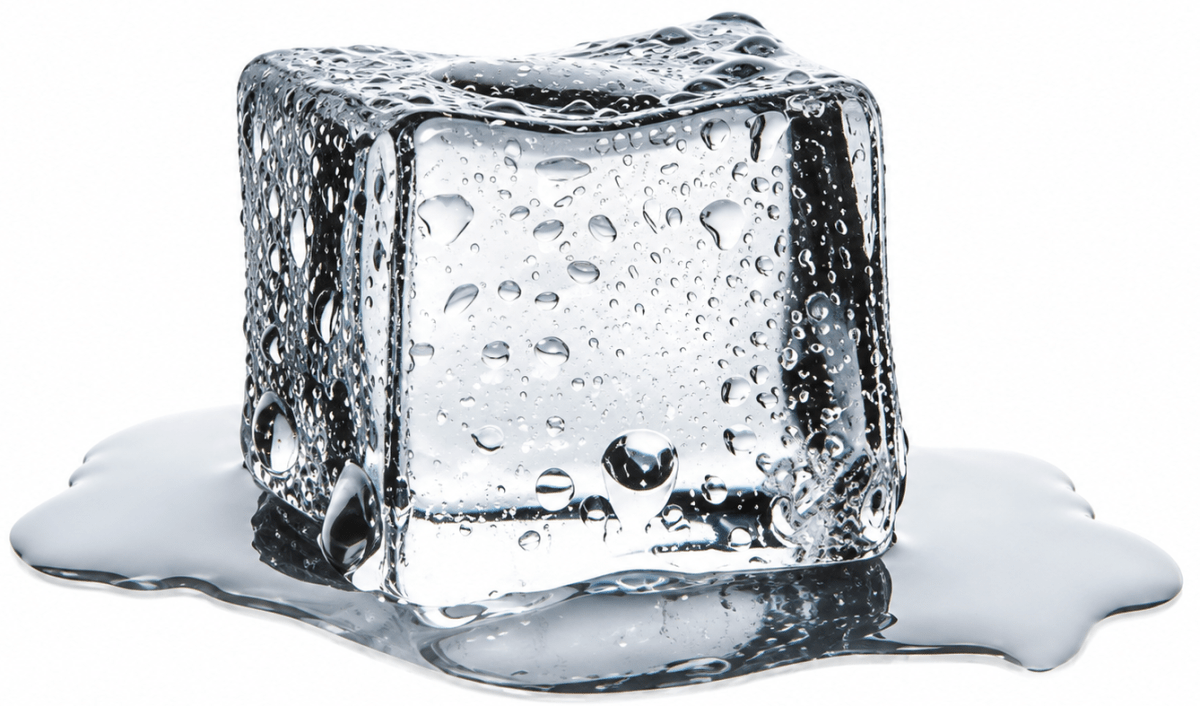
An ice cube melts at room temperature. Using what you know about particles, explain why this happens.
Answer
In an ice cube, molecules are tightly packed and only vibrate in fixed positions due to strong intermolecular forces. At room temperature, they absorb heat, gain energy, and vibrate more vigorously. When they overcome these forces, they move freely and ice melts into water.
A student thinks gases cannot be compressed. How would you explain, using particle arrangement, that gases can be compressed but solids cannot?
Answer
Gases can be compressed because their molecules are far apart with large intermolecular spaces and weak intermolecular forces. Solids cannot be compressed because their molecules are tightly packed with very little space between them.
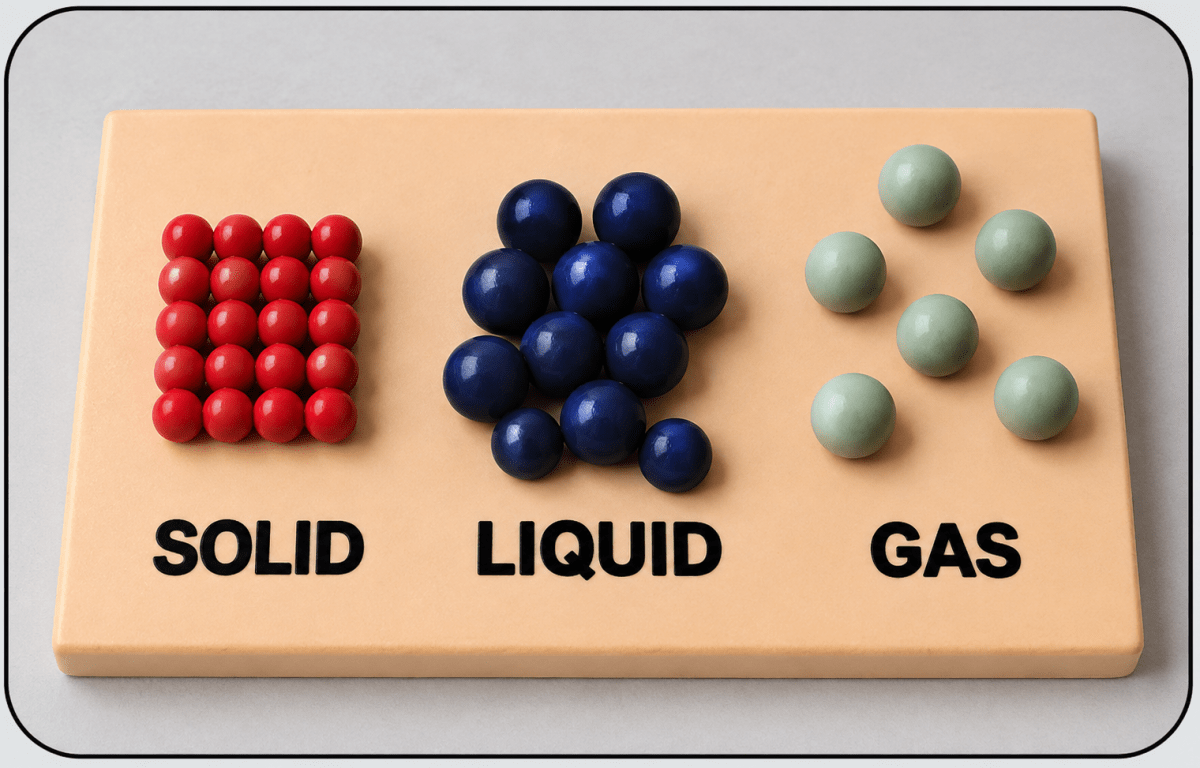
Design a simple model (using beads, marbles or clay) to show how particles are arranged in solids, liquids and gases.
Answer
To make this model, take small beads or marbles to represent the particles (molecules) of matter:
- Solid: Pack the beads very closely together in a neat, fixed pattern inside a small box so that they touch each other and cannot move from their places. This shows the tightly packed particles of a solid that only vibrate about fixed positions.
- Liquid: Place the beads in a wider container so that they are close but not fixed, with small spaces between them, and can slide over one another. This shows the loosely packed particles of a liquid that can move within the boundary of the container.
- Gas: Spread out only a few beads in a large box with large spaces between them. This shows the very loosely packed particles of a gas that are far apart and move freely.
Create a poster or slide show that shows the journey of water through solid, liquid and gas states with arrows and particle models for each change of state.
Answer
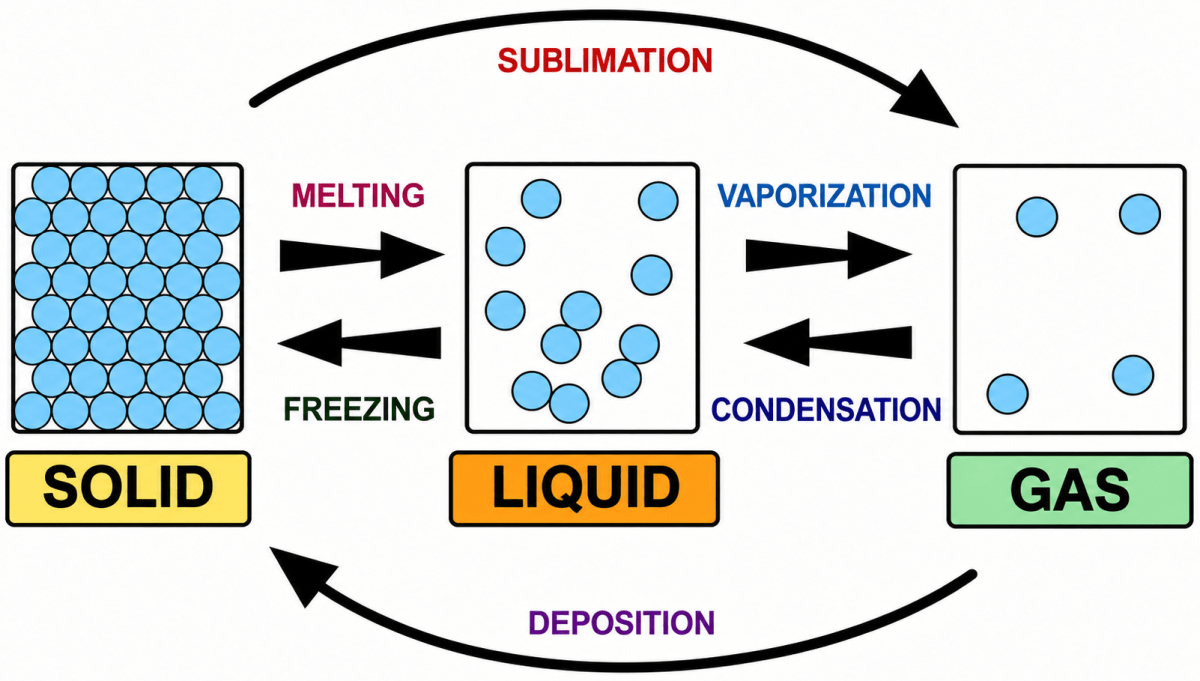
Palak kept an ice cube on a steel plate and another on a wooden tray. After a while, she saw that the ice on the steel plate melted faster. She wondered why that happened. In school, she had learnt that different materials conduct heat differently. Steel is a good conductor, so it quickly transfers heat to the ice, melting it faster. Wood is a poor conductor, so the ice on it melts more slowly.
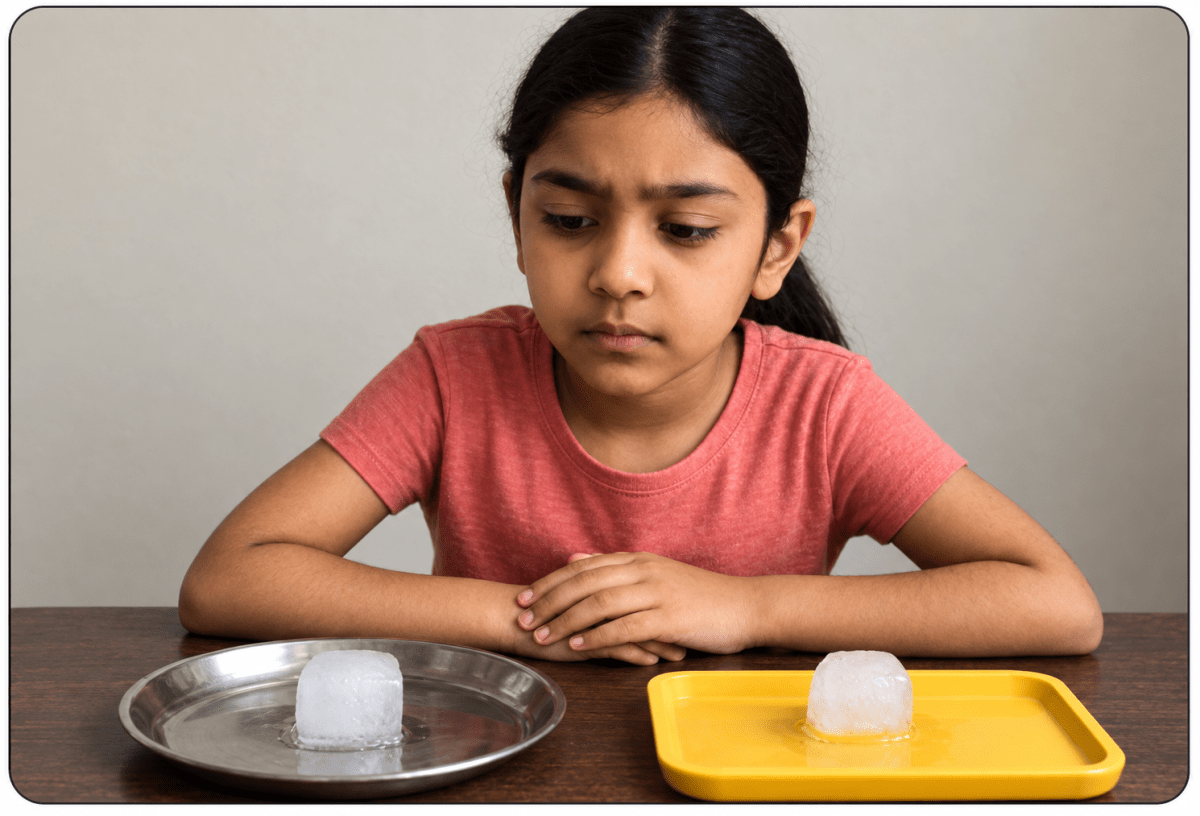
- Why did the ice melt faster on the steel plate?
- What property of wood caused the ice to melt slowly?
- How is this related to the concept of heat transfer?
- What might happen if Palak placed ice on a plastic tray?
- What conclusion can you draw about conductors and insulators from this activity?
Answer
Steel is a good conductor of heat, so it quickly transferred heat to the ice, providing the energy needed to melt it faster.
Wood is a poor conductor of heat (an insulator), so it transferred heat to the ice very slowly, causing the ice on it to melt more slowly.
Heat passes quickly through good conductors like steel and slowly through poor conductors like wood. Faster heat transfer makes ice melt faster.
Plastic is also a poor conductor of heat (an insulator), like wood. So the ice on a plastic tray would melt slowly, similar to the ice on the wooden tray.
Good conductors like steel allow heat to pass quickly, while insulators like wood and plastic allow heat to pass slowly. Hence, good conductors make ice melt faster.
Neeraj noticed that the kitchen window always got foggy when his mother boiled water. Curious, he looked closely and saw tiny water droplets forming on the glass. He learnt in the class that water vapour in the air comes into contact with the cool glass surface and changes back into water. This is called condensation — the reverse of evaporation.

- What caused the droplets to form on the window?
- What process turns steam back into water?
- What could Neeraj do to test whether the glass temperature affects condensation?
- What would happen if he used a hot window instead of a cool one?
- How could you use this observation to explain water's change of state in nature?
Answer
The water vapour present in the air came into contact with the cool surface of the glass window and changed back into tiny water droplets. This change of vapour into liquid is called condensation.
The process that turns steam back into water is condensation — the process in which a substance in its vapour or gaseous state changes back to its liquid state.
Neeraj could take two similar glass surfaces — one cooled and one at room temperature or warm — and hold both near the boiling water for the same time. By comparing the amount of water droplets formed on each, he can test which glass causes more condensation.
If the window were hot, the water vapour would not be cooled enough to condense, so very few or no water droplets would form on it. Condensation needs a cool surface to take place.
Water from Earth evaporates into vapour, rises up, and cools in the atmosphere. It then condenses into tiny droplets forming clouds, which later fall as rain—showing change of state between liquid and gas in nature.
Prabha left a balloon filled with air outside in the sun. After some time, she saw it had become bigger. She brought it inside, and it shrank. Prabha realized that the heat from the sun made the air particles inside move faster and spread out, causing the balloon to expand. When cooled, the particles moved slower and came closer together, making the balloon shrink.
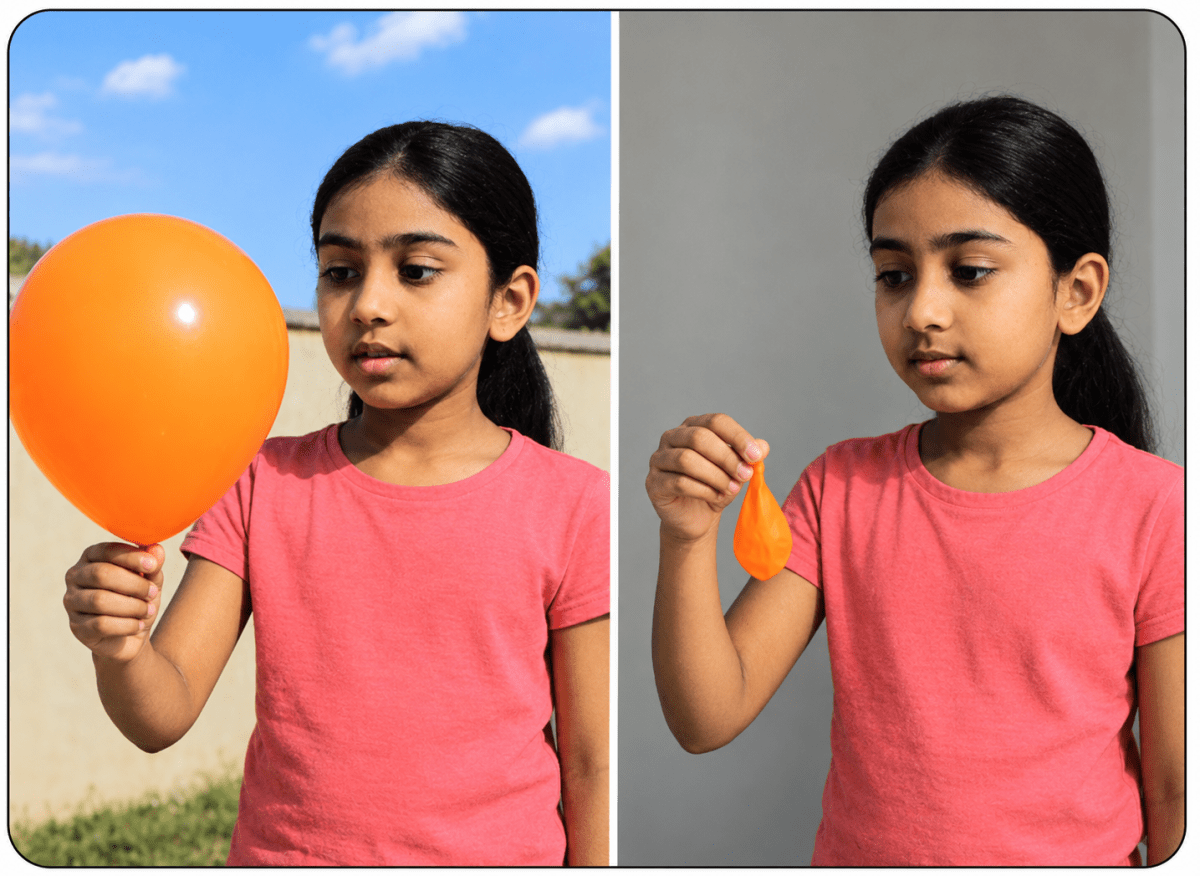
- What happened to the balloon when it was placed in the sun?
- Why did the balloon expand?
- What does this experiment show about air particles and heat?
- How did cooling the balloon affect the air inside?
- What would happen if you repeated the experiment with a water balloon?
Answer
The balloon expanded and became bigger when it was placed in the sun.
The heat from the sun increased the kinetic energy of the air particles inside the balloon, so they moved faster and spread further apart, causing the balloon to expand.
It shows that on heating, the particles of a gas gain kinetic energy, move faster and spread out, occupying more space. In other words, gases expand on heating.
On cooling, the air particles lost kinetic energy and moved slower, coming closer together. This reduced the space they occupied, so the balloon shrank.
Water expands very little on heating because its molecules are closely packed with moderate intermolecular forces. So, a water balloon expands much less in the sun than an air-filled balloon.
Manoj wanted to show how matter changes its state in nature. He built a simple model: a bowl of water (like the ocean), covered with plastic wrap, and placed under the sun. After a while, he noticed drops forming on the inside of the plastic. This showed evaporation, condensation and collection — similar to how rain forms in nature.
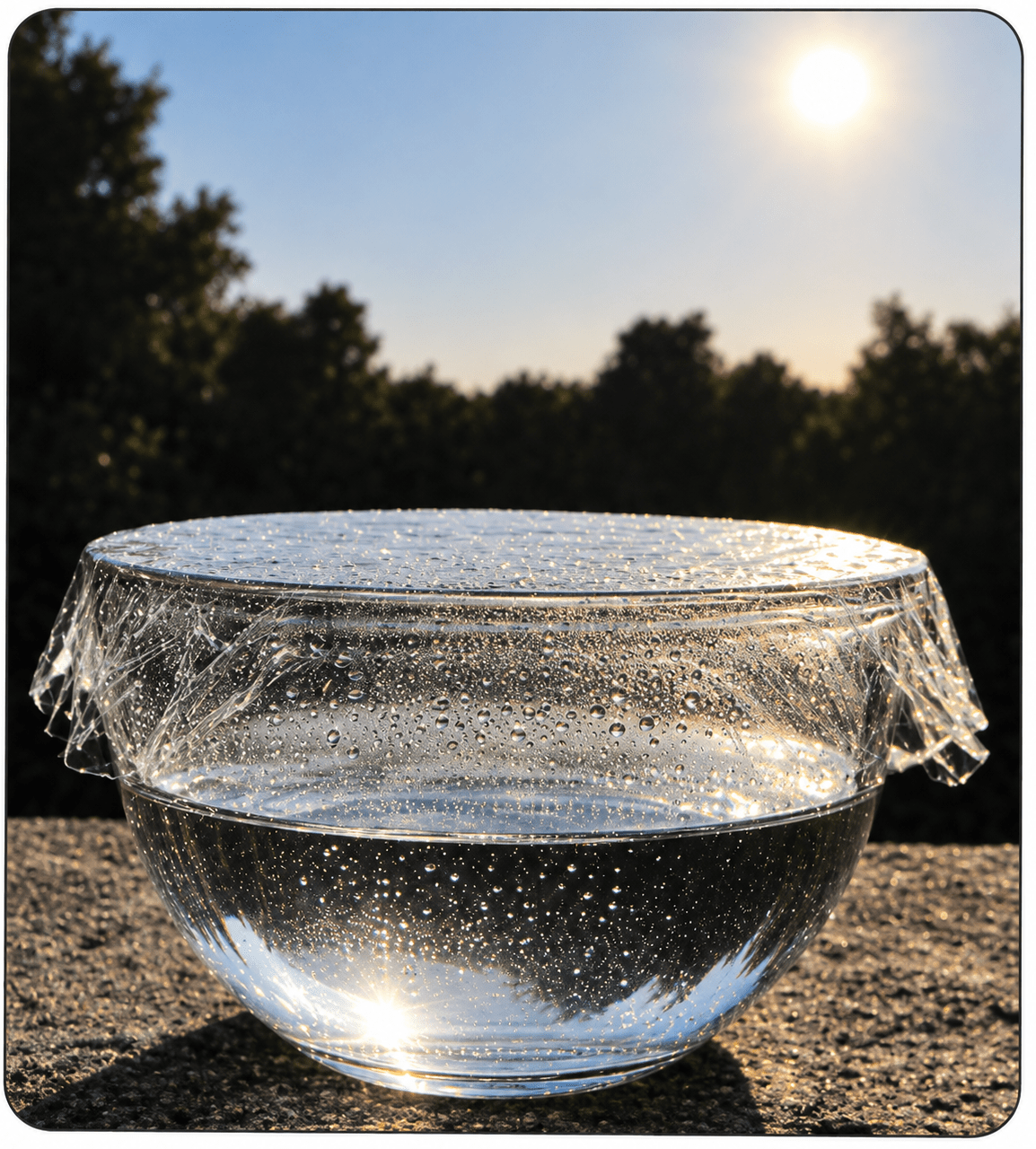
- What real-world process was Manoj trying to model?
- Which part of the setup represented evaporation?
- How did Manoj show condensation in his model?
- How is this model an example of changes in states of matter?
- Can you think of any improvements to his model to show precipitation?
Answer
Manoj was trying to model the water cycle in nature — how rain forms through evaporation, condensation and collection.
The bowl of water heated under the sun represented evaporation, as the water turned into water vapour by absorbing heat from the sun (just like the ocean).
Manoj showed condensation when water vapour hit the cool plastic wrap and turned into water droplets inside it.
In this model, liquid water changed into water vapour (gas) during evaporation, and the vapour changed back into liquid water during condensation. These are changes of state between the liquid and gaseous states of matter.
He could tilt the plastic wrap or place a small weight (like a pebble) at its centre so that the collected droplets gather and drip down into the bowl. This dripping would represent precipitation (rainfall) in the water cycle.
Fill in the blanks.
- Matter is anything that has ............... and occupies ............... .
- The smallest particle of an element which takes part in a chemical reaction is called an ............... .
- Molecules in solids are held together by strong ............... forces.
- Conversion of a solid directly into vapour without becoming liquid is called ............... .
- The process of a liquid changing into gas at all temperatures is called ............... .
Answer
Matter is anything that has mass and occupies space.
The smallest particle of an element which takes part in a chemical reaction is called an atom.
Molecules in solids are held together by strong intermolecular forces.
Conversion of a solid directly into vapour without becoming liquid is called sublimation.
The process of a liquid changing into gas at all temperatures is called evaporation.
Write True or False.
- Intermolecular space is maximum in solids.
- A liquid has a definite volume but no definite shape.
- The process of freezing is an example of a change of state.
- Gases have both definite shape and definite volume.
- Sublimation can be reversed by deposition.
Answer
False.
Corrected Statement — Intermolecular space is maximum in gases.True.
True.
False.
Corrected Statement — Gases have neither a definite shape nor a definite volume.True.
Match the columns.
| Column A | Column B |
|---|---|
| 1. Solid | (a) Weak intermolecular force |
| 2. Liquid | (b) Fixed shape and volume |
| 3. Gas | (c) Definite volume and no shape |
| 4. Melting | (d) Gas to liquid |
| 5. Condensation | (e) Solid to liquid |
Answer
| Column A | Column B |
|---|---|
| 1. Solid | (b) Fixed shape and volume |
| 2. Liquid | (c) Definite volume and no shape |
| 3. Gas | (a) Weak intermolecular force |
| 4. Melting | (e) Solid to liquid |
| 5. Condensation | (d) Gas to liquid |
Define matter with two examples.
Answer
Matter is anything that has mass and occupies space. For example, water and wood are matter.
State two differences between solids and liquids.
Answer
| Solids | Liquids |
|---|---|
| The molecules are tightly packed, so the intermolecular distance is very small. | The molecules are not very tightly packed, so the intermolecular distance is more. |
| Solids have a fixed shape and a definite volume. | Liquids have a definite volume but no fixed shape; they take the shape of the container. |
Why does a gas exert pressure on the walls of its container?
Answer
In a gas, molecules are loosely packed and move freely in all directions in continuous random motion. These fast-moving molecules constantly collide with the walls of the container, and the force of these collisions produces pressure on the walls of the container.
What is meant by intermolecular force?
Answer
Intermolecular force is the attractive force that the molecules of matter always exert on each other. This force is stronger when the molecules are close together and weaker when they are far apart.
Write two examples of substances that undergo sublimation.
Answer
Camphor and naphthalene are two substances that undergo sublimation.
Explain the kinetic theory of matter with suitable examples.
Answer
The kinetic theory of matter states that matter is composed of a large number of small particles, which are in constant motion. Its main ideas are:
- Matter is made up of tiny particles called molecules, which are very small in size (about 10-8 to 10-10 metre).
- These particles are always in continuous random (zigzag) motion. For example, the smell of perfume or an incense stick spreads throughout a room because of this motion of particles.
- The particles possess kinetic energy. On heating, they gain energy and move faster; on cooling, they move slower. For example, an ice cube melts when heated because its particles gain energy and move more freely.
- The particles exert an intermolecular force of attraction on each other, which is stronger when they are close together and weaker when they are far apart.
- There are spaces between the particles of matter. These intermolecular spaces are very small in solids, greater in liquids and largest in gases.
Describe with diagrams the arrangement of particles in solids, liquids and gases.
Answer
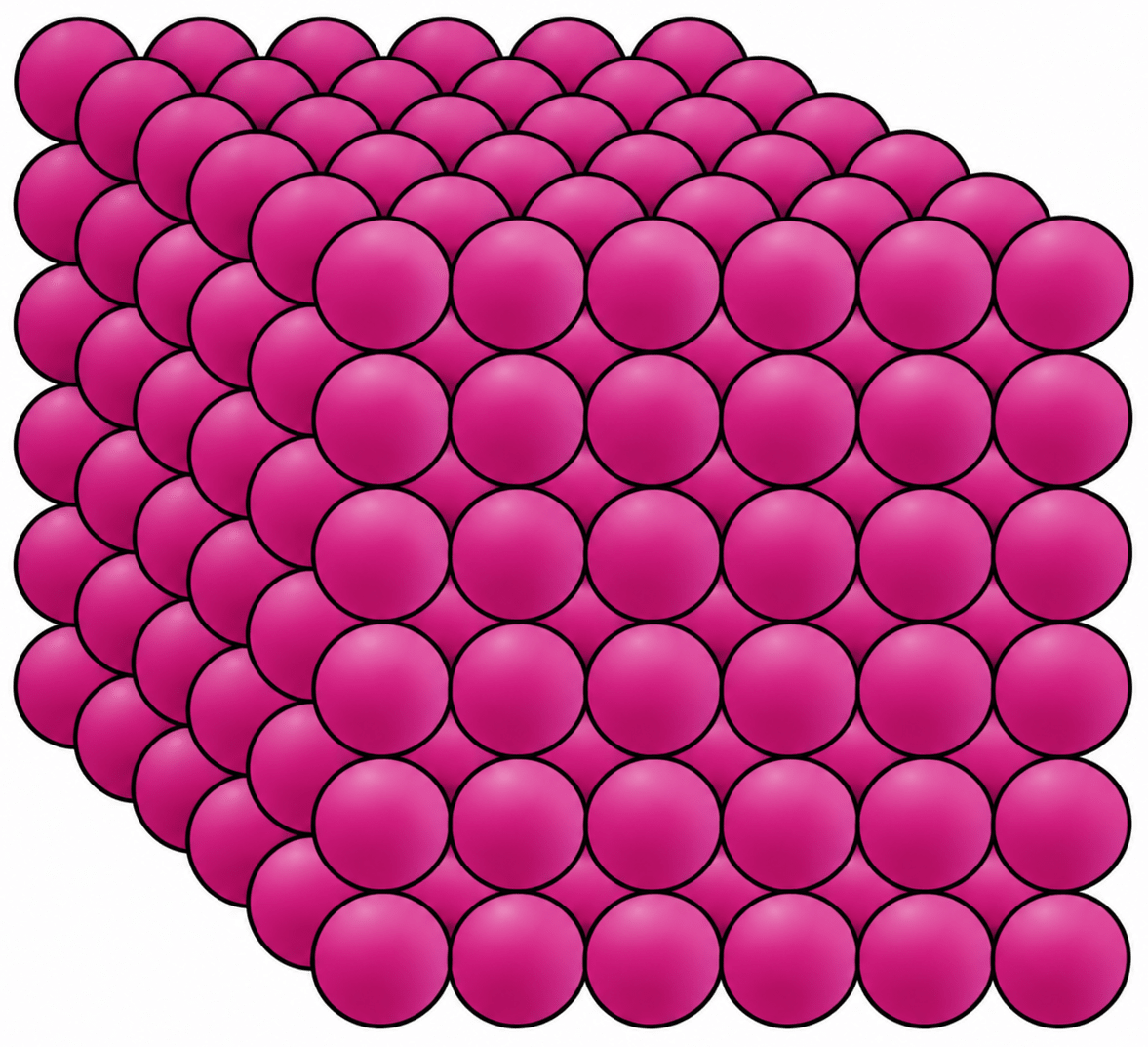
In solids, the particles are tightly packed in a fixed, orderly arrangement with very small intermolecular distance and strong intermolecular forces. They cannot move from their places and only vibrate about their fixed positions. Hence, solids have a fixed shape and volume.
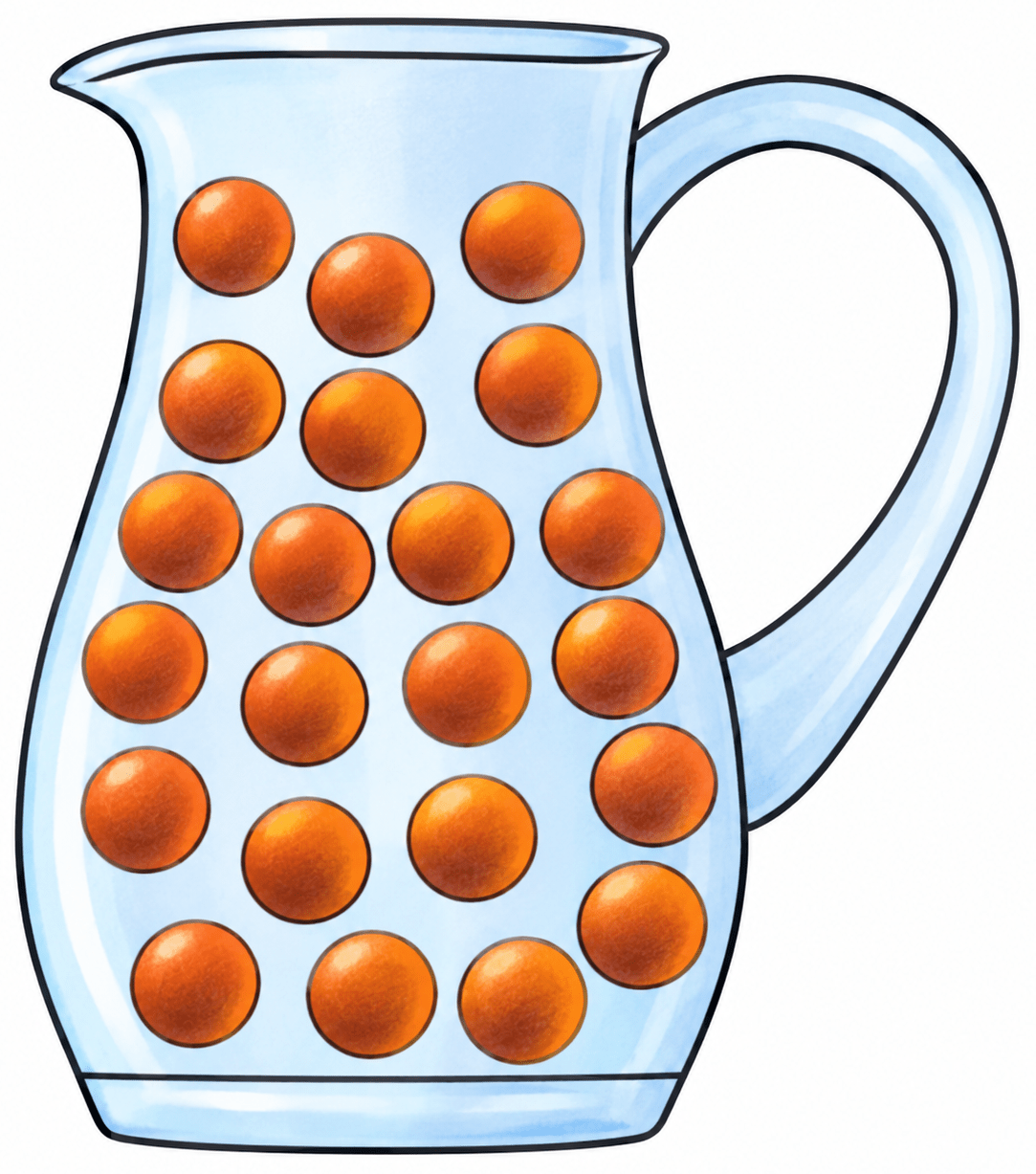
In liquids, the particles are less tightly packed, with more intermolecular distance and weaker forces than in solids. They are not fixed and can move within the boundary of the container. Hence, liquids have a definite volume but no fixed shape.
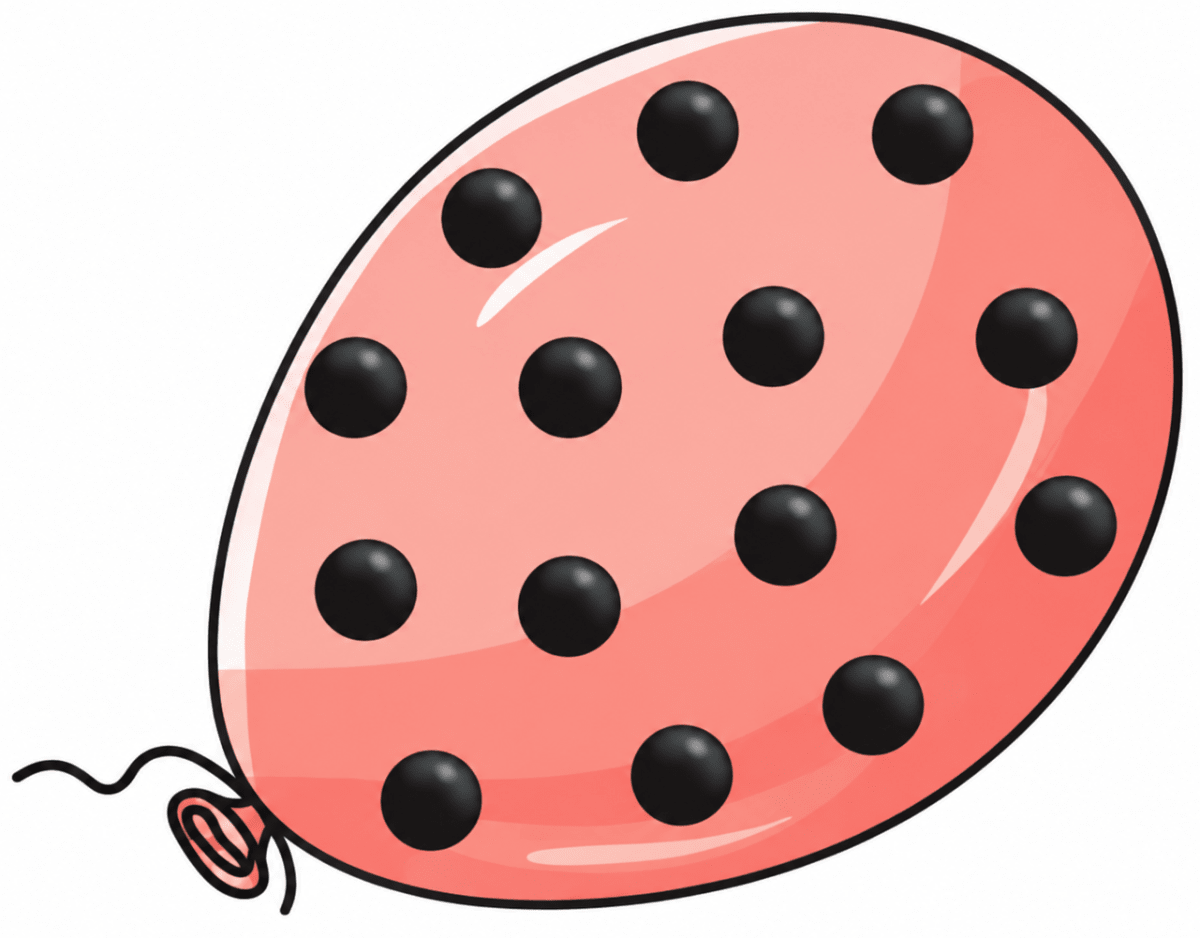
In gases, the particles are very loosely packed, with large intermolecular distance and almost negligible forces. They move freely in continuous random motion. Hence, gases have neither a fixed shape nor a fixed volume.
State the differences between evaporation and boiling. Mention two applications of each.
Answer
| Evaporation | Boiling |
|---|---|
| It is a slow process. | It is a fast process. |
| It occurs at all temperatures. | It occurs at a specific fixed temperature (boiling point). |
| It takes place only at the surface of the liquid. | It takes place throughout the mass of the liquid. |
| It causes a fall in the temperature of the surroundings. | The temperature of the surroundings remains constant. |
Applications of evaporation:
- The cooling of our body by the evaporation of sweat.
- The drying of wet clothes in the sun.
Applications of boiling:
- Boiling water to cook food and make tea.
- Boiling water to kill germs and make it safe for drinking.
What are intermolecular forces? Explain how they vary in solids, liquids and gases.
Answer
Intermolecular forces are the attractive forces that the molecules of matter always exert on each other. This force depends on the intermolecular distance — it is stronger when the molecules are close together and weaker when they are far apart.
- In solids, the molecules are very close together, so the intermolecular forces are the strongest. This gives solids a fixed shape and volume.
- In liquids, the molecules are a little farther apart, so the intermolecular forces are moderate (weaker than in solids). This allows liquids to flow and take the shape of their container while keeping a definite volume.
- In gases, the molecules are very far apart, so the intermolecular forces are the weakest (almost negligible). This allows gas molecules to move freely, so gases have neither a fixed shape nor a fixed volume.
Discuss the importance of change of state in our daily life (with at least three examples).
Answer
The change of state of matter is very useful in our daily life. Some examples are:
- Melting: Ice is melted into water for drinking and cooling, and metals are melted to mould them into different shapes and tools.
- Boiling: Water is boiled to cook food and to make it safe for drinking.
- Evaporation: The evaporation of sweat keeps our body cool.
- Freezing: Water is frozen into ice to make ice cubes and to preserve food in refrigerators.
- Condensation: The condensation of water vapour in the atmosphere forms clouds, which bring rain.