
Which of following features are depicted in this image?
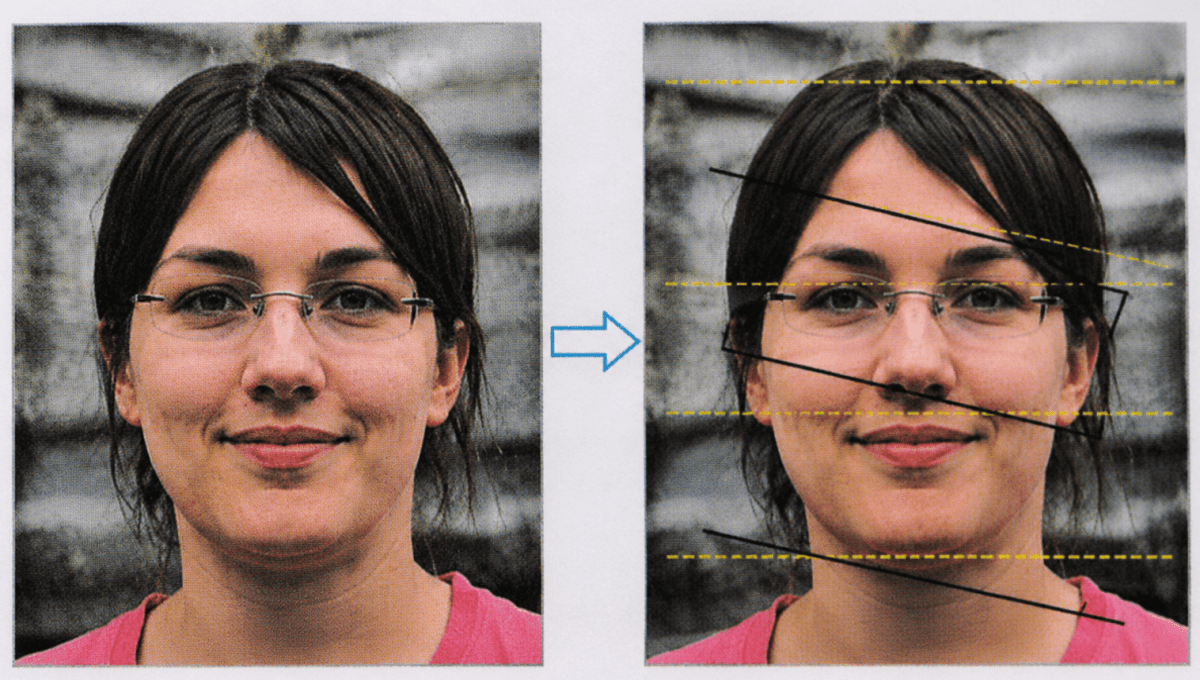
- Duplicate
- Deepfake
- Twins
- Copy and Paste
Answer
Deepfake
Reason — The image depicts a Deepfake, which refers to fake media created using AI techniques that employ deep learning algorithms to manipulate or generate images, audio or video content which look just like the original. Although both faces appear identical, one is real and the other is artificially fabricated.
Which of the following is most suitable for AI bias?
- It is a machine learning bias.
- It discriminates against certain individuals or groups.
- It exhibits unfairness.
- All of them
Answer
All of them
Reason — AI bias, also known as algorithmic bias or machine learning bias, refers to the tendency of artificial intelligence systems to exhibit unfairness or discrimination against certain individuals or groups. Hence, all the given options correctly describe AI bias.
Which of the following is the most appropriate where Amazon used a system for recruitment, created a situation in which many eligible females were left out of the consideration?
- Misinterpretation of Data
- Security
- Gender Bias
- Data Privacy
Answer
Gender Bias
Reason — Amazon's hiring algorithm was trained on resumes submitted over a 10-year period, which predominantly came from male candidates. As a result, the system downgraded resumes that included the word "women's" and favoured male-dominated language and experiences, leading to gender bias against female applicants.
Choose the odd man out:
- Robots
- Chatbots
- Superman
- Digital Assistants
Answer
Superman
Reason — Robots, Chatbots and Digital Assistants are all examples of AI-based systems that perform tasks using artificial intelligence, whereas Superman is a fictional superhero character and is not related to AI.
Which of the following is not true for AI in Unbiased Decisions?
- Performs tasks without emotions.
- Relying on practicality and rationality.
- The decision is given on face values.
- Performs accurate decision-making processes.
Answer
The decision is given on face values.
Reason — AI in unbiased decisions performs tasks without emotions, relies on practicality and rationality, and performs accurate decision-making processes. Therefore, “The decision is given on face values” is not true for AI in unbiased decisions.
State whether the following statements are True or False:
- AI systems are reliable, robust and hardy to failures or malicious attacks.
- The chatbots are AI programs designed to simulate conversation with users.
- The presence of emotional bias is a substantial advantage of AI.
- We should be partial to listen the feedback to minimise AI bias for improvement.
- The AI system only performs the tasks exactly what they made for.
- AI systems are biased because they take decisions from the data and training material provided to them.
Answer
- False
Corrected Statement: AI systems are susceptible to failures and malicious attacks that can compromise their outcomes. - True
- False
Corrected Statement: The absence of emotional bias is a substantial advantage of AI. - False
Corrected Statement: We should be impartial to listen the feedback to minimise AI bias for improvement. - False
Corrected Statement: AI systems can learn from data and make decisions based on training and algorithms. - True
Assertion (A): AI ethics refers to the moral principles and values that govern the development in use of artificial intelligence technologies.
Reason (R): It ensures that the utilisations are fair, transparent, accountable and beneficial to individuals and society.
Based on the above discussion, pick an appropriate statement from the options given below:
- Both A and R are true and R is the correct explanation of A.
- Both A and R are true and R is not the correct explanation of A.
- A is true but R is false.
- A is false but R is true.
- Both A and R are false.
Answer
Both A and R are true and R is the correct explanation of A.
Reason — AI ethics refers to the moral principles, guidelines and values that govern the development, deployment and use of AI technologies. It ensures that AI systems are fair, transparent, accountable and beneficial to both individuals and society, which is the purpose of AI ethics. Hence, R correctly explains A.
Amazon's hiring algorithms were developed in 2014. The intention was to create a tool that could automate the recruitment process by efficiently reviewing and ranking job applicants' resumes. However, it became apparent that the system was biased against female candidates. The AI had been trained on resumes submitted over a ten-year period, which predominantly came from men, leading the algorithm to favour male-dominated language and experiences. Due to these issues, Amazon ultimately scrapped the use of this particular AI hiring tool in 2017.
In which of the following AI ethical issue, it belongs?
- Accountability
- Security
- Privacy
- Bias and Fairness
Answer
Bias and Fairness
Reason — Amazon's hiring algorithm was trained primarily on resumes from male candidates over a 10-year period, which led the system to favour male-dominated language and downgrade female applicants. This is an example of gender bias and unfairness in AI, which falls under the ethical issue of Bias and Fairness.
Write short notes on AI Ethics.
Answer
AI ethics refers to the moral principles, guidelines and values that govern the development, deployment and use of artificial intelligence technologies. It aims to ensure that AI systems are created and used in ways that are fair, transparent, accountable and beneficial to both individuals and society. It also addresses critical issues such as bias, privacy, impact on employment and human rights, ensuring that AI is developed responsibly for the greater interest of the people.
Write short notes on Unbiased Decision.
Answer
Unbiased decision-making in AI refers to the ability of AI systems to perform tasks without emotions, relying on practicality and rationality. AI systems perform accurate decision-making processes without personal prejudice. However, AI does not inherently perform unbiased decisions, as it is liable to biases present in the training data or introduced through the design process. Therefore, ensuring unbiased AI decisions requires careful data selection, algorithm development and continuous monitoring.
Write short notes on Deepfake.
Answer
Deepfake refers to the fake media created using AI techniques, often employing deep learning algorithms to manipulate or generate images, audio or video content which look just like original. These sophisticated technologies can apply faces onto existing footage, allowing for the creation of highly realistic but entirely fabricated content. Deepfake can deceive and manipulate viewers, leading to issues such as misinformation, identity theft and privacy violations. It can also bypass voice and facial recognition, leading to significant implications and security risks.
Write short notes on AI Bias.
Answer
AI bias, also known as algorithmic bias or machine learning bias, refers to the tendency of artificial intelligence systems to exhibit unfairness or discrimination against certain individuals or groups. This bias arises when the data used to train AI models contains systematic errors or reflects societal prejudices, leading the algorithms to produce biased results. The biases may unconsciously transfer from the developer to the machine during the algorithm's development process. For example, a facial recognition algorithm trained mostly on fair-complex individuals may struggle to identify dark-complex individuals correctly.
"AI has no Ethics and Emotions." Comment.
Answer
AI systems do not possess inherent ethics or emotions; they perform tasks based on the data, algorithms and programming provided to them. Unlike humans, AI cannot distinguish between right and wrong on its own. While the absence of emotions allows AI to make decisions based on rationality and practicality, AI relies entirely on the quality and fairness of its training data. If the data is biased or the algorithms are flawed, AI may produce unethical or discriminatory outcomes. Therefore, ethical guidelines and fairness are important while designing AI systems.
Enlist any five ethical issues.
Answer
The five major ethical issues in AI are as follows:
- Job Displacement/Unemployment — Automation through AI is replacing certain job roles, leading to higher unemployment in various industries.
- Privacy — AI models require massive amounts of data, raising concerns about how personal data is collected, processed and stored.
- Bias — AI systems can exhibit unfairness or discrimination against certain individuals or groups due to biased training data.
- Security — AI systems are susceptible to malicious attacks that can compromise their outcomes.
- Accountability — When AI decisions result in negative outcomes, it becomes challenging to determine who is responsible — the company, the developer or the user.
In what ways you can minimise AI Bias? Explain.
Answer
We can minimise AI bias in the following ways:
- Listen to Feedback — We should be impartial to listen to the feedback and assess overall experience to identify the areas for improvement. If required, changes can be made to tailor the model as per the users' needs.
- Review Training Data — Excessive data can intensify biases within the model. Therefore, it is imperative to carefully curate and review the data before input is fed into the model.
- Maintain Quality Assurance — By actively monitoring and promptly addressing the problems, we can ensure that unintended bias does not diminish the integrity and reliability of the ML model, fostering trust in its outcomes.
Job displacement is a significant concern that comes in discussions about AI ethical issues. Comment.
Answer
Job displacement is one of the most significant ethical concerns associated with AI. There is a widespread fear that automation will replace certain job roles or aspects of jobs, leading to higher unemployment rates in various industries. According to a business report, every 3 out of 4 workers are very or somewhat concerned about the impact of automated technologies on the workforce. However, this concern can be addressed through proactive measures such as reskilling and upskilling programs, education initiatives and policies to support workers transitioning into new roles. By preparing the workforce for the changes brought about by AI, it is possible to mitigate these negative impacts and leverage AI advancements to create new job opportunities and economic growth.
Security is a top priority in AI and all branches of computer science. Justify.
Answer
Security is considered a top priority in AI and all branches of computer science because negligence in security can have wide-ranging impacts. AI systems are susceptible to malicious attacks that can compromise their outcomes and lead to serious consequences. For instance, the Cybersecurity Infrastructure and Security Agency (CISA) has documented cases where attacks caused mischief in autonomous vehicles, hidden from security camera footage. Moreover, AI systems often handle sensitive personal data, and any breach can result in privacy violations and identity theft. Therefore, experts and governmental entities continuously call for enhanced security measures to safeguard AI systems against potential threats and to mitigate their harmful effects on society.
Explain the following AI bias in brief:
(a) Healthcare Algorithm
(b) Amazon's Hiring Algorithm
Answer
(a) Healthcare Algorithm: It is a Racial Bias. A study published in Science revealed that an algorithm used to predict which patients would benefit from additional medical care was less likely to recommend Black patients compared to white patients. The bias arose because the algorithm used healthcare spending as a proxy for health needs. Due to systemic inequities, less money is spent on Black patients despite their higher health needs, leading the algorithm to underestimate their requirement for medical care.
(b) Amazon's Hiring Algorithm: It is a Gender Bias. Amazon developed a hiring algorithm that was found to be biased against women. The algorithm, trained on resumes submitted over a 10-year period, downgraded resumes that included the word "women's". As a result, most selected applicants were men due to the male dominance in the tech industry. This occurred because the system was trained primarily on resumes from male candidates, reflecting the male-dominated tech industry.