
The Renaissance marked a period of significant cultural, economic, and intellectual revival in Europe. Analyse the factors that contributed to the beginning of the Renaissance:
(i) Decline of feudalism
(ii) Capture of Constantinople by the Turks
(iii) Discovery of trade routes
- Only I
- I and II
- II and III
- I, II, and III
Answer
I, II, and III
Reason — The decline of feudalism encouraged free and fearless thinking, the capture of Constantinople by the Turks led to the revival of Greek learning in Italy, and the discovery of new trade routes broadened the outlook of Europeans and promoted the spirit of the Renaissance. Hence, all three factors contributed to the beginning of the Renaissance.
Who was the painter of the Last Supper and Mona Lisa?
- Michelangelo
- Leonardo da Vinci
- Giotto
- Cimaleue
Answer
Leonardo da Vinci
Reason — Leonardo da Vinci was a versatile genius of Florence, Italy, whose famous works, including the Mona Lisa and The Last Supper, showed his skill in using colour, light, and detail to mix beauty and realism.
Who is credited with the discovery of America in 1492?
- Vasco da Gama
- Bartholomew Diaz
- Christopher Columbus
- Prince Henry
Answer
Christopher Columbus
Reason — Christopher Columbus discovered America in 1492 during his westward voyage across the Atlantic Ocean.
Who proved that the Earth moves around the Sun?
- Roger Bacon
- Copernicus
- Galileo
- Leonard da Vinci
Answer
Copernicus
Reason — Copernicus proved that the Earth moves round the Sun, challenging the traditional belief that the Earth was the centre of the universe.
Who were renowned dramatists?
- Shakespeare, Marlowe, Tasso
- Shakespeare, Tasso, Ariosto
- Shakespeare, Marlowe, Ben Jonson
- Shakespeare, Ben Jonson, Tasso
Answer
Shakespeare, Marlowe, Ben Jonson
Reason — Shakespeare, Ben Jonson and Marlowe were the renowned dramatists of the Renaissance period. Tasso and Ariosto were poets of Italy and not dramatists, which rules out the other options.
Who authored the famous book Utopia, which describes an ideal society?
- Chaucer
- Boccaccio
- Tasso
- Thomas More
Answer
Thomas More
Reason — Thomas More was the author of Utopia, in which he described an imaginary island having an ideal society that was devoid of all evils.
"The word 'Renaissance' means 'rebirth' or revival." Which of the following statements correctly describes this period?
- It led to the revival of the study of Greek and Roman classics.
- The Renaissance stood for a creative and adventurous spirit which touched all fields of human thought and activity.
- It led to the revival of feudalism.
- It led to the discovery of new trade routes.
Answer
It led to the revival of the study of Greek and Roman classics.
Reason — The word Renaissance means 'rebirth' or revival, and it led to the revival of the study of the Greek and Roman classics. The revival of feudalism is incorrect as feudalism actually declined during the Renaissance, and the discovery of new trade routes was a cause of the Renaissance rather than a description of its meaning.
Read the two statements given below about the Renaissance and select the option that shows the correct relationship between (A) and (B):
(A): The Renaissance marked the beginning of modern science, emphasising observation and experimentation over reliance on scripture.
(B): Roger Bacon advocated original thinking and scientific enquiry, fostering a spirit of innovation that led to transformative inventions and discoveries.
- (B) contradicts (A).
- (B) is the reason for (A).
- (A) is true, but (B) is false.
- (A) and (B) are independent of each other.
Answer
(B) is the reason for (A).
Explanation — Both statements are true. Roger Bacon's advocacy of original thinking and scientific enquiry fostered a spirit of innovation, which is exactly what made the Renaissance the beginning of modern science based on observation and experimentation rather than reliance on scripture. Hence (B) is the reason for (A).
Which group of people benefited the most from the decline of feudalism?
- Kings and nobility
- Peasants, craftsmen, and traders
- Priests and monks
- Landowners and feudal lords
Answer
Peasants, craftsmen, and traders
Reason — The decline of feudalism gave freedom to the peasants, craftsmen and traders and developed in them a spirit of free thinking; hence they benefited the most from it.
Identify the reasons for the major impact of geographical exploration during the Renaissance.
P: Advances in science enabling new trade routes
Q: Increased global isolation and limited exploration
R: Creation of new trade links between Europe and the East
S: Restriction of trade to European countries only
- P and Q
- P and R
- Q and S
- R and S
Answer
P and R
Reason — Advances in science enabled Europeans to discover new trade routes (P), and these explorations created new trade links between Europe and the East (R). Statements Q and S are incorrect, as geographical exploration reduced isolation and expanded trade rather than causing isolation or restricting trade.
Which of the following statements correctly describes the significance of the given picture?
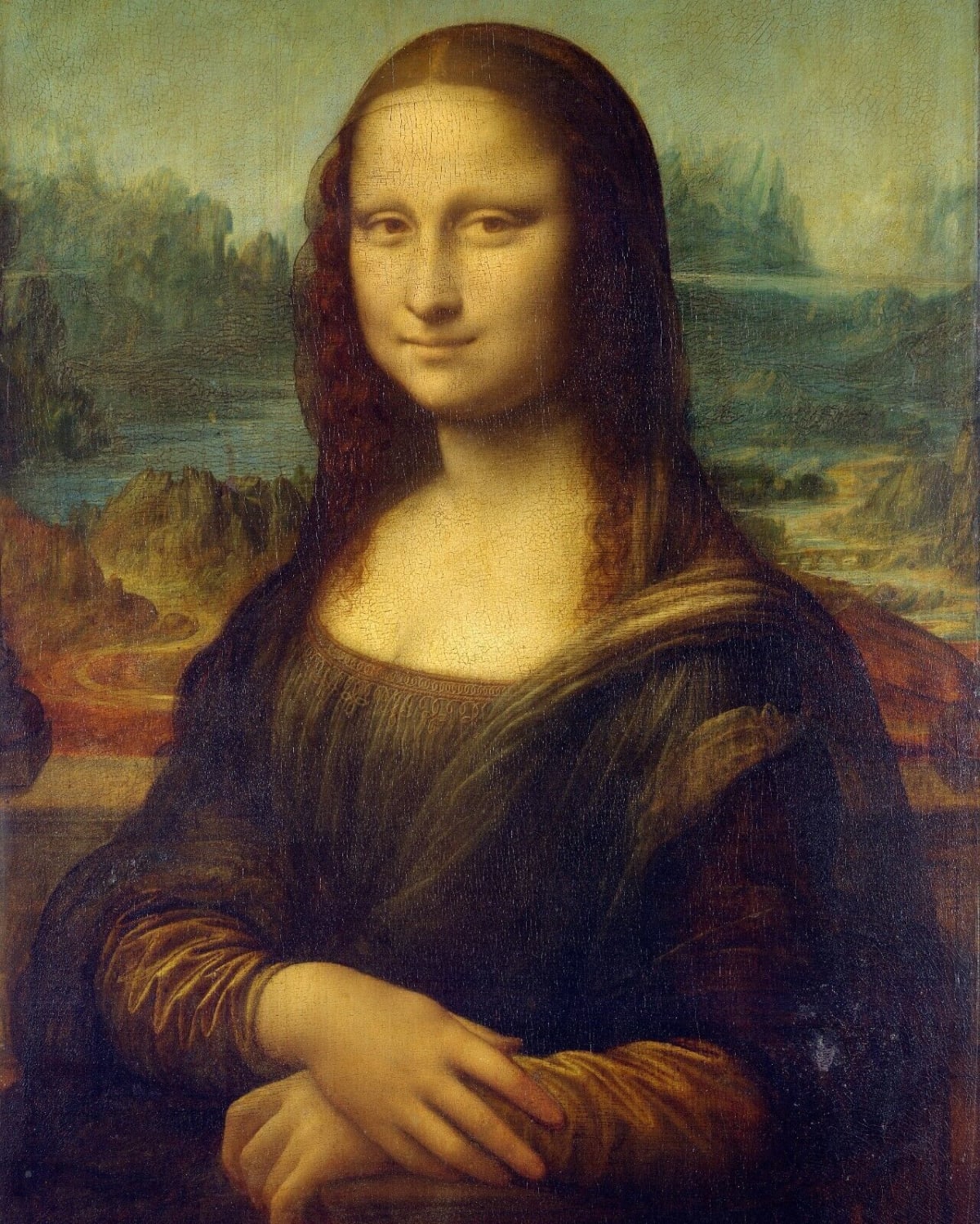
- The painting represents Leonardo da Vinci's belief in the connection between art and science.
- The painting showcases da Vinci's study of religious symbolism in the Renaissance.
- The painting demonstrates da Vinci's use of light, shadow, and detail to achieve realism.
- The painting reflects da Vinci's architectural skills.
Answer
The painting demonstrates da Vinci's use of light, shadow, and detail to achieve realism.
Reason — The picture is Leonardo da Vinci's The Last Supper, which shows his skill in using colour, light, and detail to mix beauty and realism.
Consider the two statements given below and select the option that shows the correct relationship between (A) and (R).
Assertion (A): Galileo was not only an astronomer but also a great physicist.
Reason (R): Apart from telescope, he also invented hydrostatic balance.
- Both (A) and (R) are true, and (R) is the correct explanation of (A)
- Both (A) and (R) are true, but (R) is not the correct explanation of (A)
- (A) is true but (R) is false
- (A) is false but (R) is true.
Answer
Both (A) and (R) are true, and (R) is the correct explanation of (A)
Explanation — Both statements are true. Apart from improving the telescope, Galileo invented the thermometer and the hydrostatic balance and laid the foundation of modern dynamics, which shows that he was a great physicist and not merely an astronomer. Hence (R) correctly explains (A).
Consider the two statements given below and select the option that shows the correct relationship between (A) and (R).
Assertion (A): Michelangelo was a man of many talents.
Reason (R): He was a painter, sculptor, architect as well as a poet.
- Both (A) and (R) are true, and (R) is the correct explanation of (A)
- Both (A) and (R) are true, but (R) is not the correct explanation of (A)
- (A) is true but (R) is false
- (A) is false but (R) is true.
Answer
Both (A) and (R) are true, and (R) is the correct explanation of (A)
Explanation — Both statements are true. Michelangelo was a painter, sculptor, architect as well as a poet, which is exactly why he is described as a man of many talents. Hence (R) correctly explains (A).
Which empire had Constantinople as its capital, and when was it captured by the Turks?
Answer
Constantinople was the capital of the Eastern Roman Empire and it was captured by the Turks in 1453 CE.
What is Feudalism?
Answer
Feudalism was a medieval European system based on land tenure, where everyone, from the king to the serf, had obligations to a higher authority. Society was rigidly structured, with little opportunity for social mobility, and opposed freedom and equality.
Name two sculptors of the Renaissance period and one creation by each.
Answer
Two sculptors of the Renaissance period are —
- Donatello — St. George
- Michelangelo — Statues of Moses
Read the following excerpt and answer the question that follows:
"The invention of the printing press also played a role in the emergence of the Renaissance in the continent and in England."
(Source: https://egyankosh.ac.in/bitstream/123456789/22151/1/Unit-8.pdf)
When and where was the printing press invented?
Answer
The first printing press was set up in Germany in 1465 CE by Gutenberg.
Who invented the telescope?
Answer
Italian scientist, Galileo (1564—1642 CE) invented telescope.
Name any two original thinkers who are called forerunners of Renaissance.
Answer
Roger Bacon and Thomas Aquinas were called the forerunners of the Renaissance period.
Write the names of any three writers of the Renaissance period.
Answer
Three writers of the Renaissance period are — Machiavelli, Petrarch, and Boccaccio.
Read the following excerpt and answer the question that follow:
"The period produced many other giants in science and great discoveries and inventions were made."
(Source: https://egyankosh.ac.in/bitstream/123456789/12890/1/Unit-7.pdf)
Which key inventions of the Renaissance era laid the foundation of modern science?
Answer
Telescope, microscope, printing press, and mariner's compass were the important inventions of the Renaissance era that laid the foundation of modern science.
Read the following excerpt and answer the questions that follow:
"The Renaissance thinkers attacked scholasticism saying that it fed on itself, with its circular reasoning within a close system in which the basic premises bore no relation to reality. They asserted that knowledge could be gained by going out and studying mentally and manually the Book of Nature."
(Source: https://egyankosh.ac.in/bitstream/123456789/12890/1/Unit-7.pdf)
(a) Who were some original thinkers that influenced the Renaissance?
(b) How did these original thinkers contribute to the Renaissance?
Answer
(a) Abelard, Roger Bacon, and Thomas Aquinas were some original thinkers that influenced the Renaissance.
(b) The original thinkers revolutionised thought and laid a great stress on the spirit of enquiry, reasoning, independent thinking and scientific investigation. The spirit of enquiry, original and free thinking gave great impetus to the Renaissance movement.
What themes were commonly depicted in Renaissance art? Explain how the Renaissance era shaped the development of art history.
Answer
The themes commonly depicted in Renaissance art were moral virtues, mysteries of the faith, naturalism and humanism.
The Renaissance era greatly shaped the development of art history by marking a shift from the religious focus of the Middle Ages to a more human-centered and realistic approach. Artists embraced humanism to create real and lifelike figures. The Renaissance also elevated the status of the artist from craftsman to creative genius, with figures like Leonardo da Vinci and Michelangelo influencing generations. As a result, the Renaissance laid the groundwork for modern art history, emphasizing observation, individuality, and artistic innovation.
Name any two sailors of the Renaissance period and one each of their discoveries.
Answer
Two sailors of the Renaissance period are:
- Vasco da Gama — First to reach India by sea, opening a direct maritime route from Europe to Asia.
- Christopher Columbus — Discovered the Americas.
How did Renaissance lead to geographical explorations? Give only one cause.
Answer
The Renaissance revived interest in learning and discovery, which inspired explorers to seek new trade routes and lands.
Read the following excerpt and answer the questions that follow:
"The Renaissance literature in modern European languages was marked by significant changes in style and theme. Initially, the tendency was towards copying the Latin literary style. Its first impact was felt in poetry where the imitation of court poets was given up and new rhymes were adopted with themes which were increasingly secular." (Source: https://egyankosh.ac.in/bitstream/123456789/12890/1/Unit-7.pdf)
(a) How did Renaissance literature differ from that of the Middle Ages?
(b) What language did Renaissance writers use for their works?
Answer
(a) In the Middle Ages, literature was primarily dominated by religion and written in Latin. However, Renaissance writers shifted focus to humanity, nature, and the interests of the individual. They became more concerned with the present world rather than the afterlife, as was common among scholars of the Middle Ages.
(b) During the Middle Ages most of the writings were in Latin but the writers of the Renaissance era used the common languages of the people (i.e., vernaculars) and the language of the people became the language of literature.
How did the victory of the Turks over Constantinople play a part in the rise of Renaissance?
Answer
In the year 1453 CE, Constantinople fell into the hands of the Turks. Many Greek writers were thus forced to shift to Rome with their manuscripts. Rome then became the centre of the Greek culture. They began to spread Greek knowledge and culture and in this way revived the interest of the people in the study of Greek philosophy, science, art and literature. The revival of the learning of Greek classics paved the way for the Renaissance.
How did Renaissance architecture differ from the Gothic style? Name two secular Renaissance architectural masterpieces.
Answer
Renaissance architecture differed from the Gothic style by drawing inspiration from classical Greek and Roman architecture, using features like domes, Greek porches, and pillars instead of Gothic elements.
Two secular Renaissance architectural masterpieces are the Pitti Palace in Florence and the Farnese Palace in Rome.
With reference to The Renaissance in Italy in the 14th century, answer the following questions:
(a) Describe the key causes of the Renaissance and how they contributed to this cultural revival.
(b) Discuss the impact of the Renaissance on art, literature, and science, citing specific examples.
(c) How did the Renaissance challenge traditional views and lay the foundation for modern thought?
Answer
(a) The key causes of the Renaissance are:
- Capture of Constantinople (1453): Greek scholars fled to Rome with valuable manuscripts, reviving interest in Greek philosophy, science, and art.
- Decline of Feudalism: Freed peasants and traders encouraged free thinking and devoted time to art and literature.
- Original Thinkers: Scholars like Abelard and Thomas Aquinas promoted enquiry and independent thinking, challenging the Church’s authority.
- New Trade Routes: Explorers like Vasco da Gama and Columbus found new sea routes, expanding Europe’s outlook and reducing blind faith.
- Printing Press: Gutenberg’s invention made books affordable, spreading knowledge and boosting education.
- Spirit of Enquiry: Scientific advances by Leonardo, Copernicus, and Galileo challenged old beliefs, broadening mental horizons.
(b) Impact of Renaissance on Art — Renaissance art shifted from the religious focus of the Middle Ages to naturalism and humanism. Artists emphasized beauty, grace, harmony, and lifelike forms. Painters like Leonardo da Vinci created masterpieces such as Mona Lisa and The Last Supper, combining beauty and realism. Michelangelo’s frescoes on the Sistine Chapel ceiling and his sculptures like David showcased grandeur and deep emotion. Architects like Alberti and Michelangelo discarded Gothic styles for classical Greek and Roman designs, as seen in St. Peter’s Basilica and the Pitti Palace.
Impact of Renaissance on Literature — Renaissance writers moved away from Latin and religious themes to focus on humanity, nature, and individual experience. In Italy, Machiavelli’s The Prince offered political guidance, while Dante’s Divine Comedy combined spiritual themes with human emotions and national pride. Petrarch’s poetry revived interest in classical authors. In England, Chaucer’s The Canterbury Tales and Shakespeare’s plays explored complex human nature and universal themes, enriching the English language and drama.
Impact of Renaissance on Science — The Renaissance marked the birth of modern science through observation and experimentation. Nicolaus Copernicus introduced the heliocentric model, placing the sun at the center of the universe. Galileo improved the telescope, disproved Aristotle’s theories on falling bodies, and invented scientific instruments. Vesalius and Harvey advanced anatomy and physiology. Other scientists like Newton discovered gravity, and inventions such as the printing press and mariner’s compass spread knowledge and aided exploration.
(c) The Renaissance marked a major shift from medieval thinking dominated by the Church and superstition to a new emphasis on human reason, observation, and individual experience. It challenged traditional views by promoting naturalism and humanism, which focused on the value and potential of humans rather than just divine authority.
- In literature, writers began using vernacular languages and explored secular themes like politics, love, and nature, reflecting real human concerns. This broadened intellectual horizons beyond purely religious topics.
- In art, Renaissance artists studied anatomy, perspective, and nature to create realistic and lifelike works. This focus on naturalism and balance replaced the more symbolic and flat styles of the Middle Ages.
- In science, Renaissance thinkers applied observation and experimentation to understand the natural world. Figures like Copernicus and Galileo questioned ancient geocentric views, pioneering the scientific method and modern astronomy. This laid the groundwork for modern science by valuing evidence over tradition.
Shakespeare's works are known for their universal appeal and timelessness. Analyse how his characters, themes, and language contributed to this enduring legacy, with examples.
Answer
Shakespeare’s works have universal appeal and timelessness due to his complex characters, relatable themes, and influential language. His characters, like Hamlet and Lady Macbeth, embody human strengths and flaws, making them deeply multifaceted and relatable across ages. The themes he explored—love, ambition, betrayal, and the complexities of human nature—are universal human experiences that continue to resonate today. Additionally, Shakespeare popularised over 1,700 words and phrases still used in English, such as “break the ice” and “heart of gold,” which shows his lasting impact on the language. His mastery of blending verse and prose and redefining dramatic genres like tragedy, comedy, and history elevated drama as an art form, ensuring his works remain relevant and widely performed worldwide.
Read the following excerpt and answer the questions that follow:
"The social, political, religious and cultural forces that we refer to as the Renaissance was first evident in continental Europe and began to be felt in England only about the end of the fifteenth century. Perhaps the most important of these forces in the continent and in England was the spread of the new humanist learning and ideology especially among the upper classes."
(Source: https://egyankosh.ac.in/bitstream/123456789/22151/1/Unit-8.pdf)
(a) What were the main driving forces behind the Renaissance movement?
(b) How did the Renaissance contribute to the intellectual and artistic development of Europe?
(c) How did humanism influence the Renaissance?
Answer
(a) The main driving force behind the Renaissance was the spread of new humanist learning and ideology.
(b) The Renaissance introduced new social, political, religious, and cultural forces that influenced Europe. The spread of humanist ideas encouraged new ways of thinking and learning, which contributed significantly to growth in art, literature, and science.
(c) Humanism was the key ideology behind the Renaissance. It spread and promoted a new focus on human-centered learning, encouraging a break from medieval ages thoughts and way of thinking.
How did the decline of feudalism contribute to the rise of the Renaissance? Discuss the social and economic changes that resulted in a greater emphasis on individualism and creative expression.
Answer
Feudalism was a system in which medieval European society was organized based on land tenure. Everyone, from the king to the serf, was bound by obligation and duty to a higher authority. The society had a graded organization with hardly any chance for social mobility or progress. It was also opposed to freedom and equality of rights. The decline of feudalism gave freedom to peasants, craftsmen, and traders and developed in them a spirit of free thinking. They then devoted their leisure time to the development of art and literature. This habit of free and fearless thinking greatly helped the spirit of the Renaissance.
With reference to the picture given below answer the following questions:

(a) Name the painting and the painter.
(b) Explain the theme of the painting.
(c) Name two other painting masterpieces of the painter.
(d) Mention his two other areas of excellence.
Answer
(a) The given painting is The Last Supper, and it was painted by Leonardo da Vinci.
(b) The theme of The Last Supper reflects Leonardo da Vinci’s skill in mixing beauty and realism through his use of colour, light, and detail. It shows his deep understanding of the human body and emotions.
(c) Two other paintings of Leonardo da Vinci are Mona Lisa, and Virgin of the Rocks.
(d) Leonardo da Vinci’s two other areas of excellence are science and engineering.
Examine the major consequences of the Renaissance in Europe and how they influenced various aspects of society, culture, and politics.
Answer
The Renaissance had several major consequences that influenced different aspects of European society, culture, and politics:
- Reformation Movement: It encouraged people to question traditional Church beliefs and practices, leading to the split of Christianity into Catholic and Protestant branches.
- Development of Humanism: The focus shifted from solely spiritual matters to human life, nature, and individual potential, broadening education and encouraging the study of humanities.
- Advancement of Scientific Outlook: People began to accept ideas based on reason and observation rather than blind faith, resulting in important scientific discoveries and inventions.
- Strengthening of Monarchical Governments: As Church and feudal powers declined, people sought peace and stability under strong monarchs, increasing royal authority.
- Growth of the Arts: New developments in painting, sculpture, architecture, and music flourished, producing cultural landmarks still admired today.
- Rise of the Middle Class: Traders, soldiers, lawyers, and others gained influence and success, shifting power away from feudal lords.
- Emergence of Nation-States: A growing sense of national identity led to the formation of strong nation-states across Europe.
- Impact of Geographical Exploration: Scientific advances enabled new trade routes and discovery of distant lands, increasing European prosperity and paving the way for colonization.