
Four friends P, Q, R and S were discussing the examples of genetic disorders. The examples they quoted were as follows:
P. Colour blindness and Malaria
Q. Albinism and Cholera
R. Haemophilia and Colour blindness
S. Haemophilia and Albinism
Who gave the correct examples?
- P and Q
- R and S
- P and R
- Q and S
Answer
R and S
Reason — Malaria and Cholera are not genetic disorders. They are caused by plasmodium and bacteria respectively. Haemophilia, Colour blindness and Albinism are genetic disorders.
During the ventricular systole, the atrioventricular valves (P) ............... and the semilunar valves (Q) ............... .
- P-close and Q-open
- P-close and Q-close
- P-open and Q-close
- P-open and Q-open
Answer
P-close and Q-open
Reason — The atrioventricular valves close to prevent the backflow of blood into the atria, and the semilunar valves open to allow blood to be pumped into the pulmonary artery and aorta.
Assertion (A): A thick cuticle reduces transpiration by acting as a barrier.
Reason (R): Desert plants have large, thin leaves for transpiration.
- (A) is true and (R) is false
- (A) is false and (R) is true
- Both (A) and (R) are true and (R) is the correct explanation of (A).
- Both (A) and (R) are true and (R) is not the correct explanation of (A).
Answer
(A) is true and (R) is false
Reason — A thick cuticle helps to reduce transpiration because it forms a protective, waxy barrier on the leaf surface and reduces water loss. Therefore, Assertion (A) is true.
The Reason (R) is false because desert plants do not have large, thin leaves. They usually have small leaves or leaves modified into spines to reduce water loss through transpiration.
Therefore, (A) is true and (R) is false.
A sequence of DNA has 300 nitrogenous base pairs, of which 75 are Guanine. What is the number of Thymine in this sequence ?
- 150
- 100
- 50
- 75
Answer
75
Reason
If Guanine = 75, then cytosine = 75
So, Guanine + Cytosine = 75 + 75 = 150
Remaining bases = 300 - 150 = 150
Adenine + Thymine = 150
Since, Adenine = Thymine
So, we will divide 150 equally between them.
150/2 = 75
So, Adenine = Thymine = 75
Assertion (A): Abscisic acid promotes stomatal closure during a drought.
Reason (R): Abscisic acid helps the plant to conserve water during stress.
- (A) is true and (R) is false
- (A) is false and (R) is true
- Both (A) and (R) are true and (R) is the correct explanation of (A).
- Both (A) and (R) are true and (R) is not the correct explanation of (A).
Answer
Both (A) and (R) are true and (R) is the correct explanation of (A).
Reason — During drought stress, abscisic acid signals the guard cells to close stomata, which reduces transpiration and prevents excessive water loss.
Therefore, Both (A) and (R) are true (R) is the correct explanation of (A).
Assertion (A): Leukoderma is the biological term for blood cancer.
Reason (R): An abnormal increase in the number of WBCs causes blood cancer.
- (A) is true and (R) is false.
- (A) is false and (R) is true.
- Both (A) and (R) are true and (R) is the correct explanation of (A).
- Both (A) and (R) are true and (R) is not the correct explanation of (A).
Answer
(A) is false and (R) is true
Reason — (A) is false because leukoderma is not blood cancer; it is a skin condition in which loss of pigmentation occurs. Blood cancer is called leukaemia, and it involves an abnormal increase in the number of white blood cells. Therefore, (R) is true.
Hence, (A) is false and (R) is true.
A health organization wants to educate the rural audience about population control using visually engaging methods. Which of these would be effective?
P. Posters
Q. Loudspeakers
R. Film shows
S. Street plays
- P, R and S
- Q, R and S
- P, Q and R
- P, Q and S
Answer
P, R and S
Reason — For educating the rural audience about population control through visually engaging methods, the most effective options are:
- Posters (P) – attract attention through pictures and short messages.
- Film shows (R) – provide information in an interesting visual form.
- Street plays (S) – are easy to understand and highly effective in rural areas.
Loudspeakers (Q) only provide audio and are not visually engaging.
Therefore, the correct combination is P, R and S.
A family has a history of colour blindness. During genetic testing, it was found that the mother is a carrier of colour blindness (XCX) and the father has normal vision (XY). What is the probability of their sons being colour-blind?
- 25%
- 50%
- 75%
- 0%
Answer
50%
Reason —
| Normal father (XY) | ||
|---|---|---|
| X | Y | |
| Carrier mother (XC) | XCX Carrier daughter | XCY Colour-blind son |
| Carrier mother (X) | XX Normal daughter | XY Normal son |
Bharat woke up late in the morning and missed the school bus.

This situation stimulated the nerves of the sympathetic system which resulted in
- Constriction of Coronary arteries
- Muscle relaxation
- Decrease in Respiration rate
- Bronchodilation
Answer
Bronchodilation
Reason — When Bharat panicked after missing the bus, his sympathetic nervous system became active. This prepared the body for an emergency situation by widening the air passages so that more air could enter the lungs and more oxygen could be supplied to the muscles. This widening of the air passages is called bronchodilation.
In such situations, the coronary arteries dilate, the muscles become more active, and the respiration rate increases.
Which is the correct sequence of blood flow in the Pulmonary and Systemic circulation?
Right Atrium → Right Ventricle → Lungs → Left Atrium → Left Ventricle → Body tissues
Left Ventricle → Left Atrium → Body tissues → Right Atrium → Right Ventricle → Lungs
Left Ventricle → Left Atrium → Lungs → Right Ventricle → Right Atrium → Body tissues
Right Atrium → Right Ventricle → Body tissues → Left Atrium → Left Ventricle → Lungs
Answer
Right Atrium → Right Ventricle → Lungs → Left Atrium → Left Ventricle → Body tissues
Reason — Deoxygenated blood from the body enters the right atrium, then goes to the right ventricle. From there, it is pumped to the lungs for oxygenation. Oxygenated blood returns to the left atrium, passes into the left ventricle, and is then pumped to the body tissues.
Karan was standing on a high stool and cleaning the ceiling fan.
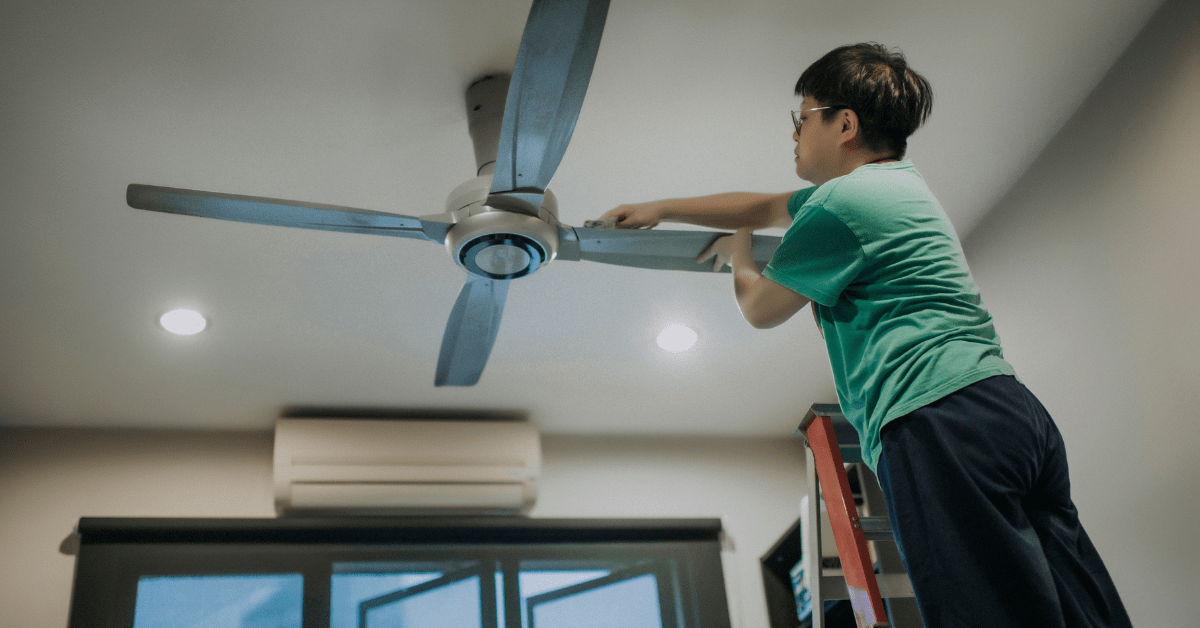
He suddenly loses balance and sustains a head injury. An examination reveals that his pupils have lost the capacity to constrict in bright light. Which structure has been damaged?
- Suspensory ligaments
- Medulla oblongata
- Eye lens
- Eye lid
Answer
Medulla oblongata
Reason — The pupil constricts in bright light due to a reflex action. Reflex centres for such involuntary actions are controlled by parts of the brainstem. If, after a head injury, the pupils lose the ability to constrict in bright light, it indicates damage to the medulla oblongata, which helps control involuntary reflexes.
Suspensory ligaments hold the eye lens in position for focus.
Eye lens only helps in focusing light on the retina and not the size of the pupil.
Eyelids protect the eye and control opening/closing of the eye.
A person suffering from kidney failure has proteins in the urine. What is this condition called?
- Haematuria
- Glycosuria
- Albuminuria
- Anaemia
Answer
Albuminuria
Reason — The presence of proteins in urine is called albuminuria. It occurs due to kidney damage, when proteins leak into the urine. Haematuria is the presence of blood in urine. Glycosuria is the presence of glucose in urine. Anaemia is a condition in which the haemoglobin level is lower than normal.
What does Swachh Bharat Abhiyan aim to achieve in India?
- Increase in deforestation to dump waste.
- Expansion of landfill areas to accommodate more waste.
- Improved sanitation and solid waste management.
- Greater industrial waste production.
Answer
Improved sanitation and solid waste management.
Reason — Swachh Bharat Abhiyan is a national cleanliness campaign aimed at improving hygiene, sanitation and waste management across India. The mission focuses on protecting the environment, not destroying forests. It aims to reduce waste generation and manage it properly, not simply increase landfill areas. The programme encourages cleanliness and waste reduction, not increasing pollution or waste.
Varun's mother added plenty of salt to the mango pickle she made. This is to:
A. enhance the colour of the pickle.
B. inhibit the growth of microorganisms.
C. increase the nutritional value.
D. create a hypertonic solution.
- A and C
- B and C
- C and D
- B and D
Answer
B and D
Reason —
- A – Salt does not enhance the colour of the pickle.
- C – Salt does not increase the nutritional value; it mainly acts as a preservative.
- B – Salt inhibits the growth of microorganisms by drawing water out of their cells and causing plasmolysis.
- D – Salt creates a hypertonic medium that helps prevent microbial growth.
Therefore, B and D are correct.
During which phase of the menstrual cycle does the endometrium shed?
- Follicular phase
- Ovulatory phase
- Menstrual phase
- Luteal phase
Answer
Menstrual phase
Reason — The shedding of the endometrium occurs when fertilisation does not take place, leading to menstruation. This happens during the menstrual phase. In the follicular phase, Follicle Stimulating Hormone stimulates the growth of ovarian follicles. In the ovulatory phase, the mature ovum is released from the ovary. In the luteal phase, after ovulation, the empty follicle becomes the corpus luteum, which releases progesterone and maintains the uterine lining for possible pregnancy. If fertilisation does not occur, the lining breaks down at the end of this phase.
Give the biological/technical terms for the following:
(a) The tropic movement wherein the tendrils of a pea plant twine around a support.
(b) A defect in our eye in which some parts of the object are in focus while the other parts are blurred.
(c) The type of waste generated in hospitals and pathological laboratories.
(d) The surgical technique for females that can be used to prevent pregnancy.
(e) The evolutionary process by which new species arise from the existing one.
Answer
(a) Thigmotropism
(b) Astigmatism
(c) Biomedical waste
(d) Tubectomy
(e) Speciation
Given below is the diagram of a human sperm. Read the information below the diagram and fill in the blanks:
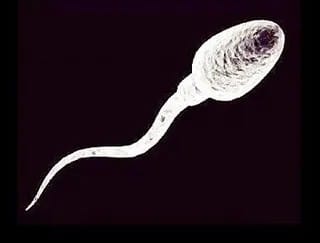
Living organisms reproduce to form new individuals of their own kind. This is essential for the survival and continuation of species. Human sperms are microscopic structures that carry genetic material.
The head of the sperm has a cap like organelle called (a) ............... (Lysosome / Acrosome) which produces an enzyme (b) ...............(Hyaluronidase / Amylase) that dissolves the outer layer of the ovum to facilitate fertilisation. The nucleus of the sperm has (c) ............... (23 / 46) chromosomes. The middle piece has (d) ............... (Chloroplast / Mitochondria) to provide energy for the motility of the sperm. (e) ............... (Semen / Hymen) is a mixture of sperms and the fluids produced by the male accessory glands.
Answer
(a) Acrosome
(b) Hyaluronidase
(c) 23
(d) Mitochondria
(e) Semen
Choose the odd one out from the following terms and name the category to which the others belong:
(a) Auxin, Oxytocin, Gibberellin, Cytokinin
(b) Growth Hormone, Vasopressin, Thyroid Stimulating Hormone, Gonadotropic Hormone
(c) Urochrome, Urea, Uric acid, Nucleic acid
(d) Cervix, Chordae Tendinea, Papillary Muscles, Sinoatrial node
(e) Morula, Blastocyst, Oviduct, Foetus
Answer
(a) Odd one : Oxytocin
Auxin, Gibberellin, Cytokinin - Plant hormones
(b) Odd one : Vasopressin
Growth Hormone, Thyroid Stimulating Hormone, Gonadotropic Hormone - Anterior pituitary gland secretions
(c) Odd one : Nucleic acid
Urochrome, Urea, Uric acid - Excretory waste products
(d) Odd one : Cervix
Chordae Tendinea, Papillary Muscles, Sinoatrial node - Parts of heart
(e) Odd one : Oviduct Morula, Blastocyst, Foetus - Stages of embryonic development
Mohit, a 30-year-old man was a software professional leading a sedentary life. He showed signs of high blood sugar during a routine health check-up despite having a normal body weight.

Answer the following :
(a) The hormonal disorder he is suffering from.
(b) The hormone responsible for this disorder.
(c) The organ that secretes this hormone.
(d) One symptom experienced by Mohit due to this disorder.
(e) One change in lifestyle to lower the blood sugar level.
Answer
(a) Diabetes mellitus
(b) Insulin
(c) Pancreas
(d) Frequent urination
(e) Regular physical exercise
Study the diagram given below and match the structure with its functions :
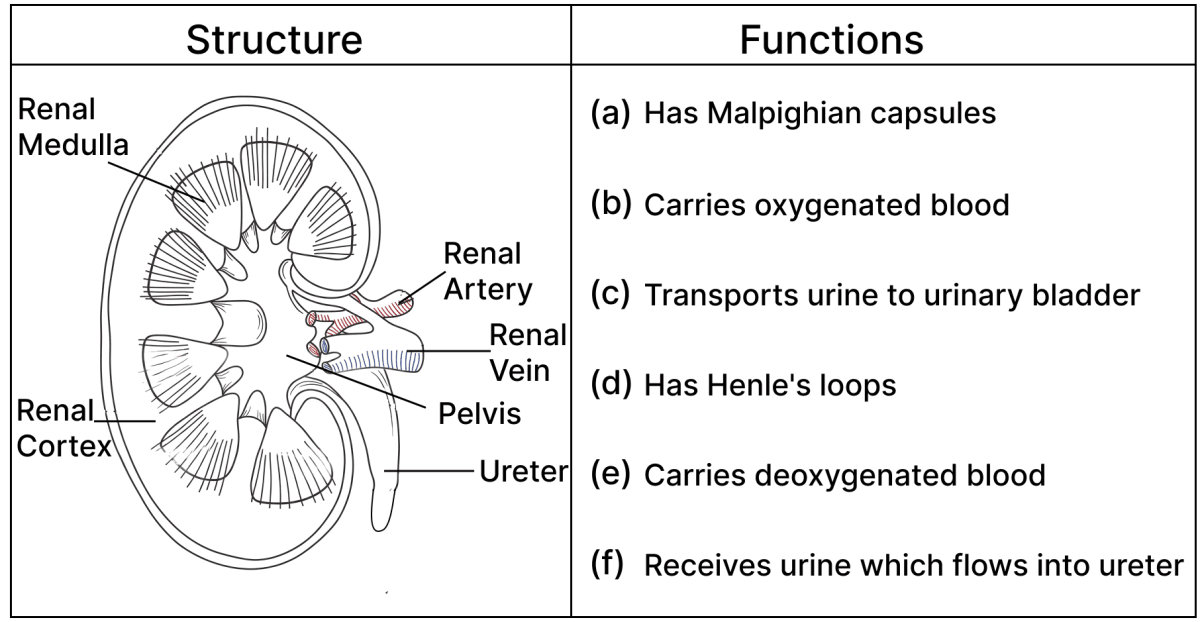
Example: Pelvis - (f)
Answer
(a) Renal cortex
(b) Renal artery
(c) Ureter
(d) Renal medulla
(e) Renal vein
(f) Pelvis
Which is the resting but metabolically active stage of the cell cycle?
Answer
Interphase is the resting but metabolically active stage of the cell cycle.
Given below is the picture of an eagle.
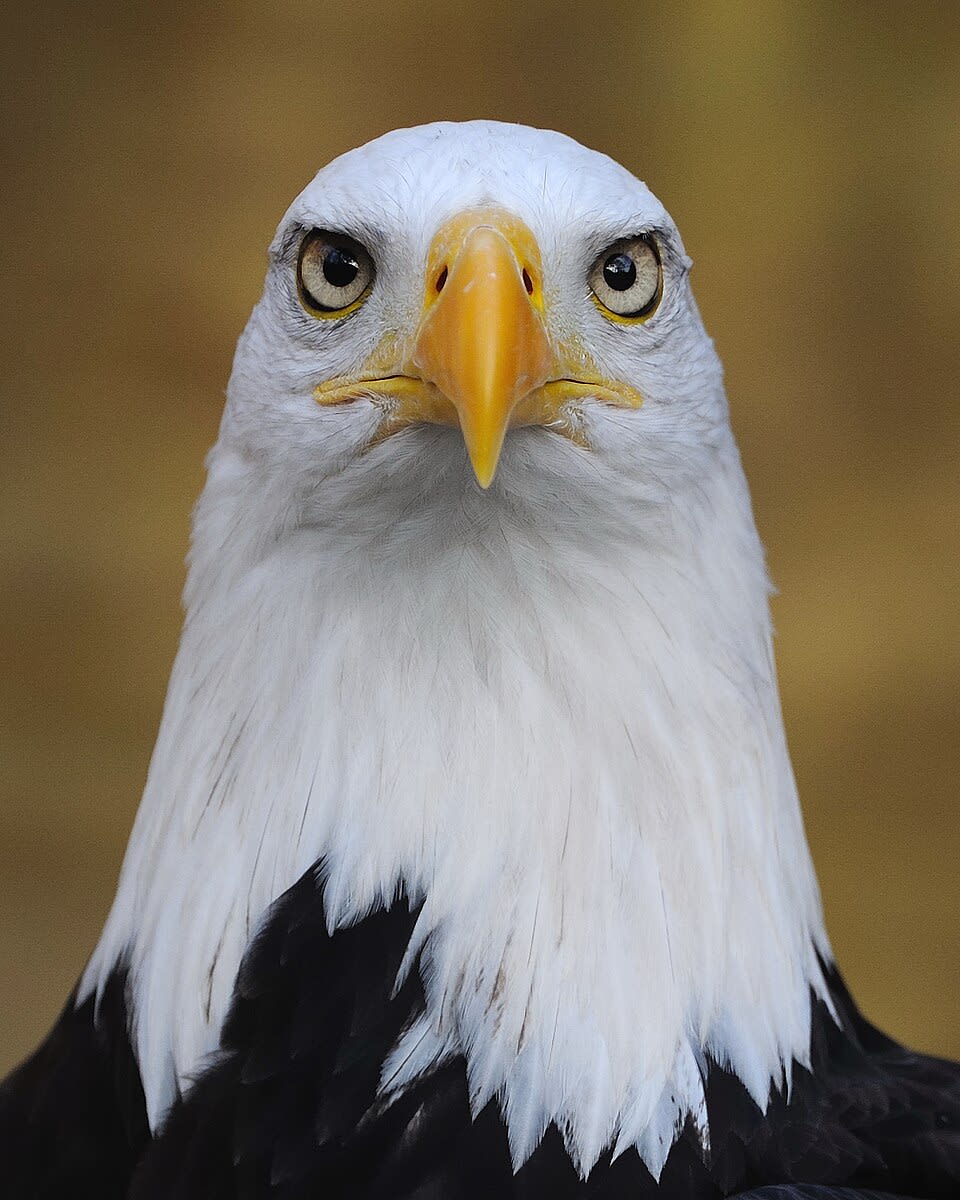
Eagles have binocular vision. What is the advantage of such a vision?
Answer
Binocular vision provides better depth perception and helps in accurately judging distance.
Mention the number of Autosomes and Allosomes in a human body cell.
Answer
There are 44 autosomes and 2 allosomes in a human body cell.
Two well-watered, identical plants were placed in brightly lit rooms at different temperatures — one at 15°C and the other at 38°C. The plant in the warmer room showed wilting by the end of the day.
(a) Which plant phenomenon resulted in the wilting of the leaves?
(b) Mention the factor of the phenomenon that is being tested.
Answer
(a) Transpiration
(b) Temperature
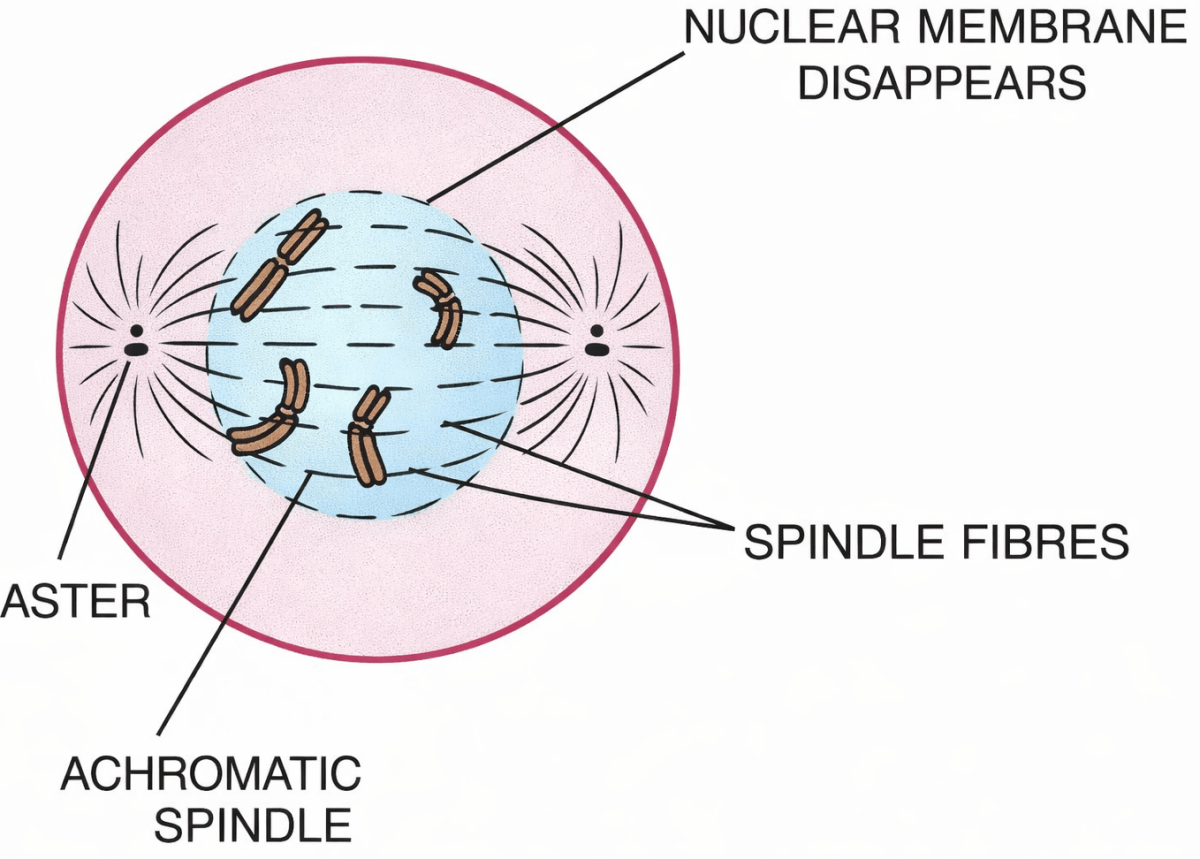
Draw a neat, labelled diagram of an animal cell showing the Prophase stage of Mitosis with four chromosomes.
Answer
What is the scientific name of modern man?
Answer
The scientific name of modern man is Homo sapiens sapiens.
How are the Cytons and Axons of neurons arranged in the following?
(a) Cerebrum
(b) Spinal cord
Answer
(a) In the cerebrum, the Cytons are present in the outer gray matter, while the Axons are present in the inner white matter.
(b) In the spinal cord, the Cytons are present in the inner gray matter, while the Axons are present in the outer white matter.
(a) Who proposed the theory of Natural Selection?
(b) Name the organism which was used as an example to explain Industrial Melanism.
Answer
(a) The theory of Natural Selection was proposed by Charles Darwin.
(b) The organism used to explain industrial melanism is Biston betularia.
Differentiate between Plasmolysis and Deplasmolysis.
Answer
Difference between Plasmolysis and Deplasmolysis:
| Plasmolysis | Deplasmolysis |
|---|---|
| It refers to the shrinkage of the cytoplasm and withdrawal of the plasma membrane from the cell wall caused due to the withdrawal of water when placed in a hypertonic solution. | Deplasmolysis is the recovery of a plasmolysed cell when it is placed in water, wherein the cell's protoplasm again swells up due to the re-entry of water. |
| In Plasmolysis, the cell becomes flaccid. | In Deplasmolysis, the cell becomes turgid. |
Akshay's father had a tumour in his prostate gland. His doctor advised him to get it removed surgically. One side effect of the surgery was incontinence of urine, i.e., leakage of urine from the urinary bladder.
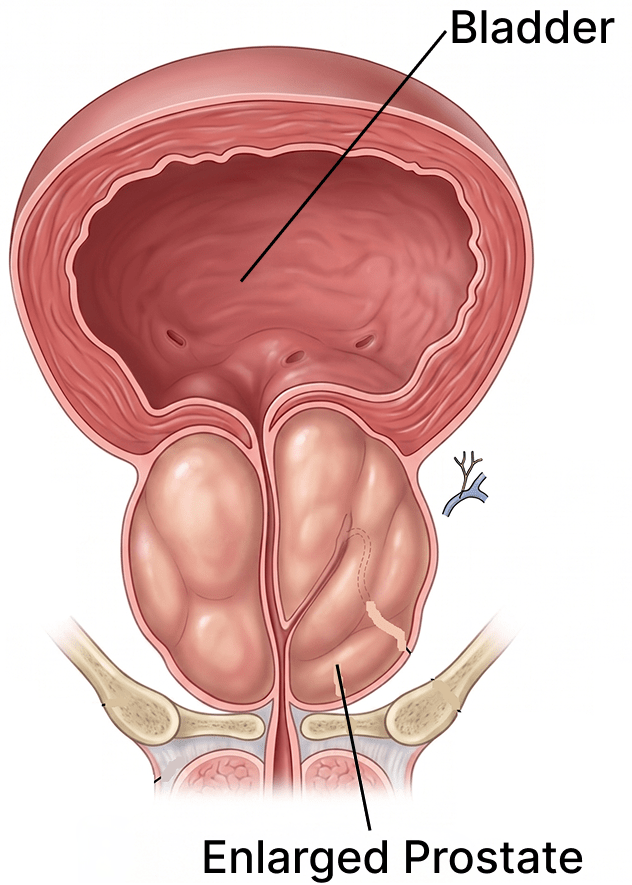
(a) Where is the prostate gland located?
(b) Why does the prostate gland produce an alkaline secretion?
(c) Name the structure that regulates the flow of urine from the urinary bladder into the urethra.
Answer
(a) The prostate gland is located just below the urinary bladder, surrounding the urethra close to its origin from the bladder.
(b) The prostate gland produces an alkaline secretion to neutralise the acidity of the urethra and vagina.
(c) The structure that regulates the flow of urine from the urinary bladder into the urethra is the internal urethral sphincter.
RBCs do not have nuclei. Discuss its advantage.
Answer
The advantages of RBCs not having nuclei are:
- It allows more space for haemoglobin, the oxygen-carrying pigment.
- It helps the RBC to maintain a biconcave shape, which increases the surface area for faster gas exchange.
Arrange the following food chains in a proper sequence.
(a) Small fish, Algae, Mosquito larvae, Kingfisher
(b) Frog, Snail, Crow, Green leaves
Answer
(a) Algae → Mosquito larvae → Small fish → Kingfisher
(b) Green leaves → Snail → Frog → Crow
A 28-year-old pregnant lady goes to a gynecologist for a check-up. Her doctor explains that there is normal growth of the foetus and the placenta is functioning well.
(a) Mention one function of the placenta.
(b) What connects the placenta to the foetus?
Answer
(a) One function of the placenta is the exchange of materials between the mother and the foetus, such as supplying oxygen and nutrients to the foetus and removing waste products from it.
(b) The structure that connects the placenta to the foetus is the umbilical cord.
Mention any two secondary sexual characteristics in a 15-year-old boy.
Answer
Two secondary sexual characteristics in a 15-year-old boy are:
- Growth of facial hair such as moustache and beard.
- Deepening of the voice due to enlargement of the larynx.
Tara's grandmother is 70 years old and has a passion for embroidery. She faces difficulty in threading the needle as the eye of the needle appears blurred. The ophthalmologist diagnosed it as an age-related disorder.
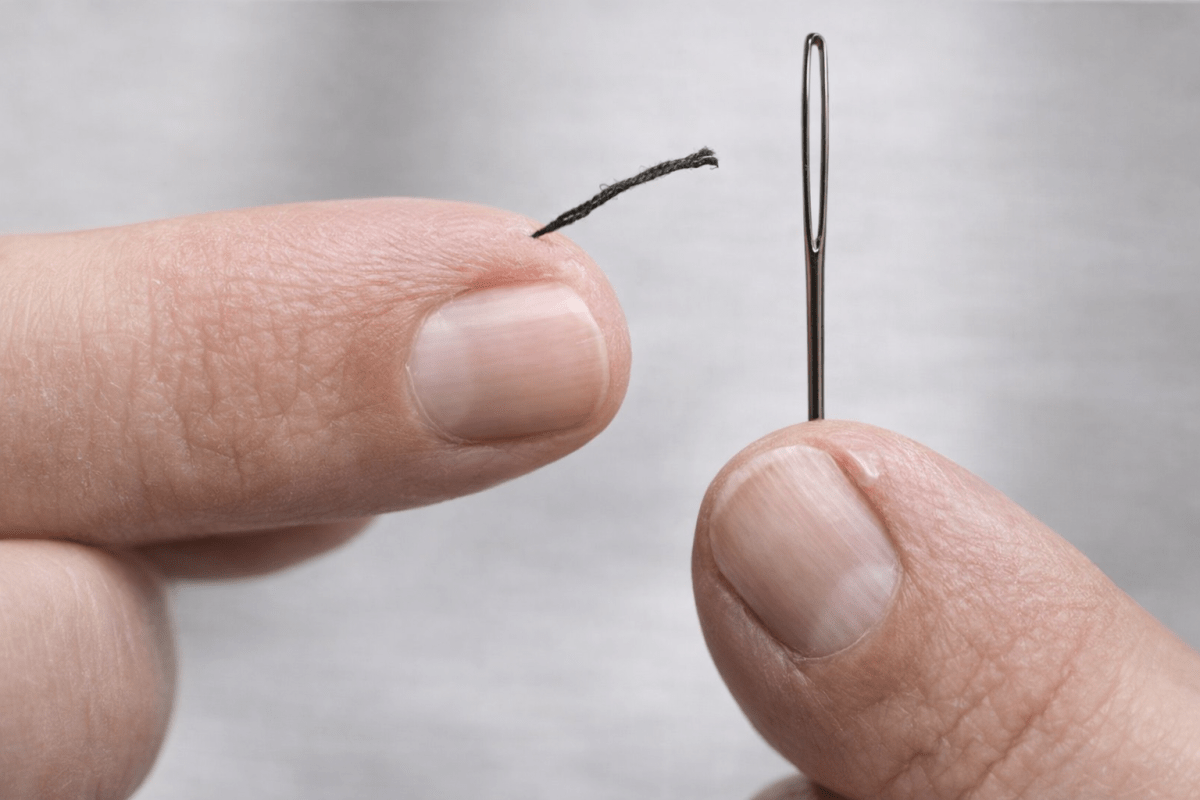
(a) Name the eye disorder she is suffering from.
(b) How can the above defect be corrected?
(c) Where is the image formed in the above disorder?
Answer
(a) The eye disorder is presbyopia.
(b) It can be corrected by using a convex lens.
(c) In this defect, the image is formed behind the retina.
Explain the term 'Population Density' with reference to human beings.
Answer
Population density is the number of people living per square kilometre at a given time.
A 17-year-old girl was having irregular menstrual cycle. Her mother took her to their family physician. She was diagnosed with adrenal virilism. Study the picture given below and answer the following question:
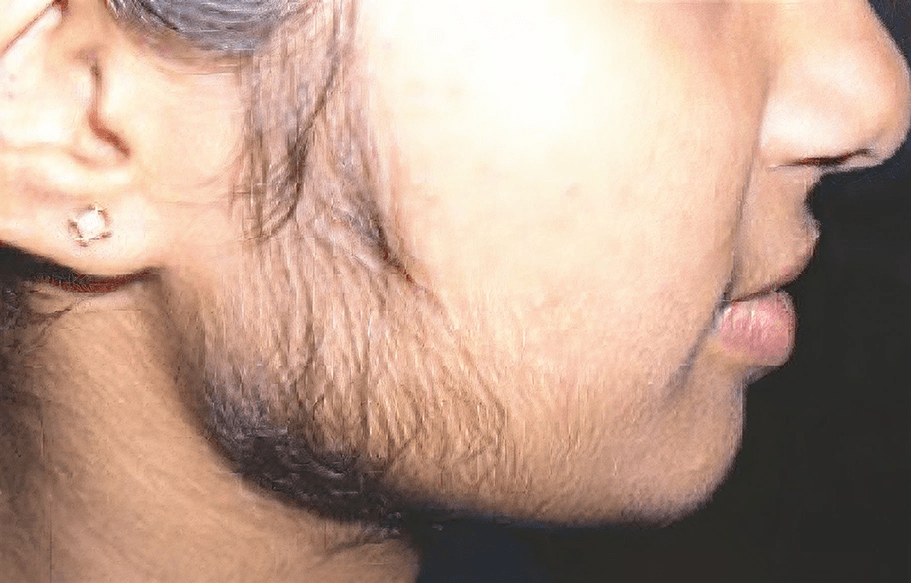
(a) Hypersecretion of which hormone results in Adrenal Virilism in human females?
(b) Mention one symptom of this disorder.
Answer
(a) Hypersecretion of androgens from the adrenal cortex results in adrenal virilism in human females.
(b) One symptom of this disorder is excessive growth of facial and body hair.
Differentiate between Mitosis in plant cell and animal cell based on Cytokinesis.
Answer
| Mitosis in plant cell | Mitosis in animal cell |
|---|---|
| Cytokinesis occur by cell plate formation. The cell plate is laid down at the centre of the cell which then grows and extends towards the cell membrane. | Cytokinesis occur by furrowing of cytoplasm. The furrow starts from the cell membrane which then proceeds to the centre of the cell. |
Sara placed a healthy potted plant in a dark room for 48 hours to perform an experiment on photosynthesis. She plucked one of the leaves and tested it for starch. The leaf did not turn blue-black on adding Iodine solution.
(a) Why was the plant placed in the dark for 48 hours?
(b) What is the significance of boiling the leaf in alcohol during the starch test?
Answer
(a) The plant was placed in the dark for 48 hours to destarch it, so that the stored starch would be used up in respiration.
(b) The leaf is boiled in alcohol to remove chlorophyll so that the colour change with iodine can be clearly observed.
Copy the diagram given below.
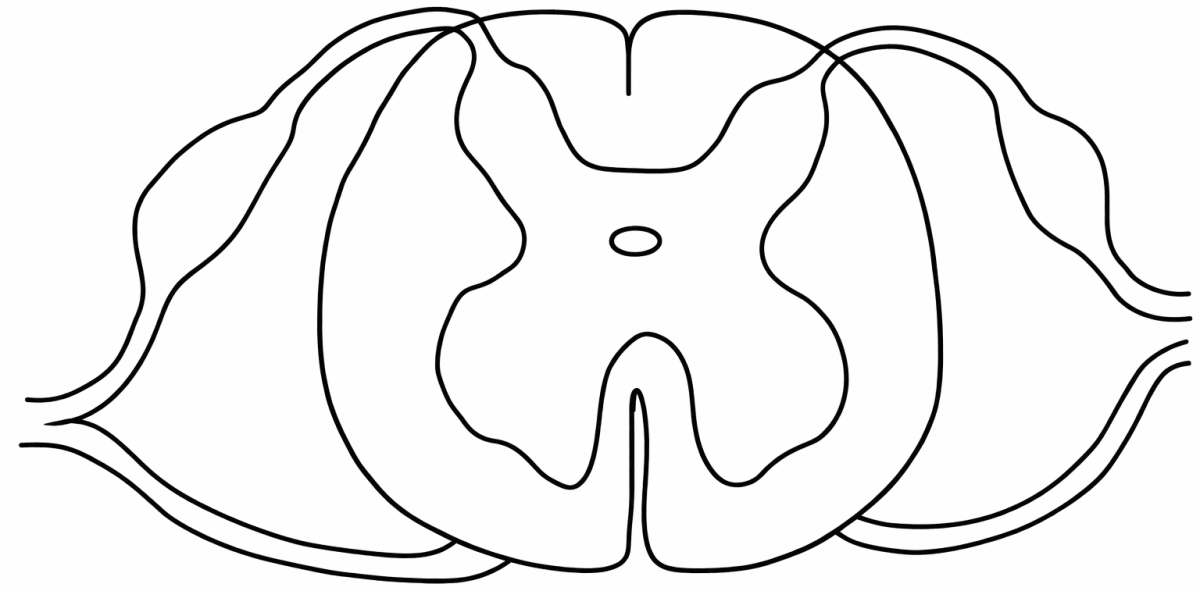
(a) Name the structure.
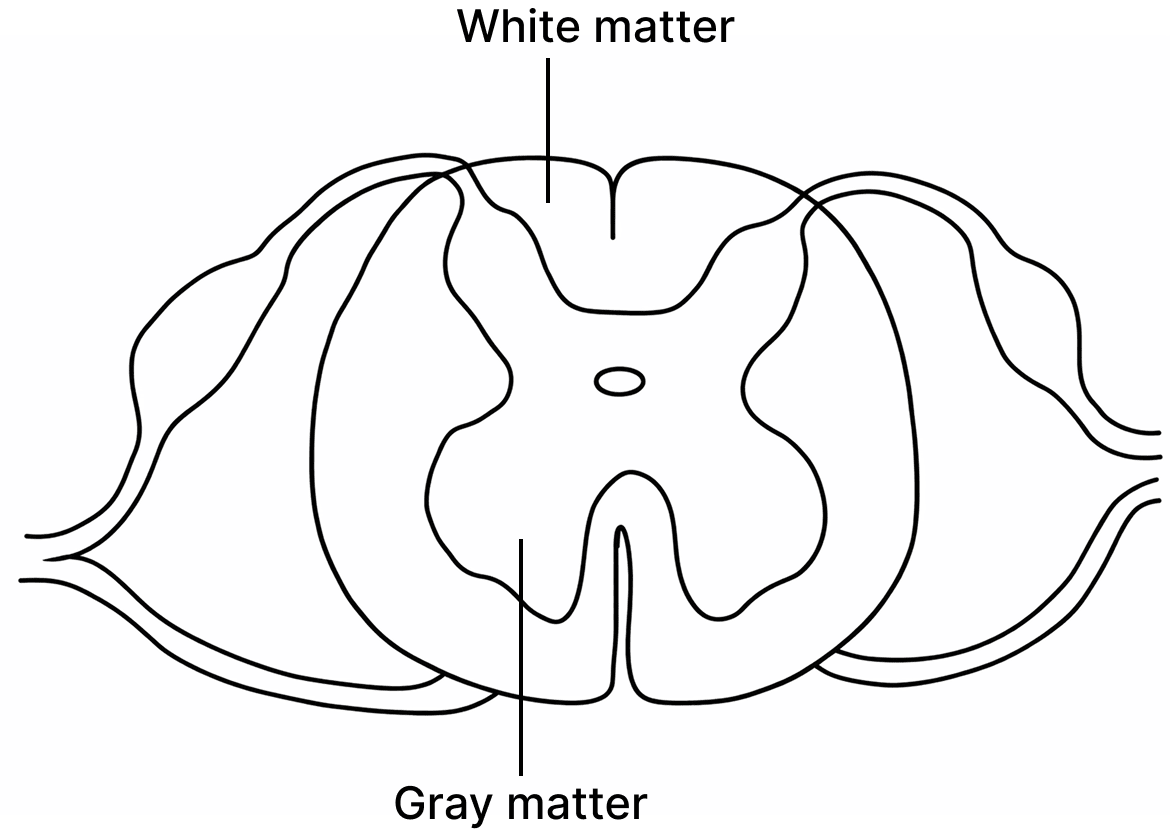
(b) Label Gray matter and White matter.
Answer
(a) The structure shown is a cross-section of the spinal cord.
(b) Gray matter and White matter is labelled in the below diagram:
Write the overall chemical equation for photosynthesis.
Answer
Expand the abbreviations:
(a) NADP
(b) ADP
Answer
(a) Nicotinamide Adenine Dinucleotide Phosphate
(b) Adenosine Diphosphate
(a) Explain the term Synapse.
(b) Name the neurotransmitter that allows the transmission of impulses across the synapse.
Answer
(a) A synapse is the junction between the terminal branches of the axon of one neuron and the dendrites or cell body of another neuron, separated by a minute gap.
(b) The neurotransmitter responsible for transmission across the synapse is acetylcholine.
What is the role of the following?
(a) Leydig cells
(b) Seminiferous tubules
Answer
(a) Leydig cells produce testosterone, which controls the development of male secondary sexual characteristics and supports sperm formation.
(b) Seminiferous tubules are the sites where sperms are produced in the testes.
"Vanishing Greenery; A Growing Urban Crisis"
In most of our cities, rapid urbanisation has led to a significant decrease in greenery over the past two decades. As the population increased, the demand for housing, roads and commercial buildings grew, leading to clearing of parks, gardens and natural resources. This has contributed to several problems.

(a) Mention one significant problem caused by the reduction in urban greenery.
(b) How do green plants contribute to improving the air quality?
(c) What role can you, as a citizen, play in protecting urban greenery?
Answer
(a) One significant problem caused by the reduction in urban greenery is an increase in air pollution.
(b) Green plants improve air quality by absorbing carbon dioxide during photosynthesis, releasing oxygen, and trapping dust and pollutants on their leaves.
(c) As a citizen, I can help by planting more trees, protecting existing plants in my surroundings, avoiding unnecessary cutting of trees, and supporting green initiatives.
Write the term for the pressure exerted by the cell contents on the cell wall.
Answer
The term for the pressure exerted by the cell contents on the cell wall is Turgor pressure.
(a) Name the fluid present between the meninges in spinal cord.
(b) What is its function?
Answer
(a) The fluid present between the meninges in the spinal cord is cerebrospinal fluid.
(b) It acts as a shock-proof cushion and forms a medium for the exchange of food materials, waste products and respiratory gases with neurons.
Given below is the diagram of a turgid plant cell:
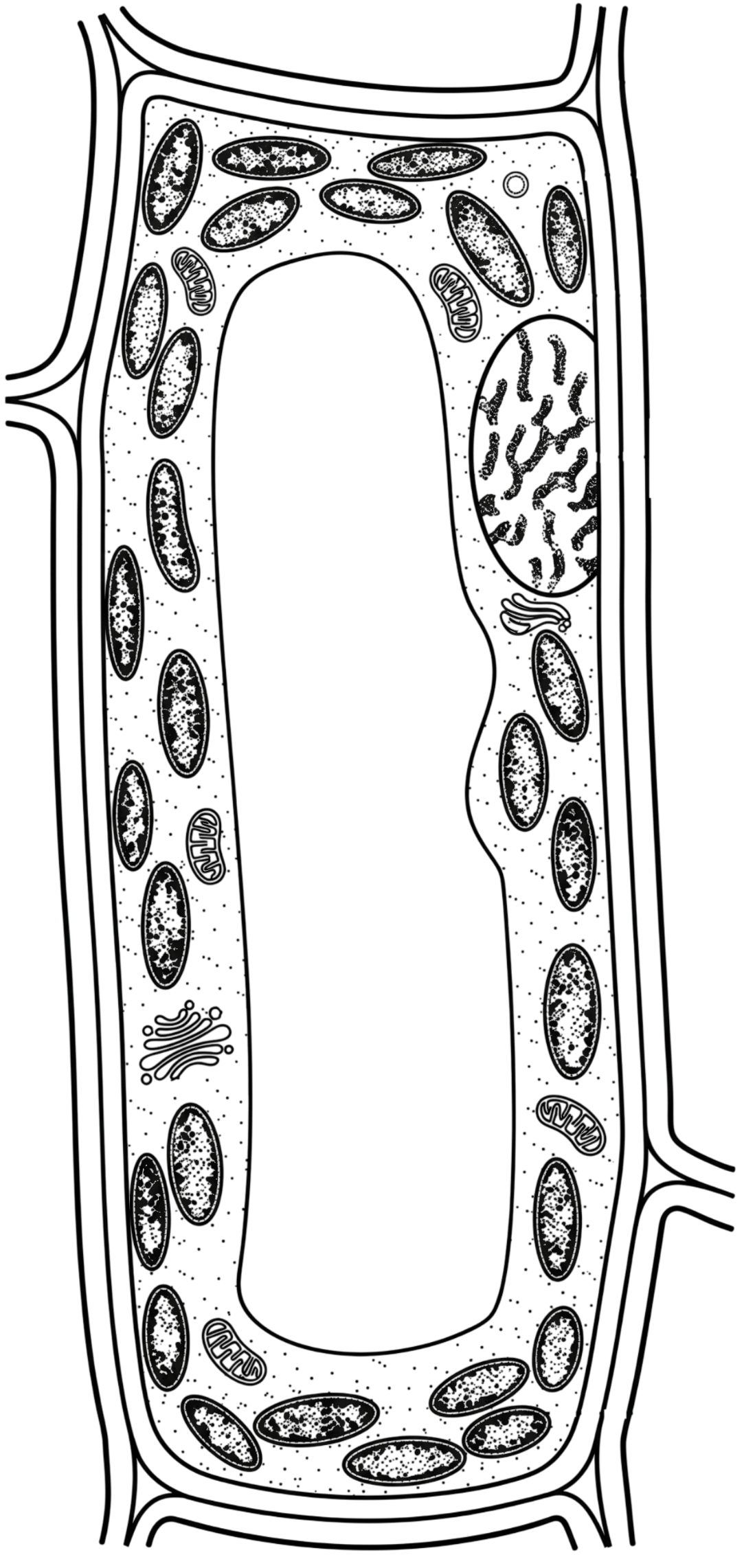
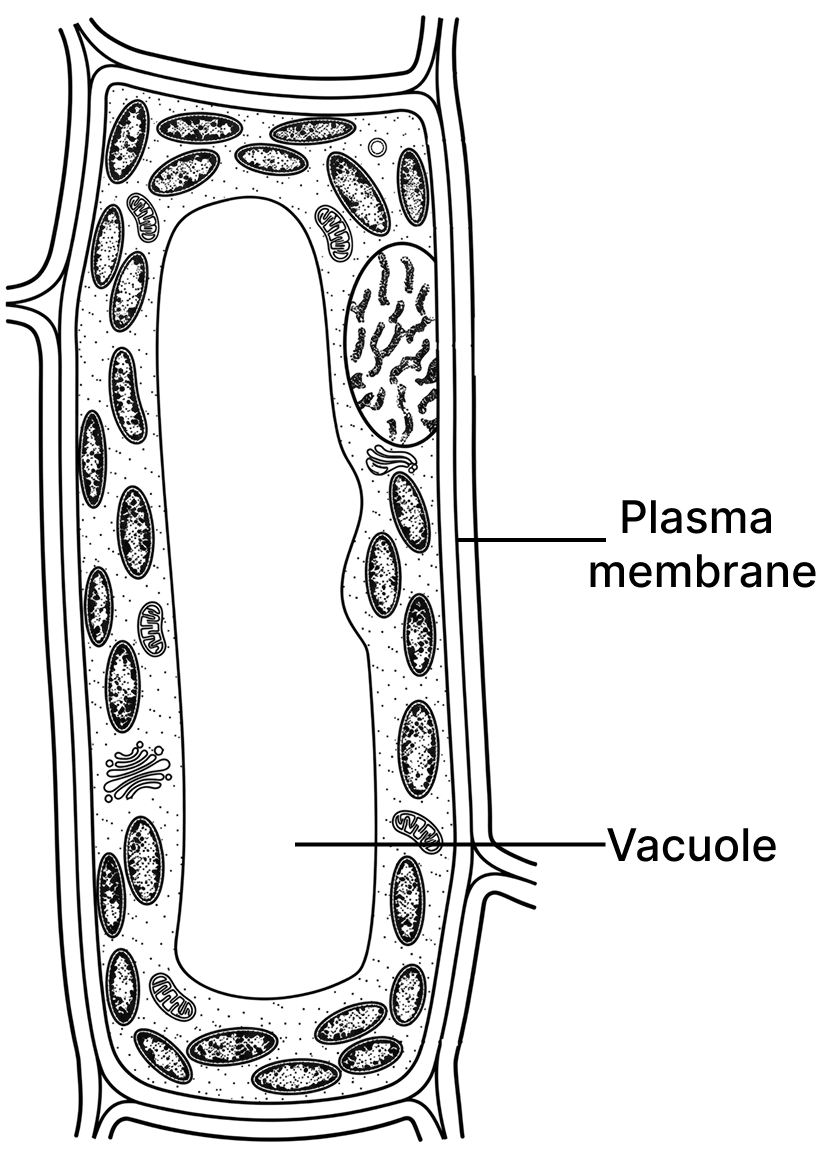
Copy the diagram and label Vacuole and Plasma membrane.
Answer
The labelled diagram is given below:
Select and write the two biodegradable wastes from the given list:
Styrofoam, Metallic cans, Decaying fruits, Plastic bottles, Newspapers
Answer
Decaying fruits and newspapers are two biodegradable wastes.
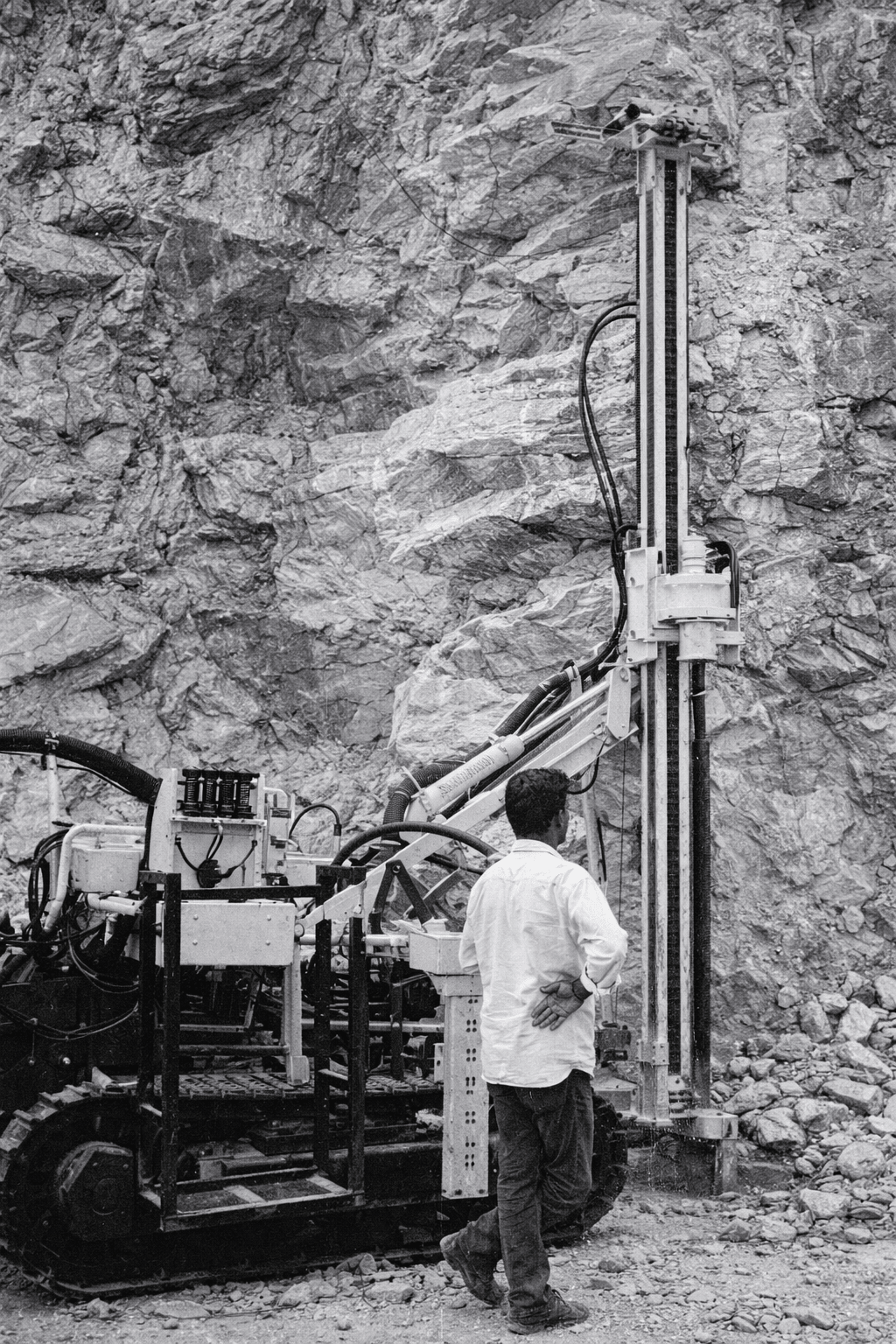
Rajat Singh was working as a supervisor in a stone quarry where rock, sand and gravel are extracted by techniques like digging, drilling and blasting. As the years rolled by, Rajat started facing a loss in hearing. The high decibel sounds had damaged a part of his internal ear, though the tympanic membrane was intact.
(a) Give the collective term for the structure located in the internal ear.
(b) Name the sensory organ in the Cochlea which was damaged for Rajat Singh.
(c) What kind of pollution do the workers face in the stone quarry?
Answer
(a) Membranous labyrinth.
(b) Organ of Corti.
(c) Noise pollution.