
Allen’s blood report showed an abnormal decrease in the number of R.B.C. He is suffering from:
- Polycythemia
- Erythropenia
- Glycosuria
- Haemophilia
Answer
Erythropenia
Reason — Erythropenia refers to an abnormally low number of red blood cells (RBCs) in the blood.
A farmer notices that storing ripe mangoes with unripe ones speeds up the ripening process. The phytohormone primarily responsible for this phenomenon is:
- Auxins
- Cytokinins
- Gibberellins
- Ethylene
Answer
Ethylene
Reason — Ethylene is a gaseous plant hormone that promotes the ripening of fruits. Ripe mangoes release ethylene, which speeds up ripening in nearby unripe mangoes.
Assertion (A): Oxygen is produced during light dependent reactions of photosynthesis.
Reason (R): Oxygen is released as a byproduct during photolysis.
- (A) is true and (R) is false.
- (A) is false and (R) is true.
- Both (A) and (R) are true and (R) is the correct explanation of (A).
- Both (A) and (R) are true but (R) is not the correct explanation of (A).
Answer
Both (A) and (R) are true and (R) is the correct explanation of (A).
Reason — Photolysis occurs in the thylakoid membranes during the light-dependent stage, producing oxygen.
Reena gets emotionally stressed when the school examinations are approaching. Which hormone is responsible for this condition?
- Adrenaline
- Thyroxine
- Insulin
- Growth hormone
Answer
Adrenaline
Reason — Adrenaline is the stress hormone secreted by the adrenal glands. It prepares the body for "fight or flight" during stressful situations. It increases heart rate, blood pressure, and energy supply.
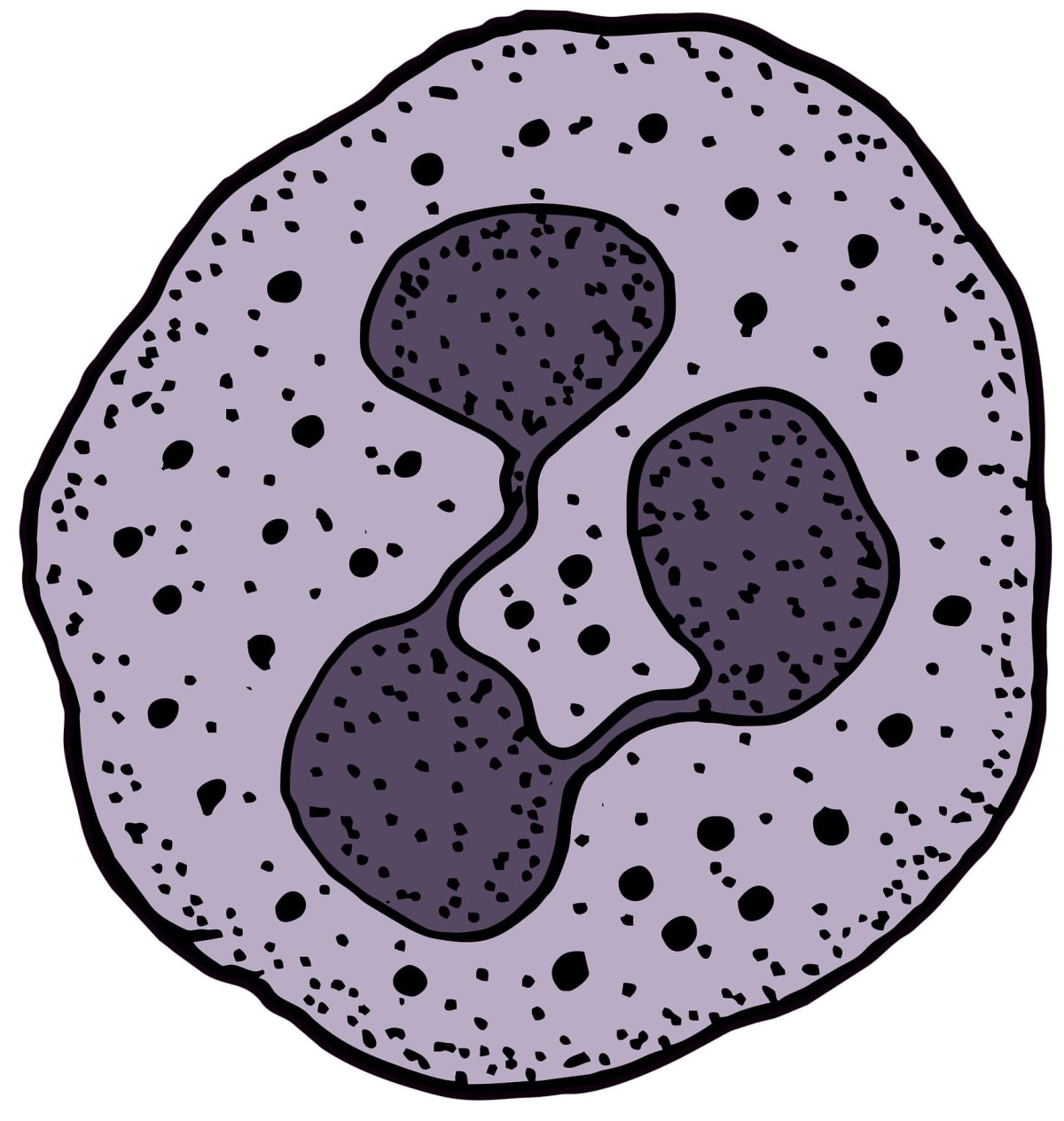
The diagram given below is that of a Neutrophil. The function is ............... :
- Secreting hormone
- Transporting food
- Phagocytosis
- Producing antibodies
Answer
Phagocytosis
Reason — Neutrophils are a type of white blood cell. Their main function is to engulf and destroy pathogens like bacteria (phagocytosis).
Assertion (A): Pituitary gland is known as the master gland.
Reason (R): It regulates the activities of other exocrine glands.
- (A) is true and (R) is false.
- (A) is false and (R) is true.
- Both (A) and (R) are true and (R) is the correct explanation of (A).
- Both (A) and (R) are true but (R) is not the correct explanation of(A).
Answer
(A) is true and (R) is false.
Reason — The pituitary gland is called the master gland because it controls the activity of many other endocrine glands.
The pituitary gland does not regulate exocrine glands (which have ducts and secrete substances like sweat or saliva). It regulates endocrine glands ( which are ductless like the thyroid, adrenal, etc.).
Aruna went to a theatre to watch a movie on a bright sunny morning. As she came out of the theatre, she felt a dazzling effect and could not open her eyes. After a few minutes her vision became normal. This is due to:

- Accommodation of eye
- Mutation
- Polarisation
- Adaptation of eyes
Answer
Adaptation of eyes
Reason — Adaptation of eyes is the ability of the eyes to adjust to changes in light intensity.
Reflex actions provide a survival advantage because they:
- Are controlled by the cerebrum.
- Are controlled by the medulla oblongata.
- Require no conscious thought, allowing rapid responses.
- Always involve the spinal cord.
Answer
Require no conscious thought, allowing rapid responses.
Reason — Reflex actions are automatic and quick responses to stimuli. They bypass the brain's conscious areas, allowing the body to react rapidly, which is necessary for survival (e.g., pulling your hand away from something hot).
Industrial melanism is the phenomenon by which the peppered moth:
- Die due to industrial growth.
- In polluted areas, became darker in colour for better camouflage.
- Became lighter in colour due to natural selection.
- Became resistant to industrial pollution.
Answer
In polluted areas, became darker in colour for better camouflage.
Reason — Industrial melanism means moths in polluted areas became darker to blend in better and avoid predators.
The hormone that maintains the thickening of the endometrium during pregnancy is:
- Oestrogen
- ACTH
- Progesterone
- Oxytocin
Answer
Progesterone
Reason — Progesterone maintains the thickened lining of the uterus (endometrium) during pregnancy. This helps support and nourish the developing embryo.
The onset of menstruation in a human female is called:
- Menopause
- Menarche
- Ovulation
- Oogenesis
Answer
Menarche
Reason — Menarche refers to the first occurrence of menstruation in girls, marking the onset of puberty and reproductive maturity.
The number of autosomes and allosomes present in a human cell:
- 22 allosomes, 1 autosome
- 22 pairs of autosomes, 1 pair of allosome
- 22 autosomes, 1 allosome
- 22 pairs of allosomes, 1 pair of autosome
Answer
22 pairs of autosomes, 1 pair of allosome
Reason — Humans have 23 pairs of chromosomes in total. 22 pairs are autosomes (non-sex chromosomes). 1 pair is allosomes (sex chromosomes — X and Y). So, the human cell contains 22 pairs of autosomes and 1 pair of allosomes.
Cultural revolution favours a steep rise in human population. Identify the correct sequence of revolution:
- Tool making, Scientific and Industrial, Agricultural
- Agricultural, Tool making, Scientific and Industrial
- Scientific and Industrial, Agricultural, Tool making
- Tool making, Agricultural, Scientific and Industrial
Answer
Tool making, Agricultural, Scientific and Industrial
Reason — Early humans started making tools, improving survival. Farming began, leading to food surplus and population growth. Advances in science and industry boosted living standards and population further.
Tanvi tried to match the phases of menstrual cycle with the number of days as given in the table below:
| PHASE | DAYS |
|---|---|
| P – Follicular Phase | Day 5 – 12 |
| Q – Luteal Phase | Day 15 – 28 |
| R – Menstrual Phase | Day 3 – 5 |
| S – Ovulatory Phase | Day 13 or 14 |
Identify the correct sequence:
- P, Q, R, S
- Q, S, R, P
- R, P, S, Q
- S, R, P, Q
Answer
R, P, S, Q
Reason
R – Menstrual Phase: Day 1 to about Day 5.
P – Follicular Phase: After menstruation, roughly Day 5 to Day 12.
S – Ovulatory Phase: Around Day 13 or 14 (when ovulation occurs).
Q – Luteal Phase: After ovulation, Day 15 to Day 28.
Aditya who is fond of roller skating. Identify the correct terms which help him to maintain his body balance:

- Cerebellum, Semicircular canals, Vestibule
- Vestibule, Sclera, Cerebrum
- Malleus, Semicircular canals, Utriculus
- Sacculus, Stapes, Cochlea
Answer
Cerebellum, Semicircular canals, Vestibule
Reason
Cerebellum — Controls coordination and balance.
Semicircular canals — Detect rotational movements of the head, helping maintain balance.
Vestibule — Detects linear movements and helps with balance.
Give the biological/technical terms for the following:
(a) A mixture of smoke and fog.
(b) The inner lining of uterus.
(c) The pressure that is responsible for the movement of water molecules across the cortical cells of the root.
(d) The ground substance present in a chloroplast.
(e) The fluid present between the layers of meninges.
Answer
(a) Smog
(b) Endometrium
(c) Root pressure
(d) Stroma
(e) Cerebrospinal fluid (CSF)
Given below is the diagram of a human heart. Read the information below the diagram and fill in the blanks:

The human heart pumps blood throughout the body. It is the size of a large fist. The heart is located between the lungs in the thoracic cavity. It has four chambers. The heart functions all through the lifespan of a person and is responsible for the survival of the person.
The heart is enclosed by a membrane called (a) ............... (Pericardium / Pleura). The ventricles give rise to two large blood vessels called (b) ............... (Pulmonary vein / Pulmonary artery) and (c) ............... (Aorta / Venacava). The flaps of the cuspid valves are kept in position by (d) ............... (Chordae tendinae / Endometrium). (e) ............... (Hepatic / Coronary) arteries supply oxygenated blood to the walls of the heart.
Answer
The heart is enclosed by a membrane called (a) Pericardium. The ventricles give rise to two large blood vessels called (b) Pulmonary artery and (c) Aorta. The flaps of the cuspid valves are kept in position by (d) Chordae tendinae. (e) Coronary arteries supply oxygenated blood to the walls of the heart.
Choose the odd term out from each of the following set of terms. Mention the category to which the remaining three belong:
(a) Sulphur dioxide, Oxygen, Carbon monoxide, Nitrogen dioxide.
(b) Pons, Epidermis, Xylem, Phloem.
(c) Tympanum, Pinna, Auditory canal, Malleus.
(d) Ureter, Urethra, Uterus, Renal Pelvis.
(e) Stomata, Lenticles, Cuticle, Root hair.
Answer
(a) Odd term — Oxygen
Category of the remaining terms — Air Pollutants.
(b) Odd term — Pons
Category of the remaining terms — Plant tissues.
(c) Odd term — Malleus
Category of the remaining terms — Parts of outer ear.
(d) Odd term — Uterus
Category of the remaining terms — Parts of Excretory system.
(e) Odd term — Root hairs
Category of remaining terms — Structures involved in transpiration in plants.
Rajeev, a 10 year old boy, went to an Ophthalmologist to get his eyes tested. He noticed a poster in the clinic with questions related to the parts of human eye. Help Rajeev answer the questions:
(a) Which is the fluid that lubricates the eye?
(b) Which cells help in colour vision?
(c) Which nerve sends impulses from the eyeball to the brain?
(d) Name the structure that gives colour to the eyes.
(e) Name the part that allows entry of light rays into the eye.
Answer
(a) Tears.
(b) Cone cells.
(c) Optic nerve.
(d) Iris.
(e) Pupil.
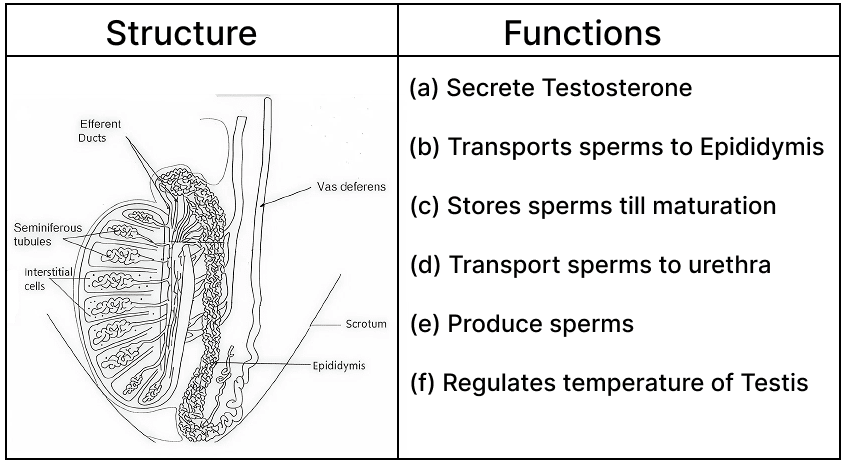
Study the diagram given below and match the structure with its function:
Answer
(a) Secrete Testosterone – Interstitial cells (Leydig cells)
(b) Transports sperms to Epididymis – Efferent ducts
(c) Stores sperms till maturation – Epididymis
(d) Transport sperms to urethra – Vas deferens
(e) Produce sperms – Seminiferous tubules
Explain the term Menarche.
Answer
It is the first occurrence of menstruation in a human female, marking the onset of puberty and the beginning of her reproductive life. It usually occurs between the ages of 10 to 15 years.
In what form is water lost during transpiration and guttation from plants?
Answer
Transpiration — Water is lost in the form of water vapour through stomata.
Guttation — Water is lost in the form of liquid droplets from the tips or edges of leaves through hydathodes.
Ayush was in the final round of a carrom match. He was focussing intently on the strokes of the opponent player.
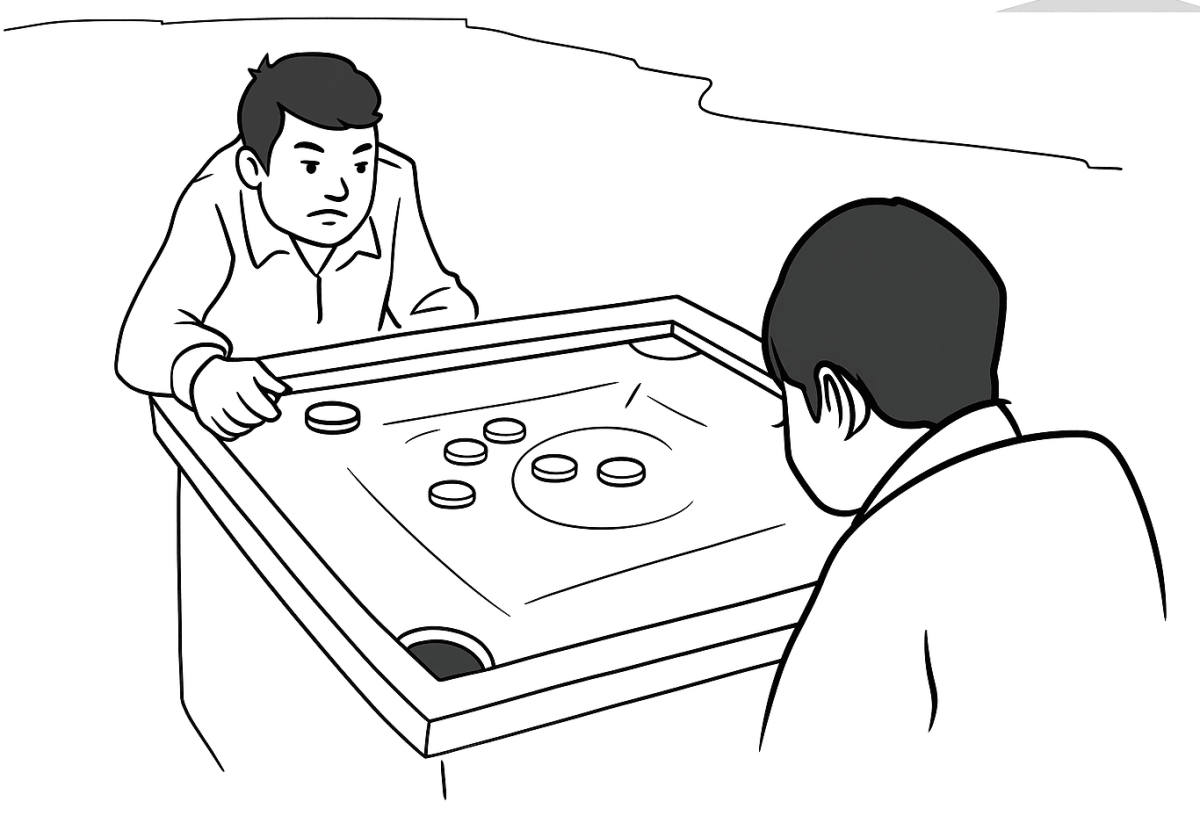
(a) Which part of the brain helps Ayush to focus on the game?
(b) Name the part of the brain that co-ordinates his muscles while using the striker.
Answer
(a) Cerebrum
(b) Cerebellum
State the permeability of cell membrane and cell wall.
Answer
(a) Cell membrane — Semipermeable
(b) Cell wall — Freely permeable
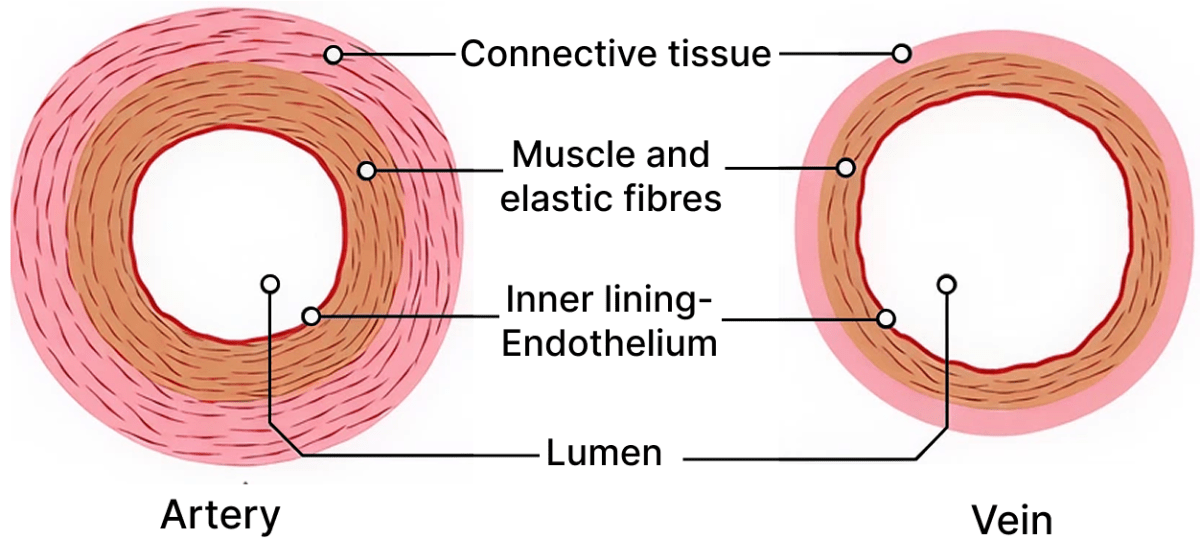
Draw a neat, labelled diagram of a cross section of an Artery and a Vein.
Answer
What is Excretion?
Answer
Excretion is the biological process by which harmful nitrogenous waste products are removed from the body.
Differentiate between Diabetes mellitus and Diabetes insipidus with reference to the hormone involved.
Answer
Diabetes mellitus occurs due to hyposecretion of insulin whereas Diabetes insipidus occurs due to hyposecretion of Antidiuretic hormone (ADH).
Give the common name and the scientific name of the plant on which Gregor Mendel conducted his breeding experiments.
Answer
Common name — Garden pea
Scientific name — Pisum sativum
Name the tonicity of the solutions for a living cell to show Endosmosis and Exosmosis.
Answer
Endosmosis occurs when a cell is placed in a hypotonic solution.
Exosmosis occurs when a cell is placed in a hypertonic solution.
Plant hormones are produced in extremely low concentrations in plants to regulate the physiological processes and tropic movements –
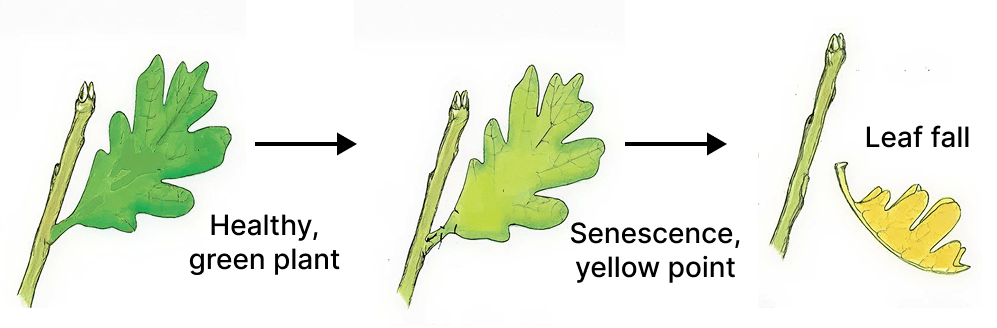
(a) Name one plant hormone responsible for the changes shown in the above picture.
(b) Identify a hormone that has an opposite effect to the one depicted in the picture.
(c) Give an example of a plant that shows Thigmotropism.
Answer
(a) Abscisic acid, Ethylene
(b) Auxin
(c) Pea plant
What are non-biodegradable wastes?
Answer
Non-biodegradable wastes are substances that cannot be broken down naturally by microorganisms (like bacteria or fungi) into harmless products. These wastes persist in the environment for a long time and can cause pollution. E.g., Plastics.
Mention any two objectives of the Swachh Bharat Abhiyan.
Answer
- To eliminate open defecation by constructing toilets and promoting sanitation practices in both rural and urban areas.
- To promote proper solid waste management through the collection, segregation, and disposal of garbage to keep surroundings clean.
Arrange the following food chain in a proper sequence:
(a) Small fish, Penguin, Algae, Seal, Mosquito larvae.
(b) Woodpecker, Caterpillar, Mountain lion, Fox, Cabbage.
Answer
(a) Algae, Mosquito larvae, Small fish, Penguin, Seal.
(b) Cabbage, Caterpillar, Wood pecker, Fox, Mountain lion.
Mention the number of cranial nerves and spinal nerves in a human being.
Answer
Cranial nerves: – 12 pairs
Spinal nerves: – 31 pairs
Surya used a plant with variegated leaves for an experiment on photosynthesis. He tested a leaf with iodine after keeping the plant in sunlight for a few hours.
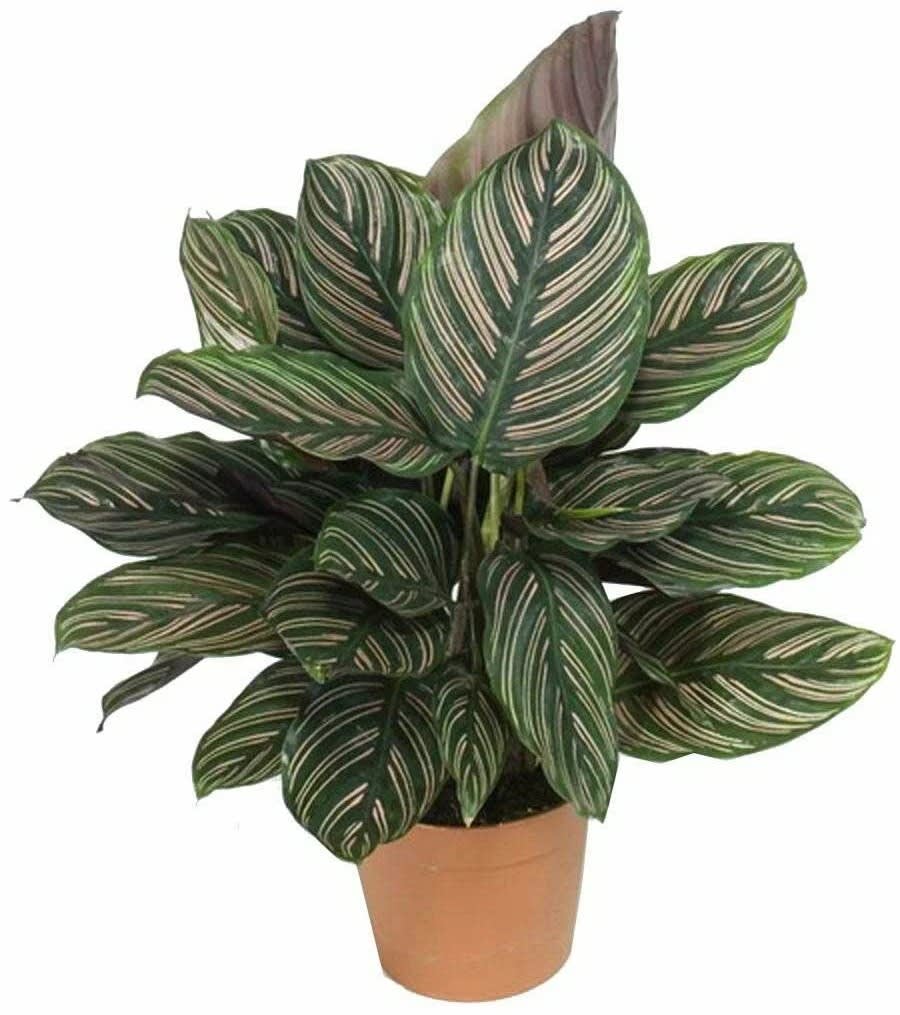
(a) Which parts of the leaf will turn blue black after the iodine test?
(b) What does this tell us about the role of chlorophyll in photosynthesis?
(c) Write the overall chemical equation for photosynthesis.
Answer
(a) The green parts of the variegated leaf will turn blue-black because they contain chlorophyll and can produce starch.
(b) It shows that chlorophyll is essential for photosynthesis because only the parts with chlorophyll produce starch (which turns blue-black with iodine).
(c)
State Mendel’s Law of Dominance.
Answer
Law of Dominance — Out of a pair of contrasting characters present together, only one is able to express itself while the other remains suppressed. The one that expresses is the dominant character and the one that is unexpressed is the recessive one.
State the rate of transpiration when the air surrounding a plant has:
(a) More atmospheric humidity.
(b) Hot and dry air.
Answer
(a) More atmospheric humidity — Transpiration rate decreases.
(b) Hot and dry air — Transpiration rate increases.
Expand the following abbreviations:
(a) ACTH
(b) ADH
Answer
(a) ACTH — Adreno Cortico Tropic Hormone
(b) ADH — Antidiuretic Hormone
Which part of the ear equalizes air pressure on either side of the ear drum? Where is this structure located?
Answer
The part of the ear that equalizes air pressure on either side of the eardrum is the Eustachian tube.
It is located in the middle ear.
Santosh loved his garden, especially his pea plants. One year, he noticed that all the pea plants he grew from one batch of seeds had round seeds. Curious, he took the seeds from one of those plants and grew a new generation. To his surprise, 75% of the new plants had round seeds, but 25% had wrinkled seeds.

(a) What were the genotypes of the parent plants that Santosh originally planted?
(b) Which trait is dominant – round or wrinkled seeds?
(c) What is the genotypic ratio of the second generation (F2) plants?
Answer
(a) The genotypes of the parent plants that Santosh originally planted were heterozygous dominant (Rr).
Since all plants in the first generation (F1) had round seeds, the parents must have been pure round-seeded (RR) and wrinkled-seeded (rr) plants. Crossing RR (round, homozygous dominant) × rr (wrinkled, homozygous recessive) produces all Rr (heterozygous round) plants in F1.
(b) Round seeds are dominant over wrinkled seeds, because the F1 plants (Rr) all show the round seed phenotype.
(c) 1:2:1
Explain the term Natality.
Answer
Natality (or birth rate) is the number of live births per 1000 people of population per year.
Distinguish between Sympathetic system and Parasympathetic system on the basis of heartbeat.
Answer
Sympathetic system increases heartbeat whereas Parasympathetic system decreases heartbeat and makes it normal.
Meena covered a potted plant as shown below with a transparent plastic bag. She observed water droplets inside the bag after a few hours when kept in sunlight.
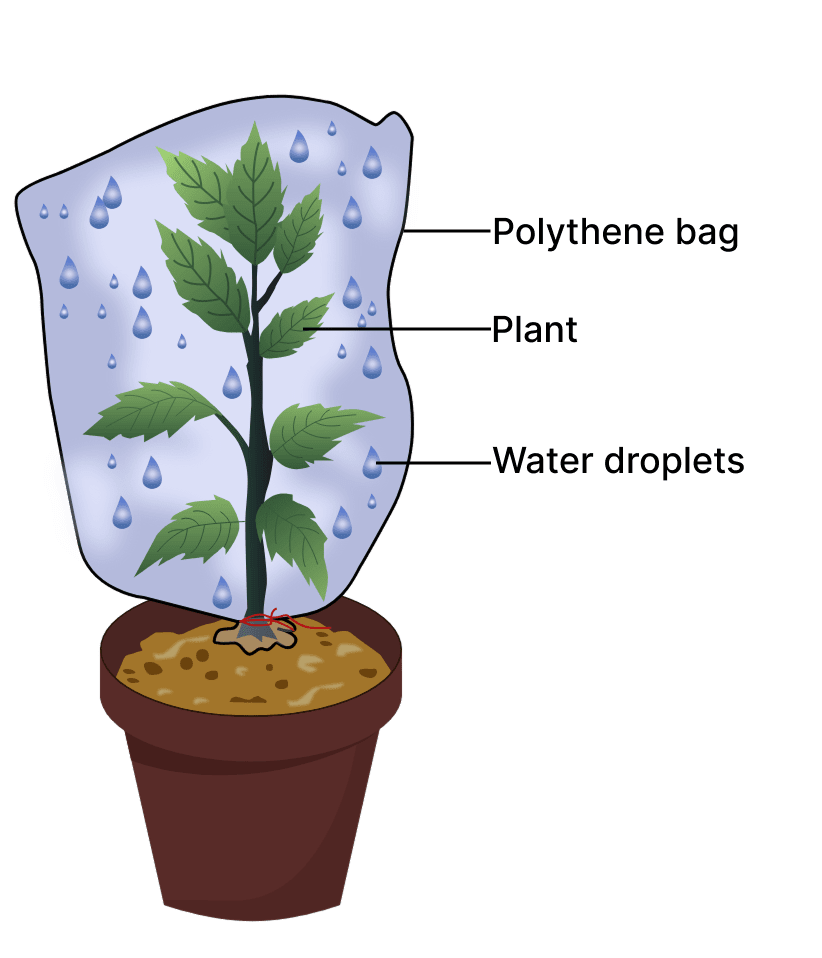
(a) Name the process that resulted in the formation of water droplets inside the bag.
(b) Define the process mentioned above.
Answer
(a) Transpiration
(b) Transpiration is the loss of water in the form of water vapour from the aerial parts (mainly leaves) of a plant.
Mention the regions of the kidney where we can find glomerulus and Henle's loop.
Answer
Glomerulus — Cortex (outer region) of the kidney.
Henle's loop — Medulla (inner region) of the kidney.
Draw a neat, labelled diagram to show the internal structure of a root hair.
Answer
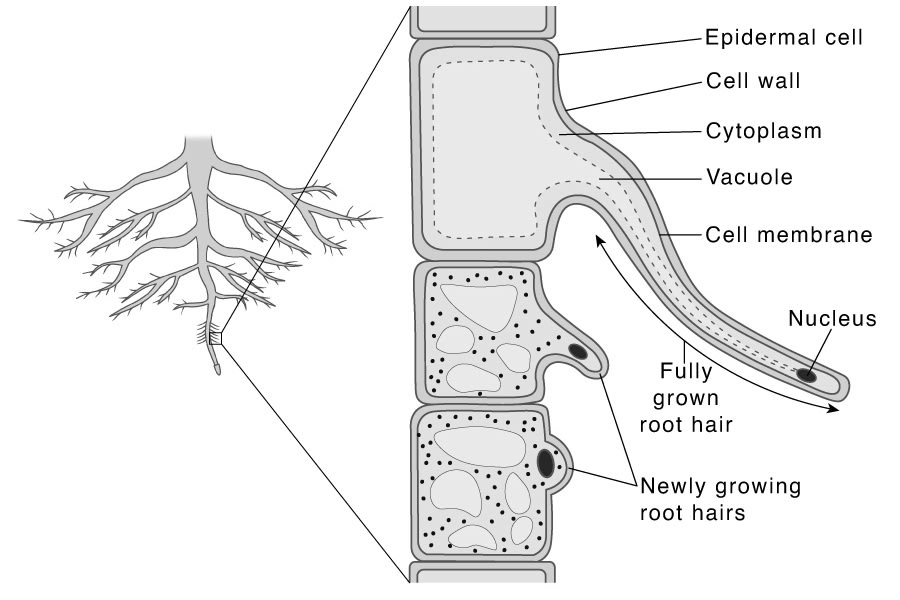
How does the ozone layer depletion affect life on earth?
Answer
Ozone layer depletion allows more harmful UV rays from the sun to reach Earth. This causes skin cancer, cataract, and weakens the immune system in humans. It also harms plants, animals, and marine life and reduces crop yields.
Mention two body features of Australopithecus.
Answer
Two body features of Australopithecus are:
- Projecting eyebrow ridges.
- Absence of chin.
Identical twins are always of the same gender. Explain why.
Answer
Identical twins are formed when a single fertilized egg (zygote) splits into two embryos. Since they come from the same egg and sperm, they have exactly the same genetic material, including the sex chromosomes.
We should not insert sharp objects into the ear to remove ear wax. Give a suitable reason.
Answer
Inserting sharp objects into the ear can damage the delicate eardrum or ear canal, causing pain, infection, or even permanent hearing loss. It can also push the earwax deeper, making the problem worse
In a school experiment, a few students grow plants in pots placed horizontally as shown below. After a few days, the students observed that the roots bent downward, and the shoots curved upward.
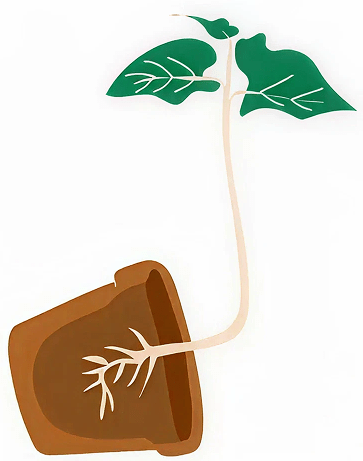
(a) Name the tropic movement seen in shoots.
(b) Why do roots always grow downwards?
(c) Which phytohormone regulates the above tropic movements?
Answer
(a) Phototropism
(b) Roots grow downward due to positive geotropism. They grow towards the gravitational pull to anchor the plant and absorb water and minerals from the soil.
(c) Auxins