
A Supreme Court judge can continue in office till the age of:
- 60 years
- 62 years
- 65 years
- 67 years
Answer
65 years
Reason — A Supreme Court judge in India can continue in office until the age of 65 years.
Given below are details of a few Indian Citizens.
| Person | Age (In years) | Description |
|---|---|---|
| W | 20 | Is a famous actor |
| X | 48 | Has been convicted by court for corruption |
| Y | 35 | Has accepted a foreign citizenship |
| Z | 50 | Is a scientist |
Select the one who is eligible to be appointed as the Prime Minister of India.
- X
- W
- Y
- Z
Answer
Z
Reason — The President invites the leader of the majority party in the Lok Sabha to form the Government, and to be a member of the Lok Sabha, a person must be an Indian citizen, with at least 25 years of age, and not a proclaimed criminal. Only Person Z meets the required criteria.
How can Mr. Amit, a non-member of the Parliament be appointed to the Union Cabinet?
- He has to become a member of either house within six months of appointment.
- He can be appointed under the Discretionary Power of the Prime Minister.
- The appointment will be delayed until he becomes a member.
- He cannot be appointed as a Minister.
Answer
He has to become a member of either house within six months of appointment.
Reason — Mr. Amit can be appointed to the Union Cabinet, but he has to become a member of either house within six months of appointment.
Which feature of collective responsibility of the Cabinet is depicted in the picture given below?

- All the ministers are collectively responsible to the Lok Sabha.
- All the ministers must function as a team and discuss policies.
- The ministers are responsible to the President.
- The Prime Minister is the head of the Cabinet.
Answer
All the ministers must function as a team and discuss policies.
Reason — The given picture shows all ministers sitting together around a table, arranging puzzle pieces, which represents teamwork, unity, and joint policy discussions.
How many elected members are there in the Rajya Sabha?
- 235
- 232
- 238
- 245
Answer
238
Reason — The maximum strength of the Rajya Sabha can be 250 members. Of these, 238 are elected by the States of the Union and 12 members are nominated by the President.
Choose the correct option with regard to an Ordinance.
- It is passed in the winter session of the Parliament.
- It must be approved within six weeks of re-assembly of Parliament.
- The President prepares the ordinance.
- It is a permanent law.
Answer
It must be approved within six weeks of re-assembly of Parliament.
Reason — If the Parliament does not approve the Ordinance within six months of its re-assembly, it lapses. If an ordinance is not disapproved, it will automatically cease to operate at the end of six weeks from the date the Parliament re-assembles.
Read the statements given below and select the option that shows the correct relationship between (A) and (R).
Assertion (A): The Congress accepted the Mountbatten Plan.
Reason (R): The only alternate to Partition was a Federation with a weak centre.
- (A) is true and (R) is false.
- (R) is false but (A) is true.
- Both (A) and (R) are independent of each other.
- (R) is the reason for (A).
Answer
(R) is the reason for (A).
Explanation — The Congress leaders realised that its better to have a smaller India with strong centre rather than having a big India with weak centre, due to internal conflicts.
Identify the leader in the given picture:
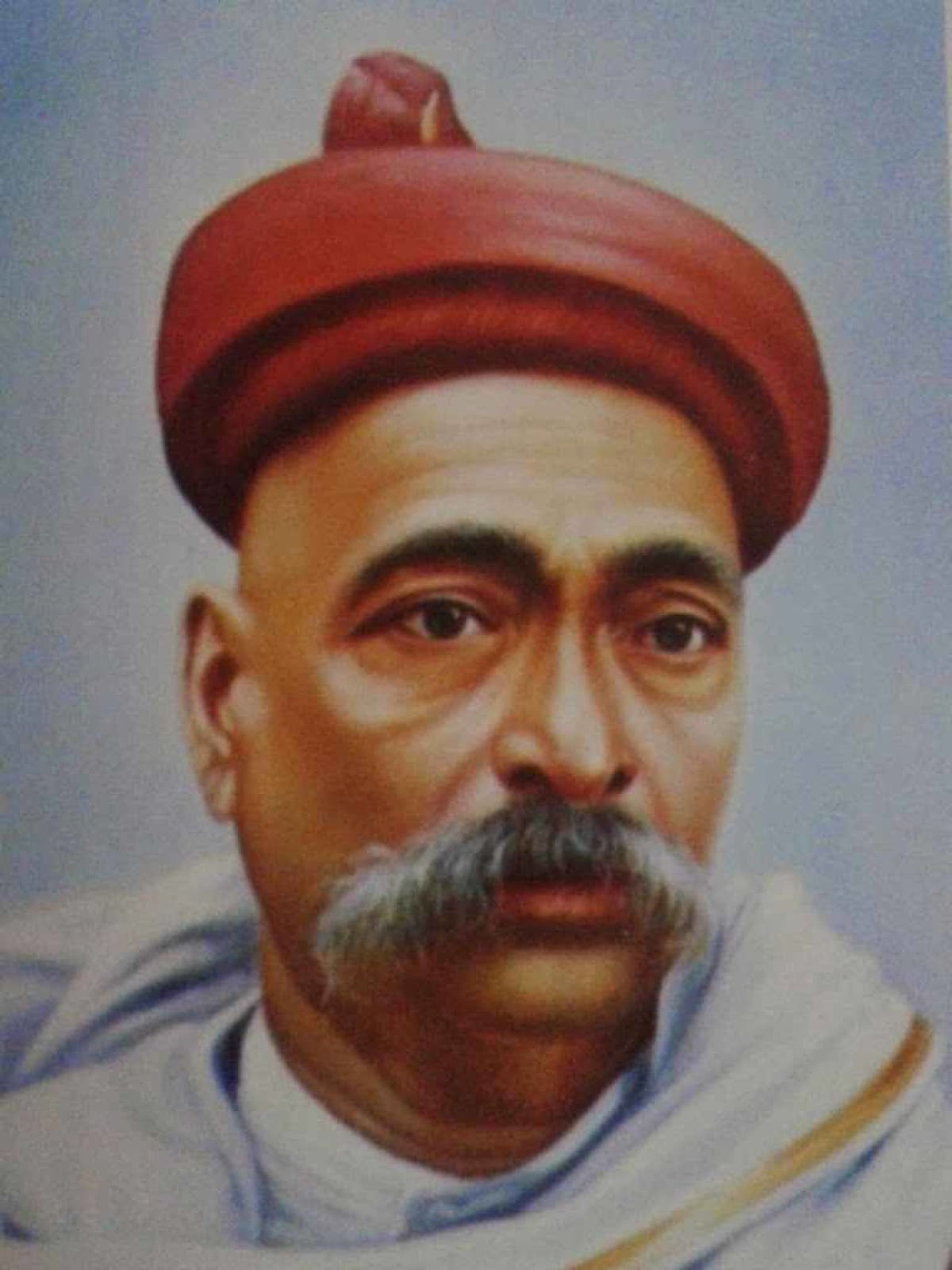
- Bipin Chandra Pal
- Bal Gangadhar Tilak
- Lala Lajpat Rai
- Gopal Krishna Gokhale
Answer
Bal Gangadhar Tilak
Reason — The given picture shows Bal Gangadhar Tilak, an assertive nationalist leader.
Anita wants to do a project on the Governor General who introduced the Subsidiary Alliance. Who among the following will she choose?
- Lord Wellesley
- Lord Cornwallis
- Lord Canning
- Lord Dalhousie
Answer
Lord Wellesley
Reason — The policy of Subsidiary Alliance was introduced by Lord Wellesley.
From the given descriptions of the Cold War, choose the odd one out.
- It was a consequence of the Second World War.
- Uneasy peace between the two countries.
- Division of the world into two power blocs.
- Two countries joined hands to fight Britain and France.
Answer
Two countries joined hands to fight Britain and France.
Reason — The Cold War was a period of ideological and political tension between the U.S. and the Soviet Union, but there was no direct military conflict. Instead, it involved proxy wars, nuclear arms race, and diplomatic struggles.
Which repressive policy of Lord Lytton is this picture associated with?
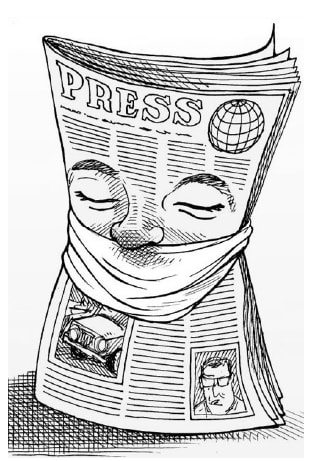
- The Vernacular Press Act
- The Arms Act
- Removal of Import Duties
- Organising the Grand Delhi Durbar
Answer
The Vernacular Press Act
Reason — The Vernacular Press Act, enacted in 1878, forbade vernacular papers to publish any material that might incite feelings of dissatisfaction against the British Government. This act was not applicable to English newspapers.
Which of the following countries suffered due to the atom bomb during World War II?
- France
- Japan
- Germany
- Britain
Answer
Japan
Reason — The USA dropped atom bombs on the Japanese cities of Hiroshima and Nagasaki when they refused to surrender in August, 1945.
Which of the following statements about the composition of the General Assembly is NOT true?
- All countries are members.
- Decisions are made by the voting of the majority members.
- Each State has five representatives but has one vote.
- Permanent members have the Veto Power.
Answer
Permanent members have the Veto Power.
Reason — Veto power refers to the Security Council, not the General Assembly. The five permanent members of the Security Council (China, France, Russia, the United Kingdom, and the United States) do have veto power over substantive decisions.
Identify the Early Nationalists Leaders
P: Dadabhai Naoroji
Q: Bipin Chandra Pal
R: Surendranath Banerjee
S: Aurobindo Ghosh
- P & Q
- R & S
- P & R
- Q & S
Answer
P & R
Reason — The Early Nationalists are Dadabhai Naoroji and Surendranath Banerjee, while Bipin Chandra Pal and Aurobindo Ghosh are Assertive nationalists.
Which of the following has influenced the objectives of the Non-Aligned Movement?
- NATO
- The Panchsheel
- SEATO
- The Warsaw Pact
Answer
The Panchsheel
Reason — The Panchsheel or the five principles of peaceful co-existence formed the basis of the Bandung Conference of 1955 and were a great contribution to the development of the NAM, thus shaping its objectives. NATO, SEATO and the Warsaw Pact were military alliances formed by the two power blocs.
Which agency of the United Nations Organisation is connected to this picture?
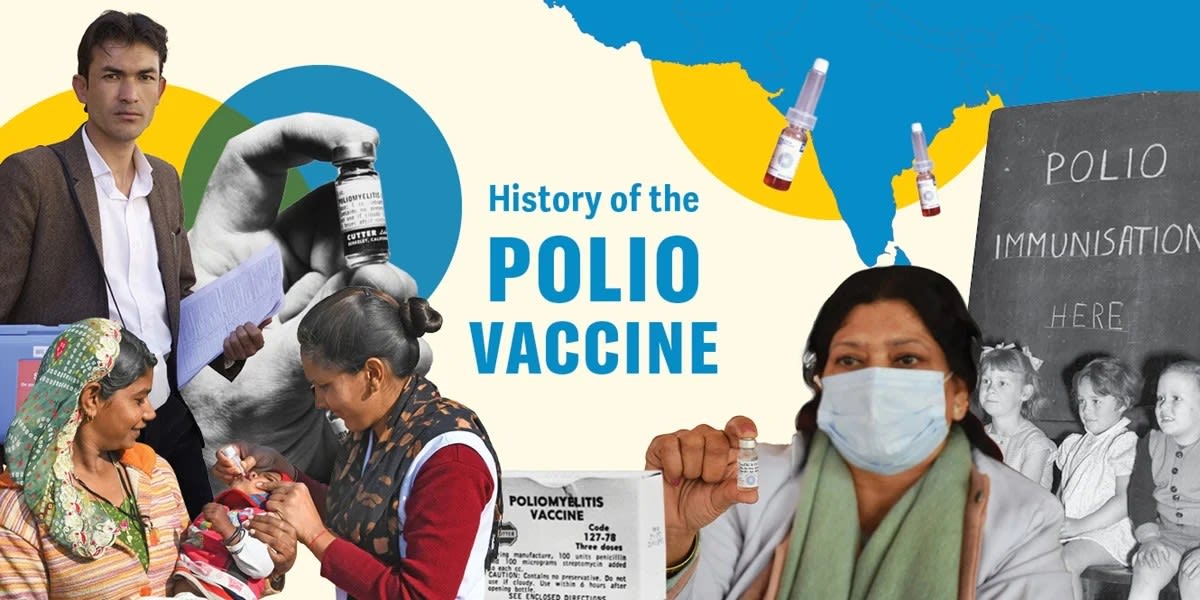
- WHO
- FAO
- UNESCO
- IMF
Answer
WHO
Reason — The picture is connected with polio vaccination. WHO makes a worldwide campaign in providing effective immunisation for all children to prevent six major communicable diseases of childhood, poliomyelitis being one of them.
Mention any two powers of the Prime Minister with reference to the President.
Answer
Two powers of the Prime Minister with reference to the President are:
- It is on the advice of the Prime Minister that the President summons and prorogues the Parliament and dissolves the Lok Sabha.
- The PM advises the President on various appointments to important posts such as the Judges of the Supreme Court, the Governors and Ambassadors.
Imagine you are a young member of the Forward Bloc, how would you and your party work towards establishing a socialist state?
Answer
Me and my party would work for the establishment of a Socialist State through:
- Reorganisation of agriculture and industry on socialist lines.
- Abolition of the Zamindari system.
- Introduction of a new monetary and credit system.
Mention any two points to highlight the significance of the Lucknow Pact.
Answer
Two points highlighting the significance of the Lucknow Pact are:
- Hindu-Muslim Unity — It was a marvellous step in achieving Hindu-Muslim unity. The joint demands of the Congress and the Muslim League could now impress upon the Government the urgency of their demands.
- Unity within the Congress — It brought about unity between the Assertive/Radical Nationalists and the Early Nationalists, who had been pursuing different paths since the Surat Session of 1907, thereby strengthening the Congress.
Mention any two methods of the Early Nationalists.
Answer
Two methods of the Early Nationalists were:
- They drafted petitions and memorandums and submitted them to the Government.
- They organised annual sessions, processions and meetings to educate the people, to arouse political consciousness and to create a powerful public opinion in favour of their demands.
Name any two countries of the Triple Entente.
Answer
Two countries of the Triple Entente were — France and Russia.
Name any two objectives of the Non-Aligned Movement.
Answer
Two objectives of NAM are as follows:
- To oppose colonialism, imperialism and racial discrimination.
- To advocate sovereign equality of all states.
In India, the Supreme Court can exercise advisory jurisdiction under Article 143 of the Constitution. With regard to the President, these opinions are purely advisory.
Mention any two points about the Supreme Court that you can deduce from the passage.
Answer
In India, the Supreme Court can exercise advisory jurisdiction under Article 143 of the Constitution. This means that:
- The Supreme Court can give its opinion on any question of law or fact of public importance as may be referred to it for consideration by the President.
- This advice is not binding on the Government and cannot be enforced like a judgment.
India has a parliamentary system of governance. With reference to the Indian Parliament, answer the following questions:
(i) State any three ways in which the legislature controls the executive.
(ii) How and by whom is the Speaker of the Lok Sabha elected?
(iii) Mention any four financial powers of the Parliament.
Answer
(i) Three ways in which the Legislature controls the Executive are:
Interpellation: The Question Hour, Calling Attention Notices and Half-an-Hour Discussion are some of the devices to seek information from the government about its policies and performance.
For example - The first hour of a sitting in both Houses is allotted for asking and answering of questions related to matters of public importance or to highlight a grievance. It is a valuable device against injustice and slackness of the government.Vote of No-confidence: If a Government acts against the Constitutional provisions, it can be voted out of office by passing a vote of no-confidence against the Prime Minister, or the Ministry as a whole or any of its members. In such a case, the whole Ministry has to resign.
Monetary Controls: During the budget session a cut motion may be moved. Parliamentary Committee on Public Accounts ensures that public money is spent in accordance with Parliament's decision. It examines reports of the Comptroller and Auditor-General of India.
(ii) The Speaker of the Lok Sabha is elected from among its own members soon after the newly elected House meets for the first time. The previous Speaker does not vacate his/her office till a new speaker is elected by the new Lok Sabha in its first meeting. The Speaker is elected for a period of five years, and can seek re-election for any number of times, if he/she is elected as a member of the Lok Sabha.
(iii) The Union Parliament has following four financial powers:
- Passing the Union Budget — The Parliament has the power to pass the annual Union Budget.
- Making Supplementary Grants — If the amount authorized by the budget is insufficient, the Parliament can make supplementary grants.
- Vote on Account — If the Budget is not passed before April, then there would be no money for the executive to spend. To provide money to the executive for day-to-day expenditure till the passage of the budget, a “Vote on Account” is passed.
- Salaries — The salaries and allowances of MPs and Ministers are determined by Parliament.
The President of India works on the advice of the Prime Minister and his Cabinet. With reference to the Prime Minister, answer the following questions:
(i) Mention any three qualifications required for a person to be elected as the President of India.
(ii) Mention any three types of emergencies that can be declared by the President.
(iii) Mention any four legislative powers of the President.
Answer
(i) A person shall be eligible for election as Vice-President, if he -
- is a citizen of India.
- has completed the age of thirty-five.
- is qualified for election as a member of the Council of States.
(ii) Three types of emergencies that can be declared by the President are:
- National or General Emergency — The President can proclaim National Emergency if there is a danger of foreign aggression, civil war, insurgency or any other such cause.
- Breakdown of Constitutional Machinery — If the President, on receipt of a report from the Governor or otherwise, is satisfied that the governance of a State cannot be carried on in accordance with the provisions of the Constitution, he/she may declare an emergency in the State. This is called President's rule because the President may assume to himself all or any of the functions of the Government of the State.
- Financial Emergency — The President can proclaim Financial Emergency if there is a setback to the financial stability or credit feasibility of the country.
(iii) Four legislative powers of the President are-
- Addresses Sessions of Parliament — The President addresses both Houses of Parliament assembled together for the first session after each General Election to the Lok Sabha and at the commencement of the first session of each year. In this address he lays emphasis on the internal and external policies of the Government. The President has the power to address either House of Parliament or their joint sitting at any time.
- Messages to Parliament — He has the power to send messages to either House of Parliament either in the regard to any pending Bill or to any other matter.
- Dissolve the Lok Sabha — He can dissolve the Lok Sabha and order fresh elections. Rajya Sabha is a permanent body, not subject to dissolution.
- Nomination of Members — The President nominates 12 members to the Rajya Sabha from among persons having special knowledge or practical experience in these matters-literature, science, art and social service.
The High Courts and Subordinate Courts are part of the integrated judicial system. With reference to the statement, answer the following questions:
(i) Mention three cases which fall under the Original Jurisdiction of the High Court.
(ii) Who appoints the High Court Judges? Mention any two qualifications required for a person to be appointed as a High Court Judge.
(iii) (a) How do Lok Adalats help the Superior Courts?
(b) Name any three writs issued by the High Court.
Answer
(i) High Courts have original jurisdiction, that is, the power to hear and decide cases at the first instance. It has original jurisdiction in the following cases:
- Matters relating to State revenue and its collection.
- Cases regarding wills, divorce, marriage, company law and contempt of court may be referred or brought before the High Court directly.
- To interpret the Constitution.
(ii) The President appoints the High Court Judges in consultation with the Chief Justice of India, the Governor of the State and the Chief Justice of the High Court.
According to the Constitution, a person shall be qualified for appointment as a Judge of a High Court under the following conditions:
- He should be a citizen of India.
- He should not be over 62 years.
- He has held a judicial office in the territory of India for at least ten years or he has been an advocate of a High Court for at least ten years.
(iii) (a) The Lok Adalats reduce the workload of other courts enabling them to deal with more serious matters. This reduces delays in higher courts. They provide fast and inexpensive justice and helps in reducing the huge backlog of the higher courts.
(b) Three writs issued by the High Court are:
- Habeas Corpus
- Mandamus
- Prohibition.
Read the excerpt given below and answer the questions that follow:
The Indian Rebellion of 1857, also known as the Indian Mutiny, the Sepoy Mutiny, or the First War of Indian Independence, was a widespread uprising against British rule in India that began in May 1857. The rebellion was sparked by the sepoys' mutiny in Meerut on May 10, 1857, and quickly spread to other parts of India. On May 10, 1857, Indian soldiers, known as sepoys, rebelled against their British officers in the town of Meerut, triggering a rebellion. The rebellion quickly spread to other parts of India with many Indian princes and soldiers joining the uprising.
— [Edited] TIMESOFINDIA.COM / May 10, 2023
(i) What was the immediate cause for the rebellion?
(ii) Mention any three political causes of the Revolt.
(iii) Mention any four changes made in the army after the Revolt.
Answer
(i) The immediate cause of the First War of Independence was the introduction of the Enfield rifle. The loading process of the Enfield rifle involved bringing the cartridge to the mouth and biting off the top greased paper with the teeth.
In January 1857, there was a rumour in the Bengal regiments that the greased cartridge had the fat of cow or pig. The sepoys were now convinced that the introduction of greased cartridges was a deliberate move to defile Hindu and Muslim religions. So, the soldiers refused to use these cartridges and staged an uprising when they were forced to use them.
(ii) Three political causes of the First War of Independence were —
- Policy of Expansion — The British policy of territorial expansion and gradual annexation of the native Indian states was one of the major grievances of the Indian rulers.
- Absentee Sovereignty of the British — Indians felt they were being ruled from England and India's wealth was drained to England and not utilised for their welfare.
- Treatment given to Nana Saheb — Nana Saheb was the adopted son of Baji Rao II, the last Peshwa. The British refused to grant Nana Saheb the pension they were paying to Baji Rao II. This treatment was widely resented in the Maratha region. Nana Saheb sent emissaries to different parts of the country for generating awareness among the Indians about the British policies. Nana Saheb also traveled - between Delhi and Lucknow to gather support for the movement.
Other Indian rulers, who were not adversely affected, also became suspicious of their future.
(iii) The India army was reorganised after 1858, to prevent the reoccurrence of another uprising, in the following manner:
- The strength of European troops in India was increased. The ratio of European to Indian troops was fixed at 1:2 (Bengal army) and 2:5 (Madras and Bombay armies). Practically the same ratio was maintained till the First World War. The general principle adopted was that the number of Indian sepoys should not exceed twice that of the European troops.
- European troops were kept in key geographical and military positions.
- To desist the Indian soldiers from rising again against the British rule, the sophisticated weapons and ammunition were never placed under the charge of Indians. All Indian artillery units, with the exceptions of a few mountain units, were disbanded.
- Newspapers, journals and nationalist publications were prevented from reaching the soldiers to keep the Indian army separated from the life of the rest of the population.
The First War of Independence led to the growth of Nationalism in India. With reference to this, answer the following questions:
(i) Who was the founder of Congress? Mention any two organisations which were precursors to the Congress.
(ii) Mention any three objectives of the Congress.
(iii) Mention any two contributions each of:
(a) Jyotiba Phule
(b) Raja Ram Mohan Roy
Answer
(i) The Indian National Congress (INC) was founded by Allan Octavian Hume in 1885. Two organisations which were precursors to the Congress are:
- East India Association (1866)
- Indian Association (1876).
(ii) Three objectives of the Indian National Congress are:
- To promote friendly relations between nationalist political workers from different parts of the country.
- To develop and consolidate the feelings of national unity irrespective of caste, religion or province.
- To train and organise public opinion in the country.
(iii) (a) Two contributions of Jyotiba Phule are:
- Caste Abolition: Phule fought against the caste system and founded the Satya Shodhak Samaj in 1873 to uplift the lower castes and promote social equality.
- Education for Women and Lower Castes: He opened the first school for girls in Pune in 1848 and advocated for education among the oppressed.
(b) Two contributions of Raja Ram Mohan Roy are:
- Founder of Brahmo Samaj: Roy founded the Brahmo Samaj in 1828, promoting monotheism and social reform, challenging idol worship and caste discrimination.
- Abolition of Sati: He campaigned against the practice of Sati, leading to its prohibition by the British in 1829.
Mahatma Gandhi launched three major movements in his fight against the British. With reference to the Gandhian Movements answer the following:
(i) Mention any three causes of the Non-cooperation Movement.
(ii) What were the causes of the Civil Disobedience Movement? Which march marked the beginning of this movement?
(iii) The Gandhi Irwin Pact was an attempt to end political tensions in India. Mention any four clauses of this Pact to justify this statement.
Answer
(i) There were three main reasons behind the Non-cooperation movement:
- Rowlatt Act: The Rowlatt Act authorised the Government to imprison any person without trial and convict him in a court. It implied:
- Arrest of a person without warrant.
- In camera trial (trial in seclusion).
- Restrictions on movements of individuals.
- Suspension of the Right of Habeas Corpus.
Gandhiji appealed to the Viceroy to withhold his consent to the Rowlatt Act. However his appeal was ignored. He started 'Satyagraha' as a challenge to the government.
Jallianwala Bagh Tragedy: Jallianwala Bagh Tragedy happened in Amritsar on April 13, 1919. On that day, peaceful gathering had assembled at Jallianwala Bagh to protest against the Rowlatt Act. Without any warning, General Dyer ordered his troops to open fire on the unarmed crowd, resulting in hundreds of deaths and thousands of injuries. It was made clear to the Indians that the British had no intention of parting with political power or sharing it with Indians.
Khilafat Movement: In the First World War Turkey was defeated and the Sultan of Turkey, who was the Caliph was deprived of all authority. The Muslim population in India started a powerful agitation known as the Khilafat Movement, under the leadership of the Ali Brothers. 'Khilafat Day' was observed on October 17, 1919 on an all-India scale. Gandhiji took the chance to unite Hindus and Muslims. Mahatma Gandhi was elected as President of the All-India Khilafat Conference in November 1919. He advised the Khilafat Committee to adopt a policy of Non-Cooperation with the Government.
(ii) The causes of the Civil Disobedience Movement are given below:
- Opposition to the Salt Tax — The British imposed the salt tax, which made salt production and sale by Indians illegal. The tax was seen as deeply unfair because it affected all sections of society, especially the poor, who relied on salt for everyday consumption. Gandhi’s Salt March (Dandi March) in 1930 directly challenged this oppressive tax.
- Simon Commission — In November 1927, the British Government appointed the Simon Commission to assess the need for constitutional reforms. Composed of seven British MPs, it had no Indian members, which was seen as an insult to India's self-respect and a violation of self-determination. The Congress, Muslim League, and Hindu Mahasabha decided to boycott the commission in all forms.
- Nehru Report (1928) — Lord Birkenhead justified the exclusion of Indians from the Simon Commission by claiming they were divided on reforms. To counter this, an All Parties Conference was held in 1928, uniting leaders from various groups. Motilal Nehru chaired the committee, with Tej Bahadur Sapru and N.C. Kelkar as key members. Their report became known as the Nehru Report. The Nehru Report proposed:
- Dominion Status for India.
- A Parliament with a Senate (200 members, elected for 7 years) and a House of Representation (500 members, elected for 5 years through adult franchise).
- Joint electorates with minority seat reservations (except in Punjab and Bengal), based on population.
- Creation of new provinces on a linguistic basis.
- 19 Fundamental Rights, including voting rights, freedom from arbitrary arrest, and freedom of conscience.
- Demand for Poorna Swaraj (Complete Freedom) — When the British Government gave no positive response to the Nehru Report, then the Congress, under the presidentship of Jawaharlal Nehru in 1929 (at Lahore Session), passed a resolution declaring Poorna Swaraj (Complete Freedom) as the ultimate objective of the Congress.
On 12th March, Mahatma Gandhi began the historic march from Sabarmati Ashram to Dandi, a village on the Gujarat sea coast to break the Salt law. This Dandi March marked the beginning of this movement.
(iii) The Gandi-Irwin Pact was signed by Gandhiji and Lord Irwin, the then Viceroy, in March 1931. Four clauses of this Pact are:
- The government agreed to release all political prisoners, except those guilty of violence.
- The government agreed to permit the free collection or manufacture of salt by persons near the seacoast.
- The Congress areed to suspend the Civil Disobedience Movement.
- The Congress areed to participate in the second session of the Round Table Conference.
Look at the picture given below and answer the questions that follow:
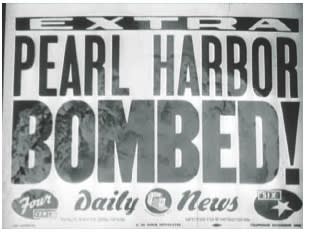
(i) Which country was responsible for the bombing? Mention any two consequences of the World War associated with this incident.
(ii) Explain the Policy of Appeasement which led to the Second World War.
(iii) The unfair Treaty of Versailles led to the rise of dictatorship in Germany. Mention any four clauses of this treaty to support this statement.
Answer
(i) Japan was responsible for the ariel attacks on the Pearl Harbor on December 7, 1941. Two consequences associated with this incident are:
- The USA joined the war to halt Japanese advance. They wanted to liberate the islands in the South West Pacific.
- The USA dropped atomic bombs on the Japanese cities Hiroshima and Nagasaki in 1945 to make Japan surrender. This caused mass destruction of life and property in Japan.
(ii) Appeasement meant accepting the hostile demands of an aggressive nation to gain peace.
- Britain and France followed the policy of appeasement towards dictatorial countries like Germany and Italy because they felt that the dictators had a real cause of grievance due to the humiliating terms of the Treaty of Versailles and if their grievances were removed they would not disturb world peace.
- Further, they wanted to check the rising tide of Communism and Russian Bolshevism.
- Britain and France feared that Germany would divert towards Russian Bolshevism.
- They, therefore, allowed Germany to rearm and to re-militarise the Rhineland and capture Austria and Czechoslovakia.
- So without the Western countries' policy of appeasement, Fascism or Nazism could not have survived so long and would not have been able to unleash the Second World War.
(iii) The unfair Treaty of Versailles led to the rise of dictatorship in Germany. Four clauses of the Treaty of Versailles are:
- Germany was declared guilty of aggression and had to pay war reparation of 33 billion dollars.
- The Saar coal mines were given to France for 15 years and the area was to be governed by the League of Nations.
- The area of the Rhine valley was demilitarized and the German territory west of Rhine was to be occupied by the Allied troops for 15 years.
- The German Army was restricted to a force of 1,00,000 soldiers and the Navy was limited to 15,000 men and 24 ships. The Air Force and submarines were banned.
The United Nations maintains international peace and security. With reference to its organs and agencies, answer the following questions:
(i) What is the composition of the Security Council?
(ii) Mention any three functions of the International Court of Justice.
(iii) Mention any four functions of the WHO.
Answer
(i) The Security Council consists of 15 members.
- It has five permanent members —
- China
- France
- Russia
- Britain
- The United States of America
- The regional representation of the ten non-permanent members is:
- Afro-Asian countries — 5
- Latin American countries — 2
- West European and other countries — 2
- East European countries — 1.
- The ten non-permanent members are elected by the General Assembly by a two-third majority for a term of two years.
- A retiring member is not eligible for immediate re-election.
- The Presidency of the Council rotates monthly, according to the English alphabetical listing of its member States.
(ii) Three functions of the International Court of Justice are:
- The International Court of Justice is the principal judicial organ of the United Nations.
- The Court settles, in accordance with international law, the legal disputes submitted to it by the States.
- It gives advisory opinions on legal questions referred to it by duly authorised international organs and agencies.
(iii) Four functions of WHO are as follows:
- It helps countries to improve their health system by building up infrastructure especially manpower, institutions and services for the individual and community.
- It gives important drugs needed for medical care. The WHO launched a programme to immunise children against six major diseases - Measles, Diphtheria, Tetanus, Tuberculosis, Polio and Whooping Cough.
- It promotes research to cure and prevent diseases. For example, it arranged for the investigation of cancer and heart diseases in laboratories in many countries to identify disease-causing organisms, to improve vaccines and to train research workers.
- It works towards providing safe drinking water and adequate waste disposal. The decade 1981-1990 was declared as the International Drinking Water Supply and Sanitation Decade.