
Biology
A biology teacher asked her students to give two examples of vestigial organs in the human body.
Raj said: Wisdom teeth and Pinna
Sonu said: Body hair and large intestine
Lata said: Vermiform appendix and wisdom teeth
Abhay said: Pinna and Ossicles
Who were correct?
- Abhay and Sonu
- Sonu and Lata
- Raj and Lata
- Abhay and Raj
Human Evolution
ICSE Sp 2025
6 Likes
Answer
Raj and Lata
Reason — Wisdom teeth, Pinna and Vermiform appendix are vestigial organs whereas large intestine, ossicles and body hairs perform important functions in human body, hence, are not vestigial organs.
Answered By
2 Likes
Related Questions
Rahul inserted a hairpin into his right ear to remove ear wax. He felt a sudden sharp pain with loss of hearing. This was due to:
- Rupture of eardrum
- Rupture of vestibule
- Rupture of cornea
- Rupture of pinna
Assertion (A): All food chains begin with herbivores.
Reason (R): Green plants are heterotrophs.
- A is True and R is False
- A is False and R is True
- Both A and R are True
- Both A and R are False
During a practical exam, a plant cell in a particular solution was placed under a compound microscope. Students were told to observe the cell and name the tonicity of the solution and mention the process that occurred in the cell.
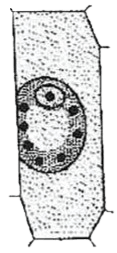
- Isotonic, Endosmosis
- Hypotonic, Active Transport
- Hypertonic, Endosmosis
- Hypertonic, Exosmosis
Name the following:
(a) The basic units of heredity.
(b) The undesirable change in the environment leading to its deterioration.
(c) The structure that connects placenta and the human foetus.
(d) The statistical study of human population.
(e) The nitrogenous base that pairs with adenine.