
Mathematics
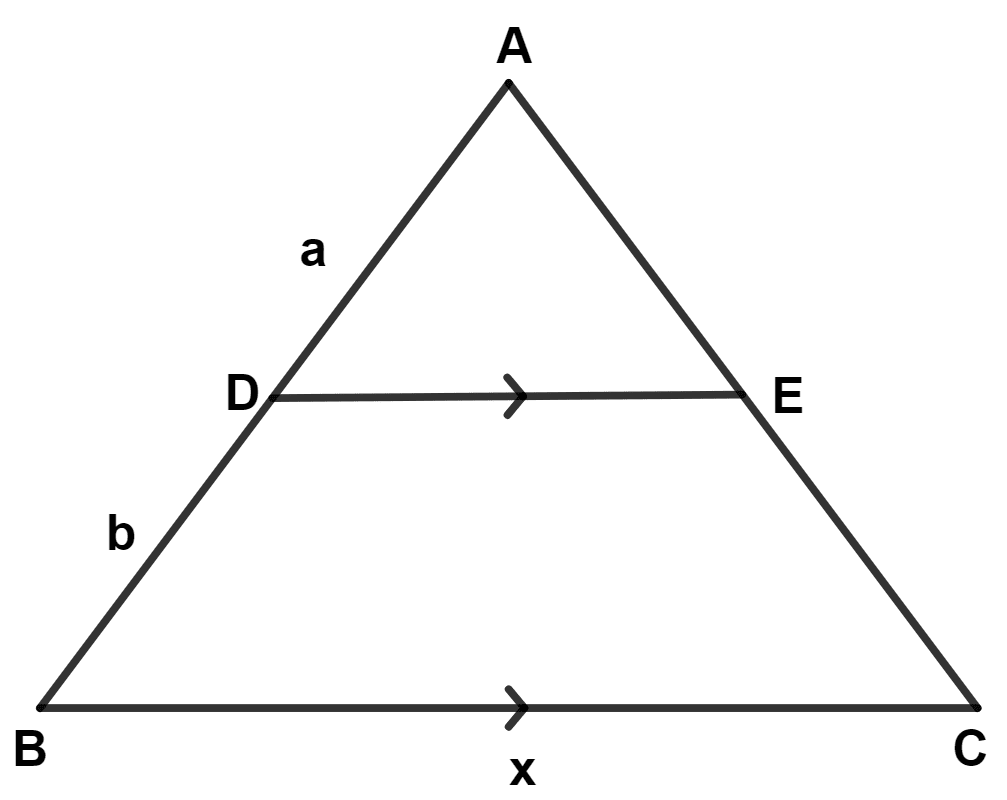
In △ ABC, DE // BC, AD = a, DB = b and BC = x, then, DE is equal to :
Similarity
14 Likes
Answer
In △ ADE and △ ABC,
⇒ ∠DAE = ∠BAC (Common angles)
⇒ ∠ADE = ∠ABC (Corresponding angles are equal)
∴ △ ADE ~ △ ABC (By A.A. axiom)
We know that,
Corresponding sides of similar triangles are proportional.
Hence, Option 3 is the correct option.
Answered By
3 Likes
Related Questions
If nth term of an A.P. is 6n - 15, then its common difference is :
6
-6
12
-12
If a : b = b : c, then a : c is equal to :
b : a
b2 : a2
a2 : b2
b : c
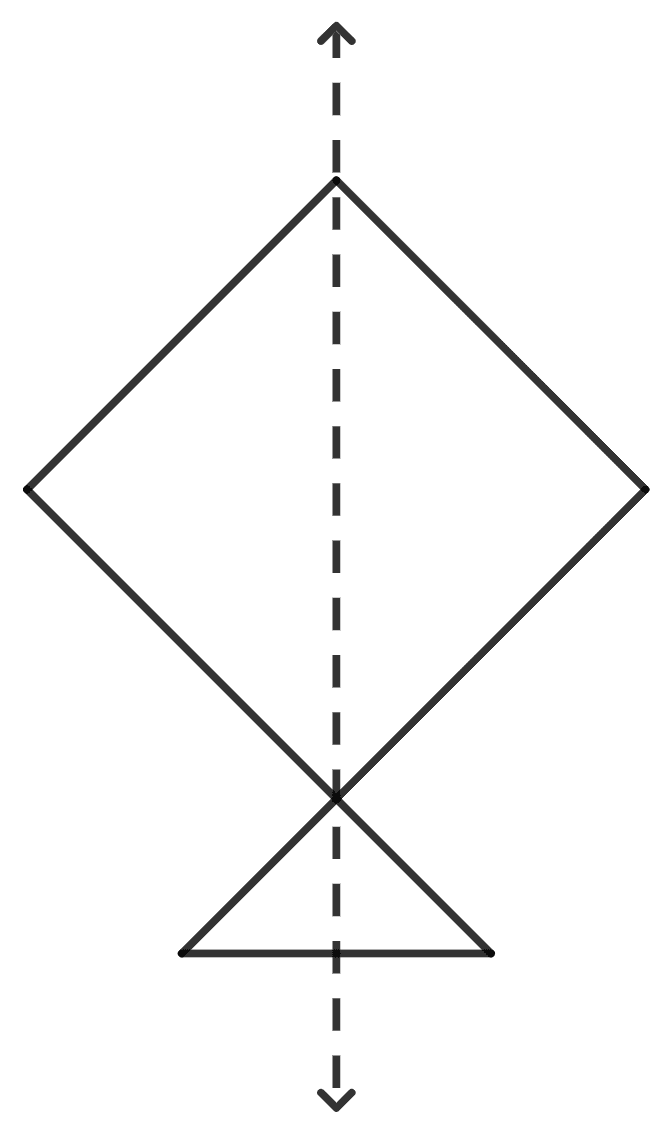
A kite shaped card-board is rotated about its line of symmetry (shown by dotted line). The solid figure so obtained has :
(i) one cone formed
(ii) two cones formed
(iii) three cones formed
only (ii)
only (iii)
both (i) and (iii)
neither (i) nor (iii)
A die is thrown once. The probability of getting a number divisible by both 3 and 5 is :
0
1