
Geography
Across
3 - plants that produce pods with seeds such as peas
Down
1 - supply of water to crops through a system of pipes
2 - dead and decomposed remains of organisms that add nutrients to the soil
4 - animal dung used for fertilising soil

Agriculture
1 Like
Answer

Across
3 - LEGUMES
Down
1 - IRRIGATION
2 - HUMUS
4 - MANURE
Answered By
1 Like
Related Questions
What do we mean by the Green Revolution? How did it help to increase food grain production?
Enumerate any three shortcomings of the Green Revolution.
Read the passage given below and answer the questions that follow:
Topography refers to the relief features. Levelled landscape always helps in ploughing, irrigating and harvesting crops. Thus, the major farming areas are in the plains. On the other hand, crops such as tea and coffee grow better on hill slopes as they cannot withstand stagnant water. Crops such as rice and jute that require more water are ideally grown in the lowlands. Sometimes broad steps have to be cut on highlands such as mountain slopes, to get the flat terrain required for cultivation of these crops. This is known as terrace cultivation.
- What are the advantages of farming on levelled topography? Which crops can be grown on these?
- Why are tea and coffee grown on hill slopes?
- Why do you think some crops need to be grown on hill slopes?
Picture-based Question.
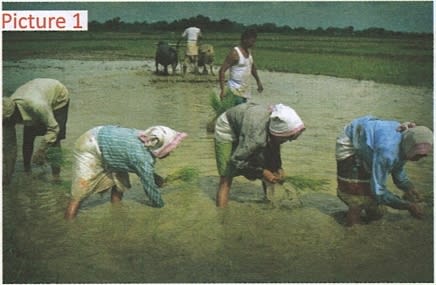
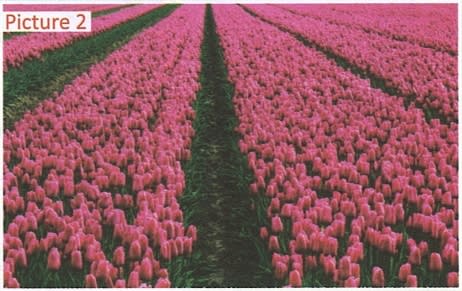
Identify the type of farming shown in:
Picture 1: ……………
Picture 2: ……………Where are these kind of farming practiced?
Picture 1: ……………
Picture 2: ……………Write a brief note describing the farming methods shown in Picture 1 and Picture 2.