
Biology
Assertion (A): Autogamy and allogamy are the two kinds of self-pollination.
Reason (R): Self-pollination occurs within the same flower or two flowers of the same plant.
- Both A and R are true and R is the correct explanation of A.
- Both A and R are true but R is not the correct explanation of A.
- A is true but R is false.
- A is false but R is true.
Pollination
27 Likes
Answer
A is false but R is true.
Reason — Autogamy is self-pollination, while allogamy is cross-pollination.
Self-pollination includes: Autogamy: Within same flower and Geitonogamy: In different flowers on the same plant.
Answered By
16 Likes
Related Questions
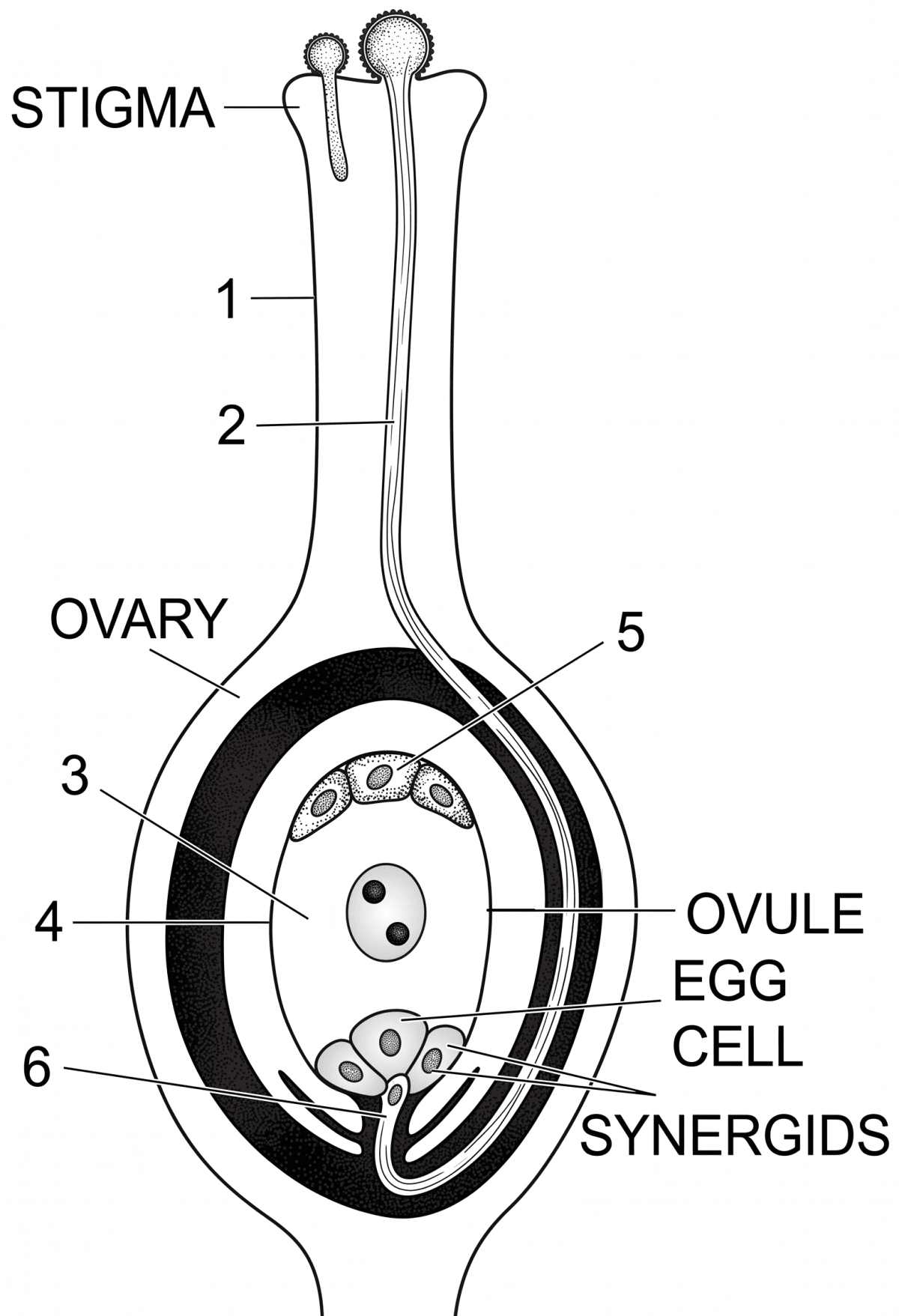
Given below is a diagrammatic representation of the process of fertilization. Study the same and then answer the questions that follow:
(a) Name the parts labelled 1, 2, 3, 4, 5 and 6.
(b) What happens to (i) Ovary (ii) Ovule after fertilization?
(c) What is the function of the synergids?
(d) What part does the stigma play in the process of fertilization?
Shivam dissected a flower of sweet pea and removed all the petals. He observed the reproductive parts of the flower (both male and female), arranged in a specific manner as shown in the diagram given below.

(a) Mention the kind of arrangement of the stamens as shown in the figure.
(b) What are the three kinds of petals that Shivam removed from the flower? Name them.
(c) Name the kind of pollination (on the basis of pollinating agent) with one specific feature of the flower which favours it.
Assertion (A): Herkogamous flowers favour cross-pollination as these flowers have a structural barrier between the male and female reproductive parts.
Reason (R): Pansy is an example of a herkogamous flower which has a hood covering the stigma.
- Both A and R are true and R is the correct explanation of A.
- Both A and R are true but R is not the correct explanation of A.
- A is true but R is false.
- A is false but R is true.
Assertion (A): Entomophilous flowers are brightly coloured and often scented.
Reason (R): The pollinating agents of entomophilous flowers are insects which usually get attracted towards the bright colours or scents of the flowers.
- Both A and R are true and R is the correct explanation of A.
- Both A and R are true but R is not the correct explanation of A.
- A is true but R is false.
- A is false but R is true.