
Biology
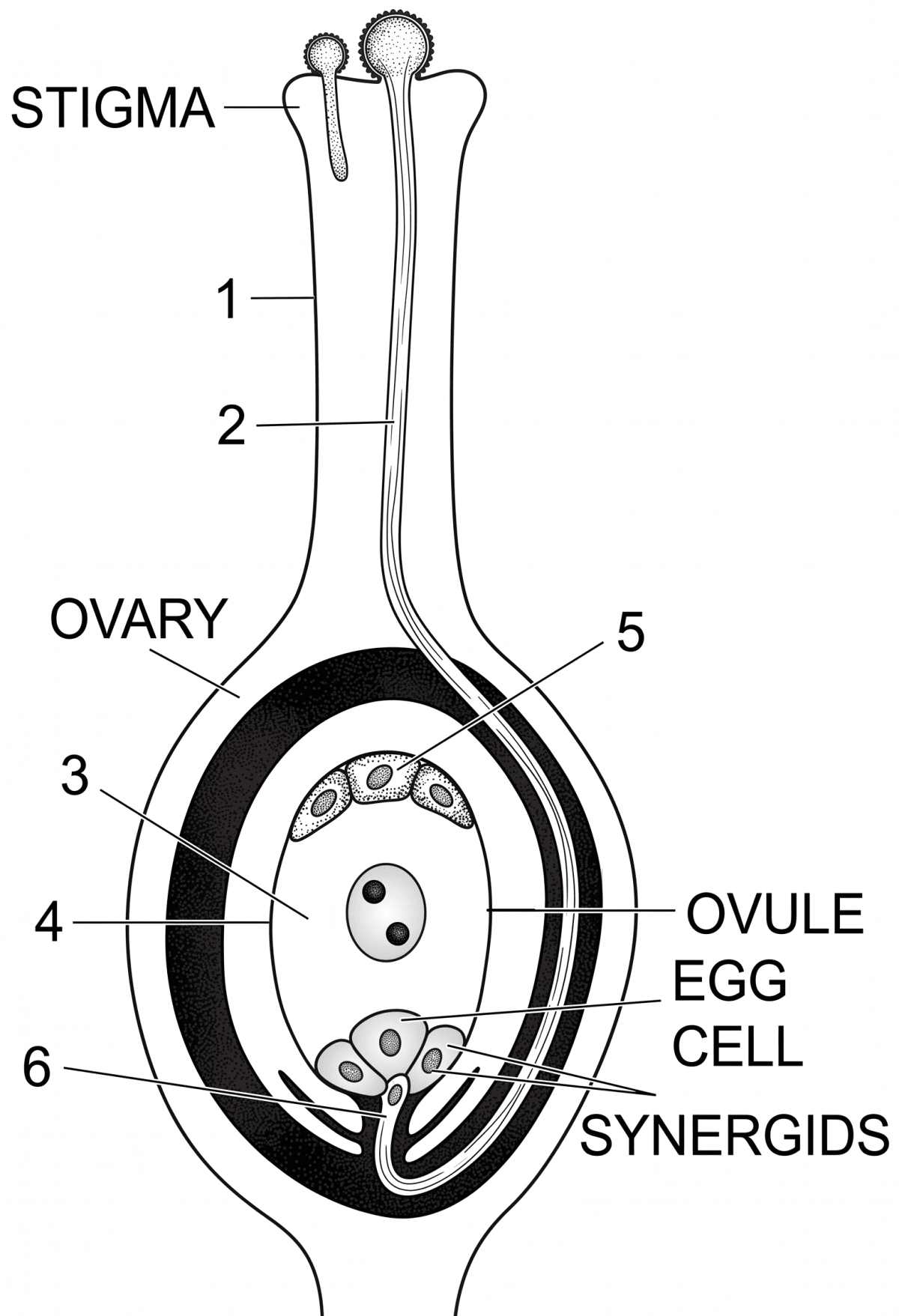
Given below is a diagrammatic representation of the process of fertilization. Study the same and then answer the questions that follow:
(a) Name the parts labelled 1, 2, 3, 4, 5 and 6.
(b) What happens to (i) Ovary (ii) Ovule after fertilization?
(c) What is the function of the synergids?
(d) What part does the stigma play in the process of fertilization?
Pollination
378 Likes
Answer
(a) The parts labelled 1, 2, 3, 4, 5 and 6 are:
- 1 → Style
- 2 → Pollen tube
- 3 → Polar nuclei
- 4 → Embryo sac
- 5 → Antipodal cells
- 6 → Micropyle
(b) After fertilization, the ovary enlarges to form the fruit and the ovarian wall forms the fruit wall. The ovule becomes the seed.
(c) Synergids help guide the pollen tube towards the egg cell and assist in the entry and release of the male gametes into the embryo sac.
(d) Pollen grain is transferred to the stigma during pollination. Germination of pollen grain takes place only if it falls on the stigma. After germination, the pollen tube grows through the stigma and reaches the ovary for the fertilization of the egg cell.
Answered By
225 Likes
Related Questions
The figure shown below represents a process in flowers. Study the same and answer the following questions.

(a) Name and define the process.
(b) Write the technical term of the above mentioned process.
(c) Give two examples of plants in which this process occurs.
(d) Write one advantage and one disadvantage of the process shown.
(e) Name two agents that participate in this process.
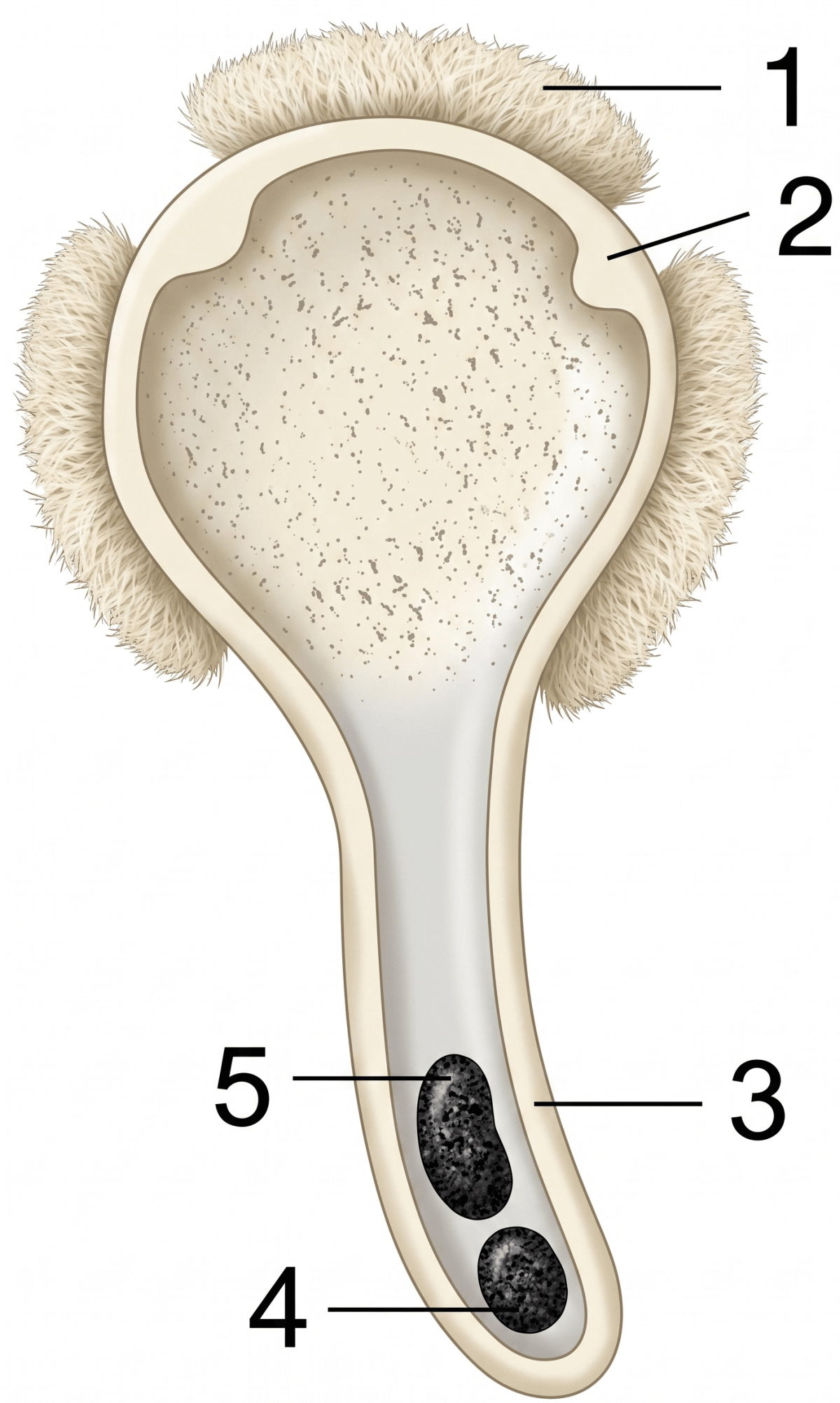
Given alongside is a diagrammatic sketch of the sectional view of a germinating pollen grain. Study the same and then answer the questions that follow:
(a) Name the parts labelled 1, 2, 3, 4 and 5.
(b) Where does the germination of the pollen grain take place and how?
(c) What is the function of the part labelled '4'?
(d) What happens to the part labelled '5' during the process?
Shivam dissected a flower of sweet pea and removed all the petals. He observed the reproductive parts of the flower (both male and female), arranged in a specific manner as shown in the diagram given below.

(a) Mention the kind of arrangement of the stamens as shown in the figure.
(b) What are the three kinds of petals that Shivam removed from the flower? Name them.
(c) Name the kind of pollination (on the basis of pollinating agent) with one specific feature of the flower which favours it.
Assertion (A): Autogamy and allogamy are the two kinds of self-pollination.
Reason (R): Self-pollination occurs within the same flower or two flowers of the same plant.
- Both A and R are true and R is the correct explanation of A.
- Both A and R are true but R is not the correct explanation of A.
- A is true but R is false.
- A is false but R is true.