
Mathematics
Assertion (A): Rhombus becomes square if its diagonals are equal.
Reason (R): OB = OD =
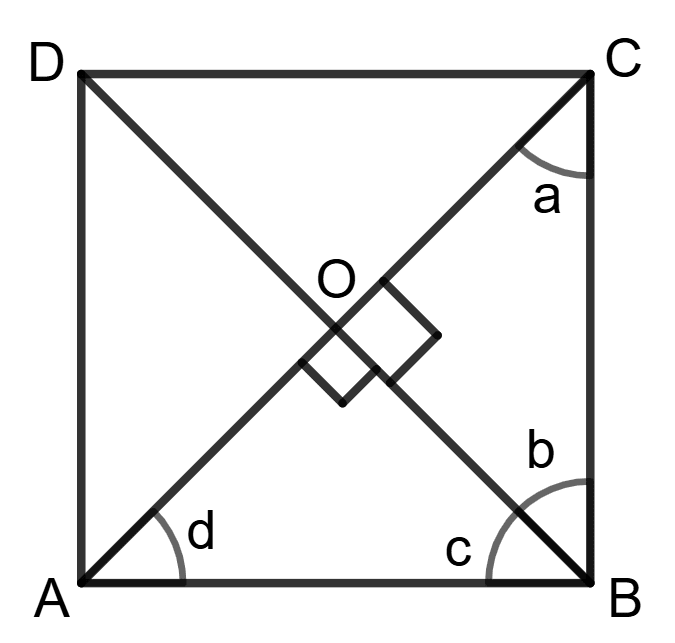
and OC = OA =
⇒ OB = OA = OC
OB = OC
⇒ ∠a = ∠b = 45°
Similarly, ∠c = ∠d = 45°
∠ABC = ∠b + ∠c = 45° + 45° = 90°
- A is true, R is false.
- A is false, R is true.
- Both A and R are true.
- Both A and R are false.
Rectilinear Figures
1 Like
Answer
Both A and R are true.
Explanation
Properties of a Rhombus: The diagonals of a rhombus bisect each other at right angles.
The diagonals divide the rhombus into four right-angled triangles.
When the diagonals of a rhombus are equal, each of these right-angled triangles becomes an isosceles right triangle. This implies that all angles adjacent to the diagonals are 45°, making all four angles of the rhombus equal to 90°.
∴ Assertion (A) is true.
In the rhombus,
OB = OD = x BD
OC = OA = x AC
Since BD = AC,
⇒ OB = OD = OC = OA
Thus, OB = OC
In Δ OAB,
Let ∠ OAB = ∠ OBA = x°.
As the sum of all angles in a triangle is 180°,
∠ OAB + ∠ OBA + ∠ AOB = 180°
⇒ x° + x° + 90° = 180°
⇒ 2x° + 90° = 180°
⇒ 2x° = 180° - 90°
⇒ 2x° = 90°
⇒ x° =
⇒ x° = 45°
Hence, ∠ c = ∠ d = 45°
Similarly, ∠ a = ∠ b = 45°
Thus, ∠ ABC = ∠ a + ∠ b = 45° + 45° = 90°
∴ Reason (R) is true.
Hence, both Assertion (A) and Reason (R) are true.
Answered By
1 Like
Related Questions
Assertion (A): In the given figure, if the area of the parallelogram ABEF is 120 cm2, then area of rectangle ABCD is 120 cm2.
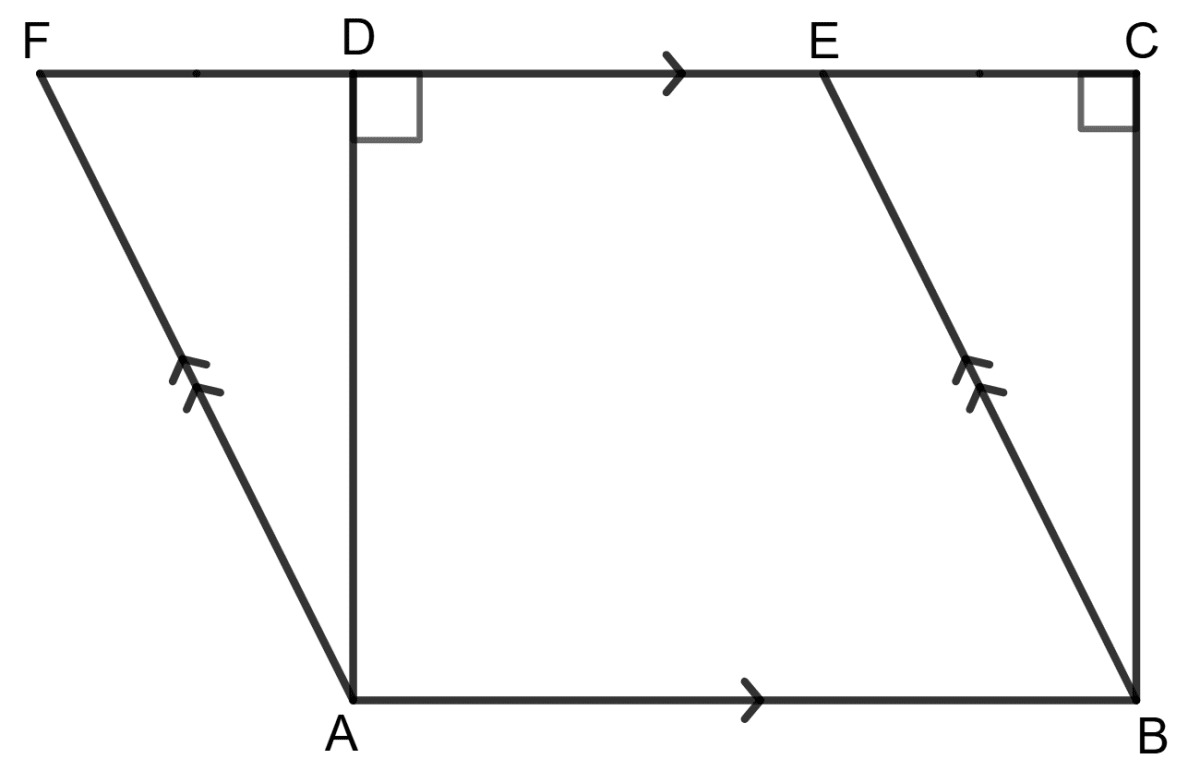
Reason (R): Parallelogram and rectangle on the same base and between the same parallels are equal in area.
- A is true, R is false.
- A is false, R is true.
- Both A and R are true.
- Both A and R are false.
Assertion (A): The length of the side of a regular hexagon is equal to the radius of its circumcircle.
Reason (R):
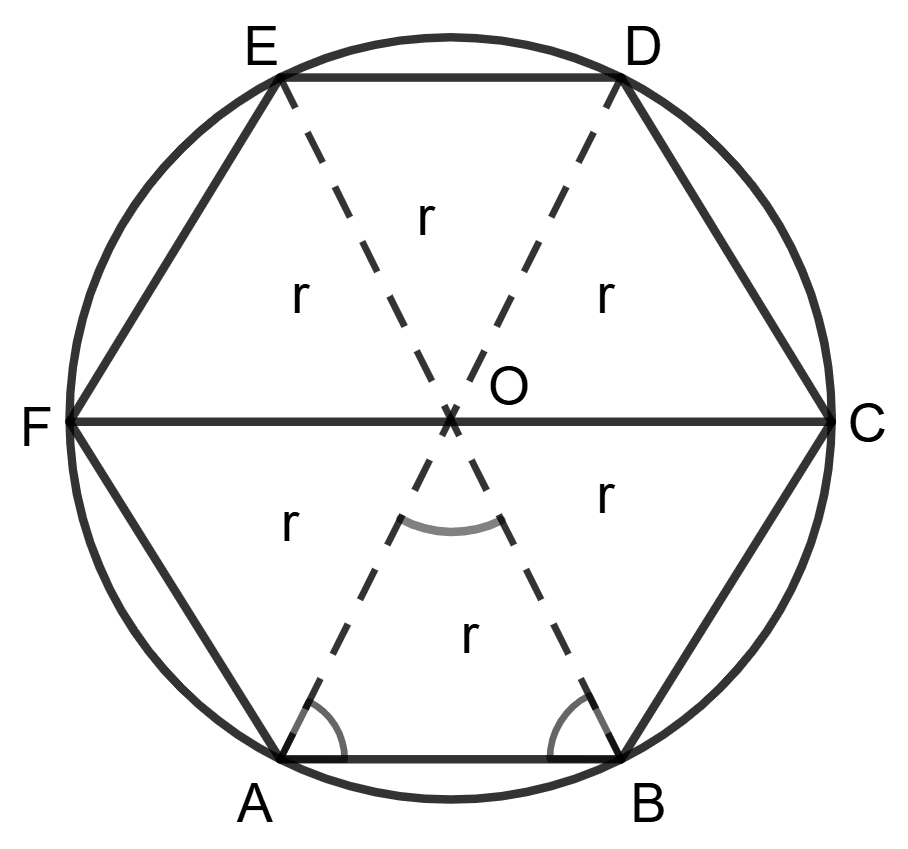
∠AOB =
∠OAB = ∠OBA =
⇒ OAB is an equilateral triangle
So, AB = OA = radius (r) of the circumcircle- A is true, R is false.
- A is false, R is true.
- Both A and R are true.
- Both A and R are false.
Assertion (A): In the given figure, square ABCD and △APB are equal in area.
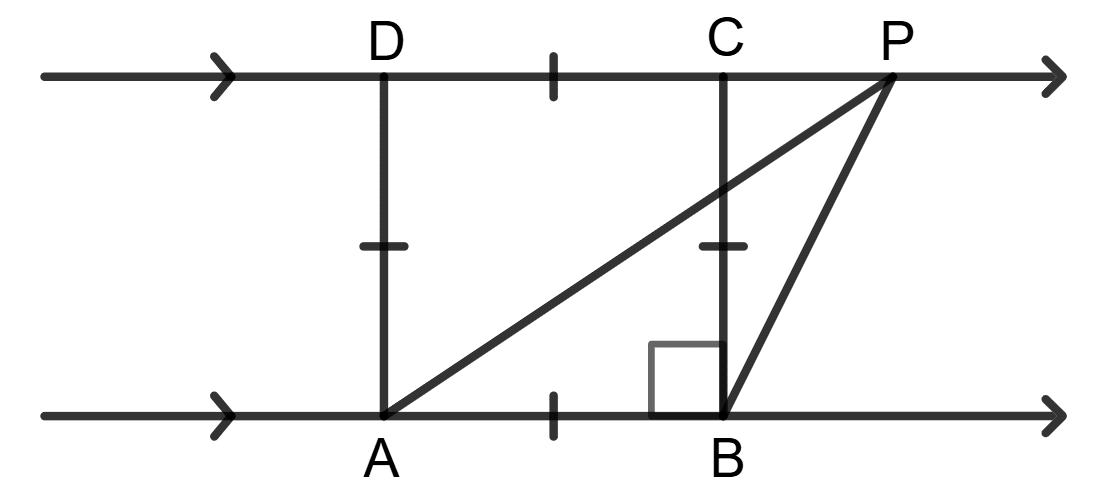
Reason (R): Square ABCD and △APB are on the same base (AB) and between the same parallels (AB//DP).
⇒ Area of △APB =
- A is true, R is false.
- A is false, R is true.
- Both A and R are true.
- Both A and R are false.
Assertion (A): In △ABC, BD : DC = 1 : 2 and OA = OD
Area of △AOB : area of △ABC = 1 : 4
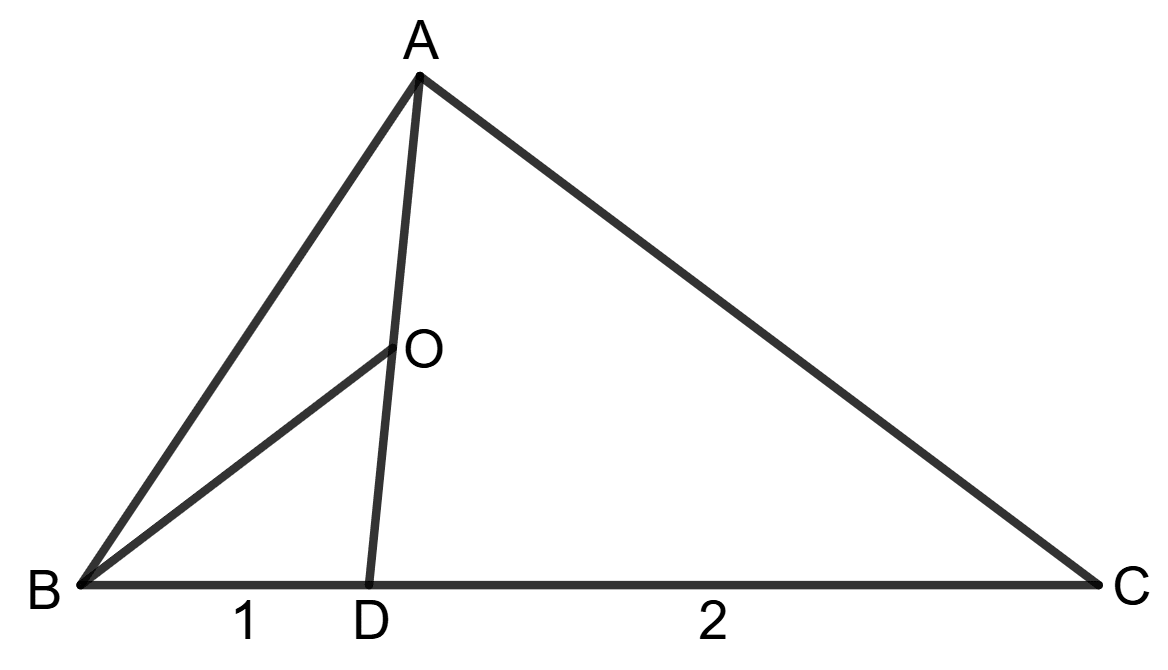
Reason (R):
Area of △AOB =
==
- A is true, R is false.
- A is false, R is true.
- Both A and R are true.
- Both A and R are false.