
Chemistry
Draw the dot and cross structure of the following:
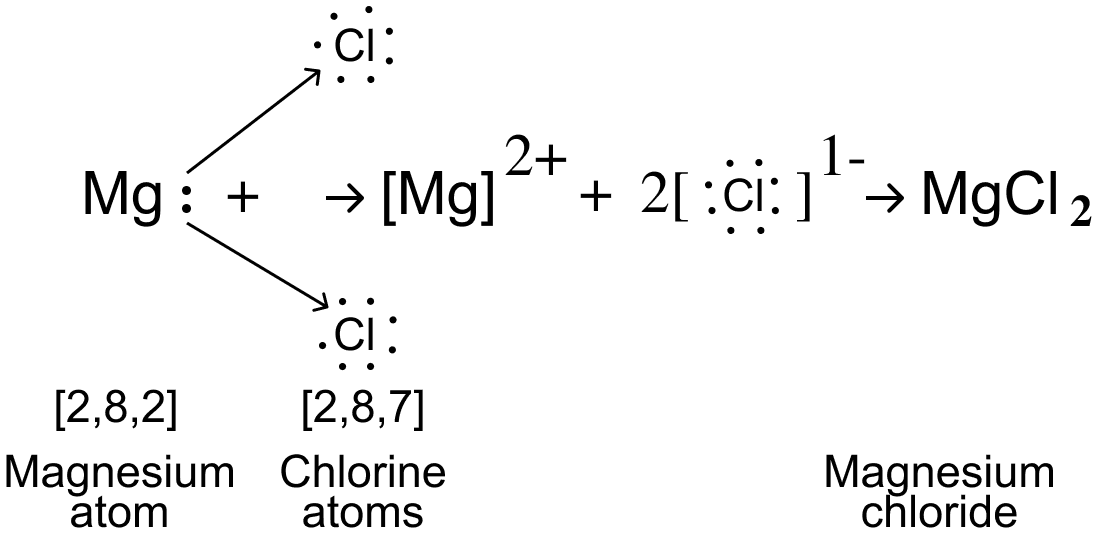
(a) An ionic compound formed when Mg reacts with the dilute HCl.
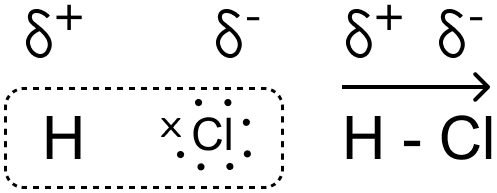
(b) A covalent compound formed when H2 reacts with Cl2.
(c) The positive ion produced when ammonia gas is dissolved in water.
[Atomic number: Mg = 12, Cl = 17, H = 1, N = 7]
Chemical Bonding
34 Likes
Answer
(a) When Mg reacts with the dilute HCl, MgCl2 formed.
(b) Covalent compound formed when H2 reacts with Cl2 is HCl.
(c) The positive ion produced when ammonia gas is dissolved in water is ammonium ion.
![Draw an electron dot diagram to show the formation of ammonium ion [N = 7, H = 1]. Chemical Bonding, Simplified Chemistry Dalal Solutions ICSE Class 10](https://cdn1.knowledgeboat.com/img/scd10/ammonium-ion-electron-dot-diagram-simplified-chemistry-icse-class-10-1200x305.png)
Answered By
12 Likes
Related Questions
Seema added a few pieces of copper turnings to a test tube containing concentrated acid P and she noticed that a reddish-brown gas evolved.
(a) Name the acid P used by Seema.
(b) Write a balanced chemical equation for the reaction that took place.
Answer the following questions with reference to the concentration of bauxite ore.
(a) Name the process used to concentrate the ore.
(b) Give a balanced chemical equation for the conversion of aluminium hydroxide to pure alumina.
Acidulated water is electrolysed using platinum electrodes. Answer the following questions:
(a) Why is dilute sulphuric acid added to water?
(b) Write the reaction taking place at the cathode.
(c) What is the observation at the anode?
(a) State Avogadro’s Law.
(b) Define Co-ordinate bond.