Mathematics
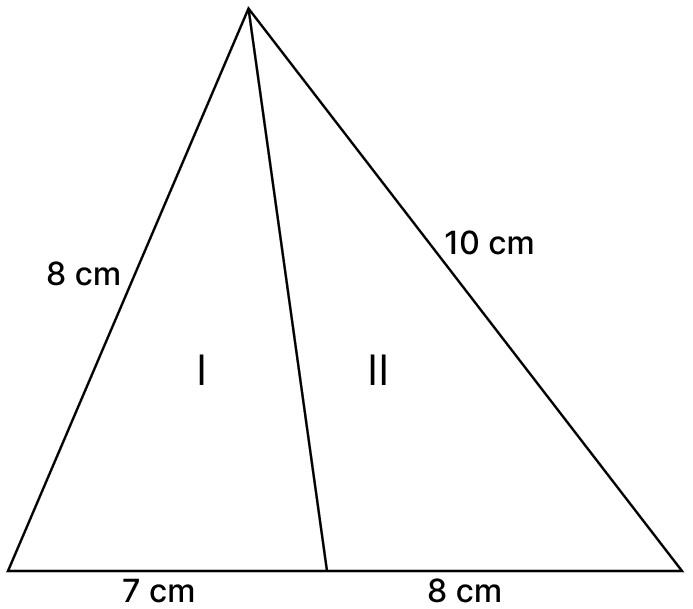
In the figure, semi perimeter of triangle I is known. Would you be able to find the area of triangle II using Heron's formula?
Answer
In triangle I,
Only 2 sides are given, but with the help of semi-perimeter from triangle I we can find 3rd side of the triangle, which is the common side for both the triangles.
In triangle II,
2 sides are already given and we got the 3rd side, which is common side for both triangles.
Since, the length of all the sides of the triangle are known. Thus, by using Heron's Formula we can find the area of triangle II.
Hence, yes we can find area of triangle II using Heron's Formula.
Related Questions
The base of an isosceles triangle is 16 cm and its area is 48 cm2. The perimeter of the triangle is :
24 cm
30 cm
36 cm
42 cm
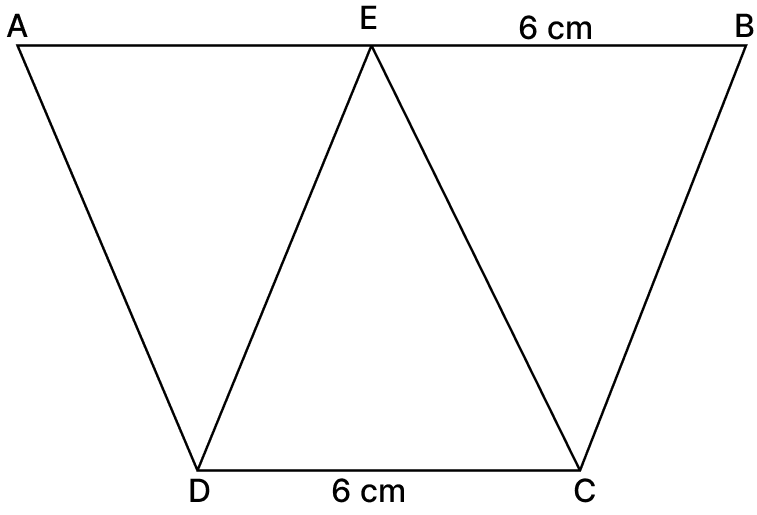
In the given figure, ABCD is a trapezium in which AB || CD. If area of △BEC is 12 cm2, then area of △EDC is :
12 cm2
6 cm2
24 cm2
none of these
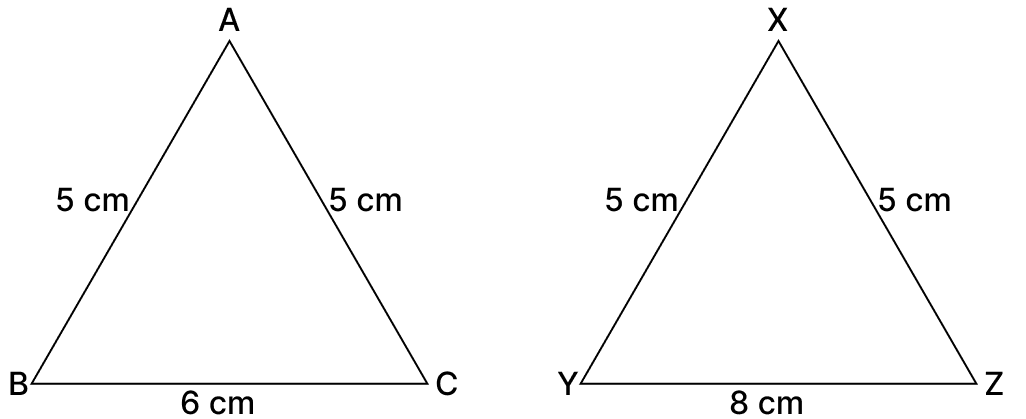
Look at the given triangles. A student argued that since the perimeter of △XYZ is more than that of △ABC, so area of △XYZ is also greater than that of △ABC. Is he right?