History & Civics
Find out the differences in the powers and functions of an MLA and an MP. If given a chance, which of the two positions would you like to take? Why?
Answer
Differences in the powers and functions of an MLA and an MP
| Aspect | MLA (Member of Legislative Assembly) | MP (Member of Parliament) |
|---|---|---|
| Level of Governance | State level | National level |
| House | Legislative Assembly (and sometimes Legislative Council) | Lok Sabha or Rajya Sabha |
| Main Role | Makes laws on State list and Concurrent list subjects | Makes laws on Union list and Concurrent list subjects |
| Constituency | Represents a state assembly constituency | Represents a parliamentary constituency |
| Budget and Finance | Participate in a state budget discussions and tax approval | Participate in union budget and national financial matters |
| Control over Executive | Controls state government through questions, motions, debates | Controls central government through similar means |
| Focus on development work | Works on local/state development | Works on national level policies and schemes. |
I would choose to become an MP, because this role allows me to work on issues that impact the entire country like national security, economic growth, education reforms, and environmental policies. MPs also have a greater platform to bring large-scale change and represent their constituency at the national level. Being part of important parliamentary debates and having the ability to influence national laws is a powerful way to serve the people.
Related Questions
Study the picture given below and answer the following questions:
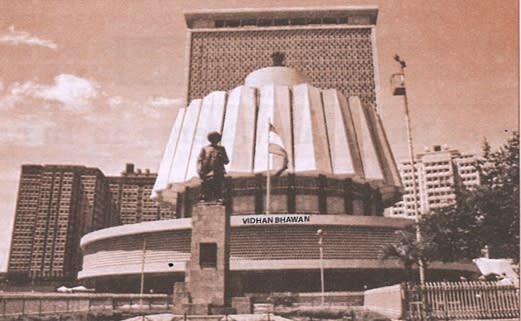
(a) How is the Legislative Assembly composed?
(b) What are the qualifications for being a member of the Legislative Assembly?
(c) What is the term of the House? Under what conditions the term of the Assembly extended or reduced?
Like the Rajya Sabha at the Centre, the Legislative Council in the State is merely an advisory chamber. In this context answer the following questions:
(a) How is Legislative Council constituted?
(b) What are the qualifications for its membership?
(c) What powers does the Legislative Council have with regard to a Money Bill and a non-money bill?
Describe the relationship between the Legislative Assembly and the Legislative Council under these heads:
(a) Finance.
(b) Control over non-money bills.
(c) Control over the Executive.
Recently elections to the Legislative Assembly of your State were held. Find out the number of seats for which elections were held. What were the issues which were debated during the election campaign? Were these issues local or national? Which issue you wanted to be addressed at the earliest?