Chemistry
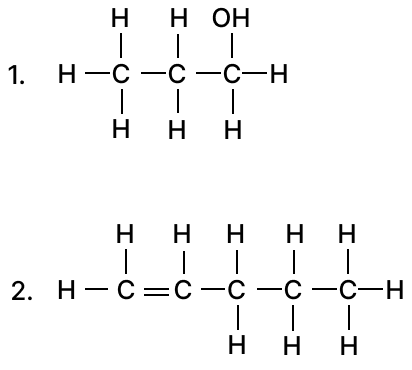
(a) Give the IUPAC name of the following organic compounds:
(b) Draw the structural diagram for the following compounds:
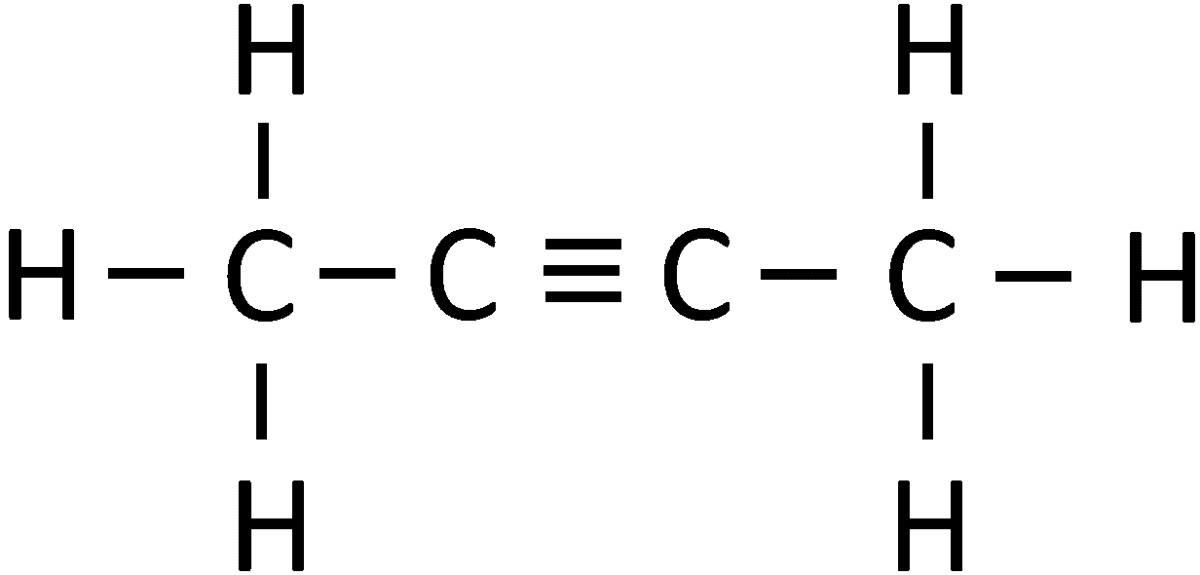
- but-2-yne
- 1, 1, 1, trichloro methane
- pentan-2-ol


Related Questions
Complete the following by choosing the correct answers from the bracket:
(a) When dilute sulphuric acid reacts with zinc granules, the gas evolved is …………… (hydrogen / carbon dioxide), which can be tested using a burning splint.
(b) A solution of copper(II) sulphate in sodium hydroxide solution forms a …………… (pale blue / green) precipitate.
(c) In methane, each hydrogen atom share(s) …………… (one / two) electron(s) with the central carbon atom to complete its valence shell.
(d) The electron affinity of element X is greater than that of element Y. The oxidising power of X is likely to be …………… (more / less) than that of element Y.
(e) The naturally occurring compound of a metal from which the metal can be extracted is called its …………… (ore / mineral).
Match the following Column A with Column B.
Column A Column B (a) Aluminium 1. Covalent compound (b) Sulphuric acid 2. Carbonate ore (c) Calcination 3. Hall Heroult's process (d) Calcium Chloride 4. Contact Process (e) Carbon tetrachloride 5. Electrovalent compound Give one significant observation when:
(a) Excess of chlorine gas reacts with ammonia.
(b) Zinc nitrate is strongly heated in a test tube.
Give reasons:
(a) When ammonia gas is passed over black copper oxide in a combustion tube a reddish-brown substance is left behind.
(b) Quick lime is not used to dry hydrogen chloride gas.