
Biology
Given below is the diagram of a human heart. Read the information below the diagram and fill in the blanks:

The human heart pumps blood throughout the body. It is the size of a large fist. The heart is located between the lungs in the thoracic cavity. It has four chambers. The heart functions all through the lifespan of a person and is responsible for the survival of the person.
The heart is enclosed by a membrane called (a) …………… . The ventricles give rise to two large blood vessels called (b) …………… and (c) …………… . The flaps of the cuspid valves are kept in position by (d) …………… . (e) …………… arteries supply oxygenated blood to the walls of the heart.
Circulatory System
90 Likes
Answer
The heart is enclosed by a membrane called (a) Pericardium . The ventricles give rise to two large blood vessels called (b) Pulmonary artery and (c) Aorta . The flaps of the cuspid valves are kept in position by (d) Chordae tendineae . (e) Coronary arteries supply oxygenated blood to the walls of the heart.
Answered By
14 Likes
Related Questions
Observe the following picture, identify the defect and the cause of the defect.
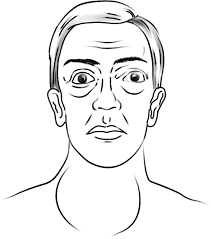
- Simple goitre, under secretion of thyroxine.
- Ex-ophthalmic goitre, over secretion of thyroxine.
- Simple goitre, over secretion of thyroxine.
- Ex-ophthalmic goitre, under secretion of thyroxine.
Name the following:
(a) The fully developed part of the ovary containing a mature ovum.
(b) A waxy layer on the upper epidermis of leaves meant to reduce Transpiration.
(c) The ear ossicle which opens into the oval window of Cochlea.
(d) The physiological process which is the starting point of all food chains.
(e) An insect which is a classic example of natural selection due to industrial melanism.
Arrange the terms in each group in the correct order. Write them in a logical sequence beginning with the term that is underlined.
(a) Palisade cells, Cuticle, Upper epidermis, Spongy cells.
(b) Hepatic portal vein, Stomach, Hepatic vein, Liver.
(c) Cyton, Dendrites, Synaptic cleft, Axon endings.
(d) Insulin release, High blood sugar, Lowers blood sugar, Stimulates glucose uptake from blood.
(e) Sperm duct, Seminiferous tubule, Epididymis, Efferent ducts.
Read the explanations given below and name the structures:
Example: The tubules which produce sperms.
Answer: Seminiferous tubules
(a) The canal through which the testes descend down into the scrotum just before the birth of a male baby.
(b) The part of the brain that regulates the peristaltic movement of the alimentary canal.
(c) A structure that collects the soundwaves and conducts them through the external auditory canal.
(d) The point of attachment of two chromatids of a chromosome.
(e) Regulation of the opening and closing of stomata.