
Mathematics
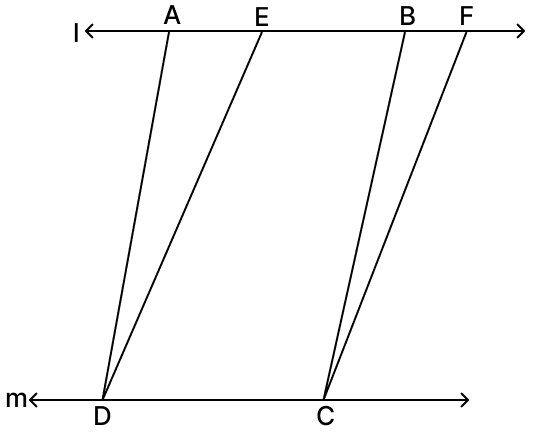
A parallelogram ABCD and a trapezium EFCD have the same base DC and are between the same parallels l and m. If the length of AB > length of EF, then compare the areas of ABCD and EFCD.
Theorems on Area
1 Like
Answer
Let distance between lines l and m be h units.
We know that,
Area of parallelogram ABCD = base × height = DC × h
The length EF is less than AB (which is equal to DC). Since the average of DC and EF is smaller than DC itself, thus the parallelogram has a larger area.
ar(ABCD) > ar(EFCD).
Hence, ar(ABCD) > ar(EFCD).
Answered By
2 Likes
Related Questions
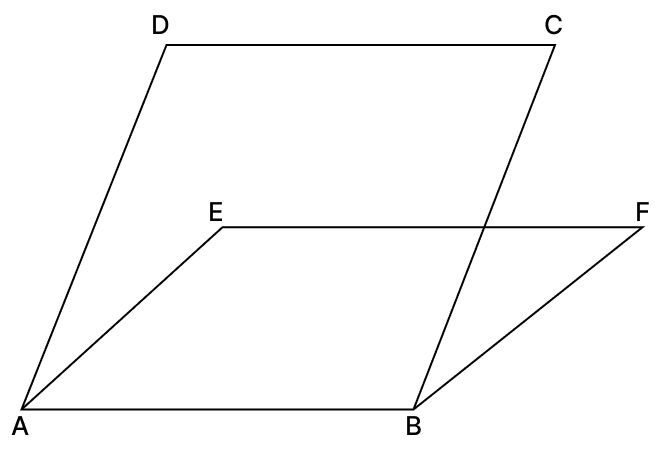
In which of the following, you find two polygons on the same base and between the same parallels?
- 1.
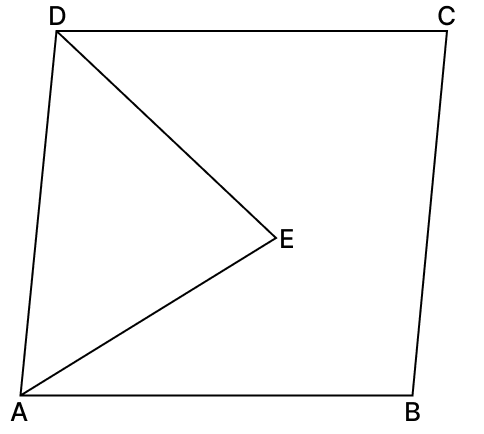
- 2.
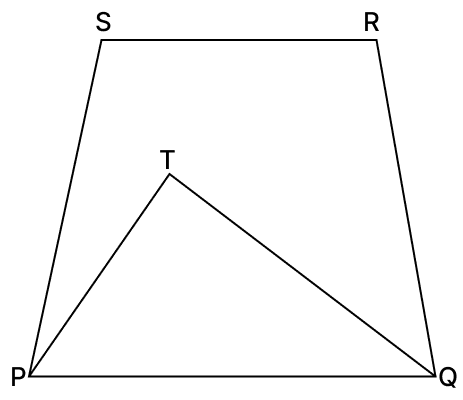
- 3.
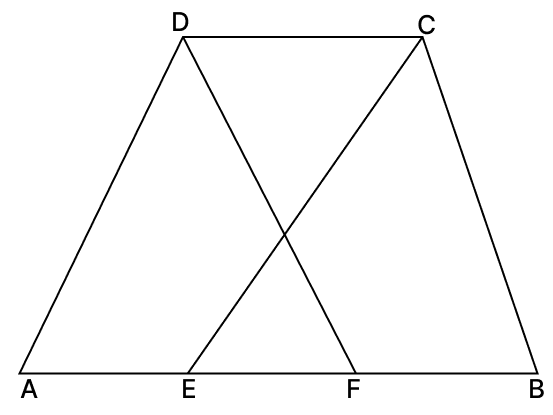
- 4.
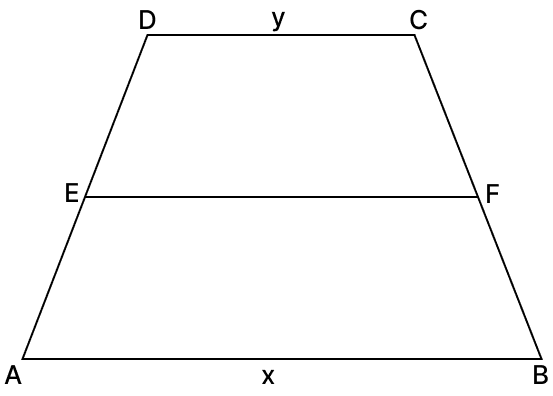
In the figure, ABCD is a trapezium with parallel sides AB = x and CD = y. E and F are mid-points of the non-parallel sides AD and BC respectively. The ratio of ar (ABFE) and ar (EFCD) is :
x : y
(3x + y) : (x + 3y)
(x + 3y) : (3x + y)
(2x + y) : (3x + y)
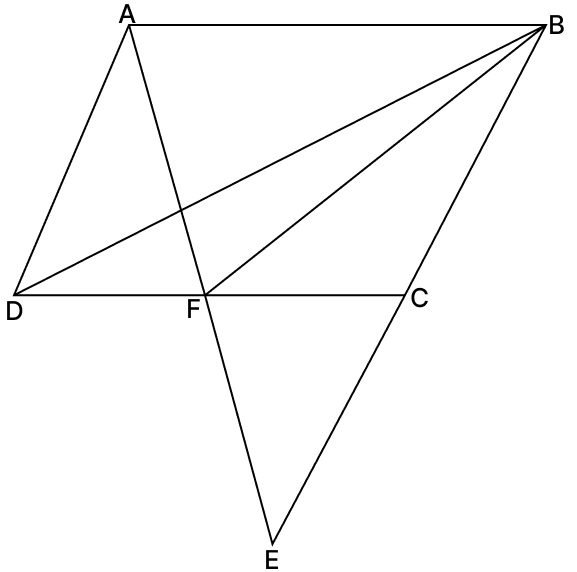
In the figure, ABCD is a parallelogram in which BC is produced to E such that CE = BC. AE intersects CD at F. If area of ΔDFB is 3 cm2, then area of the parallelogram ABCD is :
9 cm2
10 cm2
12 cm2
15 cm2
Bansidhar is a farmer. He has a field in the form of a parallelogram ABCD. He took any point P on CD and joined it to points A and B. In how many parts the field is divided? What are the shapes of these parts? Bansidhar gave the three parts of the field to his two sons equally. How did he do it?