
Physics
A ray of light passes obliquely from an optical medium of refractive index 1.33 to another medium of refractive index 1.5. While passing from the first medium to the second, the light ray will:
- bend towards the normal.
- bend away from the normal.
- move along the normal.
- suffer total internal reflection.
Refraction Plane Surfaces
6 Likes
Answer
Bend towards the normal.
Reason— Given:
- First medium: Refractive index n1 = 1.33
- Second medium: Refractive index n2 = 1.5
Since n2 > n1 the second medium is optically denser.
When light travels obliquely from a rarer medium to a denser medium, it bends towards the normal.
Answered By
1 Like
Related Questions
Assertion (A) : When the displacement is zero, then the work is zero. So, if the work done is zero, then it necessarily means the displacement is zero.
Reason(R) : Work done is calculated by the relation 𝑊=𝐹𝑆 𝑐𝑜𝑠 𝜃
- A and R are true, and R is the reason for A.
- A and R are true, and R is not the reason for A.
- A is true, but R is false.
- A is false, but R is true.
Which of the following statement is CORRECT?
The frequency of a stretched string is:
- directly proportional to its length but inversely proportional to the tension of the wire.
- inversely proportional to its length but directly proportional to the tension of the wire.
- directly proportional to the square root of its length but inversely proportional to the tension of the wire.
- inversely proportional to its length but directly proportional to the square root of the tension of the wire.
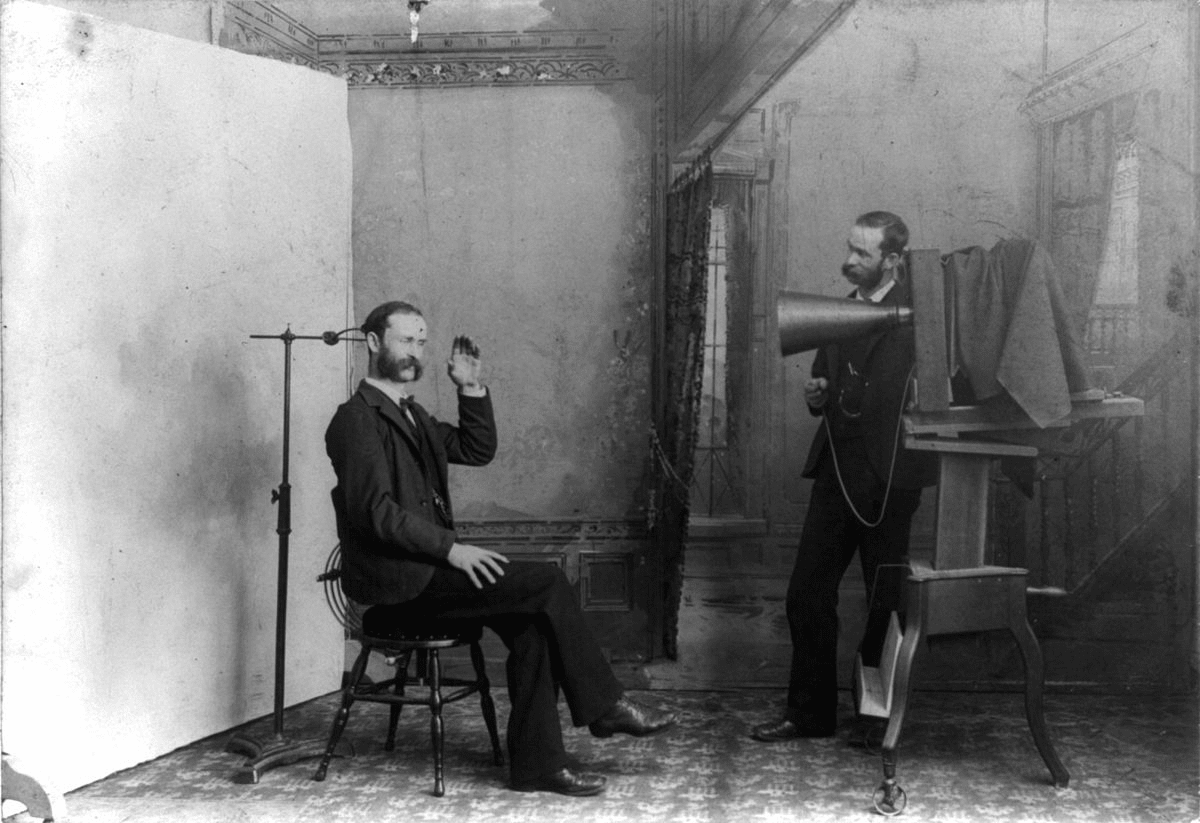
You want to register your name for an examination. For registration purposes, you need a passport-size photograph of yourself. When you went to a studio, the photographer told you to sit on a chair in front of a white screen in the room.
Assertion (A) : This is purposefully done so that you as an object should stand beyond the centre of curvature of the camera lens, but surely not at an infinite distance.
Reason(R) : The characteristics of the image formed are that it can be taken on a screen and is also diminished in size.
- Both A and R are true, and R is the correct explanation of A.
- Both A and R are true, and R is not the correct explanation of A.
- A is true, but R is false.
- Both A and R are false.
Rivers which originate from the glaciers at high altitudes have a supply of water throughout the year. This is because ice in high mountains does not melt all at once. This is due to:
- high specific heat of ice.
- low specific heat of ice.
- low specific latent heat of fusion of ice.
- high specific latent heat of fusion of ice.