
History & Civics
With reference to Muhammad-bin-Tughlaq, answer the following:
(a) Give three reasons why Muhammad-bin-Tughlaq is known as the "Wise Fool".
(b) Why did the angry peasants refuse to obey on taxation in Doab?
(c) Why did the Sultan decide to transfer his capital from Delhi to Devagiri in the south?
Delhi Sultanate
2 Likes
Answer
(a) Three reasons why Muhammad-bin-Tughlaq is known as the "Wise Fool" are:
- He was a great scholar, mathematician and philosopher, but his plans often failed due to lack of proper planning and execution.
- His decision to move the capital from Delhi to Daulatabad (Devagiri), which caused hardship to the people, and a lot of people lost their lives.
- He increased taxes in the Doab region at the time of the famine, which angered the peasants and led to widespread revolt.
(b) The angry peasants refused to obey the taxation in Doab as at the time the taxation was implemented, the area was suffering from a famine.
(c) The Sultan decided to transfer his capital from Delhi to Devagiri (Daulatabad) in the South. This is because Delhi was too close to the North-West frontier from where the Mongols attacked regularly.
Answered By
1 Like
Related Questions
Read the following excerpt and answer the questions that follow:
"Since Alauddin wanted to maintain a large army, he therefore, lowered and fixed the price of the commodities of daily use. To control the prices, Alauddin set up three different markets for different commodities in Delhi. These markets were the grain market (Mandi), cloth market (Sarai Adl) and the market for horses, slaves, cattles, etc."
(Source: https://www.nios.ac.in/media/documents/SrSec315NEW/315HistoryEng/315HistoryEng_Lesson9.pdf)
(a) What measures did Alauddin Khalji take to control markets and prices?
(b) Why was the establishment of Shahana-i-Mandi significant for market regulation?
(c) How did Alauddin Khalji ensure the availability of essential commodities to the people?
With reference to the Delhi Sultanate, answer the following questions to understand its historical significance and contributions:
(a) How did disunity among Indian kings pave the way for the Turks to establish their rule?
(b) Why was the Delhi Sultanate significant in medieval Indian history?
(c) Name the five dynasties that ruled the Delhi Sultanate and their respective time periods.
Analyse the administrative structure of the Delhi Sultanate by addressing the following aspects:
(a) The role and powers of the Sultan in governance.
(b) The organisation and functions of the Central Government.
(c) Land Revenue System
With reference to the given picture, answer the following questions:
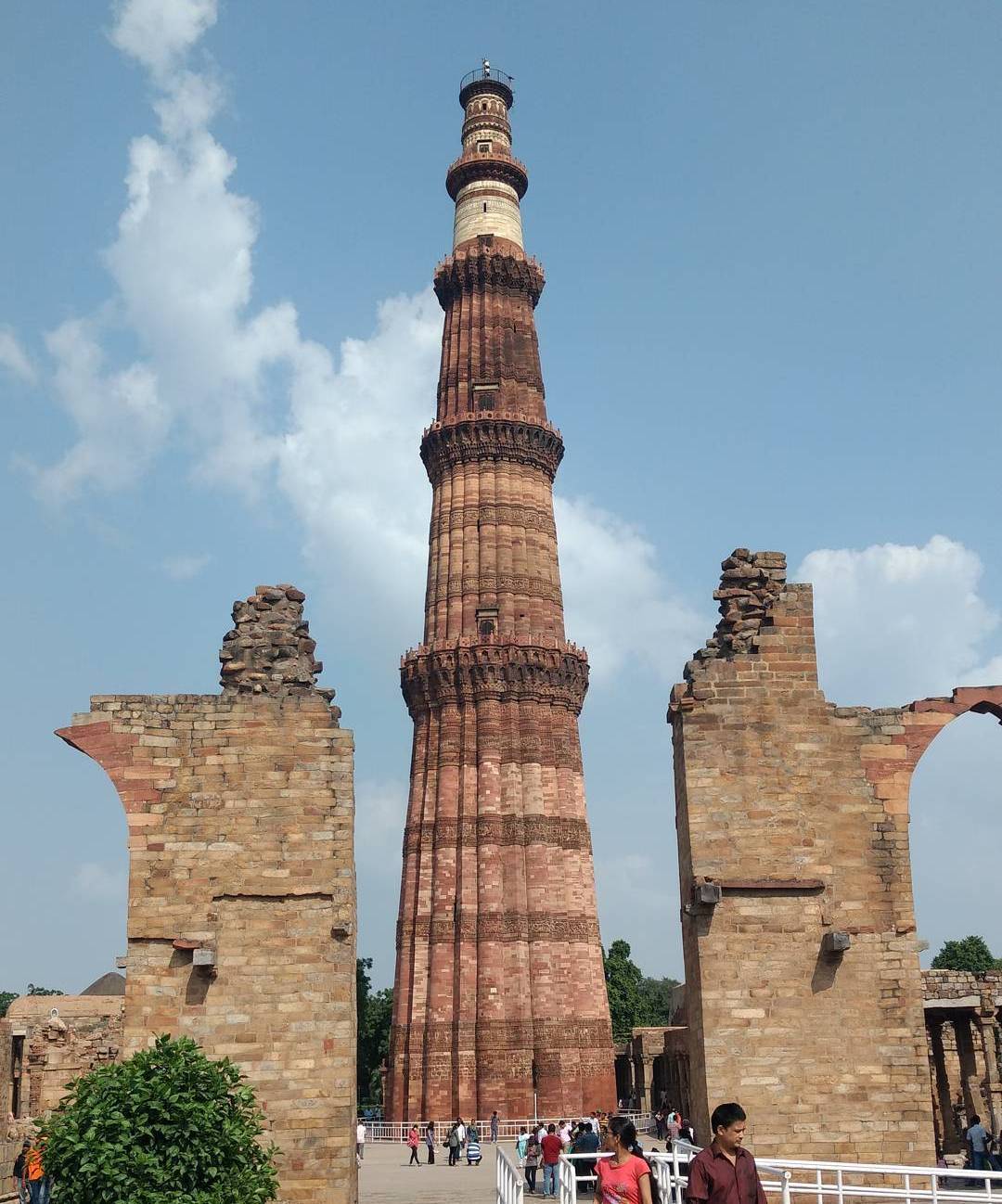
(a) Where is it located?
(b) Who built it?
(c) When was it completed?
(d) What are its important features?