
History & Civics
Analyse the administrative structure of the Delhi Sultanate by addressing the following aspects:
(a) The role and powers of the Sultan in governance.
(b) The organisation and functions of the Central Government.
(c) Land Revenue System
Delhi Sultanate
3 Likes
Answer
(a) The Sultan was an absolute ruler, often exercising considerable power over his subjects. He ruled with the help of nobles. The law was based on the Islamic tradition. Qazis and Ulemas played important roles in the judicial and religious aspects of governance. The power of the Sultan was based on the military force, the loyalty of nobles, and strong administrative systems. He administered all the functions of the government. Though wars were frequent, the Sultan's income also came from taxes, trade, and land revenue, not just booty.
(b) The government was run under various departments. Four departments were most important. Each department was supervised by a minister or a high officer. The Wazir was the Prime Minister. He headed the diwan-i-wizarat. The Diwani-Arz looked after the military organisation, headed by Ariz-i-Mumalik. The Qazi was the Chief Justice and the judicial system was based on the Islamic Law. The department of diwan-i-insha looked after the state correspondence. The diwan-i-risalat looked after religious affairs and education.
(c) Land revenue was the main source of income for the Delhi Sultans. Some land was reserved for the Sultan, and its revenue was used for his personal expenses. The remaining land was given to officers and nobles, who kept part of the revenue as salary and used another part to maintain soldiers, still keeping enough for a luxurious life.
Revenue was categorized into:
- Kharaj (tax on cultivation)
- Jizya (tax on non-Muslims)
- Khams (one-fifth of war booty)
- Zakat (tax on flocks, herds, gold, silver, etc. from Muslims)
A separate Agriculture Department, Diwan-i-Amir Kohi, managed land revenue collection, assisted by officers like Muqqadams and Patwaris.
Answered By
1 Like
Related Questions
Read the following excerpt and answer the questions that follow:
"Since Alauddin wanted to maintain a large army, he therefore, lowered and fixed the price of the commodities of daily use. To control the prices, Alauddin set up three different markets for different commodities in Delhi. These markets were the grain market (Mandi), cloth market (Sarai Adl) and the market for horses, slaves, cattles, etc."
(Source: https://www.nios.ac.in/media/documents/SrSec315NEW/315HistoryEng/315HistoryEng_Lesson9.pdf)
(a) What measures did Alauddin Khalji take to control markets and prices?
(b) Why was the establishment of Shahana-i-Mandi significant for market regulation?
(c) How did Alauddin Khalji ensure the availability of essential commodities to the people?
With reference to the Delhi Sultanate, answer the following questions to understand its historical significance and contributions:
(a) How did disunity among Indian kings pave the way for the Turks to establish their rule?
(b) Why was the Delhi Sultanate significant in medieval Indian history?
(c) Name the five dynasties that ruled the Delhi Sultanate and their respective time periods.
With reference to Muhammad-bin-Tughlaq, answer the following:
(a) Give three reasons why Muhammad-bin-Tughlaq is known as the "Wise Fool".
(b) Why did the angry peasants refuse to obey on taxation in Doab?
(c) Why did the Sultan decide to transfer his capital from Delhi to Devagiri in the south?
With reference to the given picture, answer the following questions:
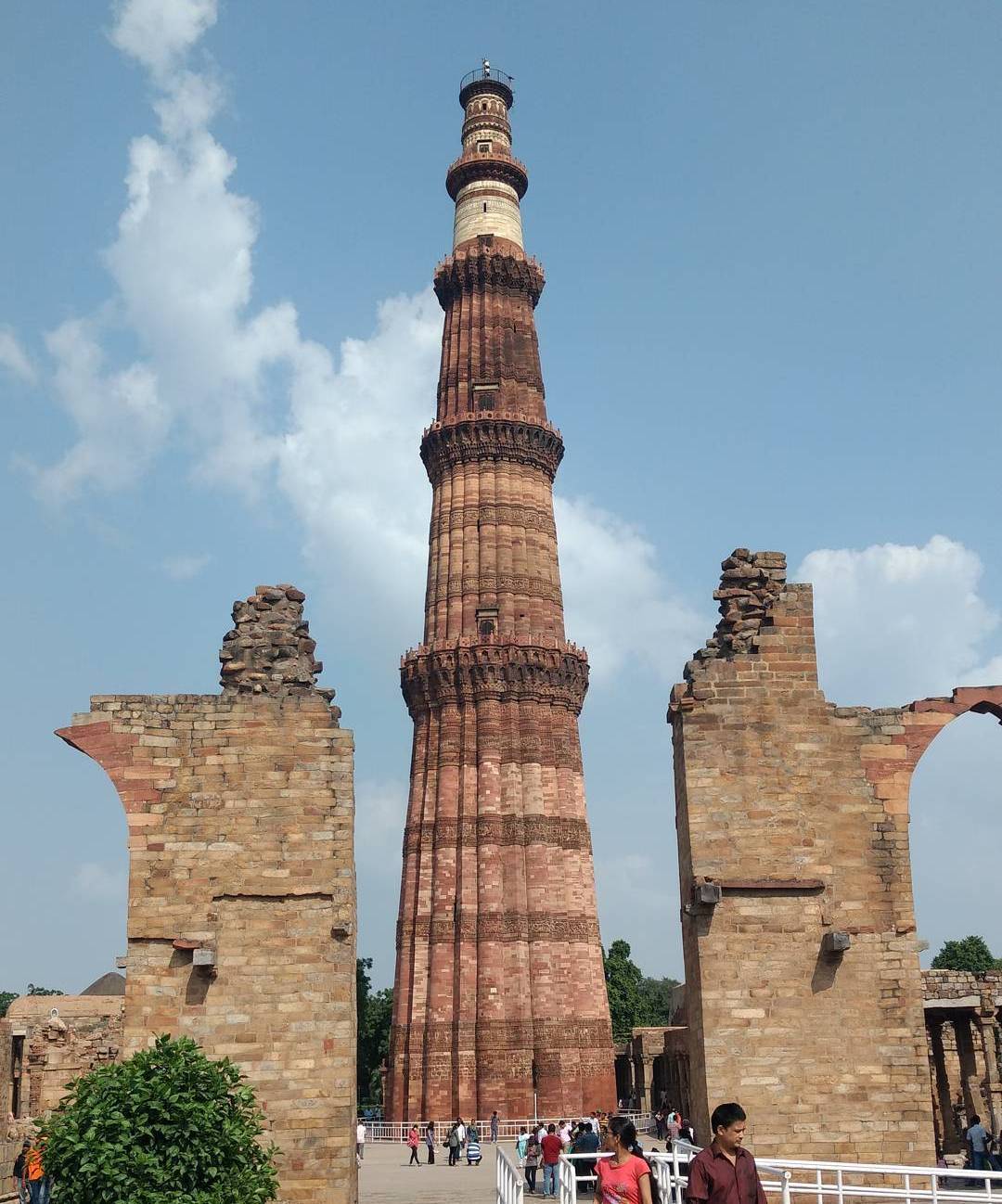
(a) Where is it located?
(b) Who built it?
(c) When was it completed?
(d) What are its important features?