
Mathematics
Statement (1): AB = AC and D is any point in side BC of △ABC. Then AB will be greater than AD.
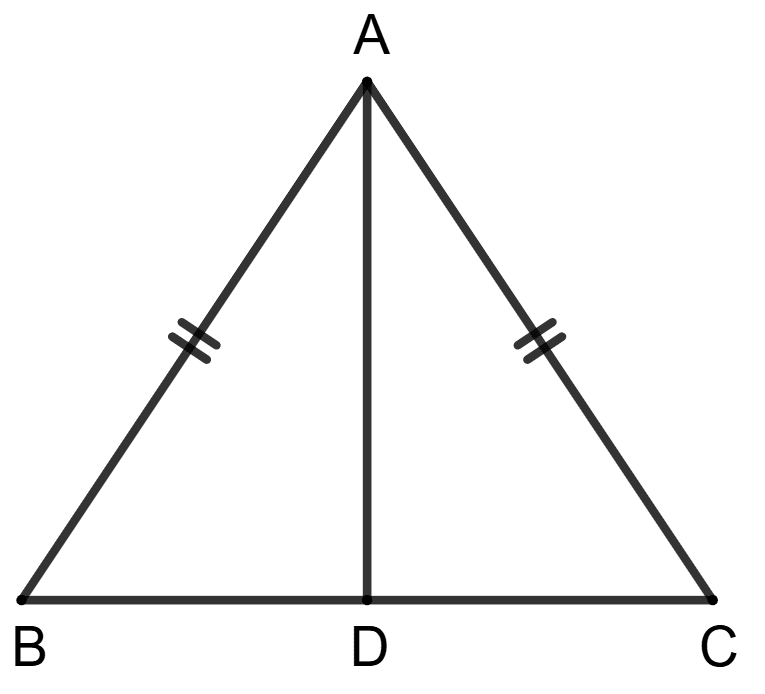
Statement (2): AB = AC
⇒ ∠C = ∠B
In ΔADC, ∠ADB = ∠C + ∠DAC
⇒ ∠ADB > ∠C
⇒ ∠ADB > ∠B
So, AB > AD
Both the statements are true.
Both the statements are false.
Statement 1 is true, and statement 2 is false.
Statement 1 is false, and statement 2 is true.
Triangles
3 Likes
Answer
Since AB = AC, ΔABC is an isosceles triangle.
The angles opposite to equal sides of a triangle are equal.
⇒ ∠B = ∠C
∠ADB is an exterior angle to ΔADC.
Therefore, ∠ADB > ∠C
⇒ ∠ADB > ∠B
⇒ AB > AD (Side opposite to the largest angle in a triangle is the longest side)
∴ Both the statements are true.
Hence, option 1 is the correct option.
Answered By
3 Likes
Related Questions
In the given figure,
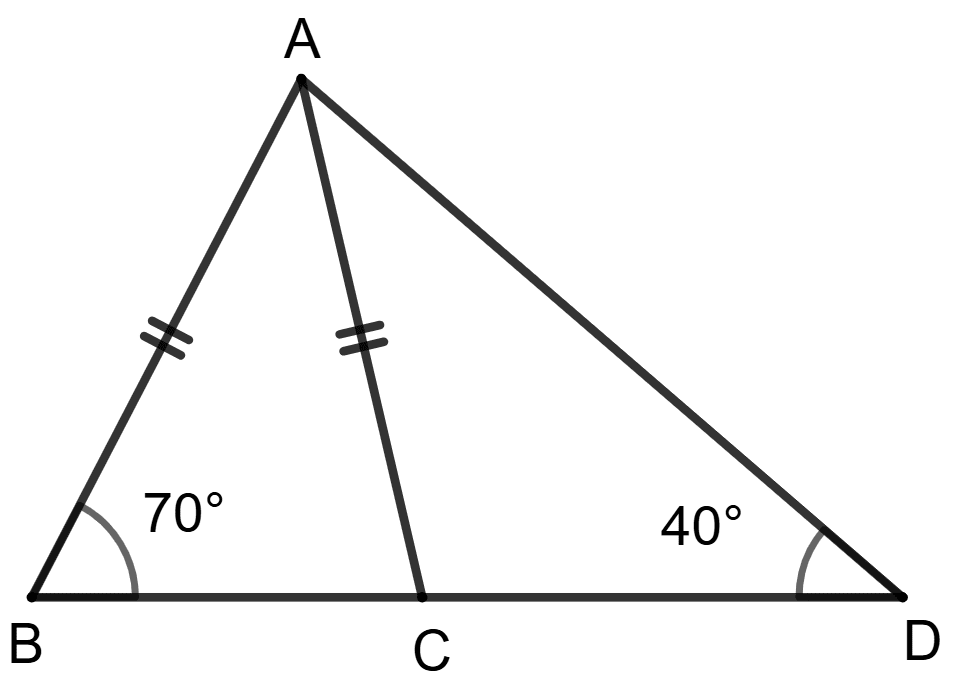
AC = CD
AB > CD
AB < CD
none of these
Statement (1): In the given figure, AC = DC = BD and ∠B = 30°. Then ΔCAD will be equilateral.
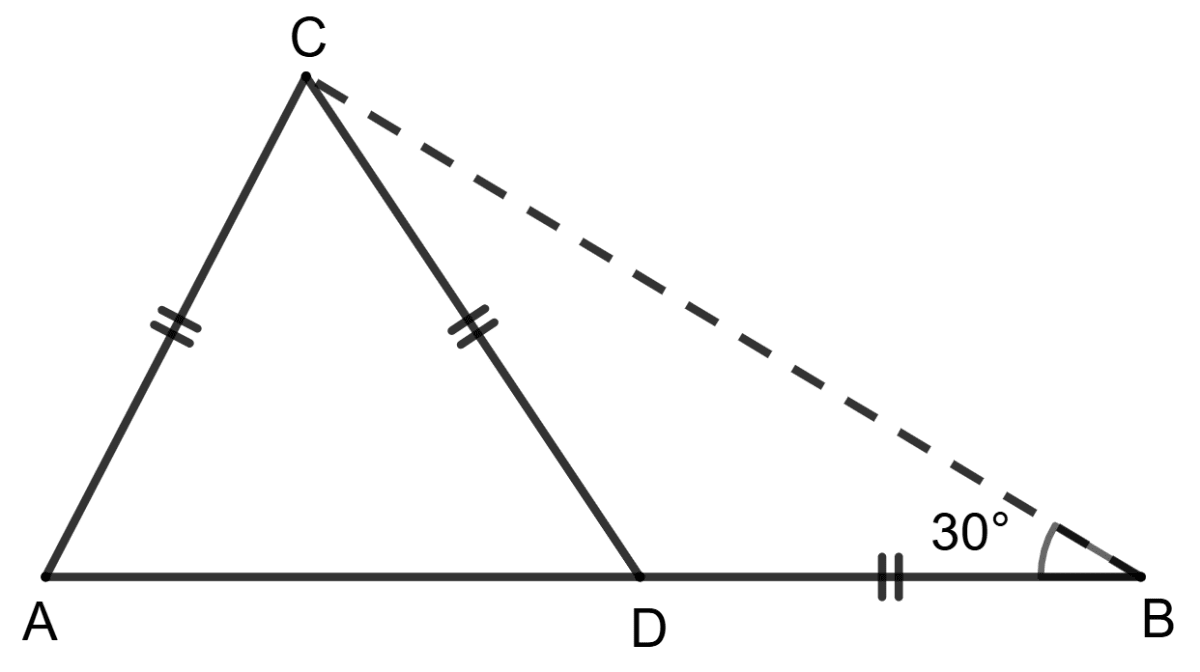
Statement (2): ∠CDA = ∠CAD = 30° + 30° = 60°
Both the statements are true.
Both the statements are false.
Statement 1 is true, and statement 2 is false.
Statement 1 is false, and statement 2 is true.
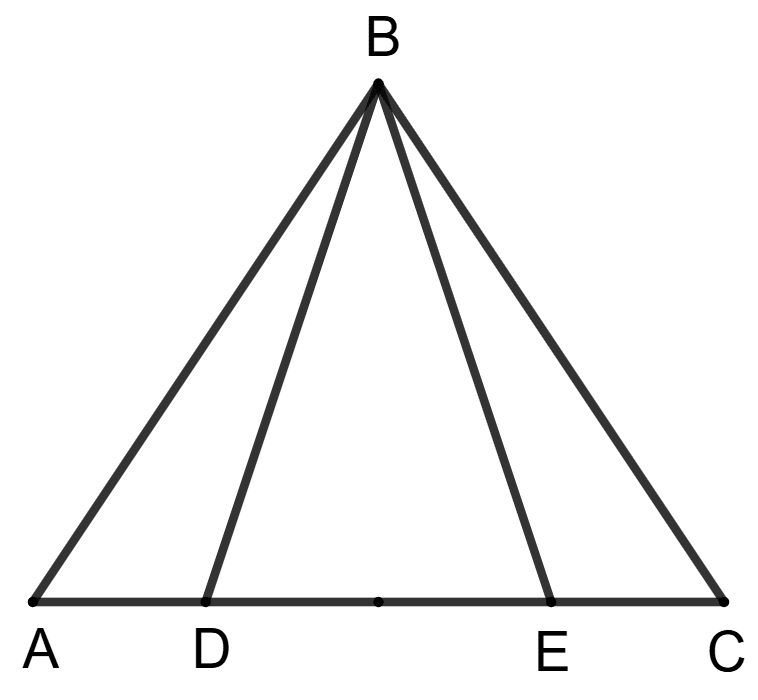
Assertion (A): In the given figure, AB = BC and AD = CE. Then BD will be equal to BE.
Reason (R): ΔBAD ≅ ΔBCE by SAS.
A is true, but R is false.
A is false, but R is true.
Both A and R are true and R is the correct reason for A.
Both A and R are true and R is the incorrect reason for A.
Assertion (A): In the given figure, S is any point on side QR.
∴ PQ + QR + RP > 2PS
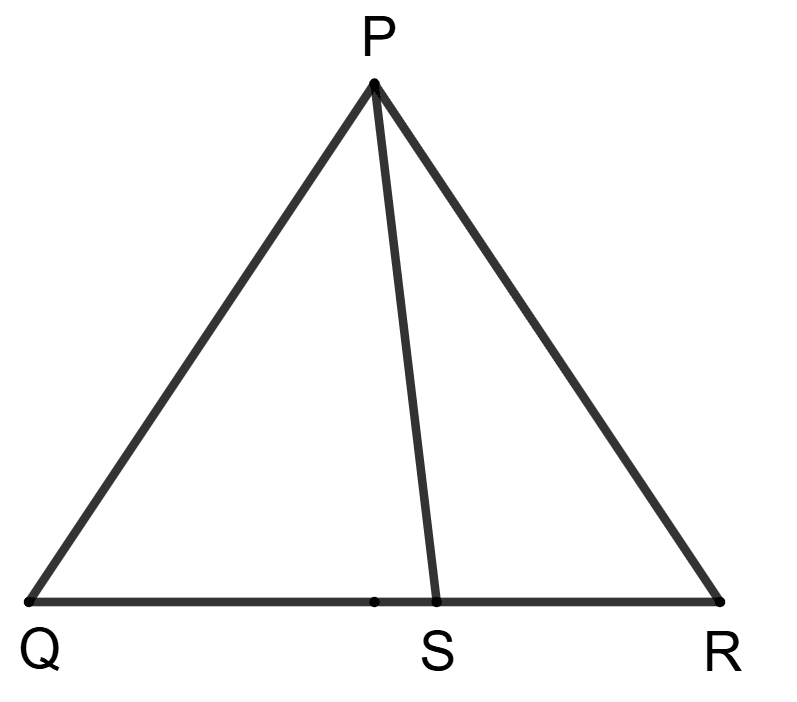
Reason (R): In ΔPQS, PQ + QS > PS and in ΔPRS, PR + SR > PS
A is true, but R is false.
A is false, but R is true.
Both A and R are true and R is the correct reason for A.
Both A and R are true and R is the incorrect reason for A.