
Mathematics
Assertion (A) : A semi-circular sheet of metal of diameter 14 cm is bent into an open conical cone, then height of the cone is cm.
Reason (R) : When a sector is bent into an open cone, the radius of the sector becomes the slant height of the cone and the length of the arc becomes the circumference of the circular base of the cone.
A is true, R is false.
A is false, R is true.
Both A and R are true.
Both A and R are false.
Mensuration
1 Like
Answer
We know that,
When a sector is bent into an open cone, the radius of the sector becomes the slant height of the cone and the length of the arc becomes the circumference of the circular base of the cone.
Given,
A semi-circular sheet of metal of diameter 14 cm is bent into an open conical cone.
Radius of semi-circle (r) = = 7 cm.
Circumference of semi-circle = πr = = 22 cm.
Circumference of base of cone = Circumference of semi-circle = 22 cm.
Let radius of cone be R cm.
⇒ 2πR = 22
⇒ R = cm.
Slant height of cone (l) = Radius of semi-circular sheet = 7 cm.
Let height of cone be h cm.
By formula,
⇒ l2 = r2 + h2
⇒ 72 = + h2
⇒ 49 = + h2
⇒ h2 =
⇒ h2 =
⇒ h2 =
⇒ h =
⇒ h = cm.
Hence, Option 3 is the correct option.
Answered By
1 Like
Related Questions
Assertion (A) : In the figure below, CD = 7.8 cm, PD = 5 cm, PB = 4 cm, then PT = 8 cm.
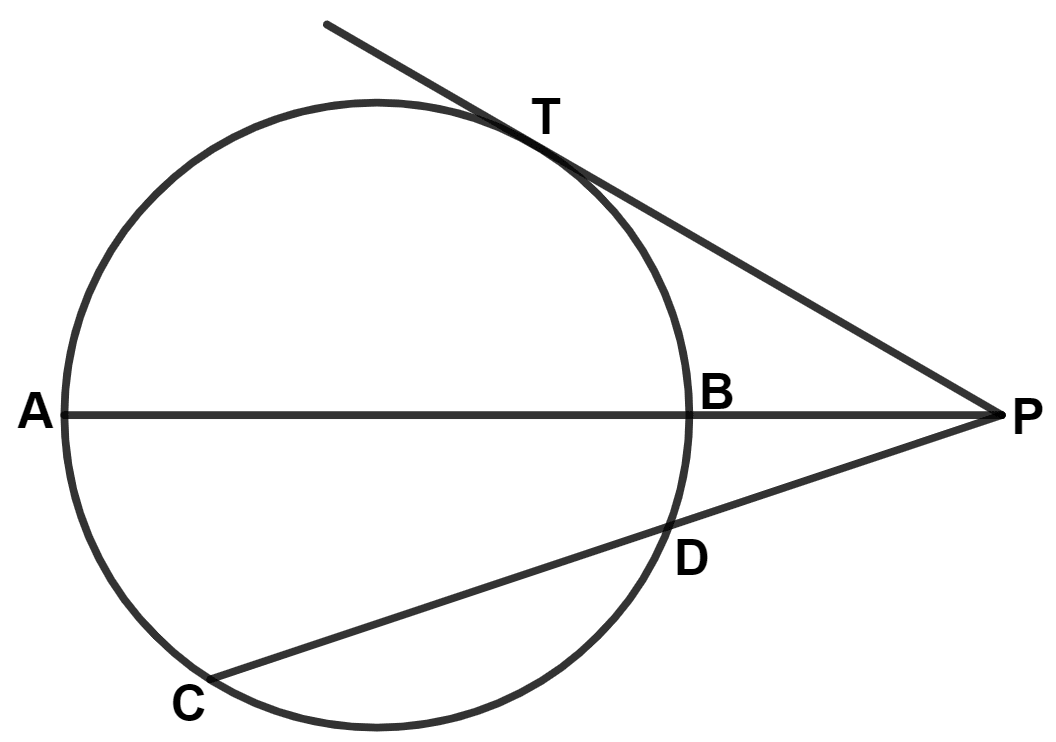
Reason (R) : If two chords of a circle intersect internally or externally then the product of the lengths of their segments is equal.
A is true, R is false.
A is false, R is true.
Both A and R are true.
Both A and R are false.
Assertion (A) : The length of a cylinder is 21 cm and radius of its cross-section is 2 cm. Area covered by the cylinder in one revolution is 264 cm2.
Reason (R) : Distance travelled by the cylinder in 1 round = circumference of its cross-section.
A is true, R is false.
A is false, R is true.
Both A and R are true.
Both A and R are false.
Assertion (A) : Multiplicative inverse of (sec θ - tan θ) is (sec θ + tan θ).
Reason (R) : sec2 θ - tan2 θ = 1.
A is true, R is false.
A is false, R is true.
Both A and R are true.
Both A and R are false.
Assertion (A) : If ∠A + ∠B = 90°, h = cm
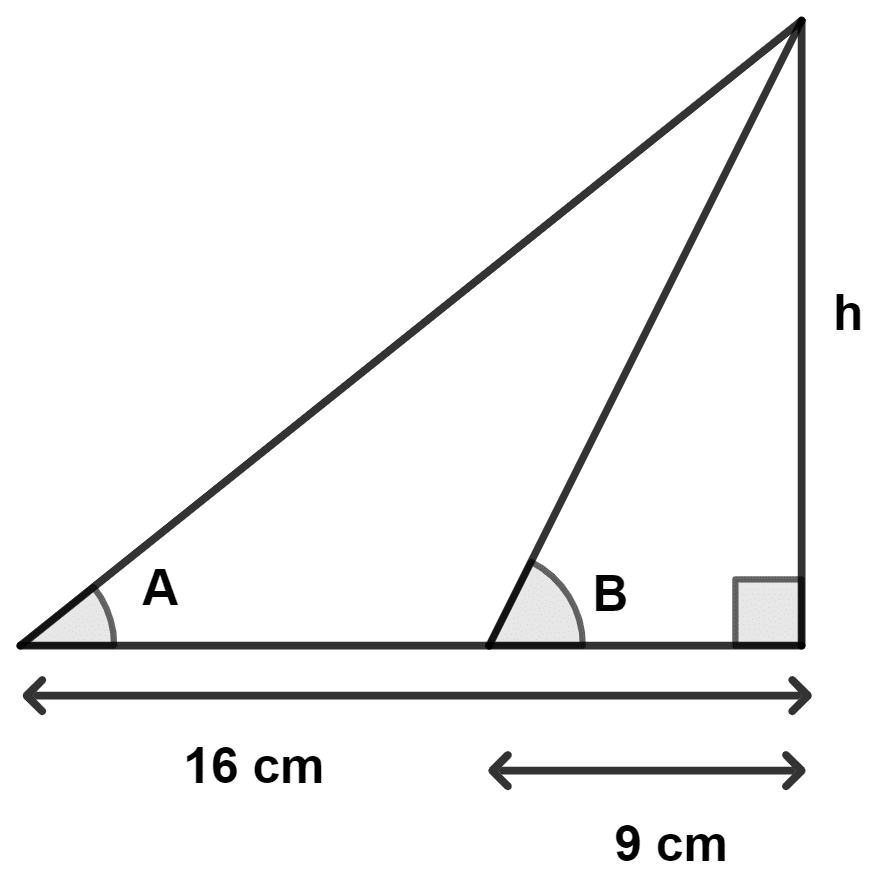
Reason (R) : tan A = and tan B = . Also, A = 90° - B ⇒ tan A = cot B ⇒ tan A × tan B = 1
A is true, R is false.
A is false, R is true.
Both A and R are true.
Both A and R are false.