
Biology
Sunil tried to match the tropic movements in plants with the stimulus they respond to. The tabulation is given below:
| Tropism | Stimulus | |
|---|---|---|
| P | Thigmotropism | Touch |
| Q | Geotropism | Water |
| R | Chemotropism | Chemicals |
| S | Phototropism | Gravity |
Identify the correct pair:
- P and R
- Q and S
- R and S
- P and S
Chemical Coordination in Plants
10 Likes
Answer
P and R
Reason — Thigmotropism (P) is the response to touch.
Chemotropism (R) is the response to chemicals.
Geotropism (Q) responds to gravity, not water.
Phototropism (S) responds to light, not gravity.
Answered By
5 Likes
Related Questions
Many nuclear power plants are constructed near water sources. They use water for cooling their machinery and release it back into the water stream. Identify the kind of pollution caused.
- Radiation pollution
- Water pollution
- Industrial pollution
- Thermal pollution
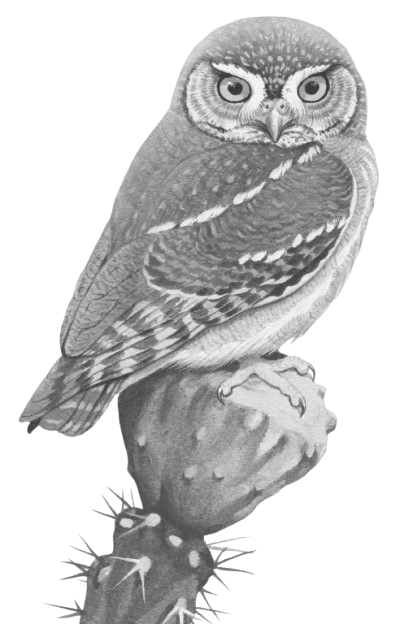
Owls are nocturnal animals. They are active at night and hunt small animals for food. Owls have large eyes and can see well at night. This is due to:
- Cones and Rhodopsin
- Rods and Iodopsin
- Rods and Rhodopsin
- Cones and Iodopsin
Observe the following picture, identify the defect and the cause of the defect.
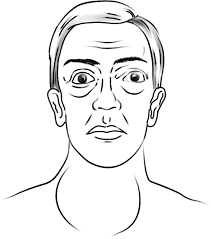
- Simple goitre, under secretion of thyroxine.
- Ex-ophthalmic goitre, over secretion of thyroxine.
- Simple goitre, over secretion of thyroxine.
- Ex-ophthalmic goitre, under secretion of thyroxine.
Name the following:
(a) The fully developed part of the ovary containing a mature ovum.
(b) A waxy layer on the upper epidermis of leaves meant to reduce Transpiration.
(c) The ear ossicle which opens into the oval window of Cochlea.
(d) The physiological process which is the starting point of all food chains.
(e) An insect which is a classic example of natural selection due to industrial melanism.