
Mathematics
The approximate volume of a human eye is 6.5 cm3. The volume of a laboratory model (excluding base and stand) of the human eye is 1404 cm3.
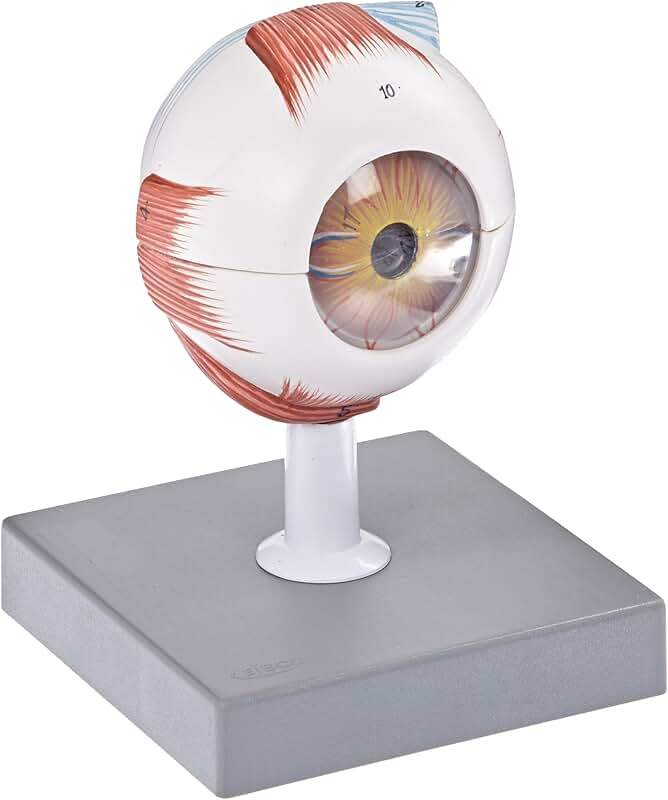
(a) State whether the scale factor k is less than, equals to or greater than 1.
(b) Calculate the:
(i) value of k
(ii) diameter of the human eye if the radius of the model is 7.2 cm.
(iii) the external surface area of the human eye if the surface area of the model is 651.6 cm2.
Similarity
76 Likes
Answer
(a) Scale factor is greater than 1 as volume of model is greater than the original eye.
(b)
(i) By formula,
Hence, scale factor (k) = 6.
(ii) By formula,
Diameter of human eye = 1.2 × 2 = 2.4 cm
Hence, diameter of human eye = 2.4 cm.
(iii) By formula,
Hence, surface area of human eye = 18.1 cm2.
Answered By
47 Likes
Related Questions
Find the equation of the straight line perpendicular to the line x + 2y = 4, which cuts an intercept of 2 units from the positive y-axis. Hence, find the intersection point of the two lines.
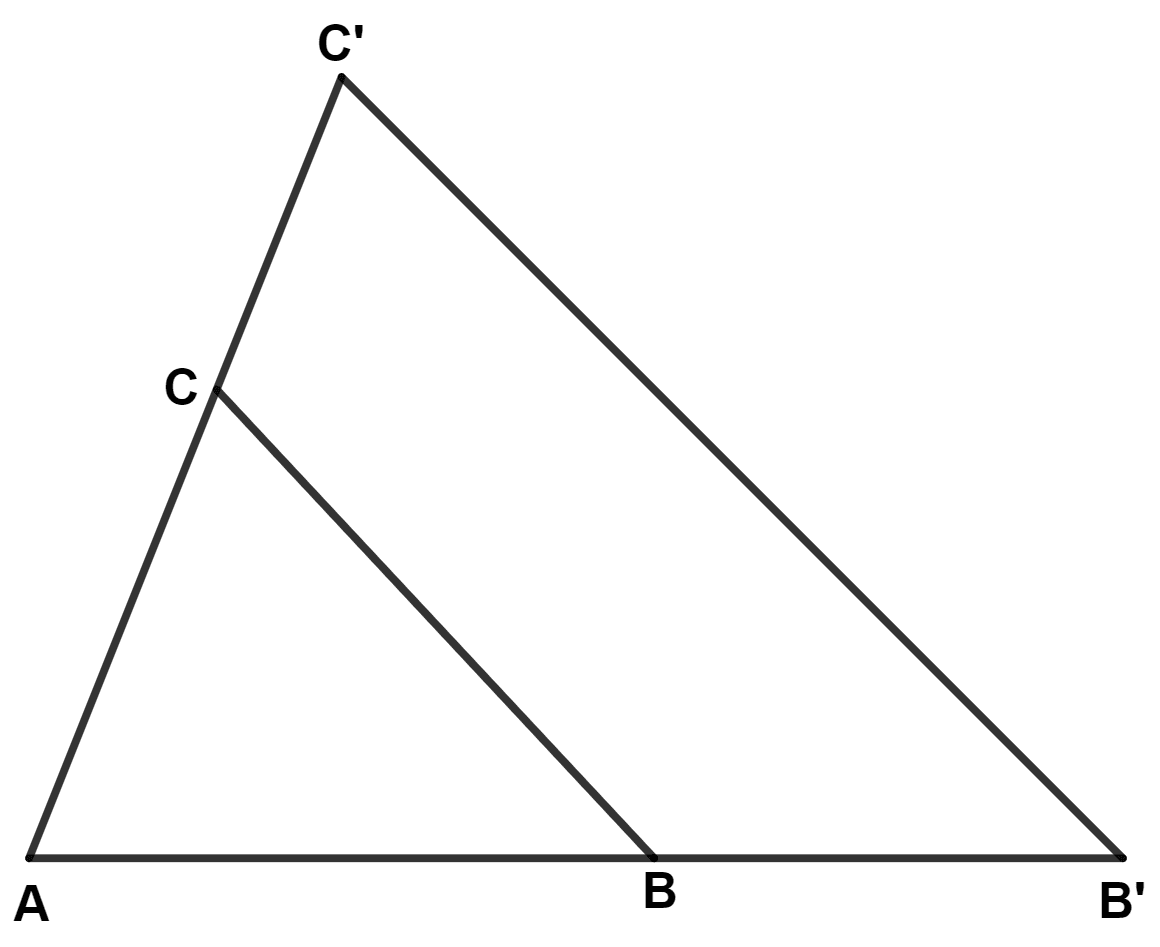
While preparing a PowerPoint presentation, ∆ ABC is enlarged along the side BC to ∆ AB'C', as shown in the diagram, such that BC ∶ B'C' is 3 ∶ 5. Find :
(a) AB ∶ BB'
(b) length AB, if BB' = 4 cm.
(c) Is ∆ ABC ~ ∆ AB'C' ? Justify your answer.
(d) ar (∆ ABC) : ar (quad. BB'C'C).
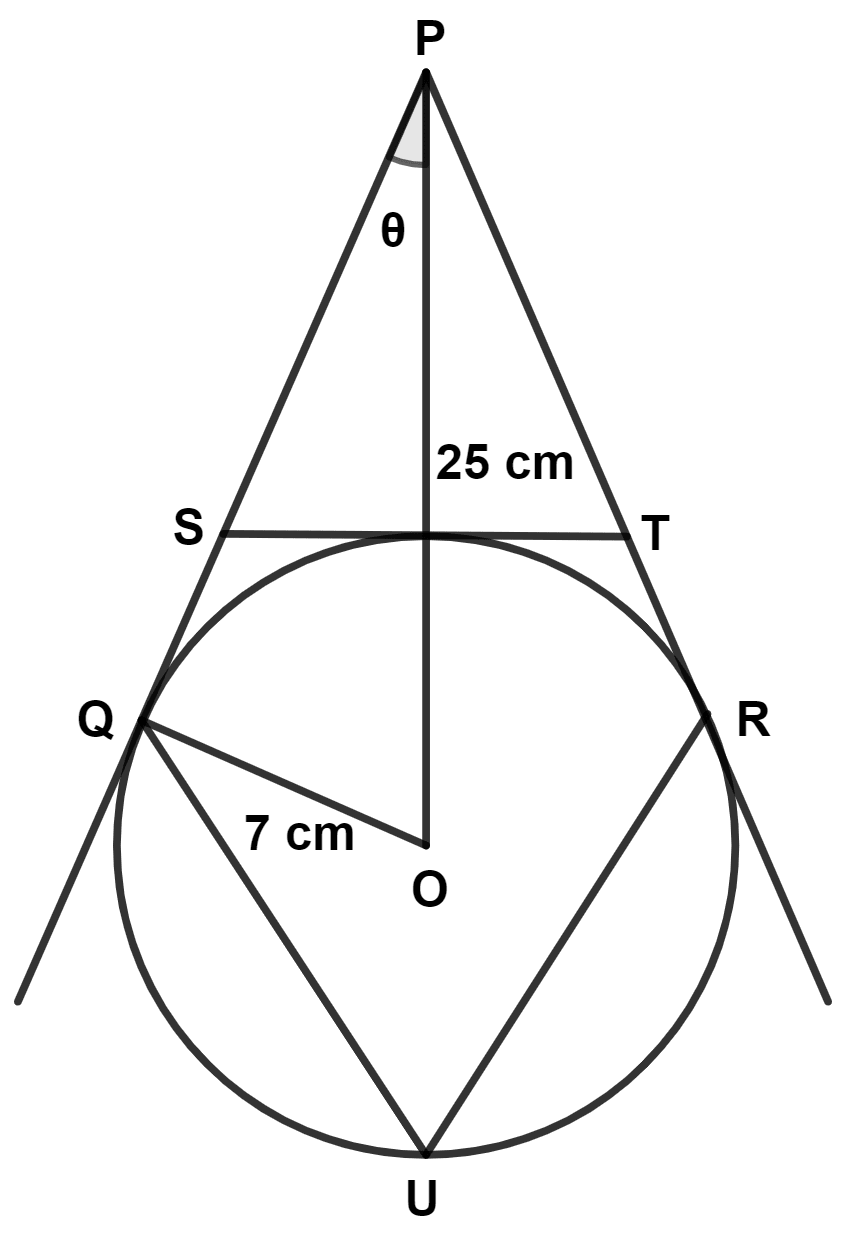
In the adjoining diagram PQ, PR and ST are the tangents to the circle with centre O and radius 7 cm. Given OP = 25 cm. Find :
(a) length of ST
(b) value of ∠OPQ, i.e. θ
(c) ∠QUR, in nearest degree
Use ruler and compass to answer this question. Construct a triangle ABC where AB = 5.5 cm, BC = 4.5 cm and angle ABC = 135°. Construct the circumcircle to the triangle ABC. Measure and write down the length of AC.