Mathematics
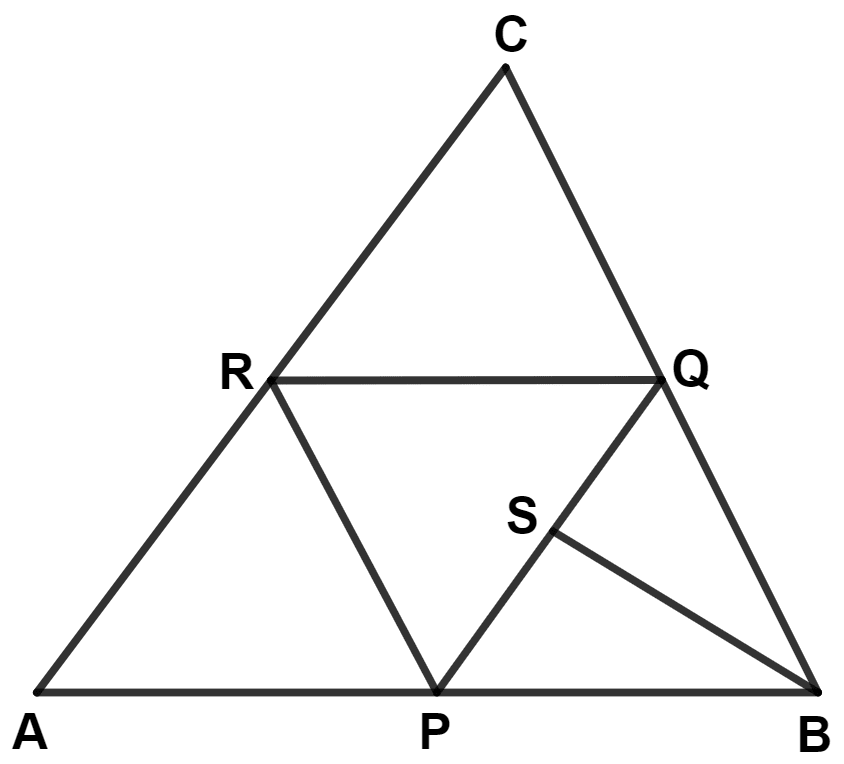
The following figure shows a triangle ABC in which P, Q and R are mid-points of sides AB, BC and CA respectively. S is mid-point of PQ. Prove that :
ar.(△ ABC) = 8 × ar.(△ QSB)
Theorems on Area
10 Likes
Answer
In △ ABC,
R and Q are mid-points of AC and BC respectively.
∴ RQ || AB (By mid-point theorem)
We know that,
Area of triangles on the same base and between the same parallel lines are equal.
△ PBQ and △ PAR lie on same base (AP = BP) and between same parallel lines RQ and AB.
∴ Area of △ PBQ = Area of △ APR ……………(1)
P and R are mid-points of AB and AC respectively.
∴ PR || BC (By mid-point theorem)
∴ PR || BQ
∴ PBQR is a parallelogram.
PQ is the diagonal.
⇒ Area of △ PBQ = Area of △ PQR (Diagonal of parallelogram divides it into two triangles of equal areas.) ………(2)
From equation (1) and (2), we get :
⇒ Area of △ PBQ = Area of △ PQR = Area of △ APR ……..(3)
P and Q are mid-points of AB and BC respectively.
∴ PQ || AC (By mid-point theorem)
∴ PQ || RC
∴ PQCR is a parallelogram.
RQ is the diagonal.
⇒ Area of △ PQR = Area of △ RQC (Diagonal of parallelogram divides it into two triangles of equal areas.) ………(4)
From equation (3) and (4), we get :
⇒ Area of △ PBQ = Area of △ PQR = Area of △ APR = Area of △ RQC = x (let).
From figure,
⇒ Area of △ PBQ + Area of △ PQR + Area of △ APR + Area of △ RQC = Area of △ ABC
⇒ x + x + x + x = Area of △ ABC
⇒ 4x = Area of △ ABC
⇒ x = Area of △ ABC
⇒ Area of △ PBQ = Area of △ ABC ……..(5)
In △ PBQ,
S is the mid-point of PQ and BS is median.
⇒ Area of △ QSB = Area of △ PSB (Median divides triangle into two triangles of equal area)
⇒ Area of △ QSB = Area of △ PBQ
⇒ Area of △ PBQ = 2 Area of △ QSB ……….(6)
Substituting value of area of △ PBQ from equation (6) in (5), we get :
⇒ 2 Area of △ QSB = Area of △ ABC
⇒ Area of △ QSB = Area of △ ABC.
Hence, proved that area of △ QSB = area of △ ABC.
Answered By
2 Likes
Related Questions
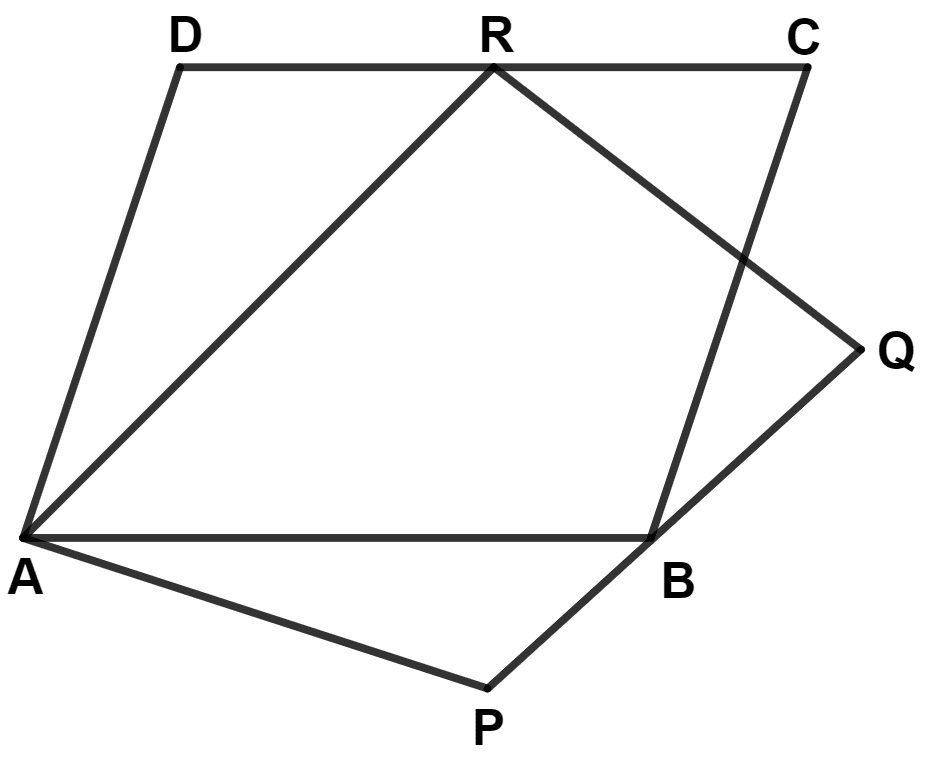
The given figure shows parallelograms ABCD and APQR. Show that these parallelograms are equal in area.
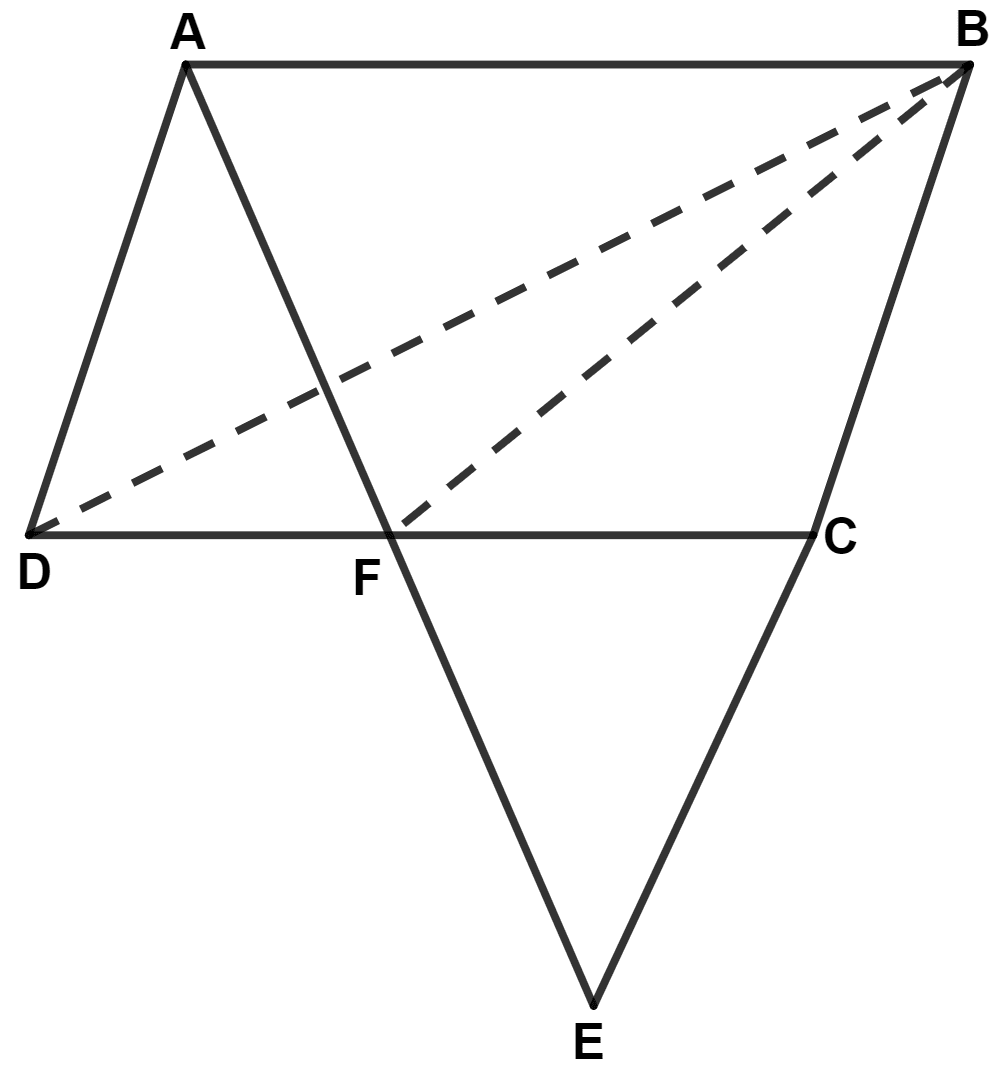
ABCD is a parallelogram in which BC is produced to E such that CE = BC and AE intersects CD at F. If ar.(△ DFB) = 30 cm2; find the area of parallelogram.
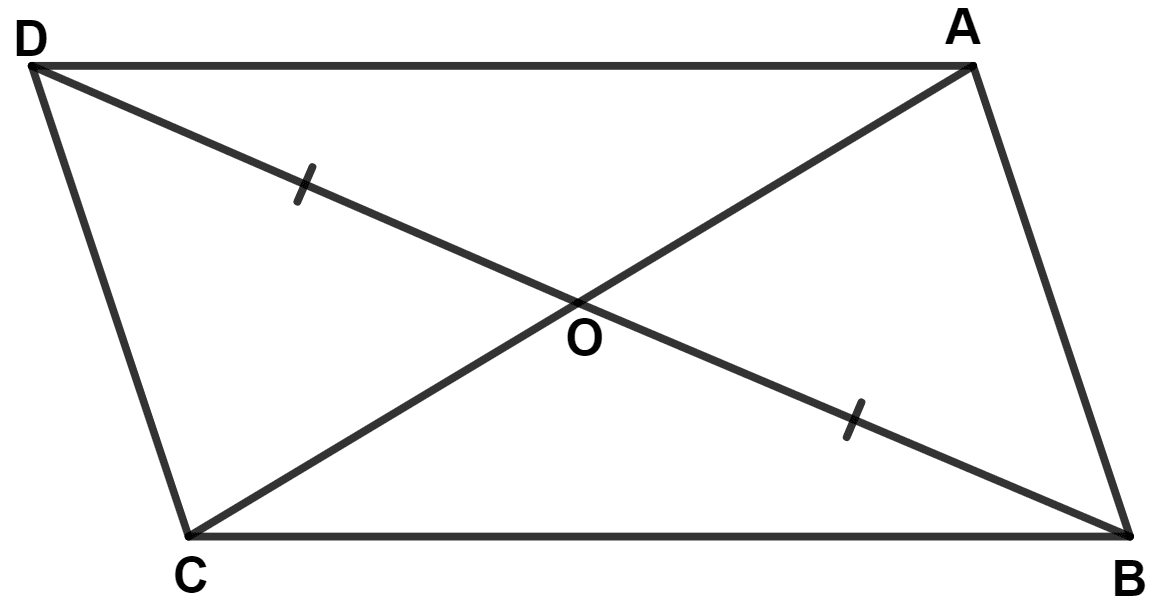
In the given figure, the diagonals AC and BD intersect at point O. If OB = OD and AB // DC, prove that :
(i) Area of (△ DOC) = Area of (△ AOB)
(ii) Area of (△ DCB) = Area of (△ ACB)
(iii) ABCD is a parallelogram.
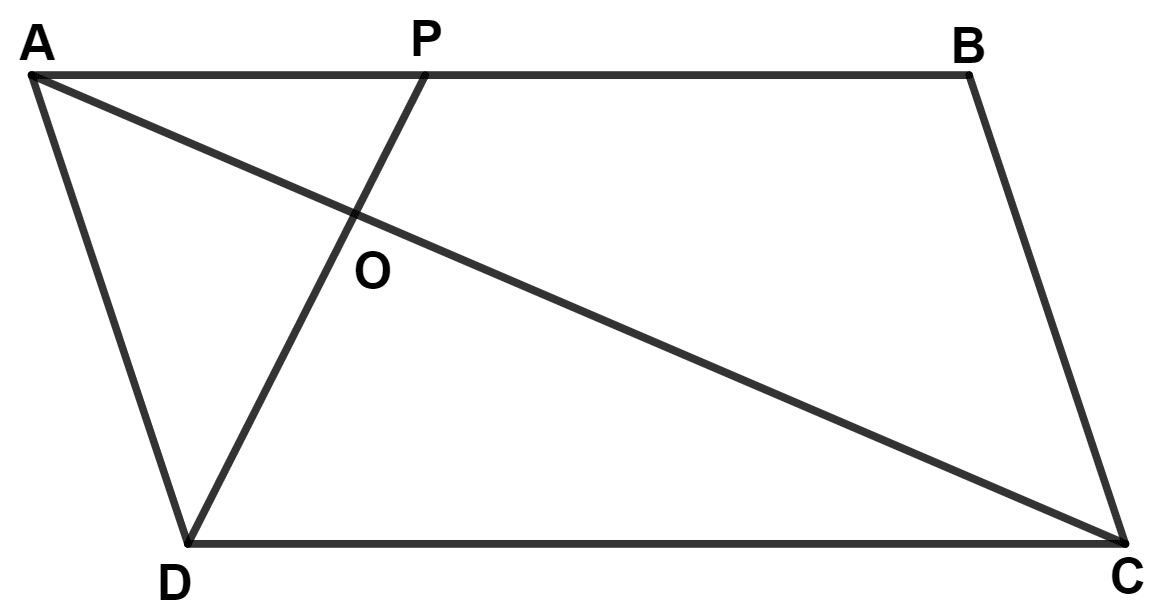
The given figure shows a parallelogram ABCD with area 324 sq.cm. P is a point in AB such that AP : PB = 1 : 2. Find the area of △ APD.