
History & Civics
The industrial revolution marked a change from handwork to machine work and from domestic system of production to factory system of production. In this context, discuss the role of the following factors in ushering in the Industrial Revolution:
(a) Invention of machines.
(b) Availability of coal and iron.
(c) Improved Transportation.
Industrial Revolution
155 Likes
Answer
(a) Invention of machines — Invention of machinery and its use in manufacturing was the starting point of Industrial revolution. John Key, a weaver of Lancashire, invented 'The Flying Shuttle' which increased the speed of weaving. It also made the weaving of broad cloth by one man possible. A Lancashire weaver named James Hargreaves invented a machine called the spinning Jenny. It could spin eight threads at a time instead of one thread of the old-fashioned spinning wheel. Richard Arkwright invented the 'Water Frame'. It produced harder and stronger yarn than that of the spinning Jenny, but it was run by water power. It ushered the factory system.
(b) Availability of coal and iron — Natural resources such as iron and coal were available in England. The iron and coal mines were situated close to each other. Iron was used in making machines. The coal provided cheap fuel. Both these factors helped in the development of industries.
(c) Improved Transportation — In the second half of the 18th century, transport system in England was adequate. The use of tarcoal and tar enabled the construction of roads in many European countries. Steamboats and steamships were used extensively. George Stephenson designed his first locomotive engine, which was used for hauling coal in the Killingworth colliery. This brought about a revolution in transport. James Watt invented the steam engine. The discovery of steam as a source of power, facilitated the industrial revolution as it was used for transport both on land and sea.
Answered By
106 Likes
Related Questions
Mention any two differences between 'Capitalism and Socialism'.
With reference to the picture of a factory given below answer the questions that follow:
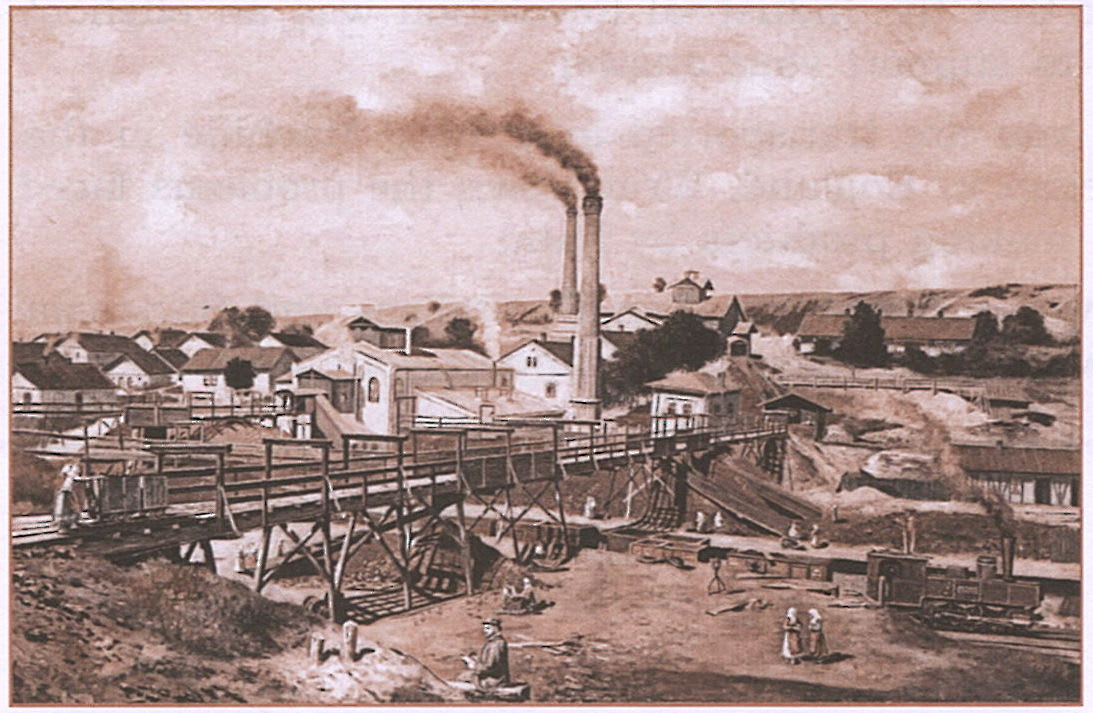
(a) Name the revolution that brought about the existence of this. Where did it begin? Why is it an important event in history?
(b) Explain the two factors responsible for its beginning in that particular country.
(c) Explain how did it lead to the growth of an economic system quite different from the domestic system of production.
With reference to the rise of Capitalism, answer the following questions:
(a) What were the causes for the rise of Capitalism?
(b) What was the impact of Capitalism on the working class?
(c) How did it give rise to Socialism?
With reference to Capitalism and Socialism, state the following:
(a) Difference between Capitalism and Socialism in terms of control over means of production and profit.
(b) Two key proponents of Capitalism and Socialism. Give examples of two countries where each economic system is prevalent.
(c) What according to you is better of the two economic systems? Give reasons to support your answer.