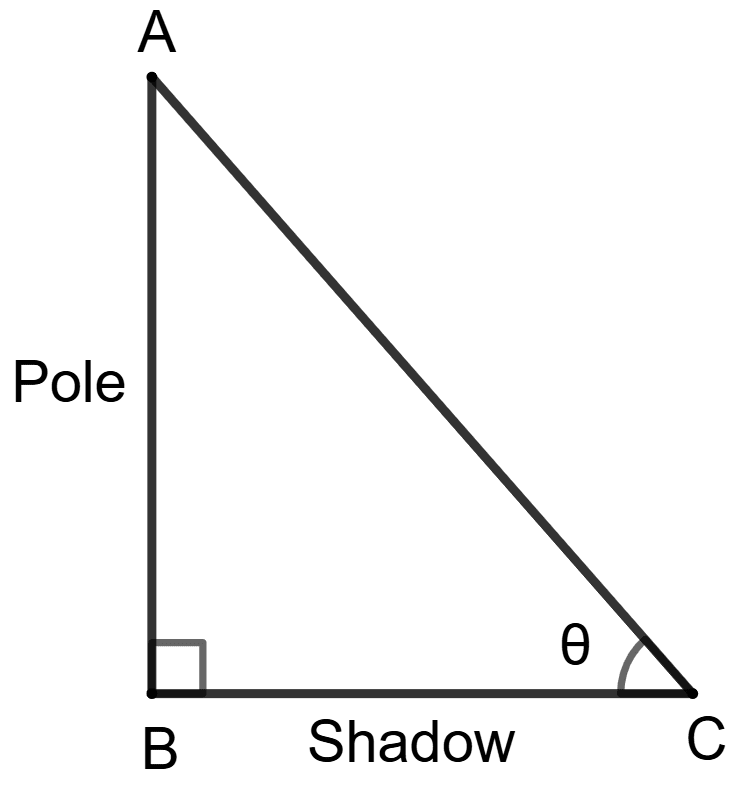
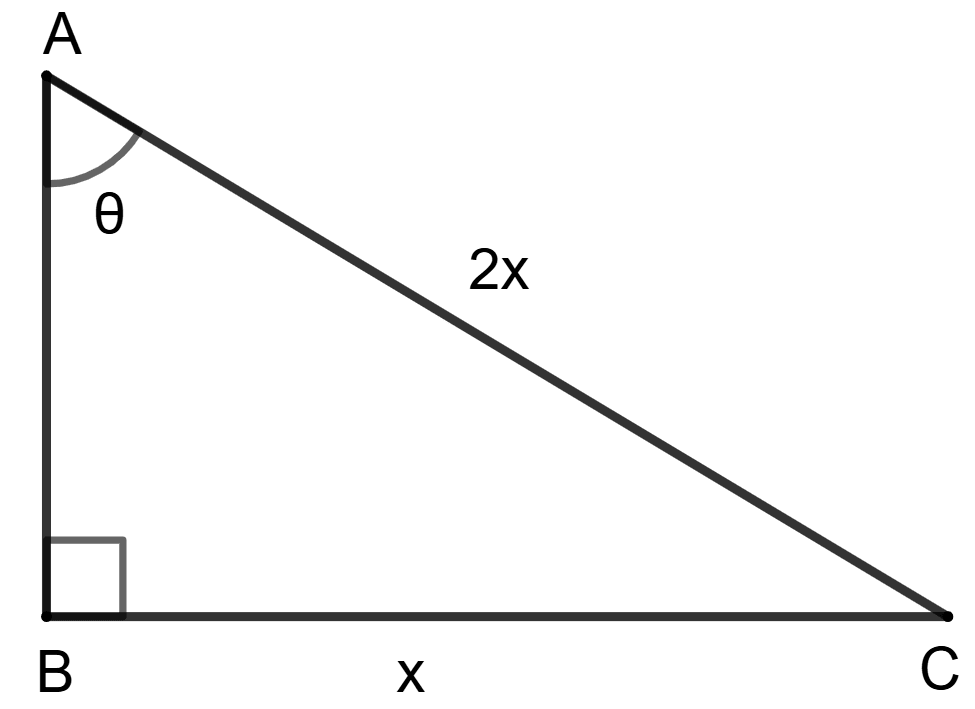
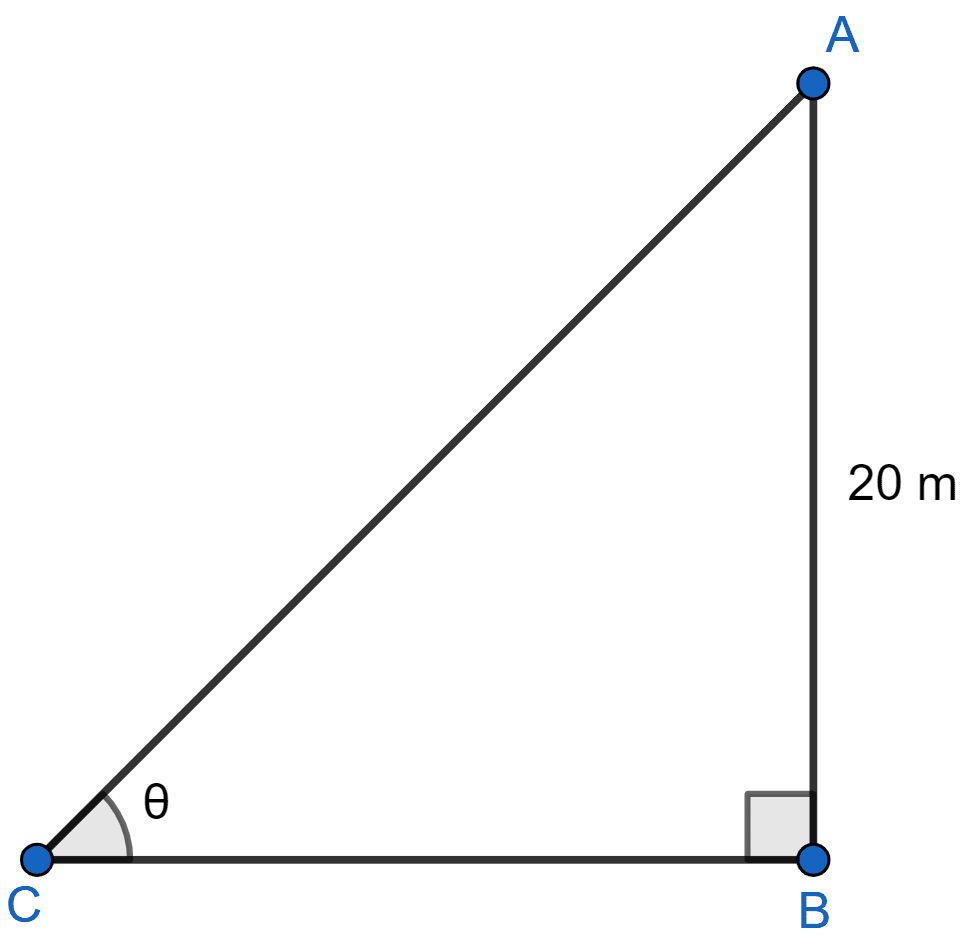
If ladder makes angle θ with the wall then sin θ = hypotenusebase=2xx=21.
Here base refers side opposite to angle θ i.e. BC.
Reason (R) is true.
Hence, option 2 is the correct option.
Question 1(h)
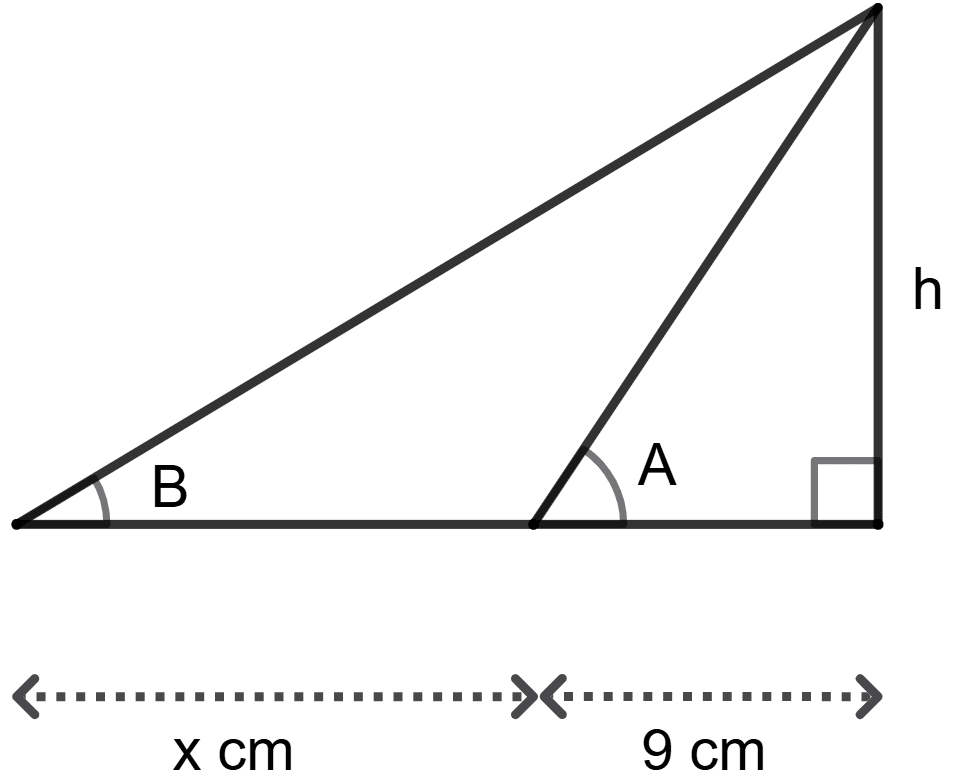
For the following figure, tan A = 132 and tan B = 31
Statement (1): x = 36 cm
Statement (2): tan A = 35=9h ⇒ h = 15
tan B = x+9h⇒31=x+915
Both the statements are true.
Both the statements are false.
Statement 1 is true, and statement 2 is false.
Statement 1 is false, and statement 2 is true.
Answer
Given,
tan A = 132=35 and tan B = 31.
From figure,
⇒tan A=9h⇒35=9h⇒h=35×9⇒h=5×3⇒h=15 cm⇒tan B=x+9h⇒31=x+915⇒x+9=15×3⇒x+9=45⇒x=45−9⇒x=36 cm.
∴ Both the statements are true.
Hence, option 1 is the correct option.
Question 1(i)
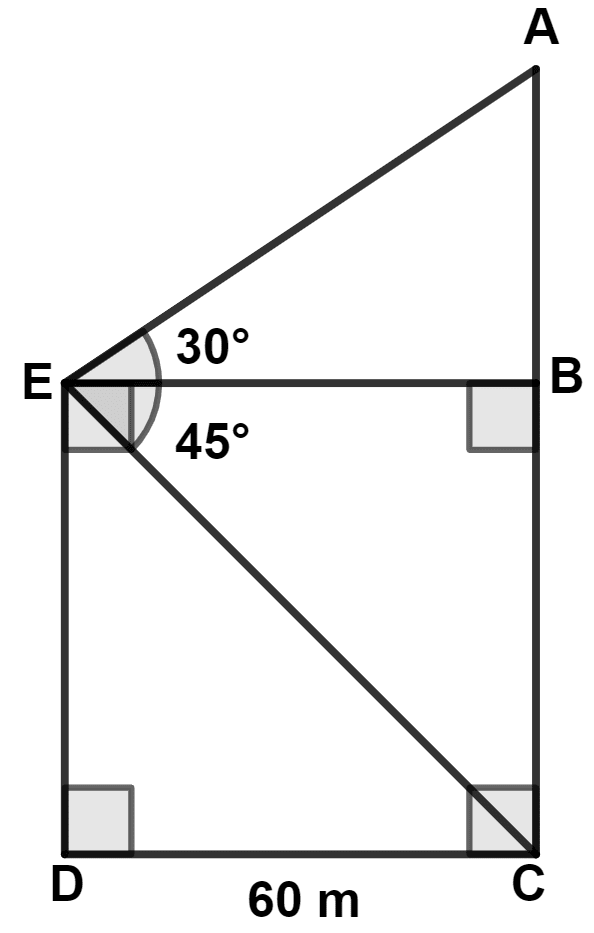
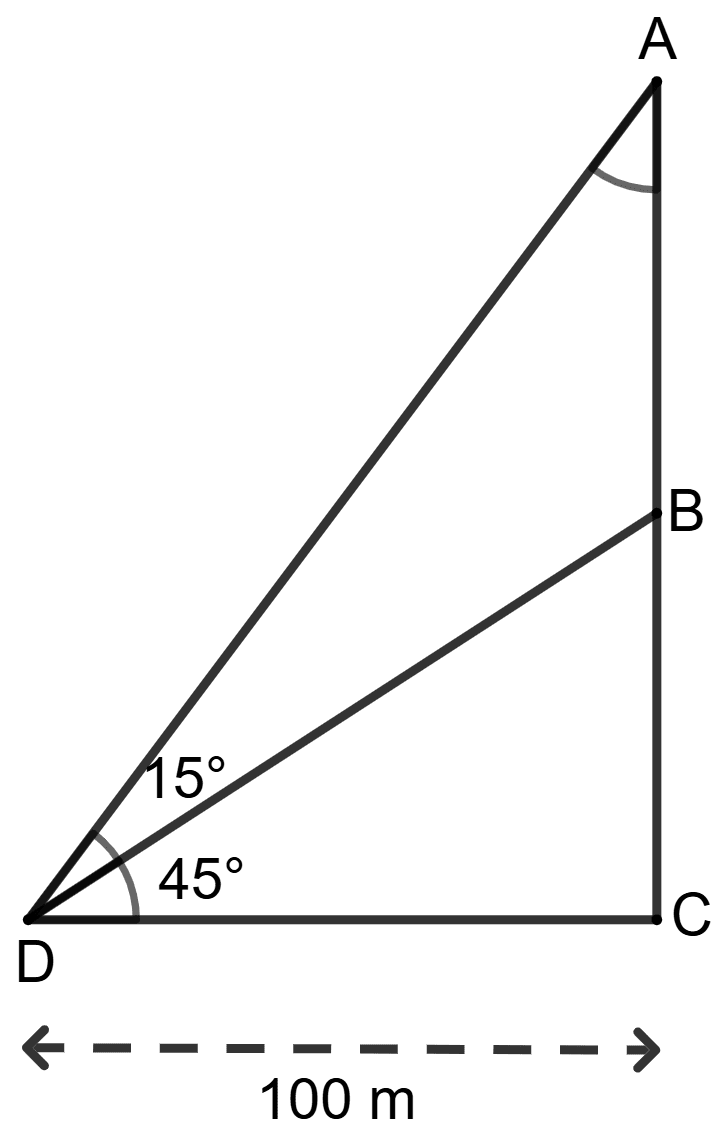
CD = 100 m, ∠ADB = 15° and ∠BDC = 45°
Statement (1): AB = 100tan 60° - tan 45°
Statement (2): AB = (100 tan 60° - 100 tan 45°) m.
Both the statements are true.
Both the statements are false.
Statement 1 is true, and statement 2 is false.
Statement 1 is false, and statement 2 is true.
Answer
From figure,
In triangle BDC,
⇒tan 45°=DCBC⇒tan 45°=100BC⇒BC=100 tan 45°In triangle ADC,⇒tan 60°=DCAC⇒tan 60°=DCAB+BC⇒tan 60°=100AB+100 tan 45°⇒100 tan 60°=AB+100 tan 45°⇒AB=100 tan 60°−100 tan 45°
∴ Statement 1 is false, and statement 2 is true.
Hence, option 4 is the correct option.
Question 2
Find AD.
(i)
(ii)
Answer
(i) From figure,
BE = CD = 20 m and DE = CB = 5 m.
In △ABE,
tan 32°=BasePerpendicular⇒0.6249=BEAE⇒AE=0.6249×BE⇒AE=0.6249×20⇒AE=12.498 m.
AD = AE + DE = 12.498 + 5 = 17.498 ≈ 17.5 m.
Hence, AD = 17.5 meters.
(ii) We know that,
An exterior angle is equal to the sum of two opposite interior angles.
∴ ∠ACD = ∠ABC + ∠BAC
Also, ∠ABC = ∠BAC (As, angles opposite to equal sides are equal)
∴ ∠ACD = 2∠ABC
⇒ 2∠ABC = 48°
⇒ ∠ABC = 24°.
In △ABD,
sin 24°=HypotenusePerpendicular⇒0.4067=ABAD⇒AD=0.4067×AB⇒AD=0.4067×30⇒AD=12.20 m.
Hence, AD = 12.20 meters.
Question 3
In the following diagram, AB is a floor-board; PQRS is a cubical box with each edge = 1 m and ∠B = 60°. Calculate the length of the board AB.
Answer
In ∆PSB,
sin 60°=HypotenusePerpendicular⇒23=PBPS⇒PB=32PS⇒PB=1.7322×1=1.155 m.
In ∆APQ,
∠APQ = ∠ABR = 60° (Corresponding angles are equal.)
cos 60°=HypotenuseBase⇒21=APPQ⇒AP=2PQ⇒AP=2 m.
From figure,
AB = AP + PB = 2 + 1.155 = 3.155 m.
Hence, AB = 3.155 meters.
Question 4
Calculate BC.
Answer
In ∆ABD,
tan 35°=BasePerpendicular⇒0.7002=BDAD⇒BD=0.7002AD⇒BD=0.700220⇒BD=28.563 m.
In ∆ACD,
tan 42°=BasePerpendicular⇒0.9004=ADCD⇒CD=AD×0.9004⇒CD=20×0.9004⇒CD=18.008 m.
From figure,
BC = BD - CD = 28.563 - 18.008 = 10.55 meters.
Hence, BC = 10.55 meters.
Question 5
Calculate AB.
Answer
In △ACD,
cos 30°=HypotenuseBase⇒23=CDAD⇒AD=23×CD⇒AD=23×6⇒AD=33⇒AD=5.196 m.
In △BDE,
sin 47°=HypotenusePerpendicular⇒0.73=DEBD⇒BD=0.73×DE⇒BD=0.73×5=3.65 m.
From figure,
AB = AD + BD = 5.196 + 3.65 = 8.846 = 8.85 meters.
Hence, AB = 8.85 meters.
Question 6
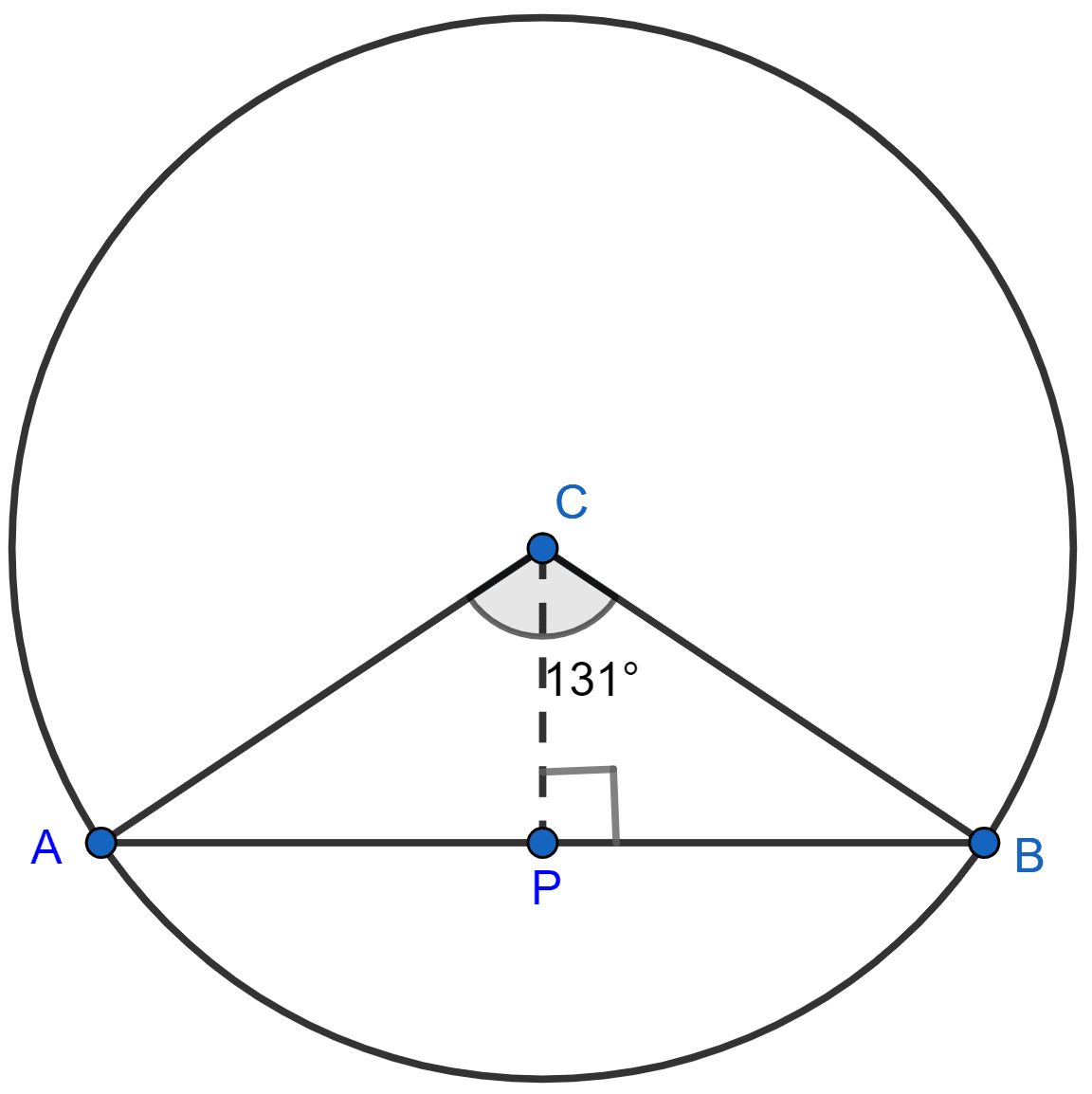
The radius of a circle is given as 15 cm and chord AB subtends an angle of 131° at the centre C of the circle. Using trigonometry, calculate :
(i) the length of AB;
(ii) the distance of AB from the centre C.
Answer
Given,
CA = CB = 15 cm and ∠ACB = 131°.
Construct a perpendicular CP from center C to the chord AB.
We know that perpendicular form center to the chord bisects the chord.
Then, CP bisects AB.
In △ACP and △BCP,
∠APC = ∠BPC = 90°
CP = CP [∵ Common Side]
AP = PB [∵ CP bisects AB]
∴ △ACP ≅ △BCP by SAS axiom.
∴ ∠ACP = ∠BCP = 2131° = 65.5° [By C.P.C.T.]
In △ACP,
sin 65.5°=HypotenusePerpendicular⇒0.91=ACAP⇒AP=0.91×AC⇒AP=0.91×15=13.65 cm.
(i) From figure,
AB = AP + PB = 2AP
= 2 × 13.65
= 27.30 cm
Hence, AB = 27.30 cm.
(ii) In △ACP,
cos 65.5°=HypotenuseBase⇒0.415=ACCP⇒CP=0.415×15⇒CP=6.225 cm.
Hence, CP = 6.225 cm.
Question 7
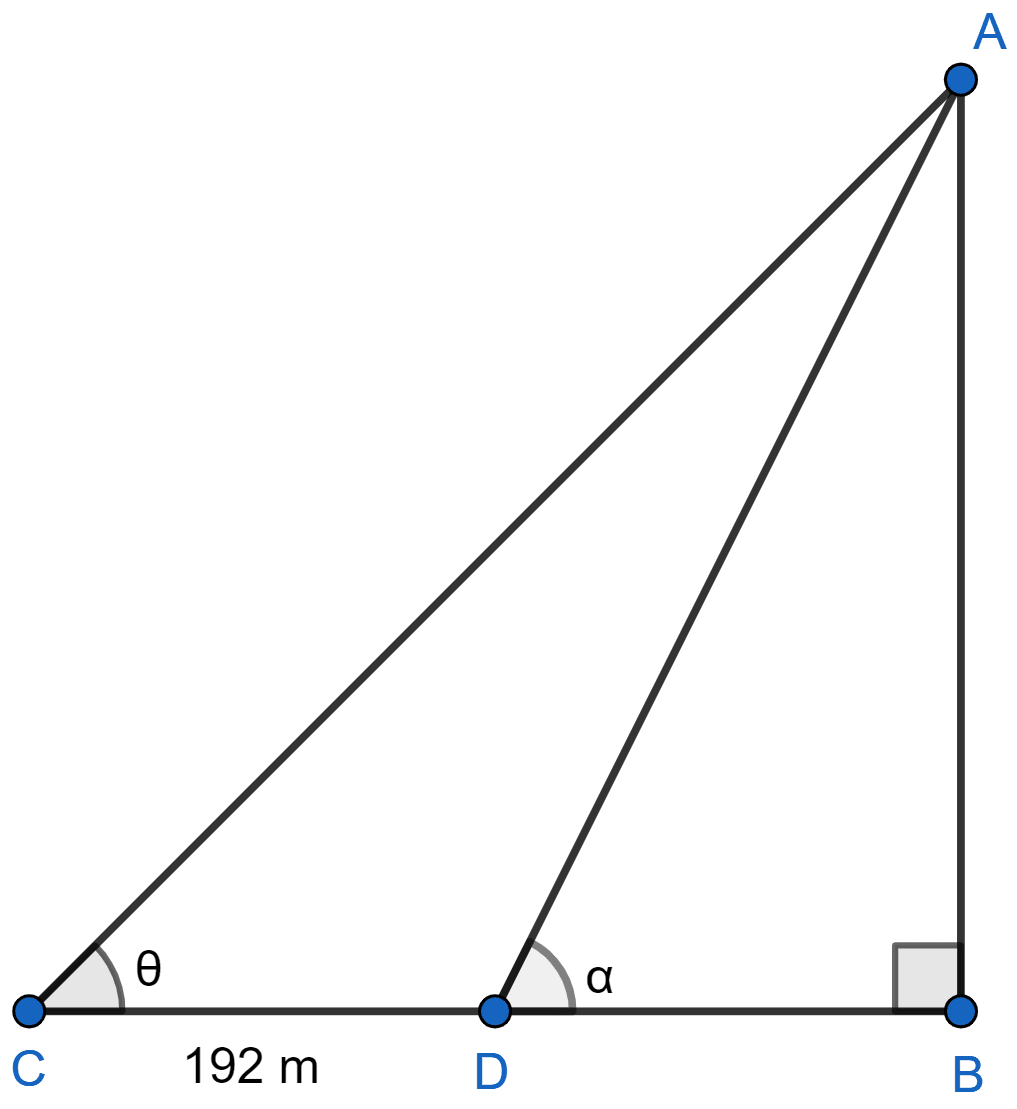
At a point on level ground, the angle of elevation of a vertical tower is found to be such that its tangent is 125. On walking 192 meters towards the tower; the tangent of the angle is found to be 43. Find the height of the tower.
Answer
Let's assume AB to be the vertical tower and C and D be the two points such that CD = 192 m.
⇒125BC=43BD⇒BDBC=4×53×12⇒BDBD+CD=2036⇒BDBD+CD=59⇒5(BD+CD)=9BD⇒5BD+5CD=9BD⇒9BD−5BD=5CD⇒4BD=5CD⇒BD=45×192⇒BD=4960⇒BD=240 m.
BC = BD + DC = 240 + 192 = 432 m.
From equation (1),
AB = 125×BC=125×432
= 5 × 36
= 180 m.
Hence, the height of the tower is 180 m.
Question 8
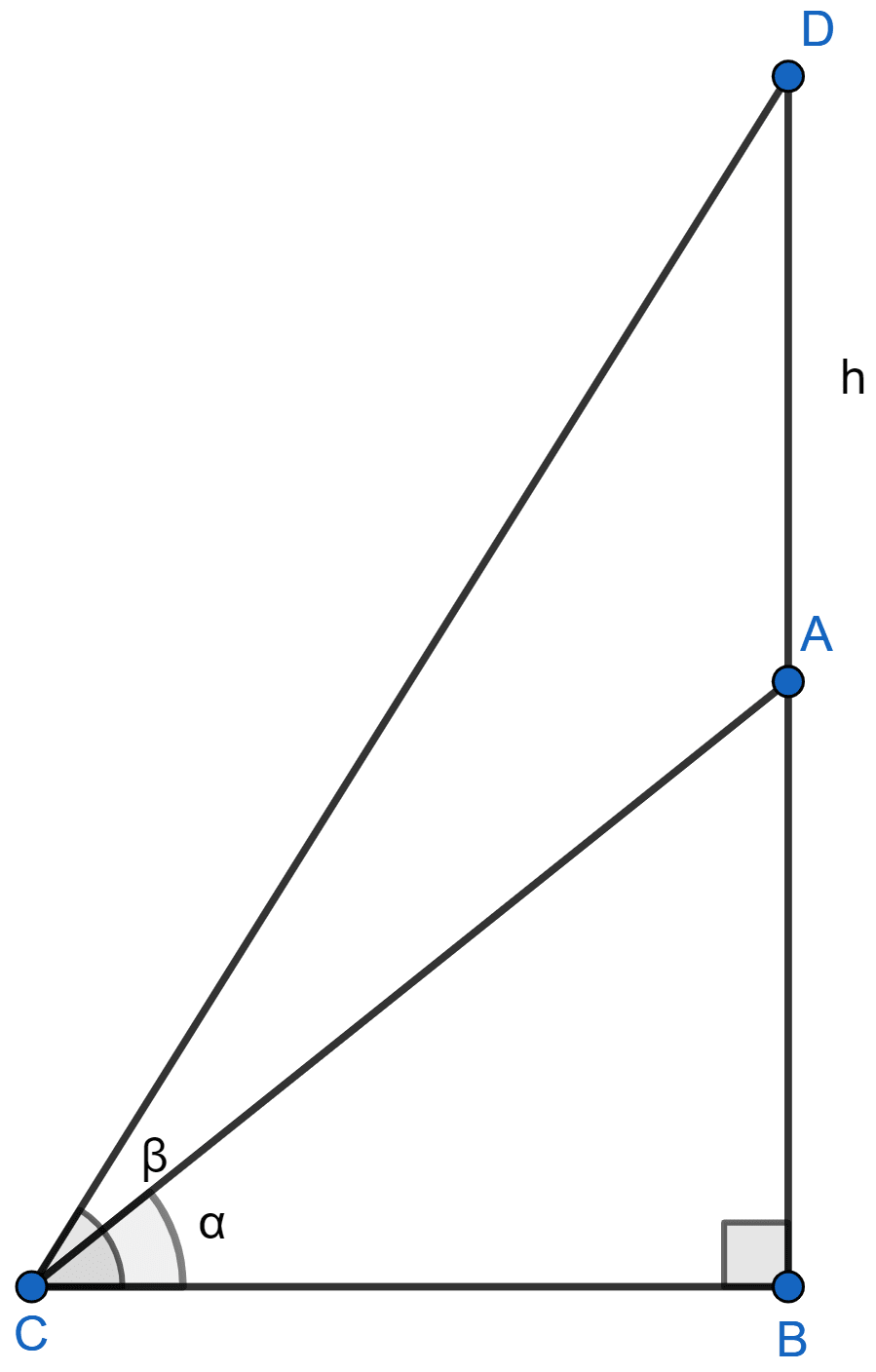
A vertical tower stands on a horizontal plane and is surmounted by a vertical flagstaff of height h meter. At a point on the plane, the angle of elevation of the bottom of the flagstaff is α and at the top of the flagstaff is β. Prove that the height of the tower is tan β−tan αh tan α.
Answer
Let AB be the tower of height x meters, surmounted by a vertical flagstaff AD of height h meters (given). Let C be a point on the plane such that ∠ACB = α, ∠DCB = β and AD = h.
Hence, proved that the height of the tower = tan β−tan αh tan α.
Question 9
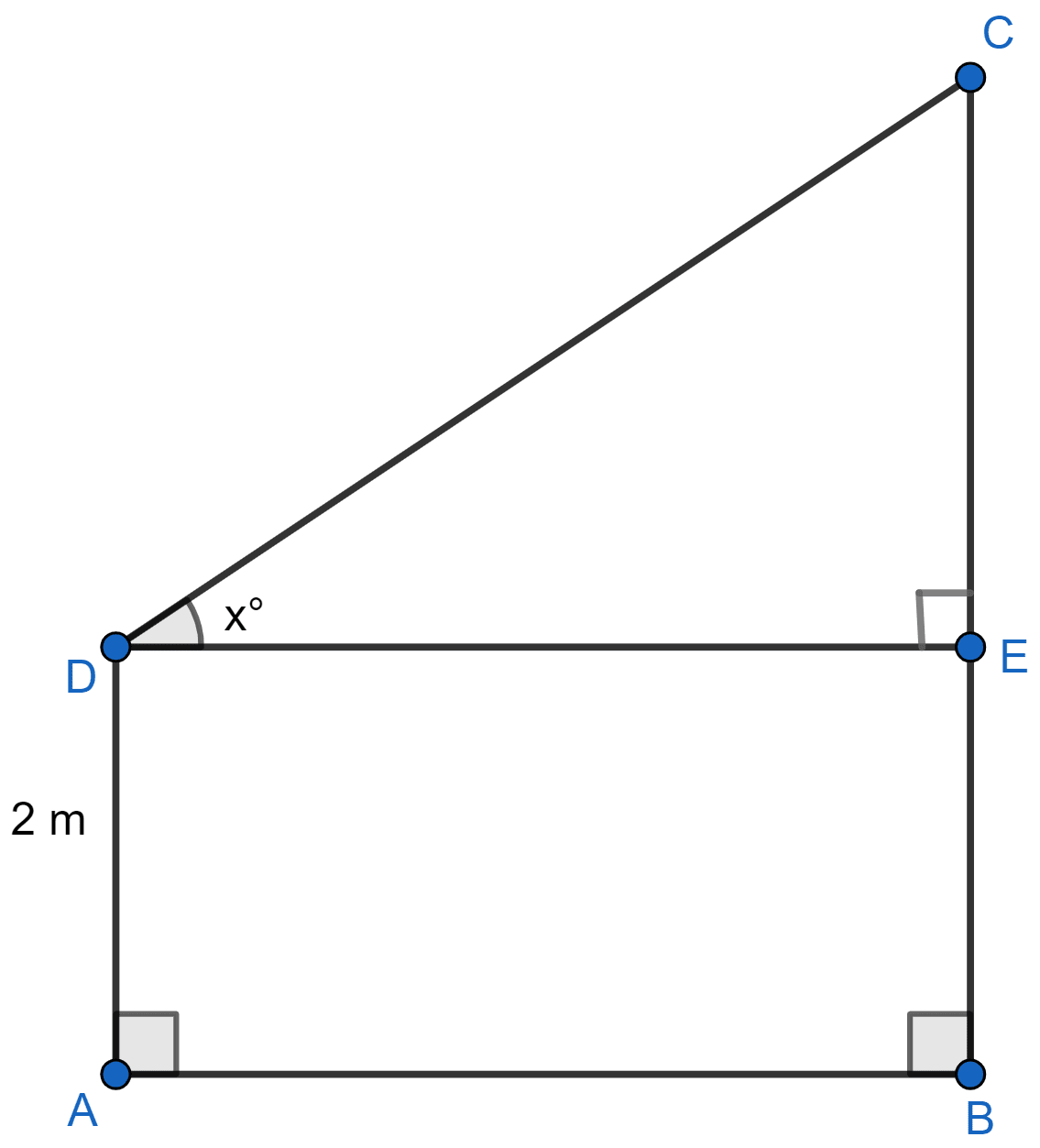
With reference to the given figure, a man stands on the ground at point A, which is on the same horizontal plane as B, the foot of the vertical pole BC. The height of the pole is 10 m. The man's eye is 2 m above the ground. He observes the angle of elevation of C, the top of the pole, as x°, where tan x° = 52. Calculate:
(i) the distance AB in metres;
(ii) angle of elevation of the top of the pole when he is standing 15 metres from the pole. Give your answer to the nearest degree.
Answer
Let's take AD to be the height of the man, AD = 2 m.
From figure, BE = AD = 2 m.
Also,
CE = BC - BE = (10 - 2) = 8 m.
(i) In ∆CED,
⇒tan x°=BasePerpendicular⇒tan x°=DECE⇒52=DE8⇒DE=28×5⇒DE=240=20 m.
From figure,
AB = DE = 20 m.
Hence, AB = 20 m.
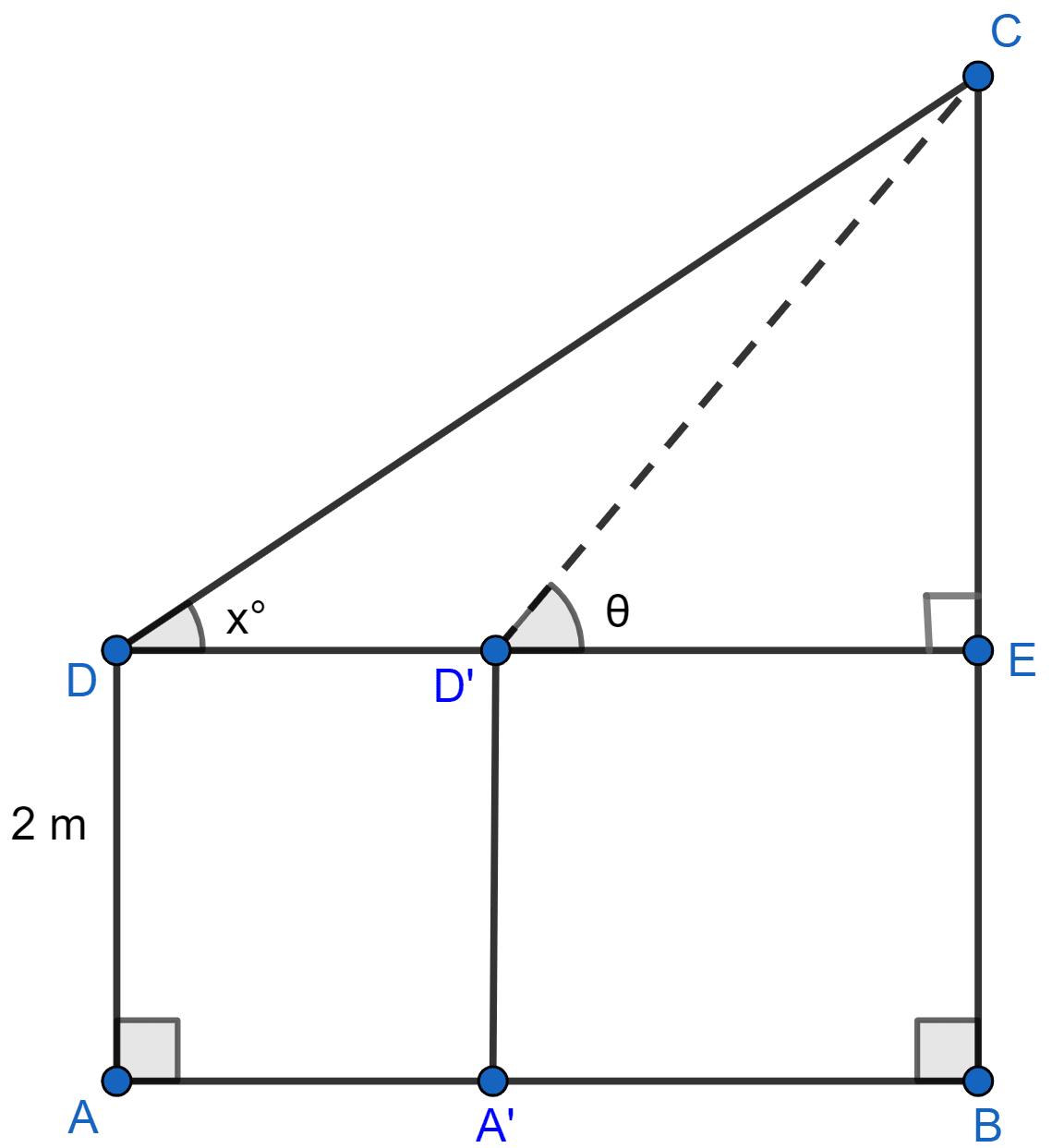
(ii) Let A'D' be the new position of the man and θ be the angle of elevation of the top of the tower.
Such that, D'E = 15 m
In ∆CED',
tan θ=BasePerpendicular⇒tan θ=D′ECE⇒tan θ=158⇒tan θ=0.533⇒tan θ=tan 28°⇒θ=28°.
Hence, angle of elevation of the top of the pole when the man is standing 15 metres from the pole is 28°.
Question 10
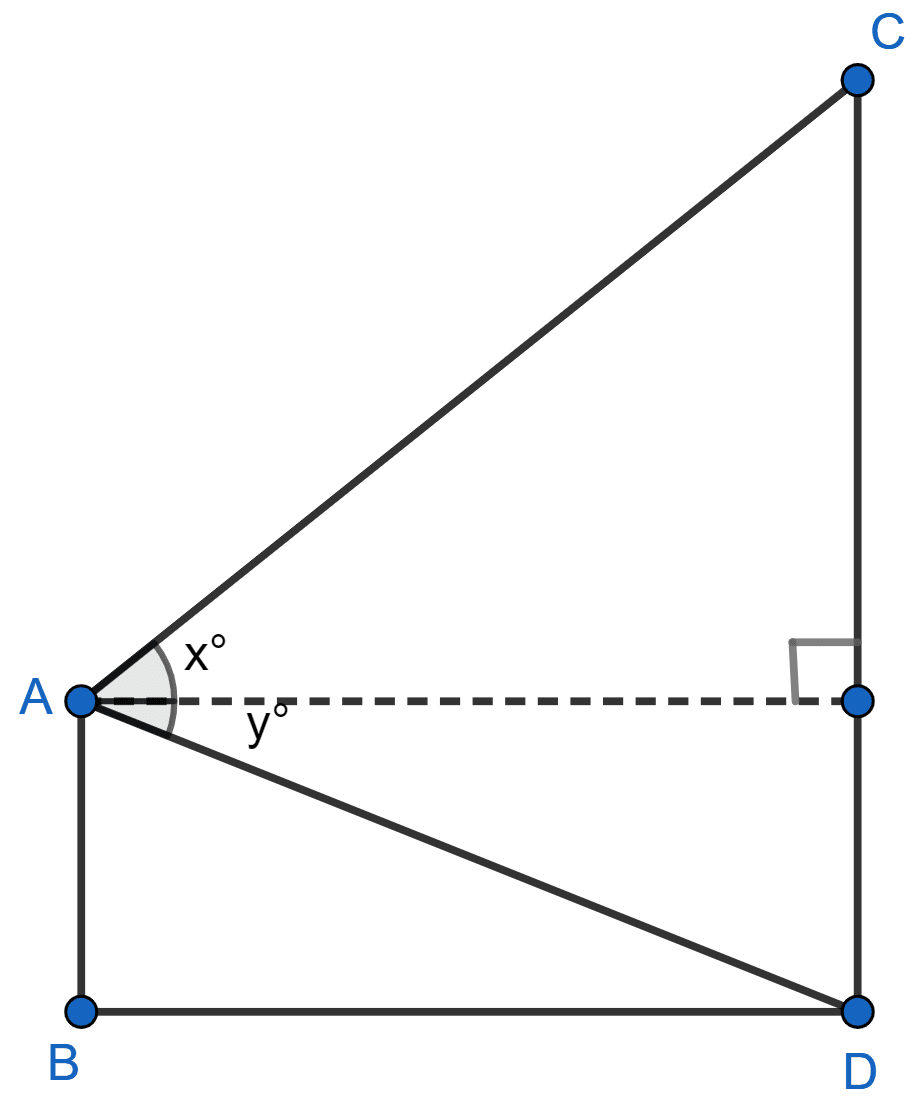
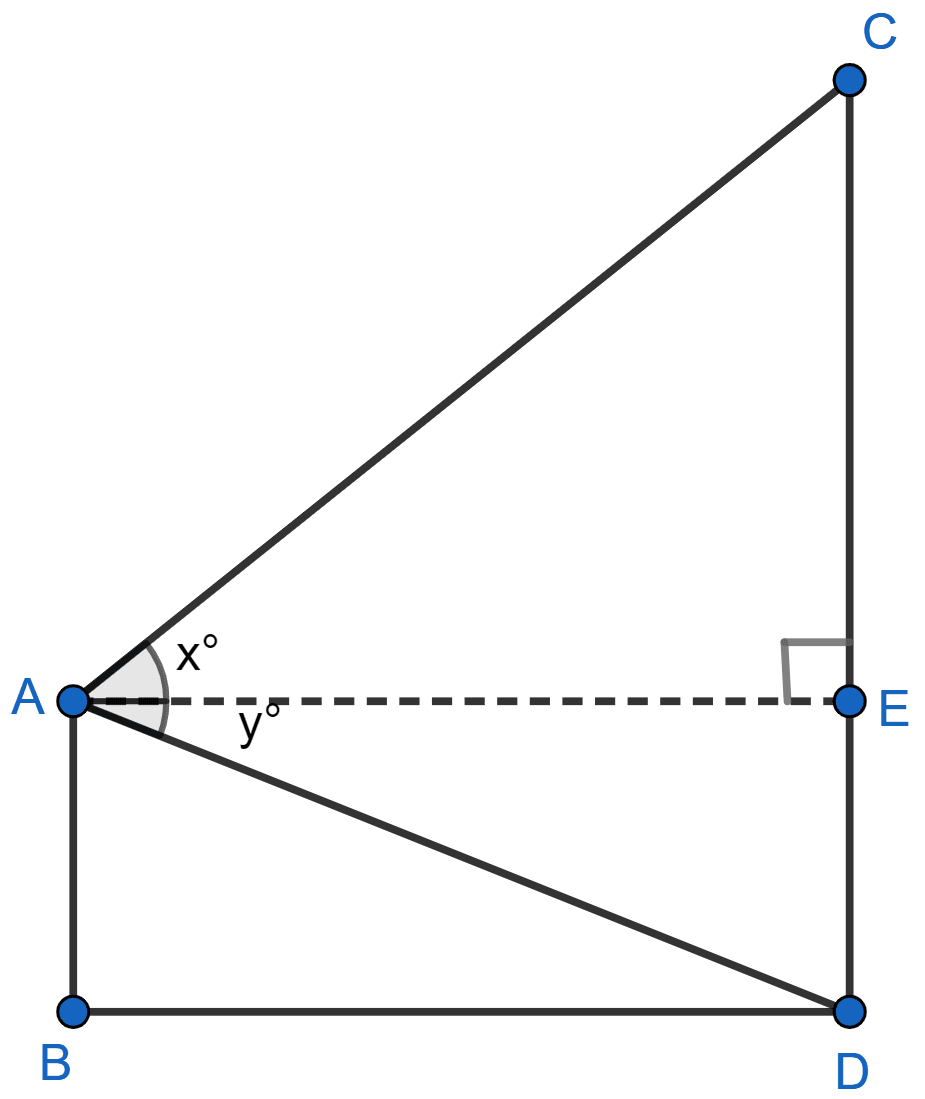
From a window A, 10 m above the ground the angle of elevation of the top C of a tower is x°, where tan x° = 25 and the angle of depression of the foot D of the tower is y°, where tan y° = 41. Calculate the height CD of the tower in metres.
Answer
From figure,
⇒ AB = DE = 10 m.
In ∆AED
⇒tan y°=BasePerpendicular⇒tan y°=AEDE⇒41=AEDE⇒AE=4DE=4×10=40 m.
In ∆AEC,
⇒tan x°=BasePerpendicular⇒tan x°=AECE⇒25=AECE⇒CE=AE×25=40×25=100 m.
From figure,
CD = DE + CE = 10 + 100 = 110 m.
Hence, height of tower (CD) = 110 m.
Question 11
A vertical tower is 20 m high. A man standing at some distance from the tower knows that the cosine of the angle of elevation of the top of the tower is 0.53. How far is he standing from the foot of the tower ?
Answer
Let angle of elevation be θ.
According to question,
⇒ cos θ = 0.53
⇒ cos θ = cos 58°
⇒ θ = 58°.
⇒ cos2 θ = 0.2809
⇒ 1 - sin2 θ = 0.2809
⇒ sin2 θ = 1 - 0.2809
⇒ sin2 θ = 0.7191
⇒ sin θ = 0.7191
⇒ sin θ = 0.848
⇒ tan θ = cos θsin θ=0.530.848 = 1.6
∴BasePerpendicular=1.6⇒BCAB=1.6⇒BC20=1.6⇒BC=1.620=12.5 m.
The man is standing at a distance of 12.5 meters.
Question 12
A vertical pole and a vertical tower are on the same level ground in such a way that from the top of the pole the angle of elevation of the top of the tower is 60° and the angle of depression of the bottom of the tower is 30°. Find :
(i) the height of the tower, if the height of the pole is 20 m;
(ii) the height of the pole, if the height of the tower is 75 m
Answer
(i) Let AB be the pole and CD be the tower.
Given,
Length of pole (AB) = 20 m.
From figure,
CE = AB = 20 m.
In △AEC,
tan 30°=BasePerpendicular⇒31=AECE⇒AE=3CE⇒AE=203 m.
In △AED,
tan 60°=BasePerpendicular⇒3=AEDE⇒DE=AE3⇒DE=203×3=20×3=60 m.
From figure,
CD = DE + CE = 60 + 20 = 80 m.
Hence, the height of the tower = 80 m.
(ii) Given,
Length of tower (CD) = 75 m
From figure,
AE = BC = y (let)
In △AEC,
tan 30°=BasePerpendicular⇒31=AECE⇒CE=3AE⇒CE=3y m.
In △AED,
tan 60°=BasePerpendicular⇒3=AEDE⇒DE=AE3⇒DE=y3 m.
From figure,
⇒ CD = CE + DE
⇒3y+3y=75⇒3y+3y=75⇒34y=75⇒y=4753 m.
We know that,
CE = 3y=34753=475 = 18.75 meters.
Hence, height of pole = 18.75 meters.
Question 13
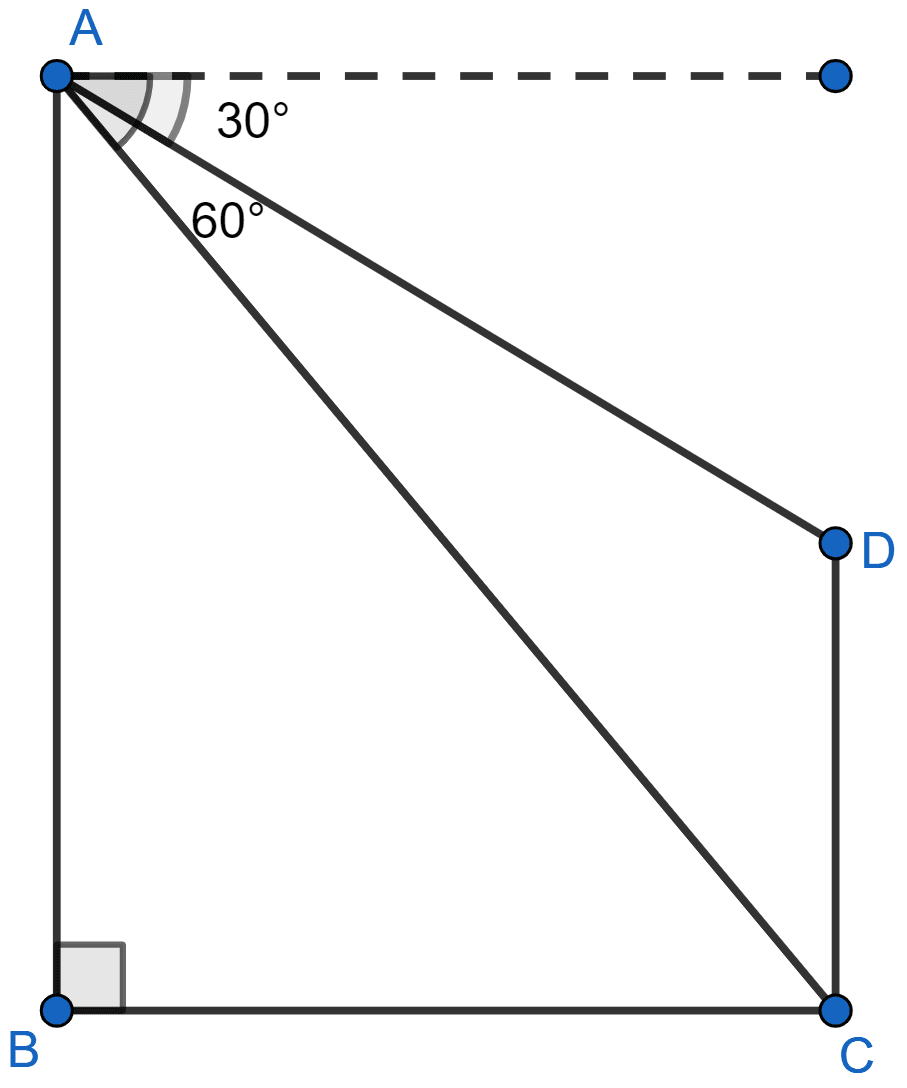
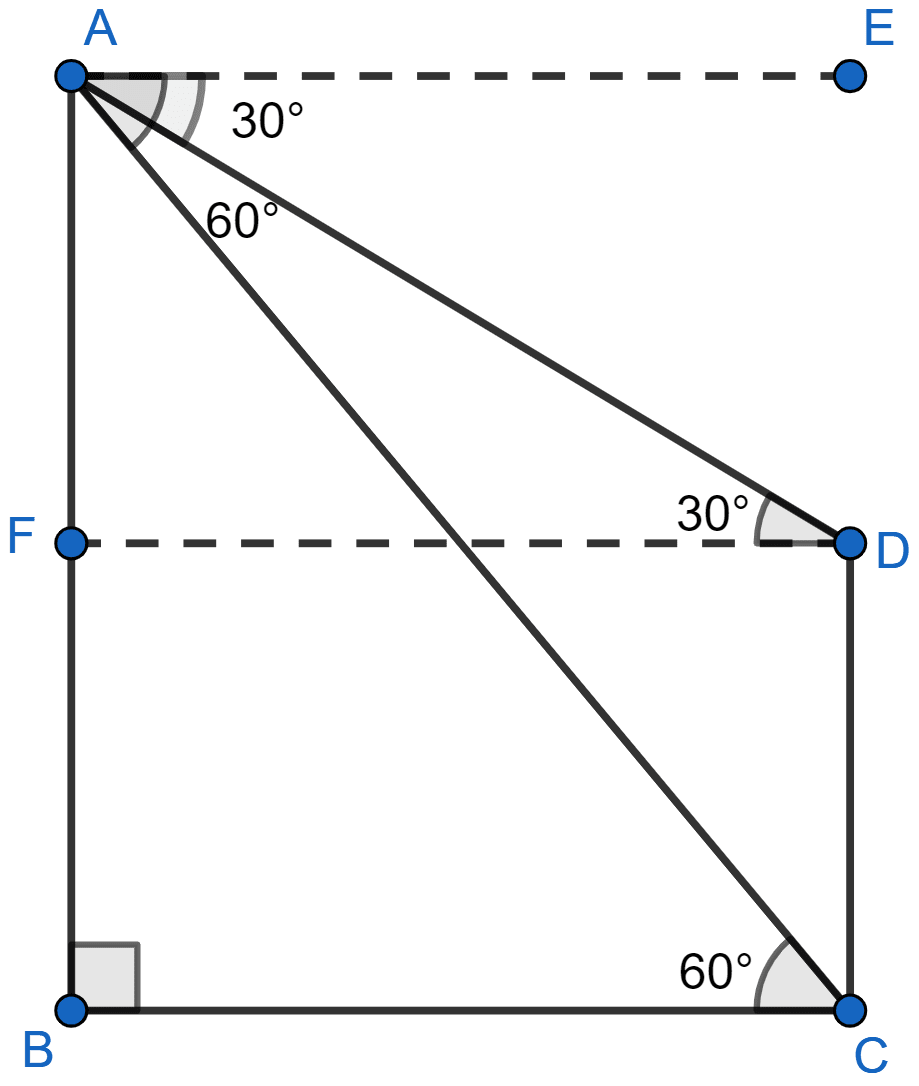
In the given figure, from the top of a building AB = 60 m high, the angles of depression of the top and bottom of a vertical lamp post CD are observed to be 30° and 60° respectively. Find :
(i) the horizontal distance between AB and CD.
(ii) the height of the lamp post.
Answer
(i) We know that,
Alternate angles are equal.
∴ ∠ACB = ∠EAC = 60°
In △ABC,
tan 60°=BasePerpendicular⇒3=BCAB⇒BC=3AB=1.73260=34.64 m.
Hence, horizontal distance between AB and CD = 34.64 meters.
(ii) We know that,
From figure,
FD = BC = 34.64 m
As, alternate angles are equal.
∴ ∠ADF = ∠EAD = 30°
In △AFD,
tan 30°=BasePerpendicular⇒31=FDAF⇒AF=3FD⇒AF=1.73234.64=20 m.
From figure,
BF = AB - AF = 60 - 20 = 40 m.
∴ CD = 40 m.
Hence, height of lamp post = 40 m.
Question 14
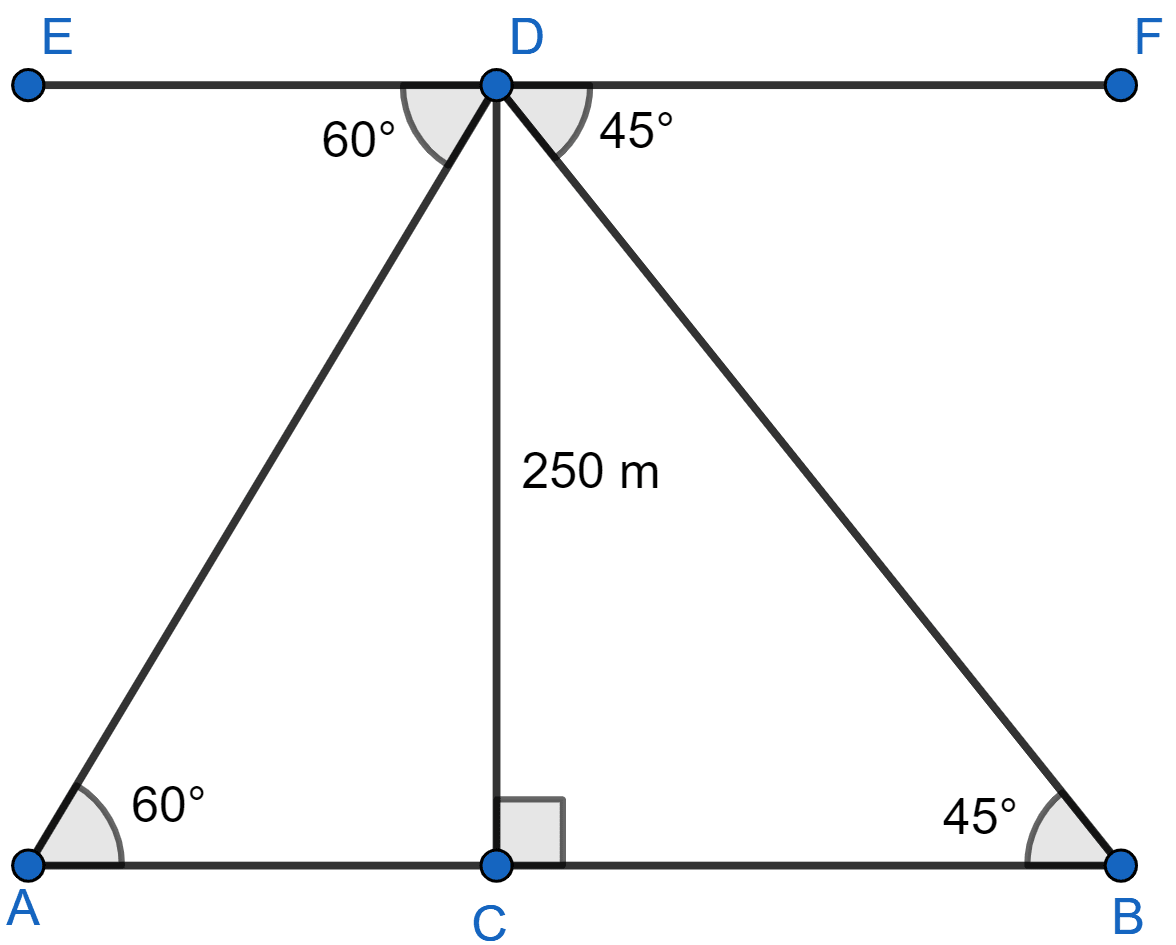
An aeroplane, at an altitude of 250 m, observes the angle of depression of two boats on the opposite banks of a river to be 45° and 60° respectively. If the boats are on the opposite sides of the aeroplane, find the width of the river. Write the answer correct to the nearest whole number.
Answer
Let D be the position of aeroplane and A and B be the positions of boat.
As, angle of depression are 60° and 45°.
Since, alternate angles are equal.
∴ ∠DAC = EDA = 60° and ∠DBC = FDB = 45°.
In △ACD,
tan 60°=BasePerpendicular⇒3=ACCD⇒AC=3CD⇒AC=1.732250⇒AC=144.34 m.
In △BCD,
tan 45°=BasePerpendicular⇒1=BCCD⇒BC=CD=250 m.
AB = AC + BC = 144.34 + 250 = 394.34 ≈ 394 m.
Hence, width of river = 394 m.
Question 15
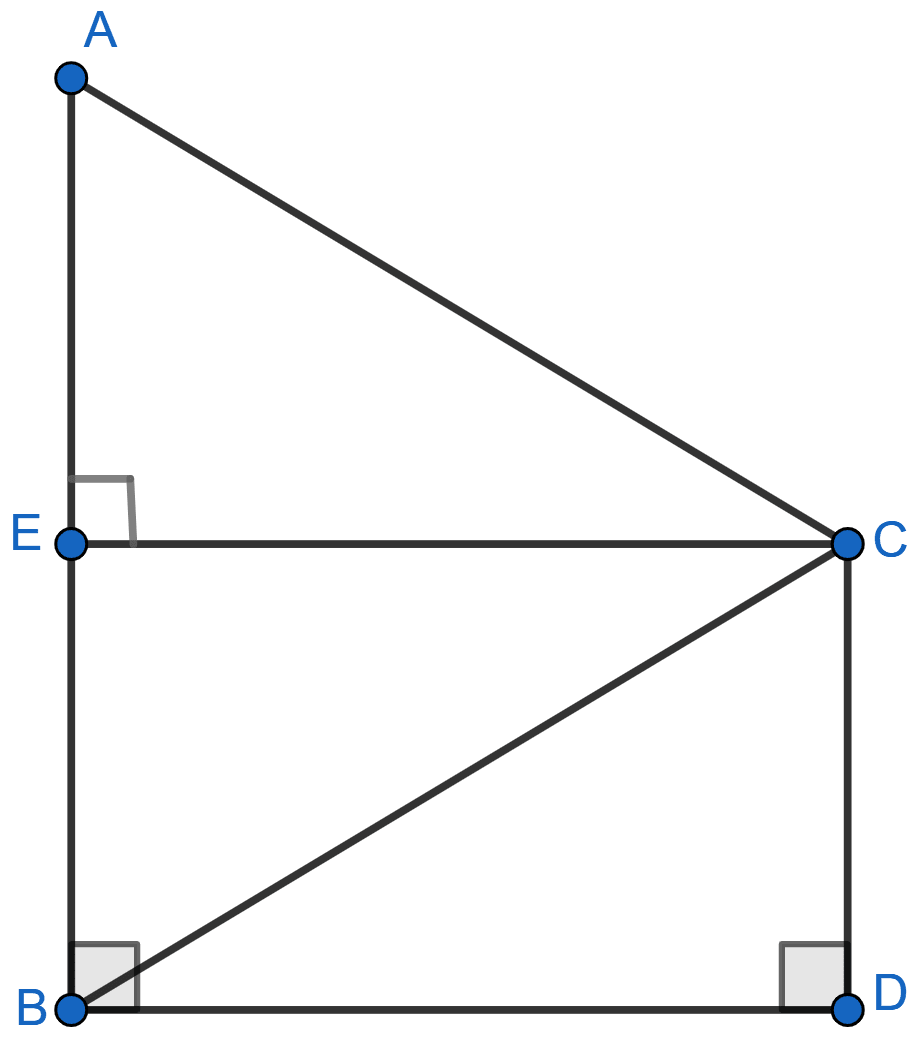
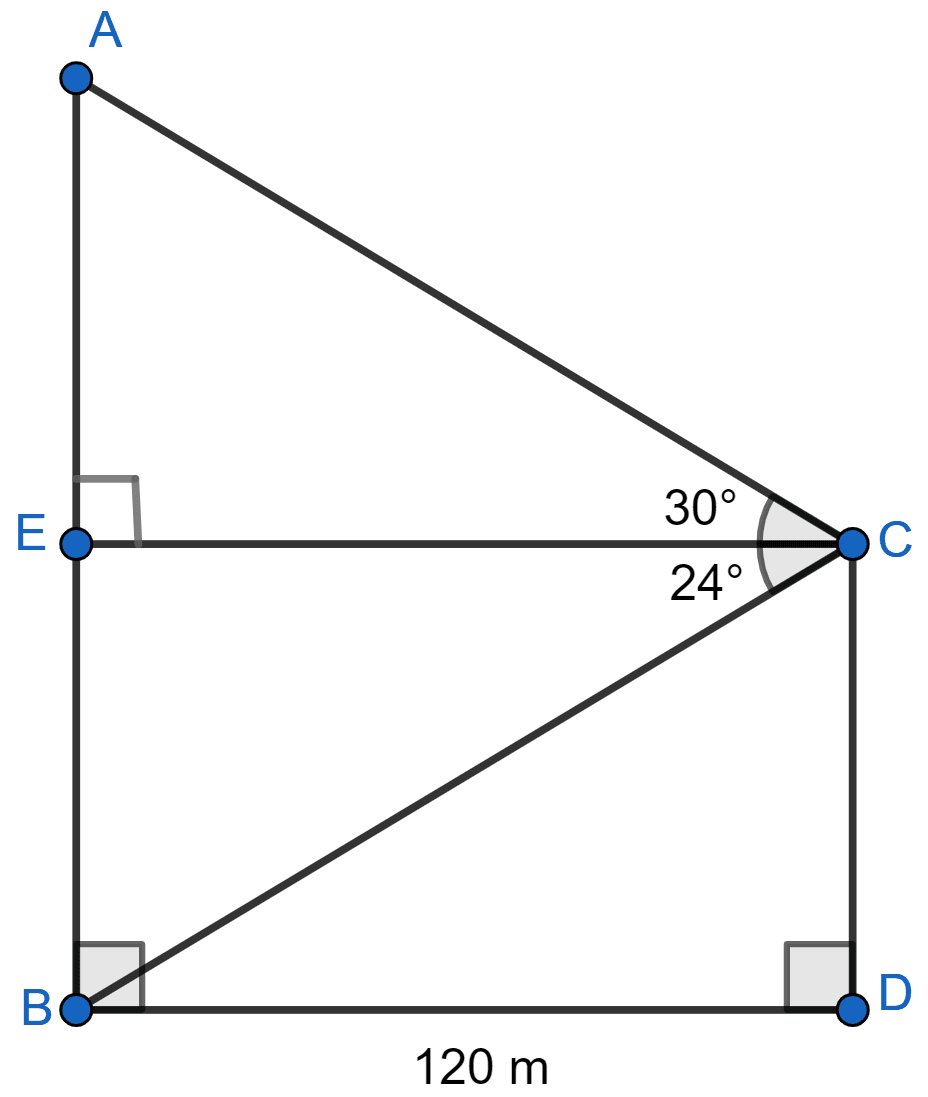
The horizontal distance between two towers is 120 m. The angle of elevation of the top and angle of depression of the bottom of the first tower as observed from the top of the second tower is 30° and 24°, respectively. Find the height of the two towers. Give your answer correct to 3 significant figures.
Answer
From figure,
AB is the first tower and CD is the second tower.
From figure,
EC = BD = 120 m.
In △AEC,
tan 30°=BasePerpendicular⇒31=ECAE⇒AE=3EC⇒AE=3120⇒AE=1.732120=69.28 m.
In △EBC,
tan 24°=BasePerpendicular⇒0.445=ECEB⇒EB=EC×0.445⇒EB=120×0.445=53.4 m.
Hence, height of two towers = 123 meters and 53.4 meters.
Question 16
The angles of depression of two ships A and B as observed from the top of a lighthouse 60 m high are 60° and 45° respectively. If the two ships are on the opposite sides of the lighthouse, find the distance between the two ships. Give your answer correct to nearest whole number.
Answer
Let CD be the lighthouse.
As, angle of depression are 60° and 45°.
Since, alternate angles are equal.
∴ ∠DAC = ∠EDA = 60° and ∠DBC = ∠FDB = 45°.
In △ACD,
tan 60°=BasePerpendicular⇒3=ACCD⇒AC=3CD⇒AC=1.73260⇒AC=34.64 m.
In △BCD,
tan 45°=BasePerpendicular⇒1=BCCD⇒BC=CD=60 m.
AB = AC + BC = 34.64 + 60 = 94.64 ≈ 95 m.
Hence, the distance between two ships = 95 m.
Question 17
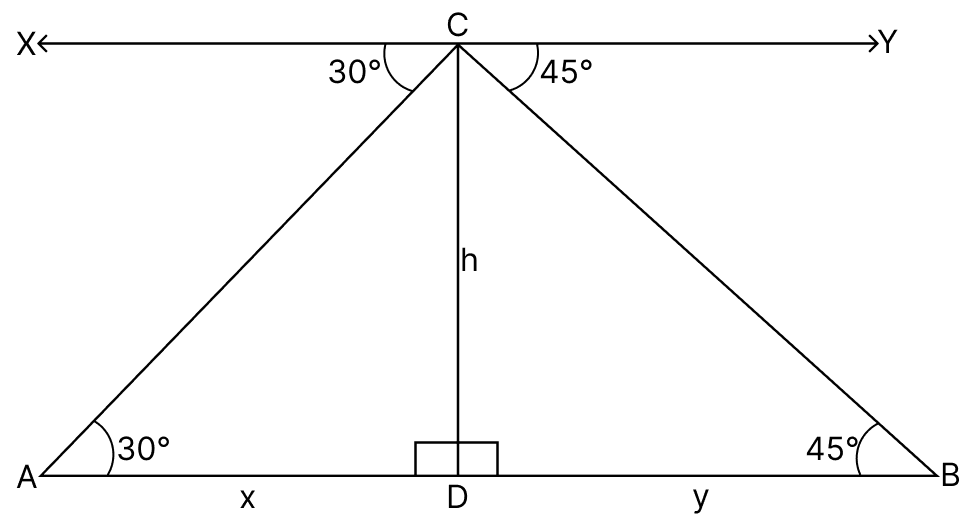
Two ships are approaching a light house from the opposite directions. The angles of depression of the two ships from the top of the light house are 30° and 45°. If the distance between the two ships is 100 metre, find the height of the light house correct to one decimal place.
Answer
Let height of lighthouse (CD) be h meters.
Let A and B be the boats approaching lighthouse.
From figure,
∠CAD = ∠ACX = 30° and ∠CBD = ∠BCY = 45°
In triangle ACD,
⇒tan30∘=xh⇒31=xh⇒x=h3.
In triangle BCD,
⇒tan45∘=yh⇒1=yh⇒h=y.
Given,
Distance between the two boats is 100 m.
x + y = 100
⇒h3+h=100⇒h(3+1)=100⇒h=3+1100⇒h=(3+1)(3−1)100(3−1)⇒h=3−1100(3−1)⇒h=2100(3−1)⇒h=50(3−1)⇒h=50(1.732−1)⇒h=50(0.732)⇒h=36.6 m.