
Which among the following is considered as a great achievement of the First World War period?
- Birth of Indian National Congress
- Formation of Swaraj Party
- Lucknow Pact
- None of these
Answer
Lucknow Pact
Reason — The Lucknow Pact (1916) was regarded as a landmark because it brought the Congress and the Muslim League on a common platform. It also marked the reunion of the Early Nationalists and the Assertive Nationalists, strengthening the National Movement.
Which among the following sessions of the Indian National Congress brought unity between Assertive and Early nationalists?
- Varanasi Session of Congress, 1905
- Surat Session of Congress, 1907
- Calcutta Session of Congress, 1906
- Lucknow Session of Congress, 1916
Answer
Lucknow Session of Congress, 1916
Reason — The Lucknow Session (1916) reunited the Early Nationalists and the Assertive Nationalists after the split at the Surat Session (1907). This reunion strengthened the Congress.
In the question given below, there are two statements marked as Assertion (A) and Reason (R). Read the statements and choose the correct option.
Assertion (A) : The Lucknow Pact was a landmark in the history of freedom movement.
Reason (R) : It achieved unity between the two factions of the Congress and the League and the Congress.
- Both Assertion (A) and Reason (R) are correct and Reason (R) is the correct explanation of Assertion (A).
- Both Assertion (A) and Reason (R) are correct but Reason (R) is not the correct explanation of Assertion (A).
- Assertion (A) is true, but Reason (R) is false.
- Assertion (A) is false, but Reason (R) is true.
Answer
Both Assertion (A) and Reason (R) are correct and Reason (R) is the correct explanation of Assertion (A).
Explanation — The Lucknow Pact (1916) united the Early Nationalists, the Assertive Nationalists and the Muslim League. Therefore, it became a landmark in the history of the freedom movement.
Read the two statements regarding the Lucknow Pact and select the option that shows the correct relationship between (A) and (B).
(A) B.G. Tilak played an important role in bringing the Congress and Muslim League together.
(B) He realised that success could be achieved only through Hindu-Muslim unity.
- (B) contradicts (A)
- (B) is the reason for (A)
- (A) is true but (B) is false
- (A) and (B) are independent of each other
Answer
(B) is the reason for (A)
Explanation — B.G. Tilak took the lead in bringing the Congress and the Muslim League together because he had realised that the success of the National Movement depended on Hindu-Muslim unity. Thus, (B) is the reason for (A).
Identify the effect of the First World War on the national movement.
P : Two Home Rule Leagues were started in India in 1916.
Q : Both the factions of the Congress were united and even the Congress and Muslim League came together.
R : Gandhiji started the Civil Disobedience Movement.
S : India was granted Dominion Status.
- P and R
- P and Q
- R and S
- P and S
Answer
P and Q
Reason — During the First World War, two Home Rule Leagues were started in 1916, and in the same year the Early and Assertive Nationalists reunited while the Congress and the Muslim League came together through the Lucknow Pact. The Civil Disobedience Movement began later in 1930, and India was not granted Dominion Status during this period.
In which year was the Lucknow Pact, an important step on the road to Hindu-Muslim Unity, signed by the Congress and the Muslim League?
- 1914
- 1915
- 1916
- 1917
Answer
1916
Reason — The Lucknow Pact was signed in 1916 at the Lucknow Session of the Congress, where the Congress and the Muslim League came together on a common platform.
The Lucknow Pact was signed between ...............
- The British and the Congress
- The Congress and the Muslim League
- The Early and the Assertive Nationalists
- The Muslim League and the British
Answer
The Congress and the Muslim League
Reason — The Lucknow Pact was signed between the Congress and the Muslim League in 1916, bringing them together on a common platform to present joint constitutional demands before the Government.
Name two leaders linked with the Home Rule Leagues.
Answer
Two leaders linked with the Home Rule Leagues are Bal Gangadhar Tilak and Annie Besant.
Name the famous pact which united the Assertive/Radical Nationalists and the Early Nationalists in 1916.
Answer
The Lucknow Pact of 1916 united the Assertive/Radical Nationalists and the Early Nationalists.
Give one evil effect of the Lucknow Pact of 1916.
Answer
One drawback of the Lucknow Pact of 1916 is that it laid stress on the separate interests of the Hindus and the Muslims and their separate political existence, which led to feelings of communalism.
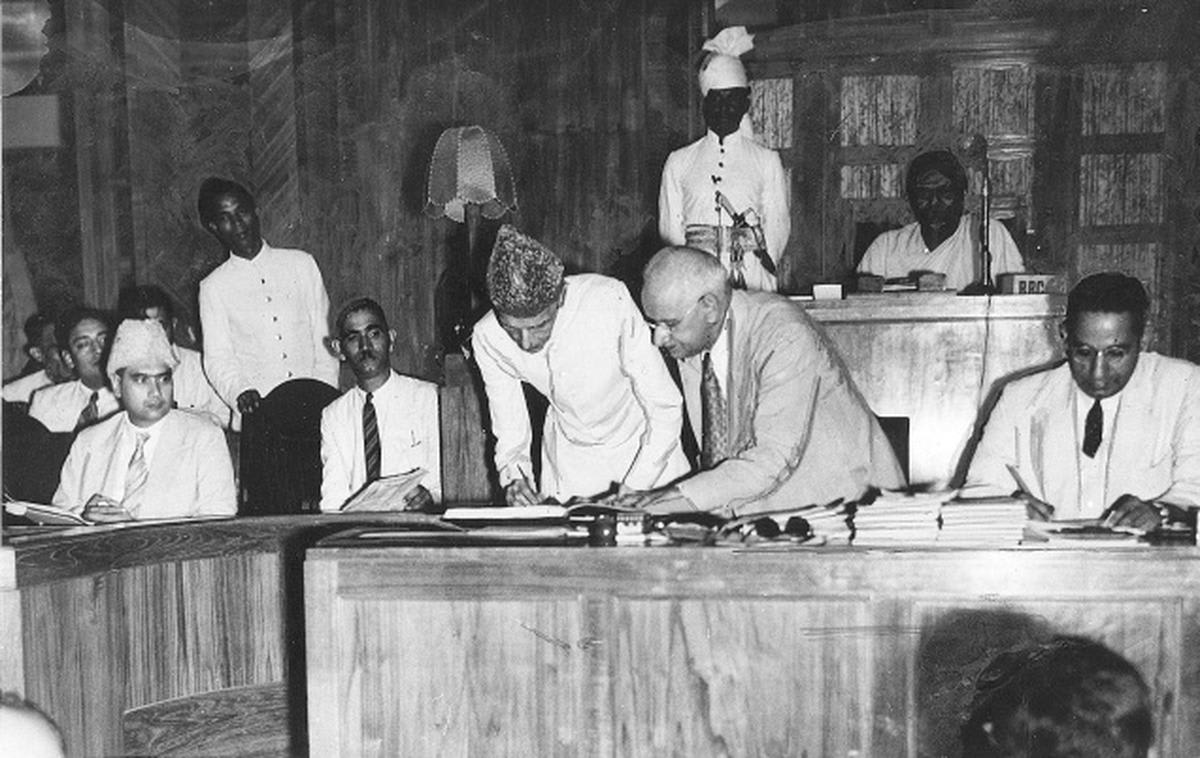
With reference to the picture given below, state any two significant outcomes of the pact signed in 1916 between the Indian National Congress and the All-India Muslim League.
Answer
Two significant outcomes of the pact signed in 1916 (the Lucknow Pact) are:
- It brought the Congress and the Muslim League together on a common platform to put forward joint constitutional demands before the Government.
- It reunited the Early Nationalists and the Assertive Nationalists, strengthening the Congress.
Mention any two points to highlight the significance of the Lucknow Pact.
Answer
Two points highlighting the significance of the Lucknow Pact are:
- Hindu-Muslim Unity — It was a marvellous step in achieving Hindu-Muslim unity. The joint demands of the Congress and the Muslim League could now impress upon the Government the urgency of their demands.
- Unity within the Congress — It brought about unity between the Assertive/Radical Nationalists and the Early Nationalists, who had been pursuing different paths since the Surat Session of 1907, thereby strengthening the Congress.
The Lucknow Pact is regarded as a landmark in the History of India. In this context, explain the following points :
(a) The parties signing the pact.
(b) Any two provisions of this pact.
(c) The importance of the pact.
(d) Lucknow Pact an important milestone in the Indian independence movement.
Answer
(a) The Lucknow Pact of 1916 was signed between the Congress and the Muslim League.
(b) Two provisions of the Lucknow Pact are given below:
- Abolition of the Indian Council : The Council of the Secretary of State for India operating from England, shall be abolished.
- Governor — General's Executive Council : One-half of the members of the Governor-General's Executive Council shall be Indians, elected by the elected members of the Imperial Legislative Council.
(c) The Lucknow Pact brought together the Congress and the Muslim League on a common platform. It also reunited the Early Nationalists and the Assertive Nationalists, enabling them to work together for a common cause.
(d) The Lucknow Pact (1916) was an important milestone because:
- It reunited the Early Nationalists and Assertive Nationalists in the Congress.
- It brought the Congress and the Muslim League together to present joint constitutional demands.
- This growing unity strengthened the national movement and influenced the Montagu Declaration of 1917, which led to the Government of India Act, 1919.
With reference to the given picture, answer the following questions.
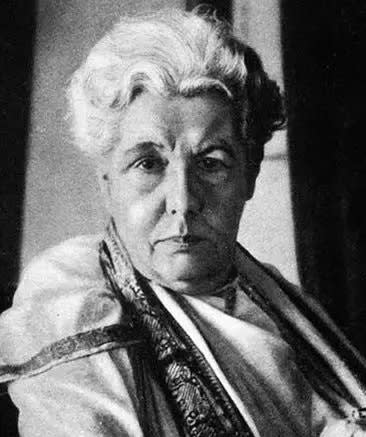
(a) Identify and name the lady and the country she originally hailed from.
(b) Mention her contribution to the national movement.
(c) Mention two newspapers published by her.
Answer
(a) The lady in the given picture is Annie Besant. She originally hailed from Ireland and later settled in India.
(b) Annie Besant played an important role in the Indian freedom struggle. She set up a Home Rule League similar to that of Tilak, in September, 1916. Its aim was to attain Home Rule or self-government within the British Empire by all constitutional means and to educate and organise public opinion in the country towards the attainment of this goal.
(c) Two newspapers published by her were — New India and The Commonweal.
With reference to the given picture, answer the following questions.
(a) What historical event does this picture represent?
(b) Who are the key figures in the image, and what roles do they play in the event depicted?
Answer
(a) The picture represents the inaugural proceedings of the first Constituent Assembly of Pakistan at Karachi in August 1947.
(b) The key figures connected with the event were:
- Muhammad Ali Jinnah — Leader of the Muslim League and founder of Pakistan. He signed the Assembly roster and became the first President of Pakistan's Constituent Assembly.
- Jogendra Nath Mandal — He served as the temporary Chairman of the Constituent Assembly during its inaugural proceedings.
- Liaquat Ali Khan — A senior Muslim League leader who played an important role in establishing the new government and subsequently became the first Prime Minister of Pakistan.
Note: The chapter incorrectly attributes this photograph to the signing of the Lucknow Pact. The Lucknow Pact was signed between the Congress and the Muslim League at Lucknow in 1916, whereas this photograph relates to the first Constituent Assembly of Pakistan in Karachi in August 1947, more than thirty years later.