
WHO has its headquarters in which city?
- New York
- New Delhi
- Geneva
- Paris
Answer
Geneva
Reason — The World Health Organisation (WHO) has its headquarters at Geneva in Switzerland. Therefore, among the given options, Geneva is the correct answer.
The main agency working for welfare of children is:
- WHO
- UNICEF
- UNESCO
- UNO
Answer
UNICEF
Reason — The main agency working for the welfare of children is UNICEF (United Nations Children's Fund). Its main objective is to look after the welfare of children, especially in developing countries, by providing people with low cost community-based services in maternal and child health, nutrition and immunisation.
UNICEF stands for
- United Nations Children's Fund
- United Nations international Chef's Fund
- United Nations Climate Fund
- United Nations Children's and Women Fund
Answer
United Nations Children's Fund
Reason — UNICEF stands for United Nations Children's Fund. It was created by the United Nations General Assembly in 1946 to help meet the emergency needs of children after the Second World War.
The logo given is of
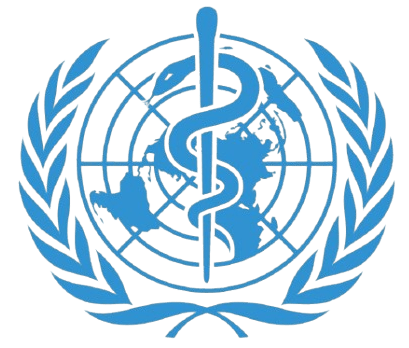
- UNO
- UNICEF
- WHO
- UNESCO
Answer
WHO
Reason — The logo shown is that of WHO — the staff and snake are internationally recognised symbols of medicine and healthcare, representing WHO's mission to promote global health.
It makes a worldwide immunisation campaign to prevent the six major communicable diseases of children:
- WHO
- UNO
- UNICEF
- UNESCO
Answer
WHO
Reason — Among the functions of WHO, it makes a worldwide campaign in providing effective immunisation for all children to prevent six major communicable diseases of childhood, namely diphtheria, measles, poliomyelitis, tetanus, tuberculosis and whooping cough.
Identify the logo :
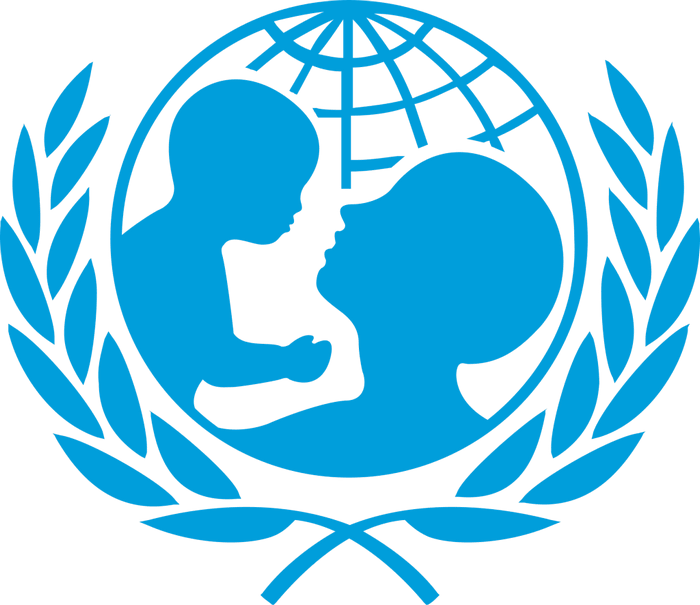
- WHO
- UNICEF
- UNO
- UNESCO
Answer
UNICEF
Reason — The logo shows a mother and child enclosed within a wreath of olive branches. It is the emblem of UNICEF (United Nations Children's Fund), the agency which works for the cause of children and women.
Which of the following is NOT the function of UNESCO?
- Encourages the study of social sciences
- Protects the world inheritance of books, work of art, etc.
- Defines standard of medicines
- Emphasis on education of women and girls.
Answer
Defines standard of medicines
Reason — Defining the standard of medicines is a function of WHO, which has set standards for many life-saving drugs so that the effectiveness and purity of imported medicines can be verified. UNESCO works in the fields of education, science, culture and communication, so this is not one of its functions.
Which UN Agency recently played a key role in controlling COVID-19?
- UNICEF
- WHO
- UNESCO
- All of these
Answer
WHO
Reason — WHO is the specialised agency of the U.N.O. devoted to health. It aims at fighting diseases and preventing them from spreading, and helps different countries to reinforce their health systems, so it played the key role in controlling COVID-19.
In the question given below, there are two statements marked as Assertion (A) and Reason (R). Read the statements and choose the correct option.
Assertion (A) : The main objective of WHO is the attainment of good health by all people all over the world.
Reason (R) : WHO was founded in April, 1948.
- Both Assertion (A) and Reason (R) are correct and Reason (R) is the correct explanation of Assertion (A).
- Both Assertion (A) and Reason (R) are correct but Reason (R) is not the correct explanation of Assertion (A).
- Assertion (A) is true, but Reason (R) is false.
- Assertion (A) is false, but Reason (R) is true.
Answer
Both Assertion (A) and Reason (R) are correct but Reason (R) is not the correct explanation of Assertion (A).
Explanation — Both statements are correct. WHO came into existence on 7 April 1948, and its main objective is the attainment by all people of the highest possible level of health. However, the founding date does not explain its objective; therefore, Reason (R) is not the correct explanation of Assertion (A).
Identify the functions of UNICEF.
P : To maintain meetings of international scientists
Q : To help in establishing scientific and technological institutions
R : To make efforts to prevent diseases like TB, malaria, etc. so that the children grow healthy.
S : Provides assistance for long term programmes for children and mothers in case of calamities and epidemics
- P and Q
- Q and R
- R and S
- P and S
Answer
R and S
Reason — Statements R and S are functions of UNICEF. It works to prevent diseases such as tuberculosis, malaria, eye diseases and skin diseases so that children grow healthy, and it provides assistance for long-term programmes for children while meeting the immediate needs of mothers and children during natural disasters, civil strife and epidemics. Statements P and Q relate to UNESCO, which promotes scientific cooperation and helps establish scientific and technological institutions.
Which agency of the United Nations Organisation is connected to this picture?
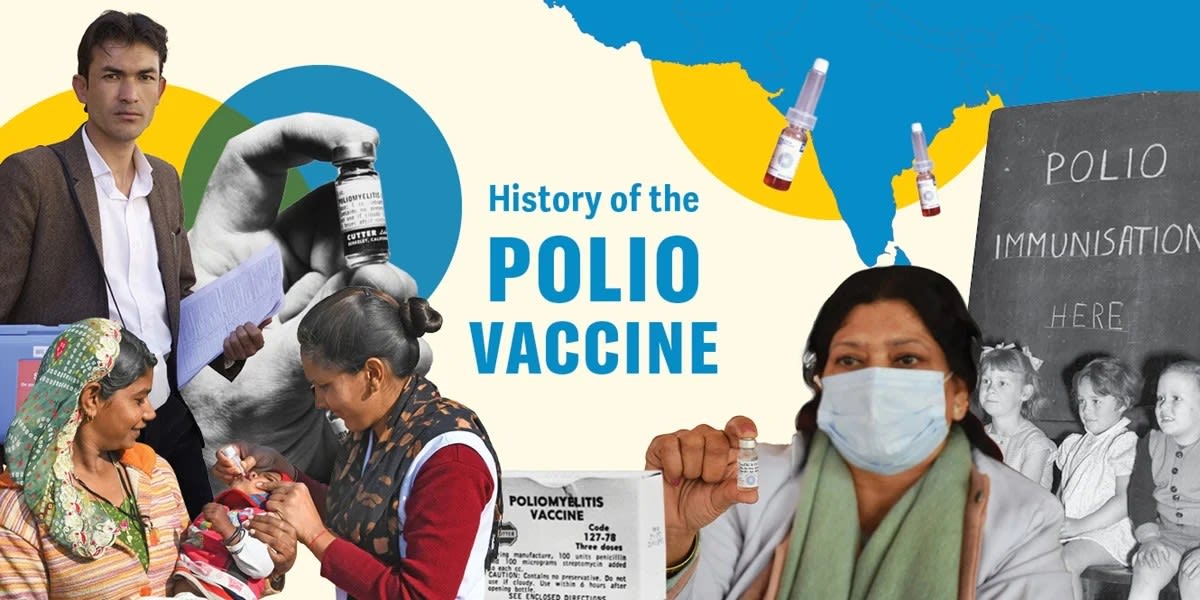
- WHO
- FAO
- UNESCO
- IMF
Answer
WHO
Reason — The picture is connected with polio vaccination. WHO makes a worldwide campaign in providing effective immunisation for all children to prevent six major communicable diseases of childhood, poliomyelitis being one of them.
Which agency of the United Nations Organisation is associated with this picture?

- UNESCO
- UNICEF
- WHO
- ILO
Answer
UNESCO
Reason — UNESCO is responsible for preserving heritage sites worldwide by ensuring their protection and conservation.
Name any two major agencies of the U.N.O.
Answer
Two major agencies of the U.N.O. are:
- WHO (World Health Organisation)
- UNICEF (United Nations Children's Fund)
Write the full form of the following : UNICEF, and WHO.
Answer
The full forms are given below:
UNICEF → United Nations Children's Fund
WHO → World Health Organisation
Name the agency of the U.N.O. which helps the developing countries to make the best use of their human and natural resources.
Answer
The agency of the U.N.O. that helps developing countries make the best use of their human and natural resources is UNESCO (United Nations Educational, Scientific and Cultural Organisation).
Mention any two functions of the UNESCO.
Answer
Two functions of UNESCO are:
- It makes arrangements to expand and guide education in different countries of the world to remove illiteracy.
- It helps in establishing scientific and technological institutions through which every country can make better use of its resources.
The WHO is a specialised UN agency devoted to a specific cause. What is this cause?
Answer
The WHO (World Health Organisation) is a specialised UN agency devoted to the cause of health. Its main objective is the attainment by all people of the highest possible level of health, health being defined in the WHO Constitution as a state of complete well-being and not merely the absence of disease or infirmity.
State any two functions of the UNICEF and any two functions of WHO.
Answer
Two functions of UNICEF are:
- It assists in the planning and extension of services befitting children in consultation with the countries concerned and in the exchange of experience between countries.
- It provides funds to strengthen the training and study of national personnel, including health and sanitation workers, teachers, nutritionists and child welfare specialists.
Two functions of WHO are:
- It helps different countries to reinforce their health system by building up infrastructure, particularly health, manpower, health institutions and services for the individual family and community.
- It promotes the research required to develop appropriate technologies relating to all aspects of health, including nutrition, maternal and child care, environmental safety, mental health, control of specific diseases, medical care, prevention of accidents and rehabilitation.
Give the full form of UNICEF and WHO.
Answer
The full forms are given below:
UNICEF → United Nations Children's Fund
WHO → World Health Organisation
Mention ANY TWO functions of the UN agency associated with the above picture.
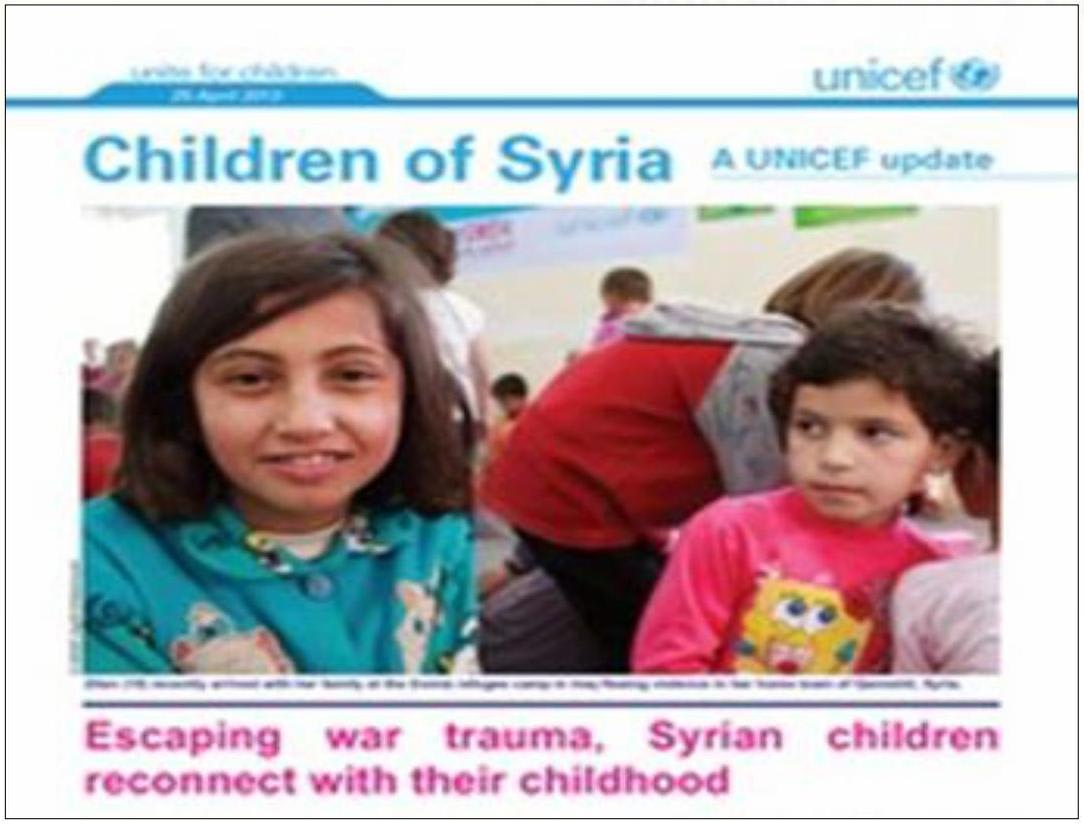
Answer
Two functions of UNICEF are:
- To protect children in respect of their survival, health and well-being.
- To prevent diseases like TB, Malaria, Eye disease, skin disease, etc.
With reference to the WHO, answer the following :
(a) When was it founded?
(b) Where are its headquarters situated?
(c) Two ways in which it helps different countries in their health programmes.
Answer
(a) The WHO or the World Health Organisation came into existence on 7 April 1948.
(b) The World Health Organisation (WHO) has its headquarters at Geneva in Switzerland.
(c) Two ways in which WHO helps different countries in their health programmes are:
- It helps different countries to reinforce their health system by building up infrastructure, particularly health, manpower, health institutions and services for the individual family and community.
- WHO conducts worldwide immunisation programmes to prevent six major communicable diseases of childhood like diphtheria, measles, poliomyelitis, tetanus, tuberculosis and whooping cough.
With reference to the United Nations, answer the following questions :
(a) What does WHO do to achieve its objectives of ensuring Health for All?
(b) Give the full form of UNICEF. Mention any three of its functions.
(c) Kolkata's famous Durga Puja received the intangible heritage tag. Which agency of the United Nations is authorised to give this tag? Mention any three other contributions of that agency in the preservation of culture.
Answer
(a) The main objective of WHO is the attainment by all people, of the highest possible level of health. To achieve this aim, WHO performs the following functions:
- It helps different countries to reinforce their health system by building up infrastructure, particularly health, manpower, health institutions and services for the individual family and community.
- It promotes the research required to develop appropriate technologies relating to all aspects of health, including nutrition, maternal and child care, environmental safety, mental health, control of specific diseases, medical care, prevention of accidents and rehabilitation.
- It provides safe drinking water and adequate waste disposal for all. For this purpose it specially organised the "International Drinking Water Supply and Sanitation Decade (1981-90)".
- WHO makes a worldwide campaign in providing effective immunisation for all children to prevent six major communicable diseases of childhood like diphtheria, measles, poliomyelitis, tetanus, tuberculosis and whooping cough.
- It sends specialists to different countries to give suggestions for the health of the people, especially women and children.
- It makes efforts on an international scale in combating diarrhoeal diseases which are known as killers of infants and young children.
(b) The full form of UNICEF is United Nations Children's Fund.
Three functions of UNICEF are:
- It assists in the planning and extension of services befitting children in consultation with the countries concerned and in the exchange of experience between countries.
- It assists governments to plan, develop and extend in both rural and urban environment low cost community based services in the inter-related fields of maternal and child health, applied nutrition, clean water and sanitation.
- It makes efforts to prevent diseases like tuberculosis, malaria, eye diseases and skin diseases etc. so that the children grow healthy and they develop to their full potential.
(c) The agency of the United Nations authorised to give the intangible heritage tag is UNESCO (United Nations Educational, Scientific and Cultural Organisation).
Three other contributions of UNESCO in the preservation of culture are:
- It encourages national and cultural values and promotes the study and development of cultures.
- It pays attention to cultural development through the medium of films.
- It sends cultural missions to different countries of the world so that there should be development of material contacts which may further promote peace and prosperity in the world.
Read the excerpt below and answer the following questions
Education is vital to achieving acceptance and respect for all people regardless of colour, gender, or national, ethnic or religious identity, being especially important to reach out to children and young people during their formative years through their formal education. Therefore, another project was launched in 2012: the UNESCO-USA-Brazil project "Teaching Respect for All" that aims to design a curricular framework to fight racism and promote tolerance, which countries can adapt to their respective contexts and needs.
Source- UNESCO
(a) Why is education important?
(b) Name the project launched in 2012. What was its objective?
(c) Mention any three functions of UNESCO in the field of education.
Answer
(a) Education is important because it helps in achieving acceptance and respect for all people, irrespective of their colour, gender, or national, ethnic, or religious identity. It plays a key role in reaching out to children and young people during their formative years, ensuring that they understand and embrace values of tolerance, respect, and inclusivity. Education promotes a more peaceful and harmonious society by fostering these values.
(b) The project launched in 2012 is the UNESCO-USA-Brazil project "Teaching Respect for All". It aims to design a curricular framework to fight racism and promote tolerance, which countries can adapt to their respective contexts and needs.
(c) Three functions of UNESCO in the field of education are:
- It makes arrangements to expand and guide education in different countries of the world to remove illiteracy.
- It opens schools and helps to train teachers, planners and administrators.
- It opens libraries and organises exhibitions.
With reference to the given picture, answer the following questions :
(a) Name the UN agency related to the emblem.
(b) Describe three of its main functions.
(c) Mention its recent role in controlling a worldwide epidemic.
Answer
(a) The UN agency related to the emblem is World Health Organisation (WHO).
(b) Three main functions of WHO are given below:
- It promotes the research required to develop appropriate technologies relating to all aspects of health, including nutrition, maternal and child care, environmental safety, mental health, control of specific diseases, medical care, prevention of accidents and rehabilitation.
- It sends specialists to different countries to give suggestions for the health of the people, especially women and children.
- It makes efforts on an international scale in combating diarrhoeal diseases which are known as killers of infants and young children.
(c) In its recent efforts to control a worldwide epidemic, WHO played an essential role in managing the COVID-19 pandemic. The Organisation issued global guidelines on how to prevent the spread of the virus, including recommendations for social distancing, mask-wearing, and sanitation. WHO also spearheaded the COVAX initiative, which aimed to ensure that COVID-19 vaccines were distributed equitably across all nations. Through these comprehensive efforts, WHO has been instrumental in mitigating the impact of the COVID-19 crisis worldwide.
With reference to the given picture, answer the following questions:
(a) Name the organisation related to given emblem.
(b) What are the objectives of this organisation?
(c) Mention any three functions of it.
Answer
(a) The organisation related to the given emblem is United Nations Children's Fund or UNICEF.
(b) The main Objective of UNICEF is to look after the welfare of children especially in developing countries by providing people with low cost community-based services in maternal and child health, nutrition and immunisation etc.
(c) Three functions of UNICEF are given below:
- It assists in the planning and extension of services befitting children in consultation with the countries concerned and in the exchange of experience between countries.
- It provides funds to strengthen the training and study of national personnel, including health and sanitation workers, teachers, nutritionists and child welfare specialists.
- It delivers technical supplies, equipment and other aids, ranging from paper for textbooks to equipment and medicines to health clinics, to pipes and pumps bringing clean water to villages.