
Who among the following was not a member of the Cabinet Mission?
- Sir Stafford Cripps
- A.V. Alexander
- Pathic Lawrence
- Lord Wavell
Answer
Lord Wavell
Reason — The Cabinet Mission, sent by the British Government in February 1946, consisted of Lord Pethick-Lawrence, Sir Stafford Cripps and A. V. Alexander. Lord Wavell was the Viceroy of India and was not a member of the Mission.
The Mountbatten Plan was announced on
- June 3, 1947
- June 8, 1947
- June 13, 1947
- June 23, 1947
Answer
June 3, 1947
Reason — Lord Mountbatten came to the conclusion that partition alone could solve the Indian problem. So, he prepared a plan which provided for the partition of India and it was announced on June 3, 1947.
Who was the Prime Minister of England at the time of Indian independence?
- Winston Churchill
- John Major
- Clement Attlee
- Harold Wilson
Answer
Clement Attlee
Reason — The Labour Party came to power in England in 1945 and Clement Attlee became the Prime Minister. He sent the Cabinet Mission to India, declared on February 20, 1947 that the British would quit India, and was the Prime Minister of England when India became independent on August 15, 1947.
The acronym 'NWFP' stands for
- North West Frontier Parliament
- North-Western Forum Province
- North-West Far Province
- North-West Frontier Province
Answer
North-West Frontier Province
Reason — NWFP stands for North-West Frontier Province. Under the Cabinet Mission Plan it was grouped with Punjab and Sind in Group B, and under the Mountbatten Plan a referendum was to be held there.
With reference to the given picture answer the following:
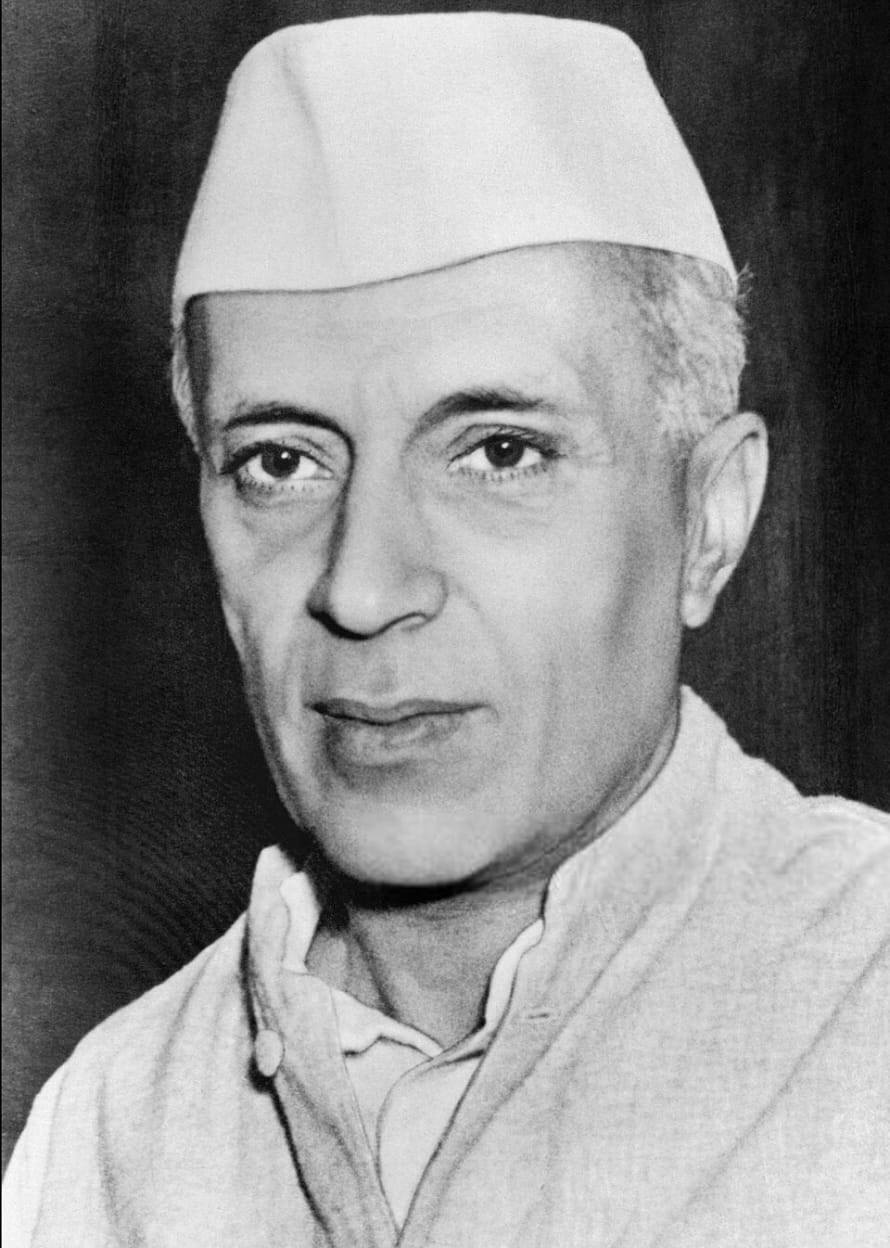
He presided the Congress Session of
- 1929
- 1936
- 1937
- All of these
Answer
All of these
Reason — The picture is of Pandit Jawaharlal Nehru, the most prominent and outstanding hero of the National Movement. He was elected President of the Congress in 1929, when the annual session was held at Lahore, and he also presided over the Congress sessions of 1936 and 1937.
With reference to the given picture answer the following:
Under his leadership, the interim government was formed in
- September 1946
- September 1947
- January 1946
- September 1948
Answer
September 1946
Reason — On August 14, 1946, the Viceroy invited Pandit Jawaharlal Nehru to form the Interim Government. Accordingly, the Interim Cabinet headed by Jawaharlal Nehru was formed in September 1946.
Which of the following proposals was not given in the Mountbatten Plan?
- The country was to be divided into two Dominions of India and Pakistan
- The transfer of power was to be formalised on August 15, 1947.
- Provinces of Bengal, Punjab and Assam were to be divided
- All the princely states were to join Dominion of India
Answer
All the princely states were to join Dominion of India
Reason — The Mountbatten Plan did not provide that all princely states had to join the Dominion of India. Instead, with the lapse of British paramountcy, they were left free to decide their future. Hence, this was not a proposal of the Mountbatten Plan.
In which of the following provinces referendum was to be held to ascertain whether the people wanted to join India or Pakistan?
- Bihar
- NWFP
- Central Provinces
- United Provinces
Answer
NWFP
Reason — Under the Mountbatten Plan, a referendum was to be held in the province of NWFP so as to ascertain whether the people there wished to stay with the Union of India or join Pakistan, as the League's influence there was doubtful.
Which of the following reasons was cited by Clement Attlee that guided the British decision to relinquish the Raj in India?
- INA activities
- Royal Indian Navy Mutiny in 1946
- Quit India Movement
- Both (1) and (2)
Answer
Both (1) and (2)
Reason — Clement Attlee stated that the INA activities had weakened the loyalty of the Indian Army, and the Royal Indian Navy Mutiny of 1946 showed that the armed forces could no longer be fully relied upon. These were among the reasons that led Britain to relinquish the Raj in India.
Which of the following was not one of the clauses of the Indian Independence Act of 1947?
- All treaties made with the British would lapse
- The army and its assets would belong only to India
- The Constituent Assemblies would serve as Central Legislatures
- The Princely States were free to associate themselves with either Dominion
Answer
The army and its assets would belong only to India
Reason — The Indian Independence Act, 1947, provided for the division of the armed forces and their assets between the two Dominions of India and Pakistan. Therefore, the army and its assets could not belong only to India. The other three were provisions of the Act.
In the question given below, there are two statements marked as Assertion (A) and Reason (R). Read the statements and choose the correct option.
- Both Assertion (A) and Reason (R) are correct and Reason (R) is the correct explanation of Assertion (A).
- Both Assertion (A) and Reason (R) are correct but Reason (R) is not the correct explanation of Assertion (A).
- Assertion (A) is true, but Reason (R) is false.
- Assertion (A) is false, but Reason (R) is true.
Assertion (A) : The Congress accepted Partition with heavy heart and bitterness.
Reason (R) : Large scale violence, riots and fear of a civil war led Congress leaders to accept Partition.
Answer
Both Assertion (A) and Reason (R) are correct and Reason (R) is the correct explanation of Assertion (A).
Explanation — Keeping in view the large-scale bloodshed, chaos and anarchy, the Congress leaders, including even Gandhiji, accepted the partition but in bitterness and with a heavy heart. They were of the view that a small but strong India was better than a large but weak one.
Identify the main provisions of the Indian Independence Act of 1947.
P : Establishment of two independent Dominions of India and Pakistan on August 15, 1947.
Q : The office of the Governor-General for each Dominion was to end forthwith and to be replaced by separate viceroys for each one of them.
R : The British Government would transfer all their powers to the Constituent Assemblies of India and Pakistan.
S : The Constituent Assembly of each Dominion shall elect new central legislatures.
- P and Q
- Q and R
- P and R
- Q and S
Answer
P and R
Reason — P and R are correct because the Act established two independent Dominions of India and Pakistan on August 15, 1947 and provided that the British Government would transfer all its powers to the Constituent Assemblies of the two Dominions. Q is incorrect because the office of the Viceroy was abolished and replaced by a Governor-General in each Dominion. S is incorrect because the Constituent Assembly itself exercised the powers of the Central Legislature.
Read the two statements given below about the Mountbatten Plan and select the option that shows the correct relationship between (A) and (B).
(A) The country would be divided into two Dominions of India and Pakistan.
(B) Princely states would have the option to join either of the two Dominions.
- (B) contradicts (A)
- (B) is the reason for (A)
- (A) is true but (B) is false
- (A) and (B) are independent of each other
Answer
(A) and (B) are independent of each other
Explanation — Both (A) and (B) were separate provisions of the Mountbatten Plan. The division of the country into two Dominions and the option given to the princely states to join either Dominion were independent clauses; neither is the reason for the other and they do not contradict each other.
According to the Indian Independence Act, 1947 which of the following are applicable to the princely states:
i. They could remain independent
ii. They could join India
iii. All treaties with the British were terminated.
iv. They could choose to be part of Pakistan
- All of the above
- Only iii
- Only ii and iv
- None of the above
Answer
All of the above
Explanation — The Indian Independence Act ended British paramountcy over the princely states. Consequently, they became legally independent, all treaties with the British lapsed, and they were free to join either India or Pakistan.
Read the statements given below and select the option that shows the correct relationship between (A) and (R).
Assertion (A) : The Congress accepted the Mountbatten Plan.
Reason (R) : The only alternate to Partition was a Federation with a weak centre.
- (A) is true and (R) is false.
- (R) is false but (A) is true.
- Both (A) and (R) are independent of each other.
- (R) is the reason for (A).
Answer
(R) is the reason for (A).
Explanation — The Congress leaders realised that its better to have a smaller India with strong centre rather than having a big India with weak centre, due to internal conflicts.
Which of these statements regarding the status of Princely States are INCORRECT with reference to the Mountbatten Plan?
- Princely states would receive the choice to be independent or join the Indian Union.
- All existing treaties with the princely states would end.
- A plebiscite will be held for all states.
- Freedom to associate with any dominion.
Answer
A plebiscite will be held for all states.
Explanation — Under the Mountbatten Plan, a referendum was proposed only in NWFP and the Sylhet district of Assam. It was not to be held for all princely states. With the lapse of British paramountcy, the princely states were left free to decide their future and could accede to either Dominion.
Why was the Cabinet Mission sent to India?
Answer
The Cabinet Mission was sent to India in March 1946 to discuss the transfer of power from the British Government to Indian leaders. It aimed at preserving the unity of India, setting up an Interim Government and making arrangements for framing a Constitution.
Give two reasons for change in the British attitude after 1942.
Answer
After 1942, the British attitude towards India began to shift due to two primary reasons:
- The weakening of Britain's global standing after World War II.
- The revolutionary activities of the INA made the British realise that they could no longer rely on the Indian Army and that their days in India were numbered.
State any two provisions of the Cabinet Mission Plan.
Answer
Two provisions of the Cabinet Mission Plan are given below:
- There was to be a federation of all the provinces and states of India.
- The Federal Centre would control only defence, foreign affairs and communication. The provinces would look after other subjects and also control residuary powers.
How was the federation to be formed at the Centre under the Cabinet Mission Plan?
Answer
There was to be a federation of all the Provinces and States of India. The Federal Centre would control only Defence, Foreign Affairs and Communications, while the Provinces would control all other subjects and residuary powers.
How was the Constituent Assembly constituted under the Cabinet Mission Plan?
Answer
A Constituent Assembly was to be elected to draw up the future Constitution of India. It would consist of 389 members — 292 from the Provinces, 4 from Chief Commissioner's Provinces and 93 from the Indian states.
Why did the Muslim League first accept and then reject the Cabinet Mission proposals?
Answer
The Muslim League accepted the Cabinet Plan in its entirety on June 6, 1946 because it felt that the grouping of Muslim-majority Provinces in a way meant the formation of Pakistan.
However, when the elections for the Constituent Assembly were held in July 1946, the Congress won 201 seats out of 292 seats which were elected from British Indian Provinces. It gained comfortable majority in the Assembly. The Muslim League could secure only 73 seats and felt disappointed. It demanded the establishment of two different Constituent Assemblies. The Muslim League under Jinnah's leadership passed a resolution on July 29, 1946 and rejected the Cabinet Mission Plan.
What was the reaction of the Congress to the Cabinet Mission proposals?
Answer
The Congress accepted the Cabinet Mission Plan with reservations.
- It only accepted that part of the scheme which dealt with the Constitution-making.
- It considered the Constituent Assembly as a sovereign body for drafting the Constitution. It regarded the grouping of the Provinces as optional and not compulsory.
- The Congress rejected the scheme of Interim Government because of its limited status and powers and also because the Congress was given parity with the Muslim League in the formation of the Provisional Government.
Why was the Mountbatten Plan accepted by the Muslim League?
Answer
The Mountbatten Plan was accepted by the Muslim League primarily because it conceded to their long-standing demand for a separate nation, Pakistan.
Name the last Viceroy of India. State any one of the provisions of the Indian Independence Act of 1947.
Answer
Lord Mountbatten was the last Viceroy of India.
One provision of the Indian Independence Act of 1947 was that two independent dominions, namely India and Pakistan, shall be set up on August 15, 1947. Pakistan was to consist of Sindh, Baluchistan, NWFP, the West Punjab and East Bengal. Rest of the territories were to be included in India.
State any two provisions of the Indian Independence Act of 1947 that was to decide the fate of the Princely States.
Answer
Two provisions of the Indian Independence Act of 1947 that were to decide the fate of the Princely States are given below:
- The princely states would have the choice to join with either of the dominions of India or Pakistan, or to retain their independence.
- All the treaties and agreements made between the British Crown and the princely states would lapse, i.e., British paramountcy over them would come to an end.
Write any two reasons for the acceptance of the Mountbatten Plan by the Congress.
Answer
Two reasons for the acceptance of the Mountbatten Plan by the Congress are given below:
- Bitter experience of working with the League in the Interim Government had convinced the Congress leadership that any joint government with the League would be an exercise in futility.
- India could not afford a Federation with a weak Centre. The Congress leaders believed that a small but strong India was better than a large but weak India.
The whole plan may not be perfect but like all plans, its success will depend on the spirit of goodwill with which it is carried out.
— Lord Mountbatten
Give two reasons for the acceptance of the above plan by the Congress.
Answer
The Mountbatten Plan was accepted by the Congress because of following two key reasons:
- Large-Scale Communal Riots — The large-scale communal riots that engulfed the whole country convinced the Congress leaders that the only solution to the communal problem lay in the Partition of India.
- Avoidance of Civil War — The leaders felt that any further delay in the transfer of power could lead to a civil war in India. They believed that it was better to have a smaller India with a strong central authority than a larger state with a weak center.
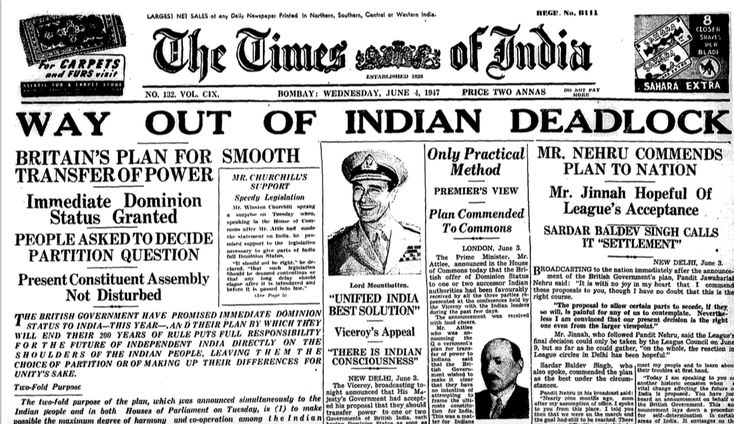
With reference to the above newspaper article, state any two reasons for the acceptance of the Mountbatten Plan.
Answer
Two reasons for the acceptance of the Mountbatten Plan were:
- Large scale communal riots engulfed the whole country. The only solution to the communal problem was the Partition of India.
- The only alternative to Partition was a Federation with a weak centre. A smaller India with a strong central authority was better than a bigger state with a weak centre.
The Cabinet Mission proposed a two-tier federal plan which was expected to maintain national unity while conceding the largest measure of regional autonomy.
With reference to the above, state the composition of the Constituent Assembly.
Answer
The composition of the 389 member constituent assembly would be as under:
- 296 members to be elected from the British provinces
- 93 members to be elected from the Princely States.
The members of the Constituent Assembly would be elected by the Provincial Legislative Assemblies. Adult suffrage (all eligible voters voting) for this was ruled out to avoid delay in the making of the Constitution.
To settle the political tangle in India, the Cabinet Mission was sent to India in 1946. In this context, answer the following :
(a) Reasons for sending the Cabinet Mission to India.
(b) Main provisions of the Cabinet Mission Plan.
(c) Reaction of the Congress and the Muslim League.
Answer
(a) The Cabinet Mission was sent to India in March 1946 to discuss the transfer of power from the British Government to Indian leaders. It aimed at preserving the unity and independence of India, setting up an Interim Government and making arrangements for framing a Constitution.
(b) The main provisions of the Cabinet Mission Plan are given below:
- There was to be a federation of all the provinces and states of India.
- The Federal Centre would control only defence, foreign affairs and communication. The provinces would look after other subjects and also control residuary powers.
- The Union would have a Legislature and its own Executive. The Legislature would pass laws on subjects contained in the Union List. These laws would be enforced by the Union Executive.
- The provinces would be free to form regional unions to which they would surrender some powers by mutual consent. There were to be three groups of provinces: Group A — United Provinces, Central Provinces, Madras, Bombay, Orissa and Bihar; Group B — Punjab, NWFP (North West Frontier Province) and Sind; Group C — Bengal and Assam.
- Each group would have a separate Constitution and if a Province opted to walk out of the group after the first general elections, it would have the option to do so.
- The states would not be under the direct control of the Union and they would themselves decide as to what powers they were to surrender.
- A Constituent Assembly would be elected to draw up the future Constitution of India. It would consist of 389 members — 292 from the Provinces, 4 from Chief Commissioner's Provinces and 93 from the Indian states.
- Till the Constitution was ready an Interim Government of all parties would be formed. It would have 14 members.
- The Union of India would be free to remain inside or outside the British Commonwealth. The plan was to be totally accepted or rejected.
(c) Reaction of the Congress — The Congress accepted the Cabinet Mission Plan with reservations.
- It only accepted that part of the scheme which dealt with the Constitution-making.
- It considered the Constituent Assembly as a sovereign body for drafting the Constitution. It regarded the grouping of the Provinces as optional and not compulsory.
- The Congress rejected the scheme of Interim Government because of its limited status and powers and also because the Congress was given parity with the Muslim League in the formation of the Provisional Government.
Reaction of the Muslim League — The Muslim League accepted the Cabinet Plan in its entirety on June 6, 1946 because it felt that the grouping of Muslim-majority Provinces in a way meant the formation of Pakistan.
However, when the elections for the Constituent Assembly were held in July 1946, the Congress won 201 seats out of 292 seats which were British Indian Provinces. It gained comfortable majority in the Assembly. The Muslim League could secure only 73 seats and felt disappointed. It demanded the establishment of two different Constituent Assemblies. The Muslim League under Jinnah's leadership passed a resolution on July 29, 1946 and rejected the Cabinet Mission Plan.
Using the following points, briefly describe the Mountbatten Plan of June, 1947 :
(a) Main clauses of the Mountbatten Plan.
(b) Why did the Congress and the Muslim League accept this plan?
Answer
(a) The main clauses of the Mountbatten Plan are given below:
- The country would be divided into two Dominions of India and Pakistan.
- Referendum was to be held in the province of NWFP so as to ascertain whether the people there wished to stay with the Union of India or Pakistan.
- The Provinces of Bengal and Punjab were to be divided. A referendum was to be held in the Sylhet district of Assam.
- The Princely states would have the option to join either of the two Dominions of India or Pakistan.
- The transfer of power was to be formalised on August 15, 1947.
(b) The Congress accepted the Mountbatten Plan because of the following reasons :
- The large scale violence and communal riots happening all over India.
- Bitter experience of working with the League in the Interim Government.
- India could not afford a Federation with a weak Union Government.
- Delay in Partition or transfer of power could lead to a civil war throughout India which it could ill afford.
The Muslim League accepted the Mountbatten Plan because it fulfilled their long-standing demand for a separate nation, Pakistan.
With reference to the Partition Plan, answer the following:
(a) Name the last Viceroy of India. State any two reasons for him to come to India.
(b) Mention any three proposals under his plan.
(c) State any four reasons for the Congress to finally accept the Plan.
Answer
(a) Lord Mountbatten was the last Viceroy of India. In March, 1947 he became the Viceroy of India in place of Lord Wavell.
Two reasons for him to come to India are given below:
- He was sent to India to solve the deadlock between the Congress and the Muslim League regarding the transfer of power from the British Crown to India.
- The hostility between the two communities had reached its peak. In the Western Provinces flames of disturbances and disorder were leaping sky-wards and in Bengal the situation was very explosive. He was to transfer power without any delay.
(b) Three proposals under the Mountbatten Plan are given below:
- The country would be divided into two Dominions of India and Pakistan.
- Referendum was to be held in the province of NWFP so as to ascertain whether the people there wished to stay with the Union of India or Pakistan.
- The provinces of Punjab and Bengal, with a referendum in Sylhet district of Assam were also to be divided.
(c) Four reasons for the Congress to finally accept the Plan are given below:
- The large scale violence and communal riots convinced the Congress leaders that there was no alternative to the Partition. Sardar Patel opined that refusal of the demand for Pakistan will lead to division of the country into so many Pakistans.
- Bitter experience of working with the League in the Interim Government had convinced the Congress leadership that any joint government with the League would be an exercise in futility.
- India could not afford a Federation with a weak Union Government. The Congress leaders believed that a small but strong India was better than a large but weak India.
- The Congress leaders were convinced that further delay in Partition or transfer of power could lead to a civil war throughout India which it could ill afford.
With reference to the picture given, answer the following questions :
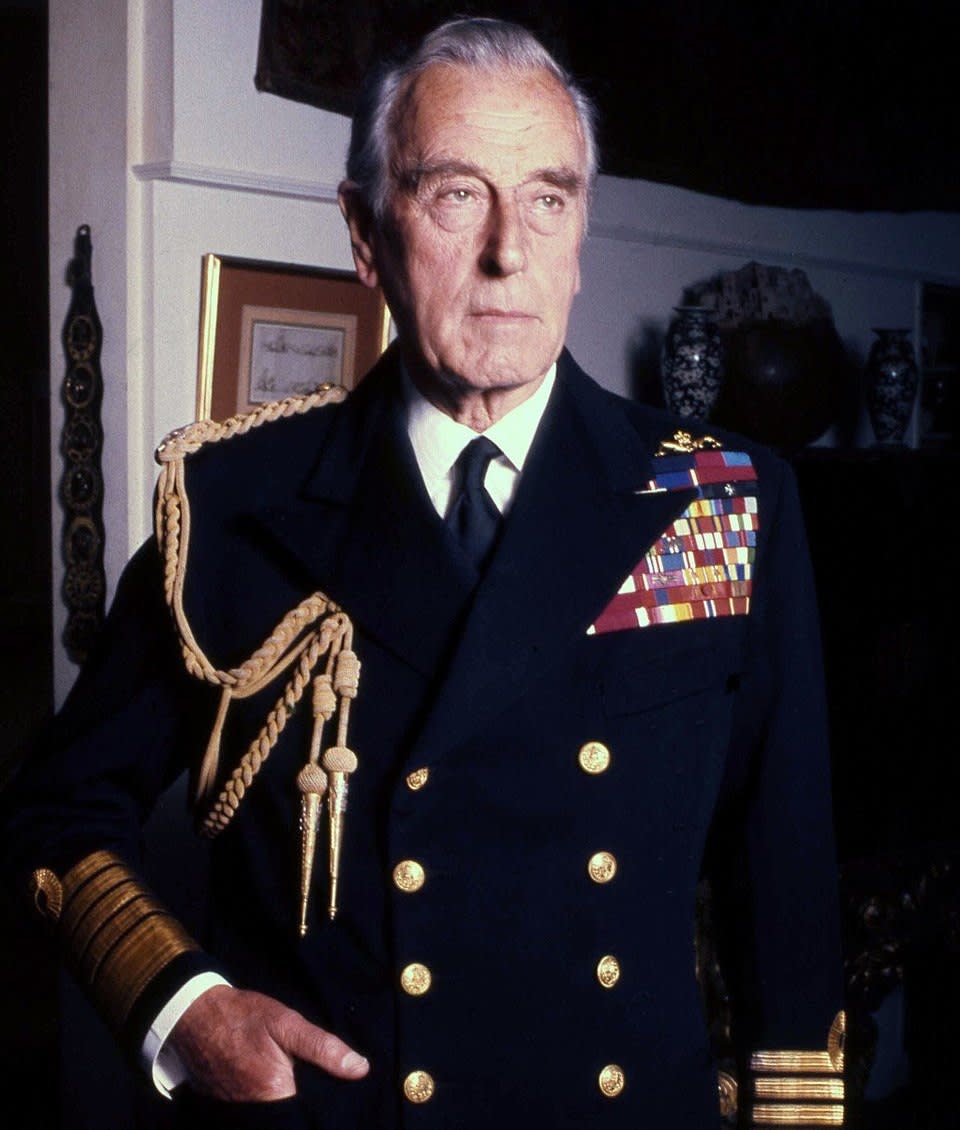
(a) Identify the Viceroy.
(b) Why was he sent to India?
(c) Name the Plan put forward by him and mention two of its provisions.
Answer
(a) The Viceroy shown in the given picture is Lord Mountbatten.
(b) In March, 1947 Lord Mountbatten became the Viceroy of India. He was a practical man with a realistic approach. He was swift in taking decisions, but was not obstinate. He was sent to India to solve the deadlock between the Congress and the Muslim League, regarding the transfer of power from the British crown to India.
(c) He put forward the Mountbatten Plan on June 3, 1947. Two provisions of the Mountbatten Plan are given below:
- The country would be divided into two Dominions of India and Pakistan.
- Referendum was to be held in the province of NWFP so as to ascertain whether the people there wished to stay with the Union of India or Pakistan.
Look at the picture given and answer the following questions:
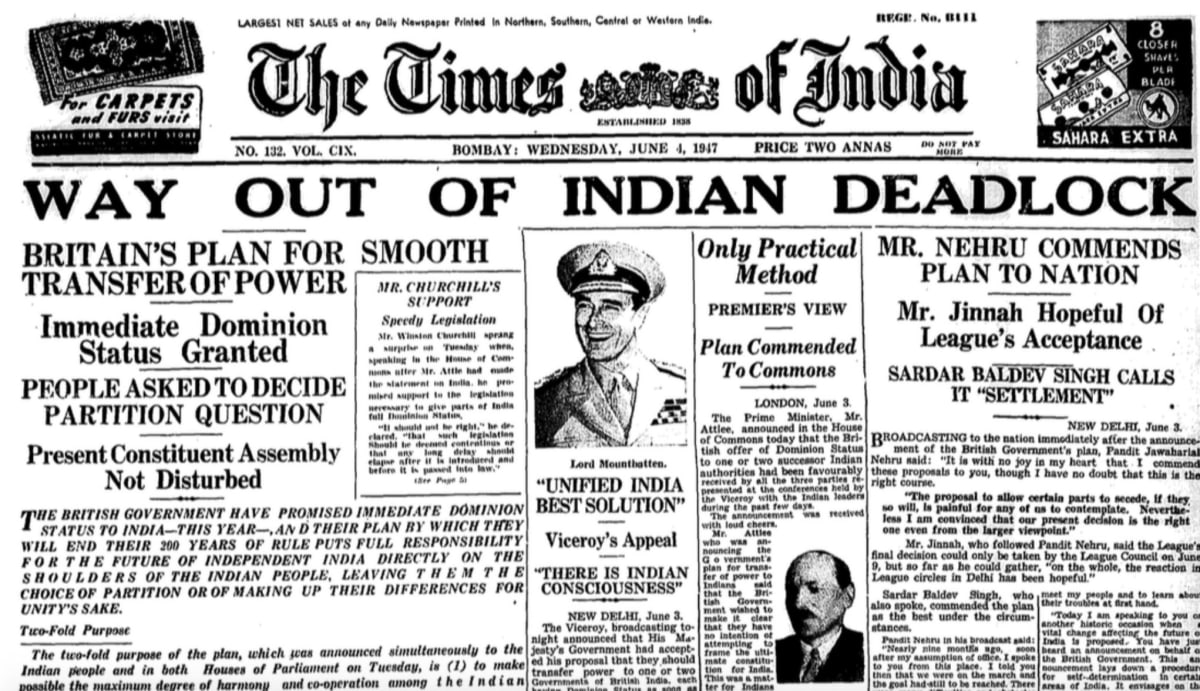
(i) Name the Viceroy who announced the plan for smooth transfer of power. Mention any two clauses of his plan with reference to the Princely States.
(ii) Mention any three reasons for the acceptance of his plan by the Congress.
(iii) Mention any four provisions of the Indian Independence Act of 1947.
Answer
(i) Lord Mountbatten announced the Mountbatten Plan on June 3, 1947, for smooth transfer of power.
Two clauses of Mountbatten Plan with reference to the Princely states are:
- The Mountbatten Plan stated that the treaties with them would come to an end.
- They would be free to associate themselves with either of the Dominions or to remain independent.
(ii) The reasons due to which All-India Congress Committee finally accepted the Mountbatten Plan may be summarised as follows:
- The large-scale communal riots that engulfed the whole country convinced all that the only solution to the communal problem lay in the Partition of India. In the words of Sardar Patel, "Refusal of the demand for Pakistan will amount to dividing the country into so many Pakistans."
- The League had joined the Interim Government to obstruct and not to cooperate. Experience of working with the League had convinced the Congress that it could not have a joint administration with the League.
- The only alternative to Partition was a Federation with a weak Centre. A smaller India with a strong central authority was better than a bigger State with a weak Centre.
(iii) Four provisions of the Indian Independence Act of 1947 are:
Two New Dominions: India would be partitioned and two independent Dominions-India and Pakistan-would be created from August 15, 1947. The Act provided legislative supremacy of both the Dominions. The territories of the two Dominions were divided in such terms that Pakistan would comprise Sindh, British Baluchistan, North West Frontier Province, the West Punjab and East Bengal. India was to comprise all the remaining territories included in the British India. The exact boundaries of the Dominions would be determined by a Boundary Commission.
Constituent Assemblies to Serve as Central Legislatures: The Constituent Assemblies of both the dominions were to act as the Central Legislatures and would have full powers to make laws for their respective Dominion. They would act as sovereign bodies for legislative purposes.
Princely States: The Princely States would become independent and all the powers exercised by the British authority were to be terminated. All treaties and agreements made by the British with reference to States would lapse from August 15, 1947. They would be free to associate themselves with either Dominion or to remain independent.
Division of the Army and the Assets: Provisions were made for the division of the Indian army between the two Dominions and steps were to be taken to share the assets and liabilities between the two Dominions.