
Do you see any line of symmetry in the figures at the start of the chapter? What about in the picture of the cloud?
Answer
The figures shown at the start of the chapter are the flower, the butterfly, the rangoli and the pinwheel.
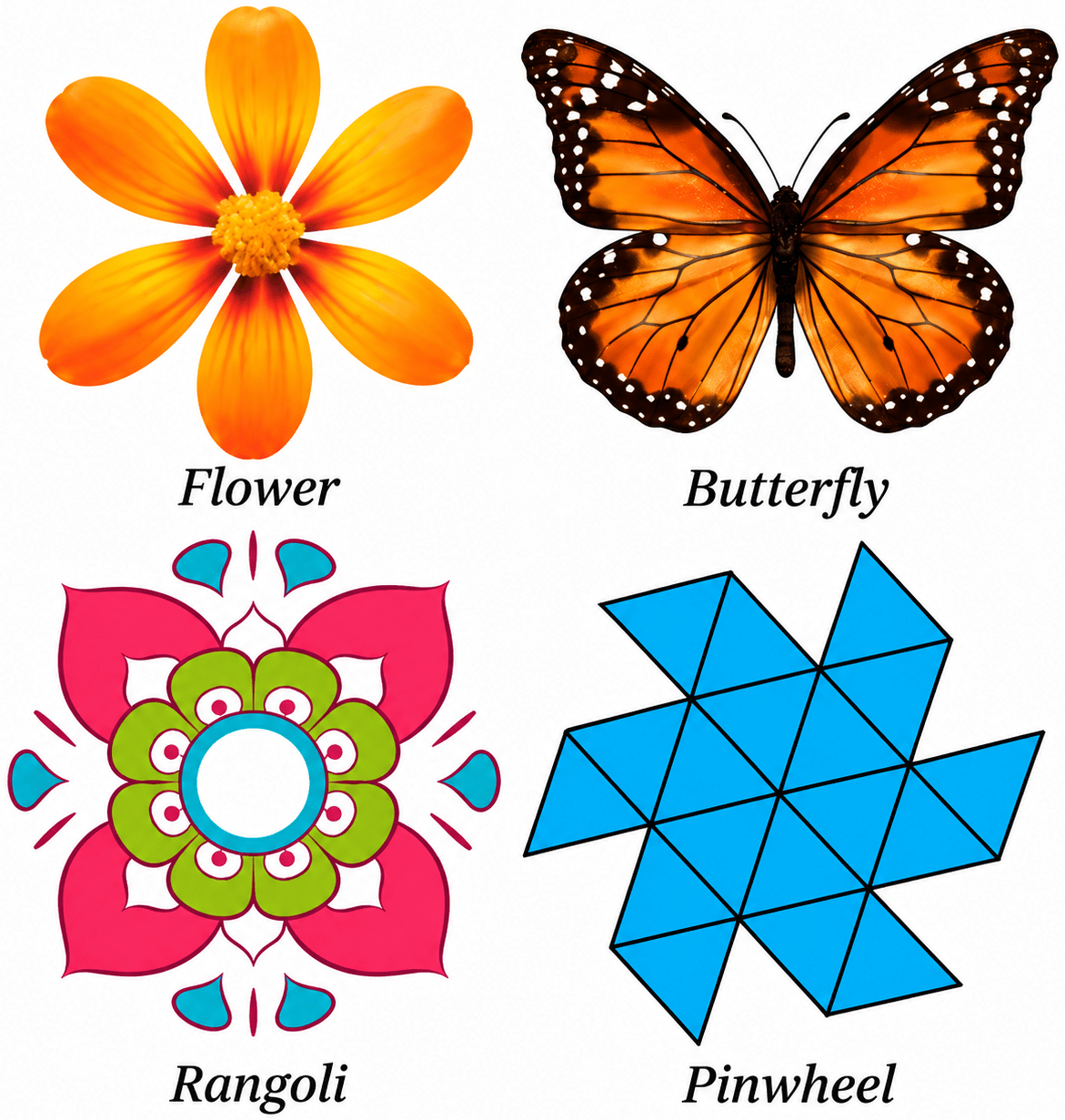
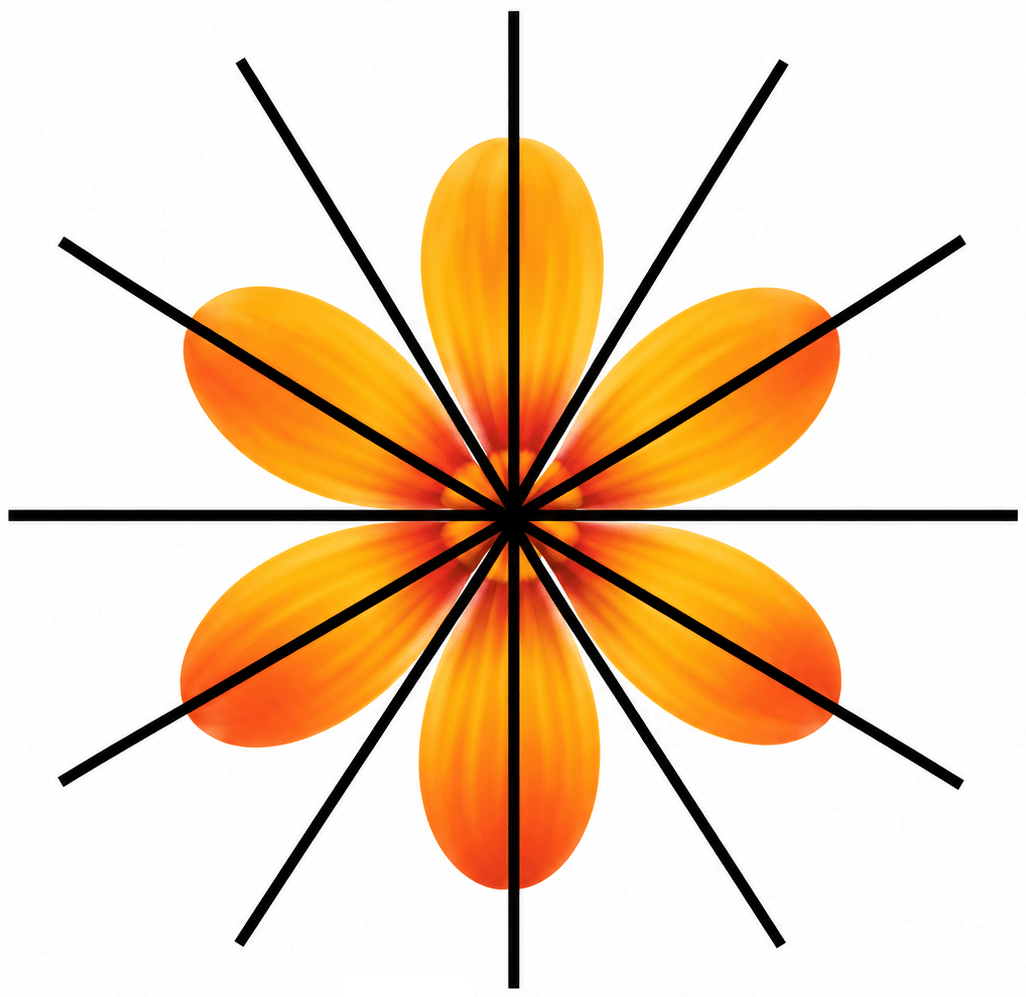
Flower — Yes. The flower has 6 lines of symmetry. Three lines pass through pairs of opposite petals, and three more pass through the gaps between opposite pairs of petals.
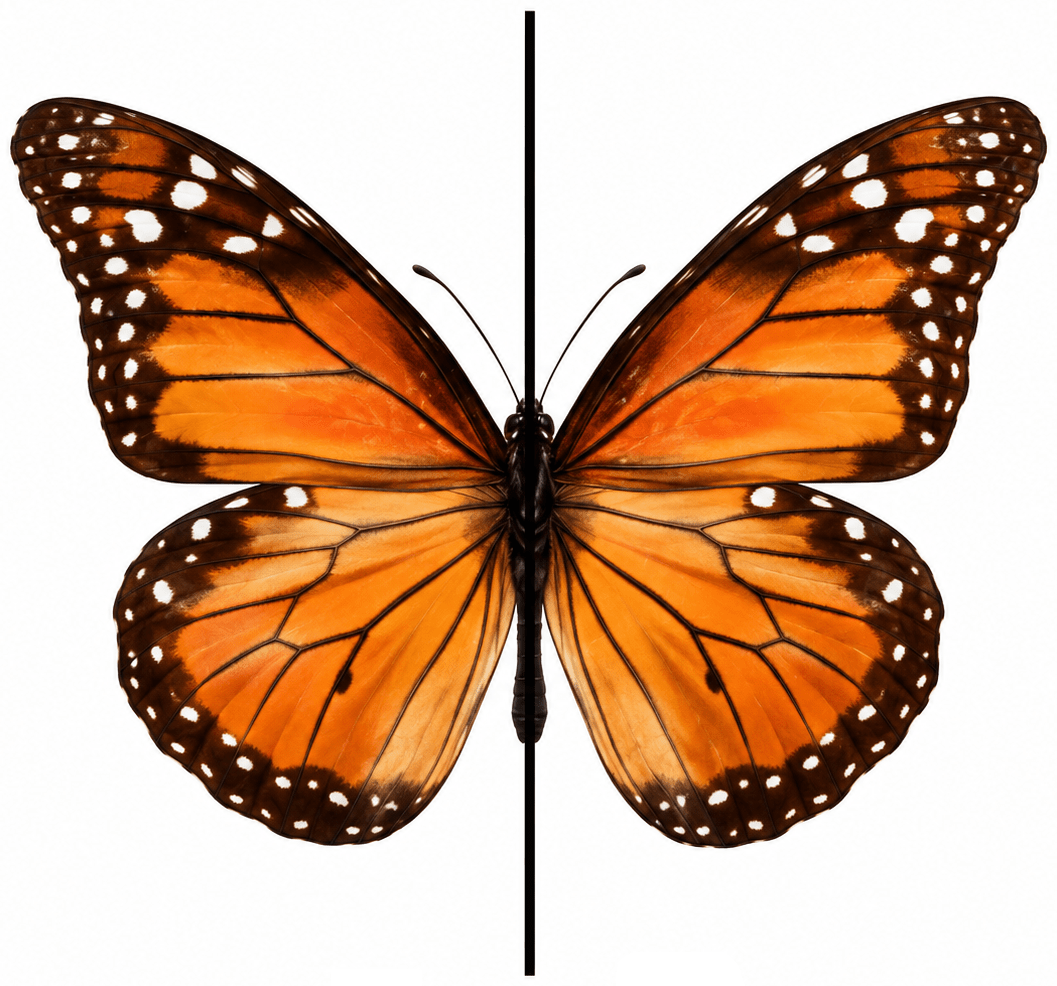
Butterfly — Yes. It has 1 line of symmetry, the vertical line running down the middle of its body. The left wing is the mirror image of the right wing.
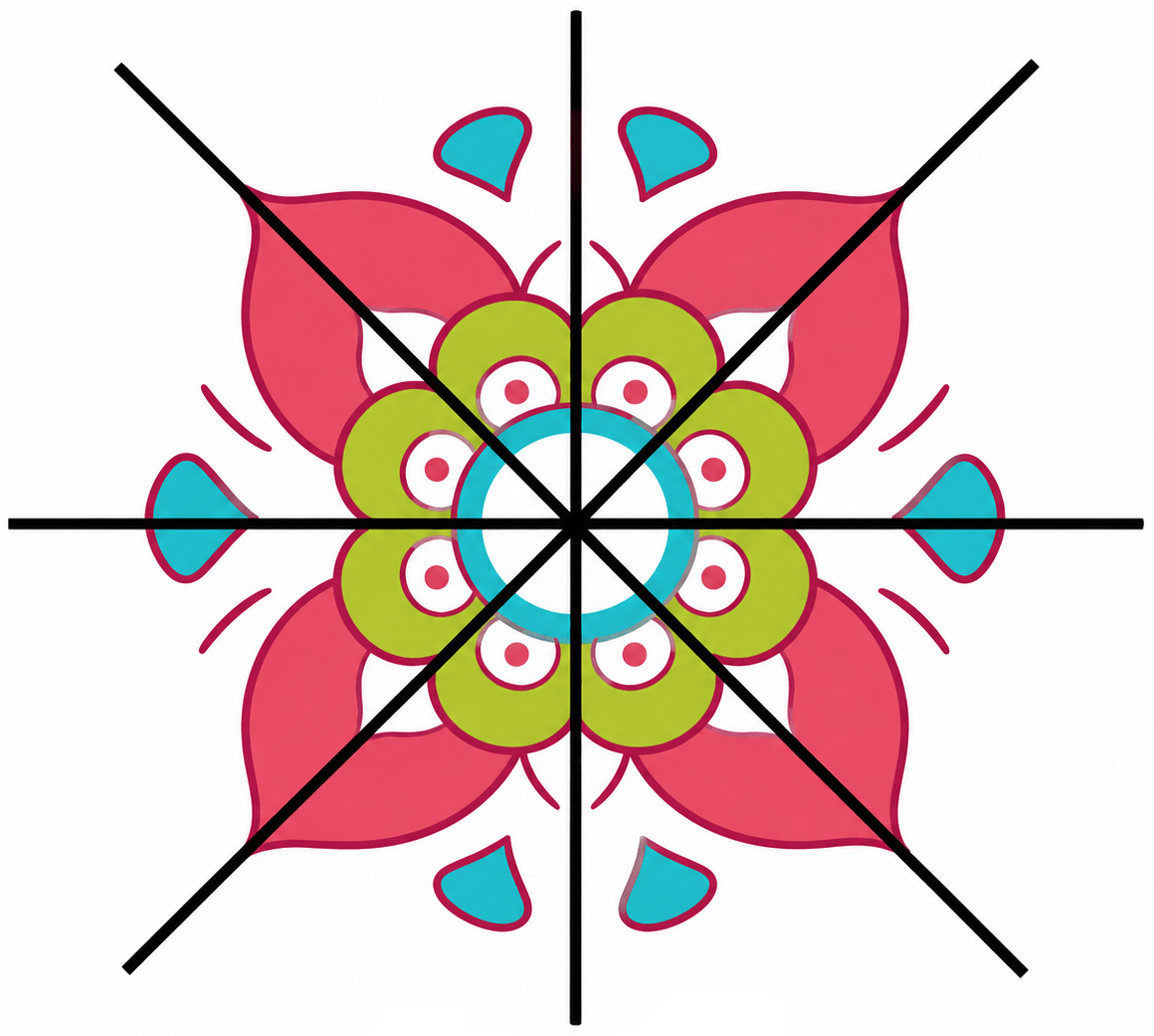
Rangoli — Yes. It has 4 lines of symmetry — the vertical line, the horizontal line and the two diagonals, all passing through the centre.
Pinwheel — No. The parts around the hexagon are arranged in a turning pattern. No fold divides the pinwheel into two mirror-image halves, so it has no line of symmetry.
Cloud — No. Its outline is irregular, so no line divides it into two mirror-image halves.
Hence, the flower, the butterfly and the rangoli have lines of symmetry, whereas the pinwheel and the cloud have none.
For each of the following figures, identify the line(s) of symmetry if it exists.

Answer
Taking the figures in order from left to right:
(i) The arrow-shaped figure
The diagonal passing through the lower-left vertex, the inward corner and the upper-right vertex divides the figure into two mirror-image halves.
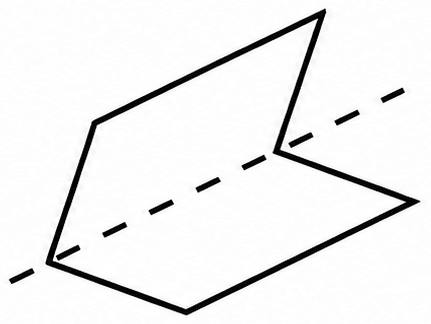
It has exactly 1 line of symmetry.
(ii) The kite
The line joining the top vertex to the bottom vertex divides the kite into two mirror-image halves. The other diagonal is not a line of symmetry.
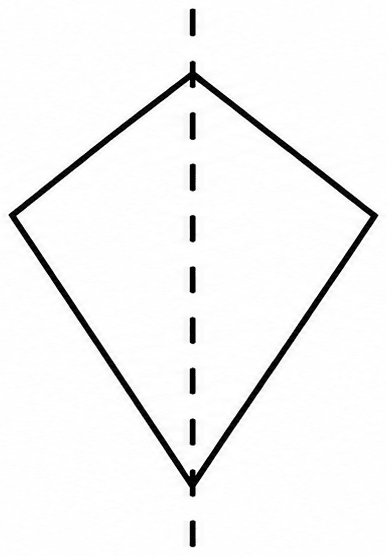
It has exactly 1 line of symmetry.
(iii) The right trapezium
No fold divides the figure into two exactly overlapping halves.
It has no line of symmetry.
(iv) The L-shaped figure
The diagonal passing through the outer corner and the inner corner divides the two equal arms into mirror-image halves.
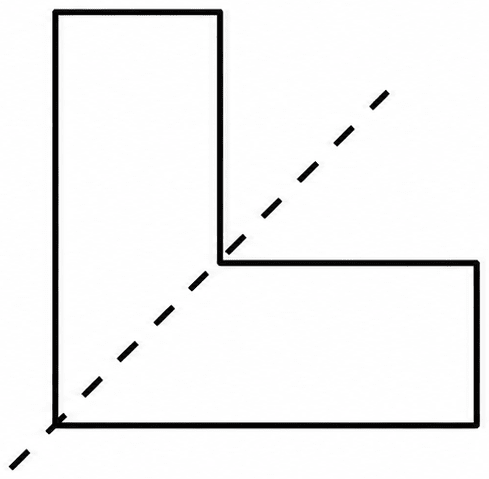
It has exactly 1 line of symmetry.
(v) The thin three-sided triangle
No line divides this irregular triangle into two mirror-image halves.
It has no line of symmetry.
Hence, only figures (i), (ii) and (iv) have a line of symmetry, and each has exactly one.
Is there any other way to fold the square so that the two halves overlap? How many lines of symmetry does the square shape have?
Answer
No. The four folds already shown are the only folds that make the two halves overlap exactly:
- the vertical line through the midpoints of the top and bottom sides,
- the horizontal line through the midpoints of the left and right sides,
- one diagonal, and
- the other diagonal.
∴ A square has exactly 4 lines of symmetry.
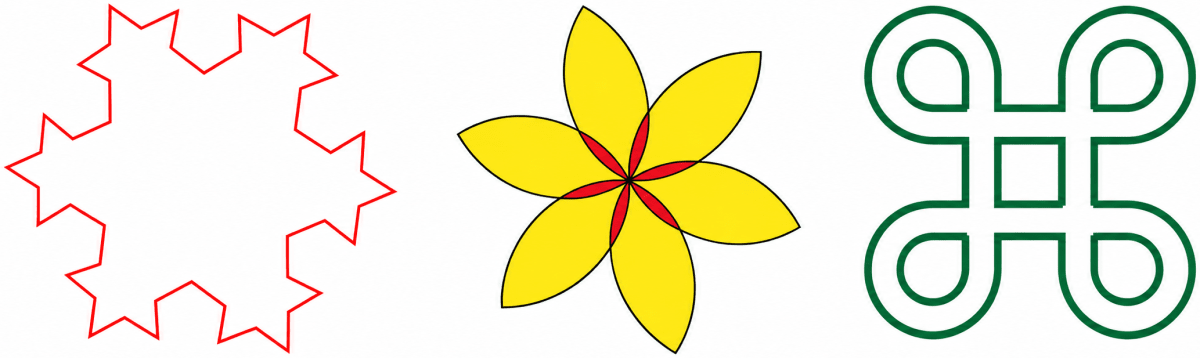
Figures can have multiple lines of symmetry. The figures below also have multiple lines of symmetry. Can you find them all?
Answer
(i) The snowflake figure
Three lines pass through pairs of opposite spikes, and three more pass through pairs of opposite gaps.
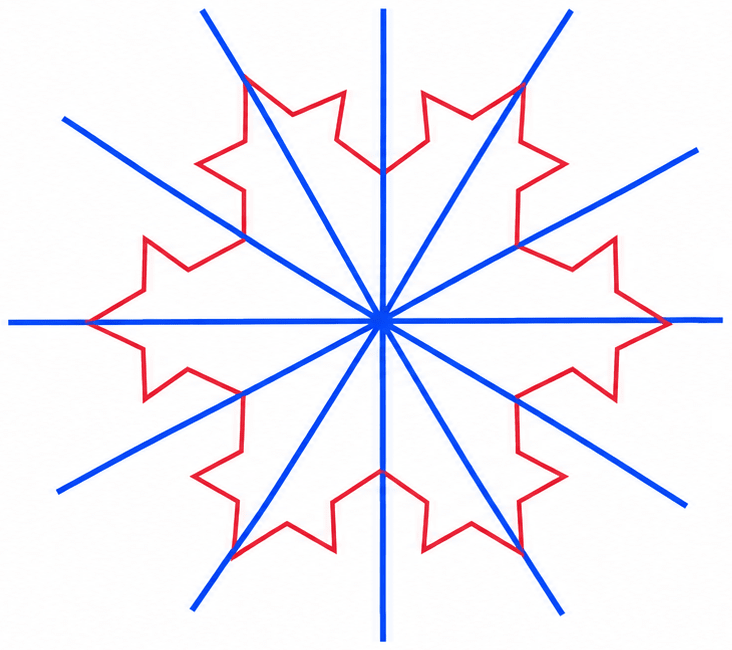
It has 6 lines of symmetry.
(ii) The flower figure
Three lines pass through pairs of opposite petals, and three more pass through the gaps between neighbouring petals.
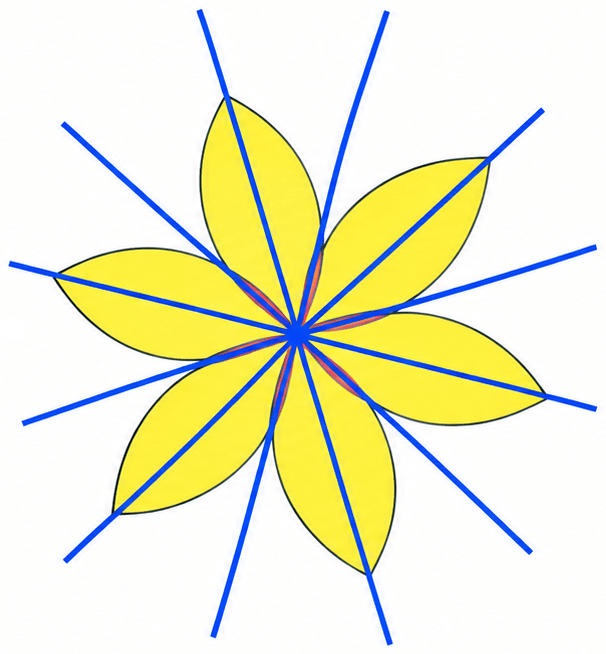
It has 6 lines of symmetry.
(iii) The green knot figure
The vertical line, the horizontal line and the two diagonals through the centre are lines of symmetry.
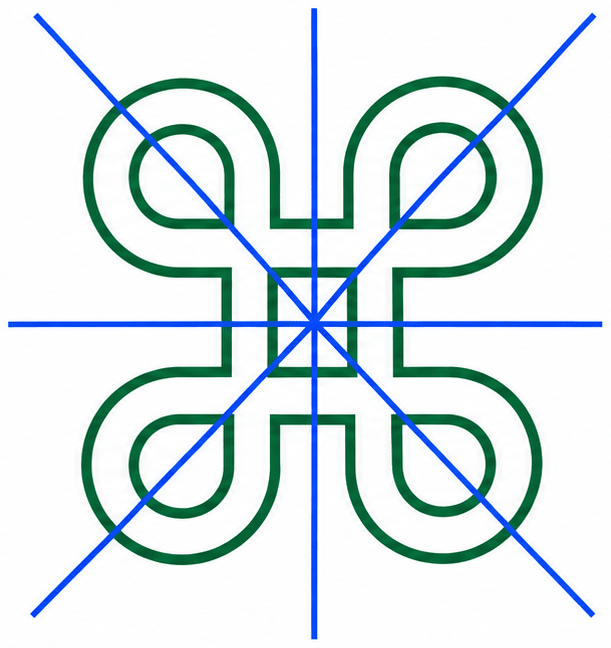
It has 4 lines of symmetry.
We saw that the diagonal of a square is also a line of symmetry. Let us take a rectangle that is not a square. Is its diagonal a line of symmetry?
Answer
No, the diagonal of a rectangle that is not a square is not a line of symmetry.
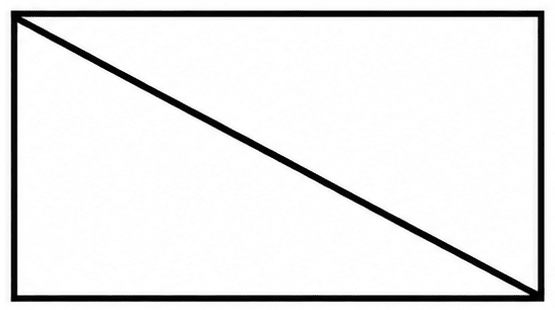
A diagonal divides the rectangle into two congruent triangles, but folding the rectangle along the diagonal does not make the two parts overlap exactly because the adjacent sides of the rectangle have different lengths.
A non-square rectangle has only 2 lines of symmetry: the horizontal and vertical lines through its centre.
∴ The diagonal of a non-square rectangle is not a line of symmetry; such a rectangle has exactly 2 lines of symmetry.
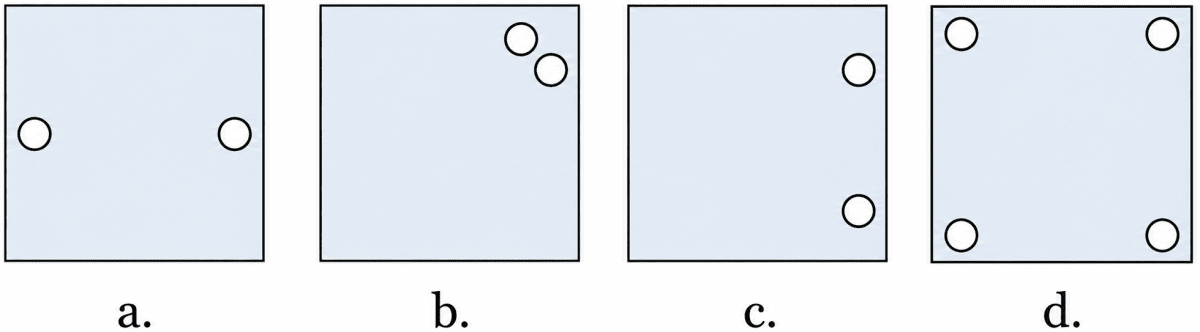
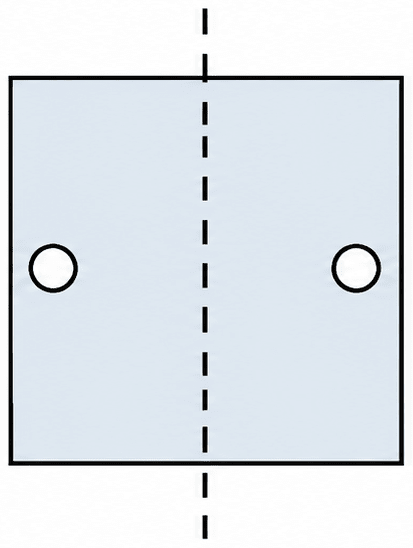
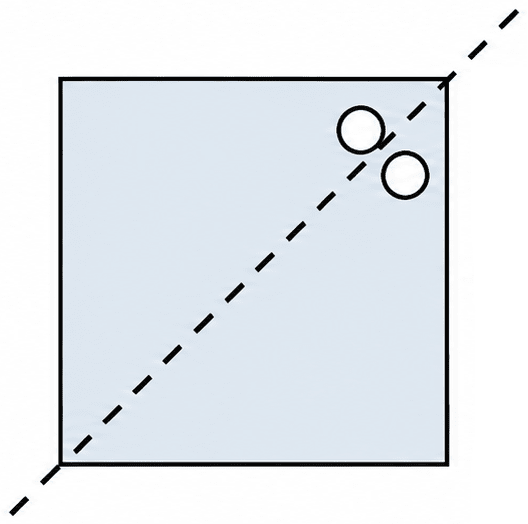
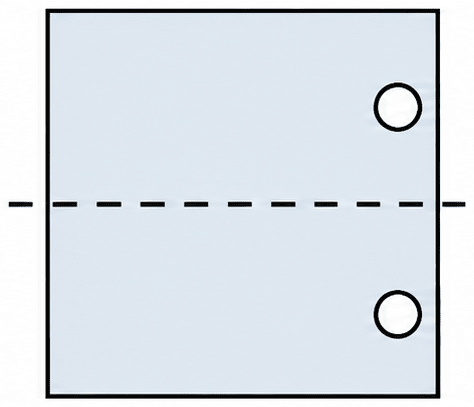
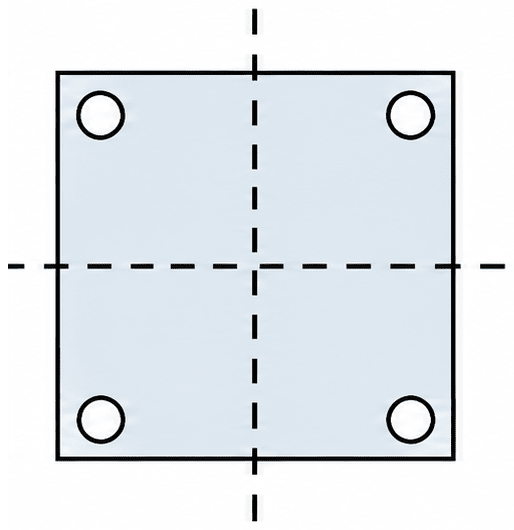
In each of the following figures, a hole was punched in a folded square sheet of paper and then the paper was unfolded. Identify the line along which the paper was folded. Figure (d) was created by punching a single hole. How was the paper folded?
Answer
When a folded sheet is punched and opened, the holes produced are mirror images about the fold line.
(a) The two holes are equally placed on the left and right sides, so the fold was along the vertical line through the centre.
(b) The two holes are mirror images about the diagonal joining the bottom-left and top-right corners.
(c) The two holes are one above the other at equal distances from the horizontal centre line, so the fold was horizontal.
(d) Four holes were produced from one punch. Therefore, the paper had four layers. It was folded twice — once vertically and once horizontally, in either order — and then punched.
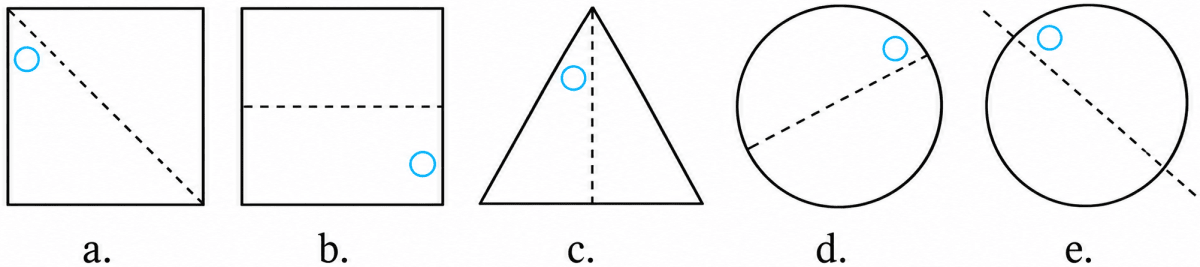
Given the line(s) of symmetry, find the other hole(s):
Answer
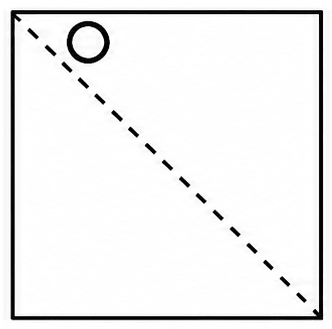
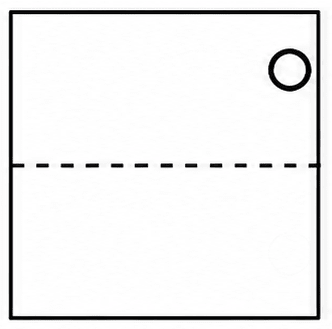
In each case, place the other hole at the mirror-image position across the given line of symmetry. The reflected hole must be at the same perpendicular distance from the line as the given hole.
(a) Reflect the hole across the diagonal from the top-left corner to the bottom-right corner.
(b) Reflect the hole across the horizontal line through the centre.
(c) Reflect the hole across the vertical line from the apex of the triangle to the midpoint of its base.
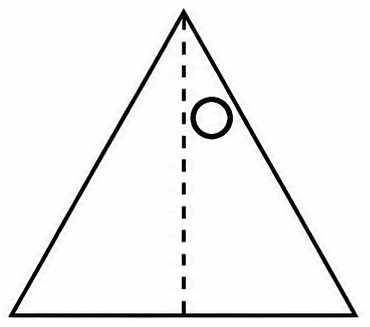
(d) Reflect the hole across the given slanting line of symmetry.
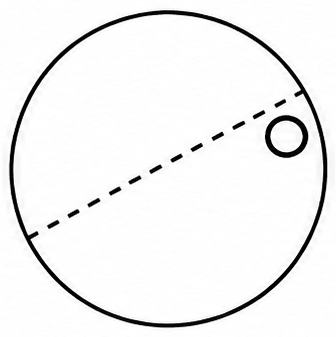
(e) Reflect the hole across the other given slanting line of symmetry.
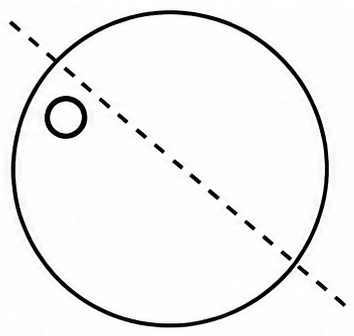
Hence, in each case the required hole is the mirror image of the given hole in the given line of symmetry.
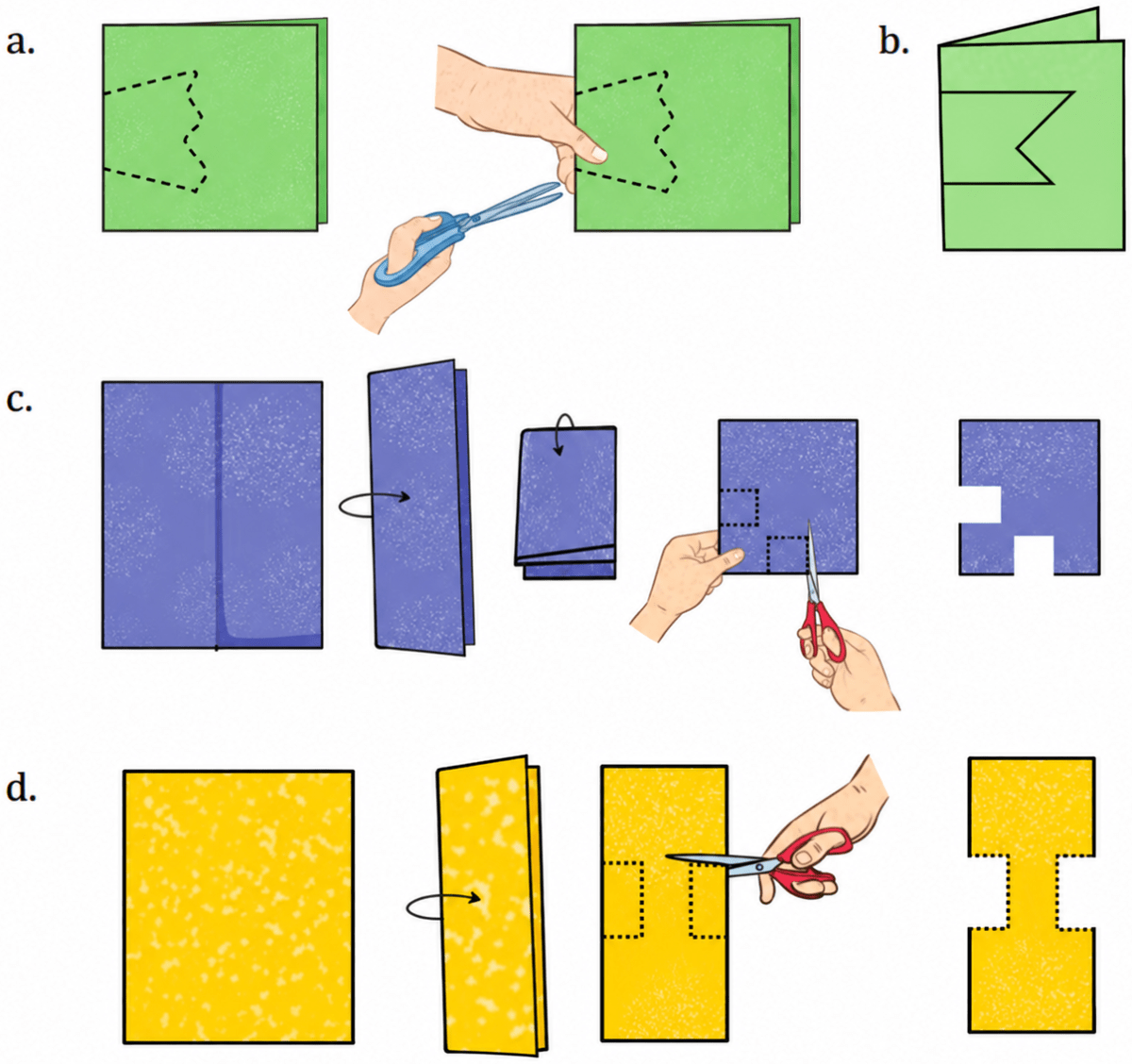
After each of the following cuts, predict the shape of the hole when the paper is opened. After you have made your prediction, make the cutouts and verify your answer.
Answer
The cut made in a folded sheet is repeated by reflection each time a fold is opened. A cut touching a folded edge joins with its mirror image to form one larger hole, while a cut on an open edge appears as a matching notch on the corresponding boundary.
(a)
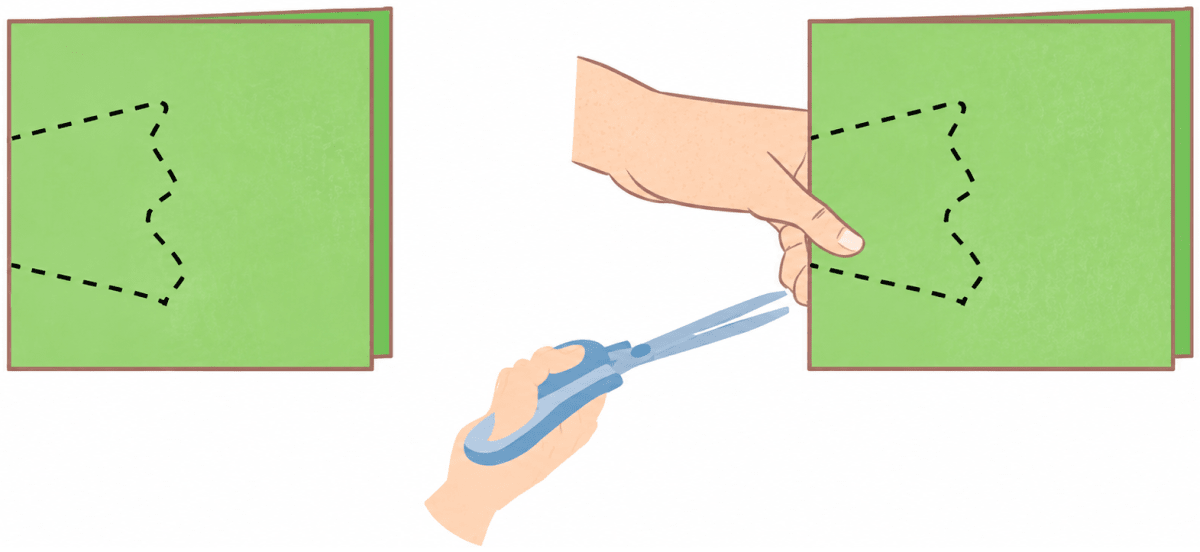
The sheet is folded once. On opening, the cut and its mirror image join to form one closed symmetric hole in the middle of the sheet.
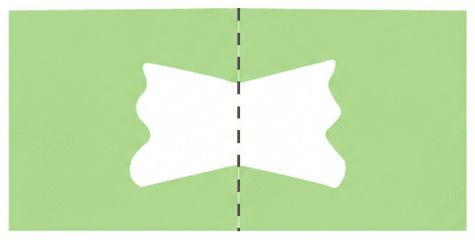
(b)
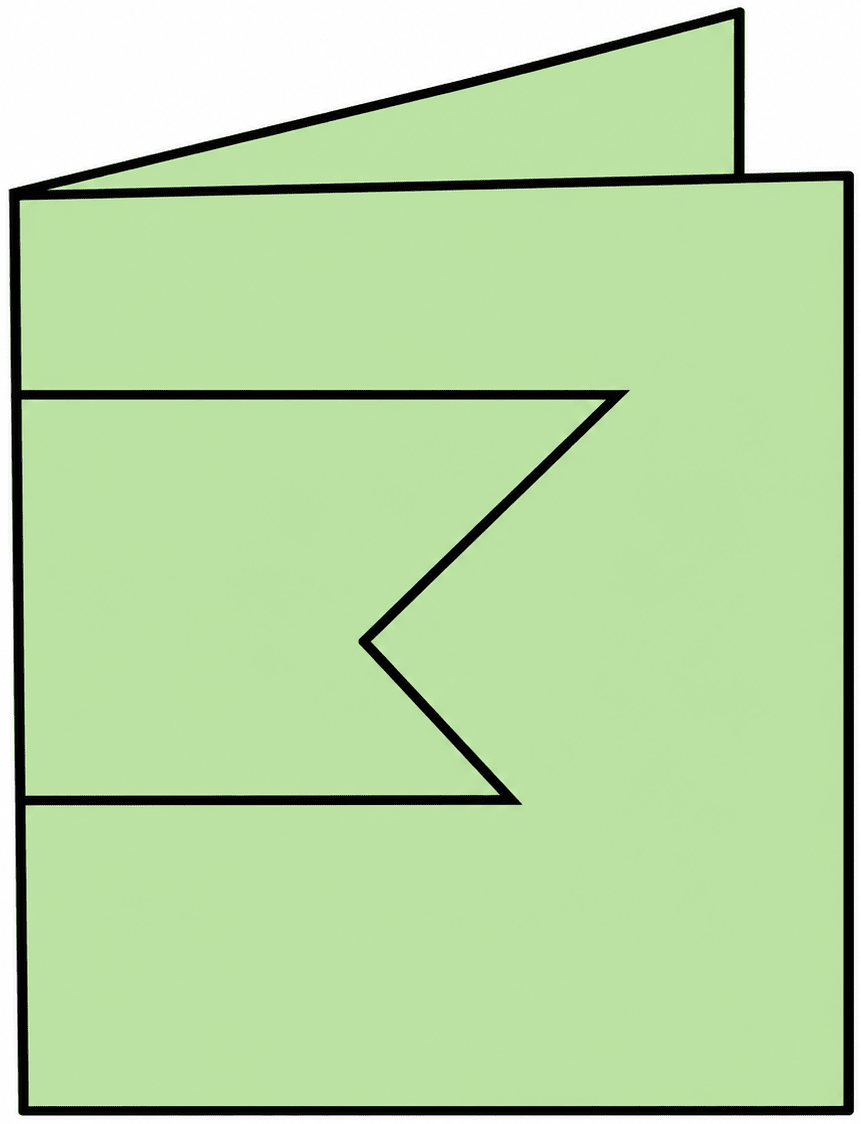
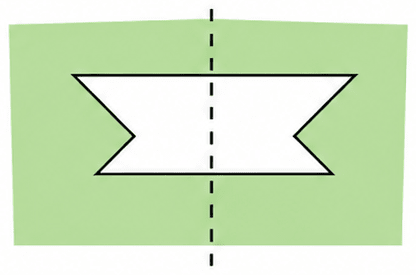
The cut is reflected across the fold line. On opening, the result is a symmetric ribbon-like hole with matching V-shaped ends.
(c)
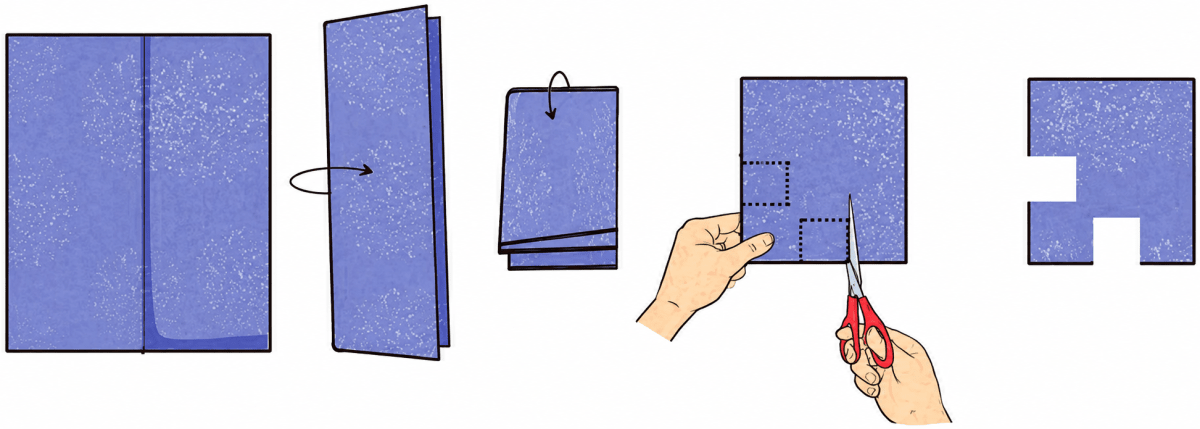
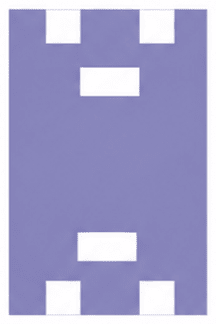
The sheet is folded twice. Therefore, each cut is reproduced according to both folds. The cut on the folded edge forms internal rectangular holes, while the cut on the open edge appears as matching notches on the outer boundary. The opened figure has both horizontal and vertical symmetry.
(d)
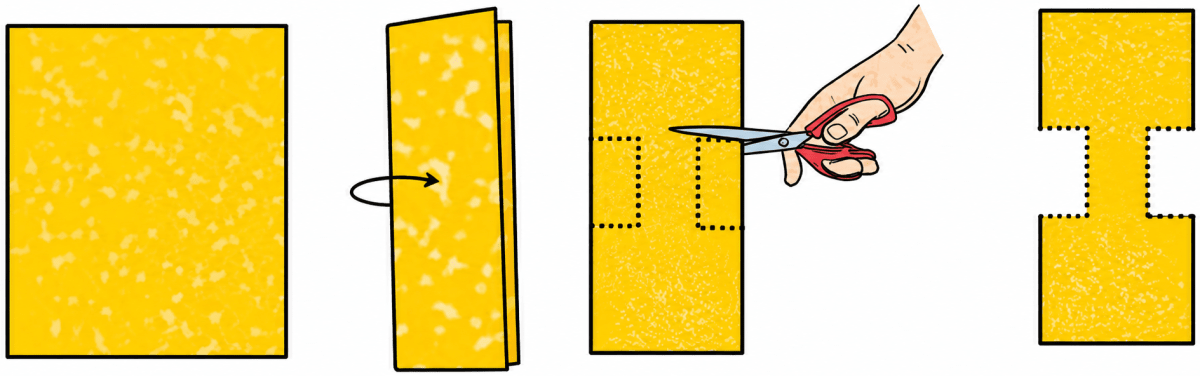
The cut on the fold opens into a central rectangular hole, while the cut on the open edge appears as matching notches on the left and right sides.
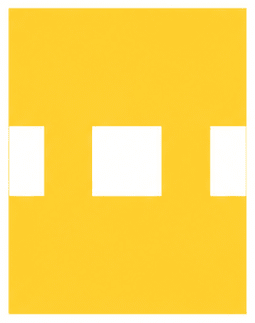
Hence, the final hole pattern is obtained by reflecting every cut across each fold line when the paper is opened.
Suppose you have to get each of these shapes with some folds and a single straight cut. How will you do it?
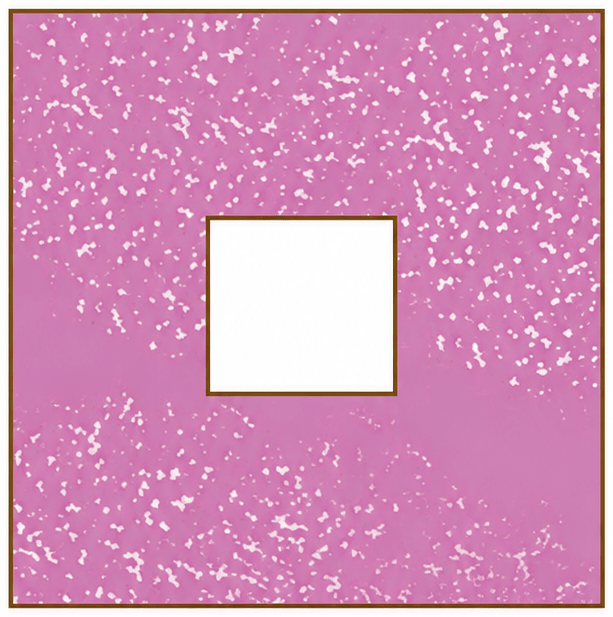
(a) The hole in the centre is a square.
(b) The hole in the centre is a square.
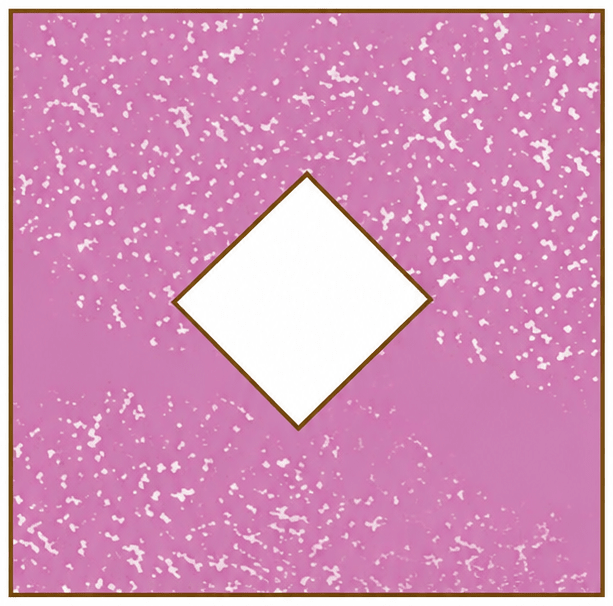
Note: For the above two questions, check if the 4-sided figures in the centre satisfy both the properties of a square.
Answer
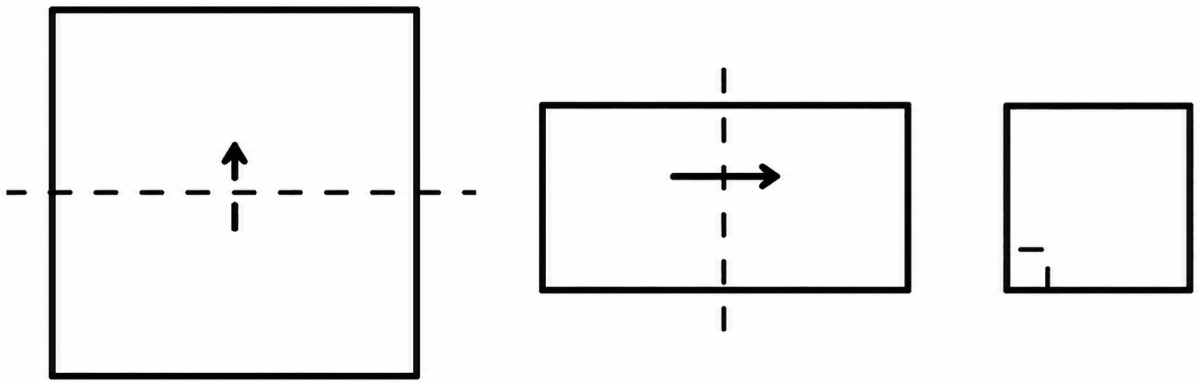
(a) Square hole with sides parallel to the sides of the sheet
- Fold the square sheet horizontally in half.
- Fold it vertically in half. The centre of the original sheet is now at the closed corner.
- Fold the smaller square once more along the diagonal passing through this closed corner so that the two edges meeting at the closed corner lie on each other.
- Make one straight cut across the folded closed corner.
- Unfold all the folds. The reflected copies of the cut form a square hole at the centre with its sides parallel to the sides of the sheet.
(b) Square hole standing on a vertex
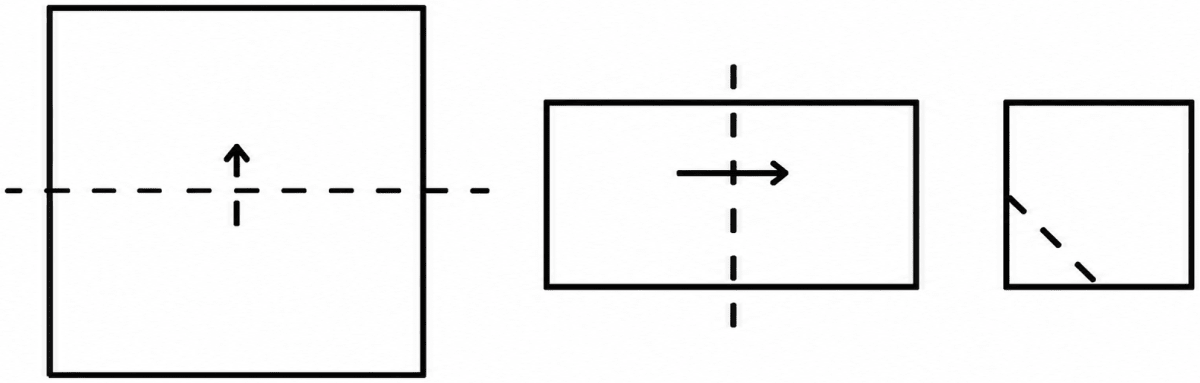
- Fold the square sheet horizontally in half and then vertically in half.
- At the closed corner, make one straight slanting cut joining points at equal distances from the corner on the two folded edges.
- Unfold the sheet. The reflected copies of this cut form a square standing on one vertex.
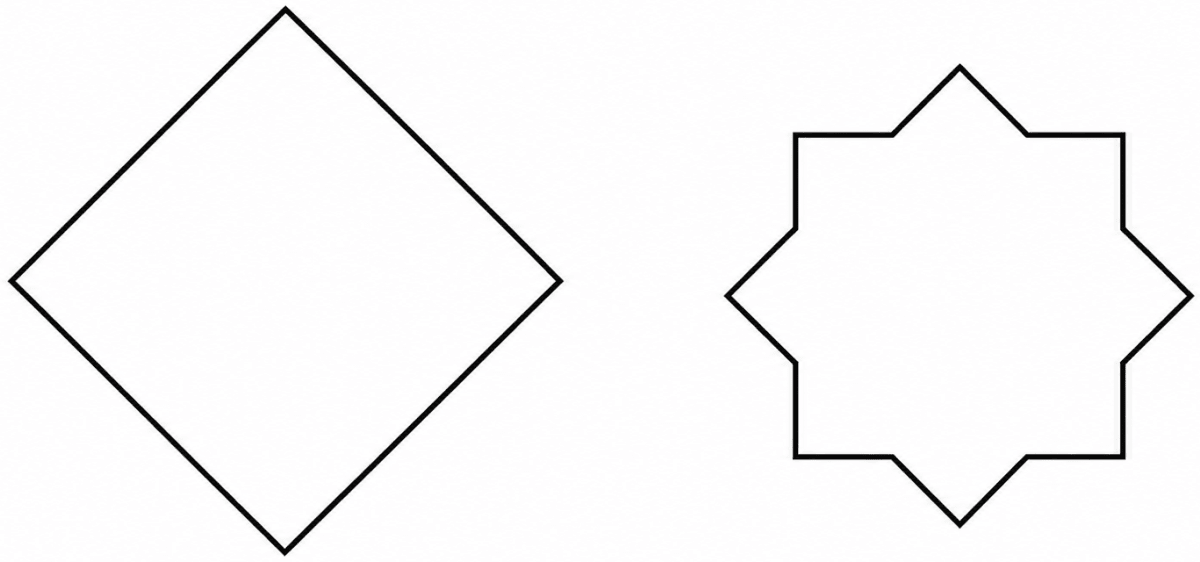
How many lines of symmetry do these shapes have?
(a)
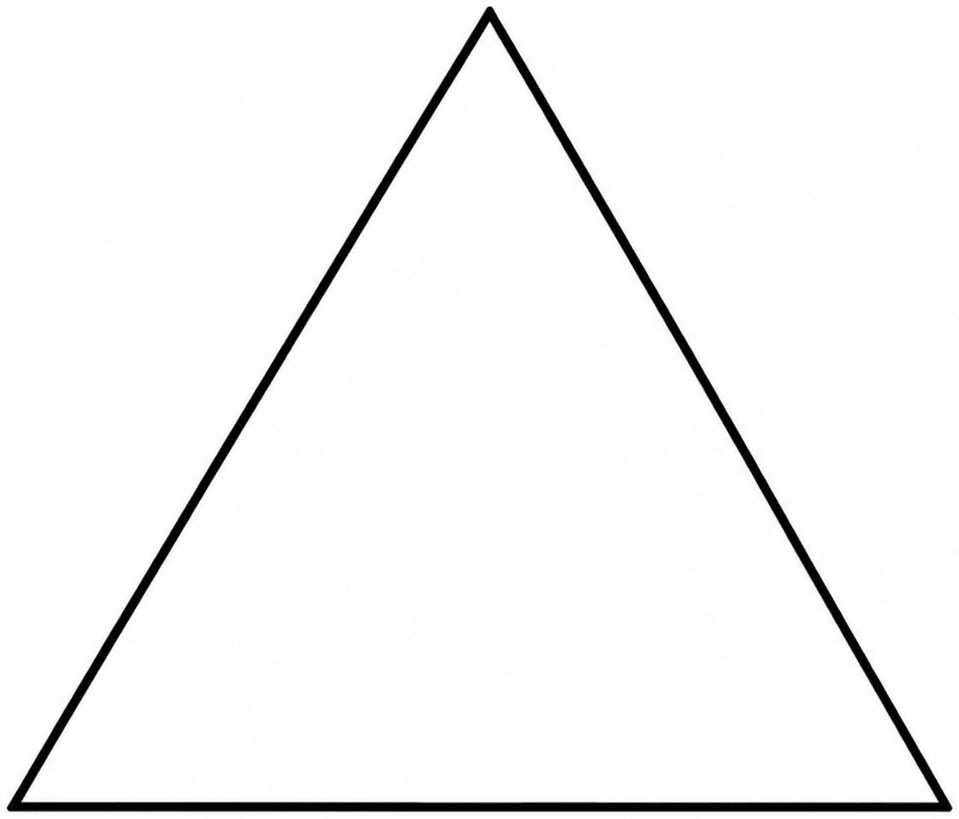
(b) A triangle with equal sides and equal angles.
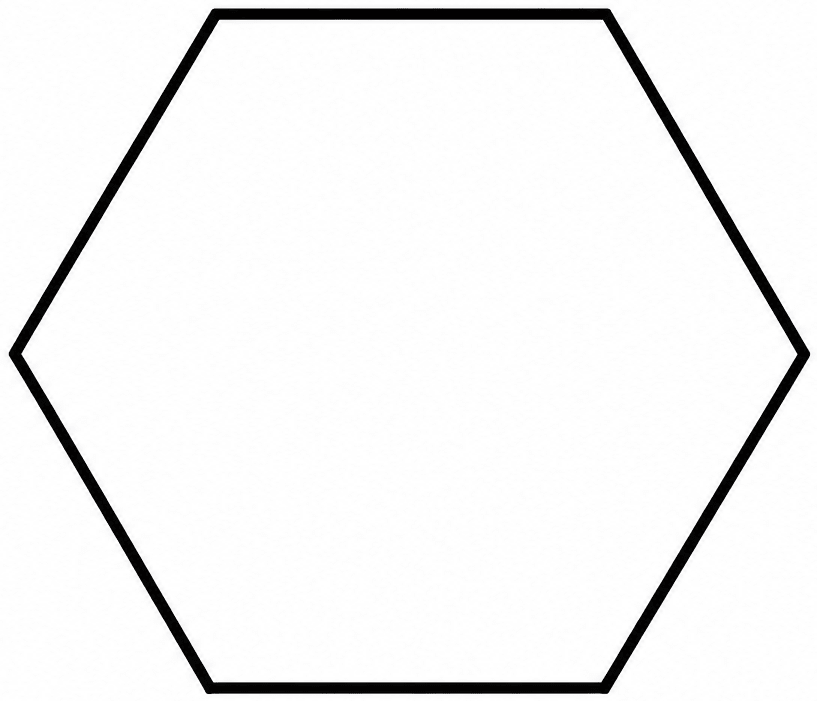
(c) A hexagon with equal sides and equal angles.
Answer
(a)
The first figure is a square resting on a vertex. A square has 4 lines of symmetry.
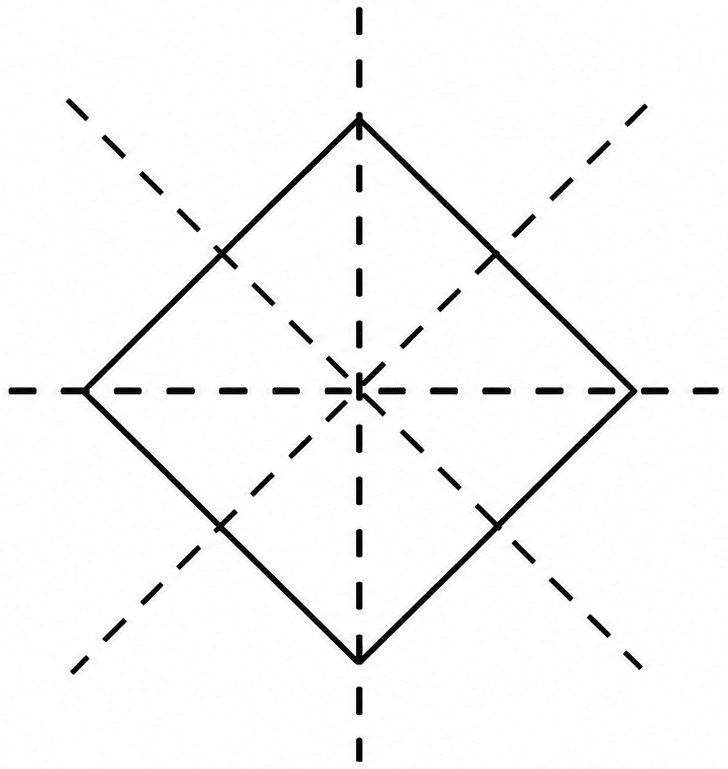
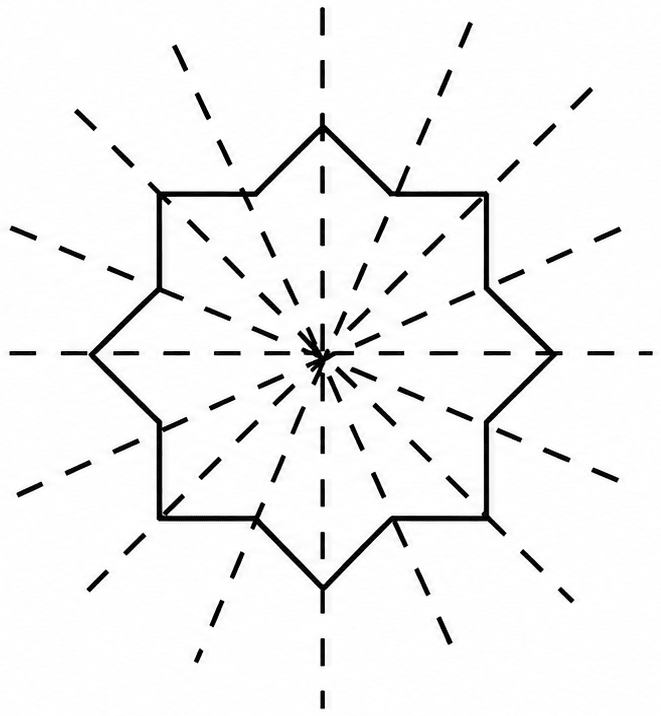
The second figure is a regular 8-pointed star. It has 8 lines of symmetry.
(b)
A triangle with equal sides and equal angles is an equilateral triangle.
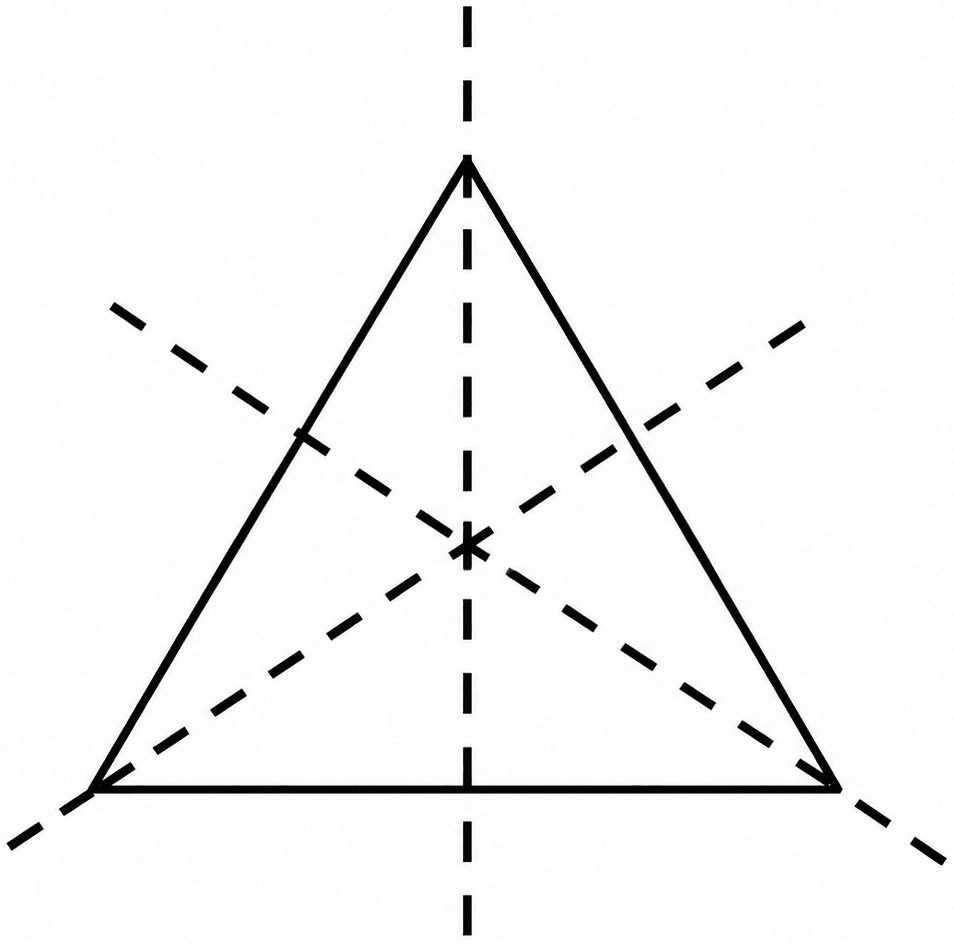
It has 3 lines of symmetry.
(c)
A hexagon with equal sides and equal angles is a regular hexagon.
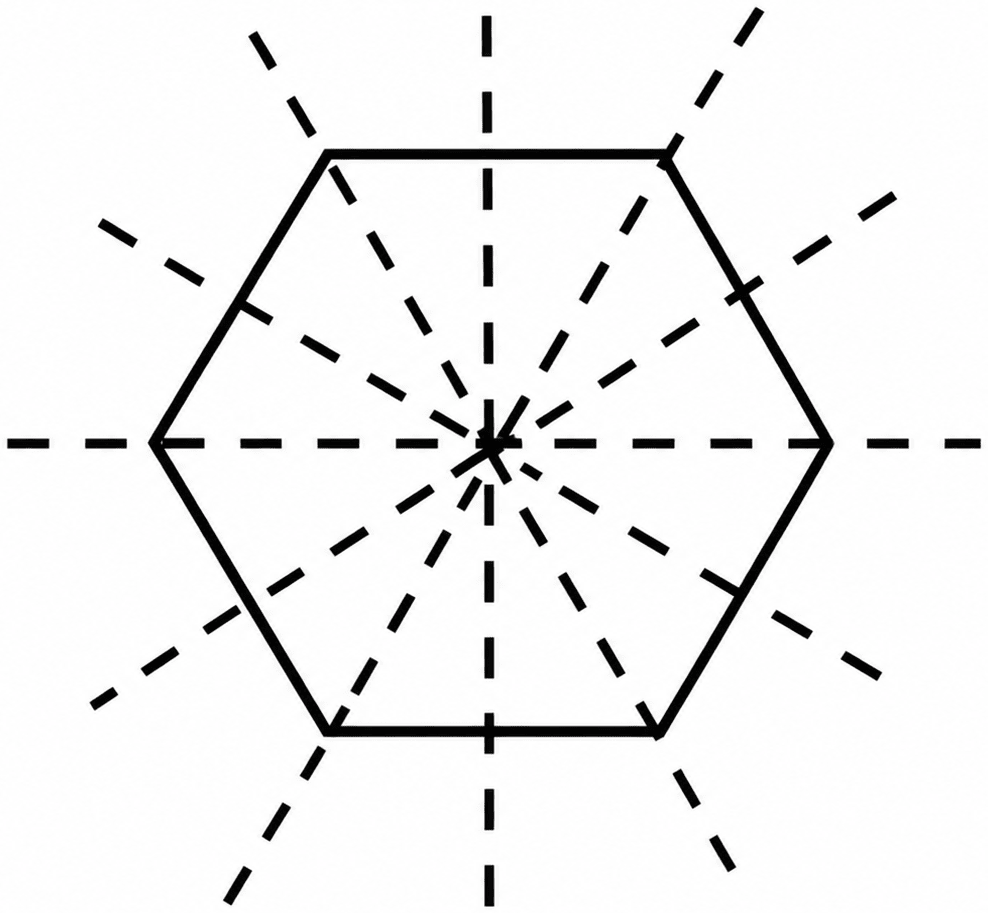
It has 6 lines of symmetry.
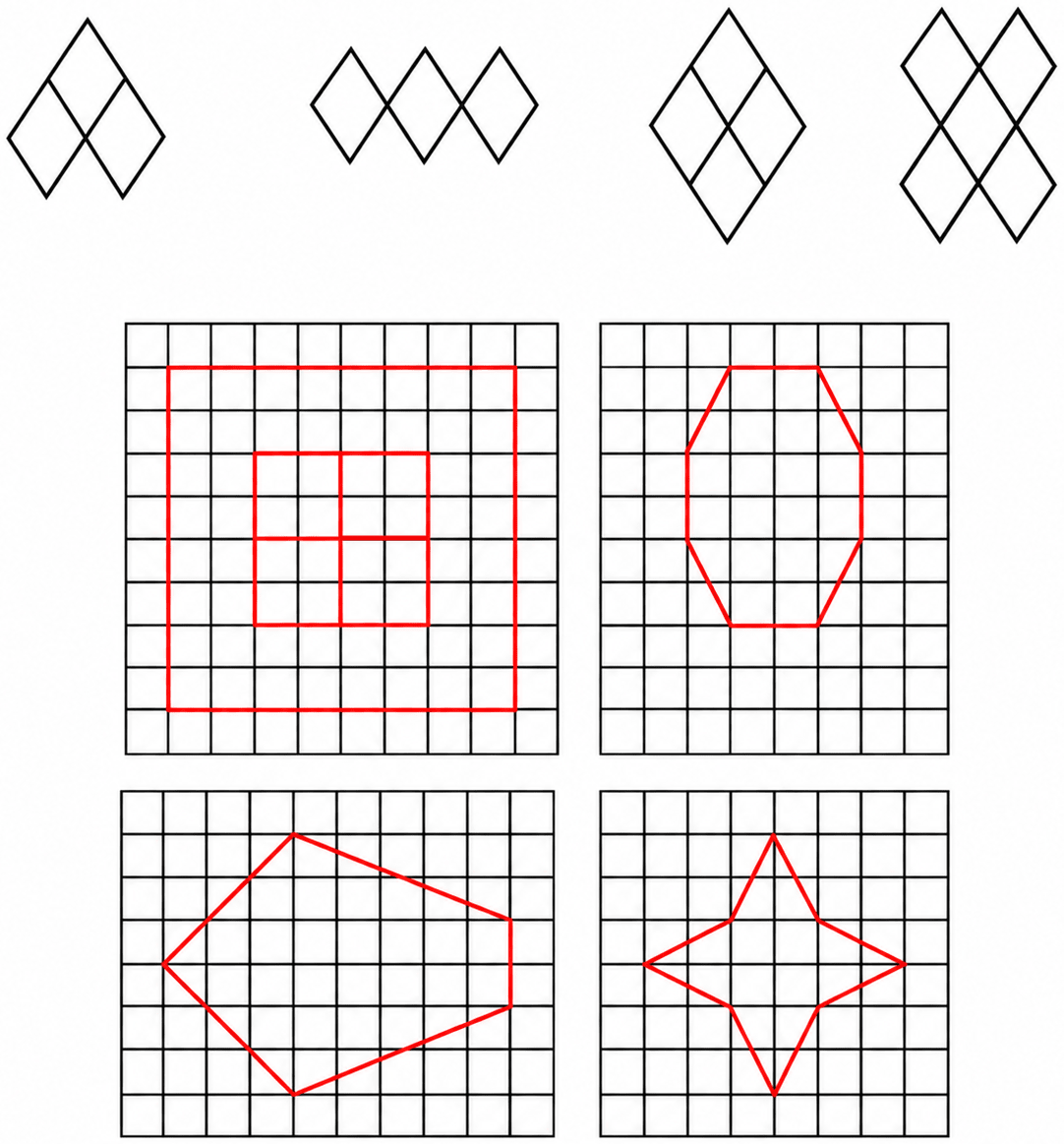
Trace each figure and draw the lines of symmetry, if any:
Answer
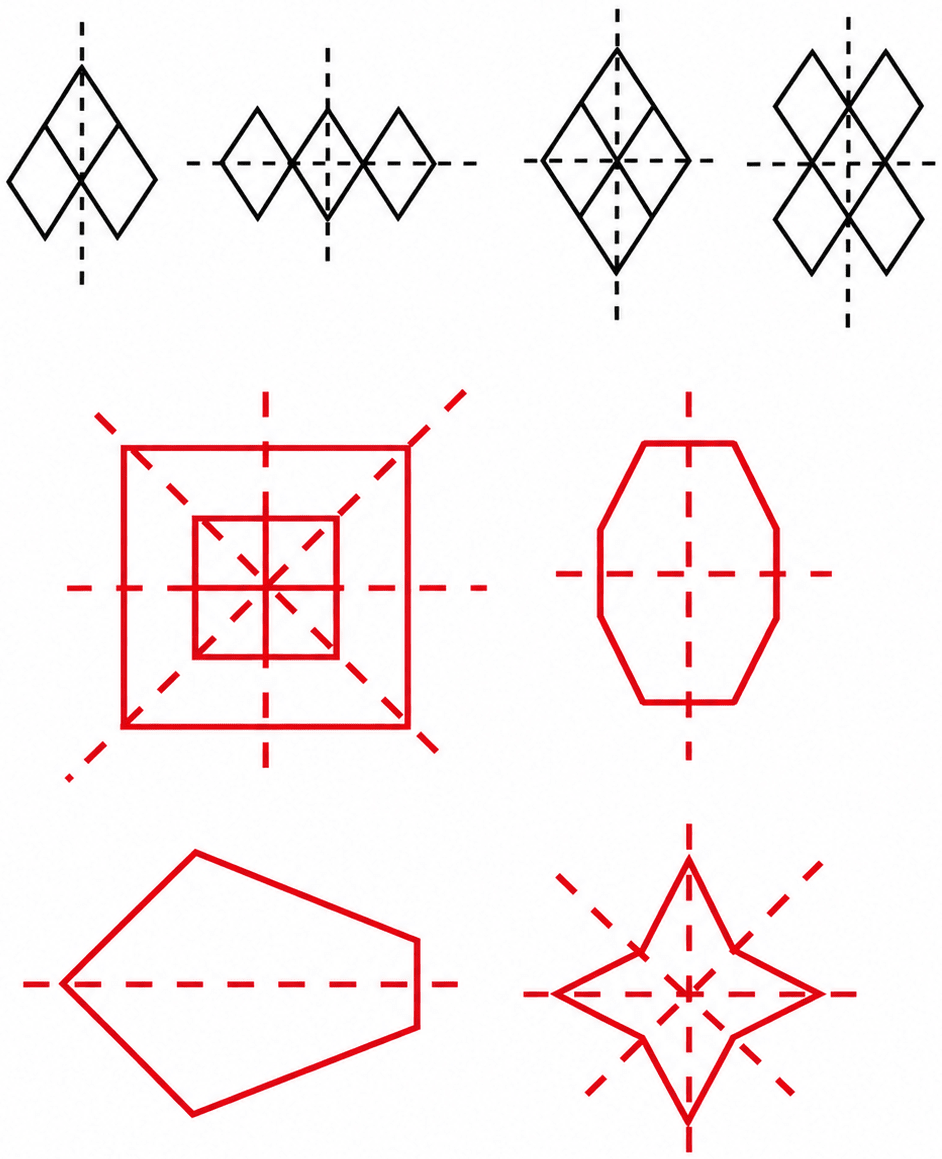
Hence, the eight figures have 1, 2, 2, 2, 4, 2, 1 and 4 lines of symmetry respectively.
Find the lines of symmetry for the kolam below.
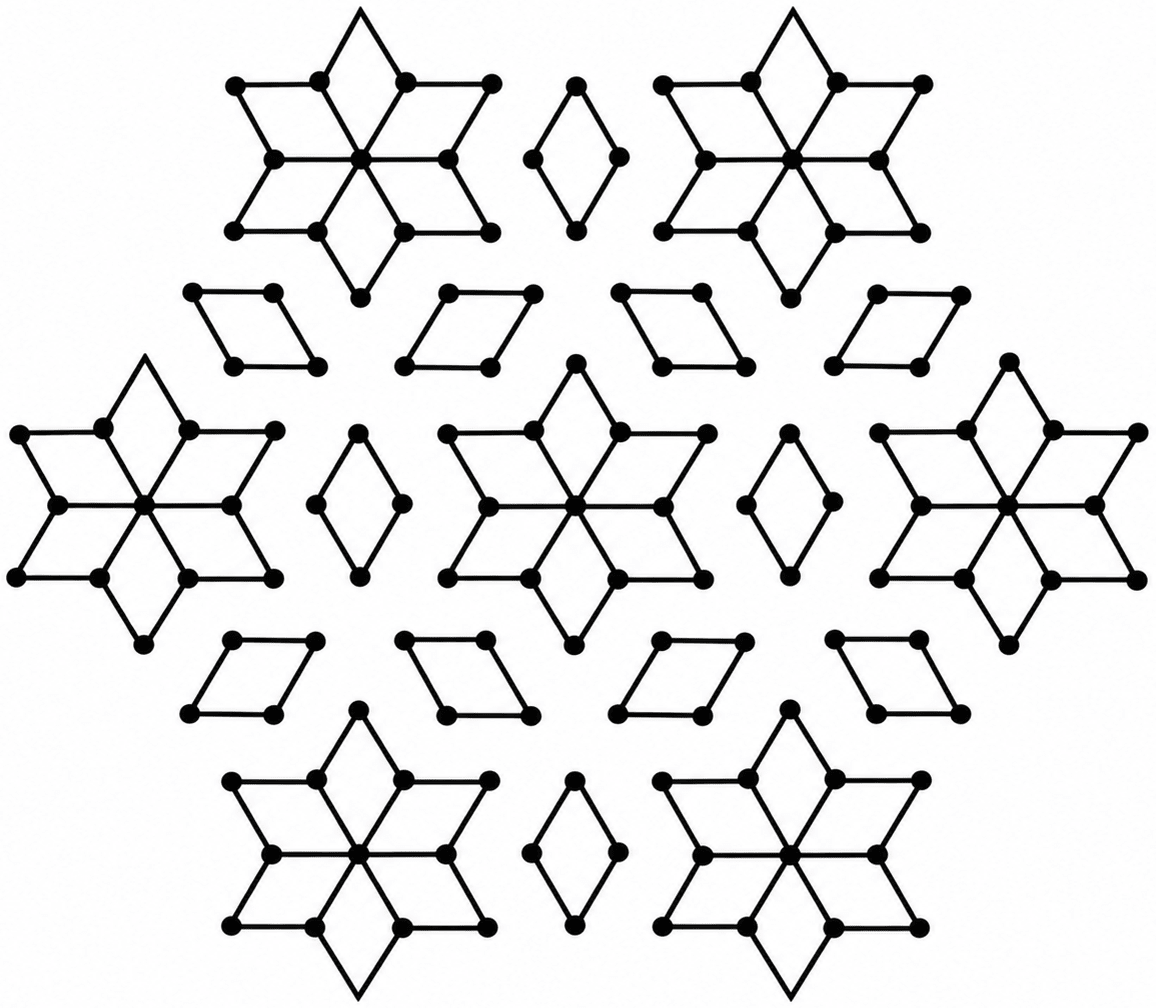
Answer
The kolam has 6 lines of symmetry, all passing through its centre.
Three lines pass through pairs of opposite outer star-like parts, and three more pass midway between neighbouring outer parts. The angle between neighbouring symmetry lines is 30°.
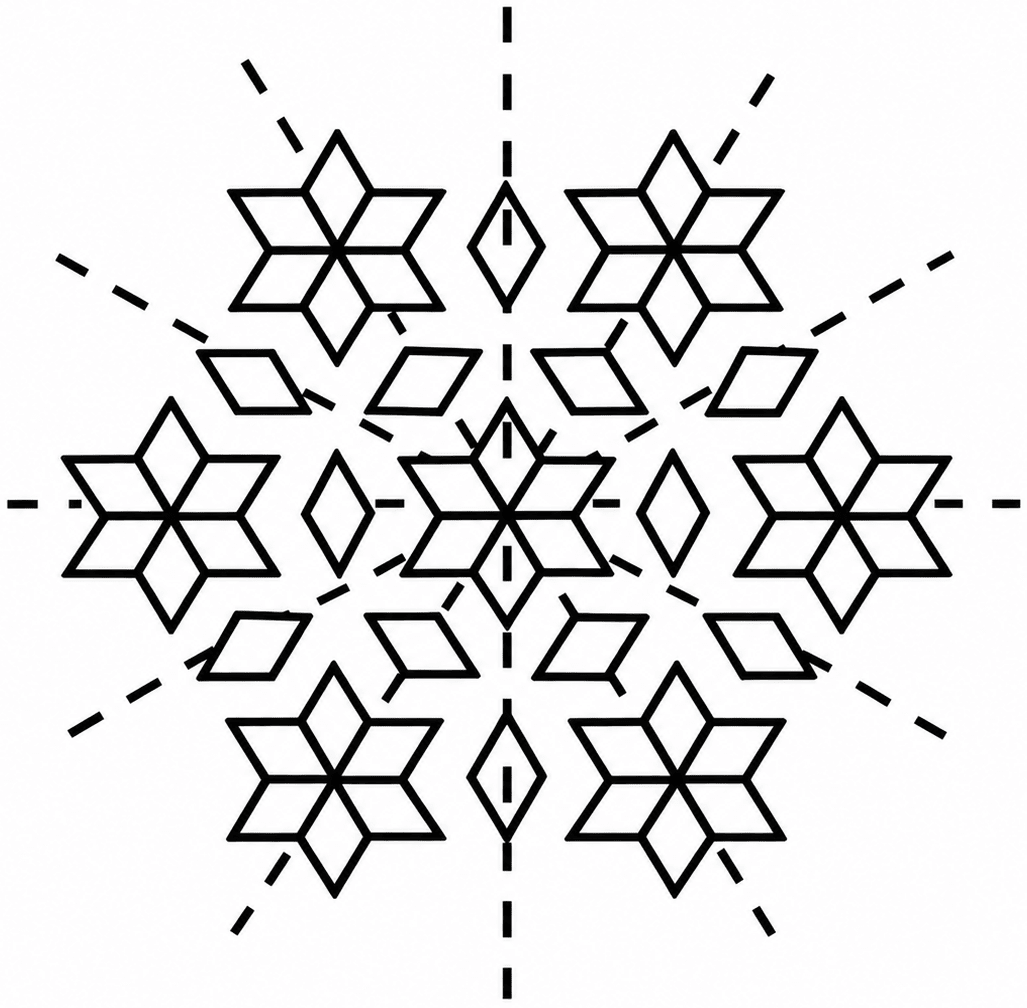
∴ The kolam has 6 lines of symmetry.
Draw the following.
(a) A triangle with exactly one line of symmetry.
(b) A triangle with exactly three lines of symmetry.
(c) A triangle with no line of symmetry.
Is it possible to draw a triangle with exactly two lines of symmetry?
Answer
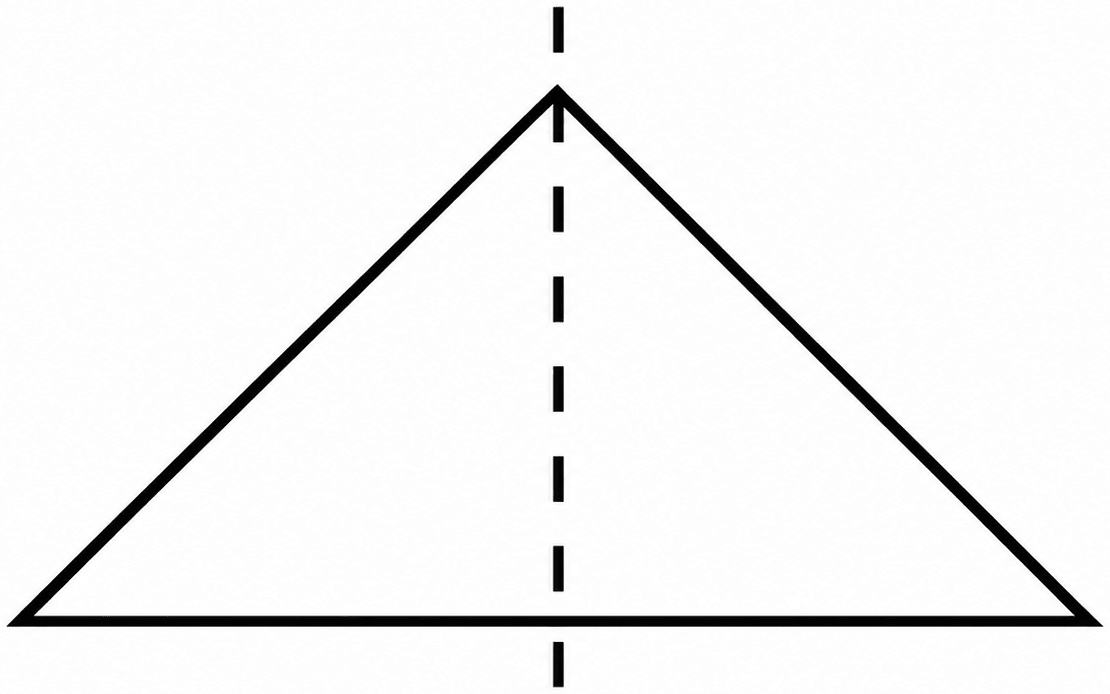
(a) A triangle with exactly one line of symmetry
Draw an isosceles triangle in which exactly two sides are equal. Its line of symmetry joins the vertex between the equal sides to the midpoint of the third side.
(b) A triangle with exactly three lines of symmetry
Draw an equilateral triangle. The line from each vertex to the midpoint of the opposite side is a line of symmetry.
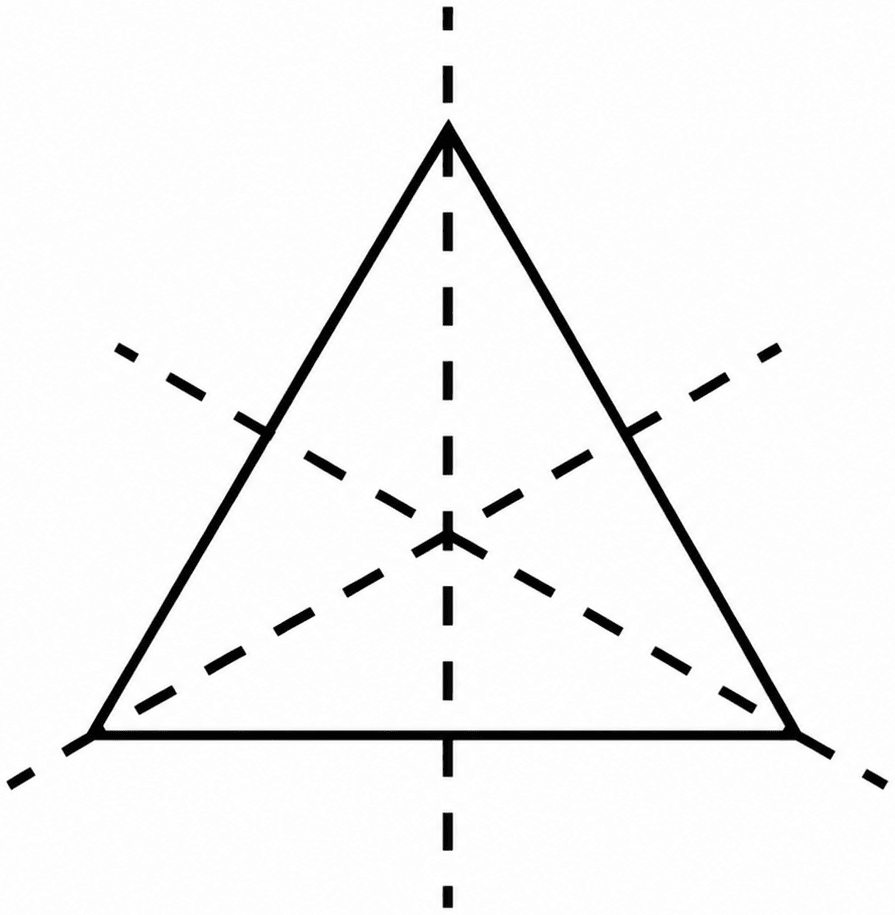
It has 3 lines of symmetry.
(c) A triangle with no line of symmetry
Draw a scalene triangle. Since all three sides are unequal, it has no line of symmetry.
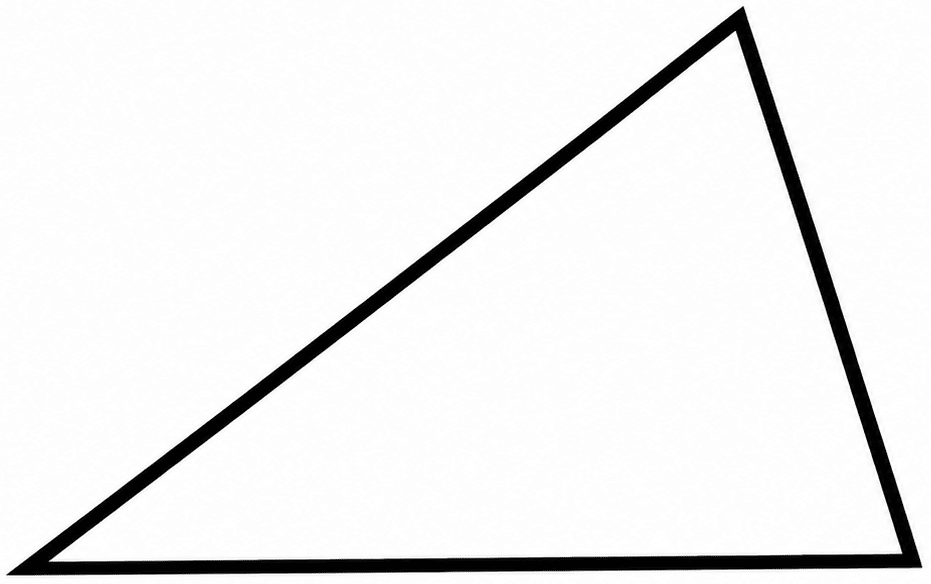
If a triangle had two lines of symmetry, these would force all three sides to be equal. The triangle would then be equilateral and would have 3 lines of symmetry.
Hence, it is not possible to draw a triangle with exactly two lines of symmetry.
Draw the following. In each case, the figure should contain at least one curved boundary.
(a) A figure with exactly one line of symmetry.
(b) A figure with exactly two lines of symmetry.
(c) A figure with exactly four lines of symmetry.
Answer
(a) A figure with exactly one line of symmetry
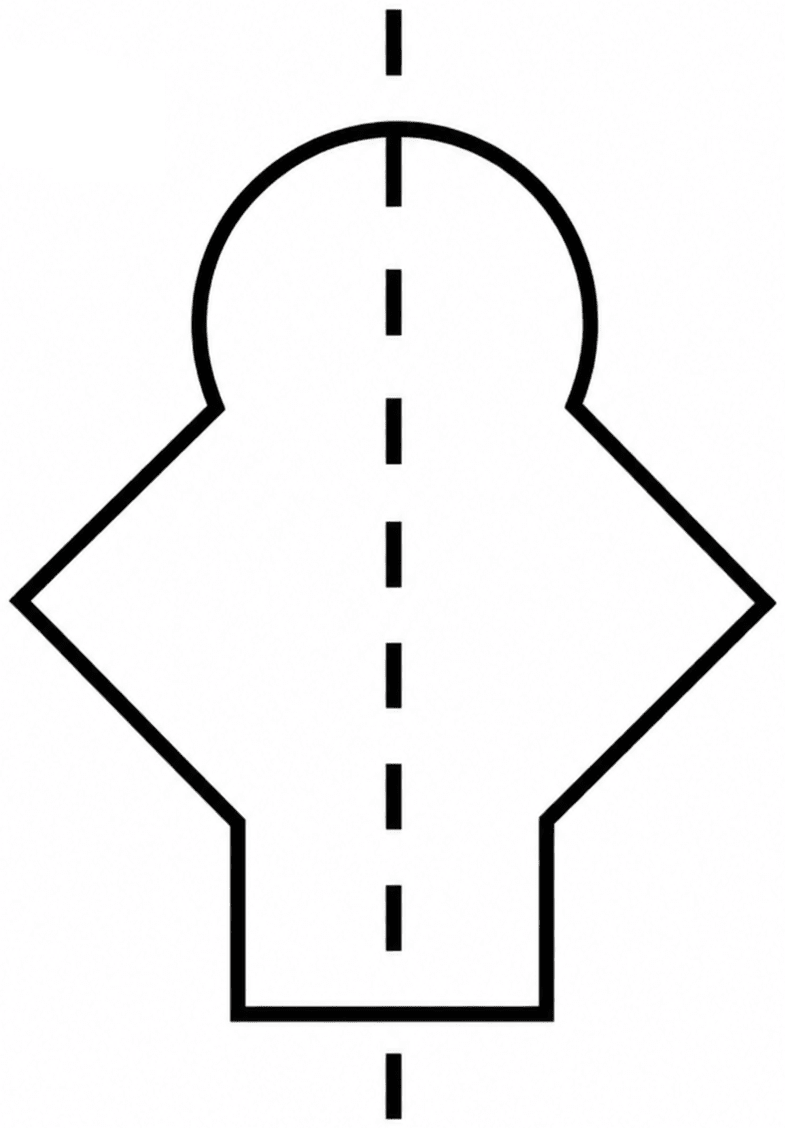
The figure shown has only one line of symmetry, the vertical line through its centre.
(b) A figure with exactly two lines of symmetry
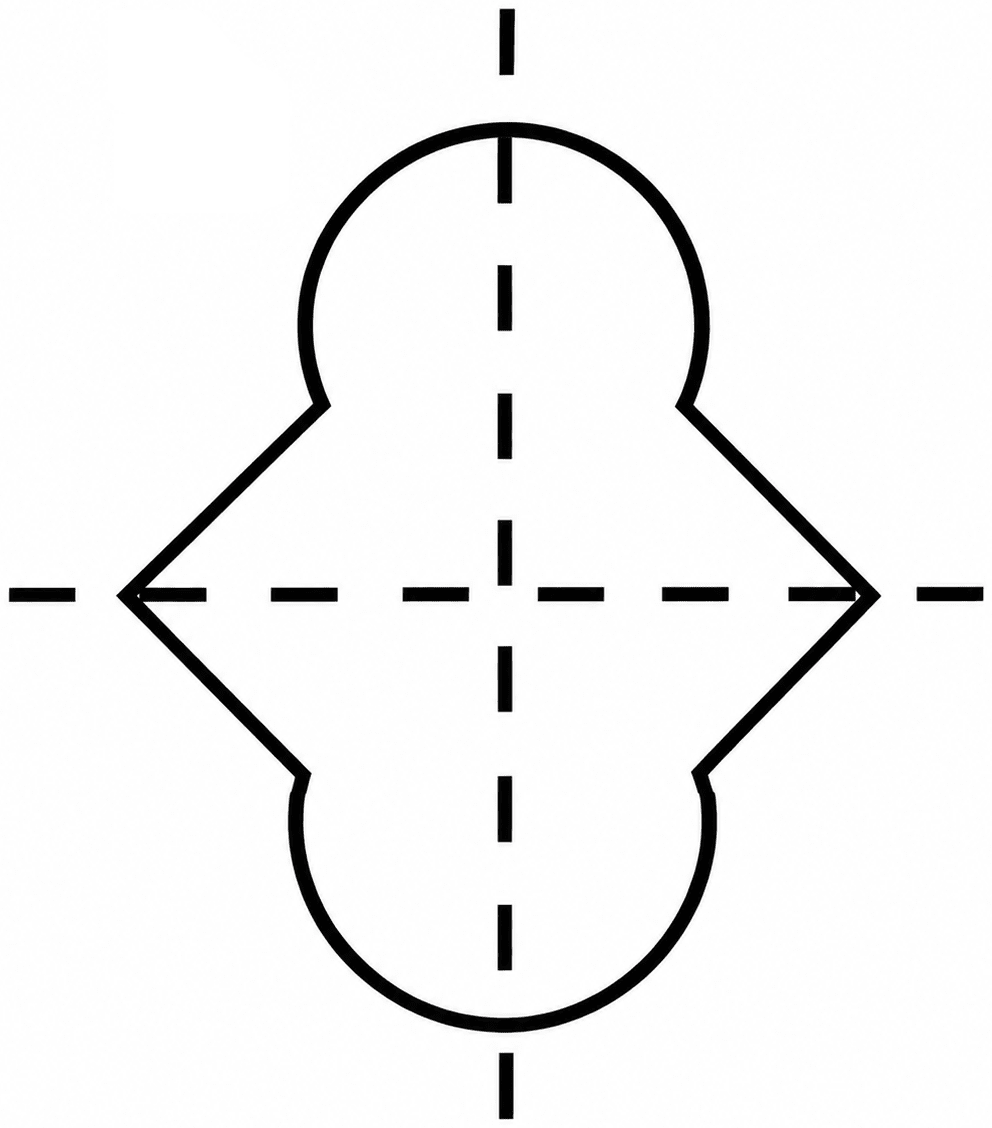
The figure shown has exactly two lines of symmetry — the vertical and horizontal lines through its centre.
(c) A figure with exactly four lines of symmetry
The figure shown has four identical rounded lobes. Its lines of symmetry are the vertical line, the horizontal line and the two diagonals through the centre.
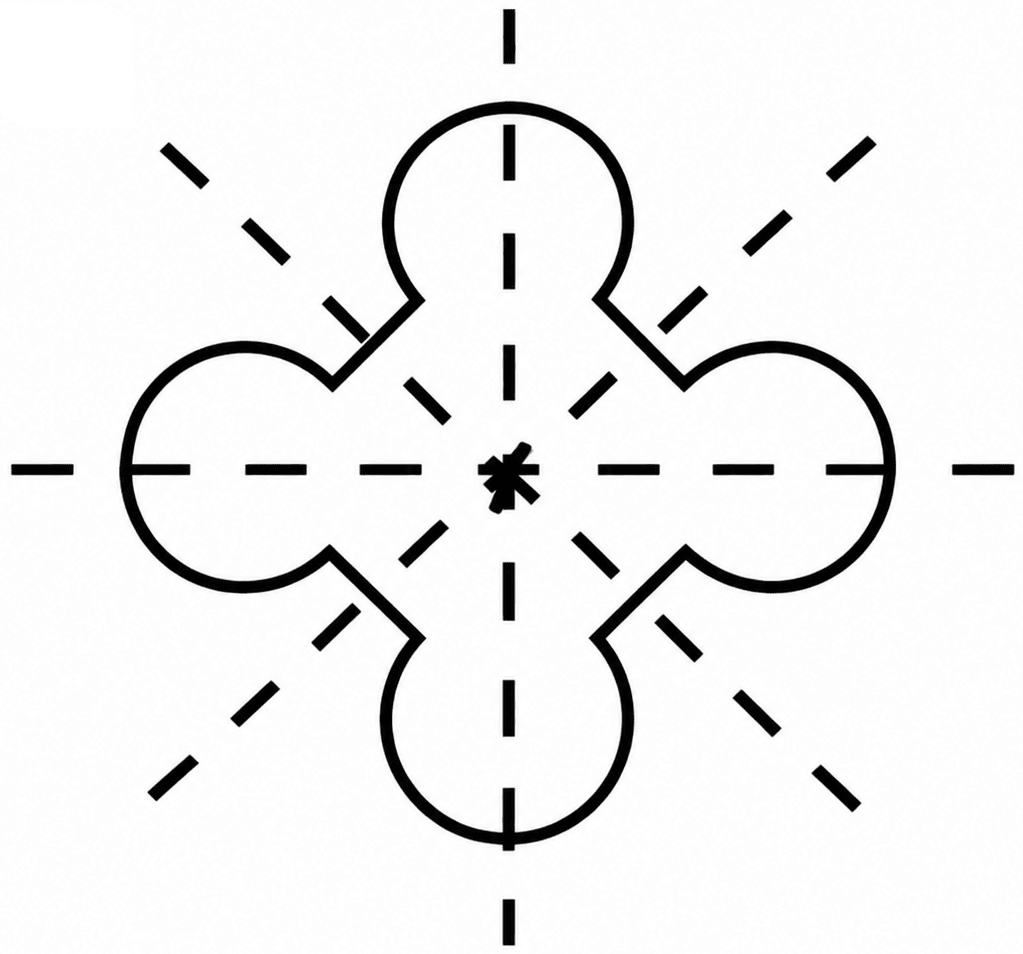
Hence, the figures shown in (a), (b) and (c) have exactly 1, 2 and 4 lines of symmetry respectively.
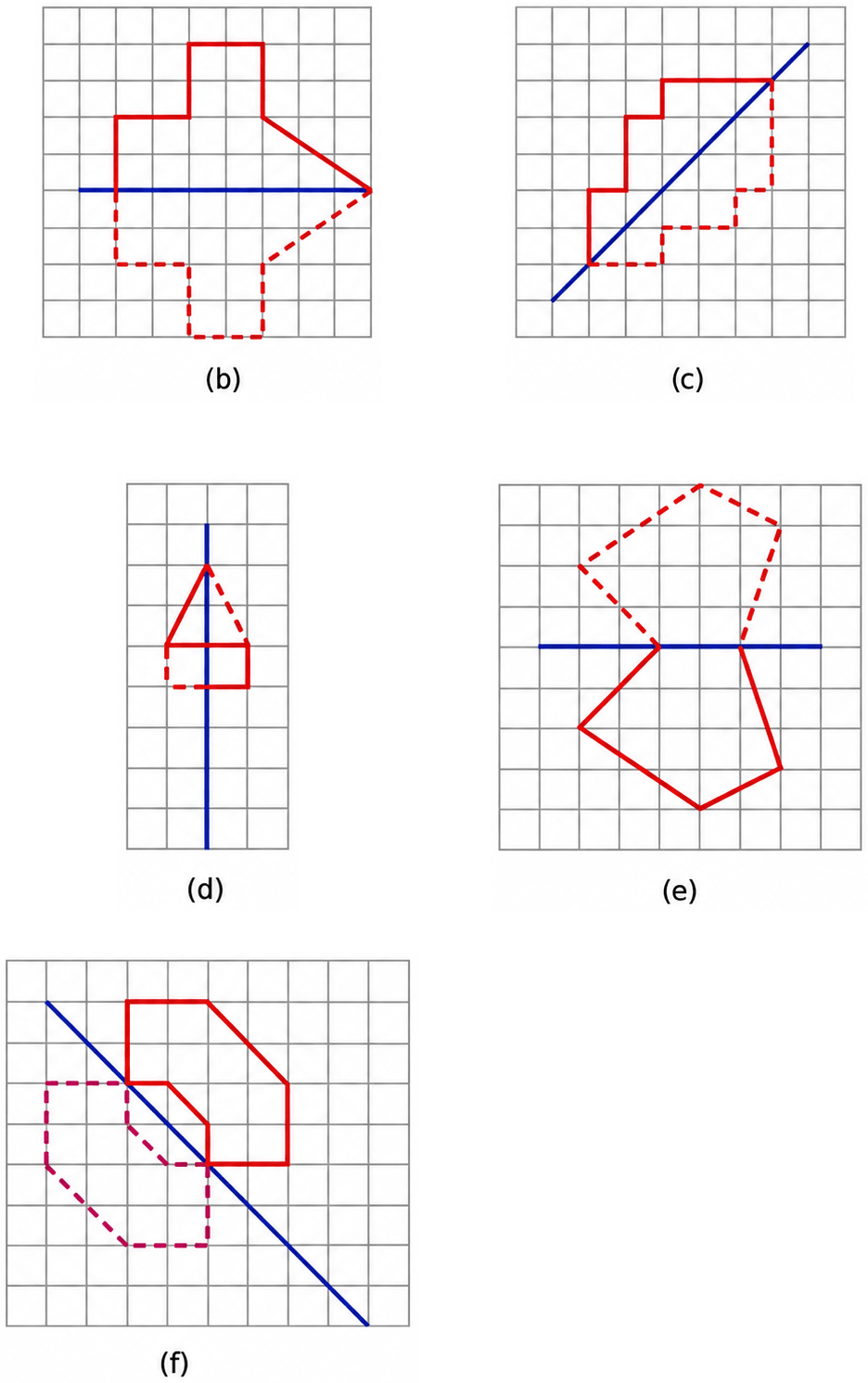
Copy the following on squared paper. Complete them so that the blue line is a line of symmetry. Problem (a) has been done for you.
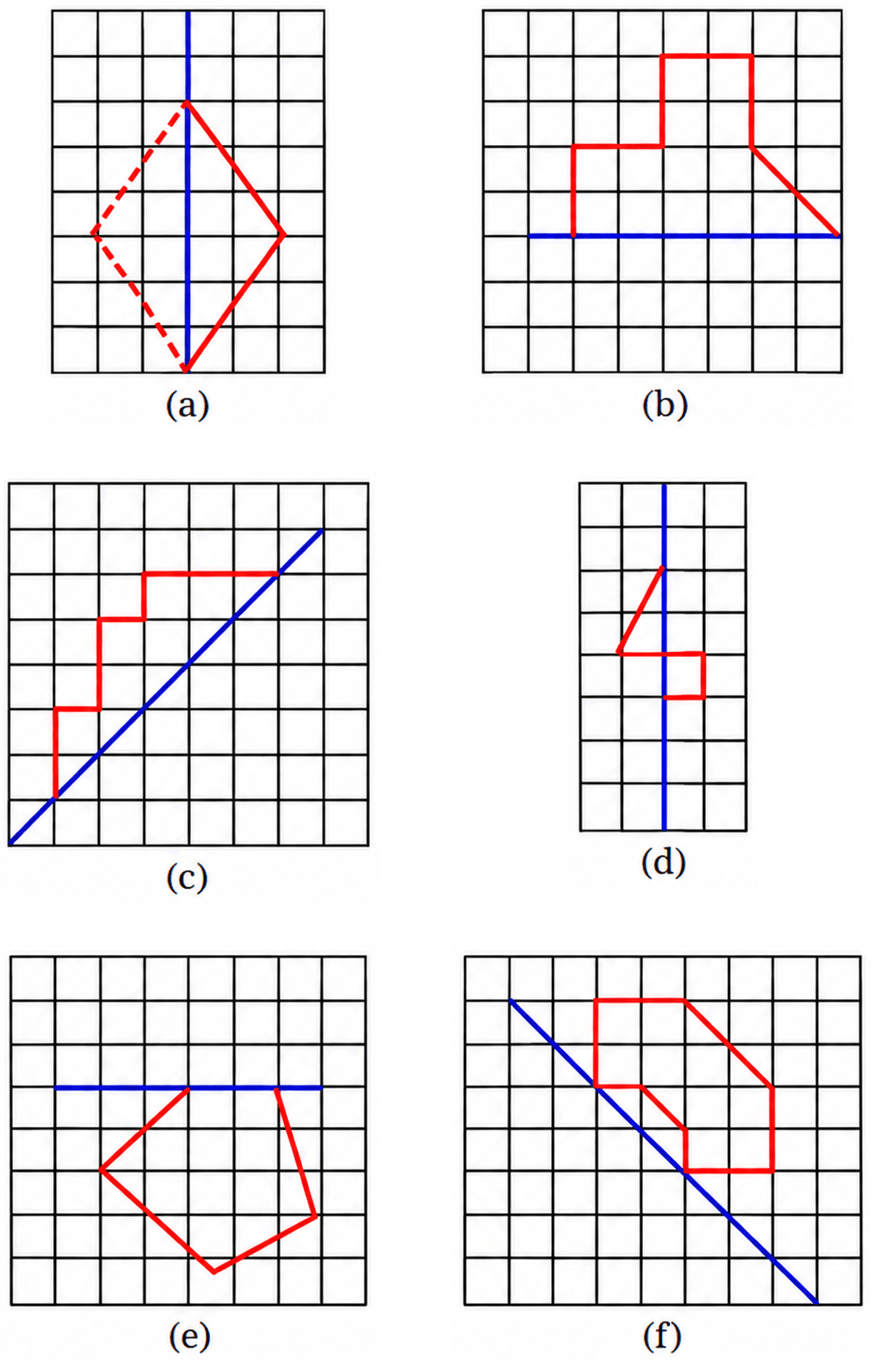
Hint: For (c) and (f), see if rotating the book helps!
Answer
Reflect every point and line segment of the given red part across the blue line, keeping the same perpendicular distance from the blue line.
Copy the following drawing on squared paper. Complete each one of them so that the resulting figure has the two blue lines as lines of symmetry.
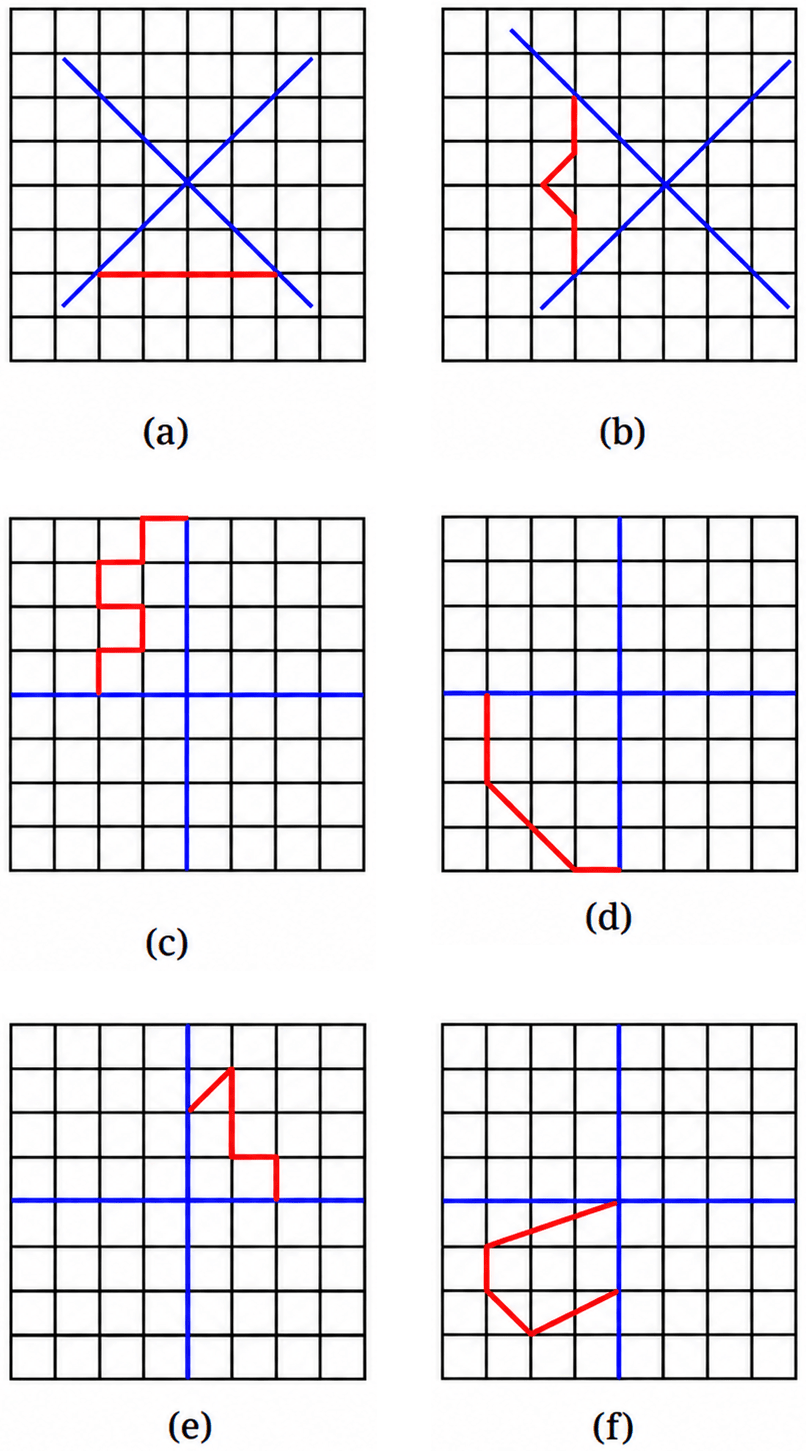
Answer
Method
First reflect the given part in one blue line. Then reflect the resulting parts in the second blue line.
All the reflected parts together form the completed figure, and both blue lines are lines of symmetry.
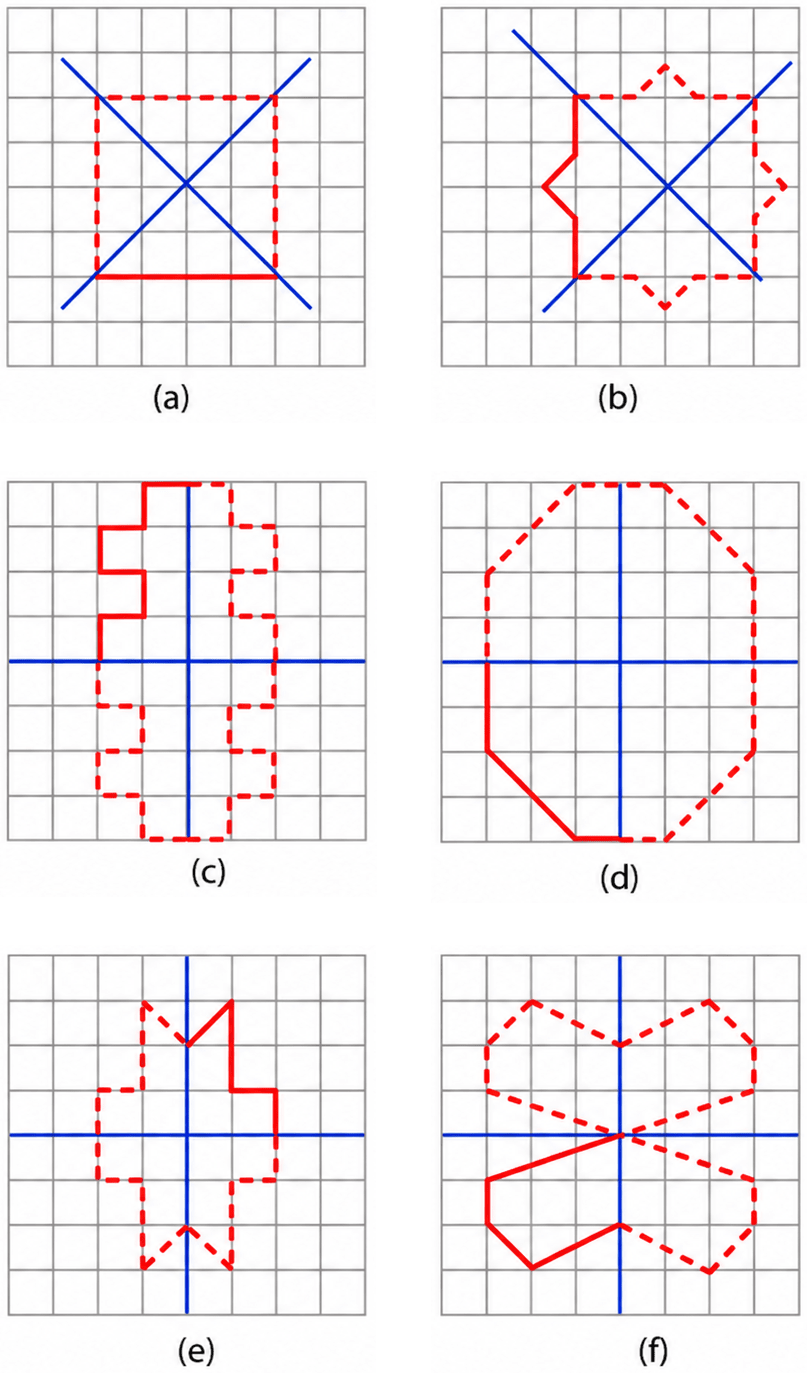
Hence, reflecting the given drawing successively in the two blue lines completes each figure.
Copy the following on a dot grid. For each figure draw two more lines to make a shape that has a line of symmetry.
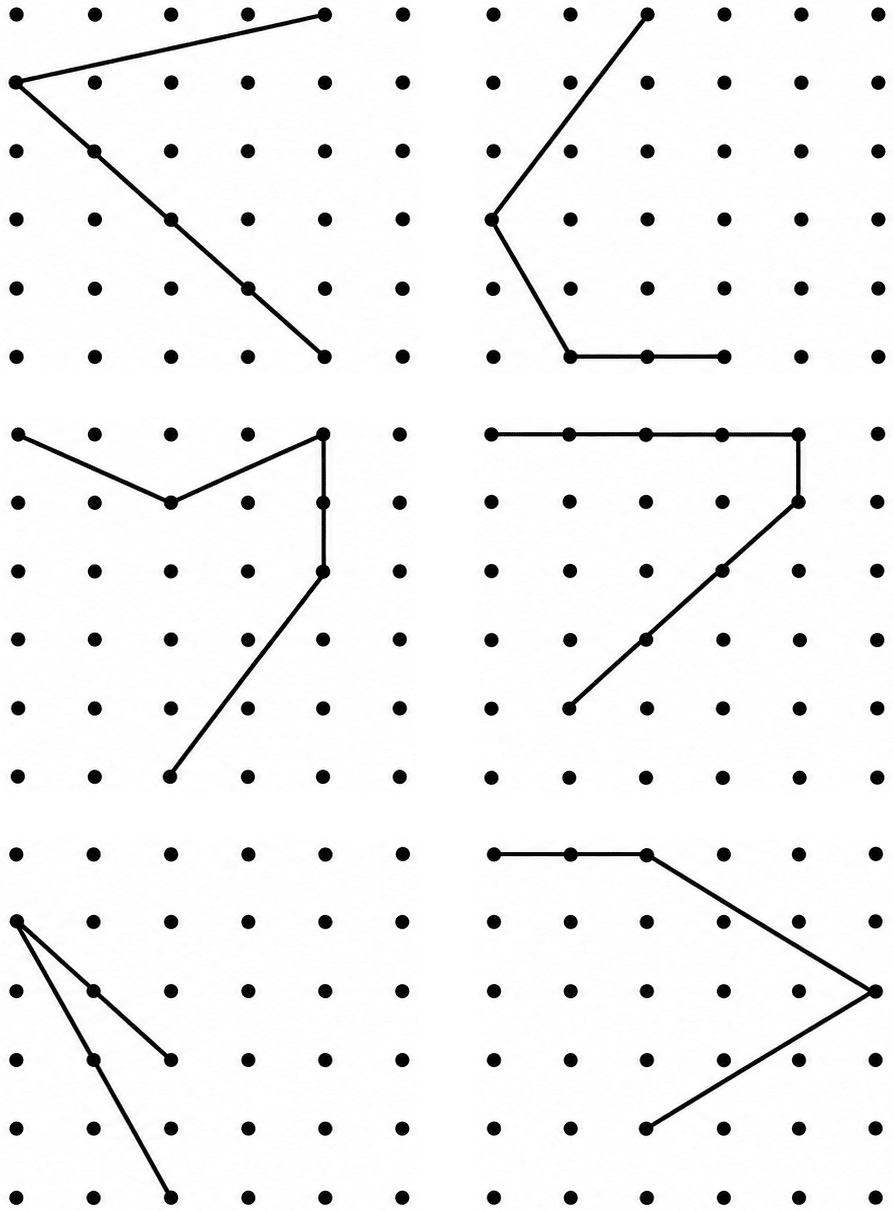
Answer
Choose a suitable line of symmetry for each figure. Add the two required line segments so that the completed part on one side is the mirror image of the part on the other side.
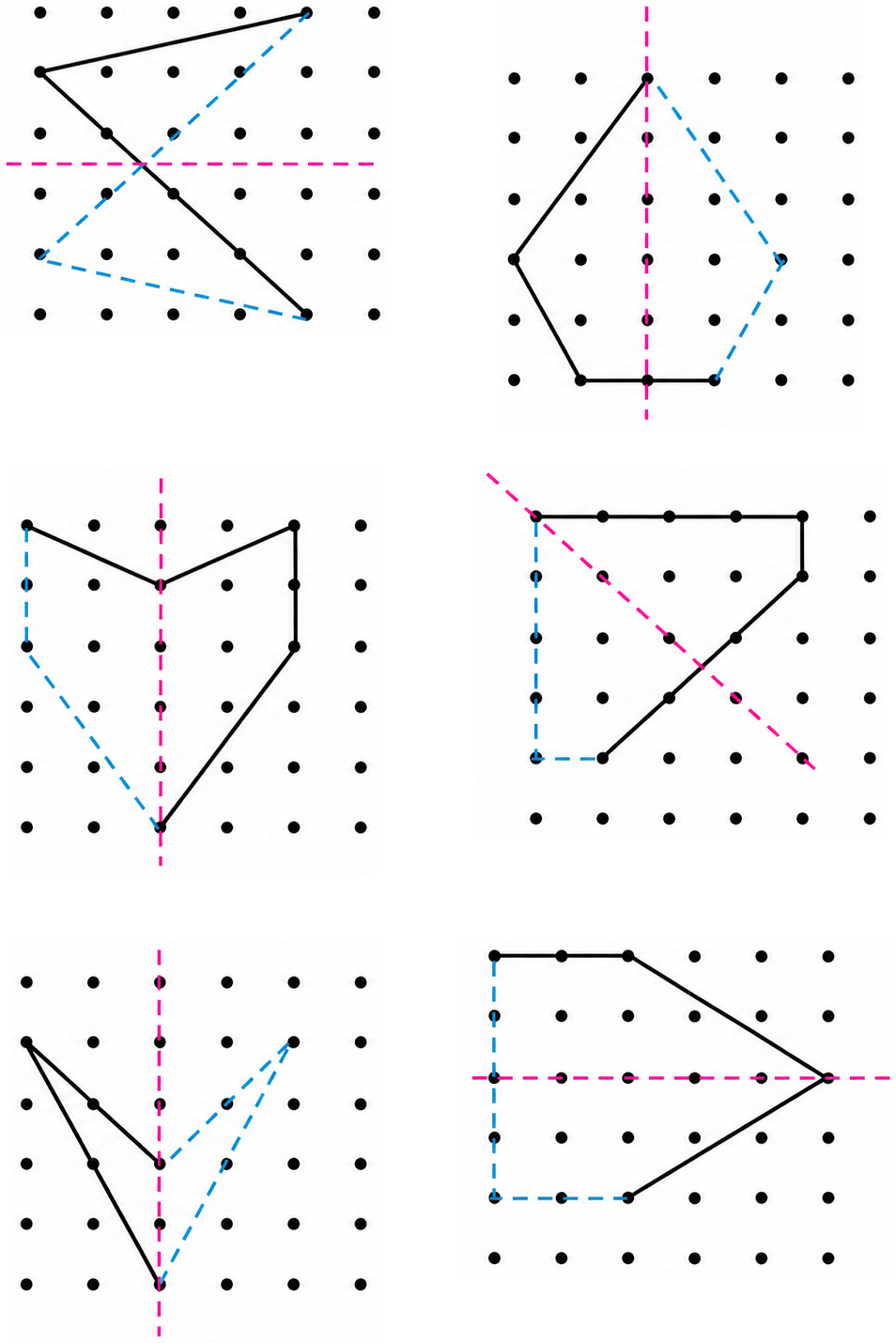
Hence, each figure can be completed by adding two line segments at positions that make the two sides mirror images.
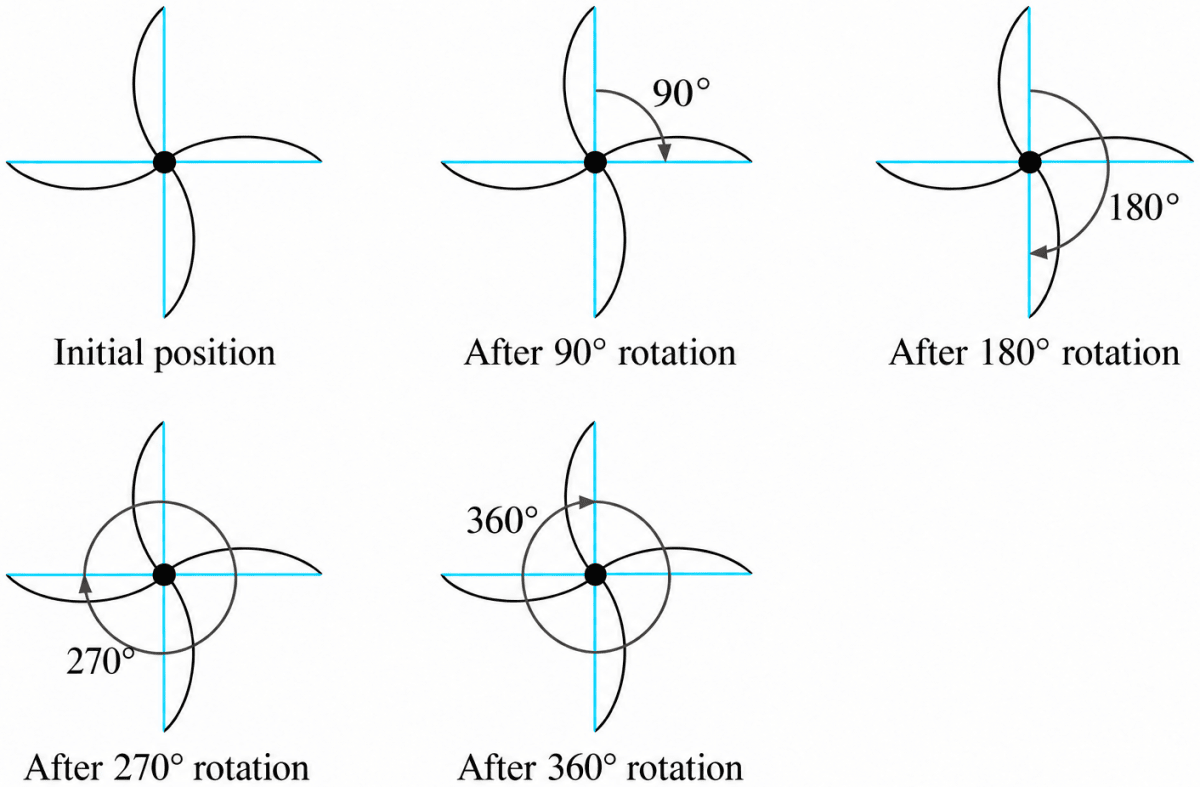
Consider this figure, a picture with 4 radial arms. How many angles of symmetry does it have? What are they? Note that the angle between adjacent central dotted lines is 90°.
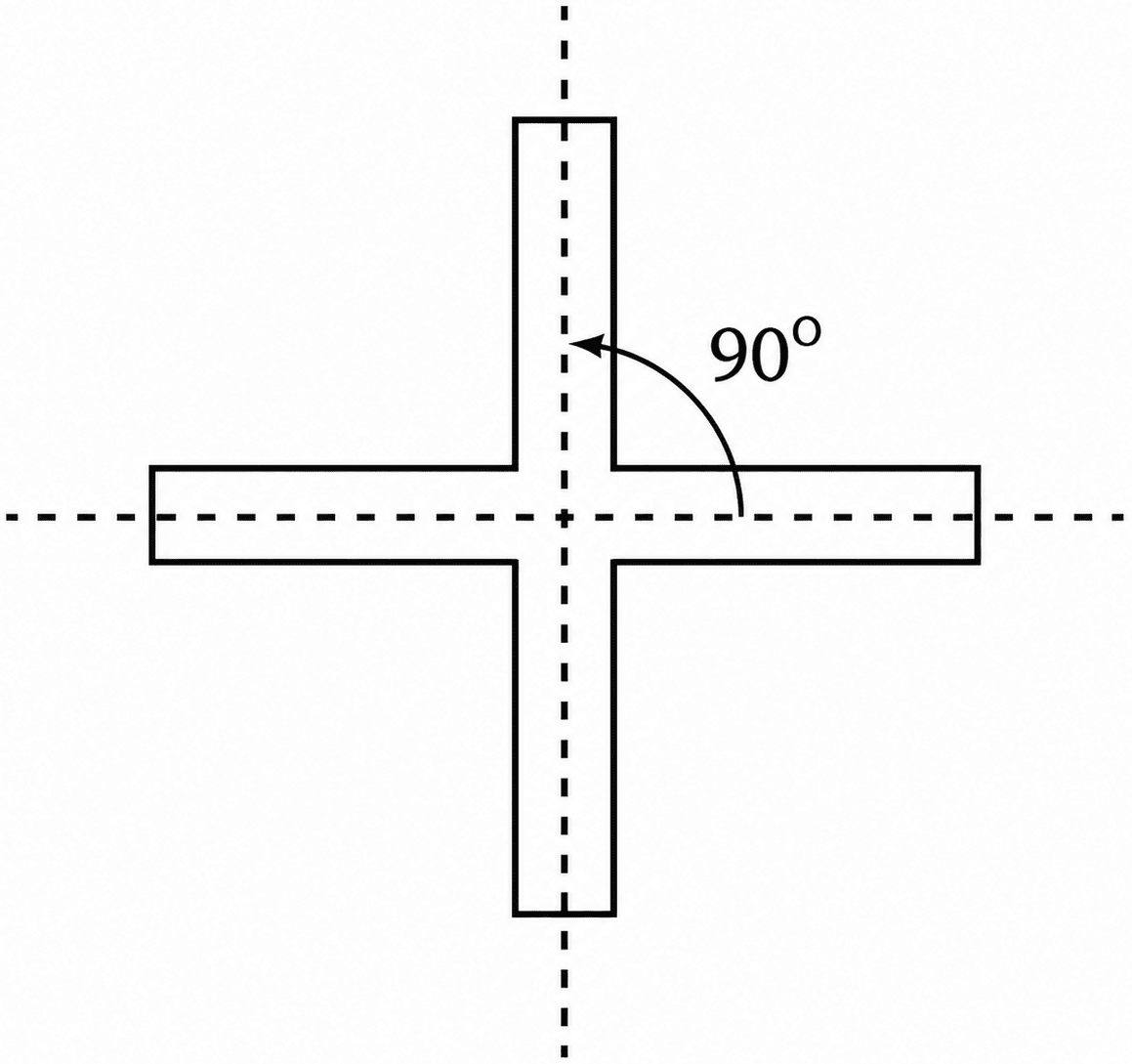
(i) How will you modify the figure above so that it has only two angles of symmetry?
Answer
The 4 identical radial arms are equally spaced at 90°.
A rotation through 90° moves each arm onto the next arm. Therefore, 90°, 180°, 270° and 360° are angles of symmetry.
∴ The figure has 4 angles of symmetry: 90°, 180°, 270° and 360°.
(i) Modifying the figure to get only two angles of symmetry
Make one pair of opposite arms different from the other pair, while keeping each arm identical to the arm directly opposite it.
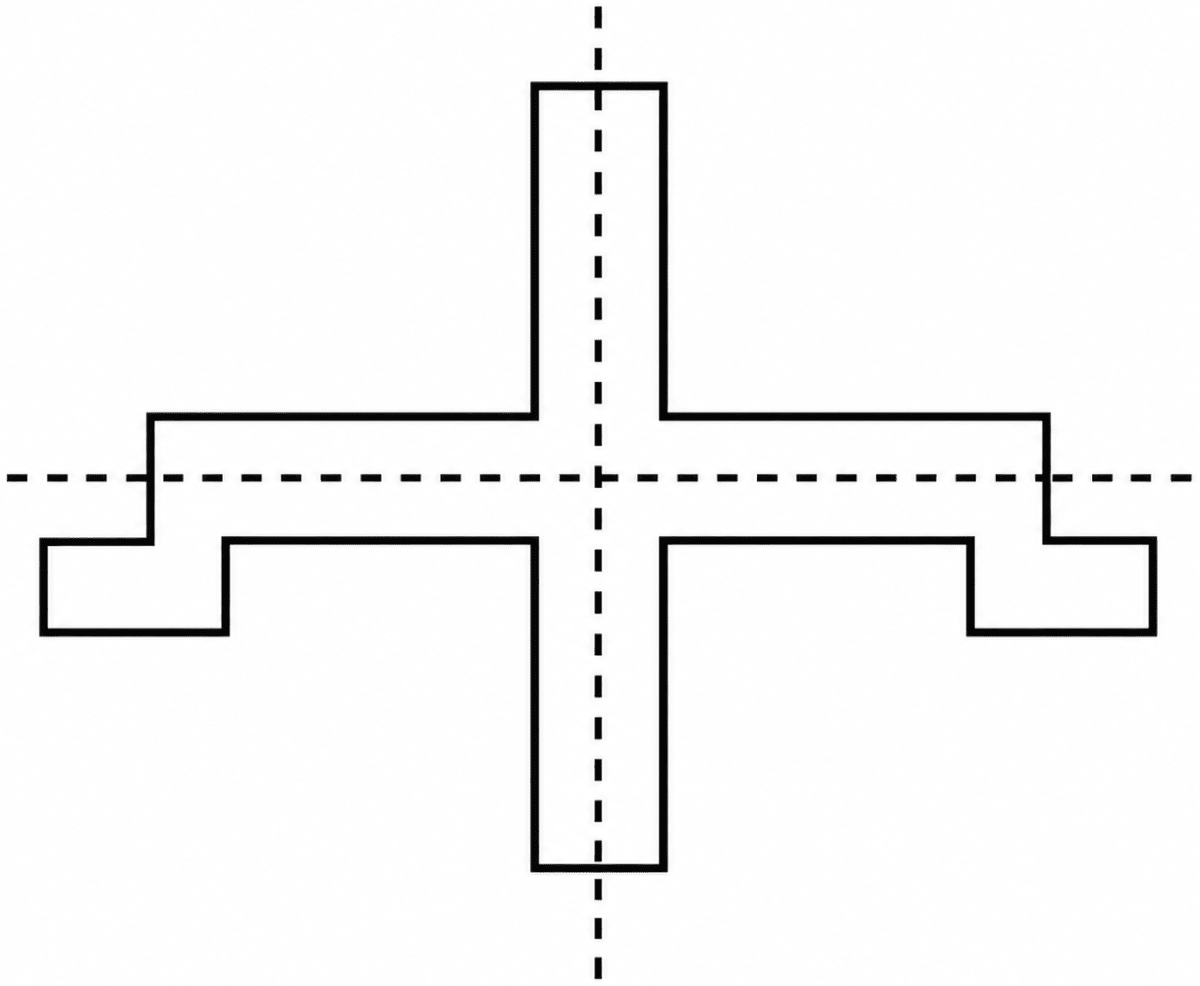
Then a rotation through 90° no longer works, but a rotation through 180° still takes each arm onto an identical opposite arm.
Hence, the modified figure has exactly 2 angles of symmetry: 180° and 360°.
We have seen figures having 4 and 2 angles of symmetry. Can we get a figure having exactly 3 angles of symmetry? Can you use radial arms for this?
Answer
Yes. Draw 3 identical radial arms equally spaced around the centre.
A full turn is 360°, so the angle between two adjacent arms must be
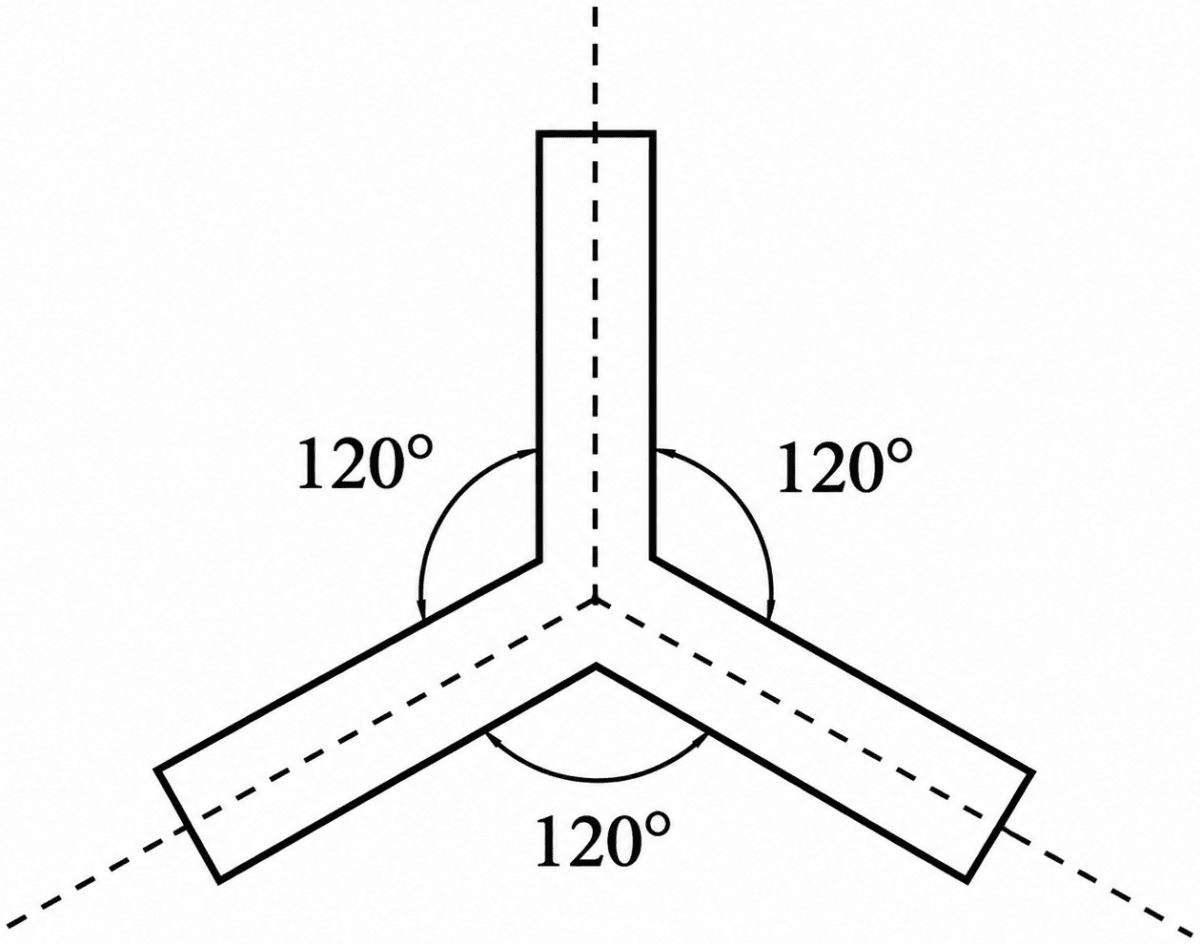
Rotations through 120°, 240° and 360° bring the figure back onto itself.
∴ Three identical radial arms with 120° between adjacent arms give exactly 3 angles of symmetry: 120°, 240° and 360°.
Can you draw a figure with radial arms that has
(a) exactly 5 angles of symmetry,
(b) 6 angles of symmetry? Also find the angles of symmetry in each case.
Hint: Use 5 radial arms for the first case. What should the angle between two adjacent radial arms be?
Answer
(a) Exactly 5 angles of symmetry
Draw 5 identical radial arms equally spaced around the centre.
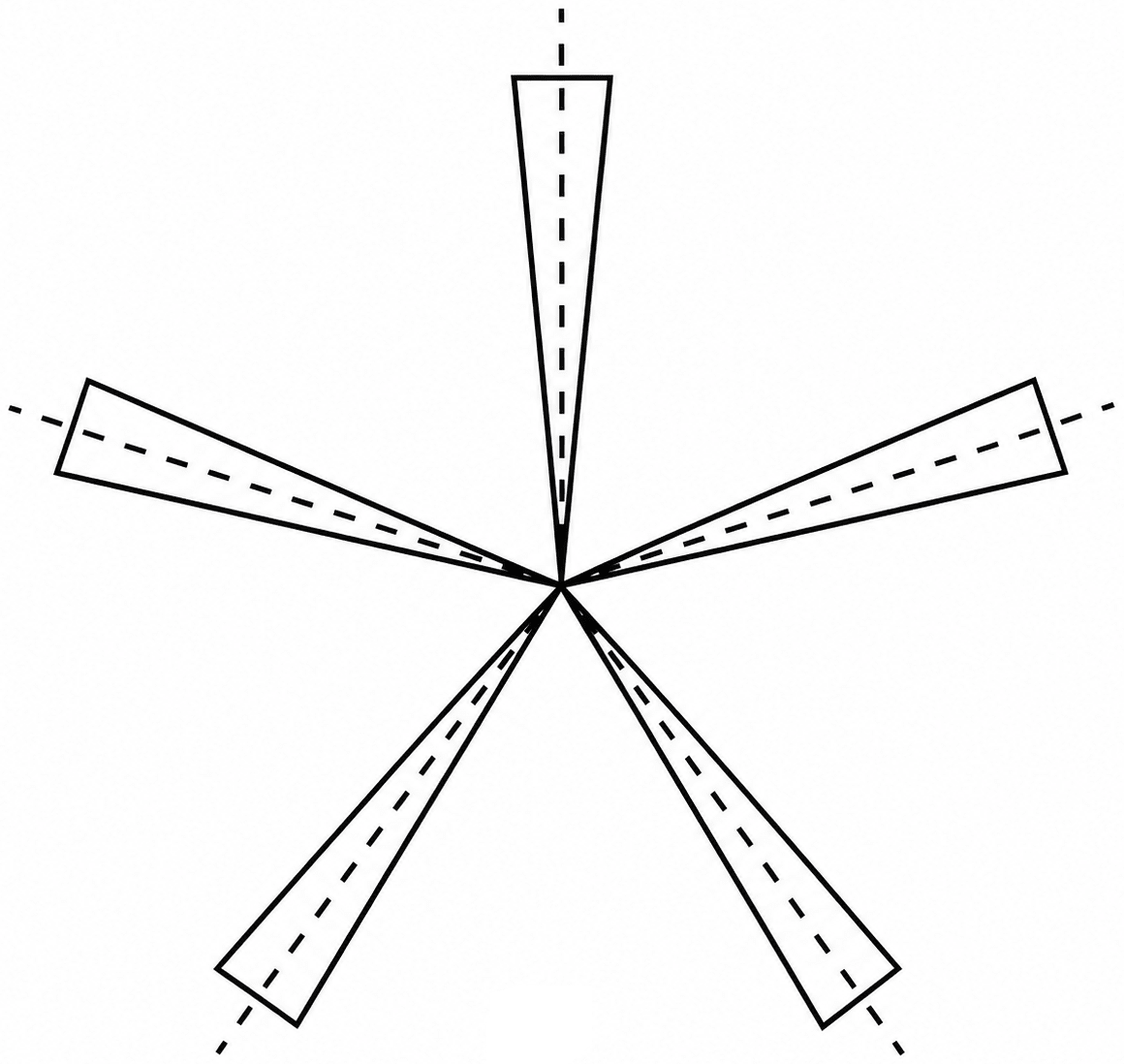
Angles of symmetry: 72°, 144°, 216°, 288° and 360°.
(b) Exactly 6 angles of symmetry
Draw 6 identical radial arms equally spaced around the centre.
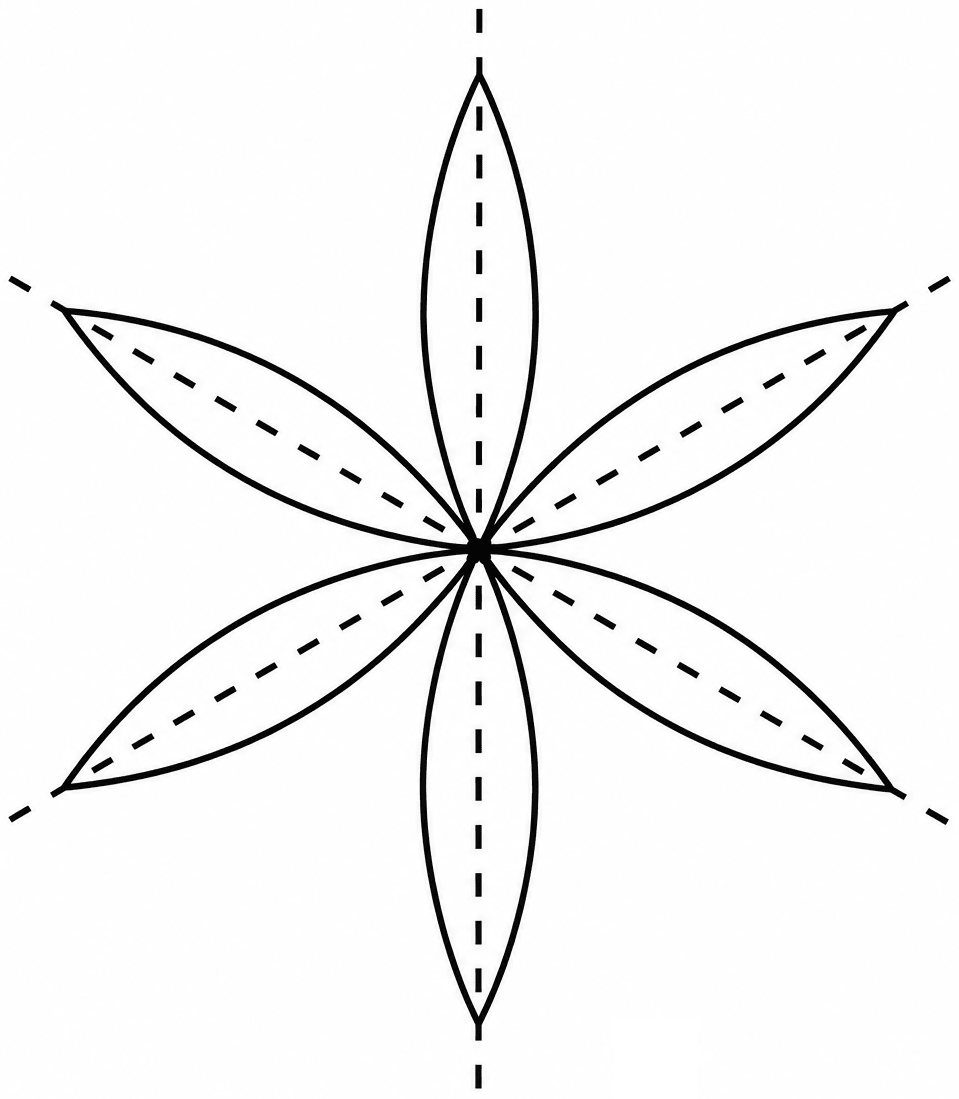
Angles of symmetry: 60°, 120°, 180°, 240°, 300° and 360°.
Hence, 5 equally spaced arms give 5 angles of symmetry and 6 equally spaced arms give 6 angles of symmetry.
Consider a figure with radial arms having exactly 7 angles of symmetry. What will be its smallest angle of symmetry? Is the number of degrees a whole number in this case? If not, express it as a mixed fraction.
Answer
If there are exactly 7 angles of symmetry, the smallest angle is
This is not a whole number of degrees.
∴ The smallest angle of symmetry is .
Find the angles of symmetry for the given figure about the point marked .
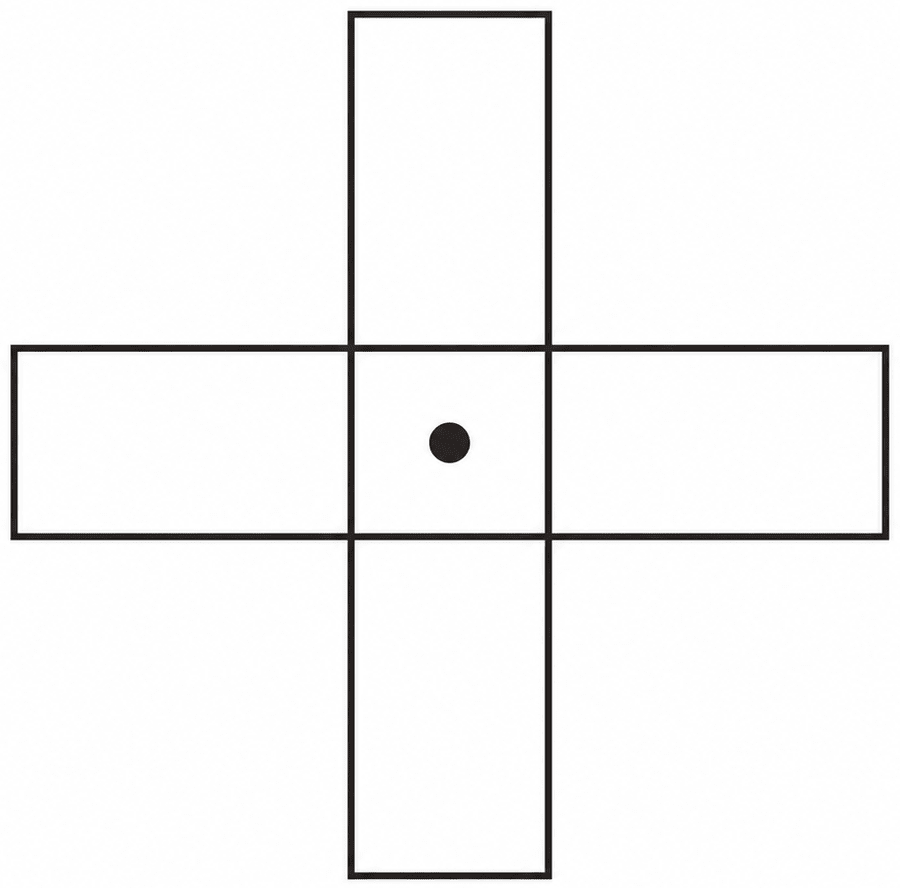
Answer
The figure is a plus-shaped cross with four equal arms. A quarter turn takes every arm onto the next arm.
⇒ Angles of symmetry = 90°, 180°, 270° and 360°.
Find the angles of symmetry for the given figure about the point marked .

Answer
On a 180° rotation, the small squares move to the opposite side of the vertical segment, so the figure does not overlap itself. Only a complete turn restores it.
⇒ Angle of symmetry = 360° only.
Since it has no angle of symmetry strictly between 0° and 360°, it has no rotational symmetry.
Find the angles of symmetry for the given figure about the point marked .
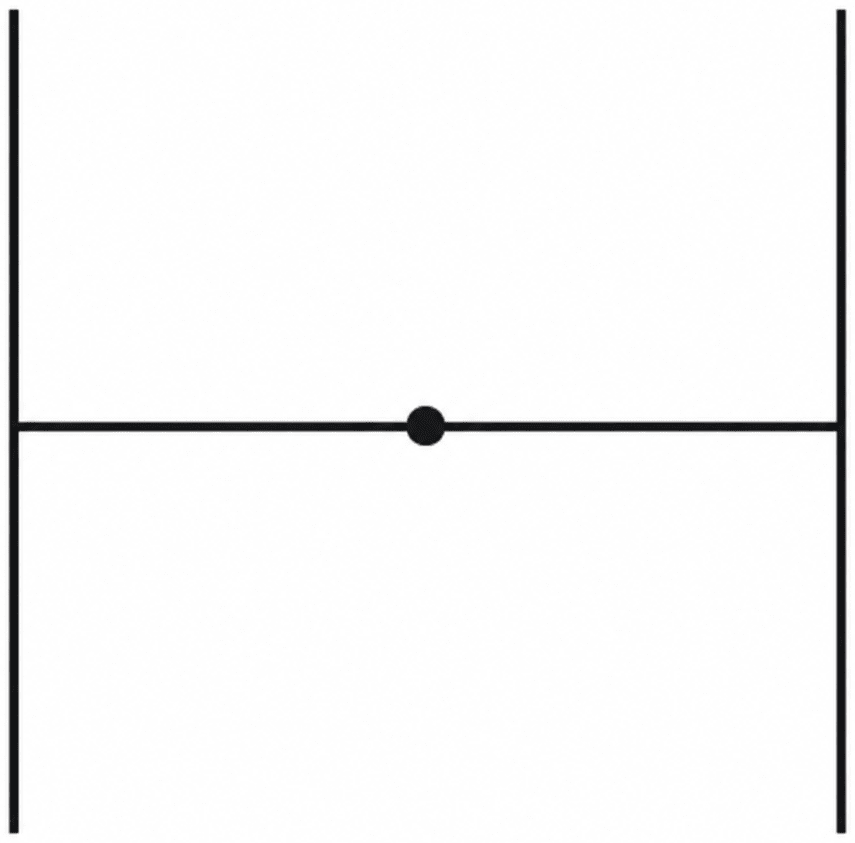
Answer
A half turn interchanges the two equal vertical segments and leaves the whole figure unchanged. A quarter turn does not.
⇒ Angles of symmetry = 180° and 360°.
Which of the following figures have more than one angle of symmetry?
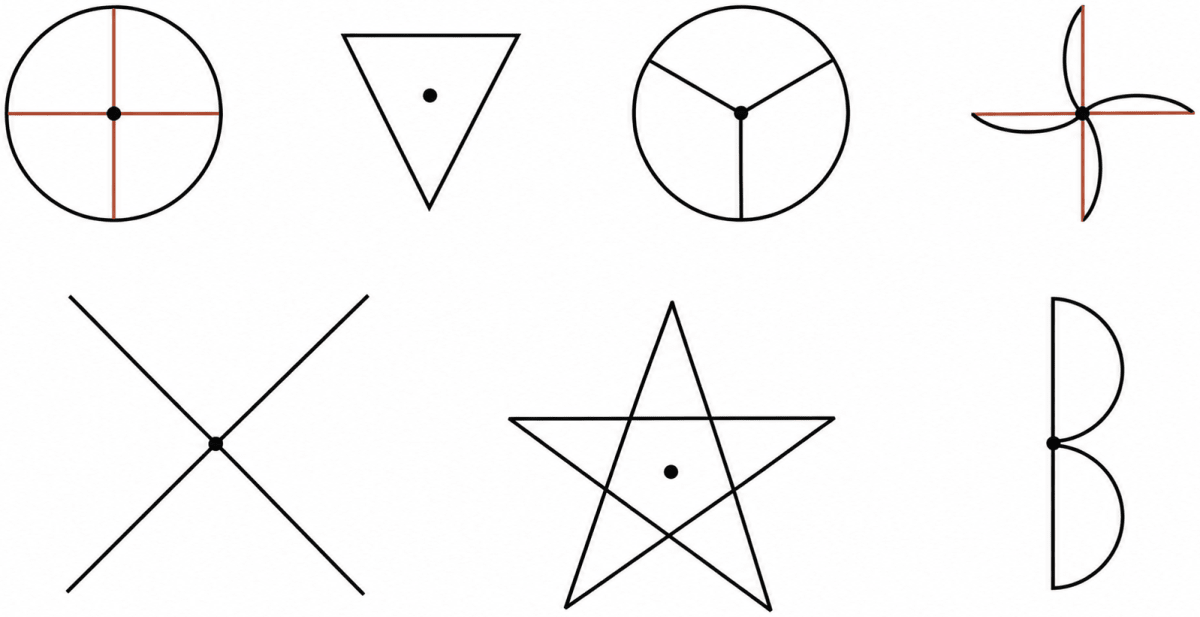
Answer
(a) Circle with two perpendicular diameters
Angles of symmetry = 90°, 180°, 270°, 360°.

(b) Inverted isosceles triangle
Only 360° brings the figure back to itself.
(c) Circle divided into three equal sectors
Angles of symmetry = 120°, 240°, 360°.

(d) Pinwheel with four equal curved blades
Angles of symmetry = 90°, 180°, 270°, 360°.
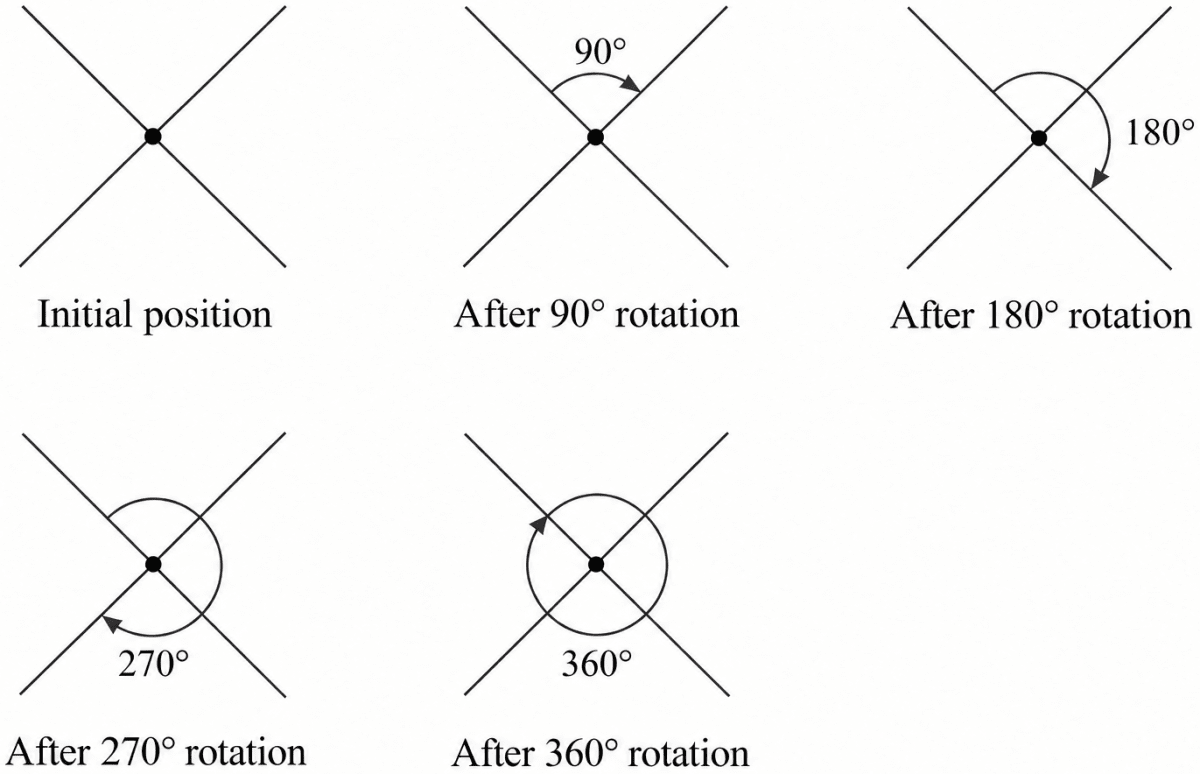
(e) Two equal line segments crossing at right angles
Angles of symmetry = 90°, 180°, 270°, 360°.
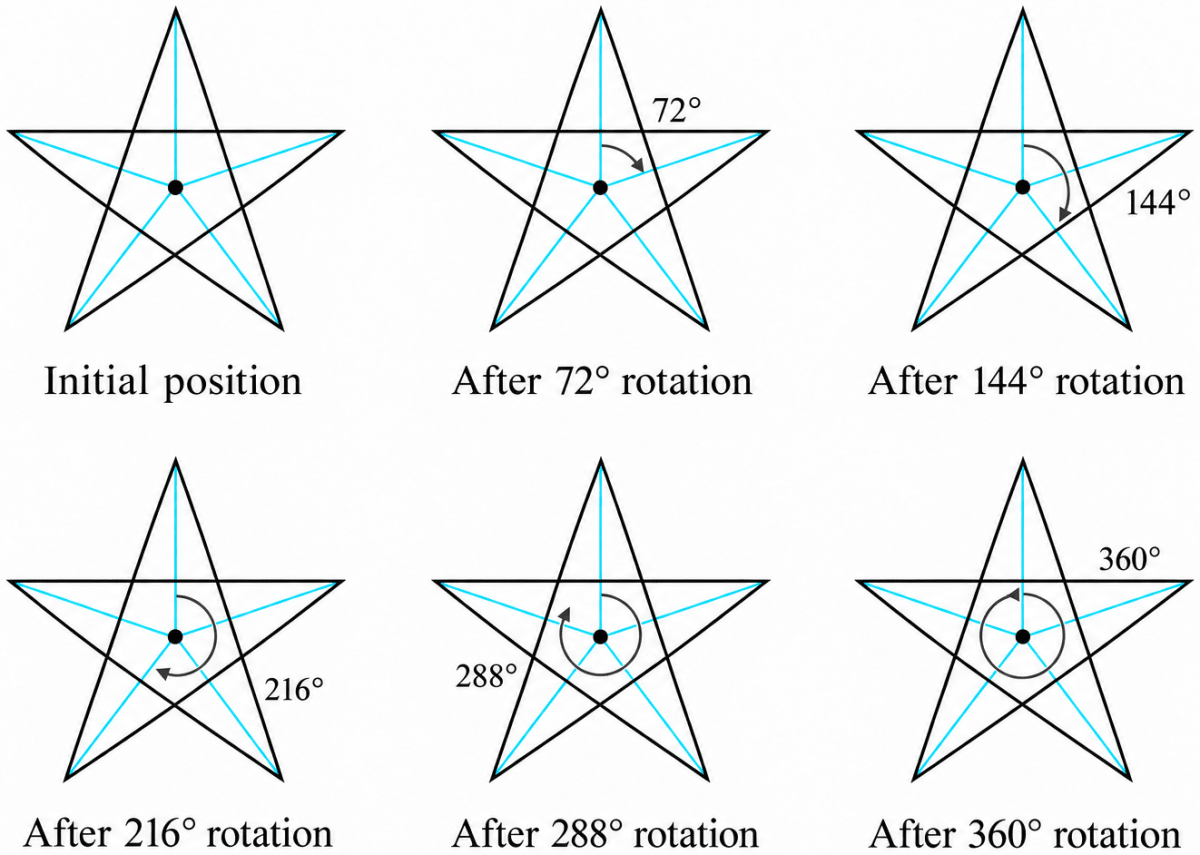
(f) Five-pointed star
Angles of symmetry = 72°, 144°, 216°, 288°, 360°.
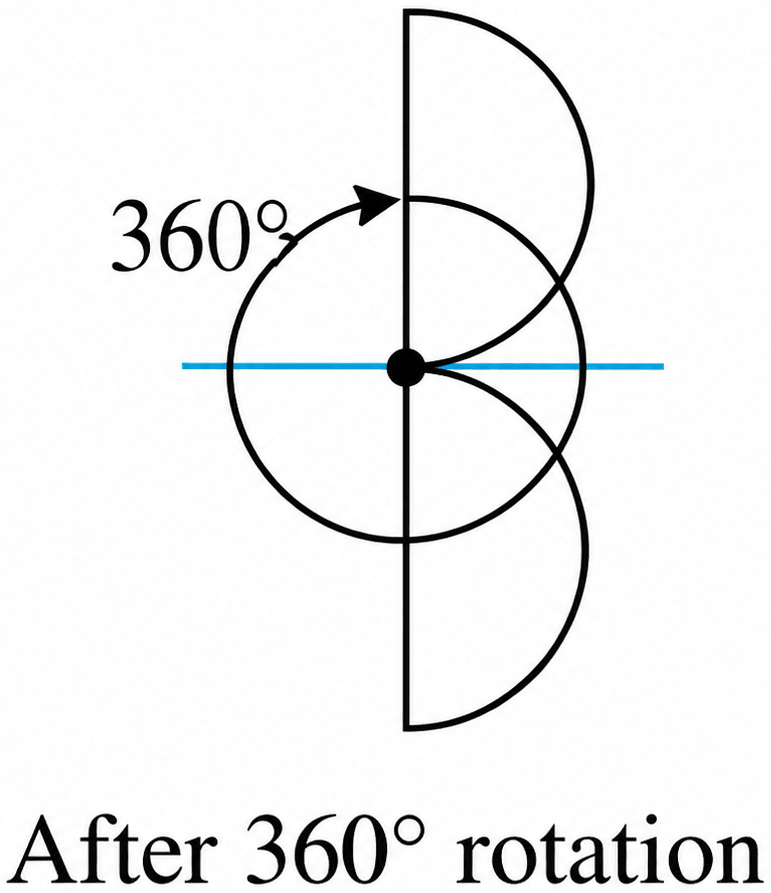
(g) Figure with two semicircles on one side of a vertical segment
Only 360° brings the figure back to itself.
∴ Figures (a), (c), (d), (e) and (f) have more than one angle of symmetry.
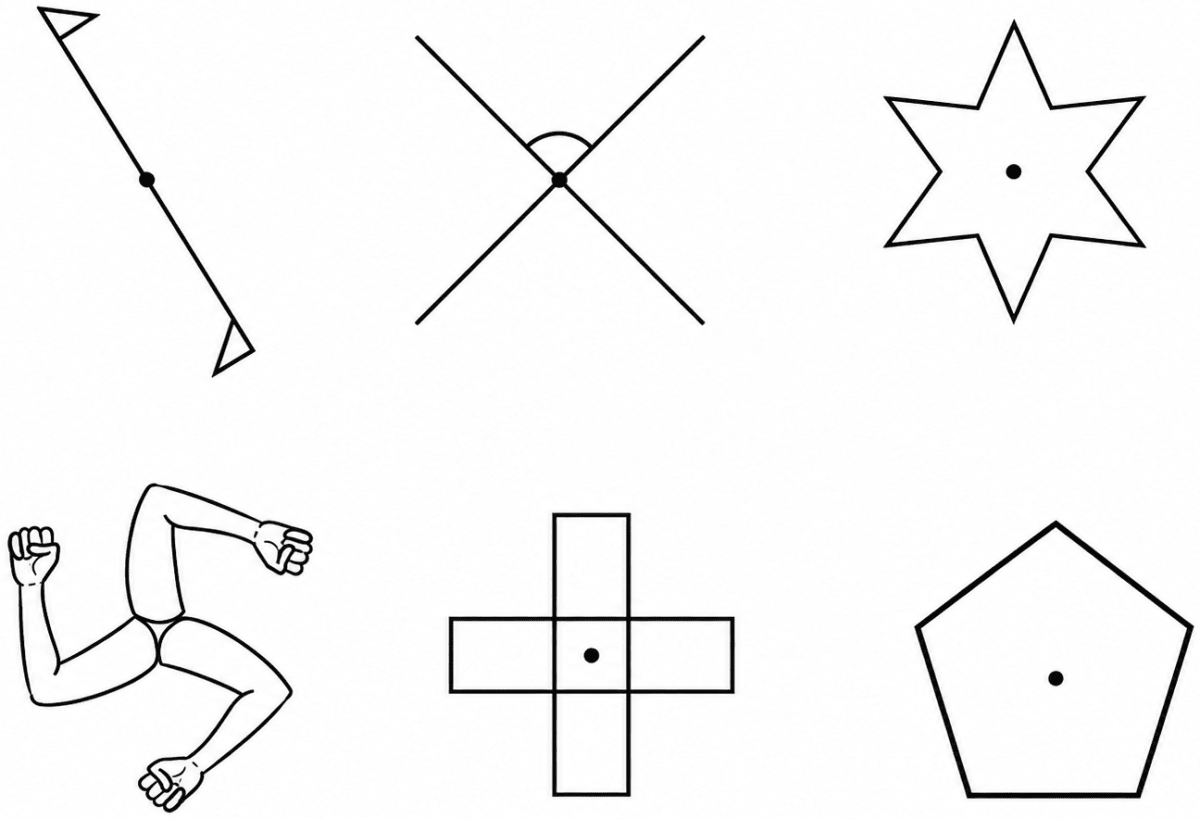
Give the order of rotational symmetry for each figure:
Answer
The order of rotational symmetry is the number of times a figure matches itself during one complete turn, including the position after 360°.
| Figure | Smallest angle of symmetry | Order of rotational symmetry |
|---|---|---|
| (a) Slanting segment with an arrowhead at each end | 180° | 2 |
| (b) Two equal segments crossing at right angles | 90° | 4 |
| (c) Six-pointed star | 60° | 6 |
| (d) Three identical bent arms about a common centre | 120° | 3 |
| (e) Plus-shaped cross | 90° | 4 |
| (f) Regular pentagon | 72° | 5 |
∴ The orders of rotational symmetry are (a) 2, (b) 4, (c) 6, (d) 3, (e) 4 and (f) 5.
In each case in the answer of Figure It Out 3 - Question 3, the angles are the multiples of the smallest angle. You may wonder and ask if this will always happen. What do you think?
Answer
For a figure that has a smallest positive angle of symmetry, every other angle of symmetry is a multiple of that smallest angle.
Suppose the smallest angle of symmetry is s. Rotating by s once gives s, rotating by the same amount twice gives 2s, three times gives 3s, and so on. These repeated rotations eventually complete a full turn of 360°.
Thus the angles of symmetry occur as s, 2s, 3s, …, 360°
Hence, for a figure having a smallest positive angle of symmetry, every angle of symmetry is a multiple of its smallest angle of symmetry.
True or False
• Every figure will have 360 degrees as an angle of symmetry.
• If the smallest angle of symmetry of a figure is a natural number in degrees, then it is a factor of 360.
Answer
(i) Every figure will have 360 degrees as an angle of symmetry.
A rotation through 360° is one complete turn and brings every figure back to its original position.
⇒ The statement is True.
(ii) If the smallest angle of symmetry of a figure is a natural number in degrees, then it is a factor of 360.
If the smallest angle is s°, then 360° must be an exact multiple of s°. Therefore, s divides 360.
⇒ The statement is True.
∴ Both statements are True.
Colour the sectors of the circle below so that the figure has
(i) 3 angles of symmetry
(ii) 4 angles of symmetry
(iii) what are the possible numbers of angles of symmetry you can obtain by colouring the sectors in different ways?
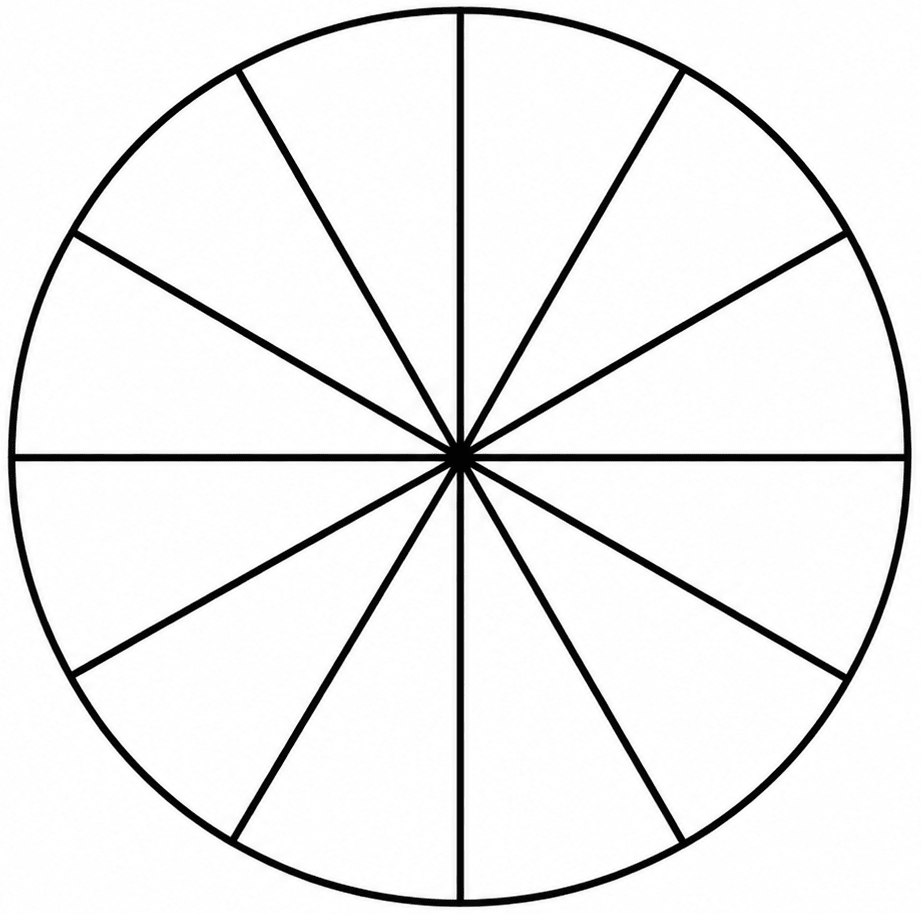
Answer
The circle is divided into 12 equal sectors, so each sector subtends
at the centre.
(i) 3 angles of symmetry
The smallest angle must be
So, for example, colour the 1st, 5th and 9th sectors.
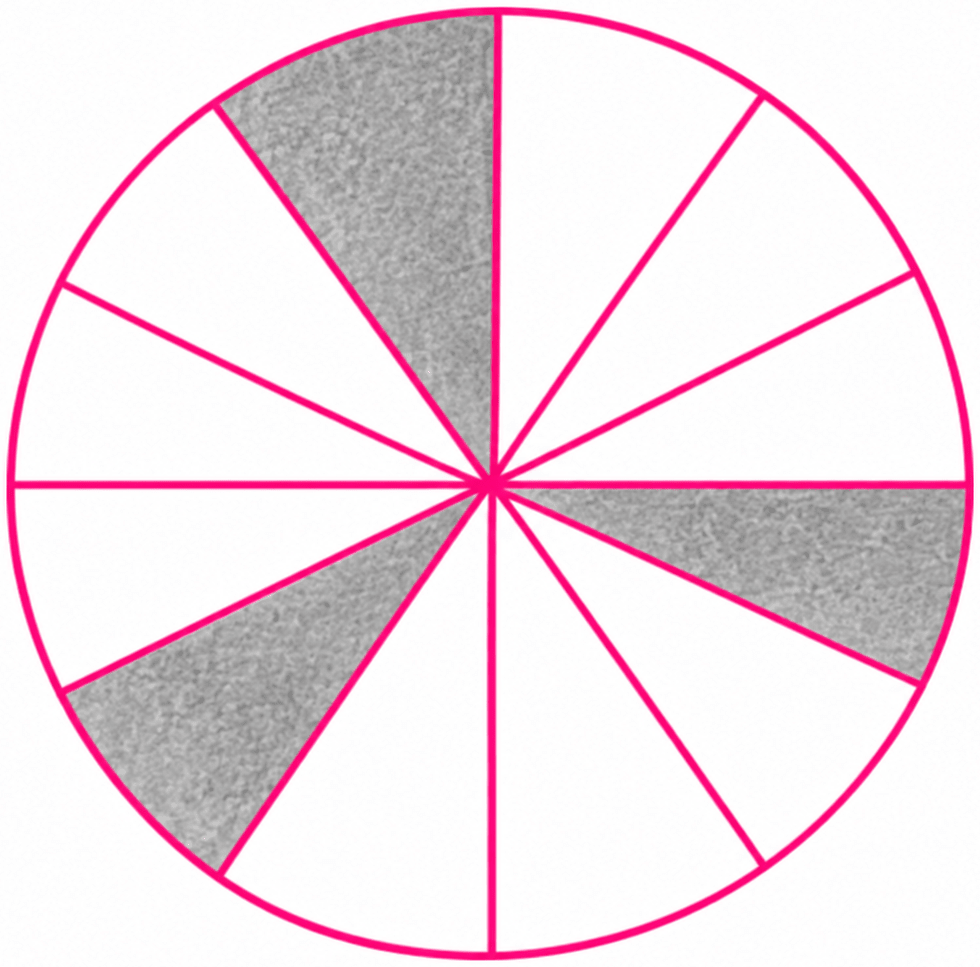
Angles of symmetry = 120°, 240°, 360°.
(ii) 4 angles of symmetry
The smallest angle must be
So, for example, colour the 1st, 4th, 7th and 10th sectors.
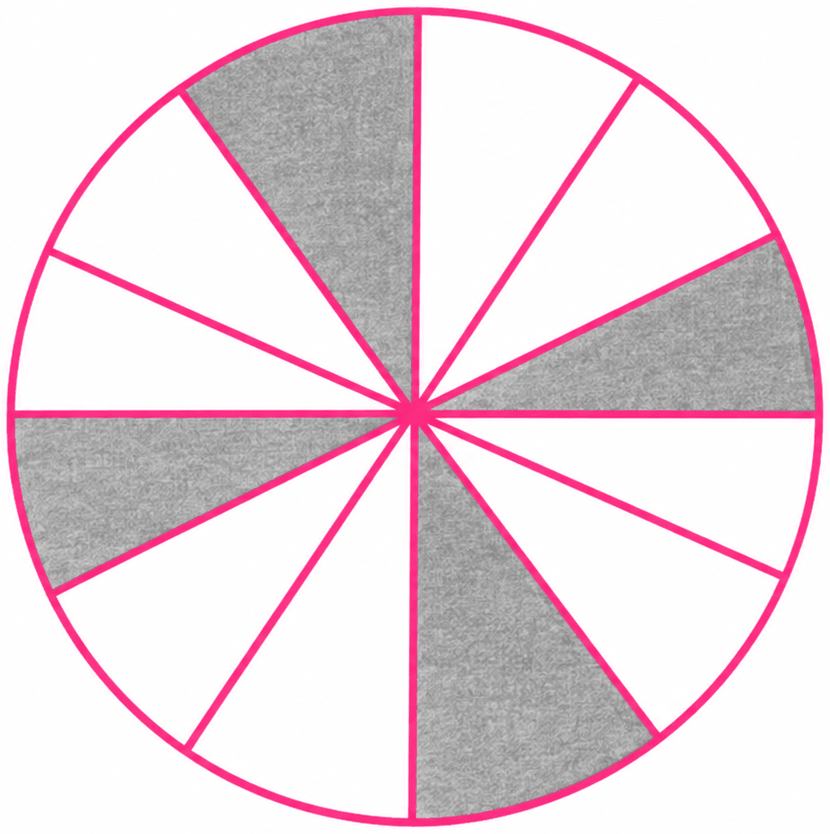
Angles of symmetry = 90°, 180°, 270°, 360°.
(iii) Possible numbers of angles of symmetry
Since there are 12 equal sectors, the possible rotational orders must divide 12. Suitable colourings can therefore produce:
- 1 angle of symmetry — an asymmetric colouring, so only 360° works;
- 2 angles of symmetry — 180° and 360°;
- 3 angles of symmetry — 120°, 240°, 360°;
- 4 angles of symmetry — 90°, 180°, 270°, 360°;
- 6 angles of symmetry — every 60°; and
- 12 angles of symmetry — every 30°.
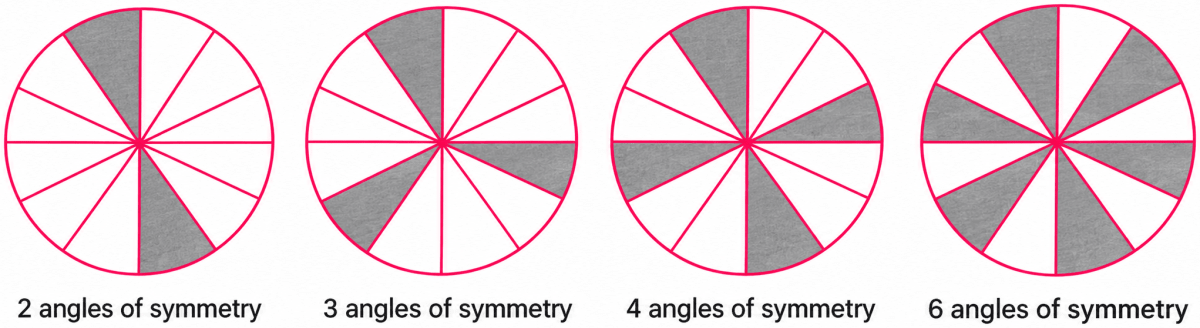
∴ The possible numbers of angles of symmetry are 1, 2, 3, 4, 6 and 12.
Draw two figures other than a circle and a square that have both reflection symmetry and rotational symmetry.
Answer
Figure 1: Four-armed cross
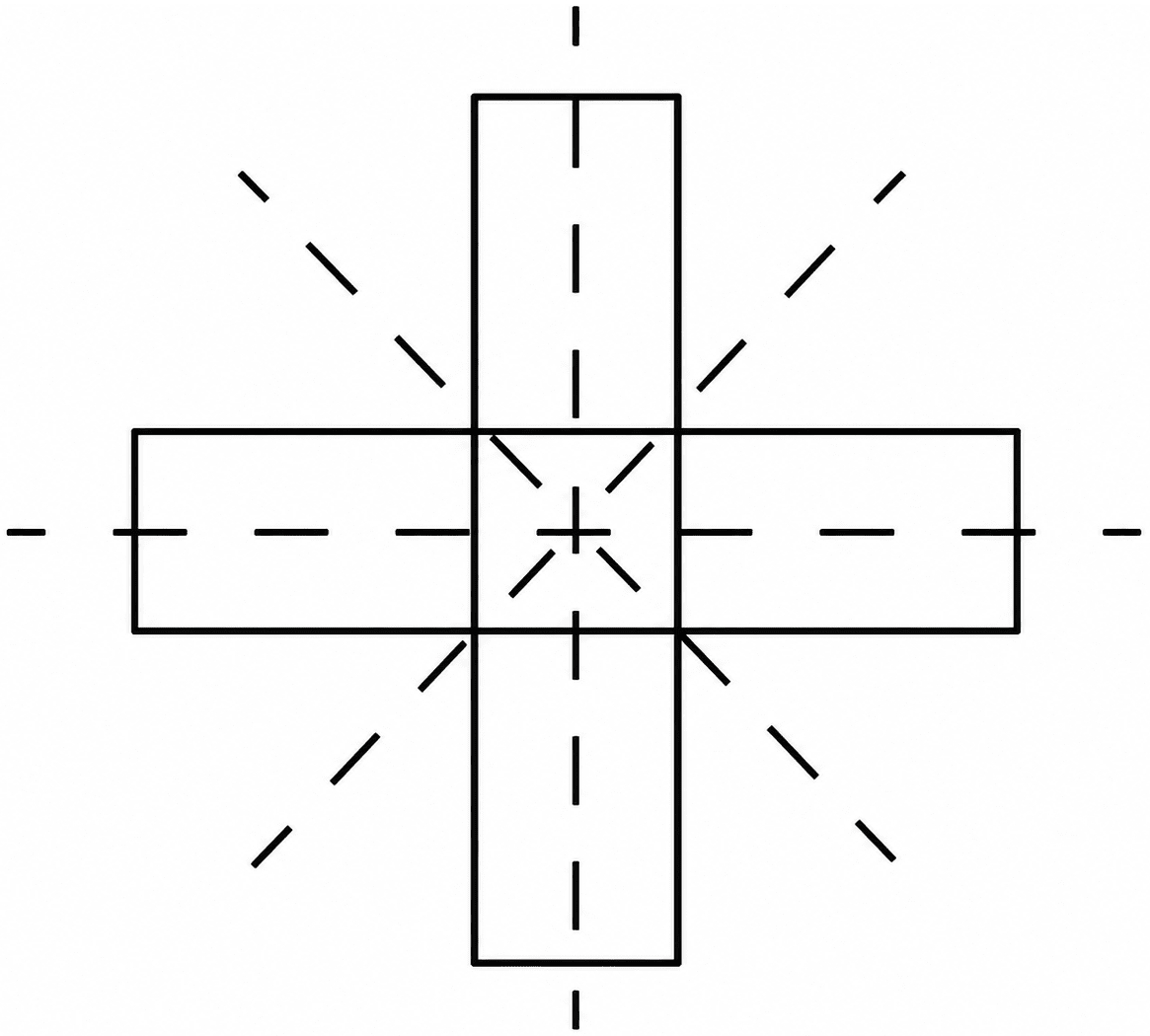
It has 4 lines of symmetry and rotational symmetry of order 4. Its angles of symmetry are 90°, 180°, 270° and 360°.
Figure 2: Four-petal flower
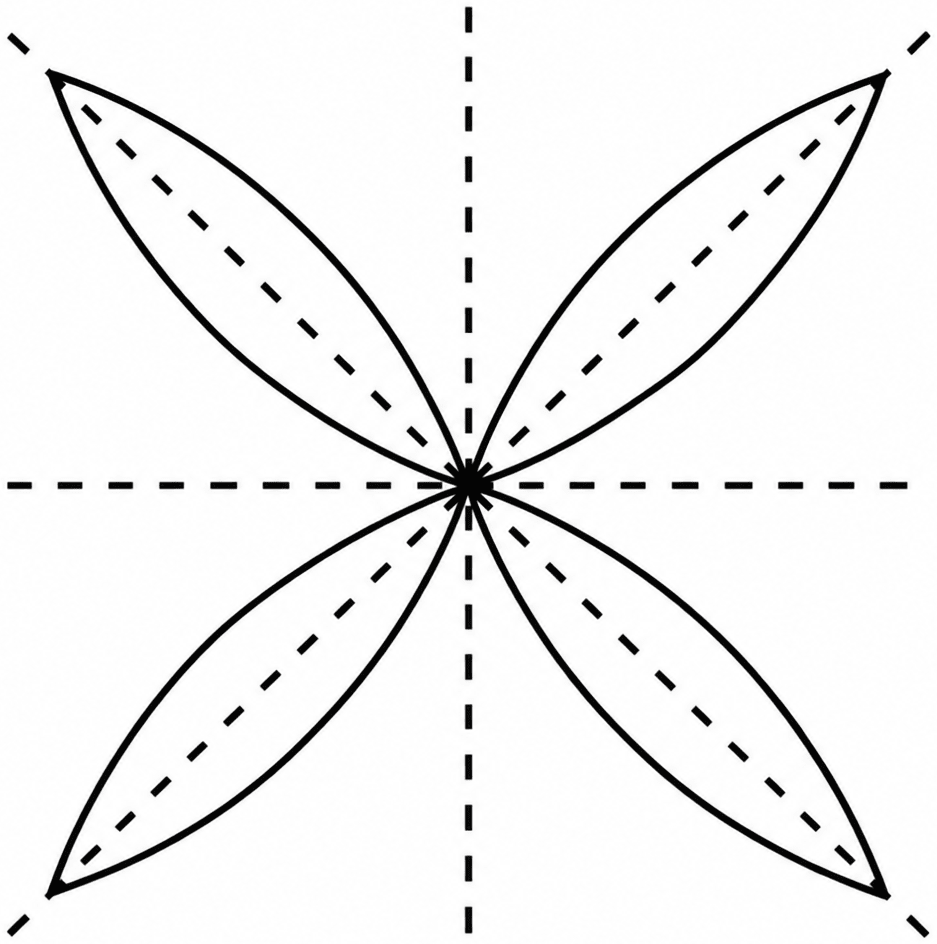
It has 4 lines of symmetry and rotational symmetry of order 4. Its angles of symmetry are 90°, 180°, 270° and 360°.
∴ The four-armed cross and the four-petal flower have both reflection symmetry and rotational symmetry.
Draw, wherever possible, a rough sketch of:
(a) A triangle with at least two lines of symmetry and at least two angles of symmetry.
(b) A triangle with only one line of symmetry but not having rotational symmetry.
(c) A quadrilateral with rotational symmetry but no reflection symmetry.
(d) A quadrilateral with reflection symmetry but not having rotational symmetry.
Answer
(a) A triangle with at least two lines of symmetry and at least two angles of symmetry
An equilateral triangle has 3 lines of symmetry. It has angles of symmetry 120°, 240° and 360°.
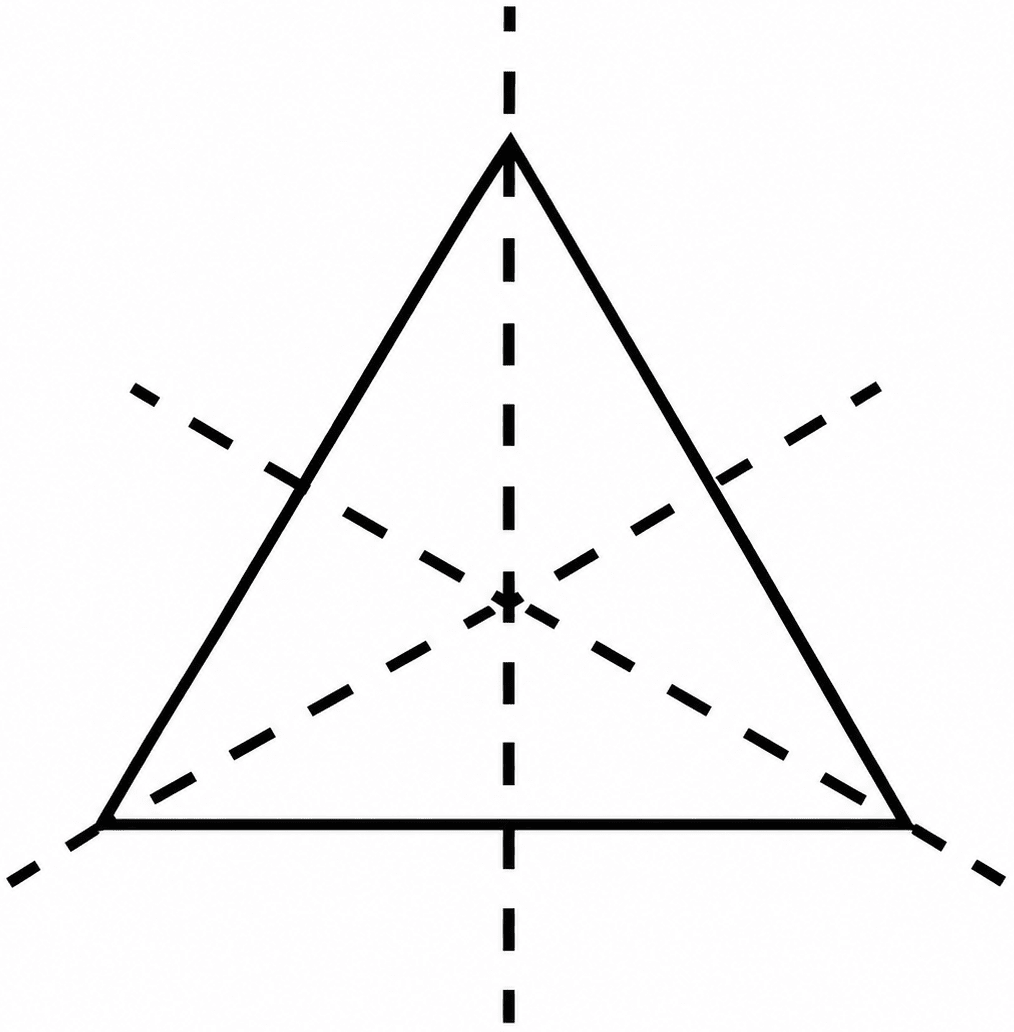
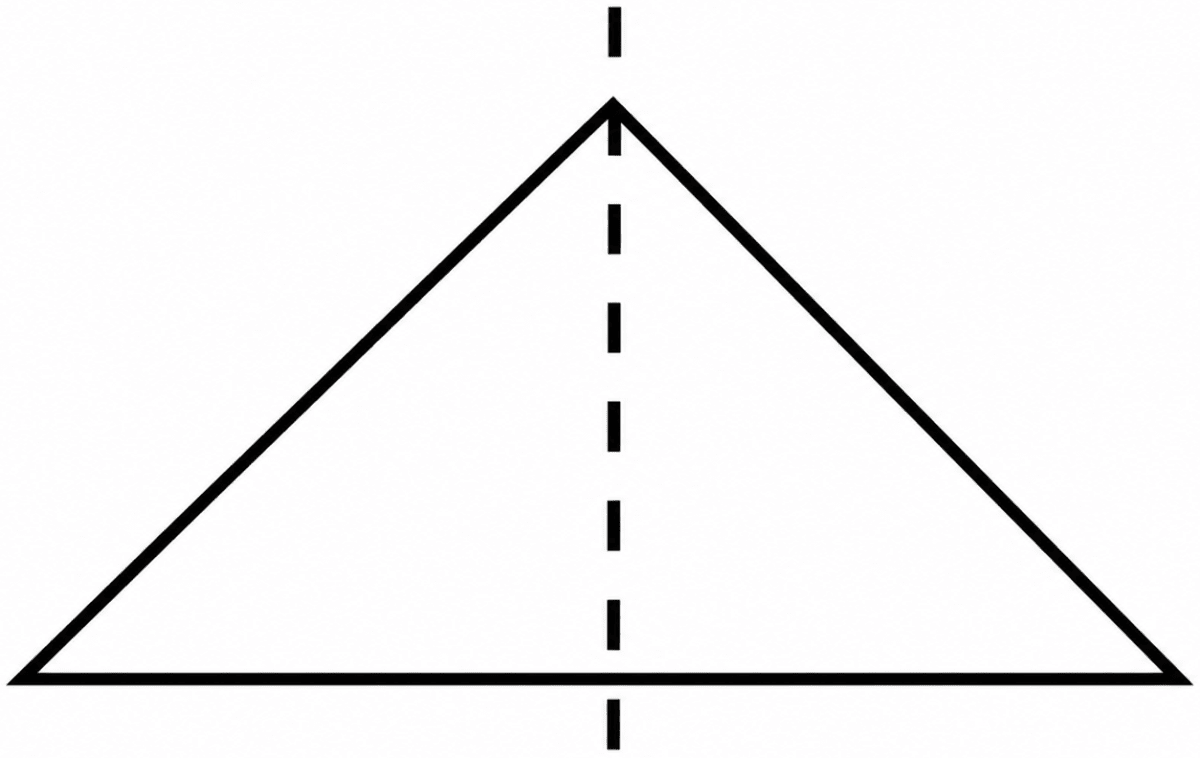
(b) A triangle with only one line of symmetry but not having rotational symmetry
An isosceles triangle with exactly two equal sides has 1 line of symmetry. Its only angle of symmetry is 360°, so it has no rotational symmetry.
(c) A quadrilateral with rotational symmetry but no reflection symmetry
Take a parallelogram that is neither a rectangle nor a rhombus. It has no line of symmetry, but a rotation of 180° brings it onto itself.
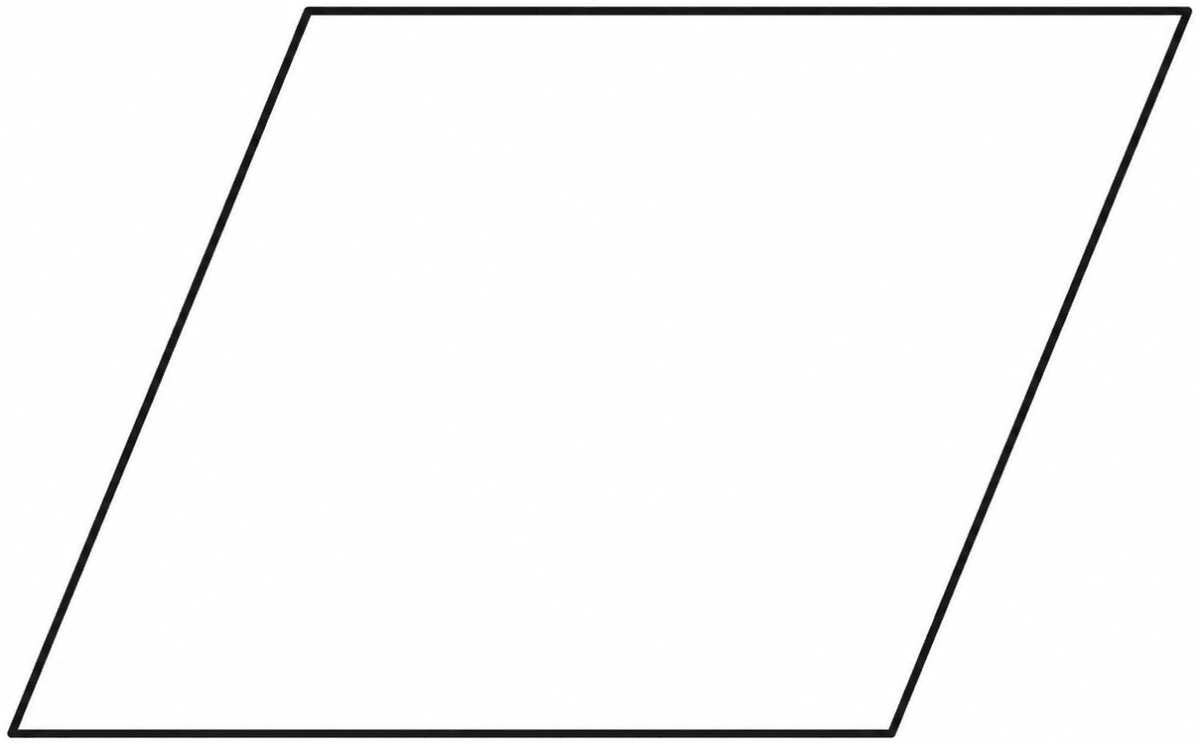
Angles of symmetry = 180°, 360°.
(d) A quadrilateral with reflection symmetry but not having rotational symmetry
Take an isosceles trapezium that is not a rectangle. It has one vertical line of symmetry, but a rotation through 180° does not bring it onto itself because the two parallel sides have different lengths.
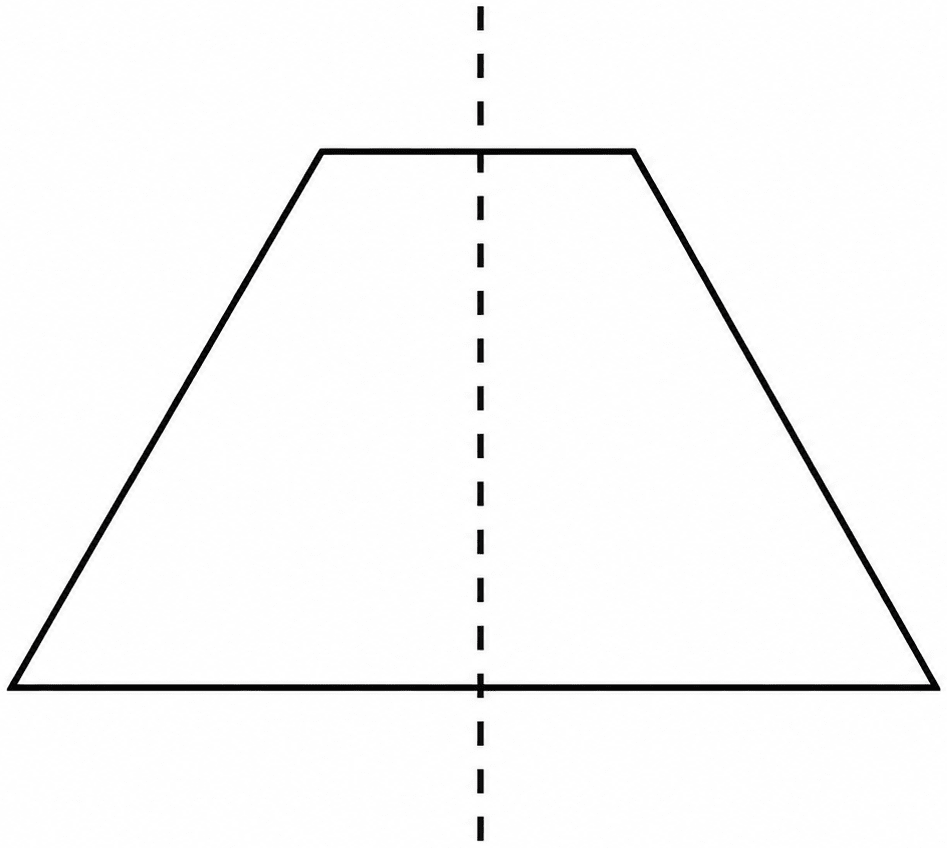
Its only angle of symmetry is 360°, so it has no rotational symmetry.
Hence, suitable examples are (a) an equilateral triangle, (b) an isosceles triangle, (c) a parallelogram and (d) an isosceles trapezium.
In a figure, 60° is the smallest angle of symmetry. What are the other angles of symmetry of this figure?
Answer
Every angle of symmetry of a figure is a multiple of its smallest angle of symmetry.
Here the smallest angle of symmetry = 60°.
So the angles of symmetry are the multiples of 60° up to one complete turn.
2 × 60° = 120°
3 × 60° = 180°
4 × 60° = 240°
5 × 60° = 300°
6 × 60° = 360°
⇒ The figure has angles of symmetry in all.
∴ The other angles of symmetry are 120°, 180°, 240°, 300° and 360°.
In a figure, 60° is an angle of symmetry. The figure has two angles of symmetry less than 60°. What is its smallest angle of symmetry?
Answer
Let the smallest angle of symmetry of the figure be s.
Every angle of symmetry is a multiple of s, so the angles of symmetry in increasing order are s, 2s, 3s, 4s, …
The figure has exactly two angles of symmetry less than 60°.
⇒ These two angles are s and 2s.
So 60° is the very next angle of symmetry in the list.
⇒ 3s = 60°
⇒
Check: With s = 20°, the angles of symmetry are 20°, 40°, 60°, 80°, … Out of these, only 20° and 40° are less than 60°, which is exactly two angles, and 60° is indeed an angle of symmetry.
∴ The smallest angle of symmetry of the figure is 20°.
Can we have a figure with rotational symmetry whose smallest angle of symmetry is:
(a) 45°?
(b) 17°?
Answer
The smallest angle of rotational symmetry must divide 360° exactly.
(a) 45°
So such a figure is possible. For example, 8 identical equally spaced radial arms have smallest angle 45°.
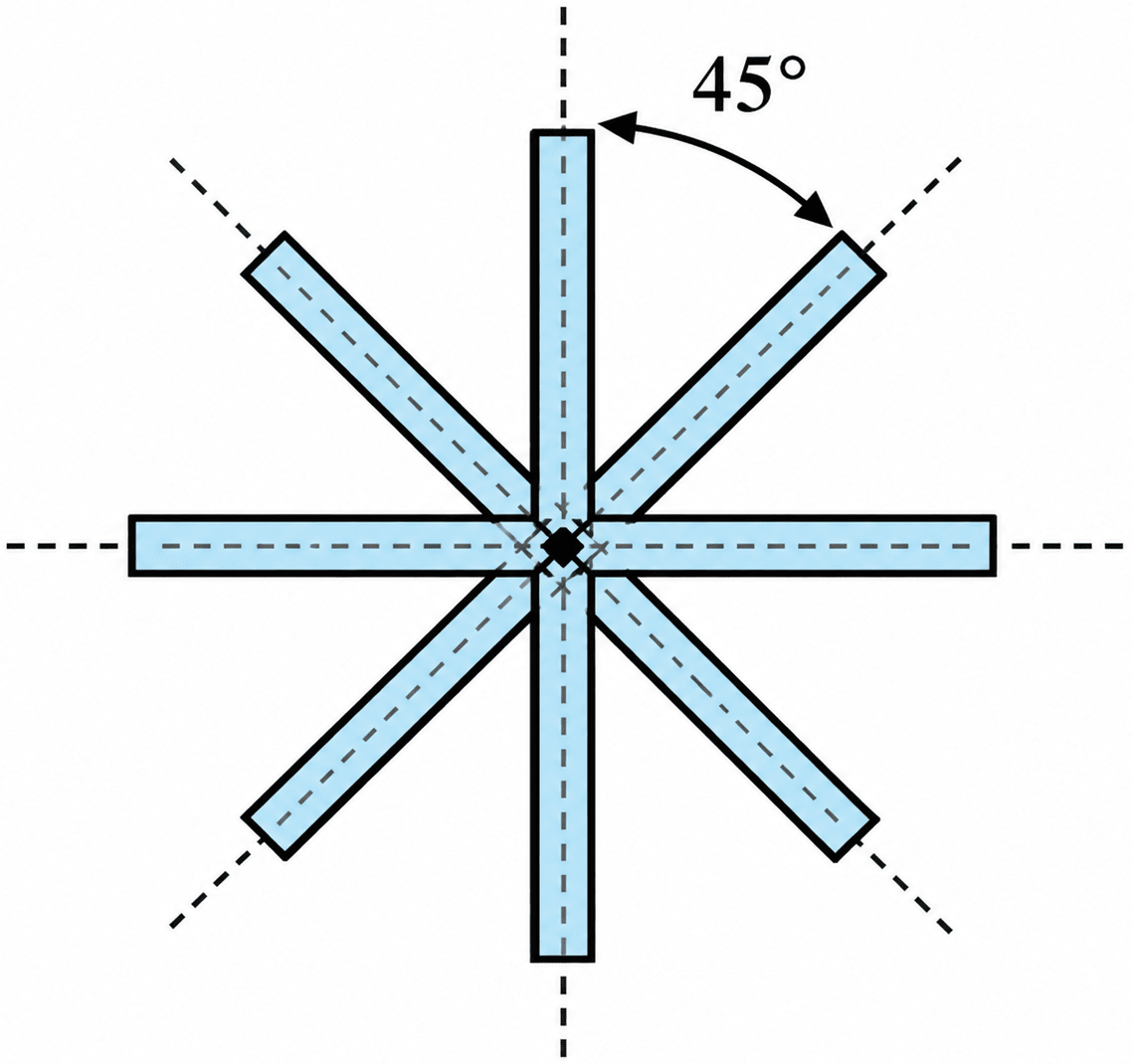
∴ Yes, a figure can have 45° as its smallest angle of symmetry.
(b) 17°
360° is not an exact multiple of 17°:
17° × 21 = 357°, 17° × 22 = 374°
So 17° cannot be the smallest angle of symmetry.
∴ No, a figure cannot have 17° as its smallest angle of symmetry.
This is a picture of the new Parliament Building in Delhi.
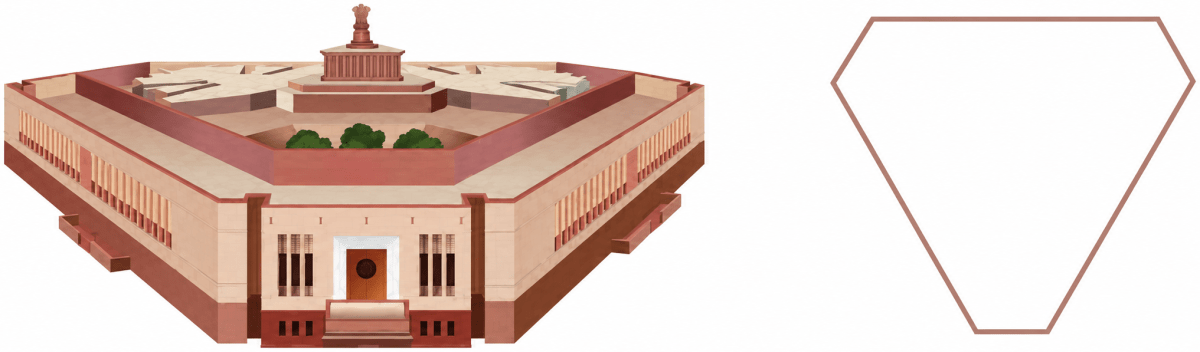
(a) Does the outer boundary of the picture have reflection symmetry? If so, draw the lines of symmetries. How many are they?
(b) Does it have rotational symmetry around its centre? If so, find the angles of rotational symmetry.
Answer
The outer boundary has three identical parts arranged around its centre.
(a) Lines of symmetry
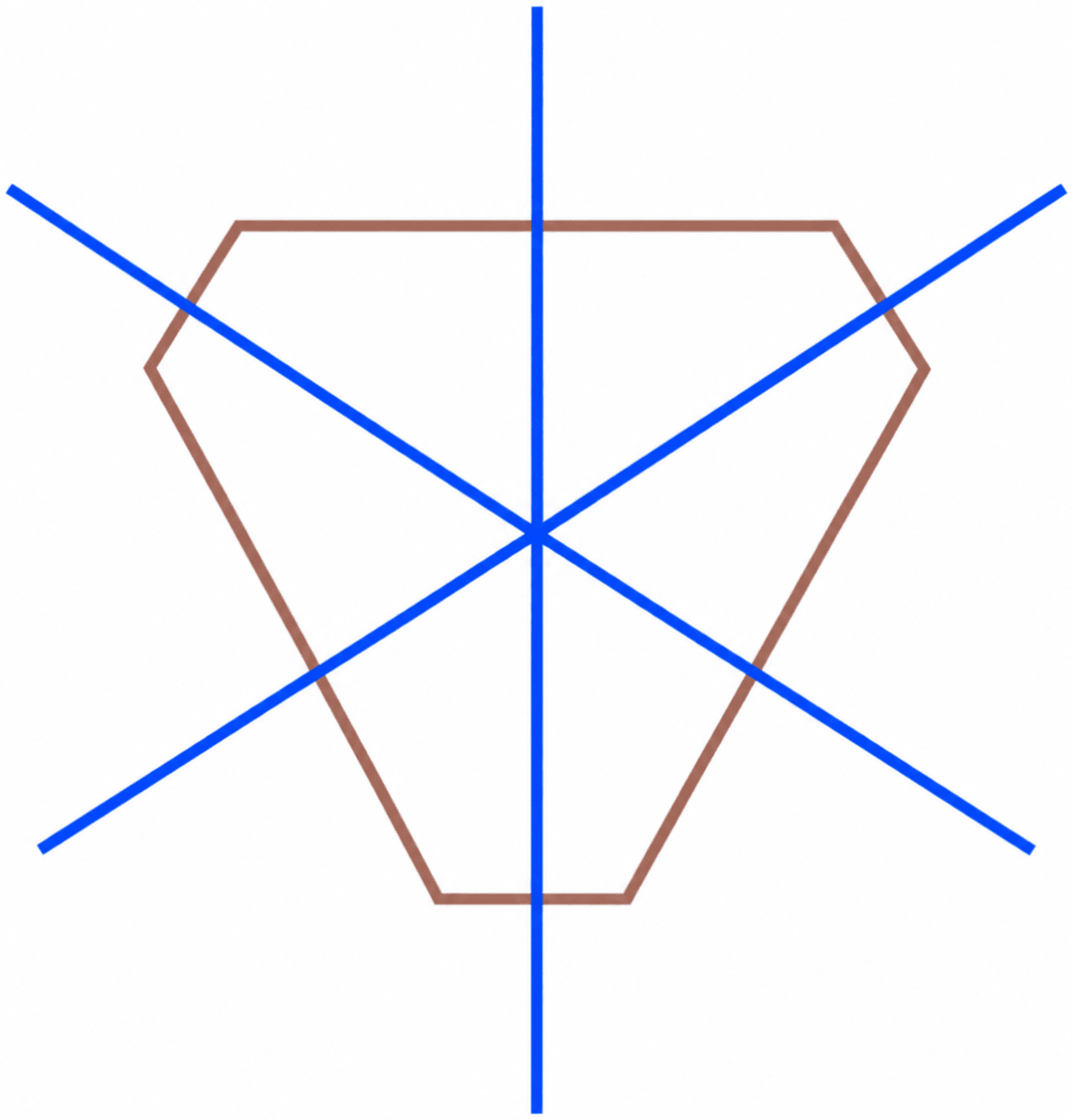
There are 3 lines of reflection symmetry.
∴ Yes, the outer boundary has 3 lines of symmetry.
(b) Angles of rotational symmetry
The smallest angle is
Therefore, the angles of rotational symmetry are 120°, 240° and 360°.
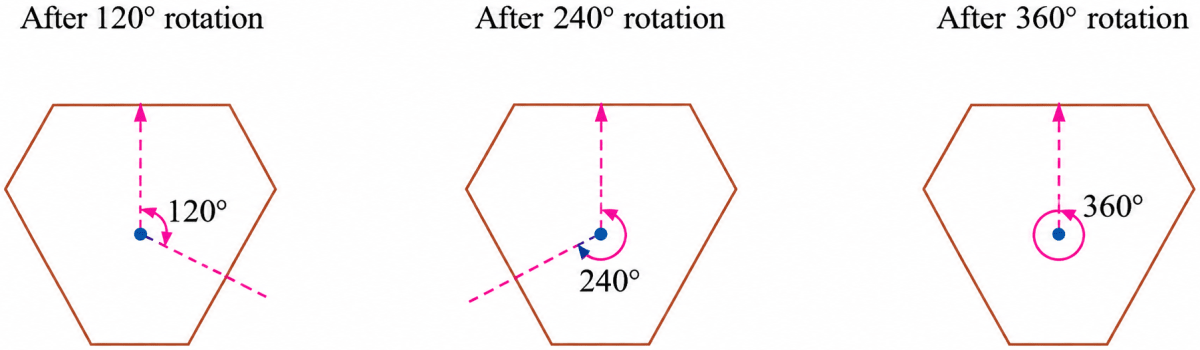
∴ Yes, its angles of rotational symmetry are 120°, 240° and 360°.
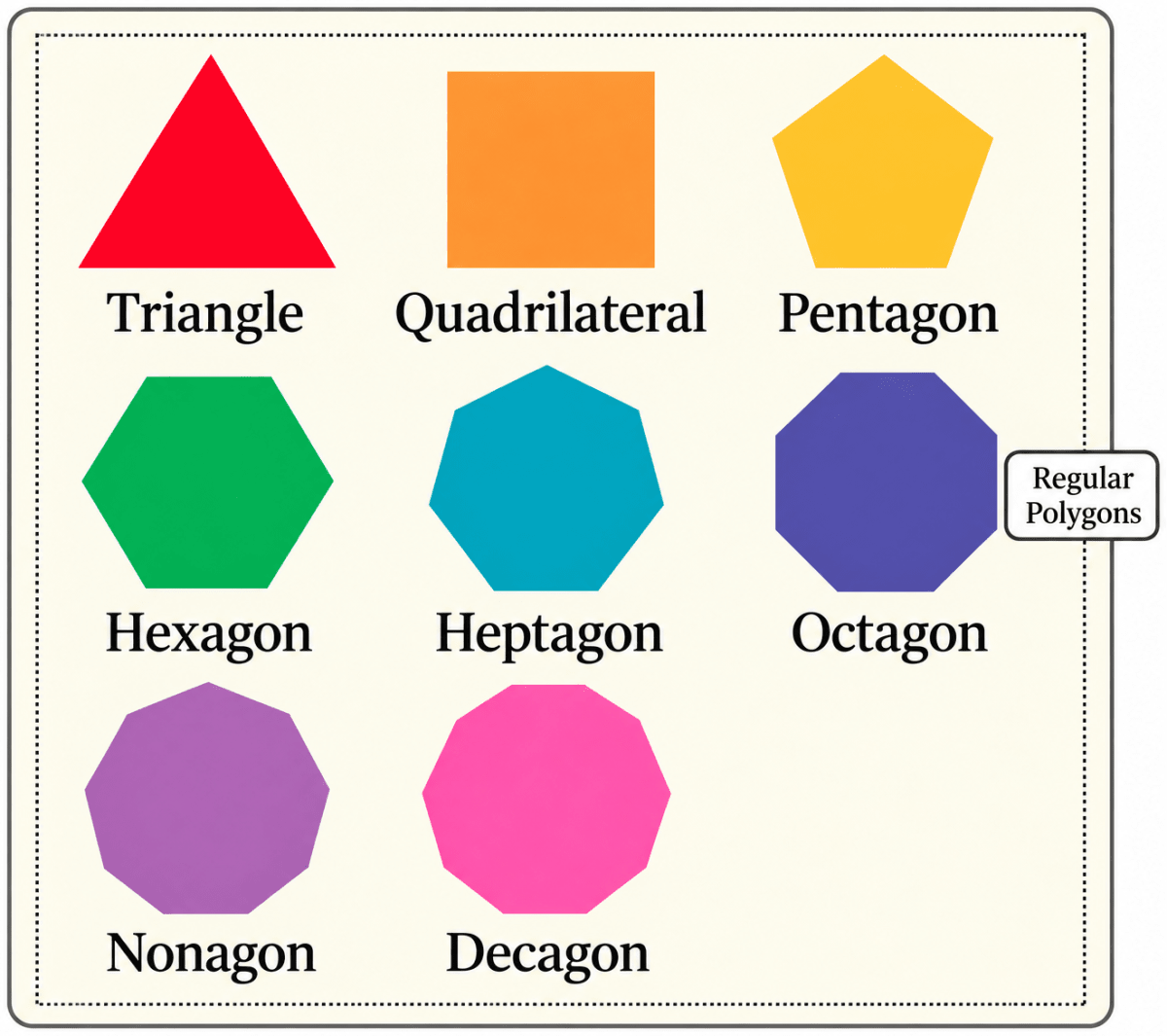
How many lines of symmetry do the shapes in the first shape sequence in Chapter 1, Table 3, the Regular Polygons, have? What number sequence do you get?
Answer
A regular polygon with n sides has exactly n lines of symmetry.
| Regular polygon | Number of lines of symmetry |
|---|---|
| Equilateral triangle | 3 |
| Regular quadrilateral (square) | 4 |
| Regular pentagon | 5 |
| Regular hexagon | 6 |
| Regular heptagon | 7 |
| Regular octagon | 8 |
| Regular nonagon | 9 |
| Regular decagon | 10 |
Therefore, the number sequence is
3, 4, 5, 6, 7, 8, 9, 10, …
∴ A regular polygon with n sides has n lines of symmetry, giving the sequence 3, 4, 5, 6, 7, 8, 9, 10, … .
How many angles of symmetry do the shapes in the first shape sequence in Chapter 1, Table 3, the Regular Polygons, have? What number sequence do you get?
Answer
A regular polygon with n sides has smallest angle of symmetry
and therefore has exactly n angles of symmetry in one complete turn.
| Regular polygon | Smallest angle of symmetry | Number of angles of symmetry |
|---|---|---|
| Equilateral triangle | 120° | 3 |
| Regular quadrilateral (square) | 90° | 4 |
| Regular pentagon | 72° | 5 |
| Regular hexagon | 60° | 6 |
| Regular heptagon | 7 | |
| Regular octagon | 45° | 8 |
| Regular nonagon | 40° | 9 |
| Regular decagon | 36° | 10 |
Thus, the number sequence is again
3, 4, 5, 6, 7, 8, 9, 10, …
∴ A regular polygon with n sides has n angles of symmetry, giving the sequence 3, 4, 5, 6, 7, 8, 9, 10, … .
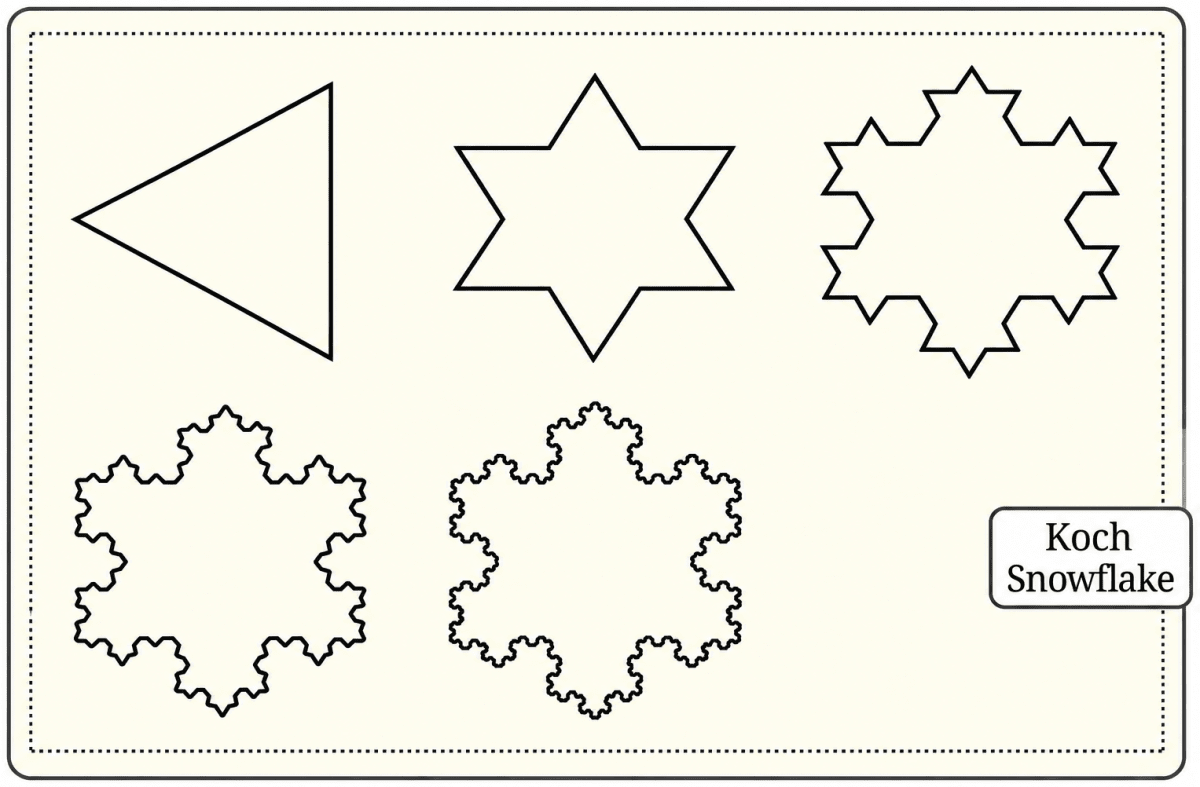
How many lines of symmetry do the shapes in the last shape sequence in Chapter 1, Table 3, the Koch Snowflake sequence, have? How many angles of symmetry?
Answer
The first shape is an equilateral triangle. It has 3 lines of symmetry and 3 angles of symmetry: 120°, 240° and 360°.
From the second shape onward, the construction produces a six-fold symmetric pattern. Each of these shapes has 6 lines of symmetry and 6 angles of symmetry.
| Shape in the sequence | Number of lines of symmetry | Number of angles of symmetry |
|---|---|---|
| 1st (equilateral triangle) | 3 | 3 |
| 2nd (six-pointed star) | 6 | 6 |
| 3rd | 6 | 6 |
| 4th | 6 | 6 |
| 5th | 6 | 6 |
∴ The numbers of lines of symmetry are 3, 6, 6, 6, 6, … and the numbers of angles of symmetry are also 3, 6, 6, 6, 6, ….
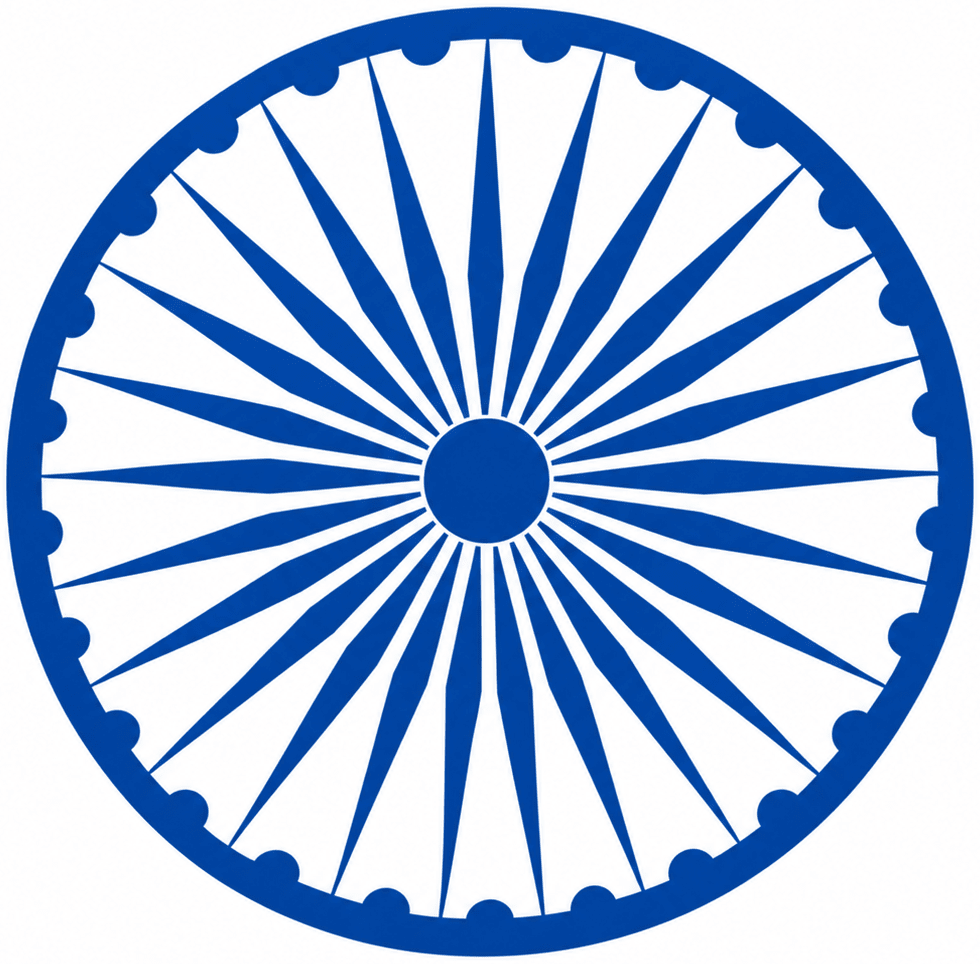
How many lines of symmetry and angles of symmetry does Ashoka Chakra have?
Answer
The Ashoka Chakra has 24 identical equally spaced spokes.
Lines of symmetry
There are 12 lines through pairs of opposite spokes and another 12 lines through pairs of opposite gaps between spokes.
Total number of lines of symmetry = 12 + 12 = 24
Angles of symmetry
The angle between consecutive spokes is
Therefore, the angles of symmetry are 15°, 30°, 45°, …, 345°, 360°, giving 24 angles in all.
∴ The Ashoka Chakra has 24 lines of symmetry and 24 angles of symmetry.