
Triangle ABC is right-angled at vertex A. Calculate the length of BC, if AB = 18 cm and AC = 24 cm.
Answer
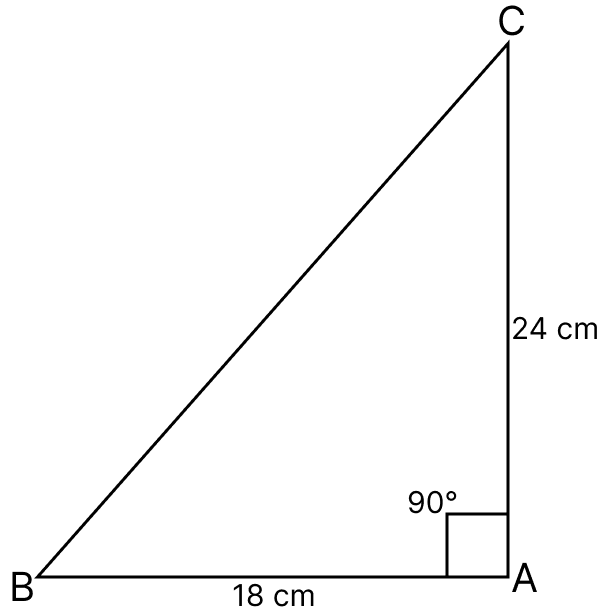
The given triangle is right-angled at vertex A means angle A = 90° and so BC is hypotenuse.
According to Pythagoras theorem :
⇒ Hypotenuse2 = Base2 + Perpendicular2
⇒ BC2 = AB2 + AC2
⇒ BC2 = 182 + 242
⇒ BC2 = 324 + 576
⇒ BC2 = 900
⇒ BC = cm = 30 cm
Hence, BC = 30 cm.
Triangle XYZ is right-angled at vertex Z. Calculate the length of YZ, if XY = 13 cm and XZ = 12 cm.
Answer
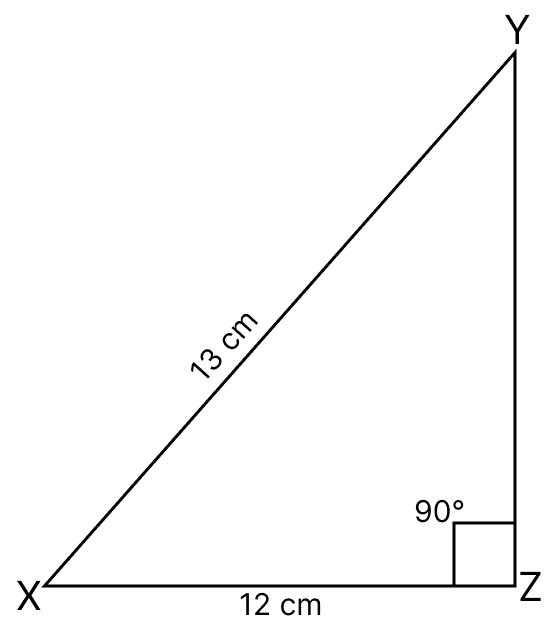
The given triangle is right-angled at vertex Z means angle Z = 90° and so XY is hypotenuse.
According to Pythagoras theorem :
⇒ XY2 = XZ2 + YZ2
⇒ 132 = 122 + YZ2
⇒ 169 = 144 + YZ2
⇒ YZ2 = 169 - 144
⇒ YZ2 = 25
⇒ YZ = cm = 5 cm
Hence, YZ = 5 cm.
Triangle PQR is right-angled at vertex R. Calculate the length of PR, if:
PQ = 2.6 cm and QR = 2.4 cm.
Answer
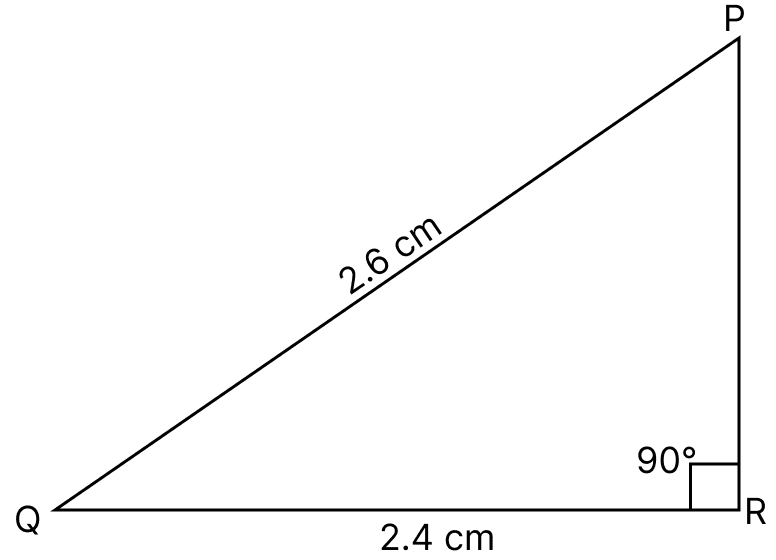
The given triangle is right-angled at vertex R means angle R = 90° and so PQ is hypotenuse.
According to Pythagoras theorem :
⇒ PQ2 = PR2 + QR2
⇒ (2.6)2 = PR2 + (2.4)2
⇒ 6.76 = PR2 + 5.76
⇒ PR2 = 6.76 - 5.76
⇒ PR2 = 1
⇒ PR = cm = 1 cm
Hence, PR = 1 cm.
The sides of certain triangles are given below. Find whether they are right angled triangles or not.
(i) 16 cm, 20 cm and 12 cm
(ii) 6 m, 9 m and 13 m
Answer
A triangle is a right-angled triangle if the square of its longest side is equal to the sum of the squares of the other two sides.
(i) The longest side = 20 cm
⇒ 202 = 400
⇒ 162 + 122 = 256 + 144 = 400
Since, 202 = 162 + 122
Hence, the triangle with sides 16 cm, 20 cm and 12 cm is a right angled triangle.
(ii) The longest side = 13 m
⇒ 132 = 169
⇒ 62 + 92 = 36 + 81 = 117
Since, 132 ≠ 62 + 92
Hence, the triangle with sides 6 m, 9 m and 13 m is not a right angled triangle.
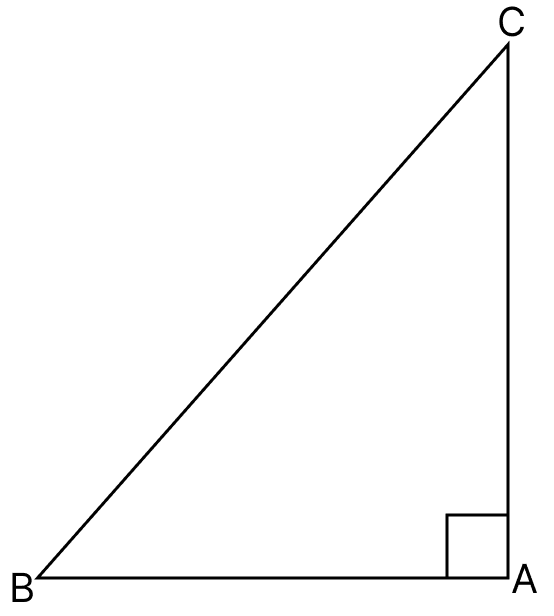
In the adjoining figure, angle BAC = 90°, AC = 400 m and AB = 300 m. Find the length of BC
Answer
Since angle BAC = 90°, BC is the hypotenuse.
According to Pythagoras theorem :
⇒ BC2 = AB2 + AC2
⇒ BC2 = 3002 + 4002
⇒ BC2 = 90000 + 160000
⇒ BC2 = 250000
⇒ BC = m = 500 m
Hence, BC = 500 m.
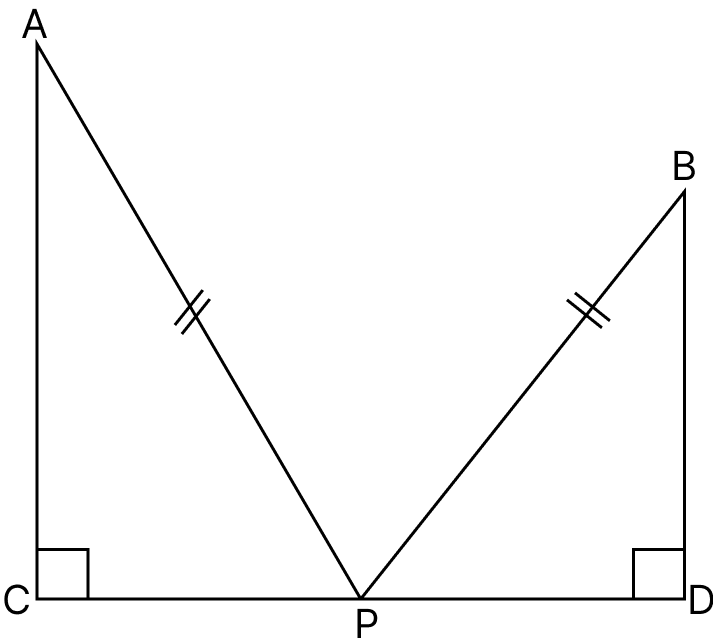
In the given figures, angle ACP = ∠BDP = 90°, AC = 12 m, BD = 9 m and PA = PB = 15 m. Find:
(i) CP
(ii) PD
(iii) CD
Answer
(i) In right-angled triangle ACP, angle ACP = 90°, so PA is the hypotenuse.
Applying Pythagoras theorem :
⇒ PA2 = AC2 + CP2
⇒ 152 = 122 + CP2
⇒ 225 = 144 + CP2
⇒ CP2 = 225 - 144
⇒ CP2 = 81
⇒ CP = m = 9 m
Hence, CP = 9 m.
(ii) In right-angled triangle BDP, angle BDP = 90°, so PB is the hypotenuse.
Applying Pythagoras theorem :
⇒ PB2 = BD2 + PD2
⇒ 152 = 92 + PD2
⇒ 225 = 81 + PD2
⇒ PD2 = 225 - 81
⇒ PD2 = 144
⇒ PD = m = 12 m
Hence, PD = 12 m.
(iii) Since C, P and D lie on the same line :
CD = CP + PD = 9 m + 12 m = 21 m
Hence, CD = 21 m.
In triangle PQR, angle Q = 90°, find:
(i) PR, if PQ = 8 cm and QR = 6 cm
(ii) PQ, if PR = 34 cm and QR = 30 cm
Answer
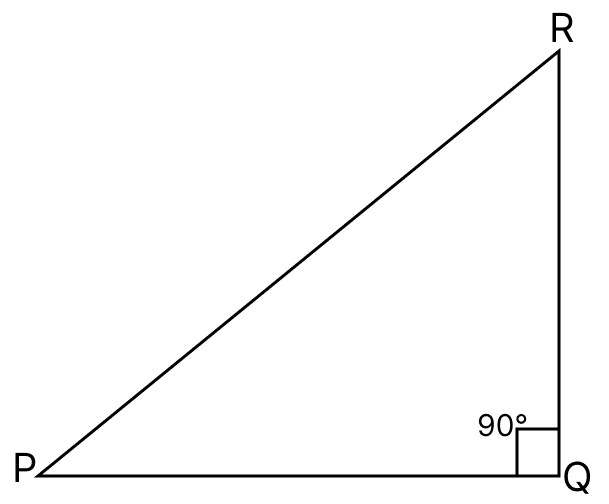
Since angle Q = 90°, PR is the hypotenuse.
(i) Applying Pythagoras theorem :
⇒ PR2 = PQ2 + QR2
⇒ PR2 = 82 + 62
⇒ PR2 = 64 + 36
⇒ PR2 = 100
⇒ PR = cm = 10 cm
Hence, PR = 10 cm.
(ii) Applying Pythagoras theorem :
⇒ PR2 = PQ2 + QR2
⇒ 342 = PQ2 + 302
⇒ 1156 = PQ2 + 900
⇒ PQ2 = 1156 - 900
⇒ PQ2 = 256
⇒ PQ = cm = 16 cm
Hence, PQ = 16 cm.
Show that the triangle ABC is a right-angled triangle; if:
AB = 9 cm, BC = 40 cm and AC = 41 cm.
Answer
A triangle is a right-angled triangle if the square of its longest side is equal to the sum of the squares of the other two sides.
The longest side = AC = 41 cm
AC2 = 412 = 1681
AB2 + BC2 = 92 + 402 = 81 + 1600 = 1681
Since, AC2 = AB2 + BC2
The angle opposite the longest side AC, i.e. angle B = 90°.
Hence, triangle ABC is a right-angled triangle, right-angled at B.
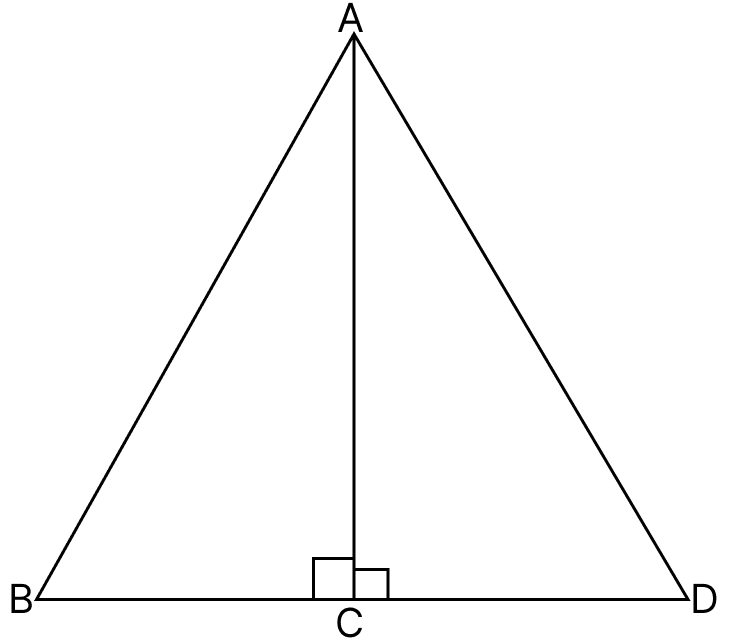
In the given figure, angle ACB = 90° = angle ACD. If AB = 10 cm, BC = 6 cm and AD = 17 cm, find:
(i) AC
(ii) CD
Answer
(i) In right-angled triangle ACB, angle ACB = 90°, so AB is the hypotenuse.
Applying Pythagoras theorem :
⇒ AB2 = AC2 + BC2
⇒ 102 = AC2 + 62
⇒ 100 = AC2 + 36
⇒ AC2 = 100 - 36
⇒ AC2 = 64
⇒ AC = cm = 8 cm
Hence, AC = 8 cm.
(ii) In right-angled triangle ACD, angle ACD = 90°, so AD is the hypotenuse.
Applying Pythagoras theorem :
⇒ AD2 = AC2 + CD2
⇒ 172 = 82 + CD2
⇒ 289 = 64 + CD2
⇒ CD2 = 289 - 64
⇒ CD2 = 225
⇒ CD = cm = 15 cm
Hence, CD = 15 cm.
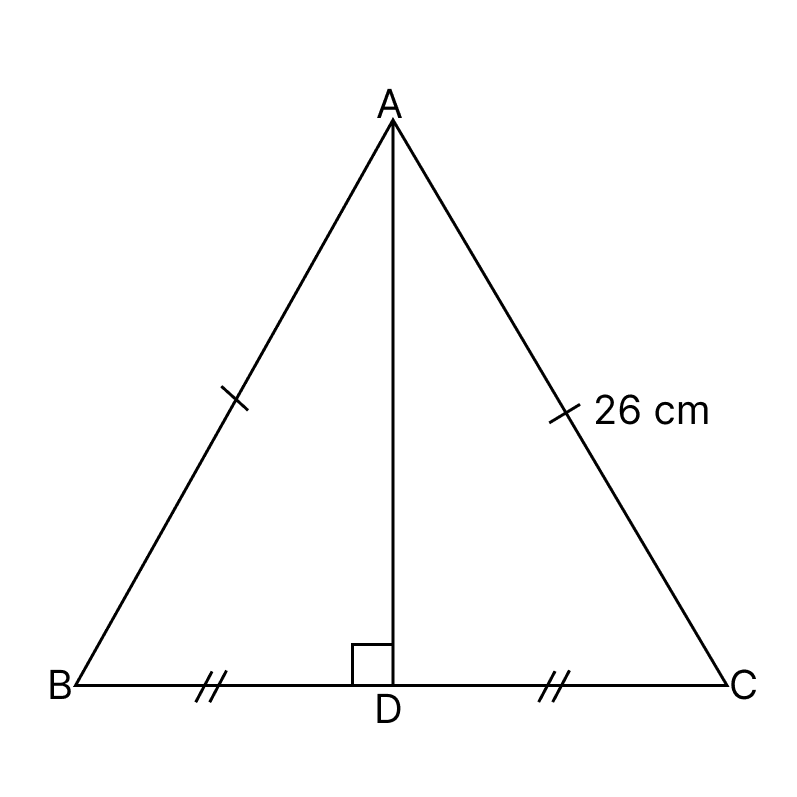
In the given figure, angle ADB = 90°, AC = AB = 26 cm and BD = DC. If the length of AD = 24 cm; find the length of BC.
Answer
In right-angled triangle ADB, angle ADB = 90°, so AB is the hypotenuse.
Applying Pythagoras theorem :
⇒ AB2 = AD2 + BD2
⇒ 262 = 242 + BD2
⇒ 676 = 576 + BD2
⇒ BD2 = 676 - 576
⇒ BD2 = 100
⇒ BD = cm = 10 cm
Since BD = DC,
BC = BD + DC = 10 cm + 10 cm = 20 cm
Hence, BC = 20 cm.
In the given figure, AD = 13 cm, BC = 12 cm, AB = 3 cm and angle ACD = angle ABC = 90°. Find the length of DC.
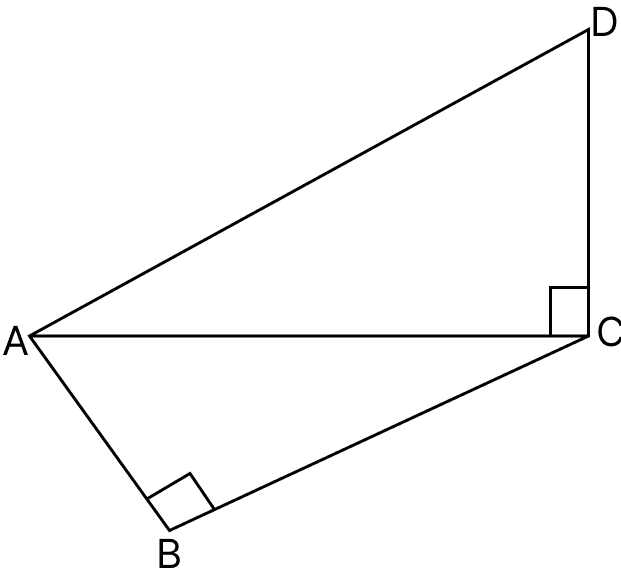
Answer
In right-angled triangle ABC, angle ABC = 90°, so AC is the hypotenuse.
Applying Pythagoras theorem :
⇒ AC2 = AB2 + BC2
⇒ AC2 = 32 + 122
⇒ AC2 = 9 + 144
⇒ AC2 = 153
In right-angled triangle ACD, angle ACD = 90°, so AD is the hypotenuse.
Applying Pythagoras theorem :
⇒ AD2 = AC2 + CD2
⇒ 132 = 153 + CD2
⇒ 169 = 153 + CD2
⇒ CD2 = 169 - 153
⇒ CD2 = 16
⇒ CD = cm = 4 cm
Hence, DC = 4 cm.
A ladder, 6.5 m long, rests against a vertical wall. If the foot of the ladder is 2.5 m from the foot of the wall, find upto how much height does the ladder reach?
Answer
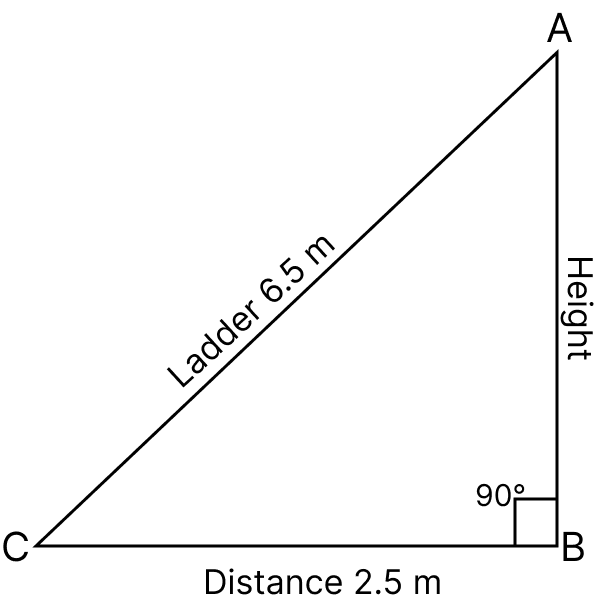
Let AC be the ladder = 6.5 m (hypotenuse), BC be the distance of its foot from the wall = 2.5 m and AB be the height reached on the wall. The wall is vertical, so angle B = 90°.
According to Pythagoras theorem :
⇒ Hypotenuse2 = Perpendicular2 + Base2
⇒ AC2 = AB2 + BC2
⇒ (6.5)2 = AB2 + (2.5)2
⇒ 42.25 = AB2 + 6.25
⇒ AB2 = 42.25 - 6.25
⇒ AB2 = 36
⇒ AB = m = 6 m
Hence, the ladder reaches a height of 6 m.
A boy first goes 5 m due north and then 12 m due east. Find the distance between the initial and the final positions of the boy.
Answer
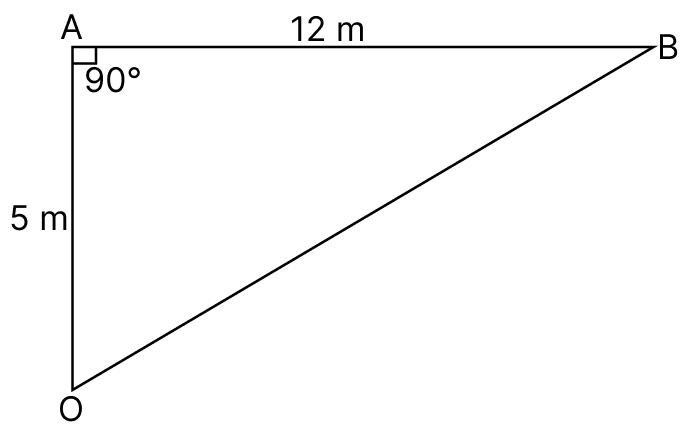
Let the boy start at O, go 5 m due north to A and then 12 m due east to B.
⇒ OA = 5 m and AB = 12 m
OB is the distance between the initial and the final positions of the boy.
Since north and east are perpendicular directions, angle OAB = 90°.
According to Pythagoras theorem in triangle OAB:
⇒ Hypotenuse2 = Perpendicular2 + Base2
⇒ OB2 = OA2 + AB2
⇒ OB2 = 52 + 122
⇒ OB2 = 25 + 144
⇒ OB2 = 169
⇒ OB = m = 13 m
Hence, the distance between the initial and final positions of the boy is 13 m.
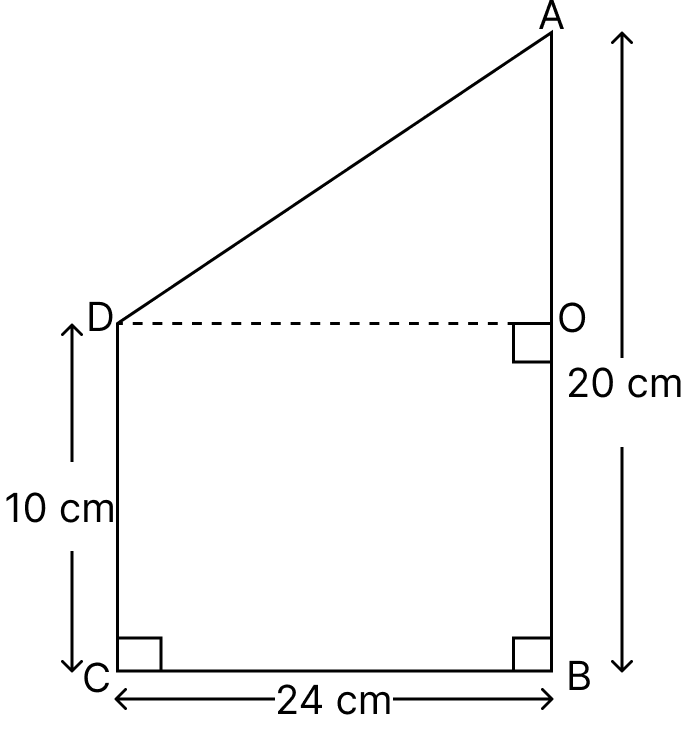
Use the information given in the adjoining figure to find the length of AD.
Answer
From the figure,
DO = CB = 24 cm, OB = DC = 10 cm and angle AOD = 90°.
AO = AB - OB = 20 cm - 10 cm = 10 cm
In right-angled triangle AOD, AD is the hypotenuse.
Applying Pythagoras theorem :
⇒ AD2 = AO2 + OD2
⇒ AD2 = 102 + 242
⇒ AD2 = 100 + 576
⇒ AD2 = 676
⇒ AD = cm = 26 cm
Hence, AD = 26 cm.