
The doctrine advocated by Adi Shankaracharya:
- Advaita
- Sulh-i-kul
- Sikhism
Answer
Advaita
Reason — Adi Shankaracharya was an advocate of the doctrine of the oneness of the individual soul and the Supreme God (the Ultimate Reality). This doctrine is known as Advaita.
Kabir was a disciple of:
- Jnaneshwara
- Chaitanya Mahaprabhu
- Ramananda
Answer
Ramananda
Reason — Kabir was a disciple of Ramananda, a popular Bhakti saint who resided in Benares and spread the doctrine of Bhakti to all the four varnas.
The Nayanars were devotees of:
- Vishnu
- Shiva
- Krishna
Answer
Shiva
Reason — The Nayanars were worshippers (devotees) of Lord Shiva, while the Alwars were devotees of Lord Vishnu.
She/He is not a Bhakti saint:
- Mirabai
- Ramananda
- Khwaja Muinuddin Chisti
Answer
Khwaja Muinuddin Chisti
Reason — Khwaja Muinuddin Chisti was a Sufi saint and the founder of the Chisti order in South Asia, not a Bhakti saint. Mirabai and Ramananda were Bhakti saints.
The saint of the Suhrawardi order of Sufism:
- Khwaja Muinuddin Chisti
- Shaikh Bahauddin Zakariya
- Guru Nanak
Answer
Shaikh Bahauddin Zakariya
Reason — Shaikh Bahauddin Zakariya was an important Sufi saint of the Suhrawardi order. Khwaja Muinuddin Chisti belonged to the Chisti order, while Guru Nanak was the founder of Sikhism.
Kabir : Doha :: Guru Nanak : ?
- Bhajan
- Veda
- Bani
- Qawwali
Answer
Bani
Reason — Just as Kabir spread his message through verses called dohas, the hymns and utterances composed by Guru Nanak are known as Bani.
'Kirtan' is described as a form of congregational worship which primarily involves:
- Silent meditation and fasting
- Choral singing of hymns and the name of God
- Individual offerings at the temple
- Recitation of ancient Sanskrit mantras by priests
Answer
Choral singing of hymns and the name of God
Reason — Kirtan is a form of congregational worship which consists of the choral singing of hymns in the name of God.
The Bhakti Movement challenged many existing dogmas and rituals of Hindu society. Identify the reason for its strong opposition to the caste system:
- The movement was primarily started by foreign invaders.
- The caste system promoted equality and justice, which the Bhakti saints opposed.
- The caste system caused social inequality, oppression of the underprivileged and alienation from religion.
- The caste system mandated expensive rituals that only the rich could afford.
Answer
The caste system caused social inequality, oppression of the underprivileged and alienation from religion.
Reason — Social inequality and injustice were the two fallouts of the rigid caste system, which gave the higher castes opportunities to oppress the underprivileged ones and alienated the common people from religion. Hence the Bhakti saints strongly opposed it.
The monument shown in the picture is most closely associated with which of the following historical and religious developments?
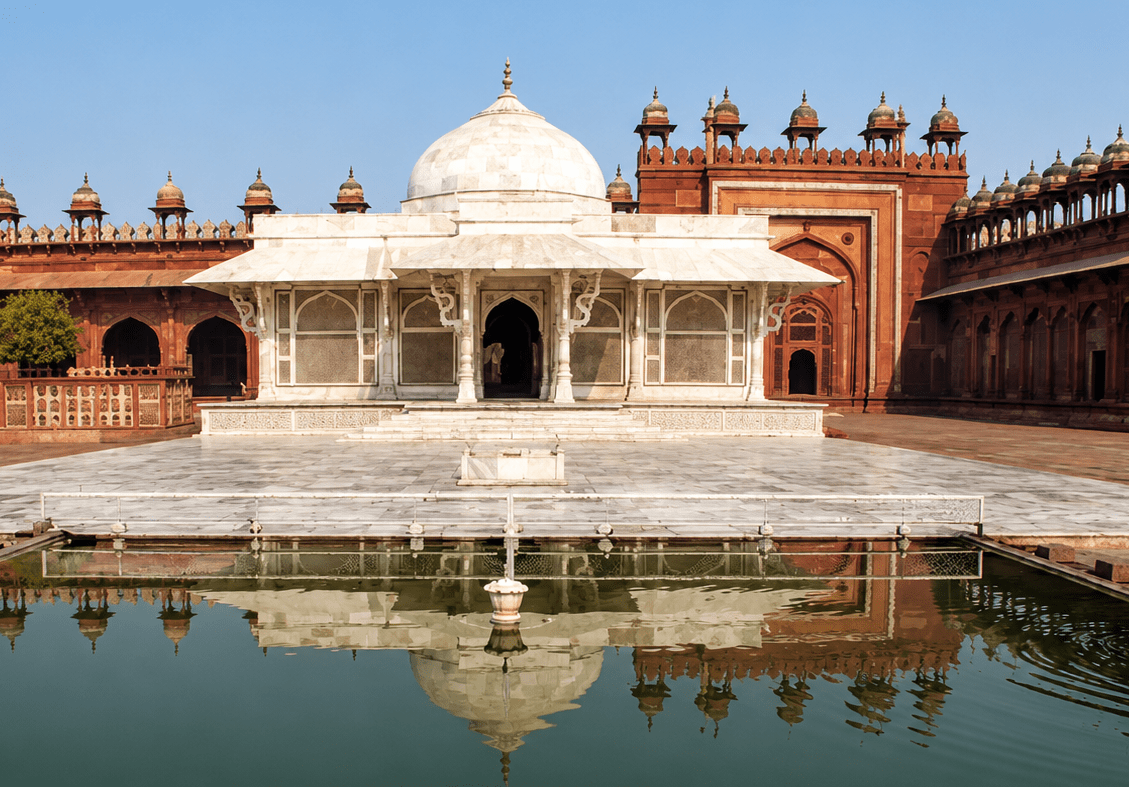
- Growth of Bhakti Movement in South India
- Sufi tradition of revering saints and spiritual intercession
- Mughal Emperor Akbar's promotion of Hindu temple architecture
- Teachings of Guru Nanak
Answer
Sufi tradition of revering saints and spiritual intercession
Reason — The monument is a Sufi dargah (the tomb of a Sufi saint). When the head of a khankah died, his grave or dargah became a pilgrimage centre where common people, regardless of their backgrounds, came to offer prayers and seek the saint's blessings. This reflects the Sufi tradition of revering saints and spiritual intercession.
Assertion (A): The Bhakti Movement helped in the growth of regional languages in India.
Reason (R): Bhakti saints composed their devotional songs and poetry in Sanskrit.
- A is true, but R is false.
- R is the reason for A.
- Both A and R are false.
- Only R is true, and A is false.
Answer
A is true, but R is false.
Explanation — The Bhakti Movement gave impetus to the translation of ancient texts from Sanskrit into vernacular or local languages, which led to the growth of literary works in regional languages, so A is true. However, the Bhakti saints composed their devotional songs and poetry in vernacular or local languages, not in Sanskrit, so R is false.
Assertion (A): The Sufi mystics detached themselves from the ruling classes and orthodox elements.
Reason (R): They disapproved of the vulgar display of wealth and the degeneration of morals following the establishment of the Islamic empire.
- A is true, but R is false.
- R is the reason for A.
- A is false, but R is true.
- Both A and R are false.
Answer
R is the reason for A.
Explanation — The Sufi mystics disapproved of the vulgar display of wealth and the degeneration of morals following the establishment of the Islamic empire, and therefore detached themselves from the ruling classes and orthodox elements. Hence, both A and R are true, and R correctly explains A.
Most of the saint-poets of the medieval period denounced discrimination in society and upheld the principle of equality amongst human beings through their teachings and writings. According to you, what were the obstacles they may have encountered?
Answer
The saint-poets may have encountered the following obstacles:
- Strong opposition from the orthodox priestly class (Brahmins), who feared losing their authority and influence over religion.
- Resistance from the higher castes, who benefited from the caste system and were unwilling to give up their privileges.
- Deep-rooted social customs, superstitions and rigid traditions that people were reluctant to give up.
- Difficulty in convincing people to accept new ideas that challenged long-established beliefs, rituals and practices.
- Hostility from sections of society that did not want to break the existing social and caste barriers.
'Religion during the medieval period of Indian history was characterised by a combination of supreme devotion to God and a liberal approach.' Analyse this statement in the light of your understanding of the chapter.
Answer
The statement is justified, as the Bhakti and Sufi movements of the medieval period combined intense personal devotion to God with a liberal and reformist outlook.
On the one hand, supreme devotion to God was central. The term 'bhakti' itself denoted passionate love or devotion to God, and the Sufis laid emphasis on love and devotion to God as the Supreme Reality. Saints expressed this devotion through devotional music, dohas, kirtans and qawwalis.
On the other hand, the period reflected a liberal approach. The saints opposed the caste system, untouchability and idol worship, condemned complex and expensive rituals, and respected all religions. They used vernacular languages so that common people could understand their message, raised the position of women, and emphasised the equality and brotherhood of all human beings. For example, Kabir worshipped one formless God and rejected caste and ritualism, Guru Nanak promoted equality through the guru ka langar, and the Sufis showed respect for all faiths and kindness towards all.
Thus, religion during the medieval period indeed combined supreme devotion to God with a liberal, inclusive and reformist approach.
With what aim did the Bhakti Movement begin?
Answer
The Bhakti Movement began with the aim of reforming Hinduism and bringing about more equality in society. The term 'bhakti' was used to denote passionate love or devotion to God.
Which Bhakti saints popularised the concept of the personal God (saguna)? Name two saints who popularised the concept of a formless God (nirguna).
Answer
Bhakti saints such as Tulsidas, Surdas and Mirabai popularised the concept of the personal God (saguna). Two saints who popularised the concept of a formless God (nirguna) were Ravidas and Kabir.
State the teachings of Adi Shankaracharya. Name the four monastic centres founded by him.
Answer
Teachings of Adi Shankaracharya:
- He advocated the doctrine of the oneness of the individual soul and the Supreme God, which is the Ultimate Reality. This doctrine is known as Advaita.
- He taught that Brahman, the Ultimate Reality, was formless and without any attributes.
- He preached renunciation of the world and urged everyone to adopt the path of knowledge to understand the true nature of Brahman and attain salvation.
The four monastic centres (mathas) founded by him are at Sringeri (Karnataka), Dwarka (Gujarat), Puri (Odisha) and Jyotirmath (Uttarakhand).
Write a short note on Kabir and his teachings.
Answer
Kabir was a disciple of Ramananda. He was brought up by a Muslim weaver family and resided in Benares, where he came in contact with both Hindu and Muslim saints. He preached that there was only one God with different names and called him by several names, such as Govinda, Hari, Sain, Sahib, Allah and Rama. Kabir was opposed to rituals, superstitions, the caste system, idol worship and the practice of untouchability. He preached his message through poems called dohas.
What did the Bhakti saint Jnaneshwara preach?
Answer
Jnaneshwara popularised the Bhakti cult in Maharashtra and worshipped Lord Vishnu in the form of Lord Vithoba. He wrote a commentary on the Bhagvad Gita in Marathi known as Jnaneshwari. He rejected all forms of ritualism, outward display of piety and social differences based on birth. He preached that Bhakti and ethical behaviour lead to the realisation of the Divine Self, and emphasised the sacrifice of one's impulses as a path to the Supreme. He believed that one who has seen the divine in the soul has no desire for other pleasures.
Write a short account of Nanak's contribution to the Bhakti Movement.
Answer
Guru Nanak's teachings of nirguna worship (one formless God) and universal brotherhood formed the basis of a new religion called Sikhism. He was born in Talwandi (now Nankana Sahib in Pakistan) in 1469 CE, and his philosophical thirst made him visit the holy places of the Hindus, Muslims and Buddhists. He finally settled on the banks of the river Ravi and preached his teachings in a practical way. He started the guru ka langar or 'kitchen of the lord', where everyone, irrespective of caste and creed, ate together from a common vessel, striking at the core of the caste system which promoted inequality. He showed a new path for the establishment of an egalitarian social order. He was as much a social reformer as a religious teacher, and he upheld the cause of women, the downtrodden and the poor.
What were the central teachings of Sikhism?
Answer
The central teachings of Sikhism are:
- There is only one God.
- All people are considered equal before God.
- Good actions are more important than rituals.
- The guru or the teacher is important in a person's life.
Name the five sacred symbols of the outward appearance of the Sikhs. Who gave the Sikhs this distinctive identity?
Answer
The five sacred symbols of the outward appearance of the Sikhs are kesa (uncut hair), kanga (wooden comb), kachhera (short drawers), kirpan (ceremonial sword) and kara (iron bracelet). The tenth guru, Guru Gobind Singh, gave the Sikhs this distinctive identity.
State the main features of the Bhakti Movement in south India, pioneered by Nayanars and Alwars.
Answer
The main features of the Bhakti Movement in south India were:
- The Bhakti Movement first began in south India around the 7th century CE under the Nayanars (worshippers of Lord Shiva) and the Alwars (worshippers of Lord Vishnu). There were sixty-three Nayanars and twelve Alwars.
- Between the 7th and the 12th centuries, they composed poems preaching single-minded devotion to God. They preached their philosophies in the local languages and disseminated them in the form of stories.
- A notable feature of this movement was the preaching of a loving bond based upon the love between the worshipped and the worshipper.
- They believed that everyone could attain salvation through devotion.
- They criticised the caste system and attacked institutionalised religion. The Nayanar poets comprised saints from all castes.
- They believed that inequality and exploitation in society existed due to the caste system and patriarchal mindset, so they incorporated all sections of society to break the caste barriers.
- They actively encouraged women to join in and compose kirtans; Mirabai composed many such kirtans.
- As Jainism and Buddhism were silent on God, they criticised both the religions.
What were the main features of the Sufi Movement?
Answer
The main features of the Sufi Movement were:
- The Sufis proposed several liberal ideas and advocated social justice and equality.
- They considered God to be the Supreme Reality and advocated that He must be worshipped through love and devotion. They also believed in the 'Unity of Being', i.e., oneness with God.
- They had respect for all religions.
- They inspired people to lead a simple life and help the needy and the poor.
- They laid importance on a pir (Sufi master), also known as khwaja, who could show the right path to reach God.
- They developed methods of training using zikr (chanting of a name), contemplation, singing (musical recitations called sama), dancing, discussion of parables and breath control under the guidance of a pir.
- The disciple was called murid, and both the pir and his disciples lived together in khankahs, which started as rest houses for travellers but came to resemble monastic establishments.
- When the head of a khankah died, his grave or dargah became a pilgrimage centre. The succession of pirs was known as silsilahs.
- They popularised devotional music or the qawwali to bring people closer to God.
Describe the impact of the Bhakti and Sufi movements on the society.
Answer
The Bhakti and Sufi movements had the following impact on society:
- The movements bridged the gaps between different castes and religions. Songs of the Bhakti saints were sung by all communities, while common people, regardless of their backgrounds, started offering prayers at the dargahs of the pirs.
- The use of vernacular languages resulted in the growth of literary works in regional languages.
- The common people could access the knowledge and truth imparted by scriptures and stopped feeling alienated from their own religion. In Hinduism, it undermined the supreme authority of the Brahmins.
- The movements revealed the futility of complex rites and rituals and elaborate codes of behaviour. Their philosophy of simple living struck a chord with the common people.
- The simple teachings of the Bhakti and Sufi saints remain relevant even today to maintain and foster a spirit of brotherhood across all communities and castes.
This is a picture of Jnaneshwara, the Bhakti saint.
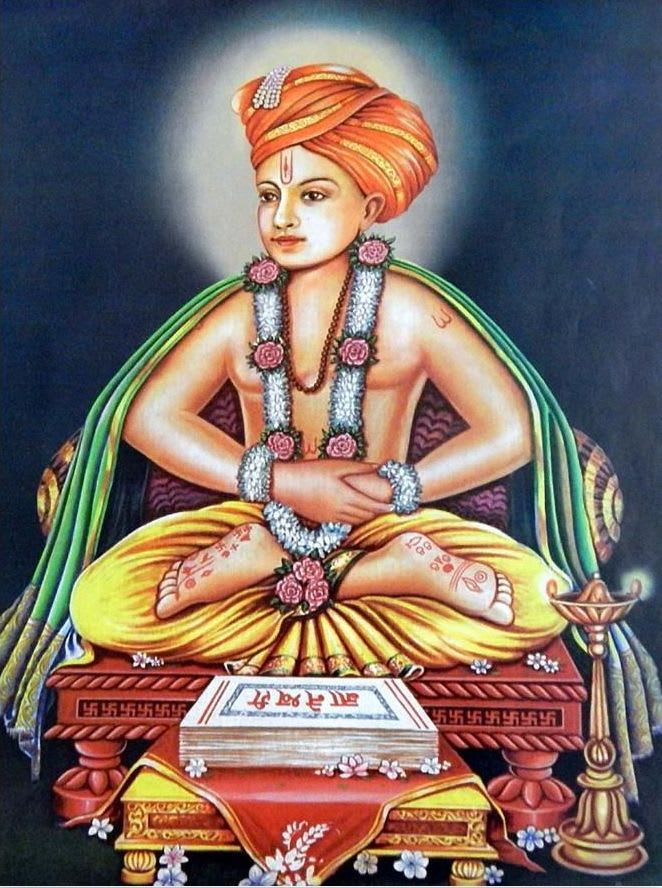
a. Name the Marathi commentary that he wrote on the Bhagvad Gita.
b. Which God did he worship?
c. In which place did he popularise the Bhakti cult?
Answer
a. The Marathi commentary that he wrote on the Bhagvad Gita is known as Jnaneshwari.
b. He worshipped Lord Vishnu in the form of Lord Vithoba.
c. He popularised the Bhakti cult in Maharashtra.
This picture depicts a large golden-domed structure surrounded by a holy water tank (Amrit Sarovar), with a white marble walkway, while the temple is reflected in the water. Based on this information, answer the following:
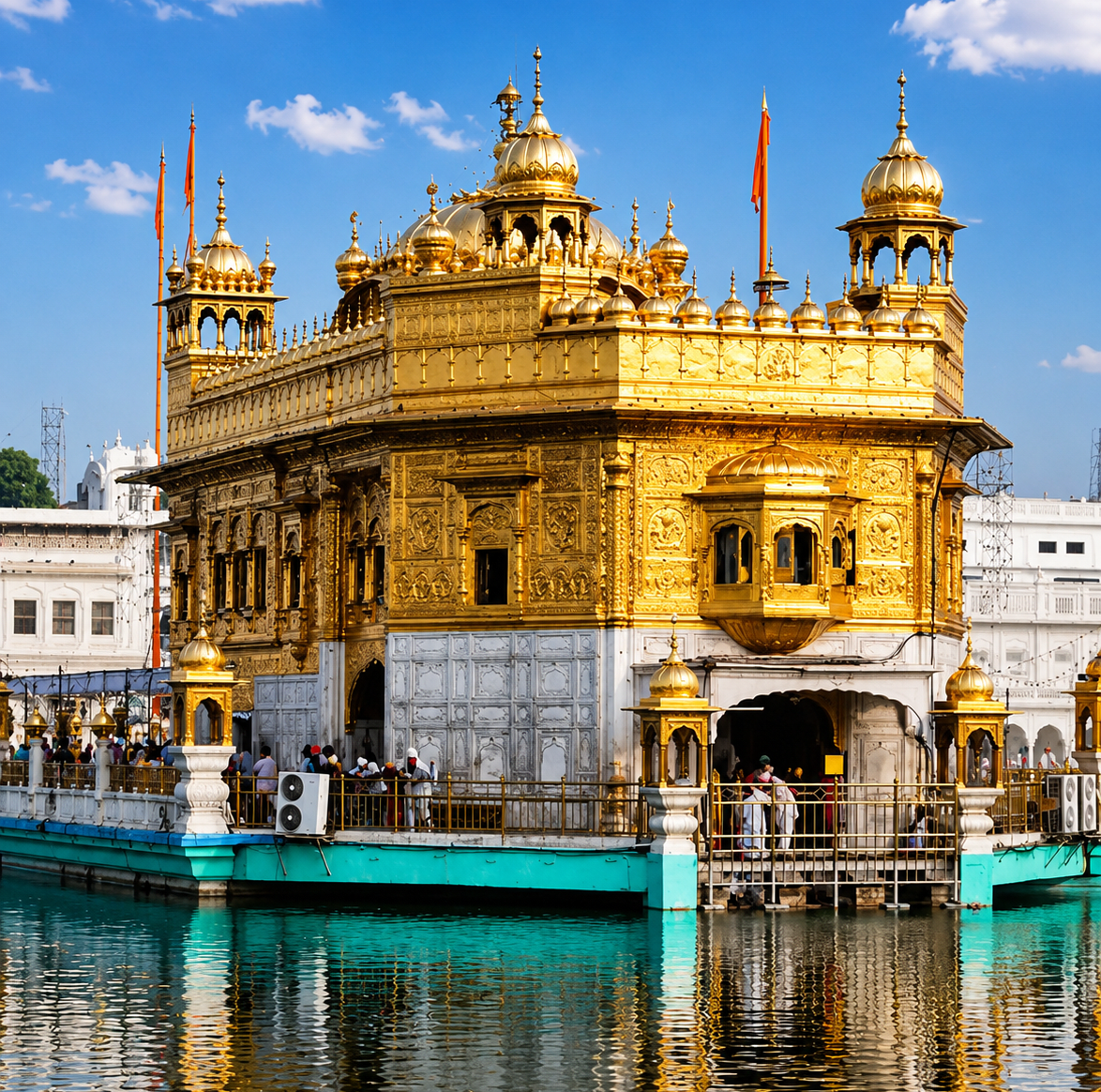
a. Identify the significant Sikh place of worship shown in the picture.
b. The Golden Temple is considered a symbol of Sikh identity. Name the five sacred symbols given by Guru Gobind Singh that represent the outward appearance of Sikhs.
c. How does the architectural style of the Golden Temple reflect the principle of universal brotherhood or openness, if at all?
Answer
a. The significant Sikh place of worship shown in the picture is the Golden Temple at Amritsar.
b. The five sacred symbols given by Guru Gobind Singh are kesa (uncut hair), kanga (wooden comb), kachhera (short drawers), kirpan (ceremonial sword) and kara (iron bracelet).
c. The Golden Temple has four entrances, one on each of its four sides, signifying that it is open to people of all castes, creeds and religions coming from every direction. This openness reflects the Sikh principle of universal brotherhood and equality, showing that all human beings are welcome and equal before God.
The Bhakti Movement brought significant transformations to Hinduism in India, starting around the 7th century CE in South India with the Nayanars and Alwars. It challenged the prevailing complexity, rigidity and ritualism of the Hindu religion. Many saints, often from humble backgrounds, propagated the message of devotion to a personal or formless God. The movement actively critiqued the caste system and rejected idol worship. It also endeavoured to elevate the position of women and encouraged the translation of Sanskrit texts into local languages. Its emphasis on equality, brotherhood and devotion attracted many, fostering internal reforms within Hinduism.
Based on the case study answer the following questions:
A. What was the core principle of Bhakti worship, common to both 'saguna' and 'nirguna' saints?
B. Name two social evils or practices within Hinduism that the Bhakti Movement challenged.
Answer
A. The core principle of Bhakti worship, common to both the saguna and nirguna saints, was devotion (bhakti) — the worship of God as a manifestation of the Supreme Being through passionate love and personal devotion. Whether God was worshipped in a personal form (saguna) or as formless (nirguna), devotion to God was the central path.
B. Two social evils or practices within Hinduism that the Bhakti Movement challenged were the caste system and idol worship.