
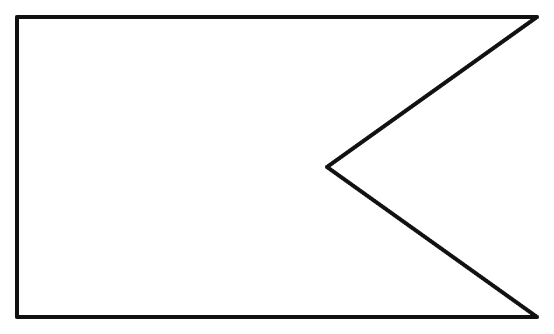
Draw all lines of symmetry, if any, in the following figure:
Answer
The given figure can be folded into two coincident parts only about the horizontal line through the vertex of its cut.
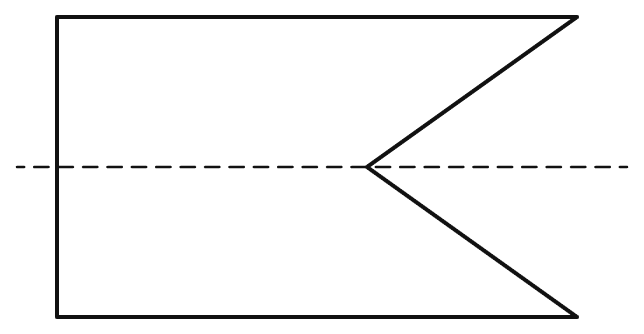
Hence, the given figure has 1 line of symmetry.
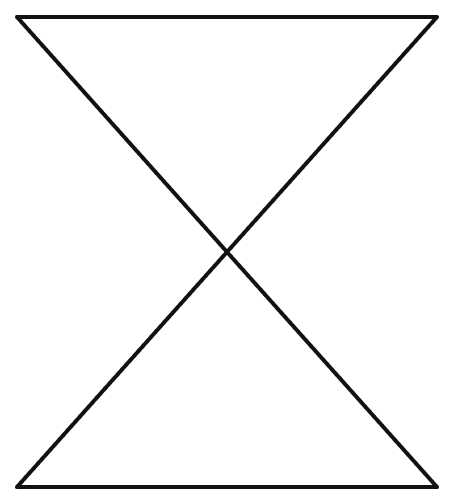
Draw all lines of symmetry, if any, in the following figure:
Answer
The given figure is made up of two triangles meeting at a common vertex. It can be folded into two coincident parts about the vertical line and about the horizontal line through the common vertex.
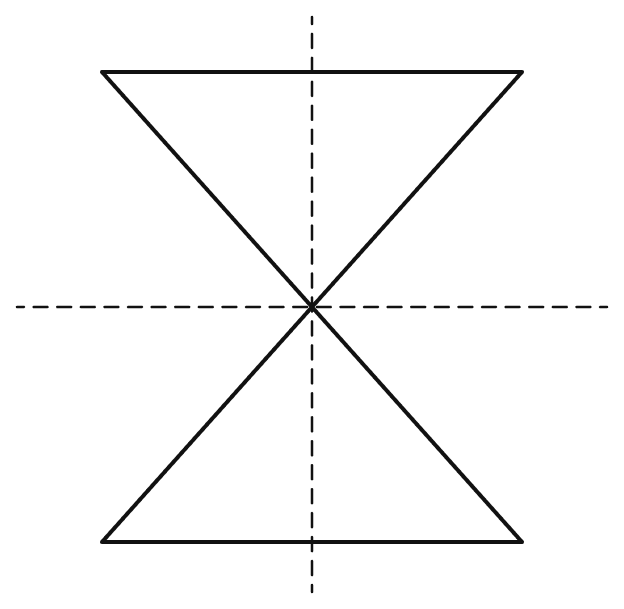
Hence, the given figure has 2 lines of symmetry.
Draw all lines of symmetry, if any, in the following figure:
Answer
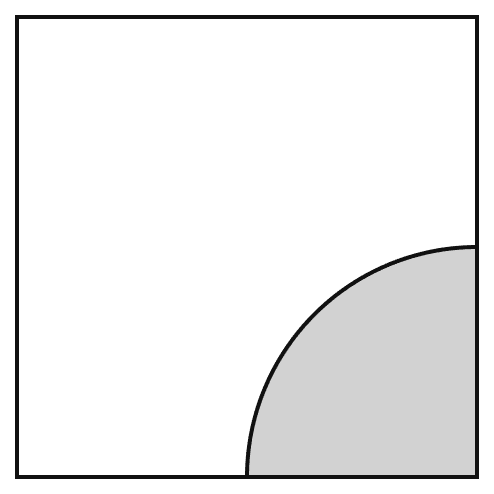
The given figure is a square with a shaded quarter circle at one corner. It can be folded into two coincident parts only about the diagonal passing through the shaded corner.
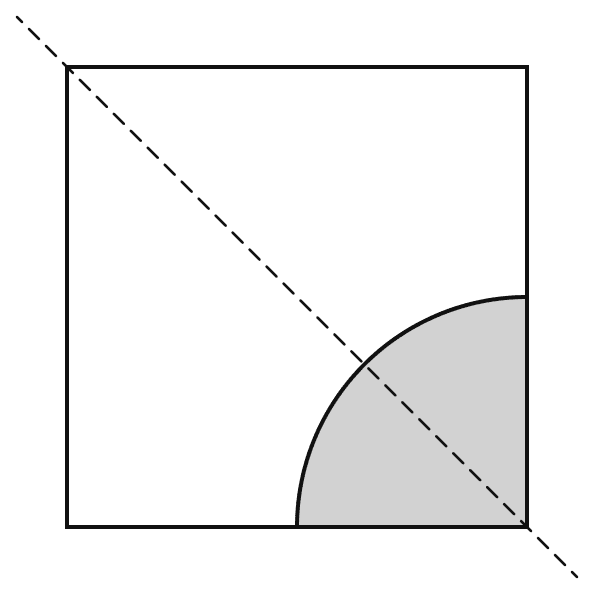
Hence, the given figure has 1 line of symmetry.
Draw all lines of symmetry, if any, in the following figure:
Answer
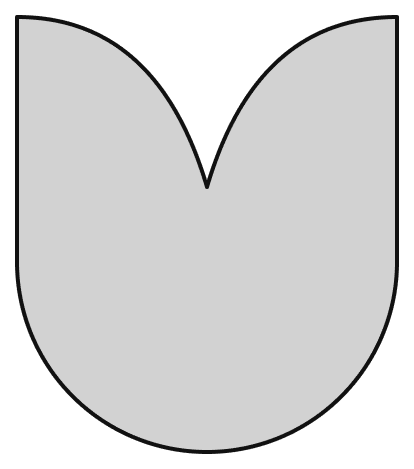
The given figure can be folded into two coincident parts only about the vertical line through its middle.
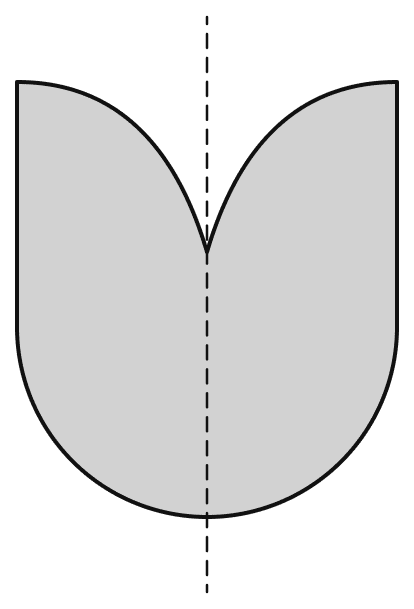
Hence, the given figure has 1 line of symmetry.
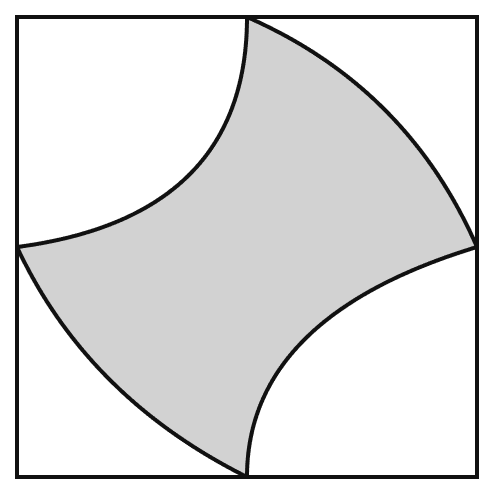
Draw all lines of symmetry, if any, in the following figure:
Answer
The given figure is a square with a shaded curved figure inside it. It can be folded into two coincident parts about each of the two diagonals of the square.
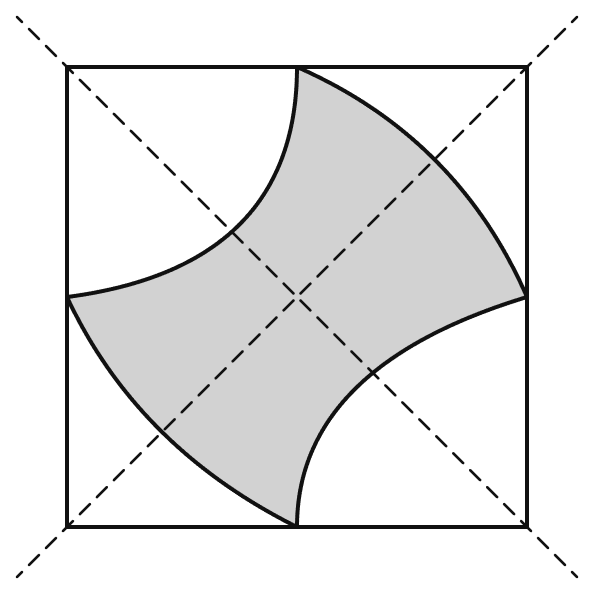
Hence, the given figure has 2 lines of symmetry.
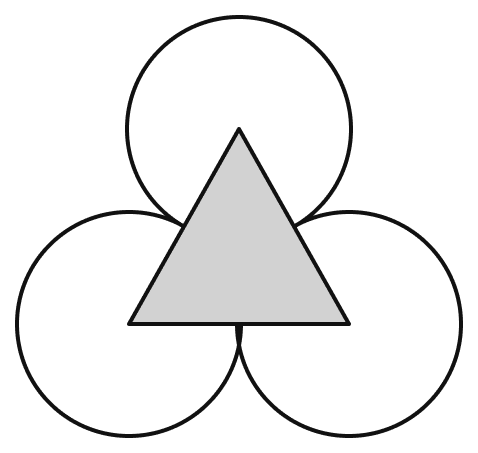
Draw all lines of symmetry, if any, in the following figure:
Answer
The given figure is an equilateral triangle with three equal circles at its vertices. It can be folded into two coincident parts about each of the three bisectors of the angles of the triangle.
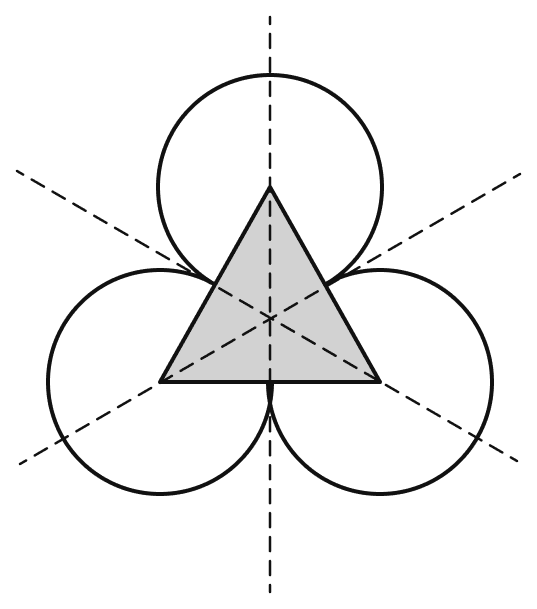
Hence, the given figure has 3 lines of symmetry.
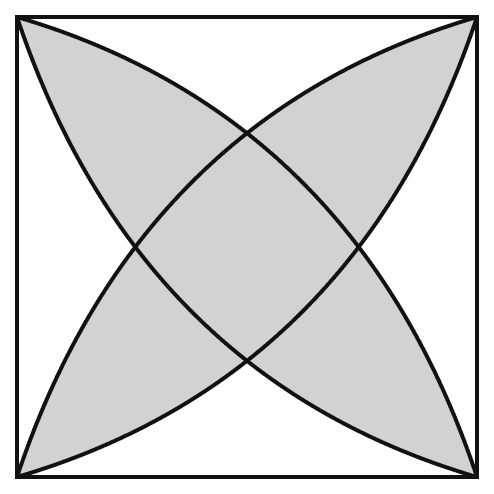
Draw all lines of symmetry, if any, in the following figure:
Answer
The given figure is a square with a shaded figure formed by its diagonals. It can be folded into two coincident parts about each of its two diagonals and each of the two lines joining the mid-points of its opposite sides.
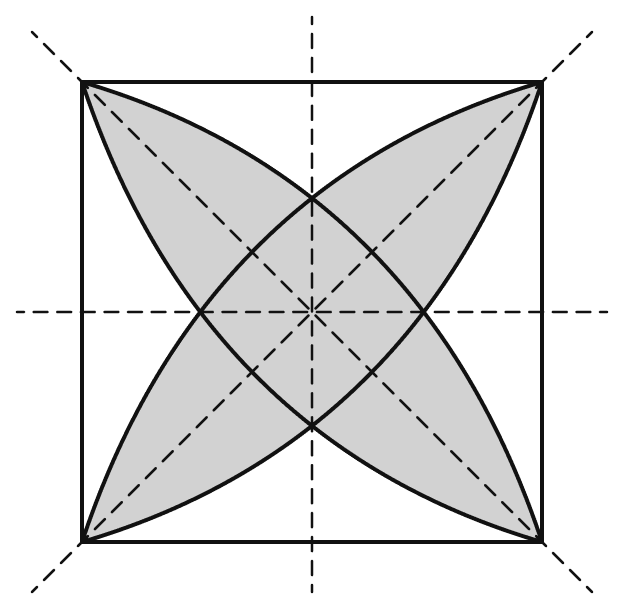
Hence, the given figure has 4 lines of symmetry.
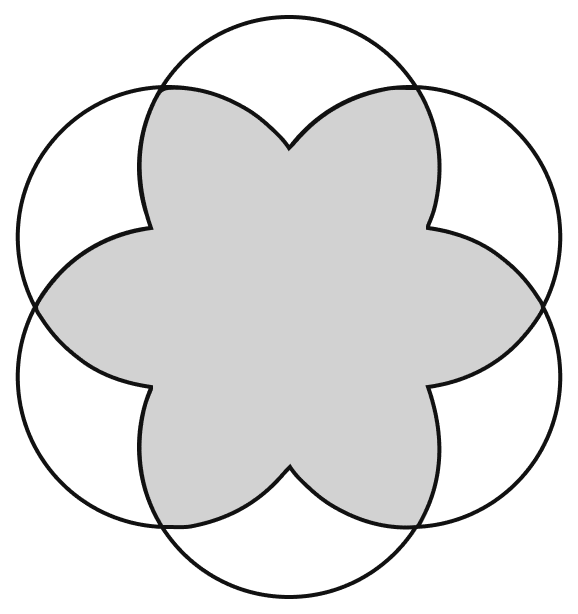
Draw all lines of symmetry, if any, in the following figure:
Answer
The given figure is a flower-shaped figure with equal petals. It can be folded into two coincident parts about each of the lines passing through the centre and the middle of a petal, and each of the lines passing through the centre and the point between two adjacent petals.
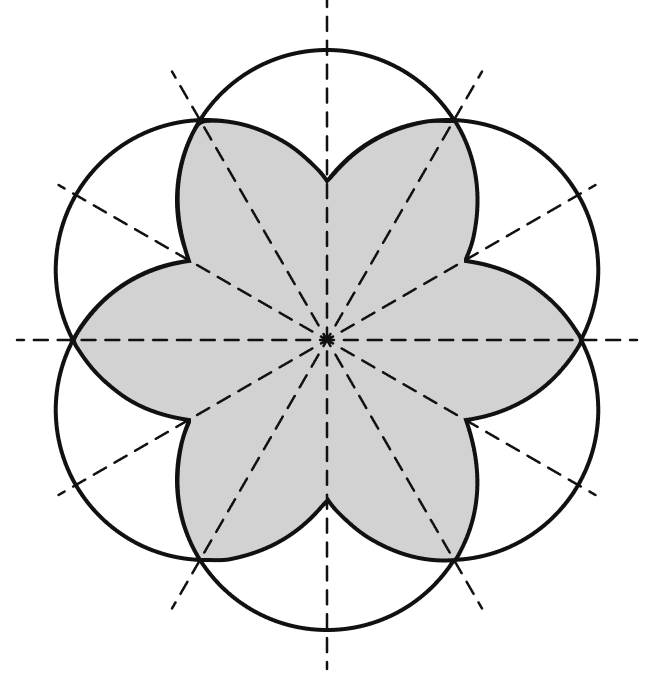
Hence, the given figure has 6 lines of symmetry.
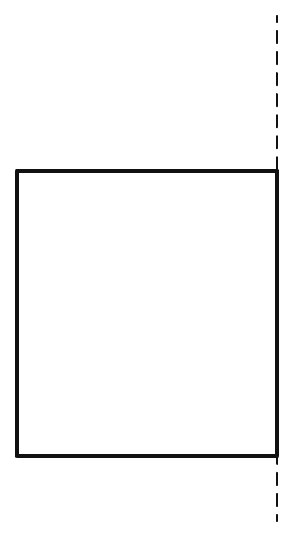
In the following figure, the mirror line (line of symmetry) is given as dotted line. Complete the figure by performing reflection in the mirror (dotted) line and name the figure you complete:
Answer
The reflection and the given figure are equidistant from the mirror line. On performing reflection of the given figure in the dotted line, we get the completed figure as shown below:
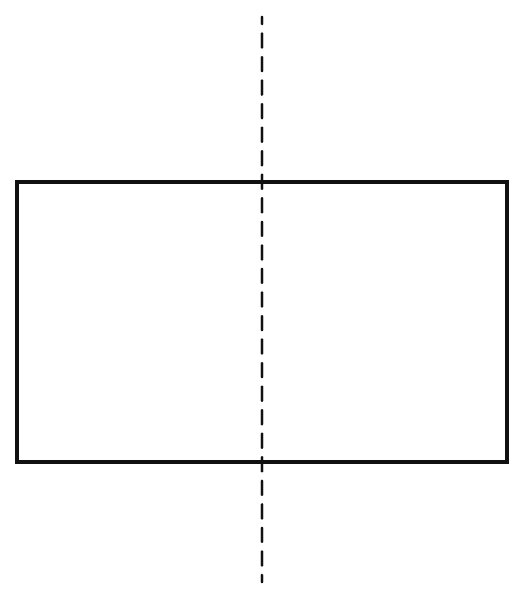
Hence, the completed figure is a rectangle.
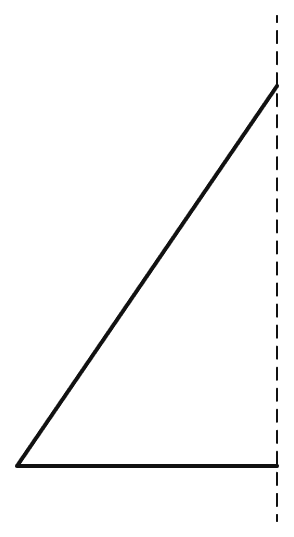
In the following figure, the mirror line (line of symmetry) is given as dotted line. Complete the figure by performing reflection in the mirror (dotted) line and name the figure you complete:
Answer
The reflection and the given figure are equidistant from the mirror line. On performing reflection of the given figure in the dotted line, we get the completed figure as shown below:
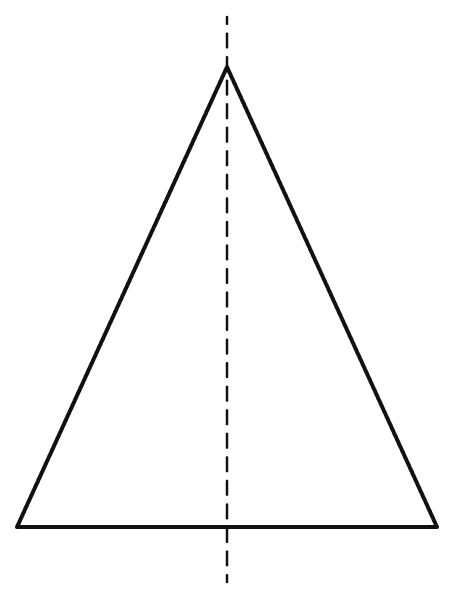
Hence, the completed figure is an isosceles triangle.
In the following figure, the mirror line (line of symmetry) is given as dotted line. Complete the figure by performing reflection in the mirror (dotted) line and name the figure you complete:
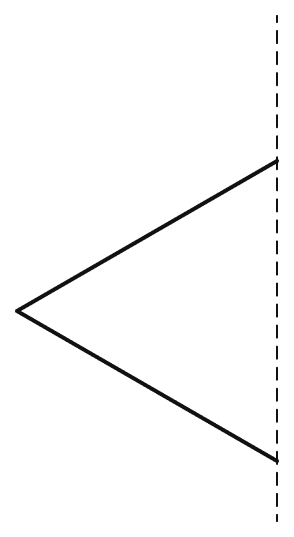
Answer
The reflection and the given figure are equidistant from the mirror line. On performing reflection of the given figure in the dotted line, we get the completed figure as shown below:
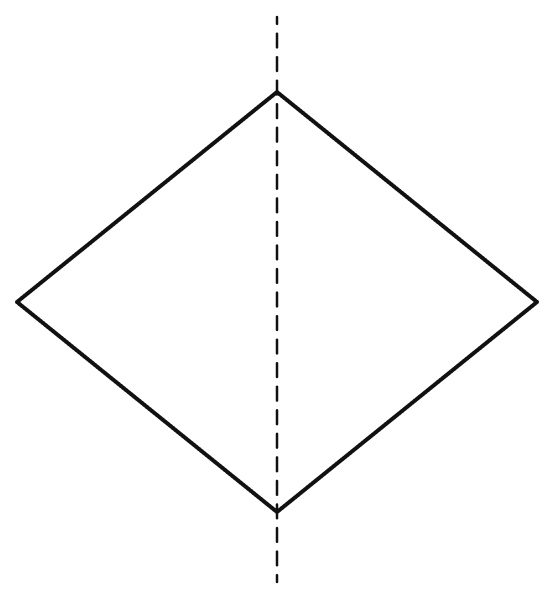
Hence, the completed figure is a rhombus.
In the following figure, the mirror line (line of symmetry) is given as dotted line. Complete the figure by performing reflection in the mirror (dotted) line and name the figure you complete:
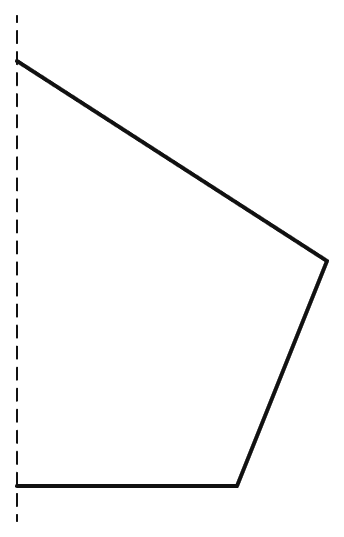
Answer
The reflection and the given figure are equidistant from the mirror line. On performing reflection of the given figure in the dotted line, we get the completed figure as shown below:
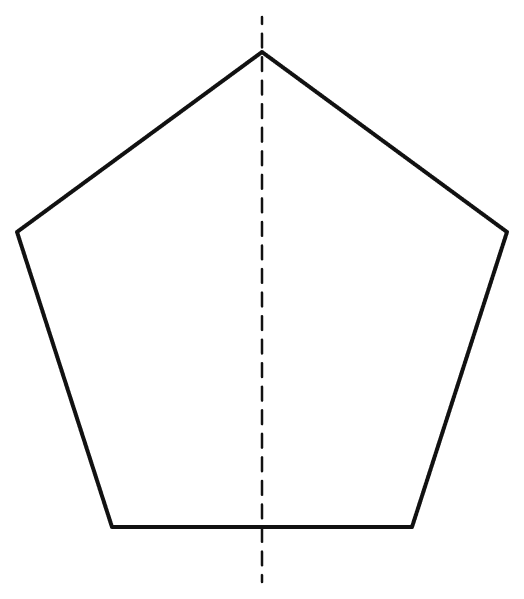
Hence, the completed figure is a pentagon.
Copy the adjoining figure.
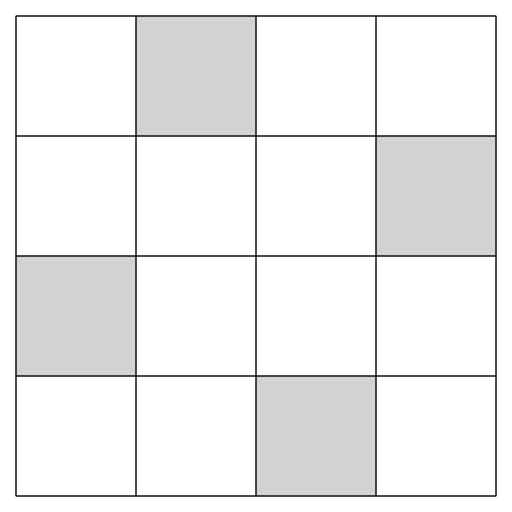
Take any one diagonal as a line of symmetry and shade a few more squares to make the figure symmetric about a diagonal. Is there more than one way to do that? Will the figure be symmetric about both the diagonals?
Answer
Taking one diagonal as the line of symmetry, we shade the image of each shaded square in that diagonal, as shown below:
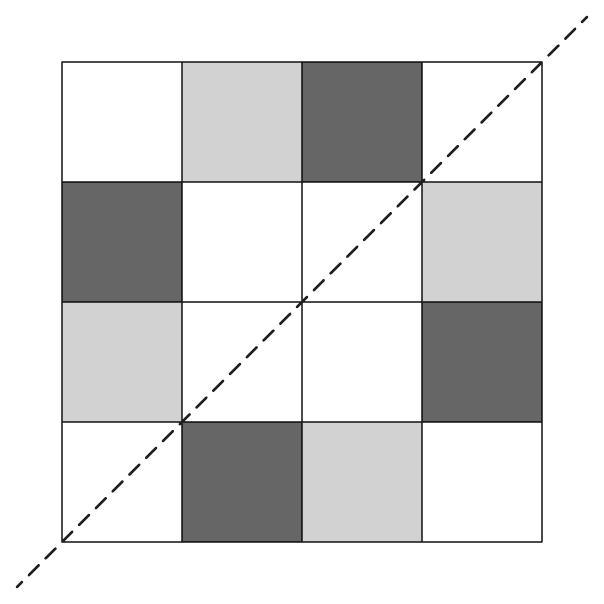
We get the same figure if we shade according to the other diagonal as line of symmetry. Also, we get the same figure if we shade by taking the lines joining the mid-points of opposite sides as lines of symmetry. So, there is more than one way to do that.
Hence, yes, there is more than one way to do that and yes, the figure is symmetrical about both the diagonals.
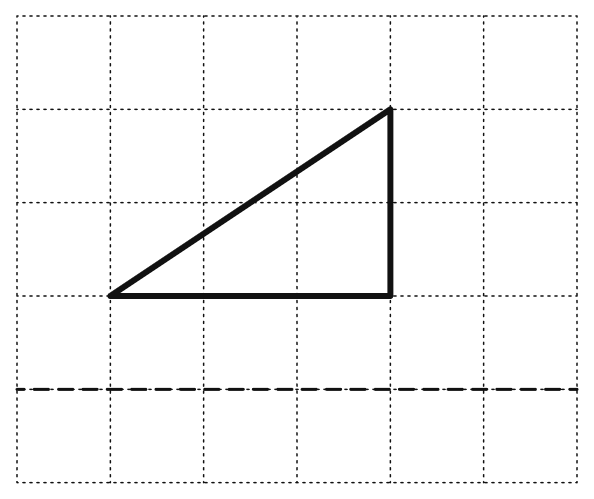
Draw the reflection of the following figure/letter in the given mirror line shown dotted:
Answer
The reflection and the given figure are equidistant from the mirror line. The reflection is a mirror image of the figure, i.e., it is flipped across the mirror line.
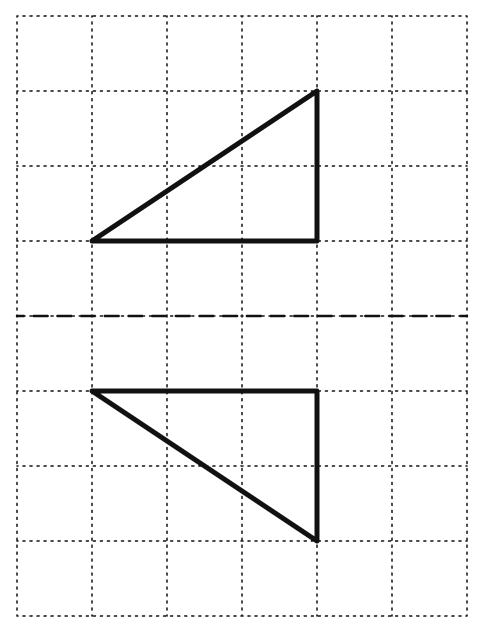
Hence, the reflection of the given figure/letter is as shown in the figure above.
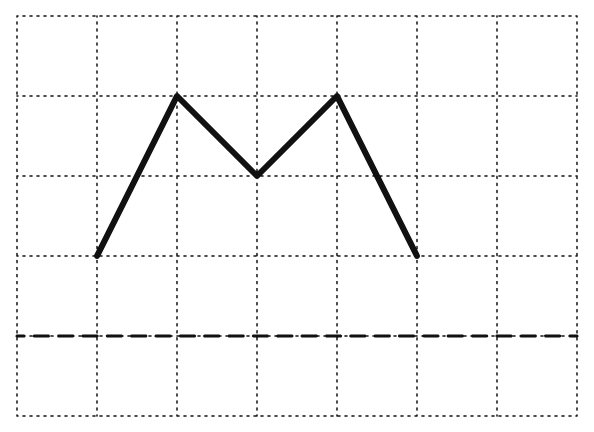
Draw the reflection of the following figure/letter in the given mirror line shown dotted:
Answer
The reflection and the given figure are equidistant from the mirror line. The reflection is a mirror image of the figure, i.e., it is flipped across the mirror line.
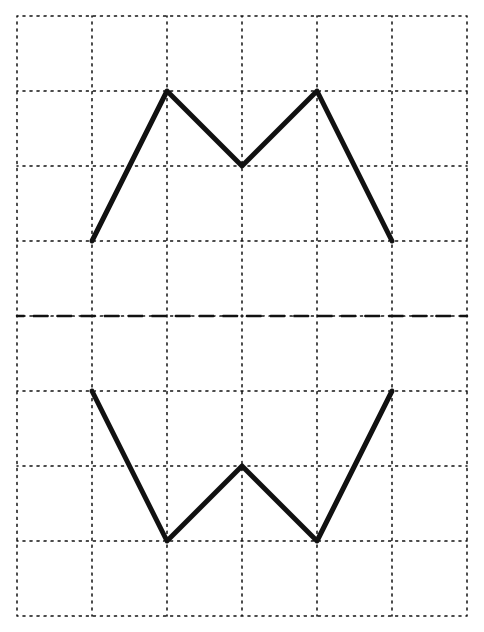
Hence, the reflection of the given figure/letter is as shown in the figure above.
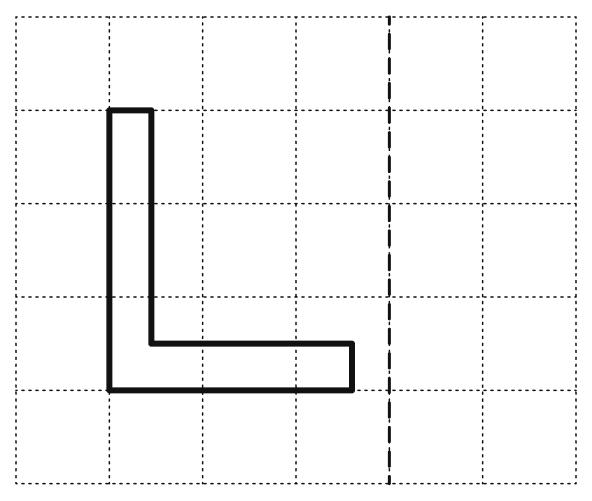
Draw the reflection of the following figure/letter in the given mirror line shown dotted:
Answer
The reflection and the given figure are equidistant from the mirror line. The reflection is a mirror image of the figure, i.e., it is flipped across the mirror line.
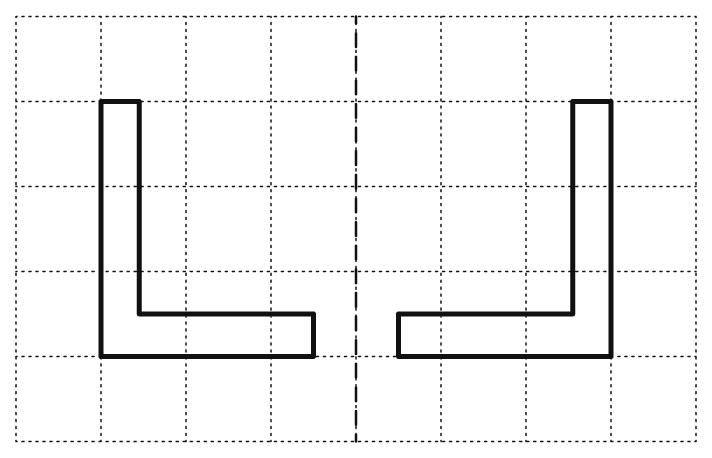
Hence, the reflection of the given figure/letter is as shown in the figure above.
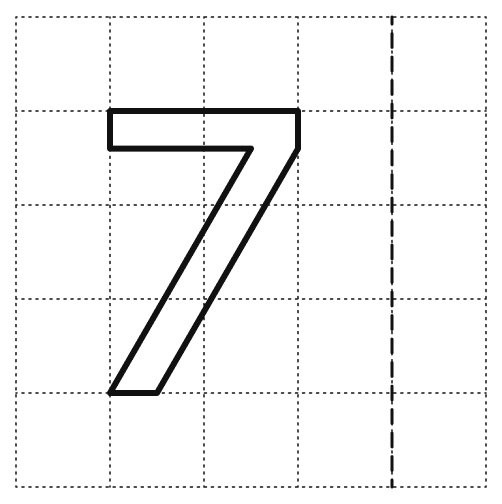
Draw the reflection of the following figure/letter in the given mirror line shown dotted:
Answer
The reflection and the given figure are equidistant from the mirror line. The reflection is a mirror image of the figure, i.e., it is flipped across the mirror line.
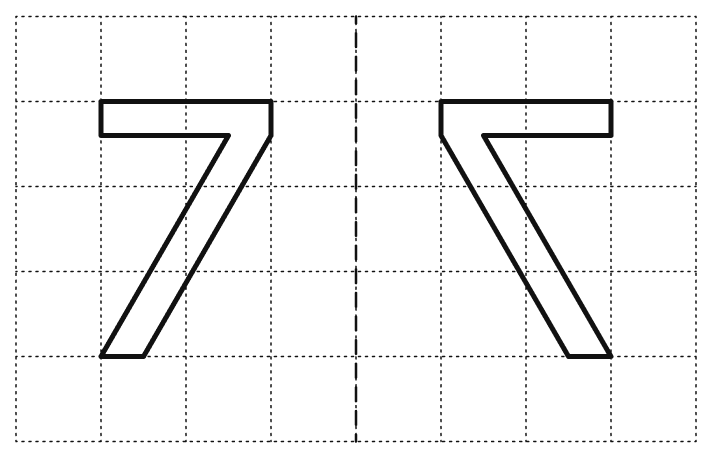
Hence, the reflection of the given figure/letter is as shown in the figure above.
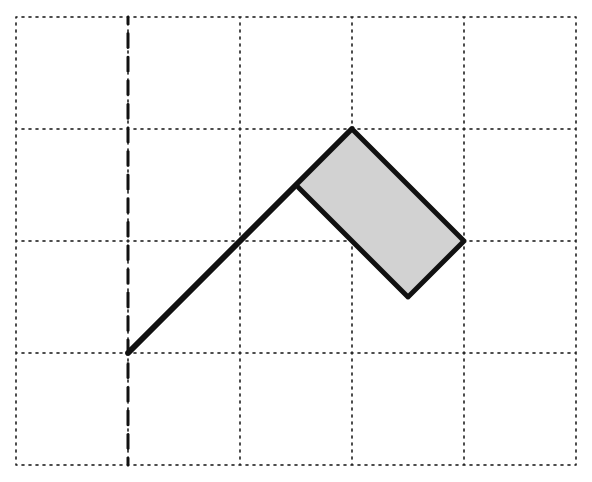
Draw the reflection of the following figure/letter in the given mirror line shown dotted:
Answer
The reflection and the given figure are equidistant from the mirror line. The reflection is a mirror image of the figure, i.e., it is flipped across the mirror line.
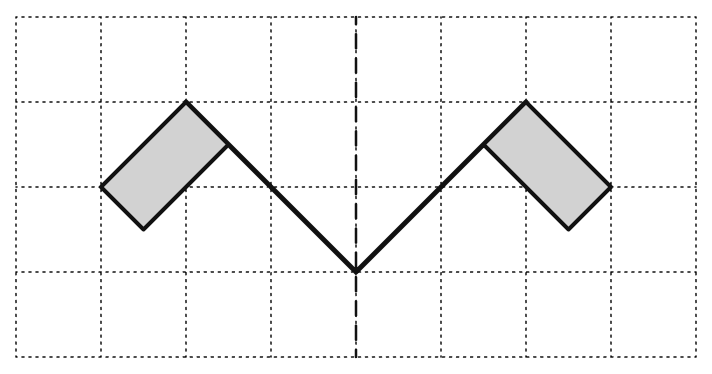
Hence, the reflection of the given figure/letter is as shown in the figure above.
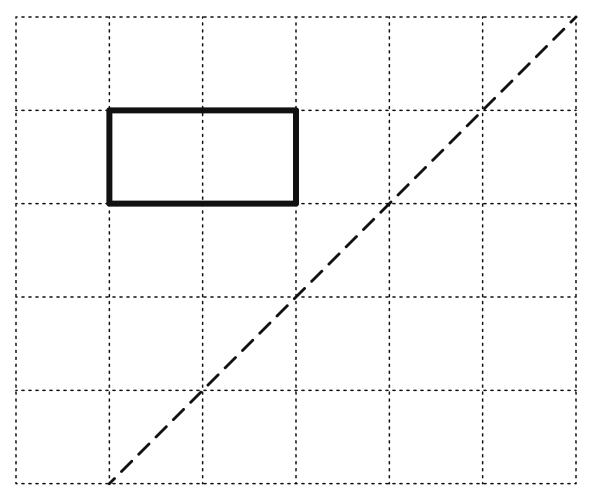
Draw the reflection of the following figure/letter in the given mirror line shown dotted:
Answer
The reflection and the given figure are equidistant from the mirror line. The reflection is a mirror image of the figure, i.e., it is flipped across the mirror line.
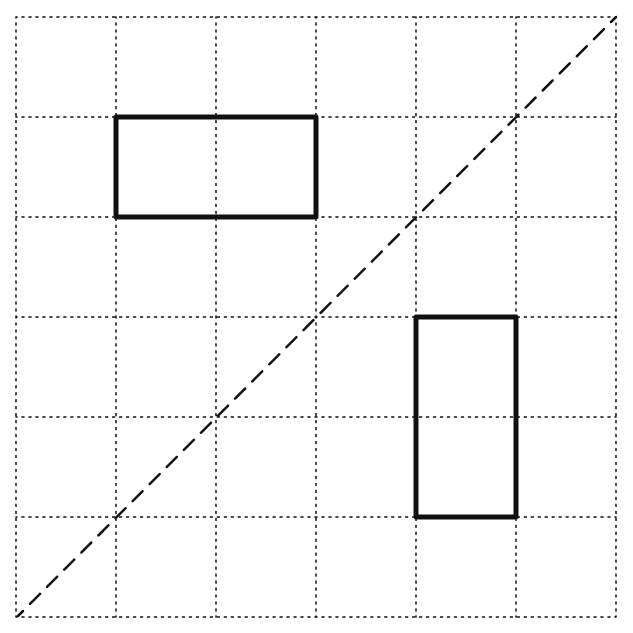
Hence, the reflection of the given figure/letter is as shown in the figure above.
What other names can you give to the line of symmetry of
(i) an isosceles triangle
(ii) rhombus
(iii) circle?
Answer
(i) The line of symmetry of an isosceles triangle is the bisector of the angle included between the equal sides. This line also joins the vertex to the mid-point of the base, i.e., it is also the median.
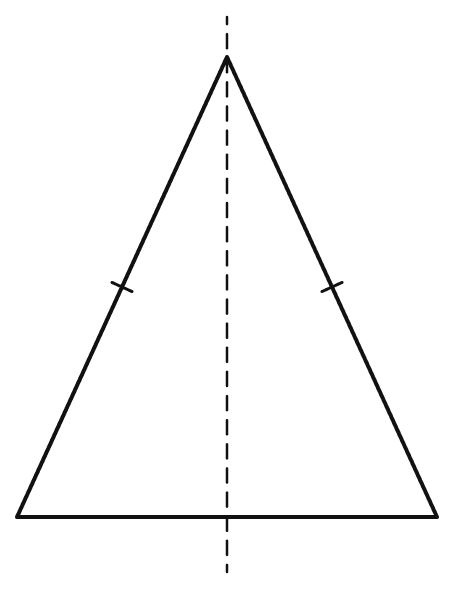
Hence, the line of symmetry of an isosceles triangle can be called the angle bisector or the median.
(ii) The lines of symmetry of a rhombus are its diagonals.
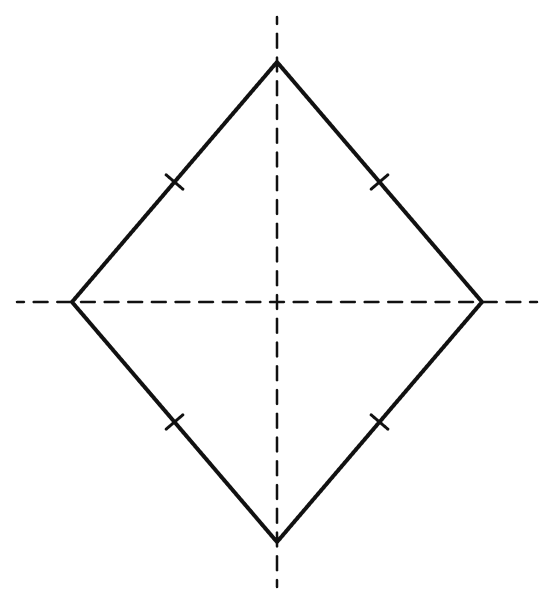
Hence, the line of symmetry of a rhombus can be called its diagonal.
(iii) Every line through the centre of a circle is a line of symmetry of the circle, i.e., every diameter is a line of symmetry.
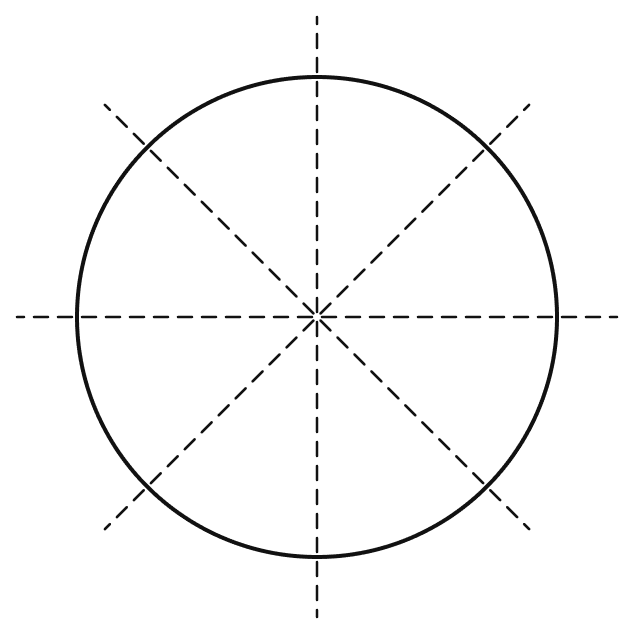
Hence, the line of symmetry of a circle can be called its diameter.
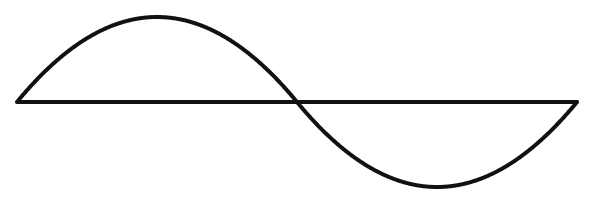
Does the following figure have rotational symmetry? In case of rotational symmetry, find the order of rotational symmetry.
Answer
On rotating the given figure about its centre, it fits onto itself when rotated through 180° and 360°, i.e., two times during one complete rotation.
Hence, the given figure has rotational symmetry of order 2.
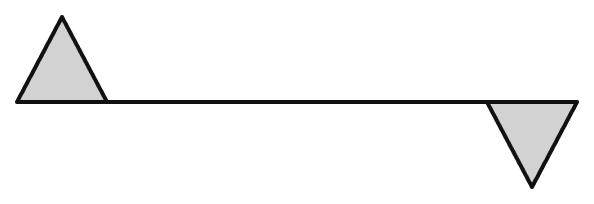
Does the following figure have rotational symmetry? In case of rotational symmetry, find the order of rotational symmetry.
Answer
On rotating the given figure about the mid-point of the line segment, it fits onto itself when rotated through 180° and 360°, i.e., two times during one complete rotation.
Hence, the given figure has rotational symmetry of order 2.
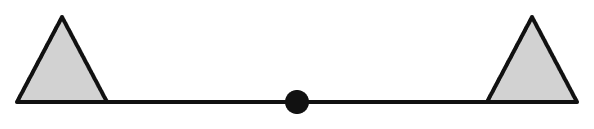
Does the following figure have rotational symmetry? In case of rotational symmetry, find the order of rotational symmetry.
Answer
Both the triangles of the given figure are on the same side of the line segment. On giving it one complete rotation about the dot, it fits onto itself only once, i.e., on being rotated through 360°.
Hence, the given figure has no rotational symmetry.
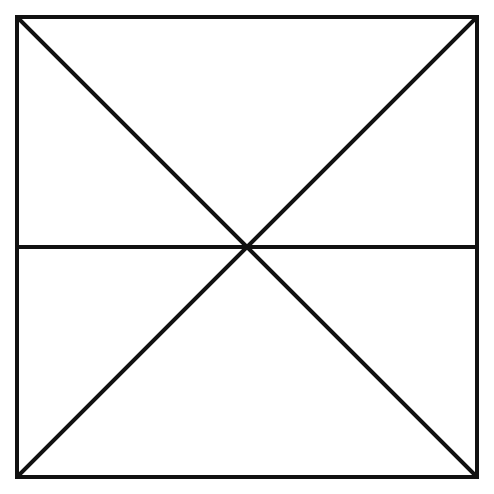
Does the following figure have rotational symmetry? In case of rotational symmetry, find the order of rotational symmetry.
Answer
On rotating the given figure about the centre of the square, it fits onto itself when rotated through 180° and 360°, i.e., two times during one complete rotation.
Hence, the given figure has rotational symmetry of order 2.
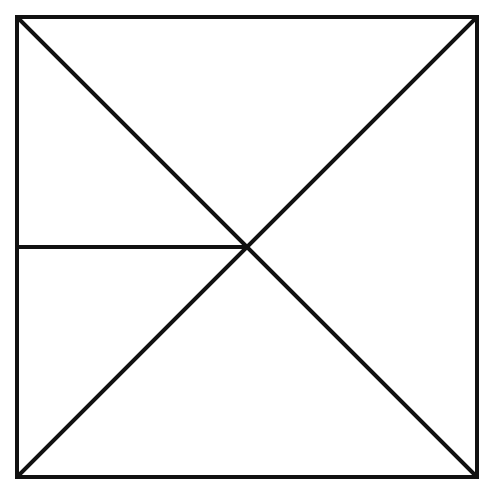
Does the following figure have rotational symmetry? In case of rotational symmetry, find the order of rotational symmetry.
Answer
On giving the given figure one complete rotation about the centre of the square, it fits onto itself only once, i.e., on being rotated through 360°.
Hence, the given figure has no rotational symmetry.
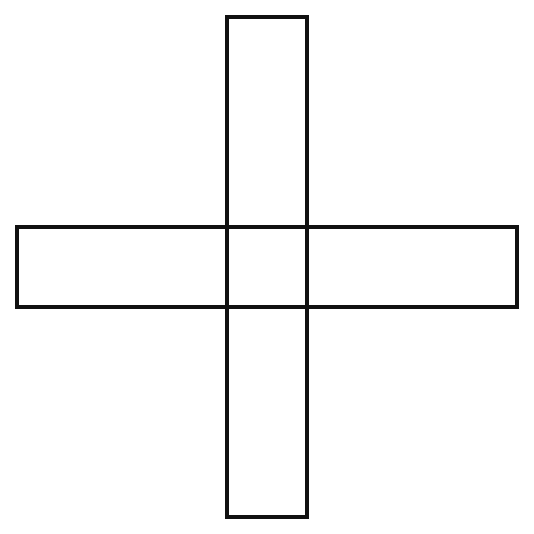
Does the following figure have rotational symmetry? In case of rotational symmetry, find the order of rotational symmetry.
Answer
On rotating the given figure about its centre, it fits onto itself when rotated through 90°, 180°, 270° and 360°, i.e., four times during one complete rotation.
Hence, the given figure has rotational symmetry of order 4.
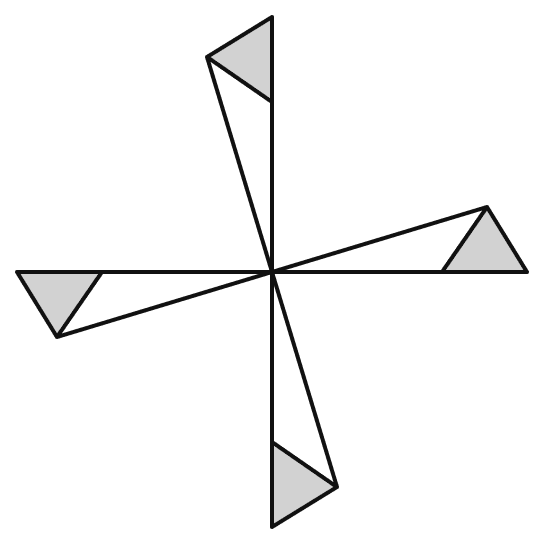
Does the following figure have rotational symmetry? In case of rotational symmetry, find the order of rotational symmetry.
Answer
On rotating the given figure about its centre, it fits onto itself when rotated through 90°, 180°, 270° and 360°, i.e., four times during one complete rotation.
Hence, the given figure has rotational symmetry of order 4.
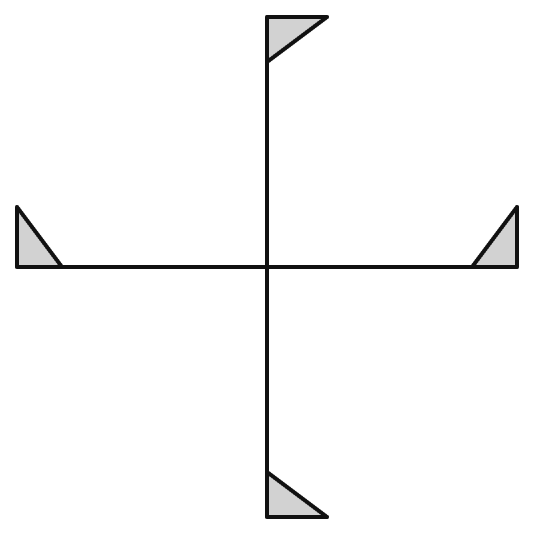
Does the following figure have rotational symmetry? In case of rotational symmetry, find the order of rotational symmetry.
Answer
On giving the given figure one complete rotation about its centre, it fits onto itself only once, i.e., on being rotated through 360°.
Hence, the given figure has no rotational symmetry.
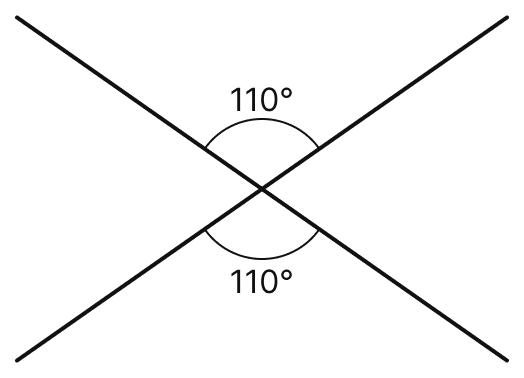
Does the following figure have rotational symmetry? In case of rotational symmetry, find the order of rotational symmetry.
Answer
On rotating the given figure about the point of intersection of the lines, it fits onto itself when rotated through 180° and 360°, i.e., two times during one complete rotation.
Hence, the given figure has rotational symmetry of order 2.
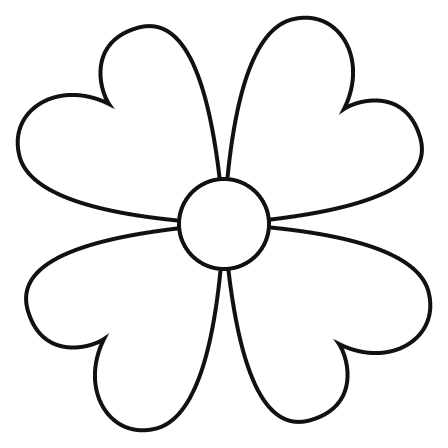
Does the following figure have rotational symmetry? In case of rotational symmetry, find the order of rotational symmetry.
Answer
On rotating the given figure about its centre, it fits onto itself when rotated through 90°, 180°, 270° and 360°, i.e., four times during one complete rotation.
Hence, the given figure has rotational symmetry of order 4.
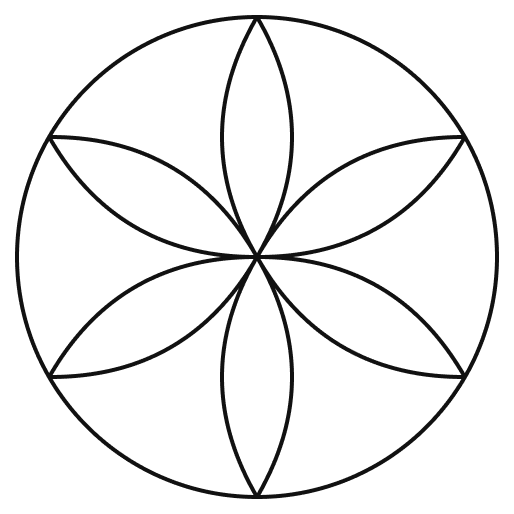
Does the following figure have rotational symmetry? In case of rotational symmetry, find the order of rotational symmetry.
Answer
On rotating the given figure about its centre, it fits onto itself when rotated through 60°, 120°, 180°, 240°, 300° and 360°, i.e., six times during one complete rotation.
Hence, the given figure has rotational symmetry of order 6.
Does the following figure have rotational symmetry? In case of rotational symmetry, find the order of rotational symmetry.
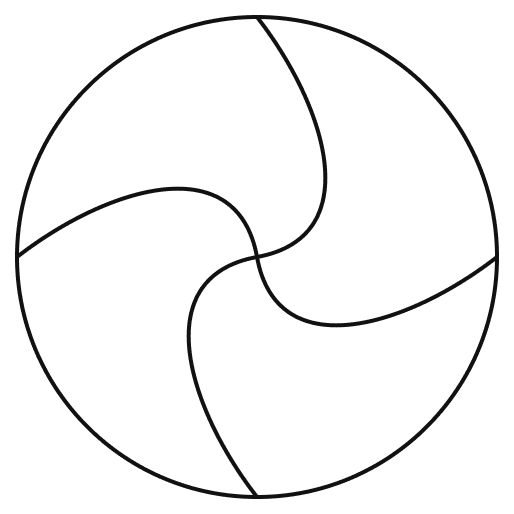
Answer
On rotating the given figure about the centre of the circle, it fits onto itself when rotated through 90°, 180°, 270° and 360°, i.e., four times during one complete rotation.
Hence, the given figure has rotational symmetry of order 4.
Does the following figure have rotational symmetry of order greater than 1?
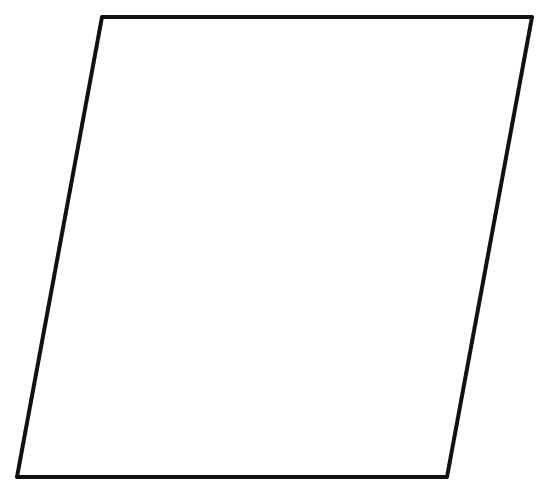
Answer
The given figure is a parallelogram. On rotating it about the point of intersection of its diagonals, it fits onto itself when rotated through 180° and 360°. So, it has rotational symmetry of order 2.
Hence, yes, the given figure has rotational symmetry of order greater than 1.
Does the following figure have rotational symmetry of order greater than 1?
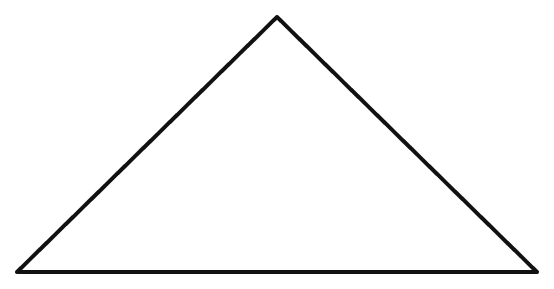
Answer
The given figure is a triangle which fits onto itself only once, i.e., on being rotated through 360°. So, it has rotational symmetry of order 1.
Hence, no, the given figure does not have rotational symmetry of order greater than 1.
Does the following figure have rotational symmetry of order greater than 1?
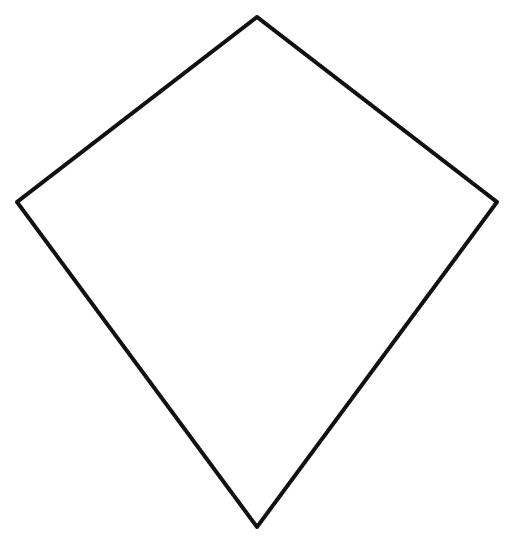
Answer
The given figure is a kite which fits onto itself only once, i.e., on being rotated through 360°. So, it has rotational symmetry of order 1.
Hence, no, the given figure does not have rotational symmetry of order greater than 1.
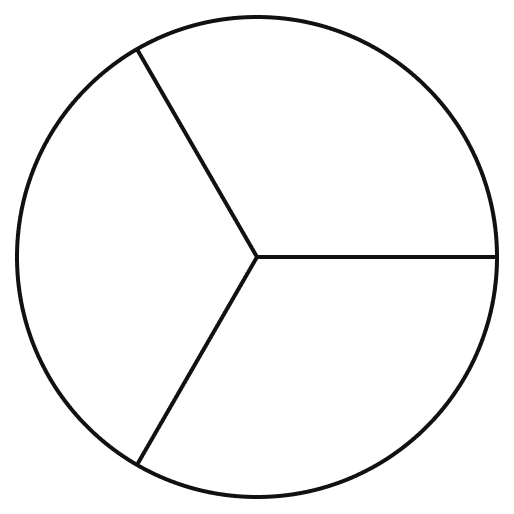
Does the following figure have rotational symmetry of order greater than 1?
Answer
The given figure is a circle divided into three equal parts. On rotating it about its centre, it fits onto itself when rotated through 120°, 240° and 360°. So, it has rotational symmetry of order 3.
Hence, yes, the given figure has rotational symmetry of order greater than 1.
Name any two figures that have both line of symmetry and rotational symmetry.
Answer
A rhombus has two lines of symmetry, which are its diagonals, and it has rotational symmetry of order 2.
An equilateral triangle has three lines of symmetry, which are the bisectors of its angles, and it has rotational symmetry of order 3.
Hence, a rhombus and an equilateral triangle have both line of symmetry and rotational symmetry.
Name the quadrilaterals which have both line and rotational symmetry of order more than 1.
Answer
A rectangle has two lines of symmetry, which are the lines joining the mid-points of opposite sides, and rotational symmetry of order 2.
A rhombus has two lines of symmetry, which are its diagonals, and rotational symmetry of order 2.
A square has four lines of symmetry, which are the lines joining the mid-points of opposite sides and the diagonals, and rotational symmetry of order 4.
Hence, a rectangle, a rhombus and a square have both line and rotational symmetry of order more than 1.
Draw a rough sketch of a triangle with both line and rotational symmetries of order more than 1.
Answer
An equilateral triangle has three lines of symmetry and rotational symmetry of order 3.
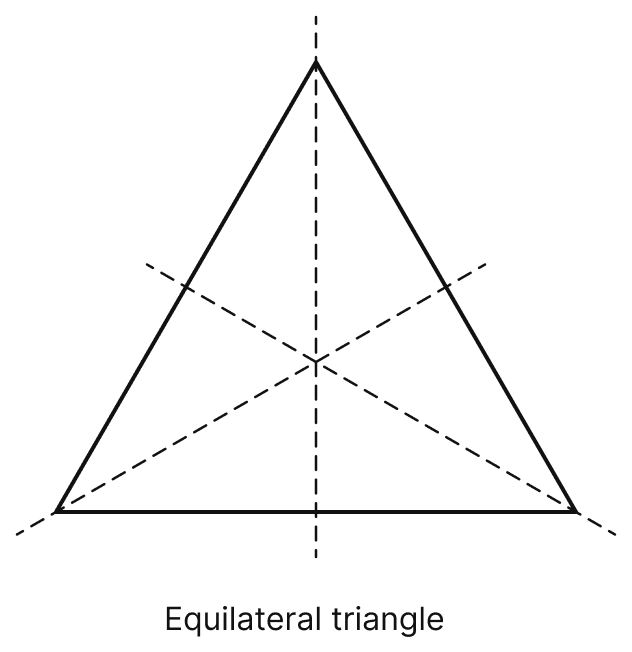
Hence, the required triangle is an equilateral triangle.
Draw a rough sketch of a triangle with only one line of symmetry and no rotational symmetry of order more than 1.
Answer
An isosceles triangle has only one line of symmetry, which is the bisector of the angle included between equal sides, and it has no rotational symmetry.
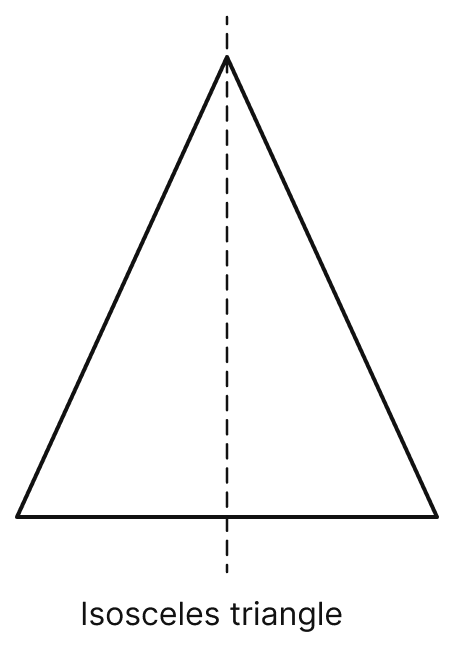
Hence, the required triangle is an isosceles triangle.
Draw a rough sketch of a triangle with no line symmetry but rotational symmetry of order 1.
Answer
A scalene triangle has no line of symmetry and it fits onto itself only once, on being rotated through 360°, i.e., it has rotational symmetry of order 1.
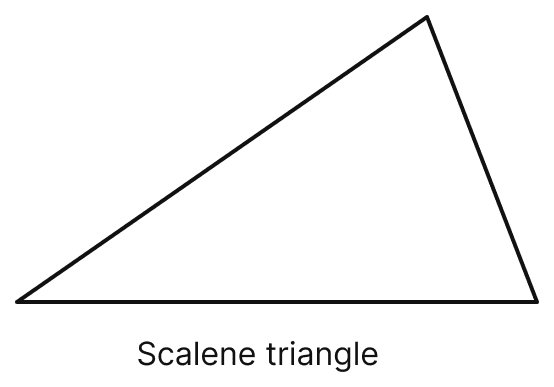
Hence, the required triangle is a scalene triangle.
Draw a rough sketch of a quadrilateral with no line symmetry but rotational symmetry of order more than 1.
Answer
A parallelogram has no line of symmetry and it has rotational symmetry of order 2.
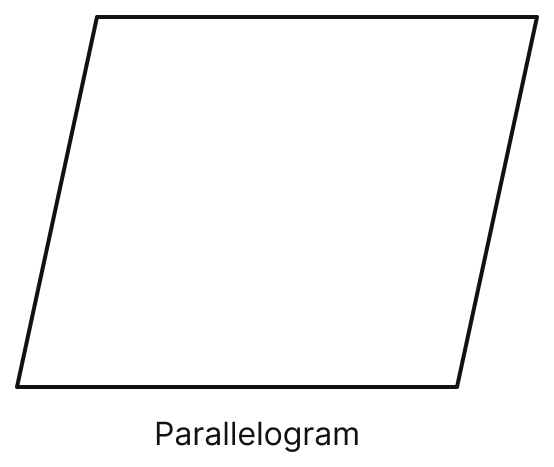
Hence, the required quadrilateral is a parallelogram.
Draw a rough sketch of a quadrilateral with line symmetry but not rotational symmetry of order more than 1.
Answer
An isosceles trapezium has one line of symmetry, which is the line joining the mid-points of its bases, and it has no rotational symmetry.
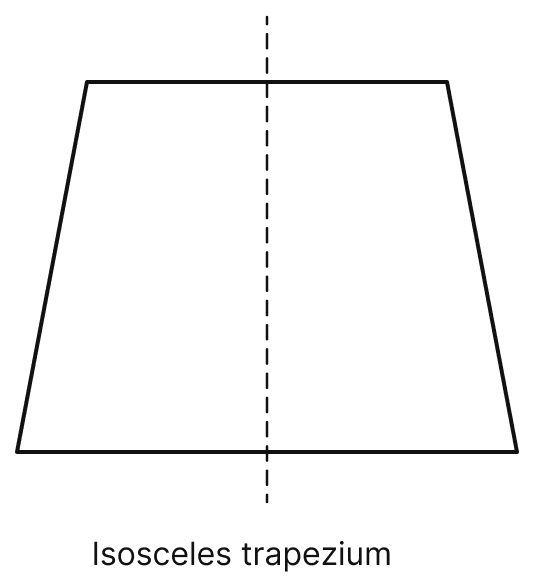
Hence, the required quadrilateral is an isosceles trapezium.
If a figure has two or more than two lines of symmetry, can it have rotational symmetry of order more than one?
Answer
We know that if a figure has two or more lines of symmetry, then it has rotational symmetry also.
For example, a rectangle has two lines of symmetry and rotational symmetry of order 2, and a square has four lines of symmetry and rotational symmetry of order 4.
Hence, yes, it can have rotational symmetry of order more than one.
A figure looks exactly the same as its original figure after rotation of 60°. At what other angles will this figure appear the same?
What can you say if the angle of rotation is
(i) 72°
(ii) 45°
(iii) 50°?
Answer
Given, angle of rotation = 60°
∴ Order of rotational symmetry = = 6
So, the figure will look exactly the same at every multiple of 60° upto 360°, i.e., at 60°, 120°, 180°, 240°, 300° and 360°.
Hence, the figure will appear the same at 120°, 180°, 240°, 300° and 360°.
(i) Angle of rotation = 72°
∴ Order of rotational symmetry = = 5
So, the figure will look exactly the same at 72°, 144°, 216°, 288° and 360°.
Hence, the figure will appear the same at 144°, 216°, 288° and 360°.
(ii) Angle of rotation = 45°
∴ Order of rotational symmetry = = 8
So, the figure will look exactly the same at 45°, 90°, 135°, 180°, 225°, 270°, 315° and 360°.
Hence, the figure will appear the same at 90°, 135°, 180°, 225°, 270°, 315° and 360°.
(iii) Angle of rotation = 50°
Order of rotational symmetry = = 7.2, which is not a whole number.
Hence, an angle of rotation of 50° is not possible.
Can a figure possessing rotational symmetry have an angle of rotation of measure 180°?
Answer
We know that if A° is the angle of rotation of a figure, then it has a rotational symmetry of order = . So, 360 must be exactly divisible by A.
= 2, which is a whole number.
Hence, yes, a figure can have an angle of rotation of 180°.
Can a figure possessing rotational symmetry have an angle of rotation of measure 120°?
Answer
We know that if A° is the angle of rotation of a figure, then it has a rotational symmetry of order = . So, 360 must be exactly divisible by A.
= 3, which is a whole number.
Hence, yes, a figure can have an angle of rotation of 120°.
Can a figure possessing rotational symmetry have an angle of rotation of measure 90°?
Answer
We know that if A° is the angle of rotation of a figure, then it has a rotational symmetry of order = . So, 360 must be exactly divisible by A.
= 4, which is a whole number.
Hence, yes, a figure can have an angle of rotation of 90°.
Can a figure possessing rotational symmetry have an angle of rotation of measure 30°?
Answer
We know that if A° is the angle of rotation of a figure, then it has a rotational symmetry of order = . So, 360 must be exactly divisible by A.
= 12, which is a whole number.
Hence, yes, a figure can have an angle of rotation of 30°.
Can a figure possessing rotational symmetry have an angle of rotation of measure 15°?
Answer
We know that if A° is the angle of rotation of a figure, then it has a rotational symmetry of order = . So, 360 must be exactly divisible by A.
= 24, which is a whole number.
Hence, yes, a figure can have an angle of rotation of 15°.
Can a figure possessing rotational symmetry have an angle of rotation of measure 17°?
Answer
We know that if A° is the angle of rotation of a figure, then it has a rotational symmetry of order = . So, 360 must be exactly divisible by A.
360 is not exactly divisible by 17, so is not a whole number.
Hence, no, a figure cannot have an angle of rotation of 17°.
Fill in the blanks:
(i) The hands of a clock rotate only in ..... direction.
(ii) While opening the cap of bottle, the direction of rotation is ....
(iii) The number of lines of symmetry of an isosceles right angled triangle is ....
(iv) A figure has .... symmetry if it is its own image under a reflection.
(v) The centre of rotation of a rhombus is the point ....
(vi) A regular polygon of n-sides has .... number of lines of symmetry.
(vii) Angle of rotational symmetry in an equilateral triangle is ....
(viii) Angle of rotational symmetry in a regular pentagon is ....
(ix) If after a rotation of 45° about a fixed point the figure looks exactly the same, then the order of rotational symmetry is ....
Answer
(i) The hands of a clock rotate only in clockwise direction.
(ii) While opening the cap of bottle, the direction of rotation is anticlockwise.
(iii) An isosceles right angled triangle has only one line of symmetry, which is the bisector of its right angle.
The number of lines of symmetry of an isosceles right angled triangle is 1.
(iv) A figure has line symmetry if it is its own image under a reflection.
(v) The centre of rotation of a rhombus is the point of intersection of its diagonals.
(vi) Each regular polygon has as many lines of symmetry as the number of sides.
A regular polygon of n-sides has n number of lines of symmetry.
(vii) An equilateral triangle has rotational symmetry of order 3.
∴ Angle of rotation = = 120°
Angle of rotational symmetry in an equilateral triangle is 120°.
(viii) A regular pentagon has rotational symmetry of order 5.
∴ Angle of rotation = = 72°
Angle of rotational symmetry in a regular pentagon is 72°.
(ix) Order of rotational symmetry = = 8
If after a rotation of 45° about a fixed point the figure looks exactly the same, then the order of rotational symmetry is 8.
State whether the following statements are true (T) or false (F):
(i) The letter A has line symmetry but no rotational symmetry.
(ii) A rhombus is also a parallelogram and hence it does not have line symmetry.
(iii) A parallelogram has two lines of symmetry.
(iv) The order of rotational symmetry of a rhombus is four.
(v) A circle has exactly four lines of symmetry.
(vi) In a regular pentagon, the perpendicular bisectors of the sides are the only lines of symmetry.
(vii) In a regular hexagon, the perpendicular bisectors of the sides are the only lines of symmetry.
(viii) In a rectangle, the angle of rotational symmetry is 90°
(ix) A semicircle has rotational symmetry of order 2
(x) An isosceles triangle has neither a line symmetry nor a rotational symmetry.
(xi) If a figure possesses a rotational symmetry, then it must look exactly the same atleast once upto a rotation of 180°
(xii) The angle of rotation of a figure is obtained by dividing 360° by the order of rotational symmetry.
Answer
(i) The letter A has one vertical line of symmetry and it fits onto itself only once in a complete rotation.
Hence, the given statement is true.
(ii) A rhombus has two lines of symmetry, which are its diagonals.
Hence, the given statement is false.
(iii) A parallelogram has no line of symmetry.
Hence, the given statement is false.
(iv) The order of rotational symmetry of a rhombus is 2.
Hence, the given statement is false.
(v) Every line through the centre of a circle is a line of symmetry, so a circle has unlimited number of lines of symmetry.
Hence, the given statement is false.
(vi) In a regular pentagon, the five lines of symmetry are the perpendiculars drawn from the vertices to the opposite sides, which are also the perpendicular bisectors of the sides.
Hence, the given statement is true.
(vii) In a regular hexagon, the lines of symmetry are the lines joining the mid-points of opposite sides (perpendicular bisectors of the sides) and also the diagonals through the centre.
Hence, the given statement is false.
(viii) A rectangle fits onto itself when rotated through 180° and 360°, so its angle of rotation is 180°.
Hence, the given statement is false.
(ix) A semicircle has no rotational symmetry.
Hence, the given statement is false.
(x) An isosceles triangle has one line of symmetry, which is the bisector of the angle included between equal sides.
Hence, the given statement is false.
(xi) For a figure to have a rotational symmetry, the angle of rotation must not be more than 180°.
Hence, the given statement is true.
(xii) Order of rotational symmetry =
⇒ A =
Hence, the given statement is true.
A quadrilateral having four lines of symmetry is a
parallelogram
rectangle
rhombus
square
Answer
A parallelogram has no line of symmetry, while a rectangle and a rhombus have two lines of symmetry each.
A square has four lines of symmetry, which are the lines joining the mid-points of opposite sides and the diagonals.
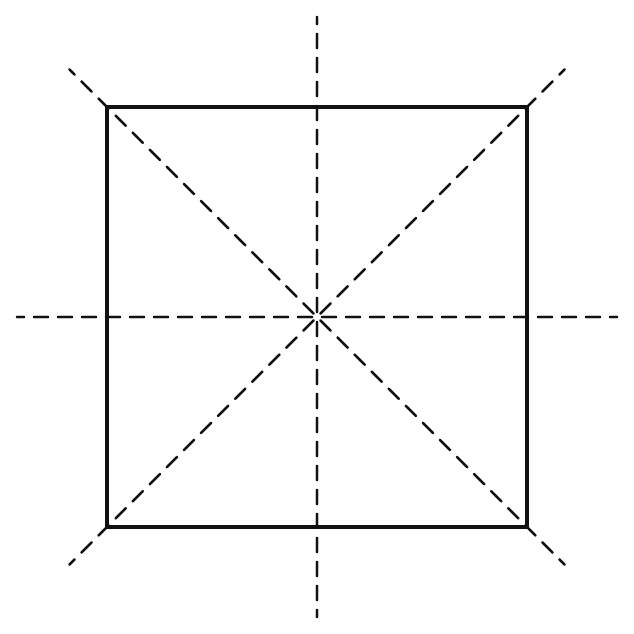
Hence, option 4 is the correct option.
The letter Z has
one horizontal line of symmetry
one vertical line of symmetry
two lines of symmetry
no line of symmetry
Answer
In whatever manner we fold the letter Z, the two parts do not coincide. So, the letter Z has no line of symmetry.
Hence, option 4 is the correct option.
A figure that does not have any rotational symmetry is
circle
parallelogram
kite
regular pentagon
Answer
A circle can be rotated about its centre by any angle and still looks the same. A parallelogram has rotational symmetry of order 2 and a regular pentagon has rotational symmetry of order 5.
A kite fits onto itself only once, i.e., on being rotated through 360°. So, it has no rotational symmetry.
Hence, option 3 is the correct option.
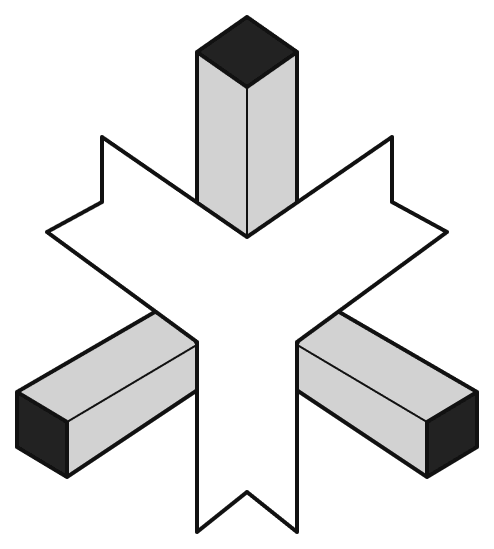
The number of lines of symmetry in the adjoining figure is
1
3
6
infinitely many
Answer
The given figure can be folded into two coincident parts about each of the three lines passing through its centre and the middle of each shaded part.
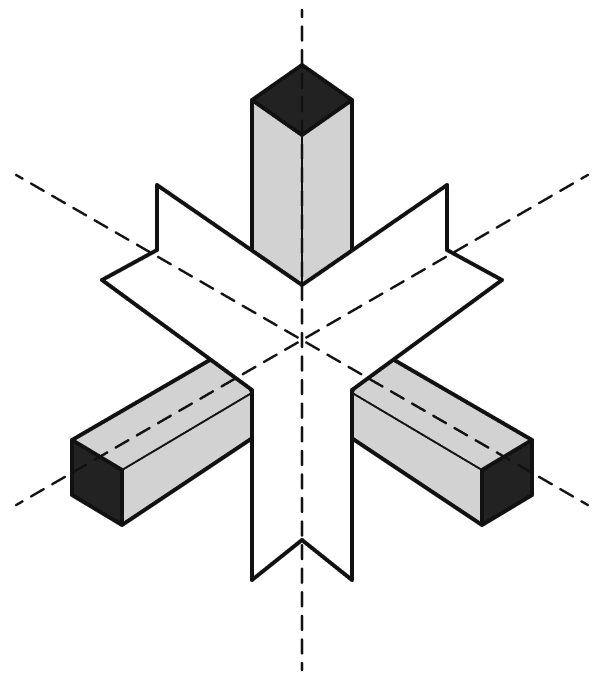
So, the given figure has 3 lines of symmetry.
Hence, option 2 is the correct option.
Rotating a figure by 60° anticlockwise is equivalent to a clockwise rotation of
60°
120°
240°
300°
Answer
A full turn = 360°
∴ Rotating a figure by 60° anticlockwise = Rotating it by (360° - 60°) clockwise = 300° clockwise.
Hence, option 4 is the correct option.
A figure having 1 line of symmetry and whose order of rotational symmetry is also 1 is
rhombus
parallelogram
kite
scalene triangle
Answer
A rhombus has 2 lines of symmetry, while a parallelogram and a scalene triangle have no line of symmetry.
A kite has one line of symmetry and it fits onto itself only once in a complete rotation, i.e., its order of rotational symmetry is 1.
Hence, option 3 is the correct option.
The order of rotational symmetry of a line segment is
1
2
3
4
Answer
On rotating a line segment about its mid-point, it fits onto itself when rotated through 180° and 360°, i.e., two times during one complete rotation.
So, a line segment has rotational symmetry of order 2.
Hence, option 2 is the correct option.
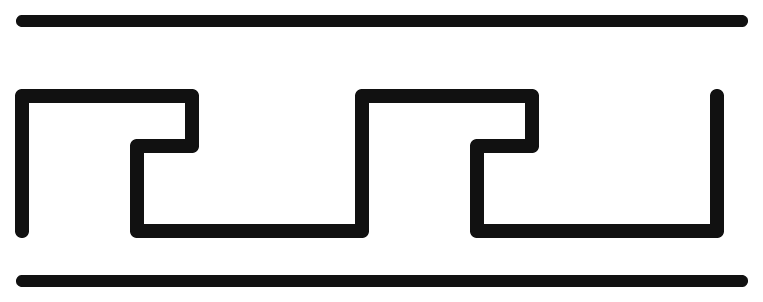
The order of the rotational symmetry in the adjoining figure is
1
2
4
infinitely many
Answer
On rotating the given figure about its centre, it fits onto itself when rotated through 180° and 360°, i.e., two times during one complete rotation.
So, the order of rotational symmetry of the given figure is 2.
Hence, option 2 is the correct option.
A possible angle of rotation of a figure having rotational symmetry of order greater than 1 is
36°
144°
150°
360°
Answer
We know that,
Order of rotational symmetry =
For A = 36°, order = = 10, which is a whole number greater than 1.
For A = 144°, order = = 2.5, which is not a whole number.
For A = 150°, order = = 2.4, which is not a whole number.
For A = 360°, order = = 1, which is not greater than 1.
So, the possible angle of rotation is 36°.
Hence, option 1 is the correct option.
In the word 'MATHS' which of the following pairs of letters have rotational symmetry?
M and T
A and S
T and S
H and S
Answer
The letters M, A and T fit onto themselves only once in a complete rotation, so they have no rotational symmetry.
The letters H and S fit onto themselves when rotated through 180° and 360°, so they have rotational symmetry of order 2.
Hence, option 4 is the correct option.
The letter which has both reflection and rotational symmetry is
H
M
S
Y
Answer
The letters M and Y have only line (reflection) symmetry and the letter S has only rotational symmetry.
The letter H has two lines of symmetry and rotational symmetry of order 2.
So, only the letter H has both reflection and rotational symmetry.
Hence, option 1 is the correct option.
Statement I: An equilateral triangle has 4 lines of symmetry.
Statement II: A line of symmetry is also called the mirror line.
Statement I is true but Statement II is false.
Statement I is false but Statement II is true.
Both Statement I and Statement II are true.
Both Statement I and Statement II are false.
Answer
An equilateral triangle has three lines of symmetry, which are the bisectors of its angles.
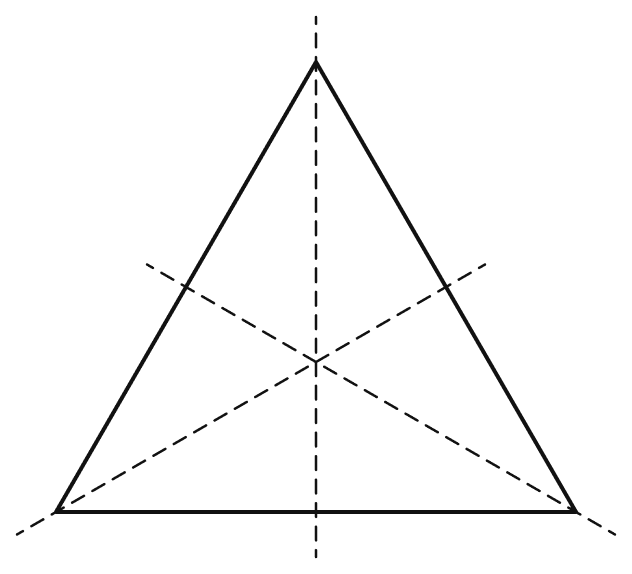
So, Statement I is false.
If a figure is divided into two coincident parts (mirror images) by a line, then the line is called its line of symmetry or axis of symmetry or mirror line.
So, Statement II is true.
∴ Statement I is false but statement II is true.
Hence, option 2 is the correct option.
Statement I: Rotating a figure by 25° clockwise is the same as rotating it 155° anticlockwise.
Statement II: A square has rotational symmetry of order 1
Statement I is true but Statement II is false.
Statement I is false but Statement II is true.
Both Statement I and Statement II are true.
Both Statement I and Statement II are false.
Answer
A full turn = 360°
∴ Rotating a figure by 25° clockwise = Rotating it by (360° - 25°) anticlockwise = 335° anticlockwise.
So, Statement I is false.
A square fits onto itself when rotated through 90°, 180°, 270° and 360°, so it has rotational symmetry of order 4.
So, Statement II is false.
∴ Both Statement I and statement II are false.
Hence, option 4 is the correct option.
Statement I: If a figure has an angle of rotation of A°, then we can say that it has a rotational symmetry of order =
Statement II: If a figure has two or more lines of symmetry, then it has rotational symmetry as well.
Statement I is true but Statement II is false.
Statement I is false but Statement II is true.
Both Statement I and Statement II are true.
Both Statement I and Statement II are false.
Answer
If A° is the smallest angle through which a figure can be rotated and still looks the same as in its starting position, then it has a rotational symmetry of order = .
So, Statement I is true.
We know that if a figure has two or more lines of symmetry, then it has rotational symmetry also.
So, Statement II is true.
∴ Both Statement I and statement II are true.
Hence, option 3 is the correct option.
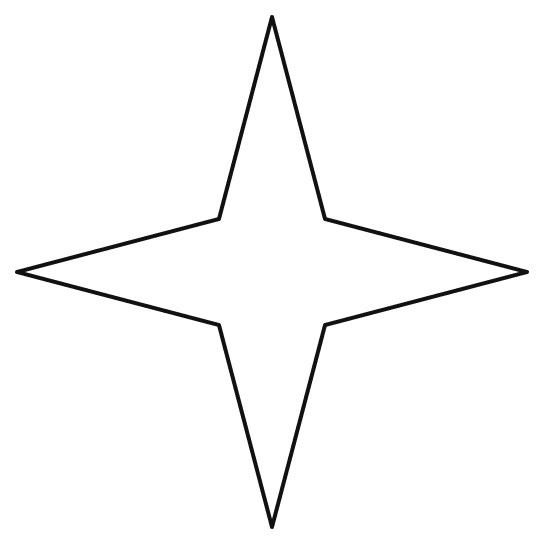
Draw the line (or lines) of symmetry, if any, of the following shape and count their number:
Answer
The given figure is a four-pointed star. It can be folded into two coincident parts about the vertical line, the horizontal line and the two lines bisecting the angles between them.
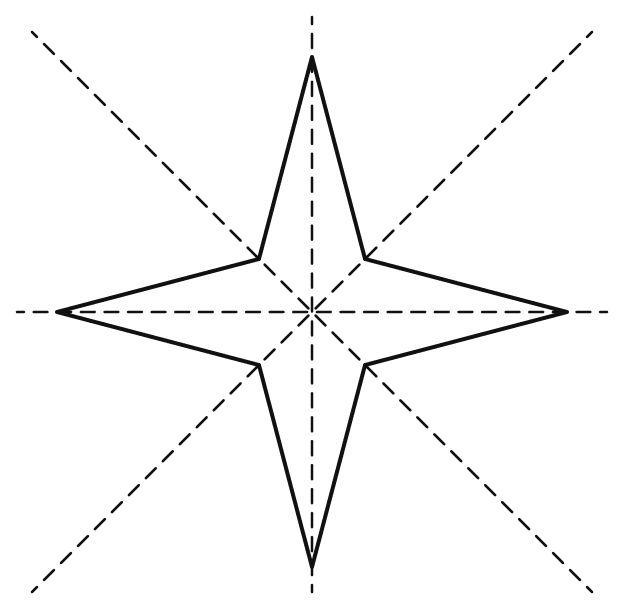
Hence, the given figure has four lines of symmetry.
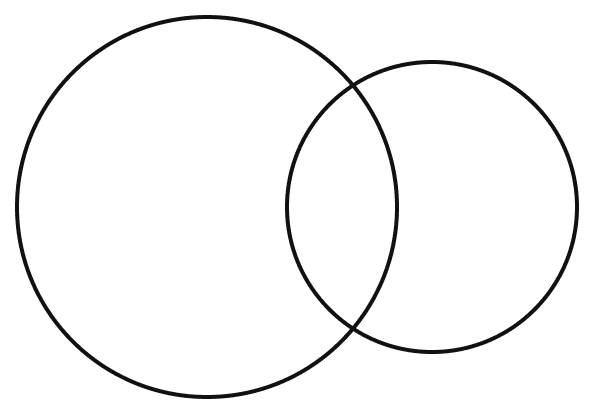
Draw the line (or lines) of symmetry, if any, of the following shape and count their number:
Answer
The given figure is made up of two overlapping circles. It can be folded into two coincident parts only about the line joining their centres.
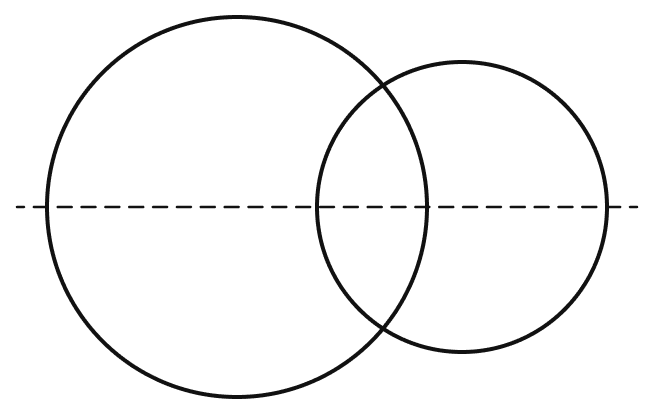
Hence, the given figure has one line of symmetry.
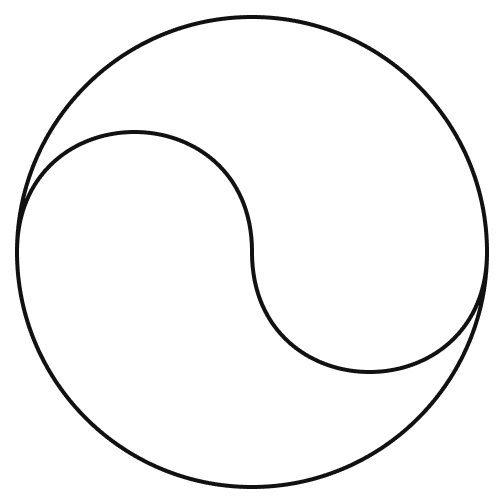
Draw the line (or lines) of symmetry, if any, of the following shape and count their number:
Answer
The given figure is a circle divided by a curved line. In whatever manner we fold it, the two parts of the figure do not coincide.
Hence, the given figure has no line of symmetry.
Draw the line (or lines) of symmetry, if any, of the following shape and count their number:
Answer
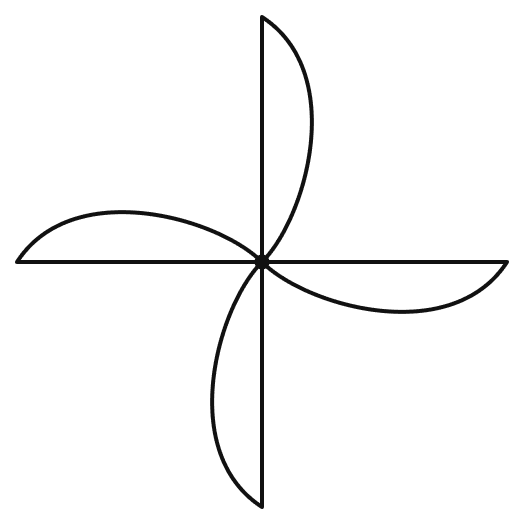
The given figure is made up of four curved blades. In whatever manner we fold it, the two parts of the figure do not coincide.
Hence, the given figure has no line of symmetry.
Draw the line (or lines) of symmetry, if any, of the following shape and count their number:
Answer
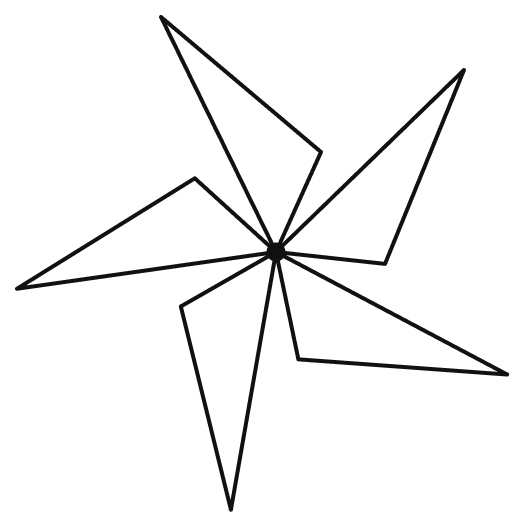
The given figure is a pinwheel made up of five blades. In whatever manner we fold it, the two parts of the figure do not coincide.
Hence, the given figure has no line of symmetry.
Draw the line (or lines) of symmetry, if any, of the following shape and count their number:
Answer
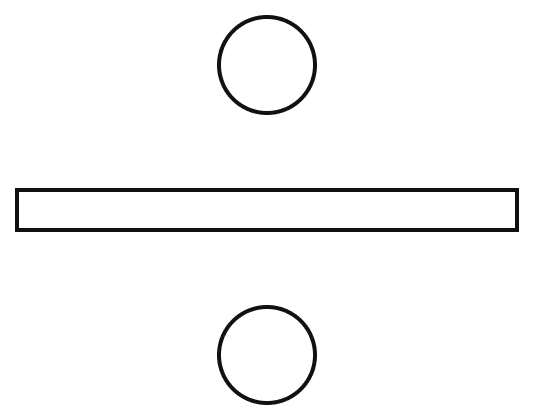
The given figure is the division sign. It can be folded into two coincident parts about the vertical line through its middle and about the horizontal line through its middle.
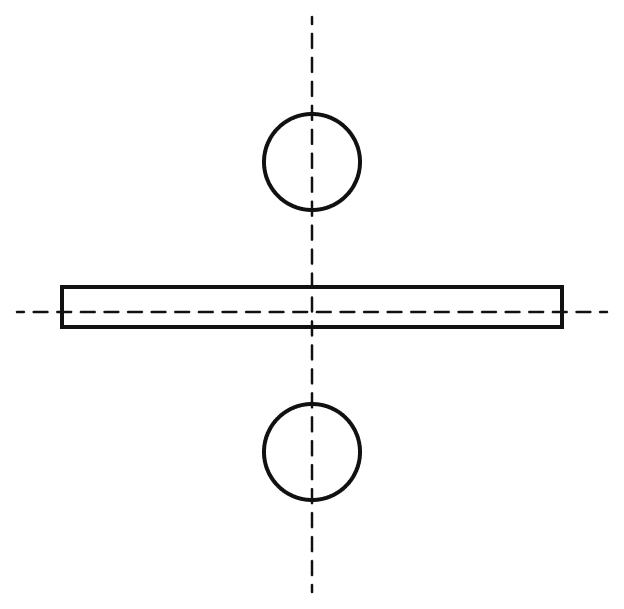
Hence, the given figure has two lines of symmetry.
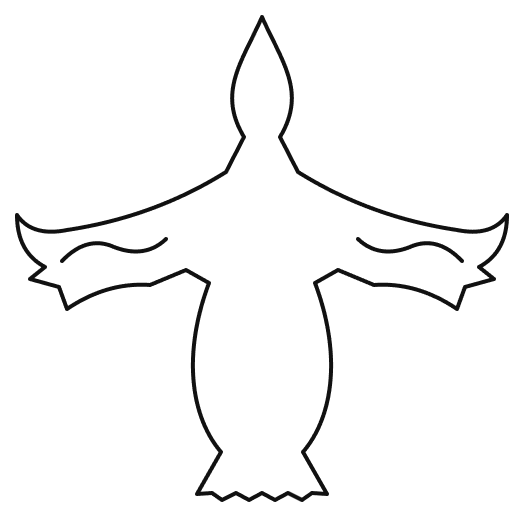
Draw the line (or lines) of symmetry, if any, of the following shape and count their number:
Answer
The given figure is a bird. It can be folded into two coincident parts only about the vertical line through its middle.
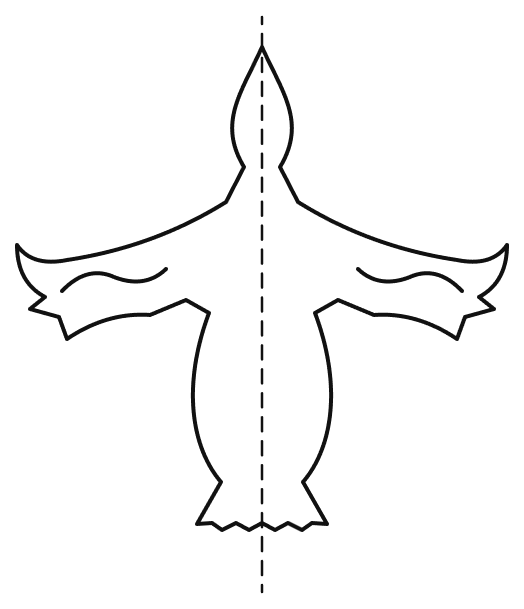
Hence, the given figure has one line of symmetry.
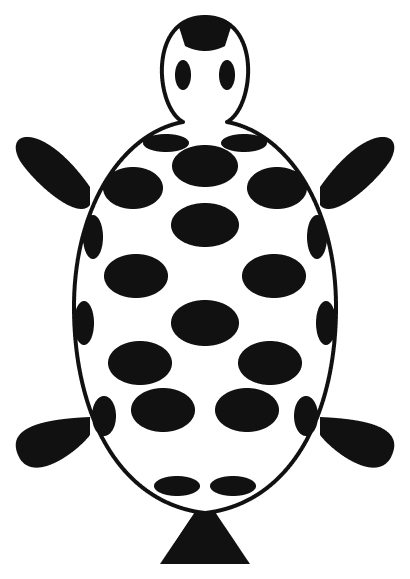
Draw the line (or lines) of symmetry, if any, of the following shape and count their number:
Answer
The given figure is a turtle. It can be folded into two coincident parts only about the vertical line through its middle.
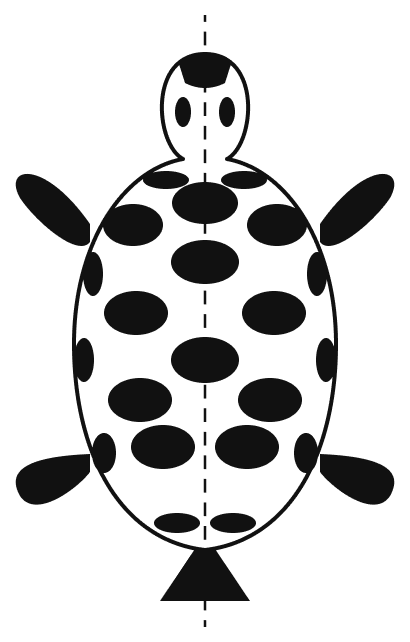
Hence, the given figure has one line of symmetry.
Draw the line (or lines) of symmetry, if any, of the following shape and count their number:
Answer
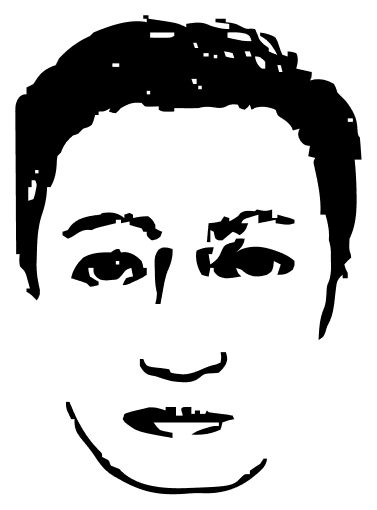
The given figure is a face. It can be folded into two coincident parts only about the vertical line through its middle.
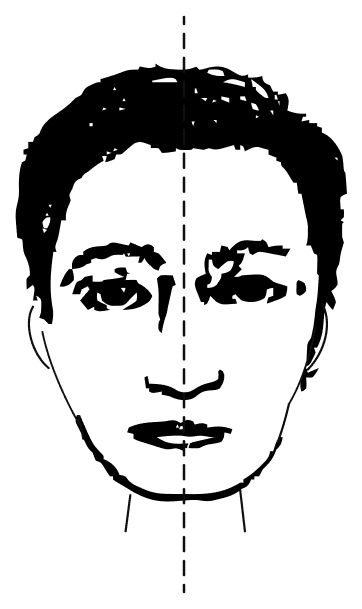
Hence, the given figure has one line of symmetry.
For the given shape in question 1, find the order of the rotational symmetry (if any).
Answer
(i) On rotating the four-pointed star about its centre, it fits onto itself when rotated through 90°, 180°, 270° and 360°, i.e., four times during one complete rotation.
Hence, its order of rotational symmetry is 4.
(ii) On giving the figure one complete rotation, it fits onto itself only once, i.e., on being rotated through 360°.
Hence, its order of rotational symmetry is 1.
(iii) On rotating the figure about the centre of the circle, it fits onto itself when rotated through 180° and 360°, i.e., two times during one complete rotation.
Hence, its order of rotational symmetry is 2.
(iv) On rotating the figure about its centre, it fits onto itself when rotated through 90°, 180°, 270° and 360°, i.e., four times during one complete rotation.
Hence, its order of rotational symmetry is 4.
(v) On rotating the pinwheel about its centre, it fits onto itself when rotated through 72°, 144°, 216°, 288° and 360°, i.e., five times during one complete rotation.
Hence, its order of rotational symmetry is 5.
(vi) On rotating the division sign about its centre, it fits onto itself when rotated through 180° and 360°, i.e., two times during one complete rotation.
Hence, its order of rotational symmetry is 2.
(vii) On giving the bird one complete rotation, it fits onto itself only once, i.e., on being rotated through 360°.
Hence, its order of rotational symmetry is 1.
(viii) On giving the turtle one complete rotation, it fits onto itself only once, i.e., on being rotated through 360°.
Hence, its order of rotational symmetry is 1.
(ix) On giving the face one complete rotation, it fits onto itself only once, i.e., on being rotated through 360°.
Hence, its order of rotational symmetry is 1.
Give the order of rotational symmetry of the following figure:
Answer
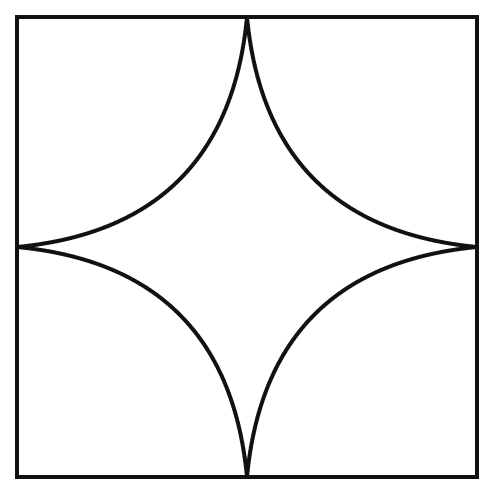
On rotating the given figure about the centre of the square, it fits onto itself when rotated through 90°, 180°, 270° and 360°, i.e., four times during one complete rotation.
Hence, the order of rotational symmetry of the given figure is 4.
Give the order of rotational symmetry of the following figure:
Answer
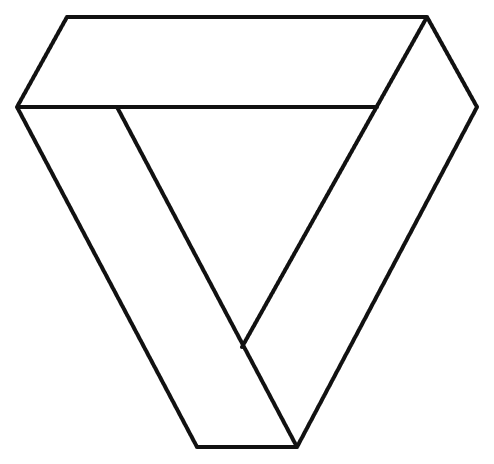
On rotating the given figure about its centre, it fits onto itself when rotated through 120°, 240° and 360°, i.e., three times during one complete rotation.
Hence, the order of rotational symmetry of the given figure is 3.
Give the order of rotational symmetry of the following figure:
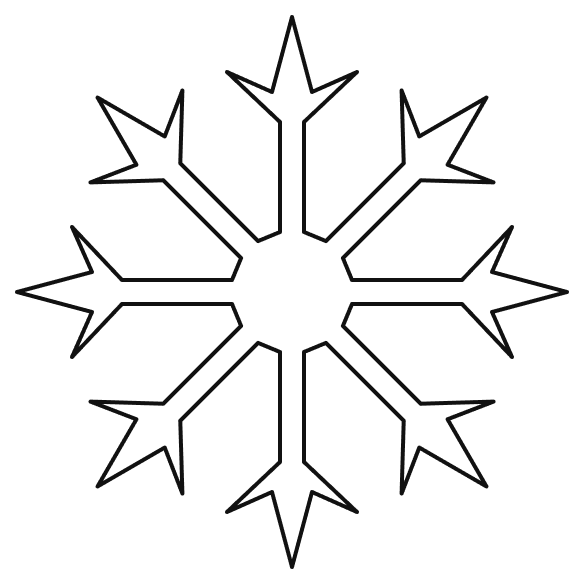
Answer
On rotating the given figure about its centre, it fits onto itself when rotated through 45°, 90°, 135°, 180°, 225°, 270°, 315° and 360°, i.e., eight times during one complete rotation.
Hence, the order of rotational symmetry of the given figure is 8.
Give the order of rotational symmetry of the following figure:
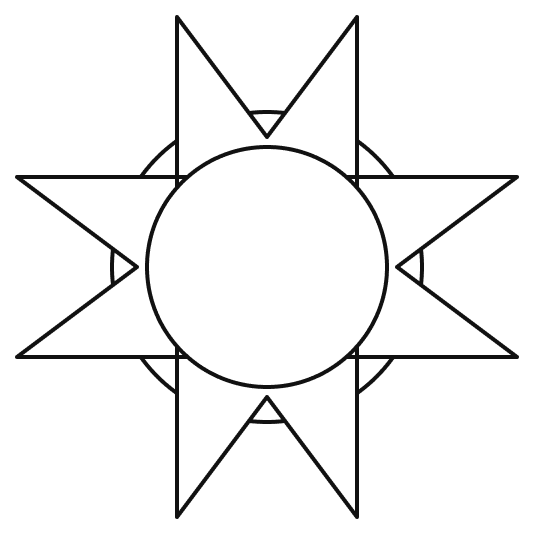
Answer
On rotating the given figure about the centre of the circle, it fits onto itself when rotated through 45°, 90°, 135°, 180°, 225°, 270°, 315° and 360°, i.e., eight times during one complete rotation.
Hence, the order of rotational symmetry of the given figure is 8.
Give the order of rotational symmetry of the following figure:
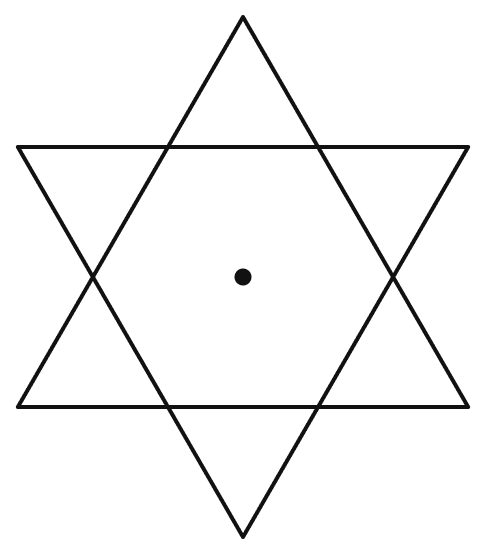
Answer
On rotating the given figure about the dot, it fits onto itself when rotated through 180° and 360°, i.e., two times during one complete rotation.
Hence, the order of rotational symmetry of the given figure is 2.
Give the order of rotational symmetry of the following figure:
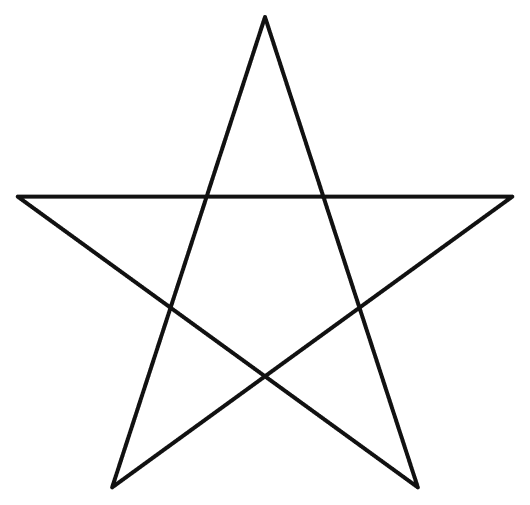
Answer
On rotating the given figure about its centre, it fits onto itself when rotated through 72°, 144°, 216°, 288° and 360°, i.e., five times during one complete rotation.
Hence, the order of rotational symmetry of the given figure is 5.