
What is the effect of 150 dB of noise?
- Pain in ear
- Significant change in pulse rate
- Permanent damage to hearing
- Nausea, vomiting, dizziness
Answer
Significant change in pulse rate
Reason — A noise level of 150 dB is extremely high and causes a significant change in pulse rate. Such intense noise also has severe adverse effects on the human body and may lead to serious health problems.
Birds avoid migrating to places where noise level is above ............... .
- 100 dB
- 90 dB
- 150 dB
- 140 dB
Answer
100 dB
Reason — Noise pollution has ill effects on animals as well. Birds avoid migrating to places where the noise level is above 100 dB, as continuous exposure to noise levels above 100 dB adversely affects hearing and disturbs living organisms.
The process of depletion of oxygen from water bodies occurring either naturally or due to human activities.
- Biomagnification
- Eutrophication
- Bioaccumulation
- Pollution
Answer
Eutrophication
Reason — Eutrophication is the depletion of oxygen in water bodies caused naturally or by human activities. Excess nutrients from domestic sewage, industrial effluents, and agricultural fertilisers promote excessive growth of algae and phytoplankton, which depletes the dissolved oxygen in water.
The increase in the concentration of various toxic substances along the food chain:
- Biomagnification
- Eutrophication
- Bioaccumulation
- Pollution
Answer
Biomagnification
Reason — Biomagnification means increasing the concentration of various toxic substances along the food chain. Toxic substances at the level of primary producers get concentrated at each trophic level as they move up the food chain.
The phenomenon of concentrated toxic deposition at the higher trophic level is known as:
- Biomagnification
- Eutrophication
- Bioaccumulation
- Pollution
Answer
Bioaccumulation
Reason — The phenomenon of concentrated toxic deposition at the higher trophic level is known as bioaccumulation. For example, traces of toxic chemicals in water get concentrated in algae, and when fish eat the algae, the concentration of toxins in them increases further.
Name the disease which resulted in numbness of body parts, vision and hearing problems and abnormal mental behaviour in Japan.
- Corona Virus
- Minamata
- Encephalitis
- Fluorosis
Answer
Minamata
Reason — People in Japan suffered from a disease called Minamata, which resulted in numbness of body parts, vision and hearing problems and abnormal mental behaviour. It was caused by the consumption of methyl mercury contaminated fish caught from Minamata Bay in Japan.
In Japan, pollution by heavy metal, cadmium, caused the disease called ................. .
- Itai-itai
- Minamata
- Encephalitis
- Fluorosis
Answer
Itai-itai
Reason — Pollution by the heavy metal cadmium caused the disease called Itai-itai among the people in Japan.
Which disease causes discolouring of dental enamel and black and brown stains on the teeth?
- Itai-itai
- Minamata
- Encephalitis
- Fluorosis
Answer
Fluorosis
Reason — Fluoride containing pollutants cause a disease called fluorosis, which causes discolouring of dental enamel and black and brown stains on the teeth. It also causes respiratory and gastrointestinal problems.
The Municipal Corporation of your city has banned all construction activities from 5 pm to 9 am. Why?
- To enable people to sleep.
- To reduce the noise produced by the activity.
- To reduce the physiological effects of noise pollution.
- All of the above.
Answer
All of the above.
Reason — Construction activities produce high-intensity noise. Restricting them from 5 p.m. to 9 a.m. reduces noise pollution, allows people to sleep peacefully, and minimises the physiological effects of noise pollution such as headache, fatigue, annoyance, and emotional stress.
Assertion (A): Birds avoid migrating to places where noise level is above 100 dB.
Reason (R): Doctors and scientists have now medically confirmed that noise disturbs living organisms.
- Both A and R are true and R is the correct explanation of A.
- Both A and R are true but R does not explain A.
- A is true but R is false.
- A is false but R is true.
Answer
Both A and R are true and R is the correct explanation of A.
Explanation — Excessive noise disturbs living organisms. Birds depend on sound for communication, navigation, and breeding; therefore, they avoid migrating to places where the noise level is above 100 dB. Noise pollution has also been found to affect egg-laying in some birds.
Given below are scenes, list the pollutants generated by each. How does each pollutant affect (i) environment; (ii) humans and other living beings; and (iii) materials?
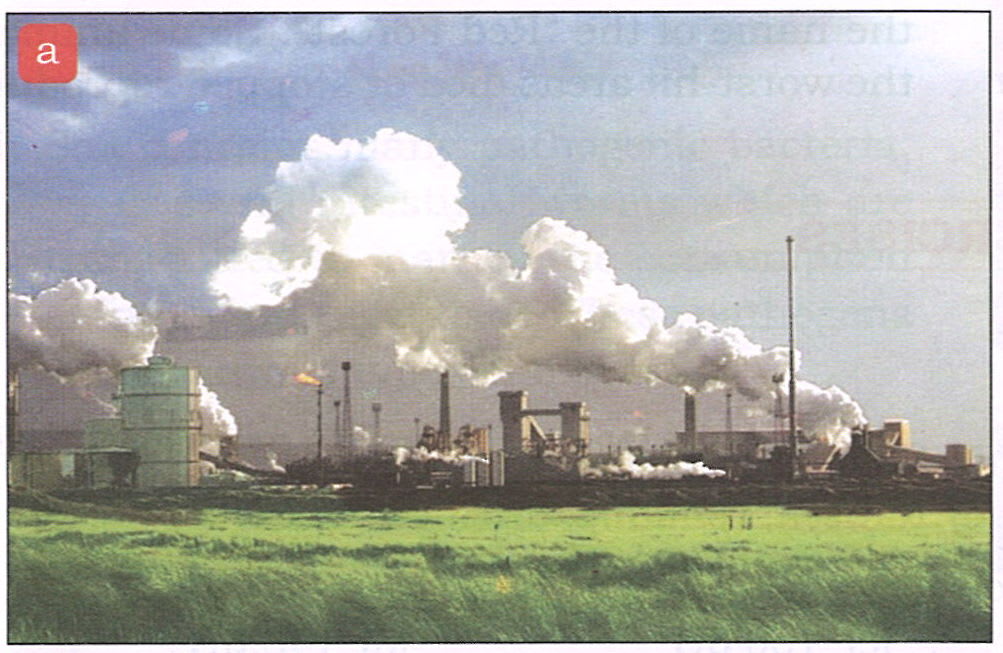
Picture A
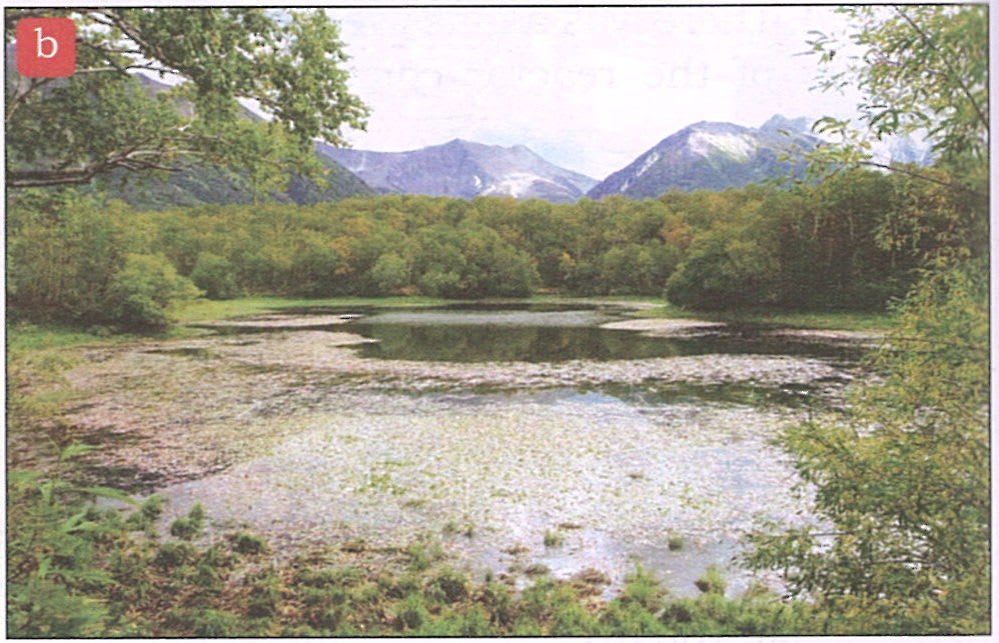
Picture B

Picture C
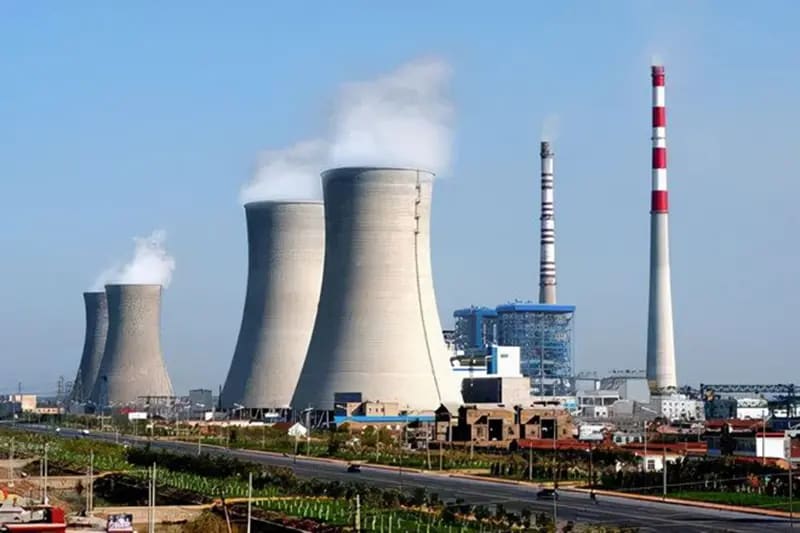
Picture D
Answer
(a) The given picture is showing Air Pollution by Industrial emissions.
Pollutants generated —
- Smoke (particulate matter)
- Carbon monoxide (CO)
- Sulphur dioxide (SO2)
- Nitrogen oxides (NOx)
Effects on Environment —
- The combination of smoke and fog leads to formation of Smog.
- Increase in concentration of Carbon dioxide (CO2) along with other Greenhouse gases like Methane, Nitrogen oxides (NOx), Chlorofluorocarbons and water vapour are responsible for increasing temperature causing Global warming.
- Sulphur dioxide and nitrogen oxides cause acid rain.
- Sulphur dioxide and nitrogen oxides damage plants by affecting chlorophyll and photosynthesis.
- Air quality deteriorates.
Effects on Humans and other living beings —
- Smoke causes asthma, eye irritation and respiratory diseases.
- Carbon monoxide reduces the oxygen-carrying capacity of blood and affects the heart and brain.
- Nitrogen oxides cause respiratory infections, bronchitis and lower resistance to diseases.
- Polluted air also affects animals feeding on contaminated plants.
Effects on Materials —
- Soot and dust damage painted surfaces, fabrics and buildings.
- Sulphur dioxide forms sulphuric acid with moisture, causing corrosion of metals.
- Acid rain damages marble and limestone structures.
- Paper becomes brittle and leather deteriorates.
(b) The given picture is of a waterbody affected by Eutrophication, showing Water Pollution.
Pollutants generated —
- Domestic sewage
- Industrial effluents
- Fertilisers containing phosphates and nitrates
Effects on Environment —
- Excess nutrients cause rapid growth of algae and phytoplankton.
- Dissolved oxygen in water is depleted.
- Aquatic weeds multiply rapidly and disturb aquatic ecosystems.
- Water quality deteriorates.
Effects on Humans and other living beings —
- Aquatic organisms die due to lack of oxygen.
- Contaminated water spreads diseases such as cholera, typhoid, diarrhoea, dysentery, hepatitis and jaundice.
- Fish and other aquatic animals are adversely affected.
Effects on Materials —
- Water becomes green, foul-smelling and unsuitable for domestic and industrial use.
- Dense algal growth interferes with fishing, navigation and irrigation.
- Water treatment systems require frequent cleaning due to algal growth.
(c) The given picture shows a polluted river, indicating Water Pollution and Land Pollution.
Pollutants generated —
- Sewage
- Plastic waste
- Domestic solid waste
- Pathogens (bacteria, viruses, protozoa and parasites)
Effects on Environment —
- Water quality deteriorates.
- Groundwater becomes polluted due to seepage.
- Plastic waste clogs waterways and harms aquatic ecosystems.
- Soil quality deteriorates.
Effects on Humans and other living beings —
- Polluted water spreads water-borne diseases such as cholera, typhoid, diarrhoea and dysentery.
- Plastic waste and pathogens harm aquatic organisms.
- Consumption of contaminated water affects human health.
Effects on Materials —
- Plastic waste blocks drainage systems.
- Water becomes unsuitable for domestic and industrial use.
- Waste accumulates on riverbanks, spoiling the surroundings.
(d) The given picture is of Nuclear Reactors, indicating Radioactive pollution.
Pollutants generated —
- Radioactive particles
- Radioactive isotopes
- Radioactive wastes
Effects on Environment —
- Radioactive wastes contaminate air, water and soil.
- Radioactive particles are carried by wind and rain to distant places.
- Radioactive pollution persists in the environment for hundreds of years.
- Nuclear accidents may cause widespread environmental contamination.
Effects on Humans and other living beings —
- Radiation damages chromosomes and causes mutations.
- It may lead to cancers, sterility, defective eyesight and genetic disorders.
- Radioactive substances accumulate in food chains and affect animals and aquatic life.
Effects on Materials —
- Materials become radioactive and unsafe for use.
- Contaminated equipment, water and food require special handling and disposal.
- Radioactive materials remain hazardous for many years and require secure storage.
How does noise pollution affect animals?
Answer
Noise from industries, railways, crackers, explosions, city traffic and aircraft affects animals, birds, fishes and domestic animals in the following ways:
- Birds avoid migrating to places where the noise level is above 100 dB.
- Noise from supersonic aircraft and railways may cause miscarriage in mammals and fishes.
- Some birds have been found to stop laying eggs due to excessive noise pollution.
What major harm is done to human beings by air pollution?
Answer
Major harm done to human beings by air pollution are-
- Chronic respiratory diseases
- Lung cancer
- Cardiovascular diseases and coma
- Damage to the nerves, brain, liver, kidney etc.
How are animals affected by air pollution?
Answer
Animals that feed on grass and plants, coated with polluted particulate matter, are affected with arsenic poisoning. Lead poisoning results in bronchitis and lack of appetite in pet animals.
What is the effect of oil spills on marine life?
Answer
Sea water polluted with crude oil leakage causes oil spills, which contaminate sea water and lead to the death of marine organisms.
The effects of oil spills on marine life are:
- Oil coats the bodies of marine animals and birds, affecting their movement, insulation and survival.
- Oil clogs the blowholes of whales and dolphins, making it difficult for them to breathe and communicate.
- Oil coats the fur of seals and sea otters, reducing its insulating property and making them vulnerable to hypothermia.
- Fish, shellfish and other marine organisms are poisoned or killed due to contamination of water, disrupting the marine food chain.
What causes water-borne diseases? Name two water-borne diseases.
Answer
Water-borne diseases are caused by pathogens such as bacteria, viruses and protozoa present in contaminated drinking water. These pathogens enter the human body through polluted water and cause diseases.
Two water-borne diseases are:
- Cholera
- Typhoid
In what way does soil pollution affect human beings?
Answer
Soil pollution affects human beings in the following ways-
- Pathogens such as bacteria, viruses and intestinal worms present in polluted soil contaminate fruits and vegetables. When consumed, they cause various diseases.
- Radioactive fallout on vegetation enters the food chain through grazing animals. These radioisotopes may cause genetic abnormalities and other health problems in humans.
- The use of animal and human excreta as manure pollutes the soil. The pathogens present in excreta contaminate soil and crops, thereby affecting human health.
A landfill was reclaimed and sturdy plants were grown on it instead of crops or fruit trees. Why?
Answer
Landfills contain toxic substances, heavy metals, chemicals, and non-biodegradable wastes that remain in the soil for a long time. Crops and fruit trees grown on such land may absorb these harmful substances, making them unsafe for human and animal consumption. Therefore, sturdy plants are grown instead, as they can survive in such conditions and are not used as food.
Give the impact of radiations on human body.
Answer
Radiations affect living organisms. They cause harmful changes in the body cells and at genetic level. Some impacts of radiations on human body are-
- Genetic variations — The damage caused by radiations is often seen in the offsprings and may be transmitted to many generations.
- Somatic variations — Short term exposures to radiation can cause damage to organs of the body. The harm done by them includes breast cancer, thyroid cancer, lung cancer and brain cancer, sterility and defective eyesight.
Why are nuclear radiations more dangerous than other forms of pollution?
Answer
Nuclear radiations are more dangerous than other forms of pollution because the high level products of nuclear wastes remain in the environment for several hundred years.
Crude oil from a refinery has leaked into the Kosasthalaiyar river (north of Chennai), the biodiverse Ennore creek (where many migratory birds come) and the Bay of Bengal. This has caused pollution. List what all could have been impacted and how?
Answer
Aquatic life in the river, creek and Bay of Bengal —
- Oil forms a thin film on the water surface, reducing the supply of oxygen to aquatic organisms.
- Toxic chemicals in crude oil poison fish and other aquatic animals, causing their death.
- Mangroves and other coastal ecosystems may also be damaged.
Migratory Birds —
- Oil coats the feathers of birds, making it difficult for them to fly, float and keep warm.
- Birds may also ingest oil while feeding or preening, causing illness or death.
Human beings —
- Consumption of contaminated fish and other seafood may cause health problems.
- Polluted water becomes unsafe for domestic and agricultural use, affecting the livelihood of local communities.
Environment —
- Oil contaminates river water, creek water and seawater, disrupting the aquatic ecosystem.
- Toxic substances may enter the food chain and affect both aquatic life and human beings.
State briefly how is noise pollution detrimental to human health.
Answer
Noise pollution is detrimental to human health because of the following effects-
- Effect on hearing (Deafness) — Continuous exposure to noise levels above 100 dB adversely affects hearing and may lead to temporary or permanent deafness.
- Interference with communication — Excessive noise interferes with communication in places like schools and offices. It also disrupts the use of radio and television.
- Interference with sleep — Noisy conditions near residential areas at night cause difficulty in sleeping.
- Mental or Physiological effects — Even short exposure to noise above 100 dB may cause headache, dizziness, mental stress, cardiovascular diseases, stomach ulcers, respiratory disorders and may also affect the foetus.
- Physical and psychological effects — Prolonged exposure to excessive noise can damage the inner ear and lead to speech interference, annoyance, fatigue, emotional distress and reduced efficiency.
How does air pollution affect the environment?
Answer
Air pollution affects the environment in the following ways:
- Global Warming — The increase in the concentration of carbon dioxide (CO₂) and other greenhouse gases such as methane, nitrogen oxides, chlorofluorocarbons (CFCs) and water vapour traps the Earth's heat, causing global warming. Its effects include:
- Rising temperatures and earlier melting of snow and glaciers.
- Increased evaporation, leading to droughts in many regions.
- Formation of glacial lakes and more frequent flooding.
- Flooding, erosion and salt-water intrusion in coastal and delta regions.
- Acid Rain — Sulphur dioxide (SO₂) and nitrogen oxides (NOₓ) combine with atmospheric moisture to form acids, resulting in acid rain. It damages forests, crops, aquatic ecosystems and buildings.
- Smog Formation — Smoke combines with fog to form smog, which reduces visibility and harms plants and animals.
- Damage to Vegetation — Air pollutants such as sulphur dioxide and nitrogen oxides damage chlorophyll, reduce photosynthesis and affect plant growth and crop yield.
Explain how the accumulation of nutrients and chemicals in the water prove fatal for the marine organisms.
Answer
The accumulation of nutrients and chemicals in water causes eutrophication. Excess nutrients promote the rapid growth of phytoplankton and algae, reducing the penetration of sunlight and oxygen into the water. When these algae die and decompose, the dissolved oxygen in the water is depleted. As a result, most aquatic organisms die due to lack of oxygen.
With the help of a well labelled diagram explain how the accumulation of toxic substances increases as we move up the food chain.
Answer
Below diagram shows the increase in accumulation of toxic substances as we move up the food chain:

As we move up the food chain, the concentration of toxic substances increases because each organism consumes many organisms from the lower trophic level. Thus, the toxins keep accumulating at every successive trophic level. This process is called biomagnification.
For example, traces of toxic chemicals in water are absorbed by algae. Fish that eat the algae accumulate a higher concentration of these toxins, and animals or humans that eat the fish accumulate an even greater concentration. Thus, the highest trophic level has the maximum concentration of toxic substances.
State any two effects each of soil pollution on human beings and environment.
Answer
Effects of soil pollution on human beings are -
- Polluted soil contains pathogenic bacteria, viruses and intestinal worms that contaminate fruits and vegetables, causing various diseases.
- Radioactive fallout on vegetation enters the food chain through grazing animals. These radioisotopes may cause genetic abnormalities in humans.
Effects of soil pollution on environment are-
- Nitrogenous fertilisers produce toxic concentrations of nitrates and nitrites in plants.
- Soil pollution reduces the fertility and productivity of the soil.
Name three common air pollutants and their effects on human health.
Answer
| Air Pollutants | Their effects on human health |
|---|---|
| Carbon monoxide | It damages lungs, weakens bones, reduces the oxygen carrying capacity of blood and damages heart. |
| Sulphur dioxide | It obstructs breathing, causes irritation of eyes and throat. |
| Suspended particulate matter | It causes asthma, irritation of eyes and cancer. |
What are pathogens? How do they enter human body? Name any three diseases caused by these pathogens.
Answer
Pathogens are disease-causing organisms such as bacteria, viruses and protozoa.
Most wastewater, especially sewage, contains pathogens. These pathogens enter the human body through contaminated drinking water and cause water-borne diseases.
Three diseases caused by these pathogens are:
- Cholera
- Typhoid
- Dysentery
State with examples the effects of radiations on the human beings and environment.
Answer
Example of radioactive accident
On 26 April 1986, a reactor at the Chernobyl Nuclear Power Plant (Ukraine) exploded, releasing large amounts of radioactive gases into the atmosphere. It is considered one of the world's worst nuclear disasters. Many people suffered from acute radiation sickness, while forests and wildlife in the surrounding areas were severely affected.
Effects of radiations on human health
- Genetic variations — Radiation damages chromosomes, causing genetic mutations that may be passed on to future generations.
- Somatic variations — Short-term exposure can damage body organs and cause cancers (such as breast, thyroid, lung and brain cancer), sterility and defective eyesight.
Effects of radiations on the environment
- Radioactive wastes pollute air, water and soil, affecting plants, animals and aquatic life.
- Radioactive substances remain in the environment for hundreds of years, and accidents involving nuclear reactors or nuclear-powered vessels can cause long-term environmental damage.
Read the passage given below and answer the questions that follow:
Despite years of progress in reducing pollution from the electric power sector, fossil fuel-fired power plants remain a leading source of air, water, and land pollution that affects communities worldwide. These power plants are the largest stationary source of nitrogen oxides (NOx) and sulfur dioxide (SO2) emissions and a significant source of mercury (Hg) and fine particle emissions. They are also a significant source of emissions of carbon dioxide (CO2), an important greenhouse gas.
NOx emissions contribute to the formation of ground-level ozone, in addition to contributing to the formation of acid rain and fine particle (PM regular) pollution. They, along with SO2 emissions are linked with a number of adverse effects to human health and ecosystems. Every year, pollution from power plants causes fine particle and ground level ozone-related premature deaths, new asthma cases and asthma exacerbations, heart attacks, and lost school and work days.
Electric power generation is the second largest emitter of carbon dioxide pollution, contributing to climate change, which is threatening public health and affecting ecosystems at multiple levels, from the biological communities that make up ecosystems to the services they provide to communities, economies, and people.
(a) How do the gases released by the power plants affect human health and well-being?
(b) How does the pollution from the power plants affect the environment?
(c) What is climate change? How do power plants contribute to it?
(d) What can be done to reduce the harm caused by use of power plants?
Answer
(a) The gases released by power plants affect human health and well-being in the following ways:
- Nitrogen oxides (NOx) cause acute respiratory infections, bronchitis and lower resistance to influenza.
- Sulphur dioxide (SO2) causes breathing difficulties and irritation of the eyes and throat.
- NOx contributes to the formation of ground-level ozone, which aggravates asthma and irritates the eyes.
- Fine particulate matter (PM) causes asthma, eye irritation and may lead to lung cancer.
- Mercury (Hg) accumulates in fish and, when consumed, can cause numbness, vision and hearing problems, and neurological disorders.
- Pollution from power plants also causes premature deaths, heart attacks, new asthma cases, asthma exacerbations, and loss of school and work days.
(b) Pollution from power plants affects the environment in the following ways:
- Sulphur dioxide (SO2) and nitrogen oxides (NOx) cause acid rain, which damages marble and limestone monuments and corrodes metals.
- Sulphur dioxide (SO2) destroys chlorophyll and causes yellowing of leaves, while nitrogen dioxide suppresses plant growth and reduces crop yield.
- Ground-level ozone damages plant leaves and affects vegetation.
- Fine particulate matter (PM) settles on buildings, fabrics and vegetation, reducing air quality and harming ecosystems.
- Mercury discharged into water bodies enters the food chain through biomagnification, harming aquatic life.
- Carbon dioxide (CO2) causes global warming, leading to melting of glaciers, droughts, sea-level rise and flooding.
(c) Climate change refers to the long-term change in the Earth's average weather patterns and temperature, mainly due to the increased concentration of greenhouse gases in the atmosphere.
Power plants contribute to climate change because they are a major source of carbon dioxide (CO2) emissions. Carbon dioxide traps the Earth's heat, causing global warming, which affects ecosystems, public health and the economy.
(d) The harm caused by power plants can be reduced by:
- Shifting to renewable sources of energy such as solar, wind, hydel and tidal energy.
- Installing scrubbers, electrostatic precipitators and filters to remove SO2, NOx and particulate matter before release.
- Using low-sulphur fuels and improving plant efficiency.
- Treating industrial effluents and hot wastewater before discharge.
- Enforcing strict emission standards and regularly monitoring air and water quality.
- Conserving electricity to reduce the demand for power generation.
- Planting trees around power plants to absorb carbon dioxide and reduce pollution.
The apparent lack of concern for the effects of pollution seems to be the reason for not implementing plans to prevent pollution. Justify this statement with examples.
Answer
The apparent lack of concern for the effects of pollution often leads to poor implementation of pollution control measures. This can be justified by the following examples:
- Industrial negligence — Many industries avoid installing pollution-control devices to reduce costs, resulting in continued air and water pollution.
- Public indifference — People continue to use plastic bags, burn garbage and litter, despite knowing their harmful effects.
- Weak enforcement — Environmental laws are often not strictly implemented, allowing industries and individuals to violate pollution-control norms.
- Lack of awareness — Many people are unaware of the long-term effects of pollution and therefore do not support or follow pollution prevention measures.
- Economic and political priorities — Greater importance is often given to industrial growth and development than to environmental protection, delaying pollution-control plans.
Which is the most visible affect of pollution on human beings in your city? What are the causes and possible remedies?
Answer
One of the most visible effects of pollution on human beings in my city is the deterioration of air quality.
Causes:
- Industrial emissions from the burning of fossil fuels.
- Vehicular emissions from cars, buses and trucks.
- Agricultural practices such as burning crop residues and excessive use of fertilizers and pesticides.
- Household pollution due to the use of coal, wood and biomass as fuel.
The possible remedies to improve the quality of air are:
- Promote clean and renewable sources of energy such as solar and wind power.
- Enforce stricter emission standards for industries and vehicles.
- Encourage the use of public transport and electric vehicles.
- Discourage crop residue burning and promote composting or recycling.
- Create public awareness about pollution and proper waste management.
- Strictly enforce environmental laws and penalize polluters.
Northern India is enveloped in smog in the month of November. List the causes for the same.
Answer
Northern India is enveloped in smog in the month of November due to the following causes:
- Stubble (crop residue) burning — Farmers in Punjab and Haryana burn crop residues after harvesting, releasing large amounts of smoke and particulate matter into the air.
- Diwali celebrations — Firecrackers release smoke, particulate matter and harmful gases, worsening air pollution.
- Industrial emissions — Industries emit pollutants such as sulphur dioxide (SO2), nitrogen oxides (NOx) and particulate matter.
- Vehicular emissions — Exhaust from a large number of vehicles releases carbon monoxide, nitrogen oxides and particulate matter.
- Weather conditions — Low temperatures, calm winds and temperature inversion during November trap pollutants near the ground, causing dense smog.