
Which of the following can pass a resolution to create or abolish a Legislative Council in a State?
- Legislative Assembly of a State
- Both Houses of Parliament
- The Governor of a State
- The Legislative Council of a State
Answer
Legislative Assembly of a State
Reason — Under Article 169, creating or abolishing a State Legislative Council requires the State Legislative Assembly to pass a resolution by a special majority, which Parliament then enacts into law.
Which of the following States does not have Bicameral Legislature?
- Andhra Pradesh
- Bihar
- Karnataka
- Punjab
Answer
Punjab
Reason — Only six Indian states have a bicameral legislature: Andhra Pradesh, Bihar, Maharashtra, Karnataka, Telangana, and Uttar Pradesh.
The State Legislature comprises which of the following?
(P) : The Governor
(Q) : The Legislative Assembly
(R) : The Legislative Council
(S) : The two Houses of State Legislature
- P and Q
- P and R
- P and S
- Q and R
Answer
P and S
Reason — The State Legislature comprises the Governor and the legislative houses. In a unicameral system, it consists of the Governor and the Legislative Assembly, whereas in a bicameral system, it includes the Governor (P) and both Houses of the State Legislature (S).
How are the members of Legislative Assembly elected?
- Directly elected by the people of the State on the basis of universal adult franchise
- Directly elected by all the members of Parliament.
- Indirectly elected by proportional representation
- Indirectly elected by the people of the State through their representatives.
Answer
Directly elected by the people of the State on the basis of universal adult franchise
Reason — Members of the Legislative Assembly (MLAs) are elected directly by the citizens of the State through universal adult franchise via a secret ballot. They are not chosen by Parliament or through an indirect system of proportional representation.
The Legislative Assembly of each State consists of not more than ............... and not less than ............... members except for Special Provision States.
- 400, 250
- 500, 60
- 550, 250
- 500, 30
Answer
500, 60
Reason — According to the Constitution, the Legislative Assembly of each State consists of not more than 500 and not less than 60 members. Lower limits apply only to Special Provision States such as Sikkim (32), Goa and Mizoram (40 each).
Complete the following analogy.
Vidhan Sabha: .........?..... :: Vidhan Parishad: Legislative Council.
- Council of People
- Council of Eldermen
- Legislative Assembly
- None of the above
Answer
Legislative Assembly
Reason — Just as Vidhan Parishad is the Hindi name for the Legislative Council, Vidhan Sabha is the Hindi name for the Legislative Assembly.
During the President's rule the Legislative Assembly may either be ............... or suspended.
- abolished
- dissolved
- created
- renewed
Answer
dissolved
Reason — When a constitutional breakdown triggers President's rule, the State Legislative Assembly is either suspended or dissolved.
During the Proclamation of Emergency in a State, the life of the House can be extended for ............... at a time.
- one year
- six months
- three months
- a month
Answer
one year
Reason — During an active Proclamation of Emergency, Parliament may extend the Legislative Assembly's tenure by a law, up to a maximum of one year at a time.
The State Legislature can make laws on matters in which of the following lists?
(P) : State List
(Q) : Concurrent List
(R) : Residual List
(S) : Union List
- P and R
- P and S
- P and Q
- Q and R
Answer
P and Q
Reason — The State Legislature is competent to make laws only on subjects in the State List and Concurrent List. It has no jurisdiction over the Union List or residuary subjects, which are exclusively reserved for Parliament.
The strength of Legislative Assembly is 200. What would be the Quorum of the Assembly?
- 10
- 8
- 12
- 20
Answer
20
Reason — The quorum of the Legislative Assembly is 10 members or one-tenth of its total membership, whichever is greater. One-tenth of 200 is 20, which is greater than 10, so the quorum of the Assembly is 20.
What happens to the Bills in the case of Bicameral Legislature?
(P) : The will of the Vidhan Sabha prevails.
(Q) : The Bill is passed at the joint sitting of the two Houses.
(R) : The Vidhan Parishad can stop the passage of a Bill.
(S) : The Vidhan Parishad can only delay the passage of a Bill.
- Q and R
- R and S
- P and S
- P and R
Answer
P and S
Reason — In a bicameral legislature, the will of the Vidhan Sabha prevails, as the Vidhan Parishad can only delay a Bill rather than veto it. Because there is no provision for a joint sitting of the two Houses, options Q and R are incorrect.
The Amendment of the Article that seeks change in the representation of States in Parliament requires ratification or approval by how many States?
- One-fourth of the Legislative Assemblies of the States
- One half of the Legislative Assemblies of the States
- Two-third of the Legislative Assemblies of the States
- None of the above.
Answer
One half of the Legislative Assemblies of the States
Reason — Amendments to specific constitutional articles including those regarding the presidential election, Union judiciary, and state representation in Parliament require ratification by at least half of the State Legislative Assemblies.
Given below are details of a few citizens of a State.
| Person | Age (in years) | Description |
|---|---|---|
| A | 32 | Does not have his/her name on the voters' list in the State concerned. |
| B | 27 | Has taken up the citizenship of France. |
| C | 30 | Holds an office of profit under the Government of India. |
| D | 25 | Is not an undischarged insolvent. |
Select the person who fulfils the eligibility criteria to become a member of the Legislative Assembly.
- A
- B
- C
- D
Answer
D
Reason — To be a member of the Legislative Assembly, an individual must be an Indian citizen, at least 25 years old, registered on the voters' list, hold no office of profit, and not be an undischarged insolvent. Only option D meets all these criteria.
The numerical strength in the Legislative Council shall not exceed ............... of the total number of members in the Legislative Assembly of the State.
- one-fourth
- one-third
- two-thirds
- one-fifth
Answer
one-third
Reason — The Constitution stipulates that the total membership of a State Legislative Council must not exceed one-third of the Legislative Assembly's strength, while normally maintaining a minimum of 40 members.
How many members in the Legislative Council are nominated by the Governor of the State?
- One-third
- One-fourth
- One-fifth
- One-sixth
Answer
One-sixth
Reason — The remaining one-sixth of the Legislative Council members are nominated by the Governor from among individuals with special knowledge or practical experience in literature, science, art, the cooperative movement, and social service.
The minimum age to be a Member of the Legislative Council is ............... years.
- 18
- 20
- 25
- 30
Answer
30
Reason — Qualifications for the Legislative Council mirror those of the Legislative Assembly, except for age: the minimum age requirement is 30 years for the Council and 25 years for the Assembly.
What is the tenure of the elected members of the Legislative Council?
- Six years
- Five years
- Four years
- Two years
Answer
Six years
Reason — The Legislative Council is a permanent House not subject to dissolution. Members serve a six-year term, with one-third retiring every two years.
Your uncle is associated with a farmer cooperative movement. He has not won any election to the Legislative Council. But he has become a member of the Legislative Council. How has he achieved this position?
- He is appointed by the Chief Minister
- He is nominated by the President of India
- He is nominated by the Governor of the State
- None of the above.
Answer
He is nominated by the Governor of the State
Reason — The Governor nominates one-sixth of the Legislative Council members based on their special knowledge or practical experience in fields like the cooperative movement. Because the uncle was not elected but is associated with a farmer cooperative movement, he must have secured his seat through the Governor's nomination.
(A) The members of State Legislative Council are directly elected by the people of the States.
(R) Of the total number of members of the Legislative Council, one-sixth are nominated by the Governor of the State.
- (A) is true but (R) is false.
- (A) is false, but (R) is true.
- Both (A) and (R) are true, but (R) is not the correct explanation of (A).
- Both (A) and (R) are false.
Answer
(A) is false, but (R) is true.
Explanation — The Legislative Council's membership is partly elected and partly nominated. Elected members are chosen by electorates comprising local body members, graduates, teachers, and MLAs, while the remaining one-sixth are nominated by the Governor.
(A) The Legislative Council can only delay the passage of a Bill.
(R) By posing a delay, the Legislative Council checks the hasty legislation by highlighting its defects.
- (A) is true but (R) is false.
- (A) is false, but (R) is true.
- Both (A) and (R) are true, (R) is the explanation of (A).
- Both (A) and (R) are false.
Answer
Both (A) and (R) are true, (R) is the explanation of (A).
Explanation — The Legislative Council can only delay the passage of the Bill. But by posing a delay, it serves to check hasty legislation by bringing to light the shortcomings or defects of any ill-considered measure.
In 2020, the Legislative Assembly of Andhra Pradesh passed a resolution to abolish the Legislative Council but the Council could not be abolished. Why?
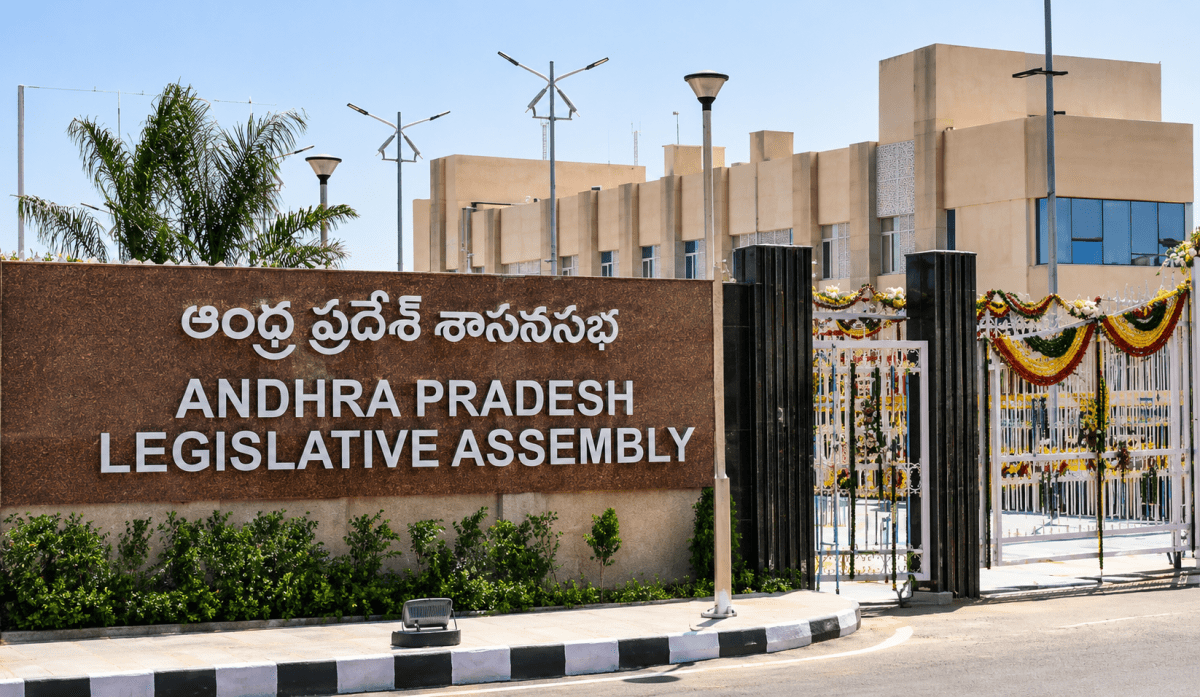
- The Governor of Andhra Pradesh did not give his consent.
- The Supreme Court of India stayed the resolution permanently.
- The Parliament of India did not enact the required law.
- The Election Commission of India rejected the proposal.
Answer
The Parliament of India did not enact the required law.
Reason — A State Assembly's resolution to abolish a Legislative Council requires an Act of Parliament to take effect. Because Parliament did not enact the required law, the Andhra Pradesh Legislative Council was not abolished.
(A) In case of a breakdown of the Constitutional machinery, the State may be placed under President's rule.
(R) The Governor of a State can recommend to the President to declare Constitutional Emergency in a State if he/she feels there is a breakdown of Constitutional machinery in the State.
- (A) is true but (R) is false.
- (A) is false, but (R) is true.
- Both (A) and (R) are true, (R) is the explanation of (A).
- Both (A) and (R) are false.
Answer
Both (A) and (R) are true, (R) is the explanation of (A).
Explanation — During President's rule, the Governor acts independently of the state Council of Ministers' advice, instead following the instructions and directions of the President. In this capacity, the Governor functions as an agent of the Union Government.
What is a Unicameral Legislature? What is a Bicameral Legislature?
Answer
Unicameral Legislature — A State is said to have Unicameral legislature if it has only one house, i.e., the Legislative Assembly or the Vidhan Sabha.
Bicameral Legislature — In a bicameral legislature, the State has two houses, i.e., the Legislative Assembly or Vidhan Sabha and the Legislative Council or Vidhan Parishad.
Name any two States in India that have a Bicameral Legislature.
Answer
Two States in India that have a Bicameral Legislature are — Andhra Pradesh and Bihar.
Name any two States in India that have a Unicameral Legislature.
Answer
Two States in India that have a Unicameral Legislature are — Punjab and Kerala.
What is the Constitutional provision regarding abolition or creation of Legislative Councils in States?
Answer
The Constitution allows for the creation or abolition of a State Legislative Council. To initiate this, the Legislative Assembly must pass a resolution by a majority of its total membership and at least two-thirds of the members present and voting, followed by an Act of Parliament.
What is the minimum age fixed for the membership of:
(a) The Legislative Assembly
(b) The Legislative Council?
Answer
(a) The minimum age fixed for the membership of the Legislative Assembly is 25 years.
(b) The minimum age fixed for the membership of the Legislative Council is 30 years.
Who is the chief presiding officer of:
(a) The Legislative Assembly
(b) The Legislative Council?
Answer
(a) The chief presiding officer of the Legislative Assembly is its Speaker.
(b) The chief presiding officer of the Legislative Council is its Chairman.
How many member/members can the Governor nominate to the Legislative Council? What qualifications do these members have?
Answer
The Governor nominates one-sixth of the Legislative Council members from individuals with special knowledge or practical experience in literature, science, art, the cooperative movement, and social service.
Mention two qualifications of a person seeking election to the:
(a) Legislative Assembly,
(b) Legislative Council.
Answer
(a) Two qualifications of a person seeking election to the Legislative Assembly are:
- He must be a citizen of India.
- He must be not less than 25 years of age.
(b) Two qualifications of a person seeking election to the Legislative Council are:
- He must be a citizen of India.
- He must be not less than 30 years of age.
What status is accorded to the Leader of Opposition in the Legislative Assembly?
Answer
The Leader of Opposition in the Legislative Assembly is accorded the same status and facilities as are enjoyed by a Minister of Cabinet rank.
How are the members of the State Legislative Council elected?
Answer
The Legislative Council's membership is partly elected and partly nominated. Elected members are chosen by electorates of local body members, graduates, teachers, and MLAs, while the Governor nominates individuals with special knowledge in literature, science, art, the cooperative movement, and social service.
How is the Vidhan Parishad of a State constituted?
Answer
The numerical strength in the Legislative Council of a State shall not exceed one-third of the total number of members in the Legislative Assembly of that State. However, the total number of members in the Legislative Council of a State shall not normally be less than 40.
Of the total number of members of the Legislative Council the composition would be as follows:
- One-third of the members are elected by the members of municipalities, district boards and other local bodies in the State.
- About one-third of the members are elected by members of the Legislative Assembly from amongst persons who are not members of the Assembly.
- One-twelfth of the members are elected by persons who have been, for at least three years, engaged in teaching in educational institutions not lower than secondary schools.
- One-twelfth of the members are elected by registered graduates of more than three years standing.
- The remaining one-sixth members are nominated by the Governor from people having special knowledge or practical experience in the fields of literature, science, art, cooperative movement and social service.
Why is the Vidhan Parishad known as a Permanent House?
Answer
The Vidhan Parishad (Legislative Council) is a permanent body not subject to dissolution. Members serve a six-year term, with one-third retiring every two years and replaced through fresh elections, ensuring continuous operation. This makes the Vidhan Parishad a permanent body.
Name any two Union Territories that have a Legislative Assembly.
Answer
Two Union Territories that have a Legislative Assembly are — Delhi and Puducherry.
How are the members of the State Legislative Assembly elected?
Answer
Members of the State Legislative Assembly are directly elected from territorial constituencies via universal adult franchise and secret ballot. To ensure uniform representation, each State is divided so that the ratio between a constituency's population and its allotted seats remains consistent throughout the State.
What is the duration of a State Legislative Assembly?
Answer
Five years.
In which two ways is the Vidhan Sabha more powerful than the Vidhan Parishad?
Answer
The Vidhan Sabha is more powerful than the Vidhan Parishad in the following two ways:
- The Vidhan Parishad cannot stop the passage of a bill, it can only delay it.
- The Legislative Assembly has the power to pass a resolution for the creation and abolition of the Legislative Council by an Act of Parliament.
Who is the presiding officer of the Legislative Assembly? Who elects him/her to this office?
Answer
The Speaker (in his/her absence the Deputy Speaker) is the presiding officer of the Legislative Assembly.
As soon as the Legislative Assembly of a State is elected, it chooses two members from the Assembly to be Speaker and Deputy Speaker respectively.
Mention the financial powers of the State Legislature.
Answer
The financial powers of the State Legislature are as follows:
- The Budget: The State Legislature passes the State Budget, which contains the estimates of receipts and expenditure of the State Government.
- Permission for Taxes: No tax can be imposed or money expended by the State Government without the approval of the State Legislature.
- Fixing of Salaries: Members of the Legislative Assemblies and the Legislative Councils receive such salaries and allowances as may be determined by the State Legislature from time to time.
Mention two ways in which the Union Legislature is superior to the State Legislature in matters of legislation.
Answer
In matters of legislation, the Union Legislature is superior to the State Legislature in following ways:
Wider Jurisdiction: The Union Legislature can make laws on subjects in the Union List, which includes matters of national importance like defence, foreign affairs, and atomic energy. In some cases, it can also legislate on items in the State List (e.g., during a national emergency).
Precedence over State Laws: If there is a conflict between a Central law and a State law on a subject in the Concurrent List, the Central law prevails over the State law, unless the State law has received the President’s assent.
What happens in the case of a conflict between the Central law and a State law with regard to a subject enumerated in the Concurrent List?
Answer
In case there is a conflict between a Law passed by the State Legislature in the Concurrent List and a Law passed on the same subject by the Union Parliament, the latter prevails.
State two ways by which the State Council of Ministers are controlled by the State Legislature.
Answer
Two ways by which the State Council of Ministers are controlled by the State Legislature are as follows:
- by means of questions,
- by debates and discussions.
What options does the Legislative Council have when a non-money bill passed by the Legislative Assembly is sent to it?
Answer
When a non-money bill passed by the Vidhan Sabha is sent to the Vidhan Parishad, the Council can delay it for up to three months. If the Assembly passes the bill again, the Council can only delay it for one additional month, after which it is deemed passed.
What happens if there is a disagreement between the Legislative Assembly and Legislative Council with regard to an ordinary bill?
Answer
The Legislative Council can only delay a bill, it cannot prevent it from being passed. There is no provision of a joint-sitting of both Houses to resolve a deadlock. Therefore, the will of the Vidhan Sabha prevails.
What happens if an ordinary bill duly passed by the Legislative Council is rejected by the Legislative Assembly?
Answer
If the Legislative Assembly rejects the Bill passed by the Legislative Council, the Bill fails and does not become law.
State any two differences between unicameral and bicameral legislatures.
Answer
| Unicameral Legislature | Bicameral Legislature |
|---|---|
| A State is said to have Unicameral legislature if it has only one house, i.e., the Legislative Assembly or the Vidhan Sabha. | In a bicameral legislature, the State has two houses, i.e., the Legislative Assembly or Vidhan Sabha and the Legislative Council or Vidhan Parishad. |
| In a unicameral legislature, the Legislative Assembly is the only house and it can be dissolved. | In a bicameral legislature, the second House or the Legislative Council is a permanent body which is not subject to dissolution. |
A bicameral legislature has a wider membership than a unicameral legislature. How?
Answer
A bicameral legislature has wider membership because, unlike a unicameral system where all members are directly elected, it includes a second house, the Legislative Council, whose members are partly elected from diverse groups like teachers, graduates, and local bodies, and partly nominated by the Governor, ensuring broader representation.
What purpose does the Upper House' delay of a bill serve?
Answer
The Upper House's (Legislative Council in the States) delay of a bill serves to check hasty legislation by bringing to light the shortcomings or defects of any ill-considered measure.
Describe the relationship between the Legislative Assembly and the Legislative Council under these heads:
(a) Finance.
(b) Control over non-money bills.
(c) Control over the Executive.
Answer
(a) Legislative Assembly holds complete control over financial matters.
A Money Bill can only originate in the Legislative Assembly. The Legislative Council can only make recommendations on a Money Bill, and must return it within 14 days. The Assembly may accept or reject these recommendations. After the lapse of 14 days, the Bill is deemed to have been passed.
Matters like passing the State budget, permission for imposing taxes, and fixing the salary of members of Legislative Assembly and the Legislative Council are handled exclusively by the Legislative Assembly.
Thus, the Council has no real power over financial legislation.
(b) A Non-Money Bill can originate in either House. If passed by one House, it must be sent to the other for approval. If there's disagreement, the bill may be passed back and forth, but ultimately, the Legislative Assembly has the final say.
Therefore, the Council’s power is advisory and delaying, not decisive.
(c) Real control over the Executive lies with the Legislative Assembly. It can be seen in the following ways:
The Council of Ministers are collectively responsible only to the Legislative Assembly. Unlike the Legislative Council, the Legislative Assembly can remove the Executive through a vote of No-confidence.
In the matter of exercising control over the State Government, the Legislative Council is allowed only formal power. It can control the executive by means of questions, debates and discussions. It may also pass a resolution on any matter of public importance.
An Ordinance promulgated by the Governor has to be laid before both the Houses. In this matter the two Houses are at equal standing.
Study the picture given below and answer the following questions:
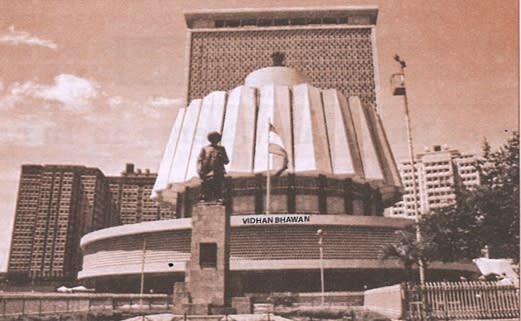
(a) How is the Legislative Assembly composed?
(b) What are the qualifications for being a member of the Legislative Assembly?
(c) What is the term of the House? Under what conditions the term of the Assembly extended or reduced?
Answer
(a) The Legislative Assembly of each State consists of not more than 500 and not less than 60 members chosen through direct election by Universal Adult Franchise using the system of secret ballot. The State is divided into territorial constituencies, ensuring equal representation based on population.
(b) In order to be a member of the Legislative Assembly a person:
- must be a citizen of India.
- must be not less than 25 years of age.
- must have his/her name on the voters' list in the State concerned.
- must not hold any office of profit under the Government of India or the Government of any State other than an office declared by law not to disqualify its holder.
- must not be of unsound mind which is declared by a competent court.
- must not be an undischarged insolvent.
(c) The Legislative Assembly serves a five-year term but can be dissolved earlier by the Governor on the Chief Minister's advice. Under President's rule, the Assembly is either dissolved or suspended. During a national emergency, Parliament can extend the Assembly's term by up to one year at a time, provided fresh elections are held within six months of the emergency's expiration.
Like the Rajya Sabha at the Centre, the Legislative Council in the State is merely an advisory chamber. In this context answer the following questions:
(a) How is Legislative Council constituted?
(b) What are the qualifications for its membership?
(c) What powers does the Legislative Council have with regard to a Money Bill and a non-money bill?
Answer
(a) The numerical strength in the Legislative Council of a State shall not exceed one-third of the total number of members in the Legislative Assembly of that State. However, the total number of members in the Legislative Council of a State shall not normally be less than 40.
Of the total number of members of the Legislative Council the composition would be as follows:
- One-third of the members are elected by the members of municipalities, district boards and other local bodies in the State.
- About one-third of the members are elected by members of the Legislative Assembly from amongst persons who are not members of the Assembly.
- One-twelfth of the members are elected by persons who have been, for at least three years, engaged in teaching in educational institutions not lower than secondary schools.
- One-twelfth of the members are elected by registered graduates of more than three years' standing.
- The remaining one-sixth members are nominated by the Governor from people having special knowledge or practical experience in the fields of literature, science, art, cooperative movement and social service.
(b) In order to be a member of the Legislative Council a person:
- must be a citizen of India.
- must be not less than 30 years of age.
- must have his/her name on the voters' list in the State concerned.
- must not hold any office of profit under the Government of India or the Government of any State other than an office declared by law not to disqualify its holder.
- must not be of unsound mind which is declared by a competent court.
- must not be an undischarged insolvent.
(c) The Legislative Council or Vidhan Parishad acts as an advisory body, with limited powers over Money bills and only a delaying power over Non-money bills.
Money Bills
- A Money Bill cannot be introduced in the Vidhan Parishad.
- The Vidhan Parishad must return the bill within 14 days, with or without suggestions. However, the Vidhan Sabha is not obliged to accept them.
- Like the Rajya Sabha, the Vidhan Parishad can delay it for 14 days. After the lapse of that period, a Money Bill is deemed to have been passed by it and sent for the Governor's assent.
- Hence, the Vidhan Parishad cannot amend or reject a money bill. Its role is purely advisory.
Non-Money Bills
- Non-Money bills can be originated in the Vidhan Parishad as well and are then sent to Vidhan Sabha for consideration. However, the will of the Vidhan Sabha prevails.
- If a Bill originates in the Vidhan Sabha (Assembly) it is sent to the Vidhan Parishad (Council) for its approval. The Vidhan Parishad can delay the passage of a Bill for three months.
- The House can propose amendments within three months in the first instance.
- If the Vidhan Parishad disagrees with a Bill, the Bill must have second journey from the Assembly to the Council.
- In the second journey, the Council cannot withhold the Bill for more than one month. After the expiry of the said period the Bill is deemed to have been passed by the Vidhan Parishad.
Recently elections to the Legislative Assembly of your State were held. Find out the number of seats for which elections were held. What were the issues which were debated during the election campaign? Were these issues local or national? Which issue you wanted to be addressed at the earliest?
Answer
Recently elections to the Legislative Assembly were held in my state Uttar Pradesh for all 403 seats of the Assembly. Some of the key issues that were debated during the election campaign are:
- Unemployment
- Inflation and Price Rise
- Stray Cattle Menace
- Infrastructure and development
- Law and order
While unemployment and inflation are national challenges, the other issues are more localized specific to Uttar Pradesh.
Among these, unemployment stands out as the most pressing issue to me, that requires immediate attention. I think that addressing job creation and providing employment opportunities are crucial for my state's economic growth and the well being of its residents.
Find out the differences in the powers and functions of an MLA and an MP. If given a chance, which of the two positions would you like to take? Why?
Answer
Differences in the powers and functions of an MLA and an MP
| Aspect | MLA (Member of Legislative Assembly) | MP (Member of Parliament) |
|---|---|---|
| Level of Governance | State level | National level |
| House | Legislative Assembly (and sometimes Legislative Council) | Lok Sabha or Rajya Sabha |
| Main Role | Makes laws on State list and Concurrent list subjects | Makes laws on Union list and Concurrent list subjects |
| Constituency | Represents a state assembly constituency | Represents a parliamentary constituency |
| Budget and Finance | Participate in a state budget discussions and tax approval | Participate in union budget and national financial matters |
| Control over Executive | Controls state government through questions, motions, debates | Controls central government through similar means |
| Focus on development work | Works on local/state development | Works on national level policies and schemes. |
I would choose to become an MP, because this role allows me to work on issues that impact the entire country like national security, economic growth, education reforms, and environmental policies. MPs also have a greater platform to bring large-scale change and represent their constituency at the national level. Being part of important parliamentary debates and having the ability to influence national laws is a powerful way to serve the people.