
Mathematics
The adjacent figure shows a circle with center O and while OABC is a quadrilateral.
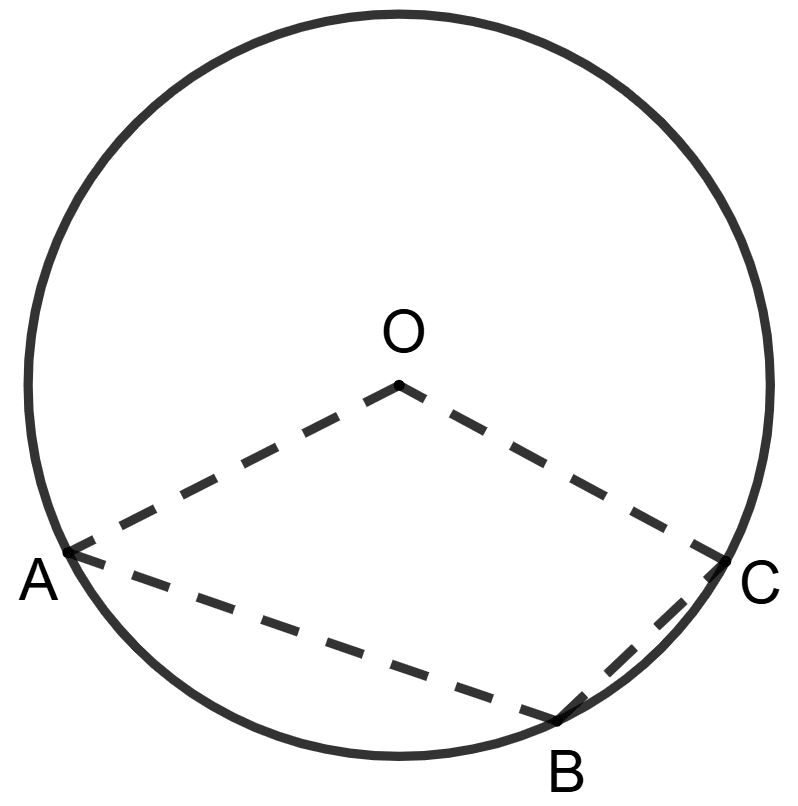
Assertion (A): OABC is a cyclic quadrilateral.
Reason (R): A quadrilateral inscribed in a circle is a cyclic quadrilateral.
Assertion (A) is true, but Reason (R) is false.
Assertion (A) is false, but Reason (R) is true.
Both Assertion (A) and Reason (R) are correct, and Reason (R) is the correct reason for Assertion (A).
Both Assertion (A) and Reason (R) are correct, and Reason (R) is incorrect reason for Assertion (A).
Circles
1 Like
Answer
A cyclic quadrilateral is defined as a quadrilateral whose all four vertices lie on the circumference of a circle. In other words, it is a quadrilateral that is inscribed in a circle.
So, reason (R) is true.
In the given figure, O is center of the circle. Hence, it does not lie on the circumference of the circle.
Therefore, OABC is not a cyclic quadrilateral.
So, assertion (A) is false.
Thus, Assertion (A) is false, but Reason (R) is true.
Hence, option 2 is the correct option.
Answered By
1 Like
Related Questions
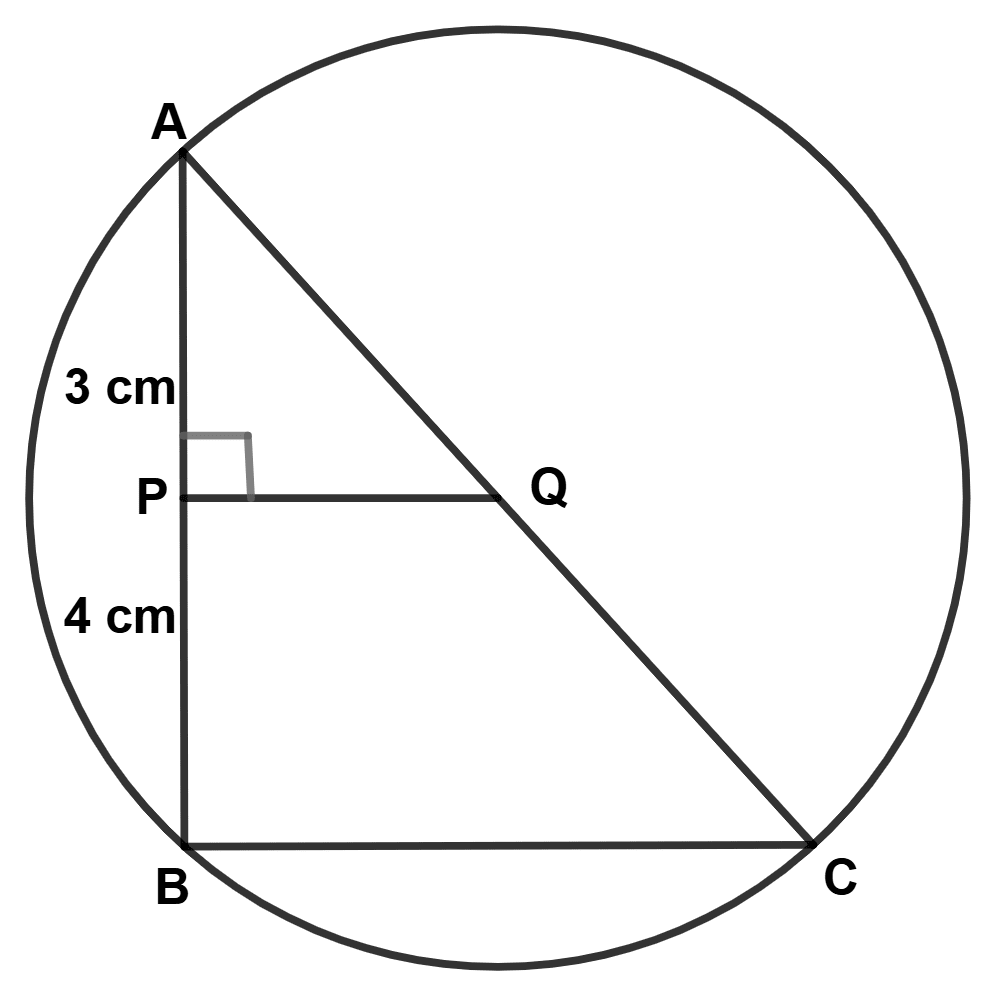
In the adjoining figure, AC is a diameter of the circle, AP = 3 cm and PB = 4 cm and QP ⊥ AB. If the area of △ APQ is 18 cm2, then the area of shaded portion QPBC is :
32 cm2
49 cm2
80 cm2
98 cm2
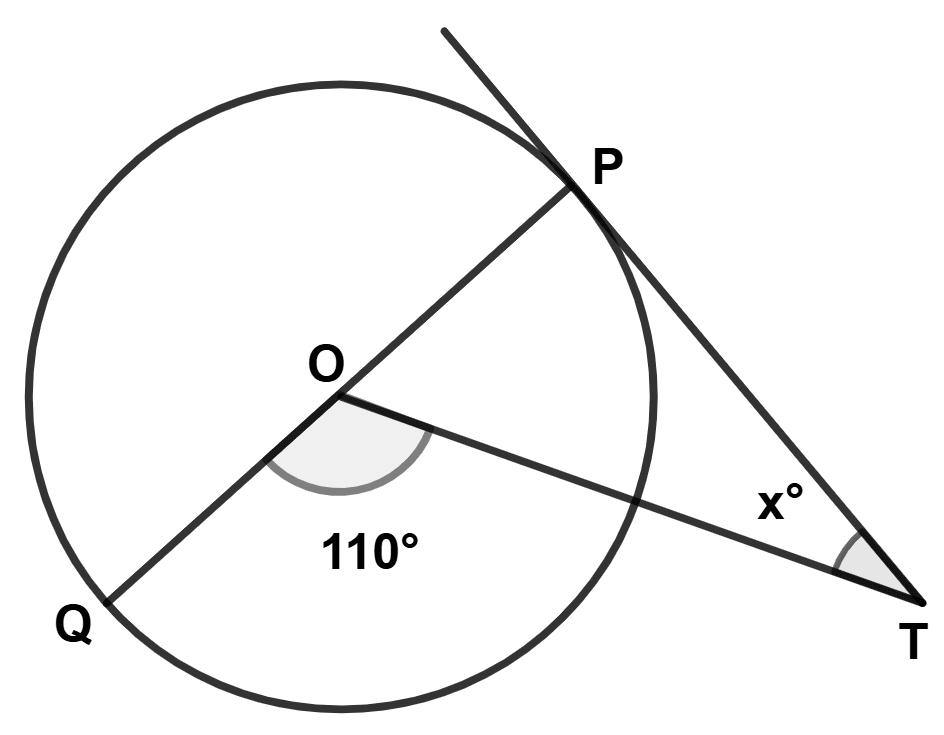
In the adjoining diagram, O is the center of the circle and PT is a tangent. The value of x is :
20°
40°
55°
70°
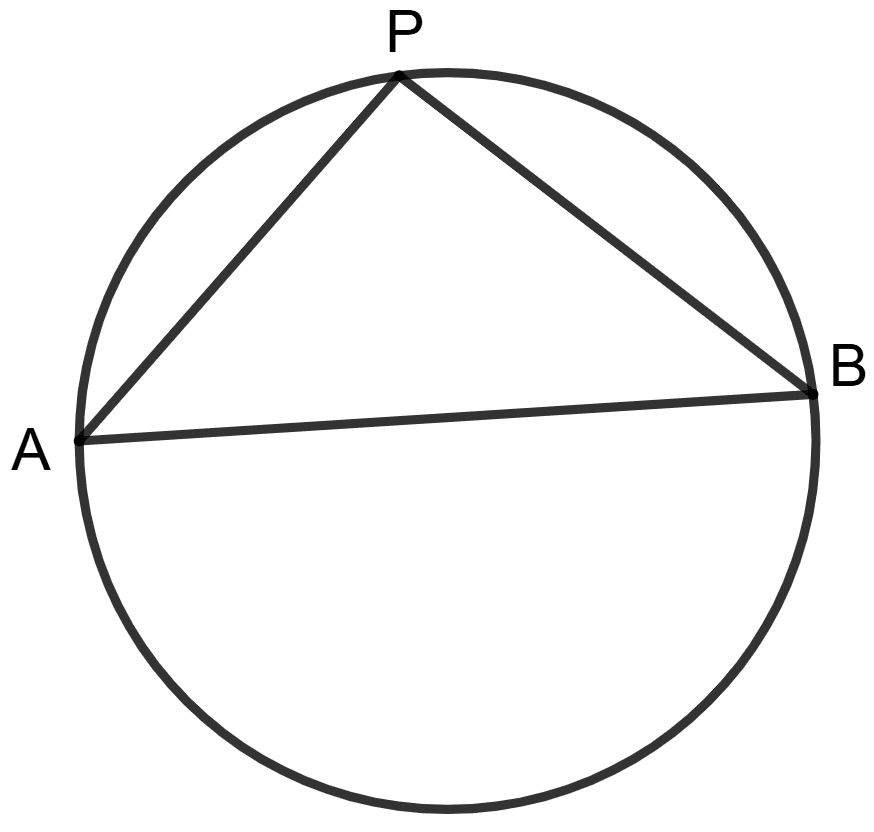
Assertion (A): In the adjoining figure, AB is a diameter of the circle. If P is any point on the circle, then AB2 = AP2 + BP2.
Reason (R): Angle in a semicircle is 90°.
Assertion (A) is true, but Reason (R) is false.
Assertion (A) is false, but Reason (R) is true.
Both Assertion (A) and Reason (R) are correct, and Reason (R) is the correct reason for Assertion (A).
Both Assertion (A) and Reason (R) are correct, and Reason (R) is incorrect reason for Assertion (A).
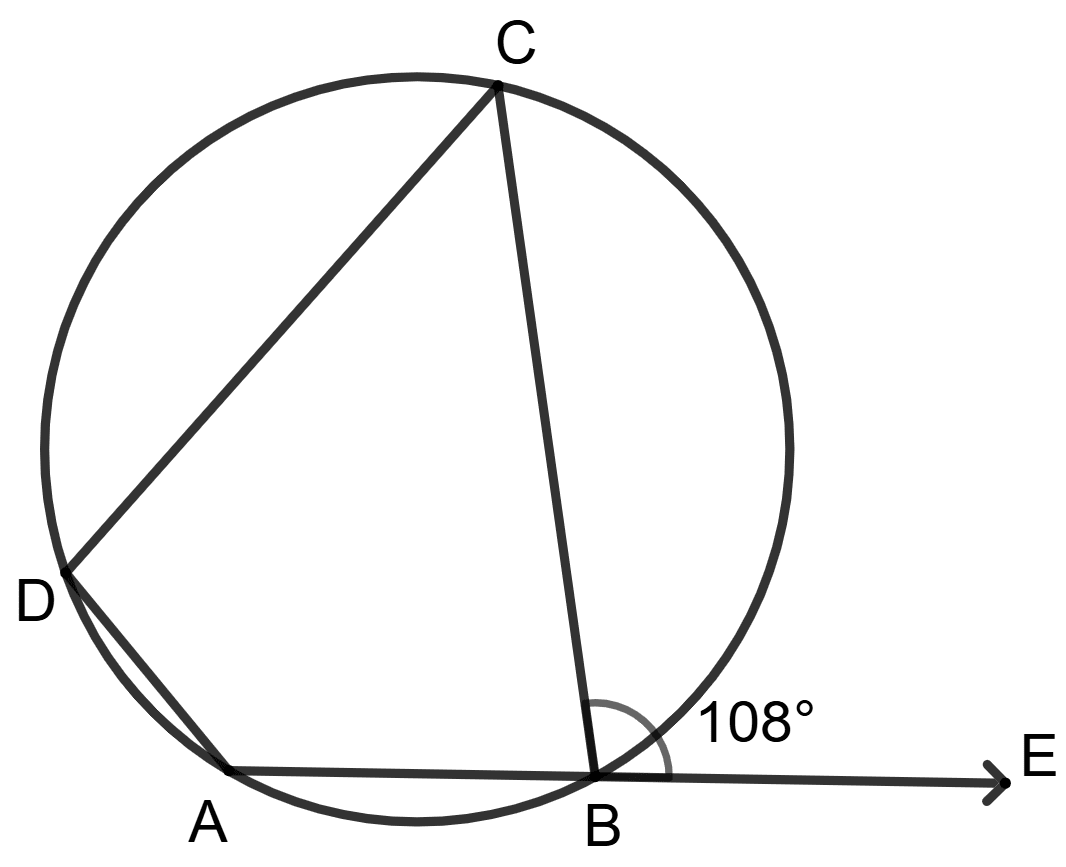
Assertion (A): In the adjoining figure, ABCD is a cyclic quadrilateral. If ∠CBE = 108°, then ∠ADC = 108°.
Reason (R): In a cyclic quadrilateral, opposite angles are supplementary.
Assertion (A) is true, but Reason (R) is false.
Assertion (A) is false, but Reason (R) is true.
Both Assertion (A) and Reason (R) are correct, and Reason (R) is the correct reason for Assertion (A).
Both Assertion (A) and Reason (R) are correct, and Reason (R) is incorrect reason for Assertion (A).