
Mathematics
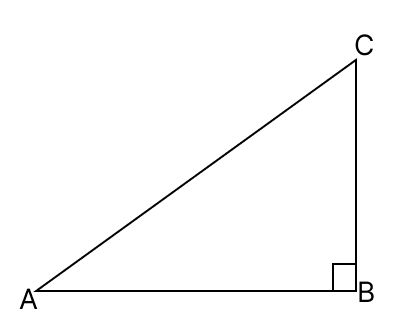
Assertion (A): In the adjoining figure, tan A = . Then AC = 2AB.
Reason (R): In right angled ΔABC, AC2 = AB2 + BC2
Assertion (A) is true, Reason (R) is false.
Assertion (A) is false, Reason (R) is true.
Both Assertion (A) and Reason (R) are true, and Reason (R) is the correct reason for Assertion (A).
Both Assertion (A) and Reason (R) are true, but Reason (R) is not the correct reason (or explanation) for Assertion (A).
Trigonometrical Ratios
1 Like
Answer
Given, tan A =
As we know,
Let BC = k and AB = k
Since, ΔABC is a right angled triangle, using pythagoras theorem,
⇒ AC2 = AB2 + BC2
∴ Reason (R) is true.
Substituting values we get :
∴ Assertion (A) is false.
∴ Assertion (A) is false, Reason (R) is true.
Hence, option 2 is the correct option.
Answered By
2 Likes
Related Questions
If sin θ = , then cos θ is equal to
Consider the following two statements:
Statement 1: In sin A = , then value of cot A is .
Statement 2: cot A = sin A.cos A.
Which of the following is valid?
Both the statements are true.
Both the statements are false.
Statement 1 is true, and Statement 2 is false.
Statement 1 is false, and Statement 2 is true.
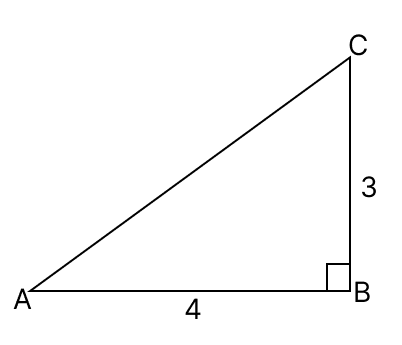
Assertion (A): In adjoining triangle ABC, sinA cosA = .
Reason (R): cos A = .
Assertion (A) is true, Reason (R) is false.
Assertion (A) is false, Reason (R) is true.
Both Assertion (A) and Reason (R) are true, and Reason (R) is the correct reason for Assertion (A).
Both Assertion (A) and Reason (R) are true, but Reason (R) is not the correct reason (or explanation) for Assertion (A).
Assertion (A): If x = a cos θ + b sin θ and y = a cos θ - b sin θ, then x2 + y2 = a2 + b2
Reason (R): cos2θ + sin2θ = 1.
Assertion (A) is true, Reason (R) is false.
Assertion (A) is false, Reason (R) is true.
Both Assertion (A) and Reason (R) are true, and Reason (R) is the correct reason for Assertion (A).
Both Assertion (A) and Reason (R) are true, but Reason (R) is not the correct reason (or explanation) for Assertion (A).