
Mathematics
PQRS is a parallelogram. L and M are points on PQ and SR respectively such that PL = MR. Show that LM and QS bisect each other.
Triangles
38 Likes
Answer
Parallelogram PQRS is shown in the figure below:
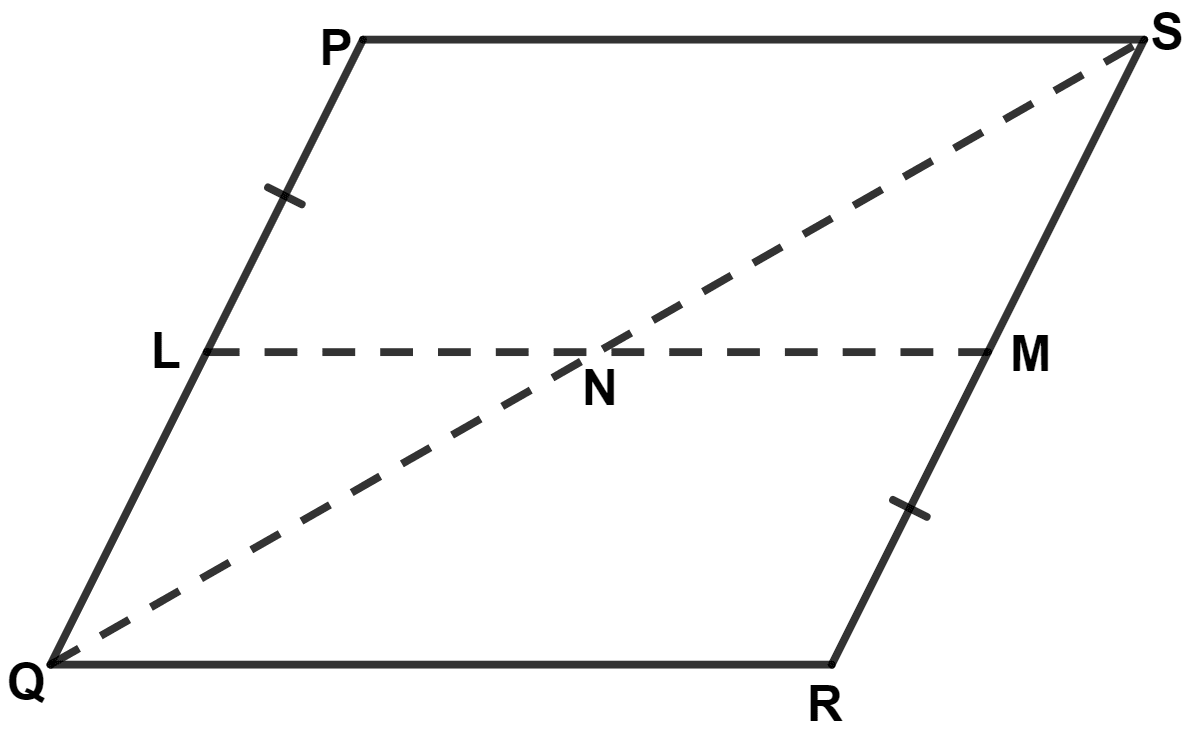
We know that,
Opposite angles of a parallelogram are equal.
∠Q = ∠S = x (let).
Diagonals of a parallelogram bisect the interior angles.
∴ QS bisects interior angles Q and S.
∴ ∠LQN = and ∠NSM = .
∴ ∠LQN = ∠NSM.
We know that,
Opposite sides of a parallelogram are equal.
∴ PQ = SR = a (let)
Given,
⇒ PL = MR = b (let)
From figure,
⇒ LQ = PQ - PL = a - b
⇒ MS = SR - MR = a - b
∴ LQ = MS.
In △ LNQ and △ MNS,
⇒ ∠LNQ = ∠MNS (Vertically opposite angles are equal)
⇒ LQ = MS (Proved above)
⇒ ∠LQN = ∠NSM (Proved above)
∴ △ LNQ ≅ △ MNS (By A.A.S. axiom).
We know that,
Corresponding parts of congruent triangles are equal.
∴ QN = NS and LN = NM.
Hence, proved that LM and QS bisect each other at point of intersection.
Answered By
23 Likes
Related Questions
ABCD is a parallelogram. The sides AB and AD are produced to E and F respectively such that AB = BE and AD = DF. Prove that :
△ BEC ≅ △ DCF
In the following figure, ABC is an equilateral triangle in which QP is parallel to AC. Side AC is produced upto point R so that CR = BP.
Prove that QR bisects PC.

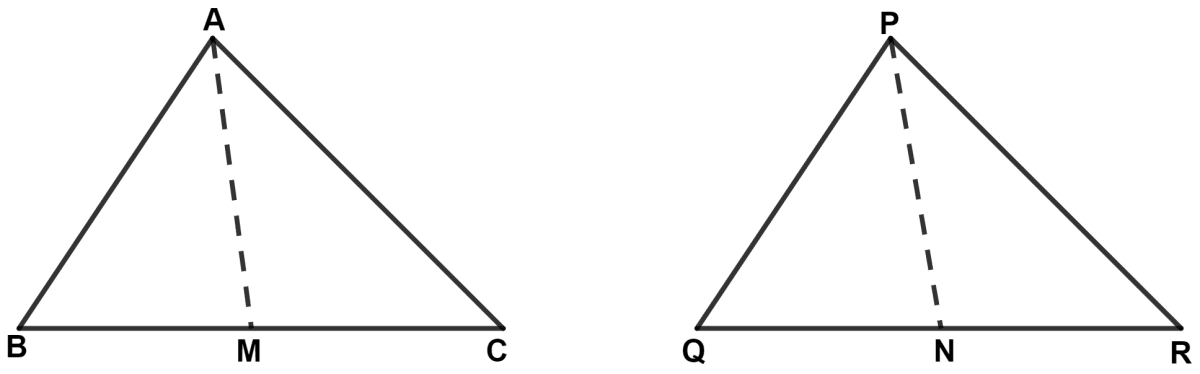
In the given figure, AB = PQ, BC = QR and median AM = median PN, then :
AC ≠ PR
BM ≠ QN
△ ABM ≇ △ PQN
△ ABC ≅ △ PQR
In triangles ABC and DEF, AB = DE and AC = EF, then to make these two triangles congruent, we must have :
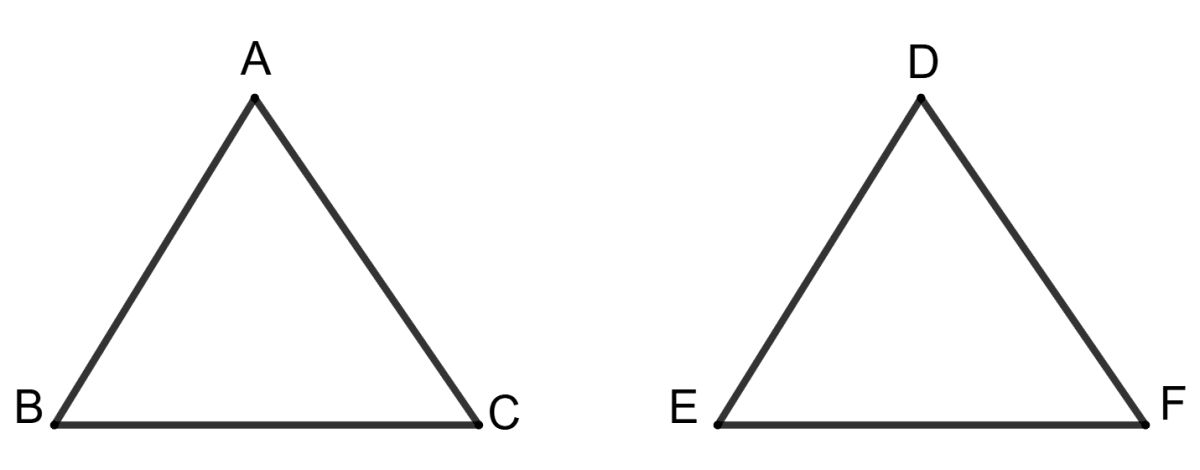
BC = DF
∠A = ∠E
any of (1) and (2)
none of (1) and (2)