
History & Civics
With reference to Nationalism and the birth of the Indian National Congress, explain each of the following:
(a) Role of Swami Vivekananda.
(b) State any three objectives of the Indian National Congress.
(c) Role of Dadabhai Naoroji.
Nationalism Growth
388 Likes
Answer
(a) Role of Swami Vivekananda:
- He was a great humanist who believed that service to mankind was service to God.
- He founded the Ramakrishna Mission in 1897, which worked for education, healthcare and relief of the poor.
- He proclaimed the superiority of Indian culture and civilisation, which instilled pride and self-confidence among Indians.
- He preached the unity of all religions and brotherhood of mankind, helping to unite Indians across caste and creed.
- He condemned caste discrimination and untouchability and worked for the upliftment of the weaker sections of society.
- His address at the Parliament of World Religions, Chicago (1893) made Indians proud of their spiritual heritage and aroused nationalist sentiment.
(b) Three objectives of the Indian National Congress were-
- To promote friendly relations between nationalist political workers from different parts of the country.
- To develop and consolidate the feelings of national unity irrespective of caste, religion or province.
- To formulate popular demands and present them before the government.
(c) Dadabhai Naoroji played a significant role in the rise of Nationalism and the birth of the Indian National Congress.
- The East India Association was founded in London in 1866 by Dadabhai Naoroji.
- The Association provided information on all Indian subjects to British citizens and Members of Parliament.
- It voiced the grievances of Indians and suggested remedial measures.
- Dadabhai Naoroji, the Grand Old Man of India, was of the opinion that the British were basically just and good.
- He wanted to place the true state of affairs in India before the people of England so that the problems of the Indians may be resolved.
- The association had its branches in Mumbai, Kolkata and Chennai.
- Later, he supported the formation of Indian National Congress.
- The second session of the Congress was held at Kolkata in 1886, under the Presidentship of Dadabhai Naoroji.
Answered By
222 Likes
Related Questions
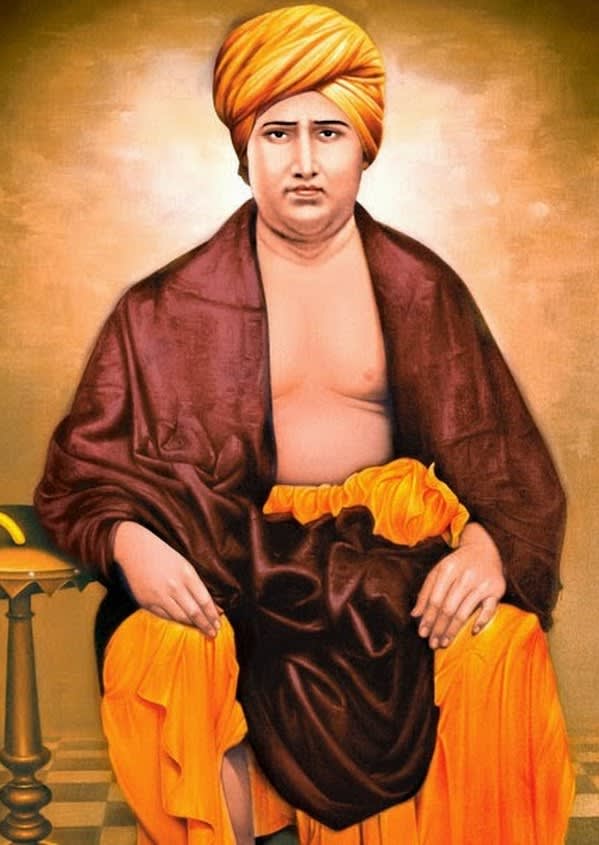
(a) Identify the person in the given picture. Name the organisation formed by him. State any two beliefs of this organisation with regard to upliftment of women.

(b) Mention his contribution to the growth of Indian National movement.
(c) How did the socio-religious reform movements of the 19th century act as pioneers of Indian Nationalism?
Read the excerpt given below and answer the question that follows:
"From the mid-18th century, it was a European corporation, the East India Company - run from the City of London by merchants and accountants, with their ledgers and careful accounting - that ran amok and seized and subjugated a fragmented and divided India in what was probably the supreme act of corporate violence in history."
—William Dalrymple(a) What term is used to describe the East India Company's act of running India's trade and finance from the city of London? How did it work?
(b) What was its impact on the artisans and craftsmen?
(c) The author has described the East India Company's act as 'Corporate violence'. What term was used by Dadabhai Naoroji for such an act? Describe how it worked.
(a) Identify the person in the given picture. Name the organisation formed by him. State any two beliefs of this organisation with regard to opposition of social evils.
(b) Mention his contribution to the spread of education in India.
(c) State one basic difference between Raja Rammohan Roy and the person in the Picture.
The establishment of the Indian National Congress was a significant event in the development of national movement in India. In this context:
(a) What was the name of the Indian National Congress before it got this name? Who gave it its present name? Where was it established and who was its founder?
(b) Why did Lord Dufferin favour the formation of the Indian National Congress?
(c) What was the nature of the political associations formed before the Indian National Congress was established? Name any two associations which acted as the forerunners of the Indian National Congress.