History & Civics
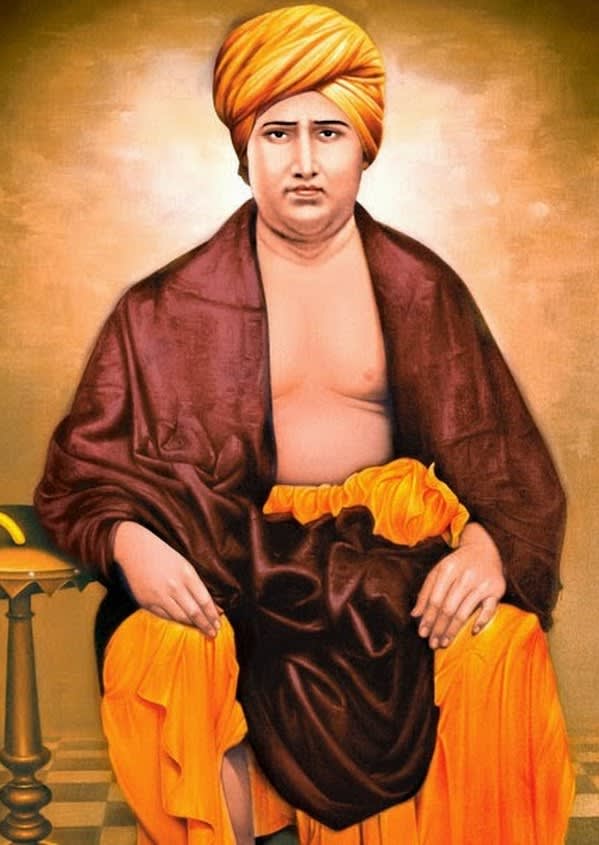
(a) Identify the person in the given picture. Name the organisation formed by him. State any two beliefs of this organisation with regard to upliftment of women.

(b) Mention his contribution to the growth of Indian National movement.
(c) How did the socio-religious reform movements of the 19th century act as pioneers of Indian Nationalism?
Nationalism Growth
227 Likes
Answer
(a) The person in the given picture is Jyotiba Phule. In 1873, he founded the Satya Shodhak Samaj.
Two beliefs of this organisation with regard to upliftment of women were —
- Jyotiba Phule and his organisation considered women superior to men and to maintain it he wanted to provide education to women.
- Jyotiba Phule and his organisation pioneered the widow remarriage movement in Maharashtra and started a private orphanage for the widows.
(b) The contributions of Jyotiba Phule to the growth of Indian National movement were:
- He worked for the upliftment of women. To provide them education, he along with his wife Savitribai Phule started one of the first girls school in Pune.'
- He pioneered widow remarriage and started a private orphanage for the widows.
- He considered the caste system prevalent in India as an epitome of slavery. In his famous book, 'Ghulamgiri', he described the hardships and distress felt by the lower castes.
- In 1873, he founded the Satya Shodhak Samaj with the aim of securing social justice for the weaker sections of society.
(c) The socio-religious reform movements of the 19th century were great pioneers of Indian nationalism in the following ways:
- The impact of Western education, which led to a rational, humanitarian and scientific approach to life, made the educated Indians realise the need to reform their religion and society.
- The reformers condemned untouchability and the caste system. The ideas of brotherhood and equality attracted the so called lower castes.
- The reformers taught people not to ignore the importance of women, who could participate in the national movement.
- In the social sphere, these movements worked for the abolition of caste system, child marriage, dowry system, purdah system, sati and infanticide.
- In the religious sphere, these reform movements combated religious superstitions, attacked idolatry, polytheism and hereditary priesthood.
- The reform movements created a consciousness of a new society devoid of privileges based on caste, creed or religion.
- They protested against the British domination of India. Swami Dayanand Saraswati and Swami Vivekananda proclaimed the superiority of Indian culture and civilisation. Swami Dayanand Saraswati was the first to use the word 'Swaraj' and to raise the slogan 'India for the Indians'.
Answered By
139 Likes
Related Questions
Mention the regional association that each nationalist was associated with:
(a) Surendranath Banerjee
(b) Dadabhai Naoroji
Various factors led to the rise and growth of nationalism in India in the 19th century. In this context, explain the role of each of the following:
(a) Economic Exploitation.
(b) Repressive Colonial Policies.
(c) The Press.
Read the excerpt given below and answer the question that follows:
"From the mid-18th century, it was a European corporation, the East India Company - run from the City of London by merchants and accountants, with their ledgers and careful accounting - that ran amok and seized and subjugated a fragmented and divided India in what was probably the supreme act of corporate violence in history."
—William Dalrymple(a) What term is used to describe the East India Company's act of running India's trade and finance from the city of London? How did it work?
(b) What was its impact on the artisans and craftsmen?
(c) The author has described the East India Company's act as 'Corporate violence'. What term was used by Dadabhai Naoroji for such an act? Describe how it worked.
(a) Identify the person in the given picture. Name the organisation formed by him. State any two beliefs of this organisation with regard to opposition of social evils.
(b) Mention his contribution to the spread of education in India.
(c) State one basic difference between Raja Rammohan Roy and the person in the Picture.