
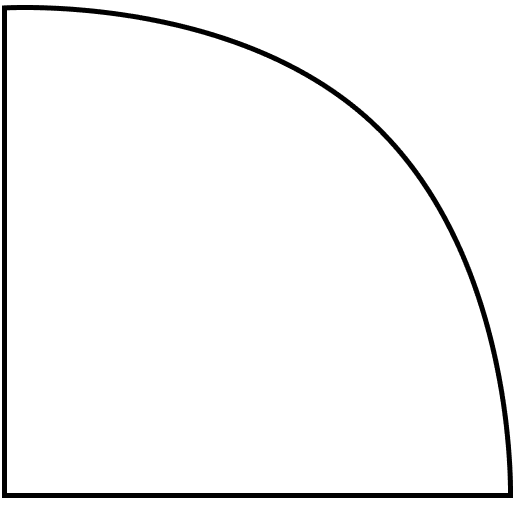
Draw the line (or lines) of symmetry, if any, of the following shape and count their number:
Answer
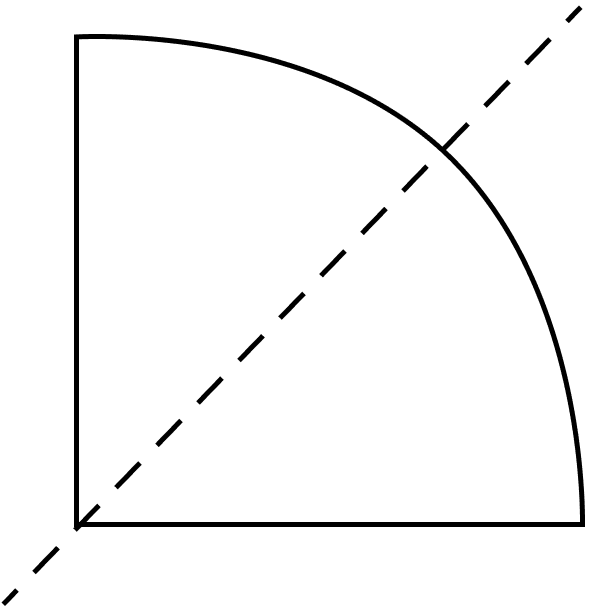
The given figure is a quarter circle (quadrant). It has 1 line of symmetry, i.e., the line joining the corner point to the midpoint of the curved arc.
Draw the line (or lines) of symmetry, if any, of the following shape and count their number:
Answer
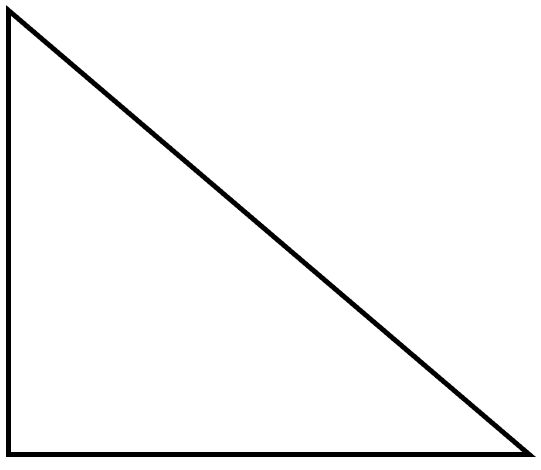
The given figure is a scalene right-angled triangle. It has no line of symmetry, since all three sides are of different lengths.
Draw the line (or lines) of symmetry, if any, of the following shape and count their number:
Answer
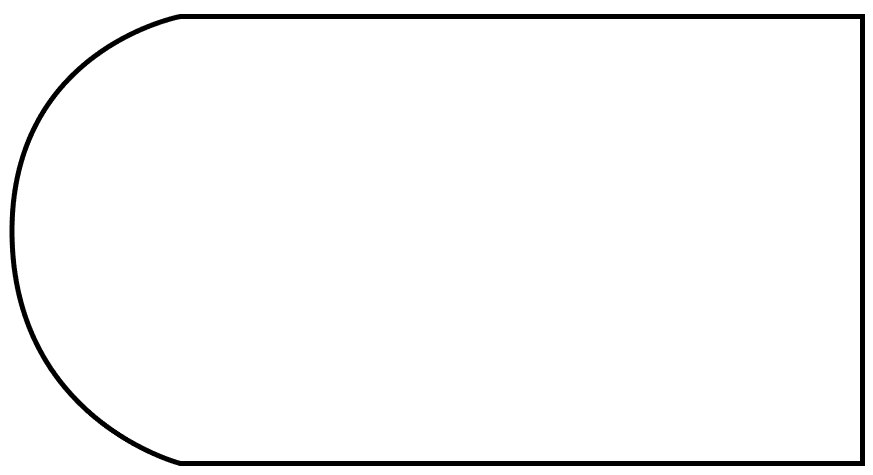
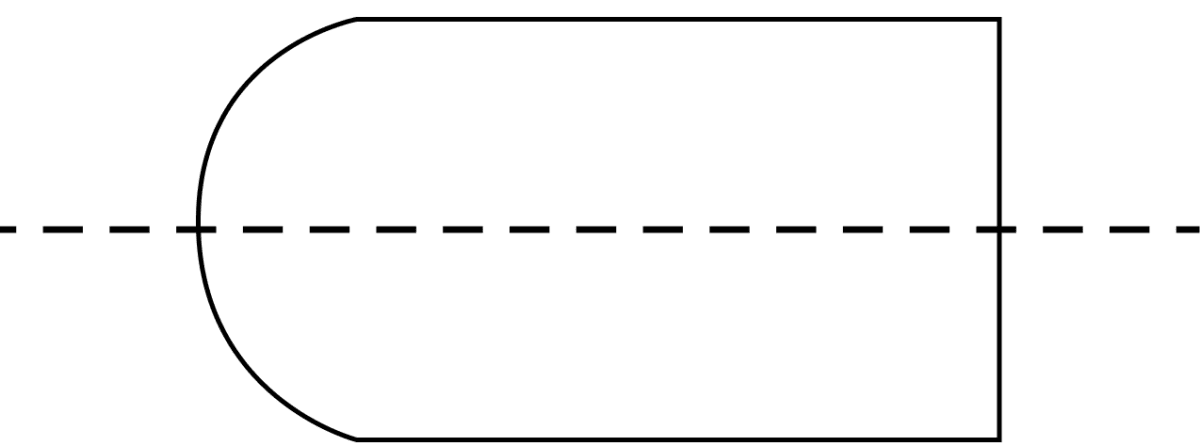
The given figure has 1 line of symmetry, i.e., the horizontal line through the middle.
Draw the line (or lines) of symmetry, if any, of the following shape and count their number:
Answer
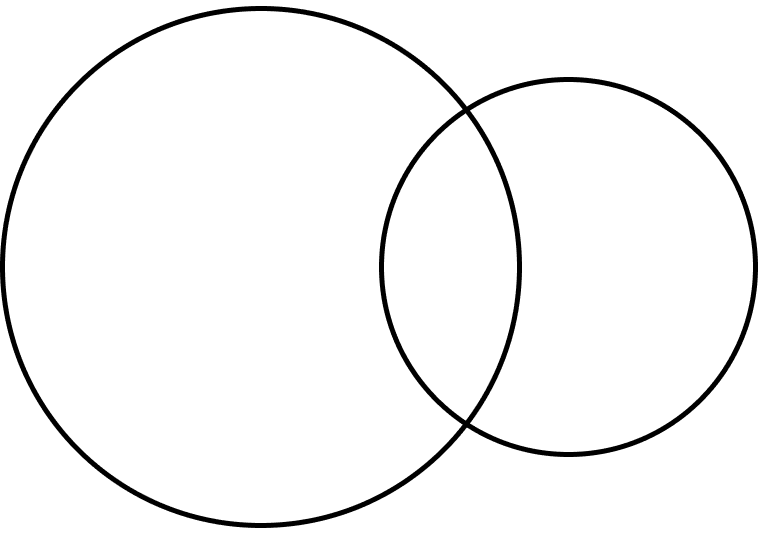
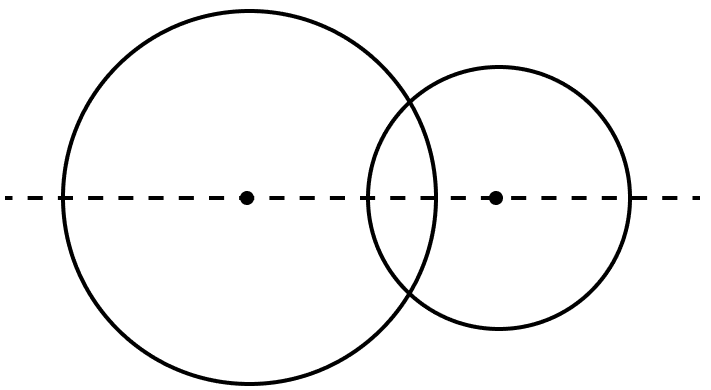
The given figure shows two unequal overlapping circles. It has 1 line of symmetry, i.e., the line joining the centres of the two circles.
Draw the line (or lines) of symmetry, if any, of the following shape and count their number:
Answer
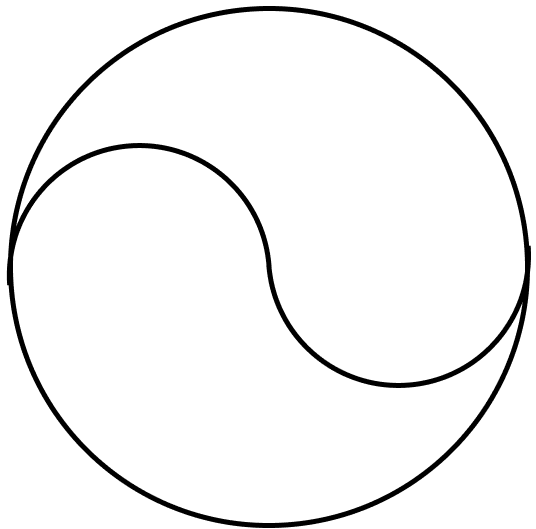
The given figure is a yin-yang style figure (an 'S' shape inside a circle). It has no line of symmetry, because any fold causes the curved portions to point in opposite directions.
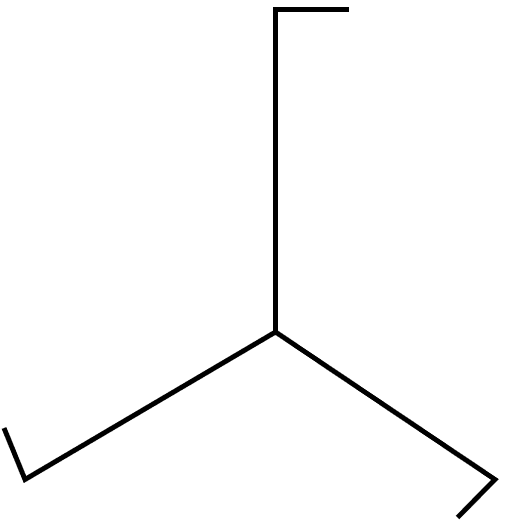
Draw the line (or lines) of symmetry, if any, of the following shape and count their number:
Answer
The given figure shows three rays emerging from a common point at equal angles (120° apart). It has no line of symmetry.
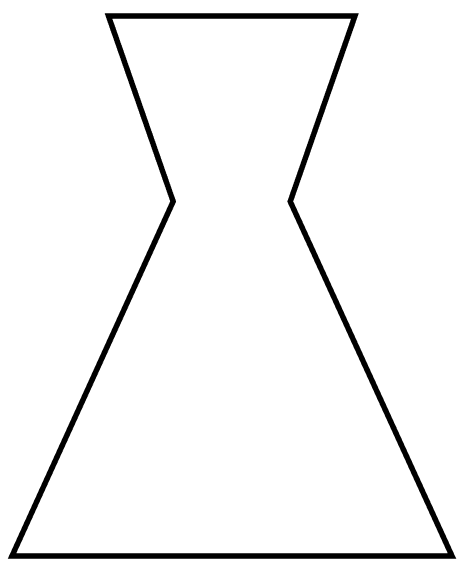
Draw the line (or lines) of symmetry, if any, of the following shape and count their number:
Answer
The given figure is an hourglass (bow-tie) shape. It has 1 line of symmetry i.e., the vertical line through the centre.
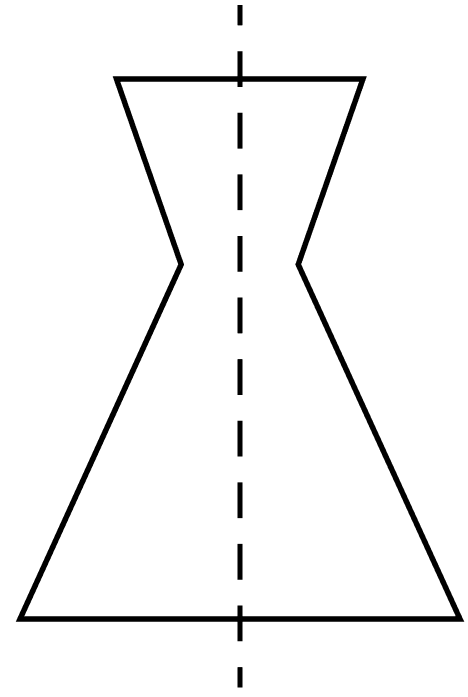
Draw the line (or lines) of symmetry, if any, of the following shape and count their number:

Answer
The given figure is an arrow. It has 1 line of symmetry, i.e., the line along the length of the arrow.
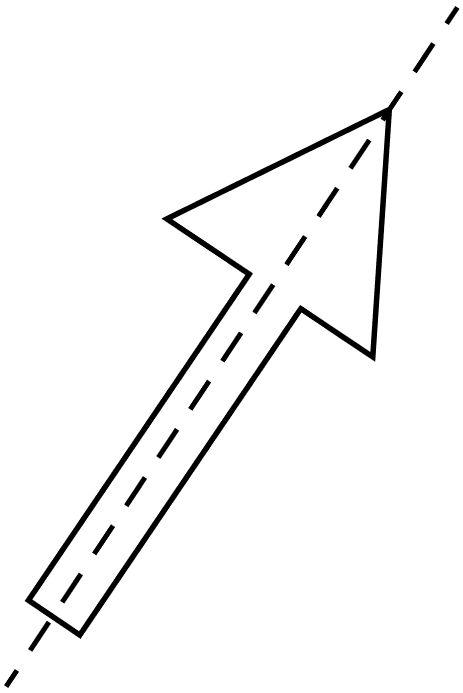
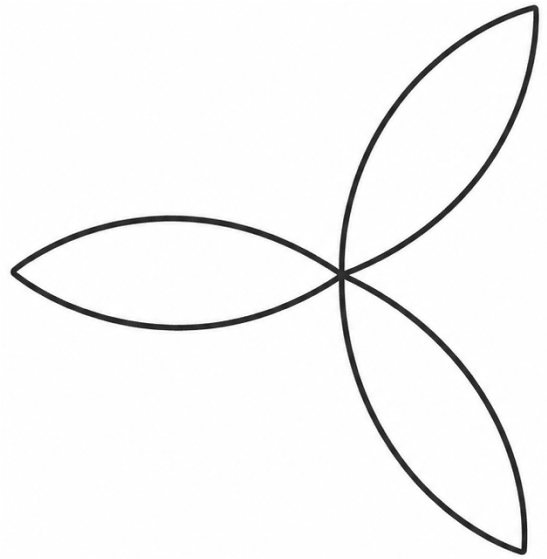
Draw the line (or lines) of symmetry, if any, of the following shape and count their number:
Answer
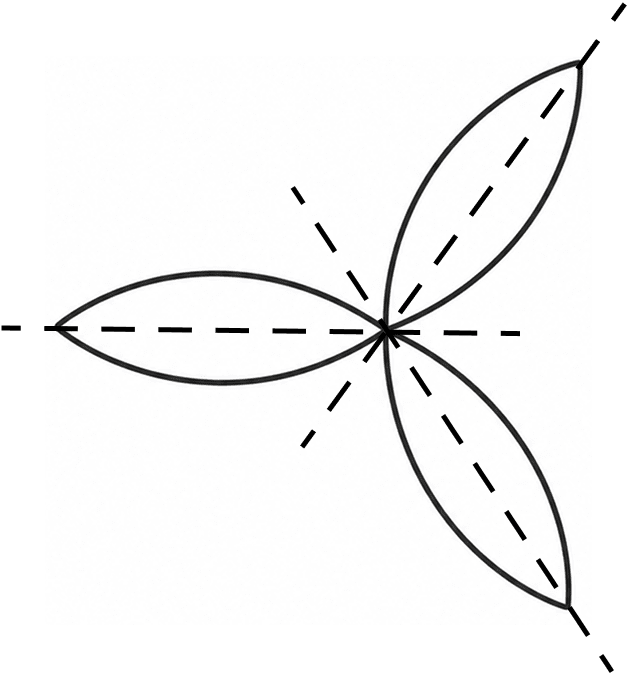
The given figure is a three-leaf clover (trefoil) shape. It has 3 lines of symmetry, i.e., one through each leaf and the centre.
Draw the line (or lines) of symmetry, if any, of the following picture (of objects) and count their number:

Answer
The given picture of a telephone has 1 line of symmetry, i.e., the vertical line passing through the centre.

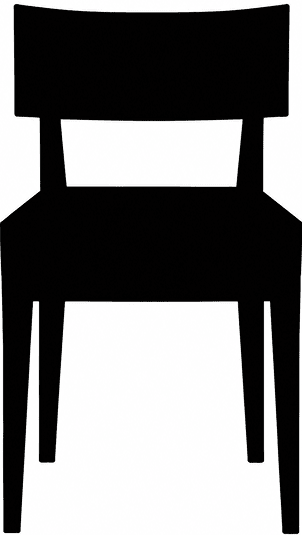
Draw the line (or lines) of symmetry, if any, of the following picture (of objects) and count their number:
Answer
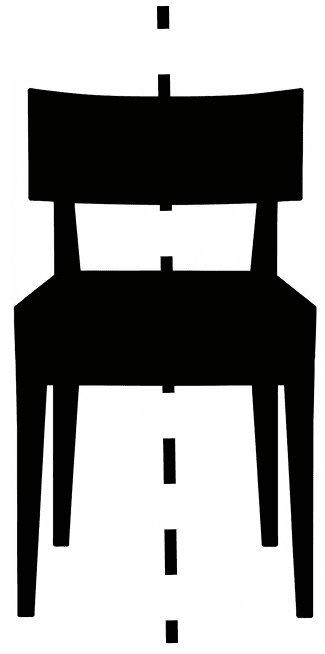
The given picture of a chair has 1 line of symmetry, i.e., the vertical line passing through the centre of the chair.
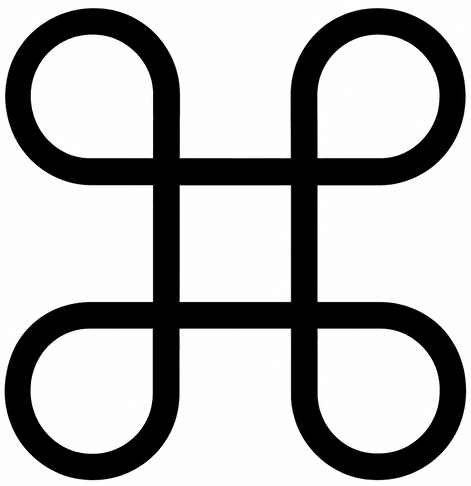
Draw the line (or lines) of symmetry, if any, of the following picture (of objects) and count their number:
Answer
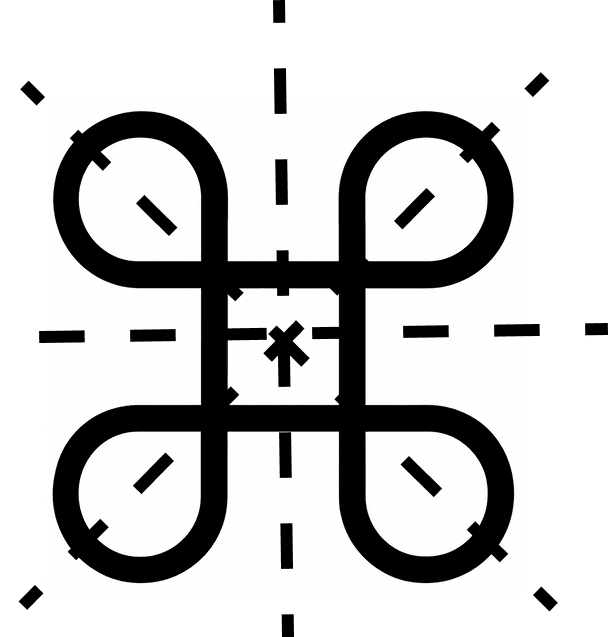
The given picture of the command symbol (⌘) has 4 lines of symmetry, i.e., the horizontal line, the vertical line and the two diagonals through the centre.
Draw the line (or lines) of symmetry, if any, of the following picture (of objects) and count their number:
Answer
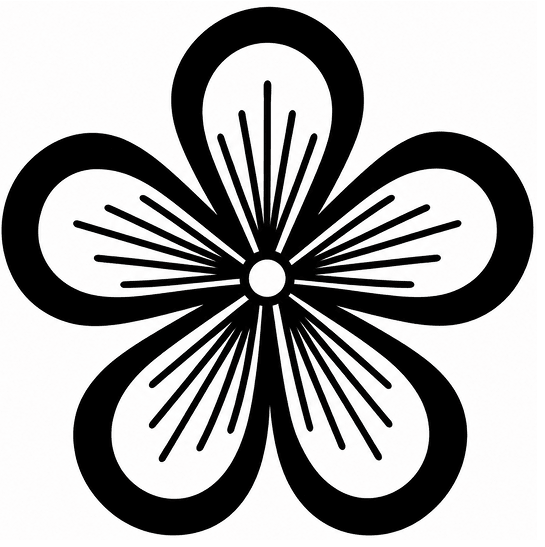
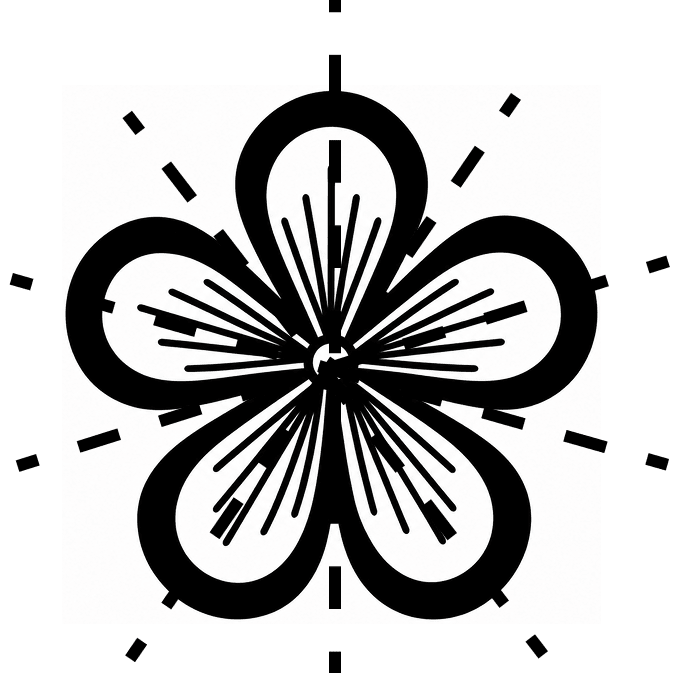
The given picture of a five-petalled flower has 5 lines of symmetry, i.e., one passing through each petal and the centre.
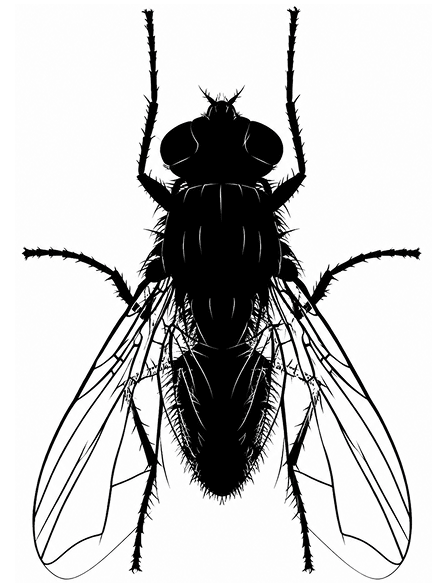
Draw the line (or lines) of symmetry, if any, of the following picture (of objects) and count their number:
Answer
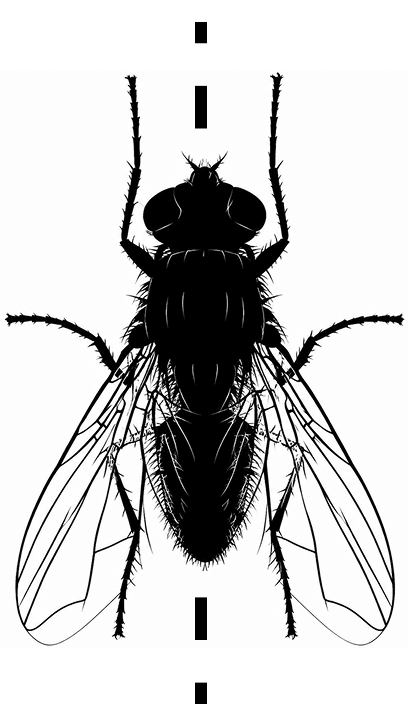
The given picture of a fly (housefly) has 1 line of symmetry, i.e., the vertical line passing through the centre of its body.
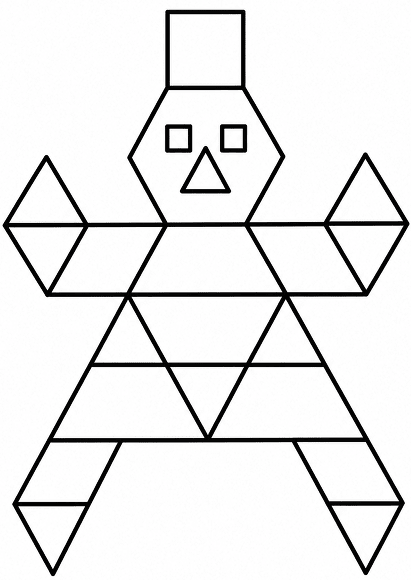
Draw the line (or lines) of symmetry, if any, of the following picture (of objects) and count their number:
Answer
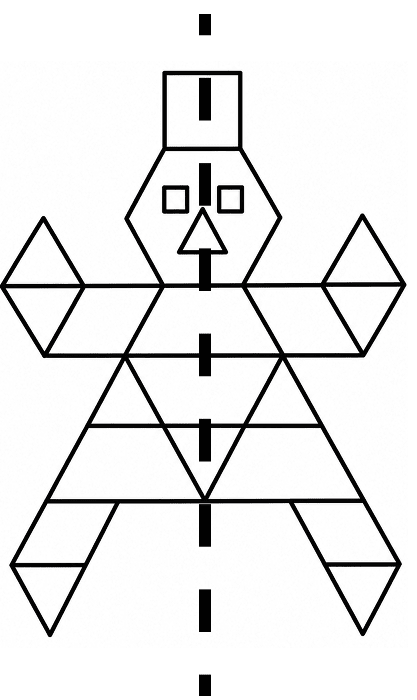
The given decorative figure has 1 line of symmetry, i.e., the vertical line passing through its centre.
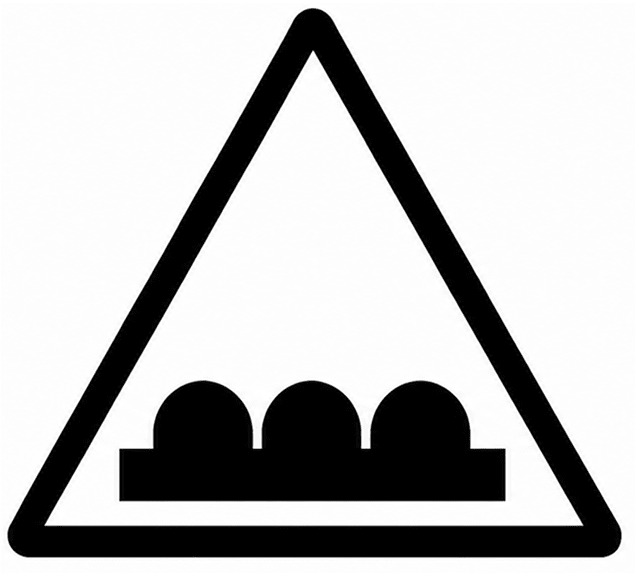
Draw the line (or lines) of symmetry, if any, of the following road signs and count their number:
Answer
The given road sign (speed breaker/hump) has 1 line of symmetry, i.e., the vertical line passing through the apex of the triangle.
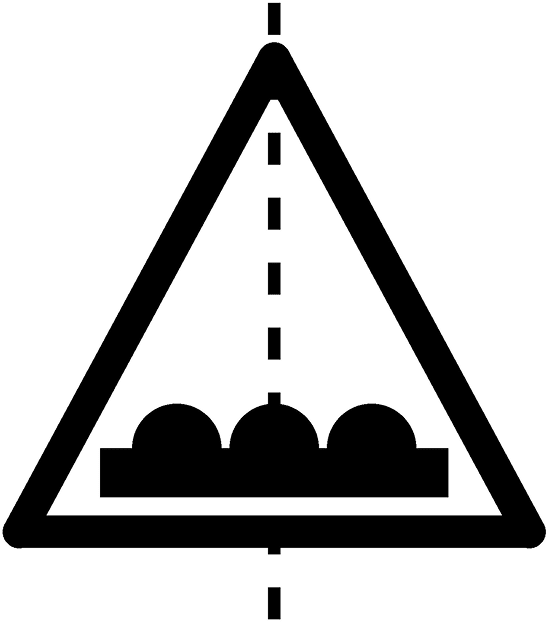
Draw the line (or lines) of symmetry, if any, of the following road signs and count their number:
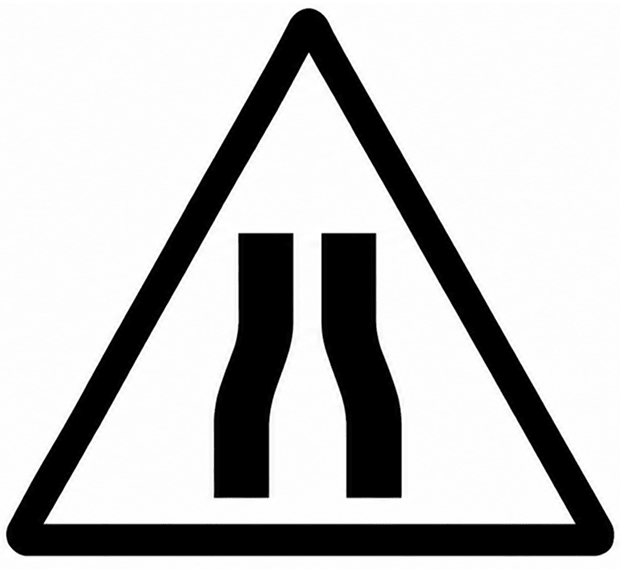
Answer
The given road sign (narrow bridge/barrier) has 1 line of symmetry, i.e., the vertical line passing through the apex of the triangle.
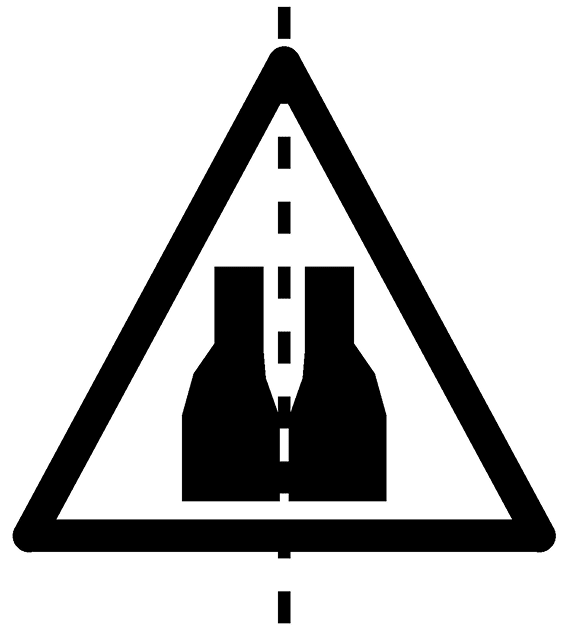
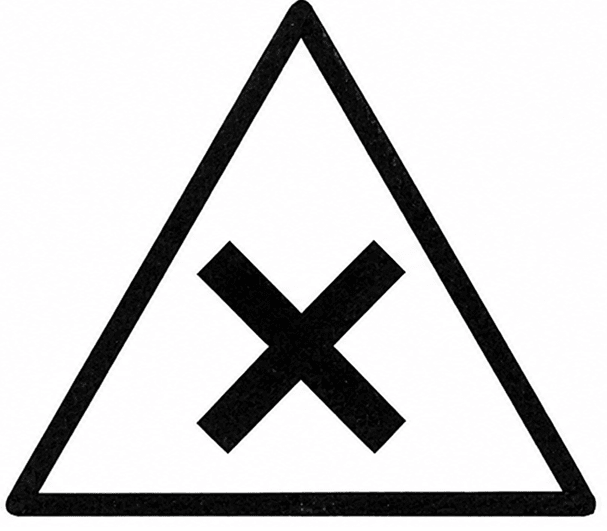
Draw the line (or lines) of symmetry, if any, of the following road signs and count their number:
Answer
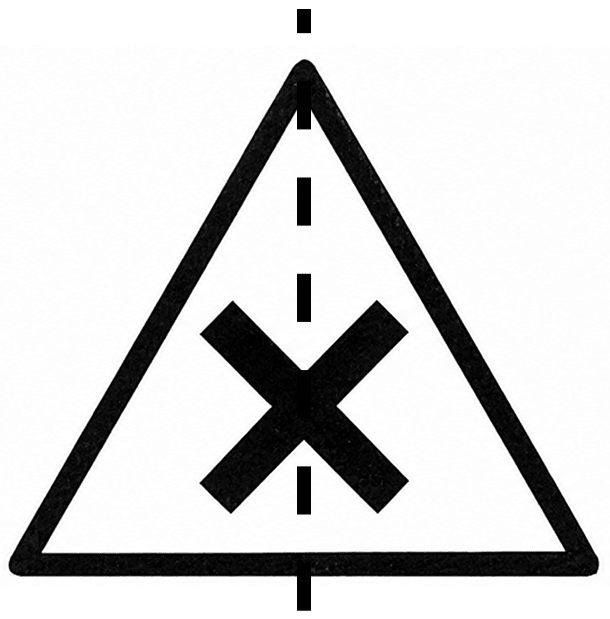
The given road sign (cross-road) has 1 line of symmetry, i.e., the vertical line passing through the apex of the triangle. (Although 'X' alone has 4 lines of symmetry, the triangular outline allows only the vertical axis to be common.)
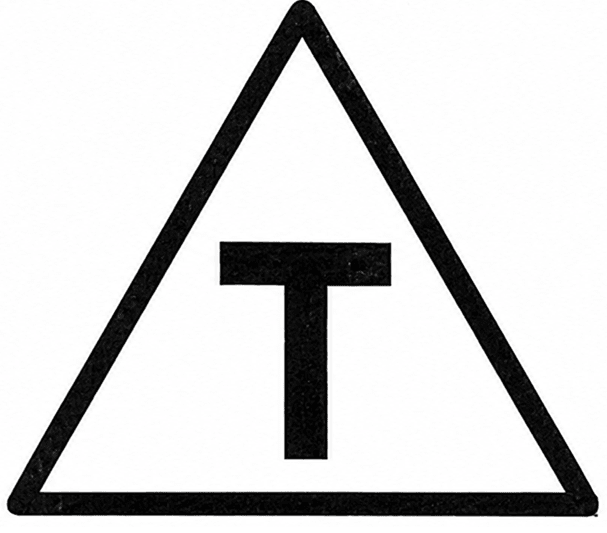
Draw the line (or lines) of symmetry, if any, of the following road signs and count their number:
Answer
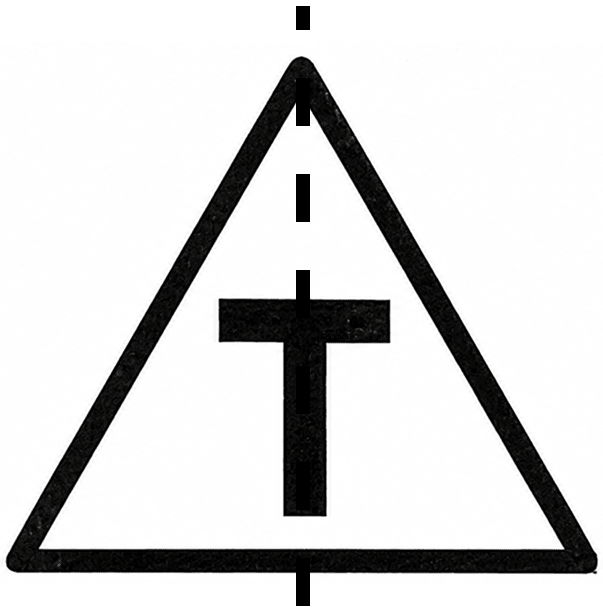
The given road sign (T-junction) has 1 line of symmetry, i.e., the vertical line passing through the apex of the triangle.
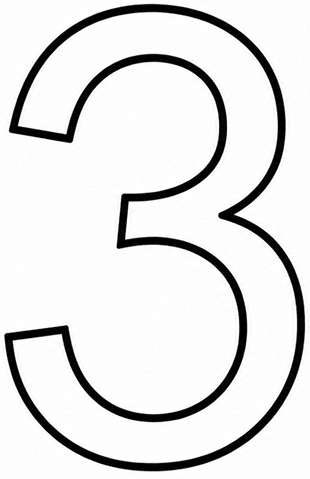
Draw the line (or lines) of symmetry, if any, of the following numeral and count their number:
Answer
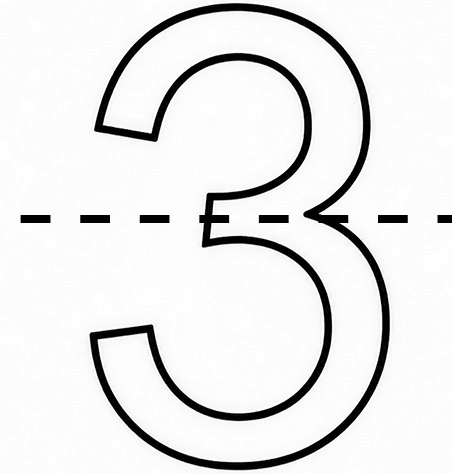
The numeral 3 has 1 line of symmetry, i.e., the horizontal line passing through the middle.
Draw the line (or lines) of symmetry, if any, of the following numeral and count their number:
Answer
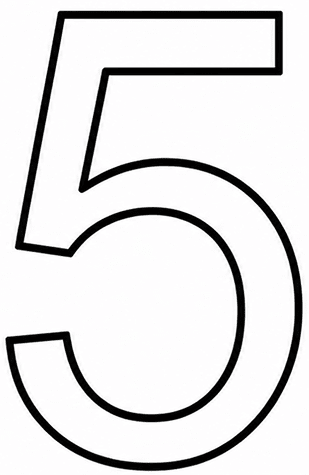
The numeral 5 has no line of symmetry.
Draw the line (or lines) of symmetry, if any, of the following numeral and count their number:
Answer
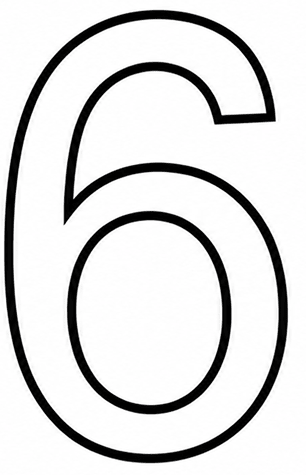
The numeral 6 has no line of symmetry.
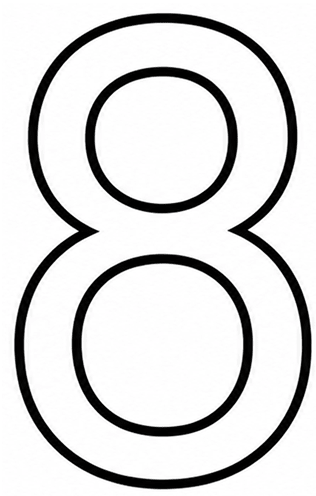
Draw the line (or lines) of symmetry, if any, of the following numeral and count their number:
Answer
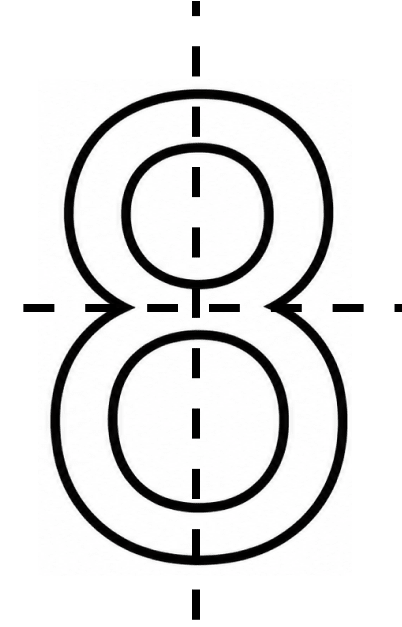
The numeral 8 has 2 lines of symmetry, i.e., the horizontal line and the vertical line through the centre.
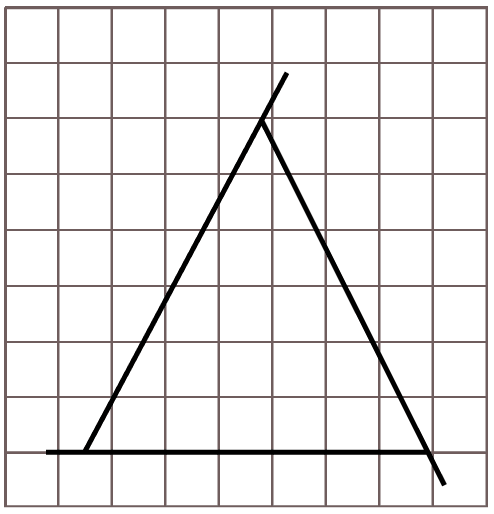
Copy the following figure on a squared paper and draw the lines of symmetry (if any) and count their number:
Answer
The given figure has no line of symmetry because of these unequal extensions.
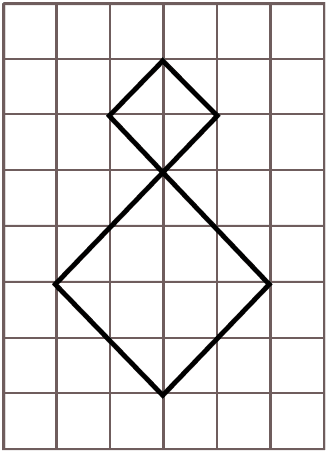
Copy the following figure on a squared paper and draw the lines of symmetry (if any) and count their number:
Answer
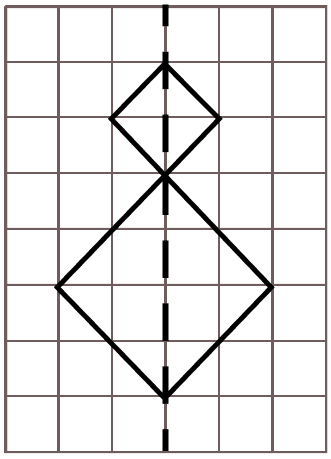
The given figure has 1 line of symmetry, i.e., the vertical line.
Copy the following figure on a squared paper and draw the lines of symmetry (if any) and count their number:
Answer
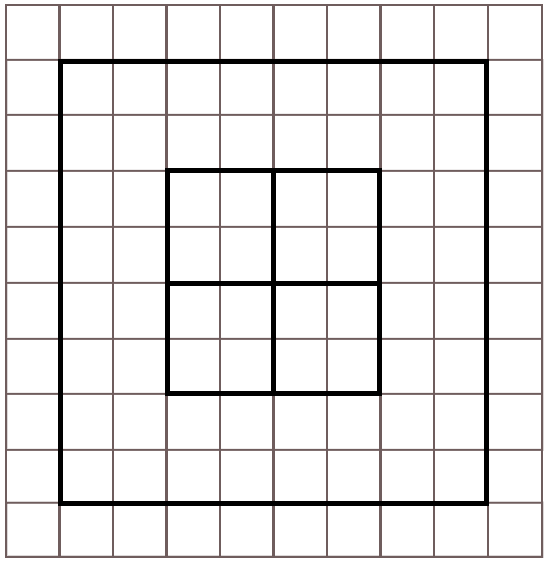
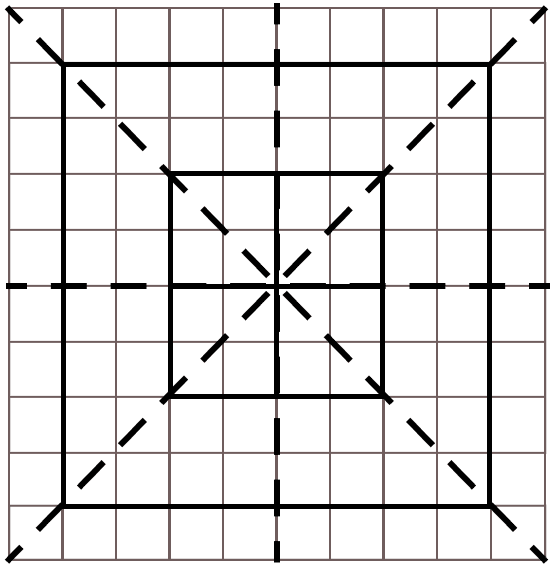
The given figure (a small square inside a larger square) has 4 lines of symmetry, i.e., the horizontal line, the vertical line and the two diagonals through the centre.
Copy the following figure on a squared paper and draw the lines of symmetry (if any) and count their number:
Answer
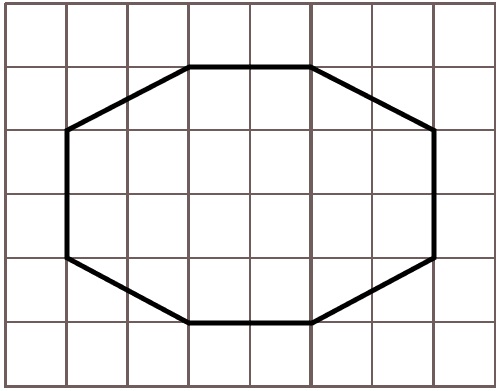
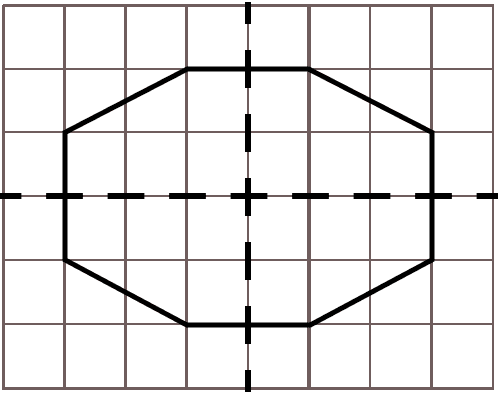
The given figure is an irregular (elongated) hexagon. It has 2 lines of symmetry, i.e., the horizontal line and the vertical line through its centre.
Copy the following figure on a squared paper and draw the lines of symmetry (if any) and count their number:
Answer
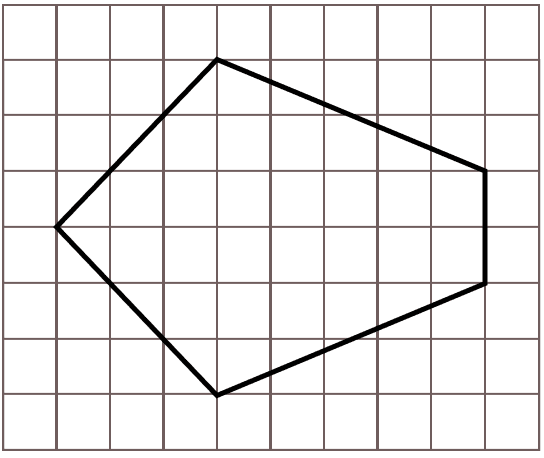
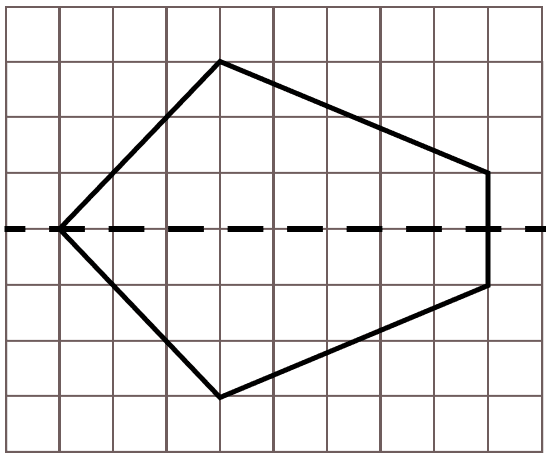
The given figure is a kite/pentagon-like shape. It has 1 line of symmetry, i.e., the horizontal line through its centre.
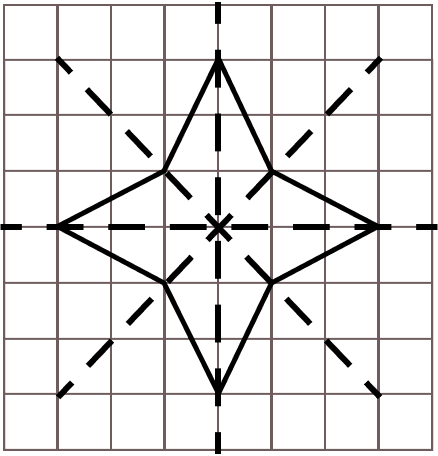
Copy the following figure on a squared paper and draw the lines of symmetry (if any) and count their number:
Answer
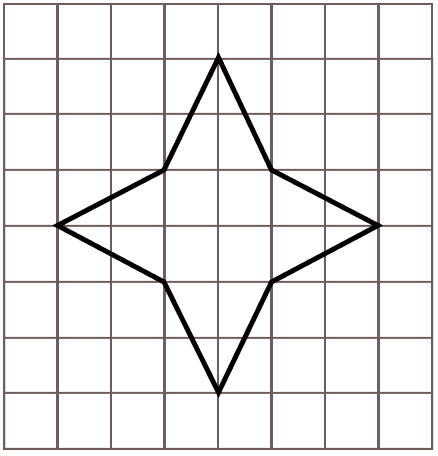
The given figure is a four-pointed star. It has 4 lines of symmetry, i.e., the horizontal line, the vertical line and the two diagonals through the centre.
Write the letters of words 'JUST LOOK' which have no line of symmetry.
Answer
Let us check each letter of 'JUST LOOK':
- J → No line of symmetry.
- U → 1 line of symmetry (vertical).
- S → No line of symmetry.
- T → 1 line of symmetry (vertical).
- L → No line of symmetry.
- O → 2 lines of symmetry (horizontal and vertical).
- O → 2 lines of symmetry (horizontal and vertical).
- K → 1 line of symmetry (horizontal)
∴ The letters of 'JUST LOOK' which have no line of symmetry are: J, S, and L.
Can you draw a triangle which has
(i) exactly one line of symmetry?
(ii) exactly two lines of symmetry?
(iii) exactly three lines of symmetry?
(iv) no lines of symmetry?
Sketch a rough figure in each case and name the triangle.
Answer
(i) Yes, a triangle with exactly one line of symmetry can be drawn. It is an isosceles triangle. The line of symmetry is the perpendicular from the vertex angle to the midpoint of the base.
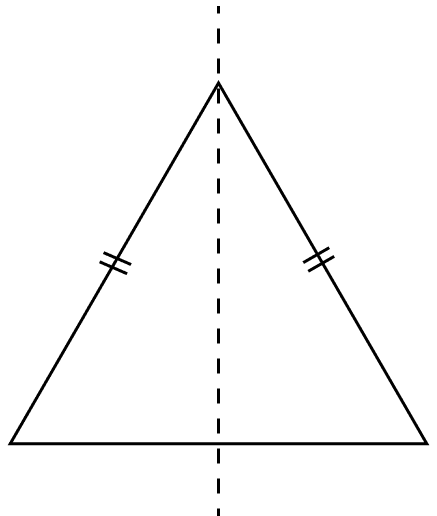
(ii) No, a triangle with exactly two lines of symmetry cannot be drawn. Any triangle that has more than one line of symmetry must have all its sides and angles equal, which makes it an equilateral triangle (with 3 lines of symmetry).
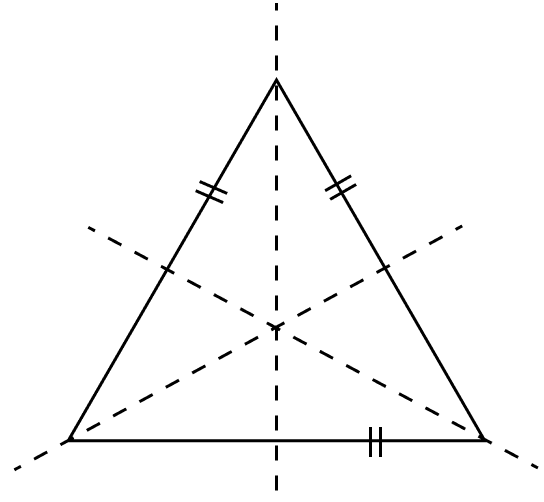
(iii) Yes, a triangle with exactly three lines of symmetry can be drawn. It is an equilateral triangle. The three lines of symmetry are the perpendicular bisectors of its three sides (which are also the angle bisectors).
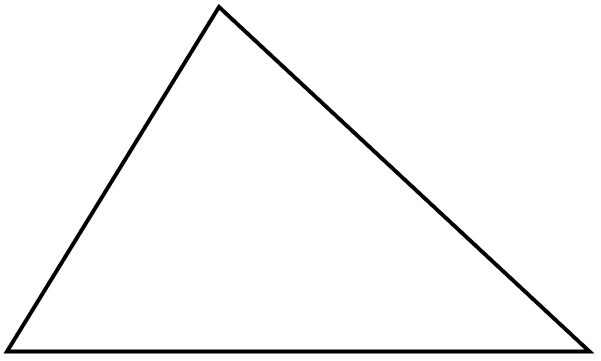
(iv) Yes, a triangle with no lines of symmetry can be drawn. It is a scalene triangle (all three sides of different lengths).
Copy the following figure on a squared paper. Complete each of them such that the dotted line is the line of symmetry:
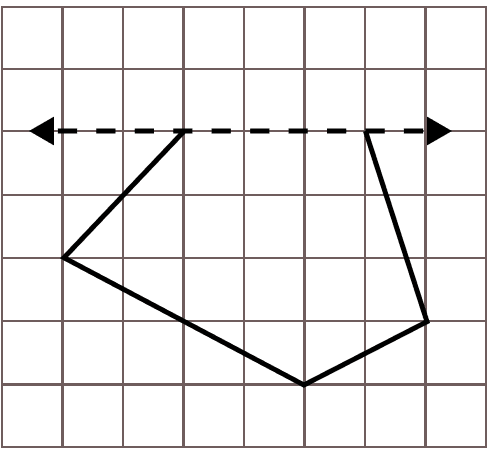
Answer
To complete the figure, we draw the mirror image of the given portion in the dotted line so that the dotted line becomes the line of symmetry.
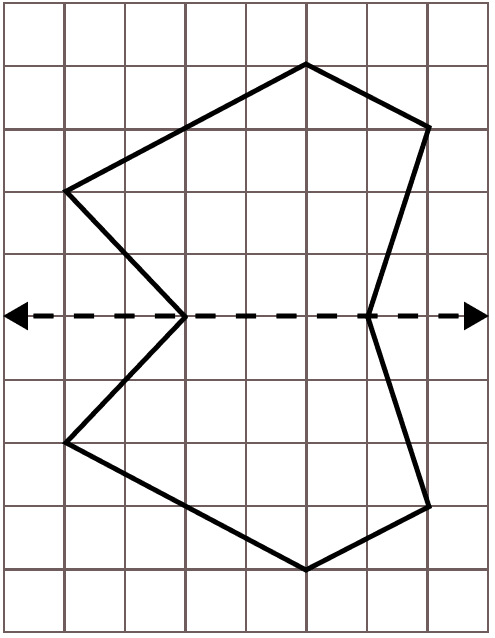
Copy the following figure on a squared paper. Complete each of them such that the dotted line is the line of symmetry:
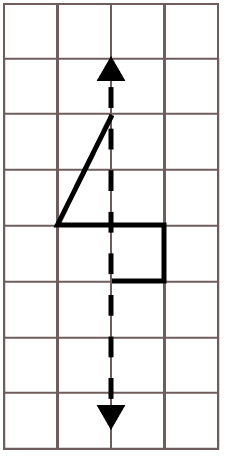
Answer
To complete the figure, we draw the mirror image of the given portion in the dotted line so that the dotted line becomes the line of symmetry.
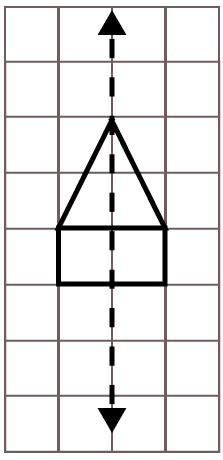
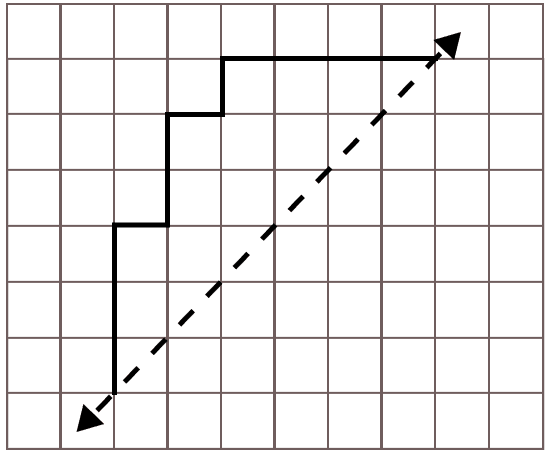
Copy the following figure on a squared paper. Complete each of them such that the dotted line is the line of symmetry:
Answer
To complete the figure, we draw the mirror image of the given portion in the dotted line so that the dotted line becomes the line of symmetry.
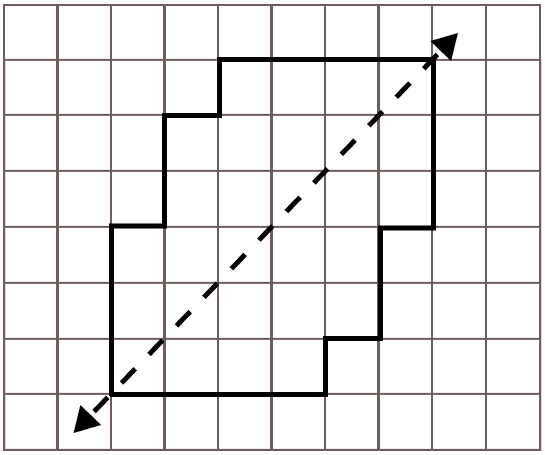
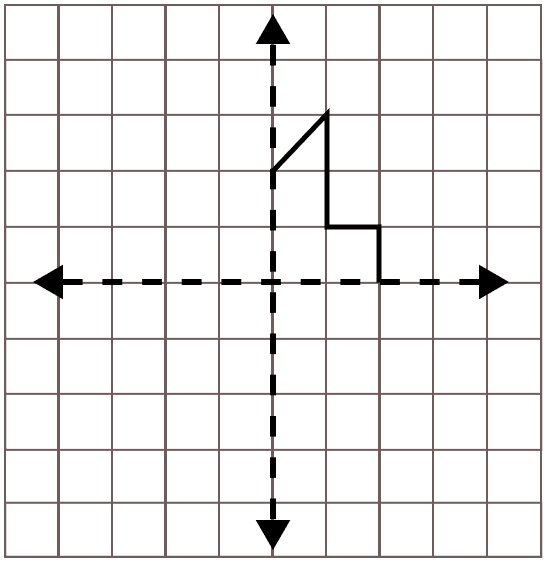
Copy the following figure on a squared paper. Complete each of them such that the resultant figure has two dotted lines as the lines of symmetry:
Answer
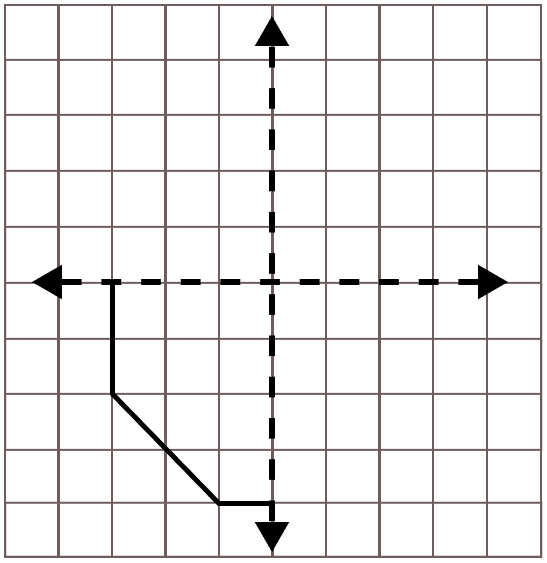
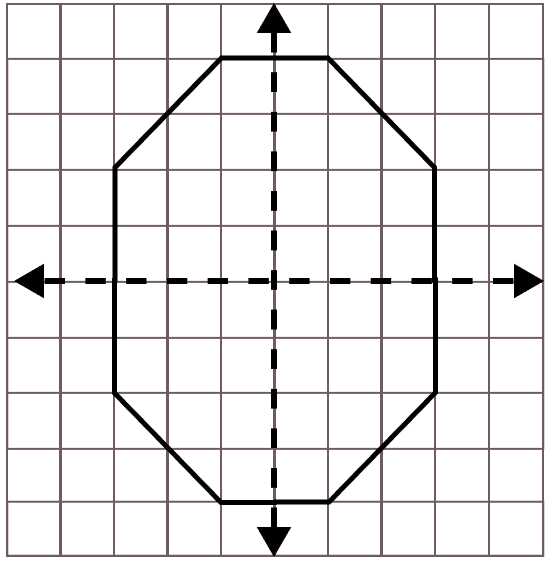
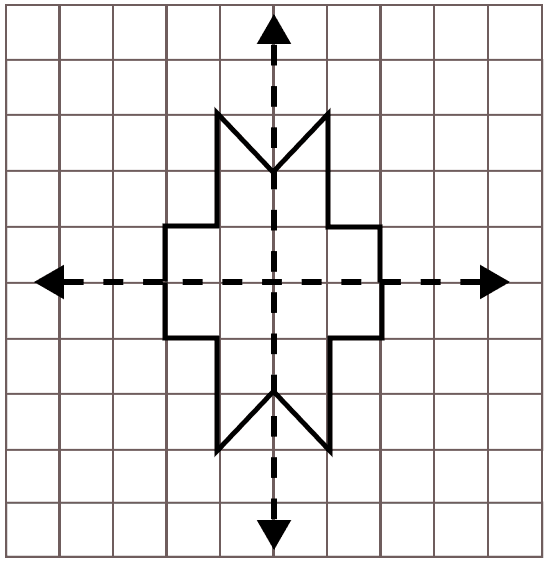
To complete the figure, we first reflect the given portion in one of the dotted lines and then reflect the resulting figure in the other dotted line, so that the final figure is symmetrical about both dotted lines.
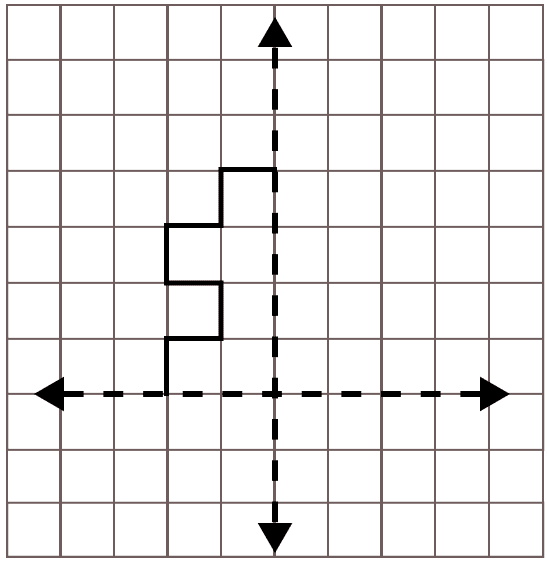
Copy the following figure on a squared paper. Complete each of them such that the resultant figure has two dotted lines as the lines of symmetry:
Answer
To complete the figure, we first reflect the given portion in one of the dotted lines and then reflect the resulting figure in the other dotted line, so that the final figure is symmetrical about both dotted lines.
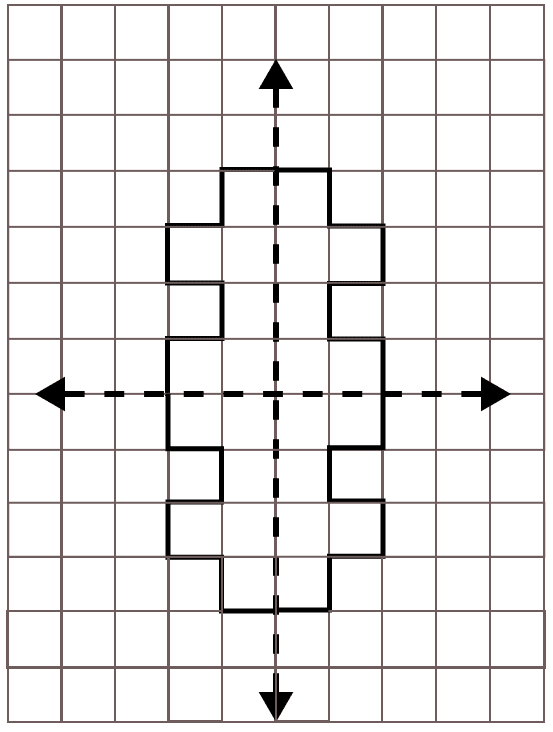
Copy the following figure on a squared paper. Complete each of them such that the resultant figure has two dotted lines as the lines of symmetry:
Answer
To complete the figure, we first reflect the given portion in one of the dotted lines and then reflect the resulting figure in the other dotted line, so that the final figure is symmetrical about both dotted lines.
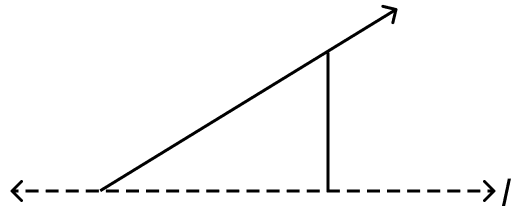
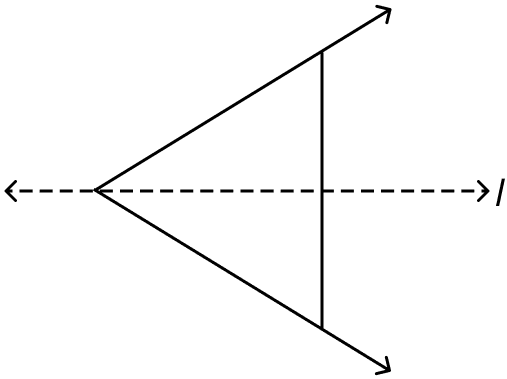
In the adjoining figure, l is the line of symmetry. Complete the diagram to make it symmetrical.
Answer
To make the given figure symmetrical about the line l, we draw the mirror image of the given portion in the line l. The complete diagram is shown below.
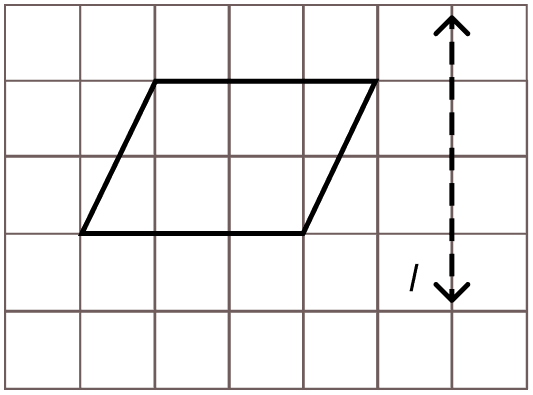
Copy the following figure on a squared paper and find their reflections in the mirror line l.
Answer
The reflection of the figure is obtained by drawing its mirror image in the line l. The image has the same shape and size as the original figure, but with a left-right change in orientation. The mirror line l is the perpendicular bisector of the line segments joining the corresponding points (vertices) of the figure and its image.
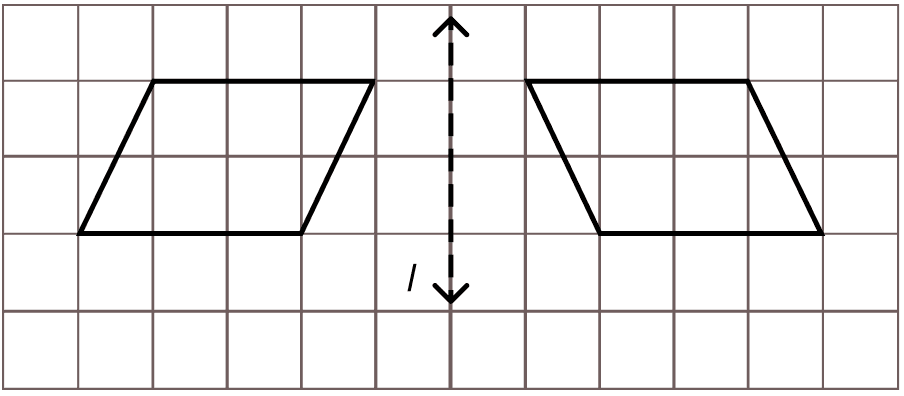
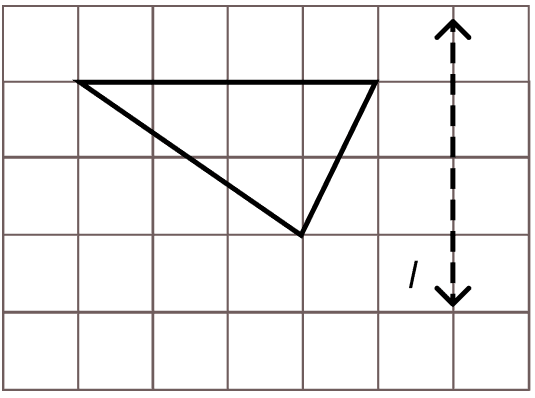
Copy the following figure on a squared paper and find their reflections in the mirror line l.
Answer
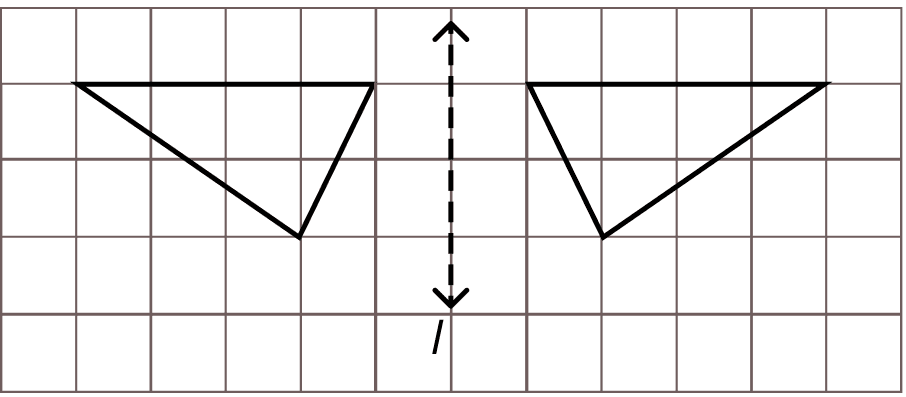
The reflection of the figure is obtained by drawing its mirror image in the line l. The image has the same shape and size as the original figure, but with a left-right change in orientation. The mirror line l is the perpendicular bisector of the line segments joining the corresponding points (vertices) of the figure and its image.
Fill in the blanks:
(i) The subtraction symbol – has ..... lines of symmetry.
(ii) The addition symbol + has ..... lines of symmetry.
(iii) Line of symmetry is also known ..... line or ..... of symmetry.
(iv) A kite has ..... line(s) of symmetry.
(v) A parallelogram has ..... line(s) of symmetry.
(vi) The number of lines of symmetry in a regular hexagon is ..... .
(vii) A rectangle is symmetrical about the lines joining the ..... of the opposite sides.
(viii) The number of capital letters of the English alphabet having only vertical line of symmetry is ..... .
(ix) The number of capital letters of the English alphabet having only horizontal line of symmetry is ..... .
(x) The number of capital letters of the English alphabet having both horizontal and vertical lines of symmetry is ..... .
(xi) The digits having two lines of symmetry are ..... and ..... .
Answer
(i) The subtraction symbol – has 2 lines of symmetry.
(ii) The addition symbol + has 4 lines of symmetry.
(iii) Line of symmetry is also known mirror line or axis of symmetry.
(iv) A kite has 1 line(s) of symmetry.
(v) A parallelogram has no line(s) of symmetry.
(vi) The number of lines of symmetry in a regular hexagon is 6.
(vii) A rectangle is symmetrical about the lines joining the mid-points of the opposite sides.
(viii) The number of capital letters of the English alphabet having only vertical line of symmetry is 7 (A, M, T, U, V, W, Y).
(ix) The number of capital letters of the English alphabet having only horizontal line of symmetry is 4 (B, C, D, E).
(x) The number of capital letters of the English alphabet having both horizontal and vertical lines of symmetry is 4 (H, I, O, X).
(xi) The digits having two lines of symmetry are 0 and 8.
State whether the following statements are true (T) or false (F):
(i) The letter N has one line of symmetry.
(ii) Every hexagon has six lines of symmetry.
(iii) All right angled triangles have one line of symmetry.
(iv) A triangle with more than one line of symmetry must be an equilateral triangle.
(v) A line of symmetry divides a figure into two identical parts.
(vi) A circle has only 8 lines of symmetry.
(vii) A regular octagon has 10 lines of symmetry.
(viii) A square and a rectangle have the same number of lines of symmetry.
(ix) A right angled triangle can have atmost one line of symmetry.
(x) If an isosceles triangle has more than one line of symmetry, then it must be an equilateral triangle.
(xi) If a rectangle has more than two lines of symmetry, then it must be a square.
Answer
(i) False
Reason — The letter N has no line of symmetry. It only has rotational symmetry of order 2.
(ii) False
Reason — Only a regular hexagon has six lines of symmetry. An irregular hexagon may have fewer or no lines of symmetry.
(iii) False
Reason — Only an isosceles right-angled triangle has one line of symmetry. A scalene right-angled triangle has no line of symmetry.
(iv) True
Reason — Only an equilateral triangle has more than one (in fact, three) lines of symmetry.
(v) True
Reason — A line of symmetry divides a figure into two coincident (mirror-image) parts, which are identical in shape and size.
(vi) False
Reason — A circle has an infinite number of lines of symmetry (every diameter is a line of symmetry).
(vii) False
Reason — A regular octagon has 8 lines of symmetry, not 10.
(viii) False
Reason — A square has 4 lines of symmetry, while a rectangle has only 2 lines of symmetry.
(ix) True
Reason — A right-angled triangle has at most one line of symmetry (in the case of an isosceles right-angled triangle). A scalene right-angled triangle has none.
(x) True
Reason — An isosceles triangle has exactly one line of symmetry. If it has more than one, the third side must also be equal, making it an equilateral triangle.
(xi) True
Reason — A rectangle has exactly two lines of symmetry. If it has more (such as the diagonals), all its sides must be equal, making it a square.
The number of lines of symmetry of a scalene triangle is:
0
1
2
3
Answer
A scalene triangle has three sides of different lengths and three angles of different measures. Because no two sides or angles are equal, there is no line along which it can be folded to produce two identical halves.
Hence, Option 1 is the correct option.
The letter F has
one horizontal line of symmetry
one vertical line of symmetry
two lines of symmetry
no line of symmetry
Answer
The letter F has no line of symmetry. If we fold it horizontally or vertically, the two parts do not coincide.
Hence, Option 4 is the correct option.
The number of lines of symmetry of a rectangle is:
0
1
2
4
Answer
A rectangle has 2 lines of symmetry, i.e., the lines joining the mid-points of its opposite sides.
Hence, Option 3 is the correct option.
A rhombus is symmetrical about
each of its two diagonals
each of its two lines joining the mid-points of opposite sides
each of the perpendicular bisector of its sides
none of these.
Answer
A rhombus has two lines of symmetry, and these are its two diagonals. If we fold the rhombus along either diagonal, the two halves coincide perfectly.
Hence, Option 1 is the correct option.
The number of lines of symmetry of a circle is
4
8
16
unlimited
Answer
Every diameter of a circle divides it into two identical halves. Since a circle has infinitely many diameters, it has an unlimited (infinite) number of lines of symmetry.
Hence, Option 4 is the correct option.
Which of the following letters does not have any line of symmetry?
B
T
Z
Y
Answer
- B has 1 horizontal line of symmetry.
- T has 1 vertical line of symmetry.
- Z has no line of symmetry (it only has rotational symmetry).
- Y has 1 vertical line of symmetry.
Hence, Option 3 is the correct option.
Which of the following letters does not have the vertical line of symmetry?
A
H
M
E
Answer
- A has a vertical line of symmetry.
- H has both vertical and horizontal lines of symmetry.
- M has a vertical line of symmetry.
- E has a horizontal line of symmetry (but no vertical).
Hence, Option 4 is the correct option.
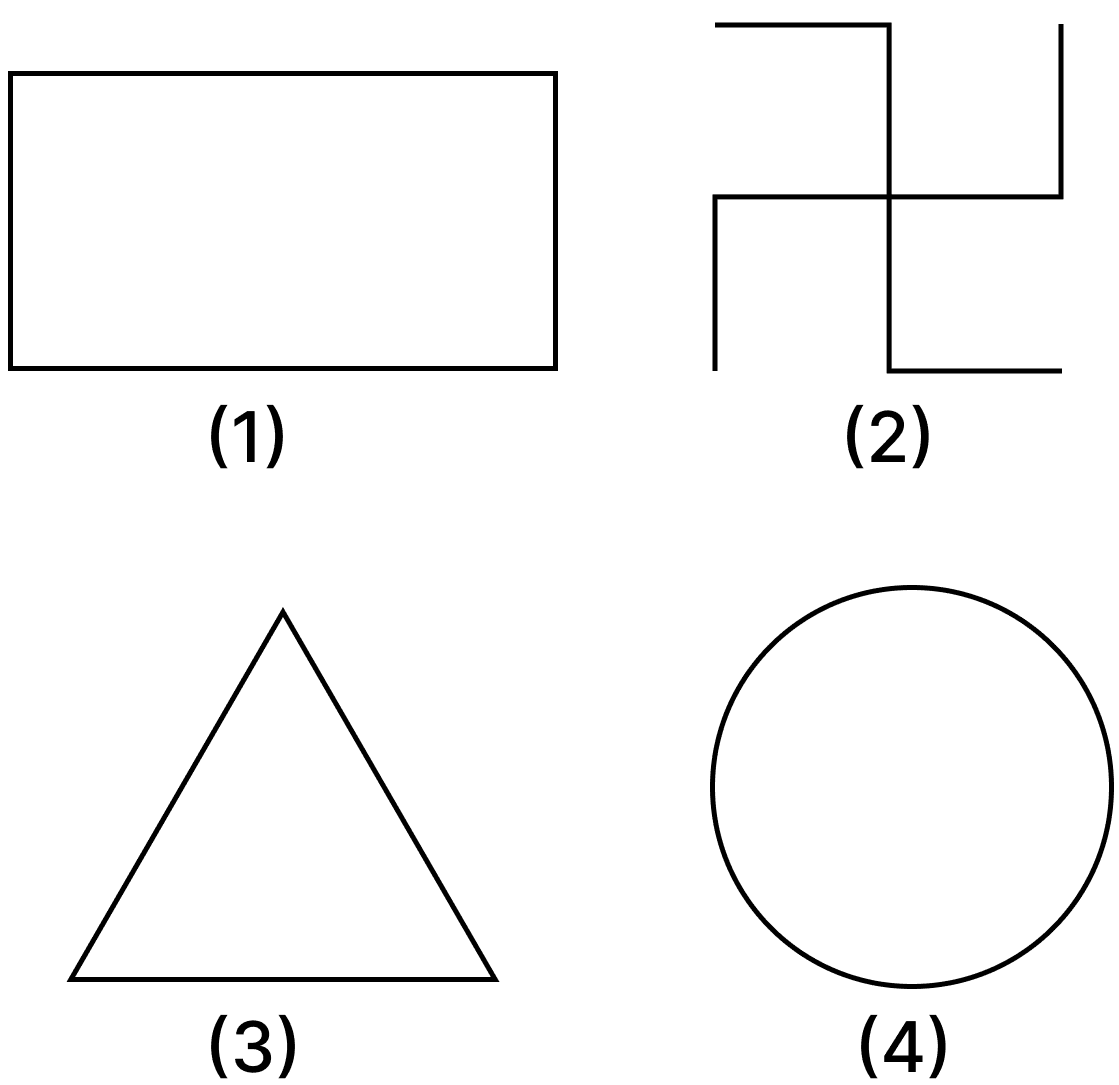
Which figure from the following figures is not symmetrical with respect to any line?
Answer
Figures 1, 3 and 4 (rectangle, triangle and circle) are symmetrical about at least one line, whereas figure 2 is an irregular/asymmetric shape (like a zig-zag step shape) and is not symmetrical about any line.
Hence, Option 2 is the correct option.
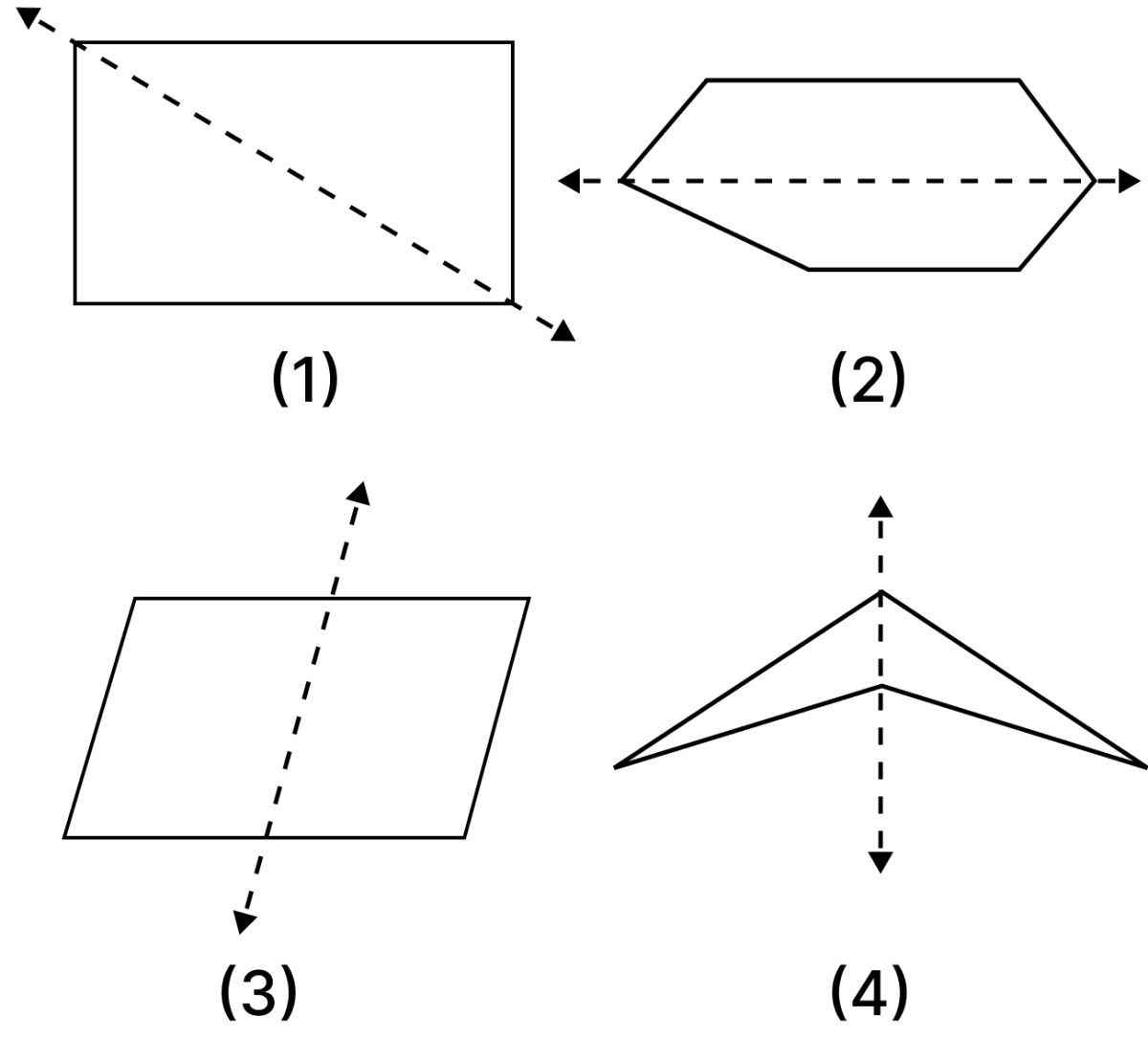
In which of the given figures is the dotted line of symmetry?
Answer
- A diagonal of a rectangle is not a line of symmetry.
- A horizontal line through the elongated hexagon is not a line of symmetry.
- A diagonal of a parallelogram is not a line of symmetry.
- The vertical line through the arrowhead is its line of symmetry.
Hence, Option 4 is the correct option.
Amongst the given figures, the one having maximum number of lines of symmetry is:
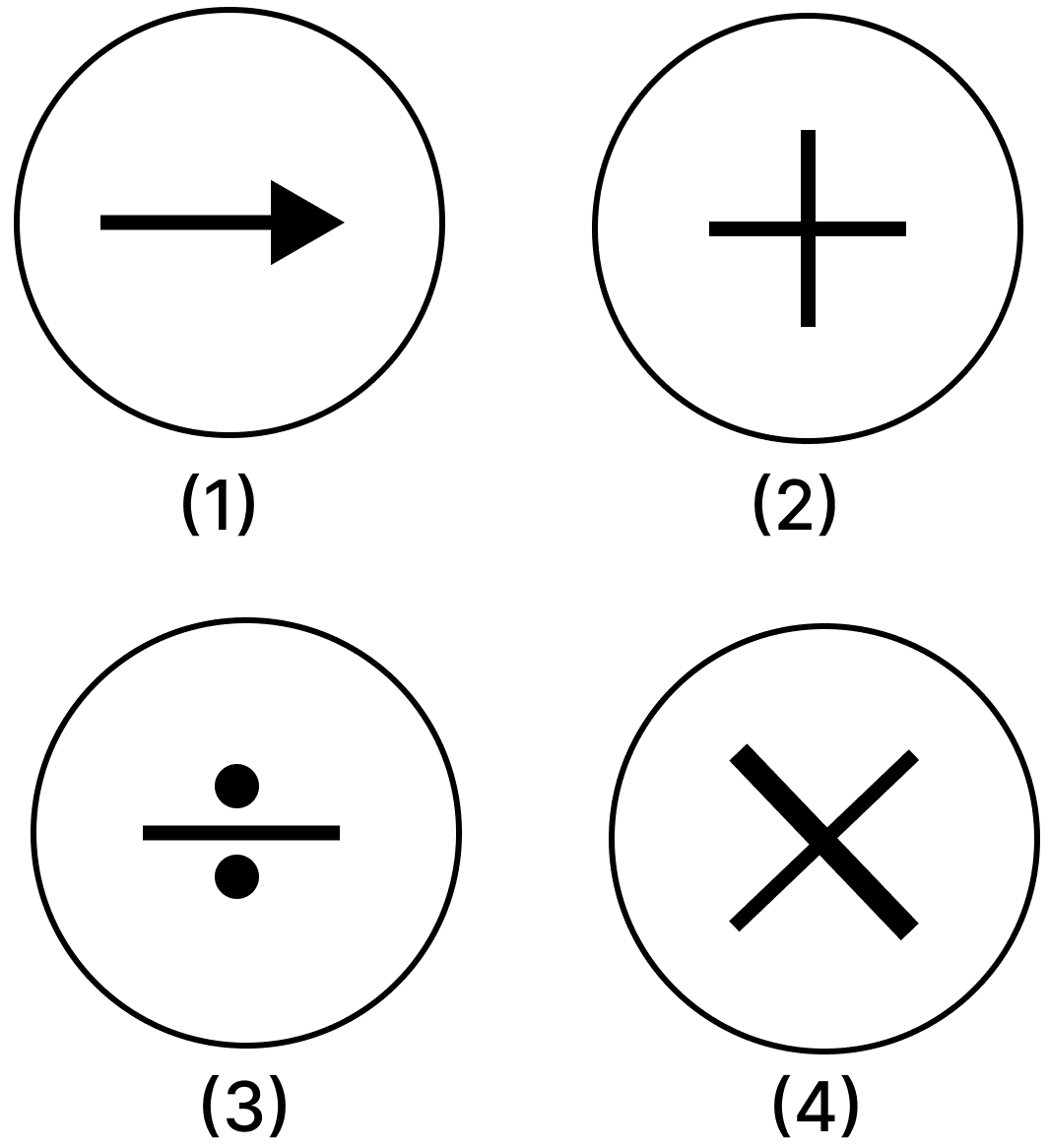
Answer
- Arrow (in circle) has 1 line of symmetry.
- '+' (in circle) has 4 lines of symmetry — horizontal, vertical and the two diagonals.
- '÷' (in circle) has 2 lines of symmetry — horizontal and vertical.
- 'X' (in circle) has 2 lines of symmetry of diagonal because the arms of X in the given figure are not equal.
The '+' symbol has the maximum number of lines of symmetry.
Hence, Option 2 is the correct option.
The angle between the mirror line l and the line segment joining a point and its reflection (image) is:
0°
45°
60°
90°
Answer
The mirror line is always perpendicular to the line segment joining a point and its image. So, the angle between them is 90°.
Hence, Option 4 is the correct option.
Which of two figures are images of each other (mirror line shown dotted)?
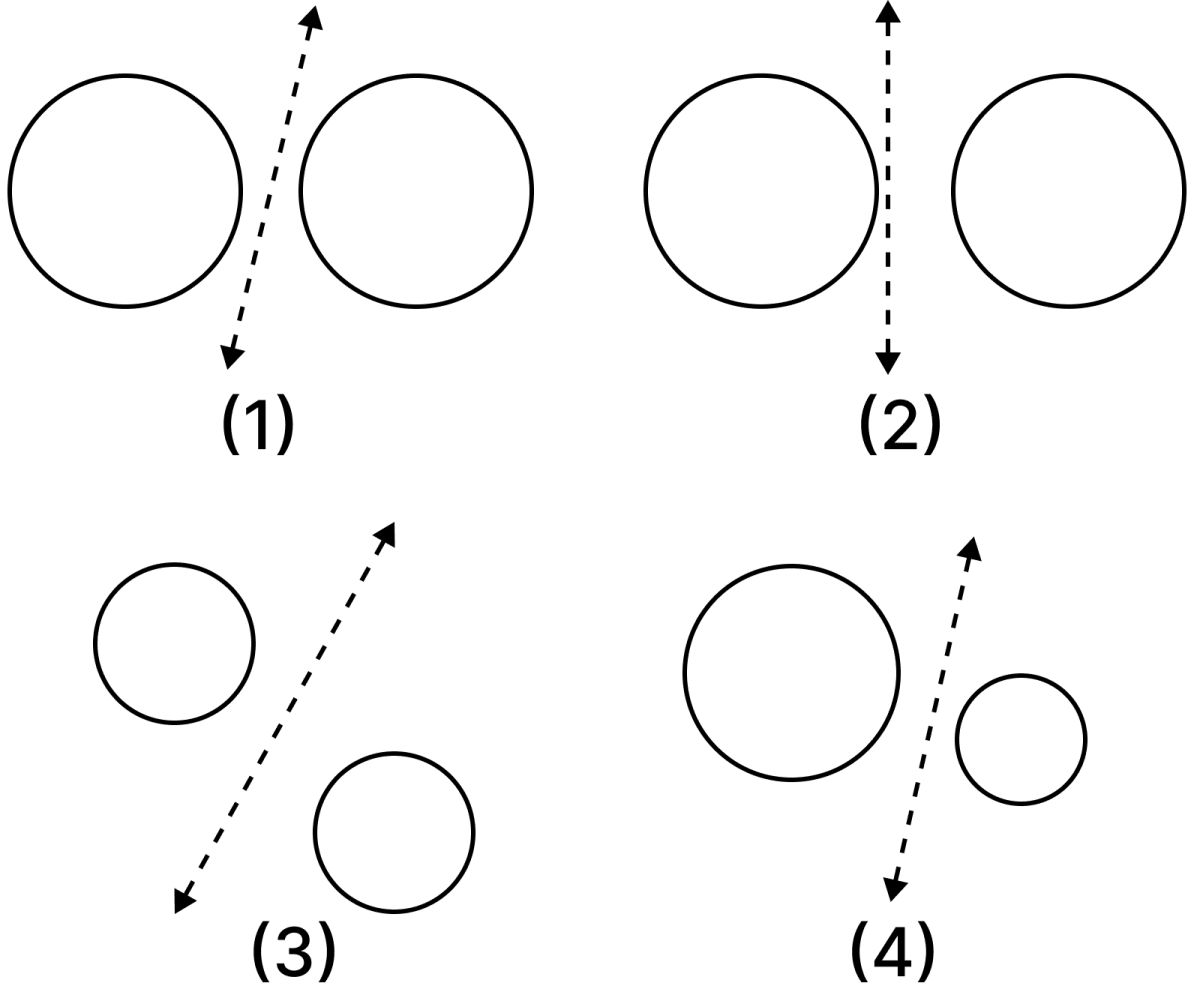
Answer
For two figures to be mirror images of each other, they must be:
(i) of the same shape and size,
(ii) at equal distances from the mirror line, and
(iii) on opposite sides of the mirror line, with a left-right change in orientation.
Only option 3 satisfies all these conditions.
Hence, Option 3 is the correct option.
Which of the two figures are mirror images of each other (mirror line shown dotted)?
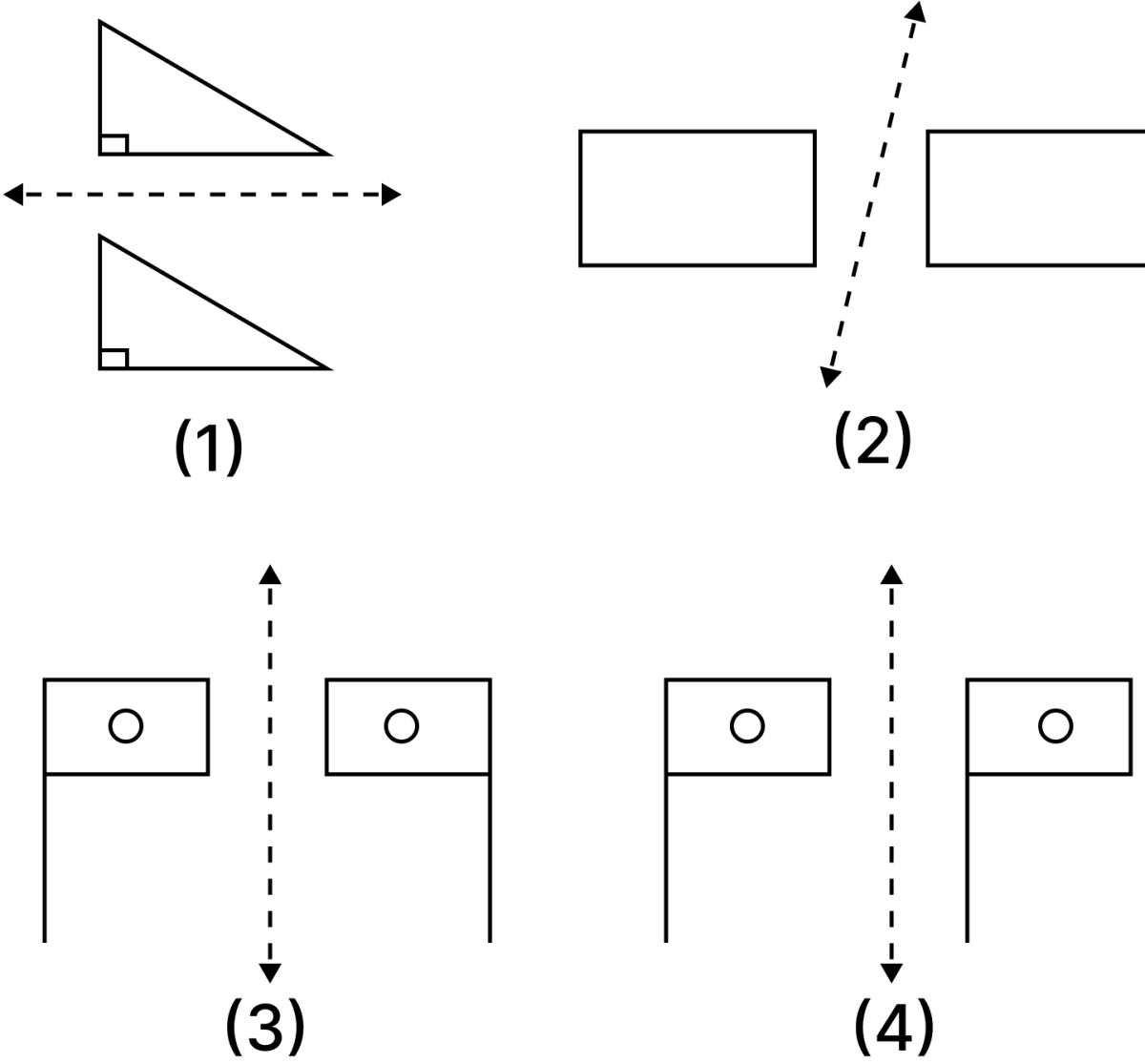
Answer
For two figures to be mirror images of each other, they must be of the same shape and size, at equal distances from the mirror line on opposite sides, with a left-right change in orientation.
Only option 3 satisfies all these conditions.
Hence, Option 3 is the correct option.
Statement I: Any two-dimensional figure has atleast one line of symmetry.
Statement II: A mirror line is called a line of symmetry.
Statement I is true but statement II is false.
Statement I is false but Statement II is true.
Both Statement I and Statement II are true.
Both Statement I and Statement II are false.
Answer
Statement I is false, because many two-dimensional figures (such as a scalene triangle or a parallelogram) have no line of symmetry at all.
Statement II is true, because by definition, the line about which a figure is symmetrical is also the mirror line for the two halves of the figure.
Hence, Option 2 is the correct option.
Statement I: Ram draws two squares and two rectangles, as shown in the adjacent figure. Next, he draws lines of symmetry in each figure. The total lines of symmetry he draws are 10.
Statement II: All the lines of symmetry of a circle are also its diameters.

Statement I is true but statement II is false.
Statement I is false but Statement II is true.
Both Statement I and Statement II are true.
Both Statement I and Statement II are false.
Answer
Statement I: Each square has 4 lines of symmetry, so two squares have lines of symmetry. Each rectangle has 2 lines of symmetry, so two rectangles have lines of symmetry. Total = lines, not 10. So Statement I is false.
Statement II: Every line of symmetry of a circle passes through its centre, and any chord passing through the centre of a circle is a diameter. So all lines of symmetry of a circle are diameters. Statement II is true.
Hence, Option 2 is the correct option.
Statement I: Consider the adjoining figure. It has only one line of symmetry.
Statement II: A semicircle has one line of symmetry, whereas an arrowhead has 2 lines of symmetry.
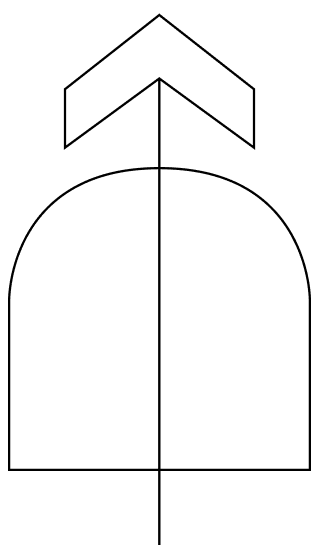
Statement I is true but statement II is false.
Statement I is false but Statement II is true.
Both Statement I and Statement II are true.
Both Statement I and Statement II are false.
Answer
Statement I is true. The given figure (combination of an arrowhead-like shape on top of a semicircular shape) has exactly one line of symmetry — the vertical line passing through its centre.
Statement II is false. A semicircle has one line of symmetry (the perpendicular bisector of its diameter), but an arrowhead also has only one line of symmetry (its diagonal), not 2.
Hence, Option 1 is the correct option.
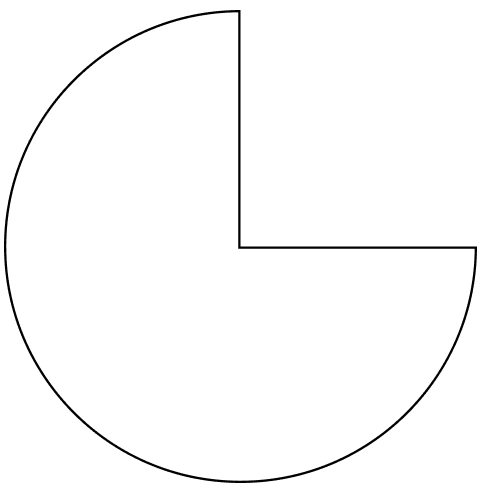
Statement I: Suhana bakes a circular pie. Then she eats th of the pie. The resulting figure is shown on the right. There are 2 lines of symmetry in the remaining pie.
Statement II: If a figure is divided into two coincident parts by a line, then the figure is called symmetrical about that line.
Statement I is true but statement II is false.
Statement I is false but Statement II is true.
Both Statement I and Statement II are true.
Both Statement I and Statement II are false.
Answer
Statement I is false. When of the circular pie is removed, the remaining pie has only 1 line of symmetry, i.e., the diagonal that bisects the removed quarter (passing through the centre and the corner of the missing portion).
Statement II is true. This is the standard definition of a line of symmetry — a line that divides a figure into two coincident (mirror image) parts.
∴ Option 2 is the correct option.
Statement I: Two squares are placed edge to edge. There are 4 lines of symmetry in the resulting figure.
Statement II: A smaller circle and a larger circle are drawn with the same centre. The resulting figure has 8 lines of symmetry.
Statement I is true but statement II is false.
Statement I is false but Statement II is true.
Both Statement I and Statement II are true.
Both Statement I and Statement II are false.
Answer
Statement I is false. When two equal squares are placed edge to edge, the resulting figure is a rectangle (with length = 2 × breadth), which has only 2 lines of symmetry (the horizontal and vertical lines through its centre), not 4.
Statement II is false. Two concentric circles (one inside the other with the same centre) have infinitely many lines of symmetry — every line through the common centre is a line of symmetry, not just 8.
Hence, Option 4 is the correct option.
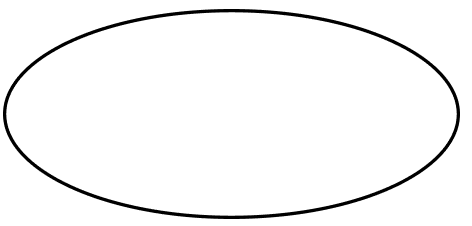
Draw the line (or lines) of symmetry, if any, of the following figure/picture and count their number:
Answer
The given figure is an ellipse (oval). It has 2 lines of symmetry, i.e., the major axis and the minor axis.
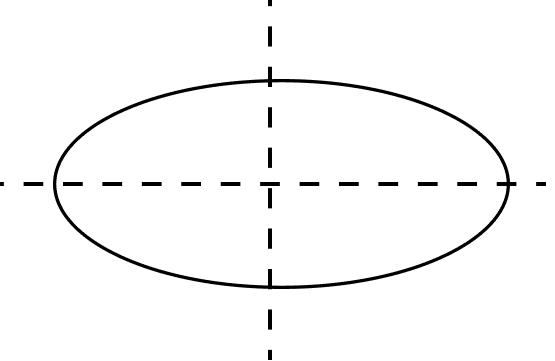
Draw the line (or lines) of symmetry, if any, of the following figure/picture and count their number:
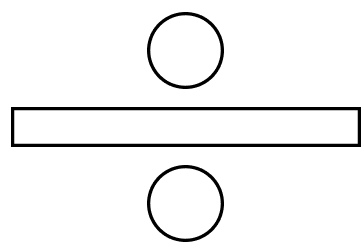
Answer
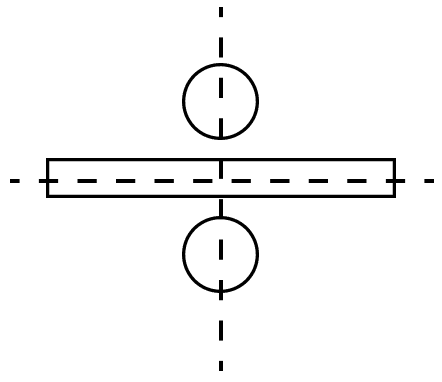
The given figure is the division symbol (÷). It has 2 lines of symmetry, i.e., the horizontal line through the dash and the vertical line through the centre.
Draw the line (or lines) of symmetry, if any, of the following figure/picture and count their number:
Answer
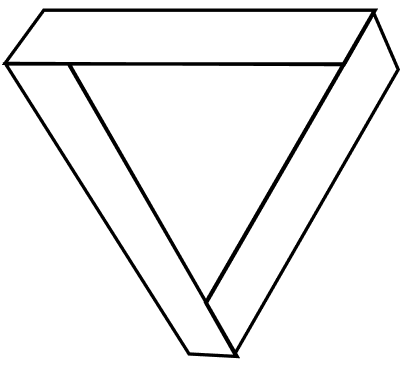
The given figure has no line of symmetry.
Draw the line (or lines) of symmetry, if any, of the following figure/picture and count their number:
Answer
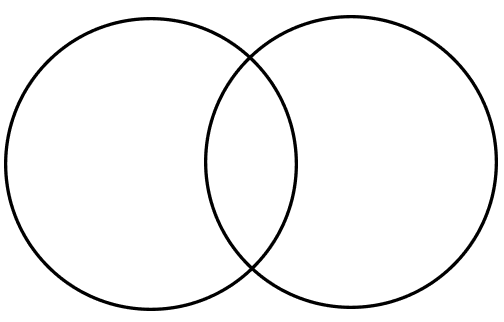
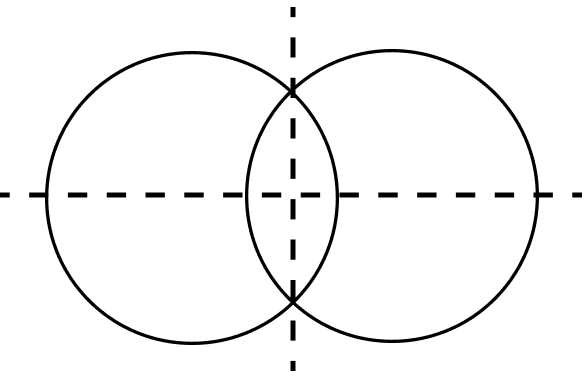
The given figure shows two equal overlapping circles. It has 2 lines of symmetry, i.e., the line joining the centres of the two circles and the perpendicular bisector of that line.
Draw the line (or lines) of symmetry, if any, of the following figure/picture and count their number:
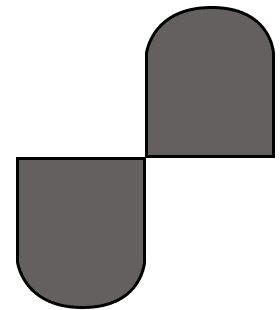
Answer
The given figure is a yin-yang shape (an 'S' inside a circle). It has no line of symmetry.
Draw the line (or lines) of symmetry, if any, of the following figure/picture and count their number:
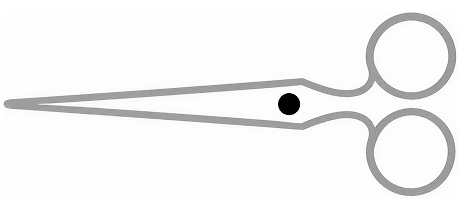
Answer
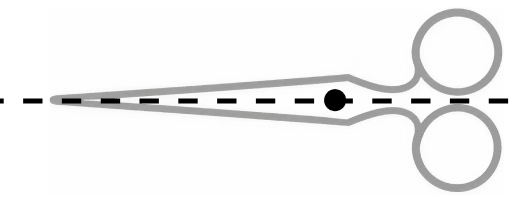
The given picture is a pair of scissors. It has 1 line of symmetry, i.e. from horizontal because if the scissors are folded along this line, both halves will exactly overlap each other.
Draw the line (or lines) of symmetry, if any, of the following figure/picture and count their number:
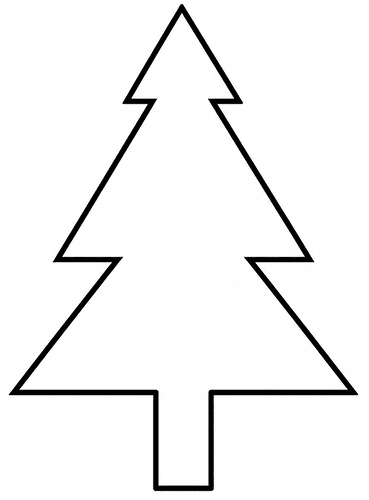
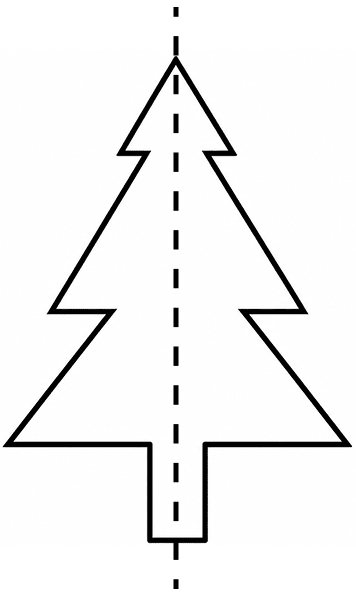
Answer
The given picture is a Christmas tree. It has 1 line of symmetry, i.e., the vertical line passing through its centre.
Draw the line (or lines) of symmetry, if any, of the following figure/picture and count their number:
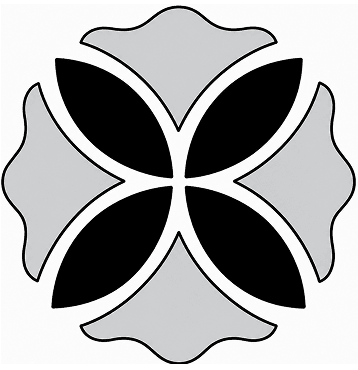
Answer
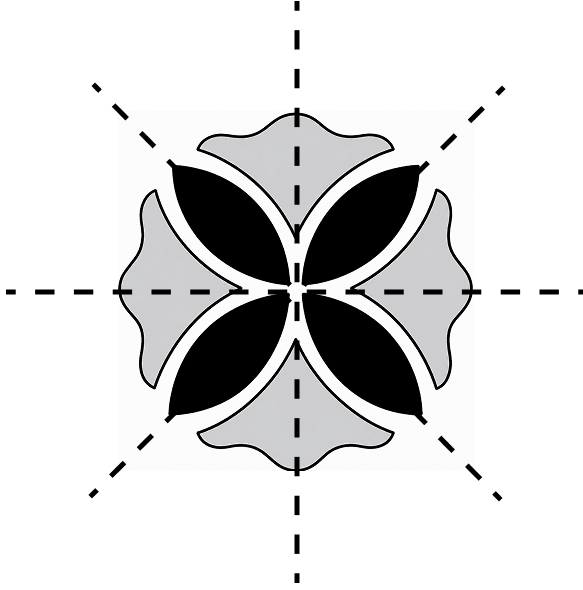
The given picture is a four-leaf clover. It has 4 lines of symmetry, i.e., the horizontal line, the vertical line and the two diagonals through the centre.
Draw the line (or lines) of symmetry, if any, of the following figure/picture and count their number:
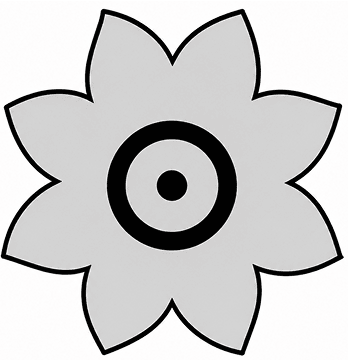
Answer
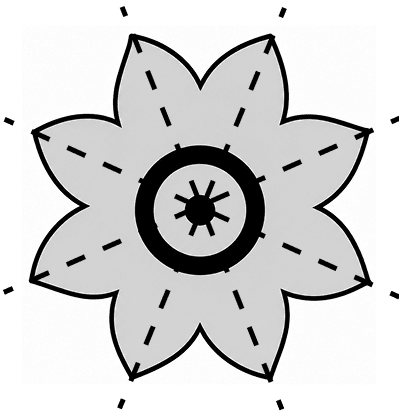
The given picture is a flower (with a small circle in the centre). It has 4 lines of symmetry, i.e., one through each pair of opposite petals (and passing through the centre).
Draw the line (or lines) of symmetry, if any, of the following picture of playing cards and count their number:
Answer
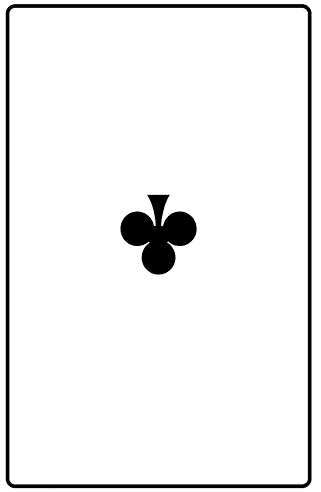
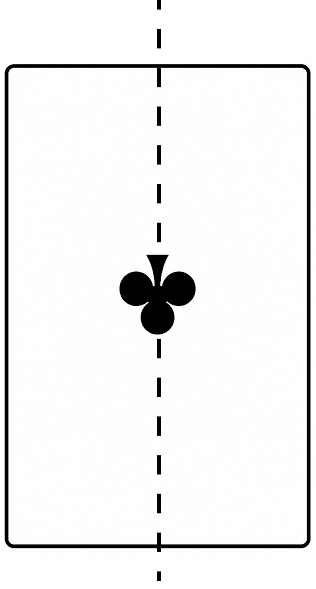
The given picture (ace of clubs) has 1 line of symmetry, i.e., the vertical line passing through the centre of the club symbol.
Draw the line (or lines) of symmetry, if any, of the following picture of playing cards and count their number:
Answer
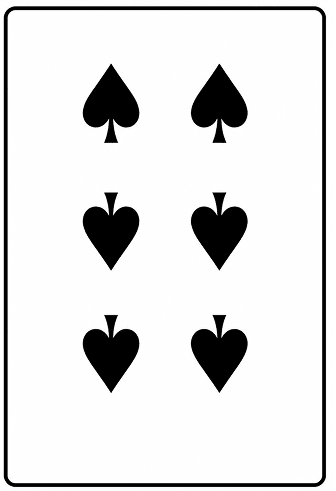
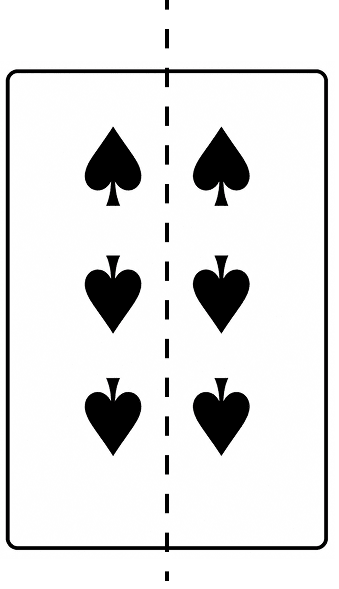
The given picture (six of spades) has 1 line of symmetry, i.e., the vertical line passing through the centre of the card.
Draw the line (or lines) of symmetry, if any, of the following picture of playing cards and count their number:
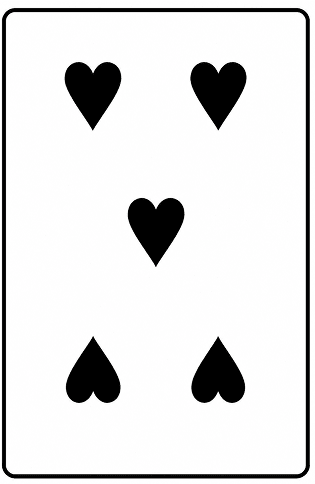
Answer
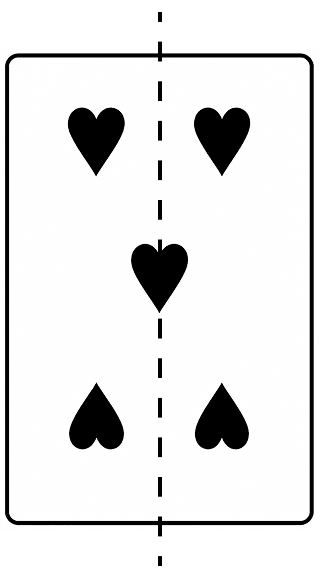
The given picture (five of hearts) has 1 line of symmetry, i.e., the vertical line passing through the centre of the middle heart.
Draw the line (or lines) of symmetry, if any, of the following picture of playing cards and count their number:
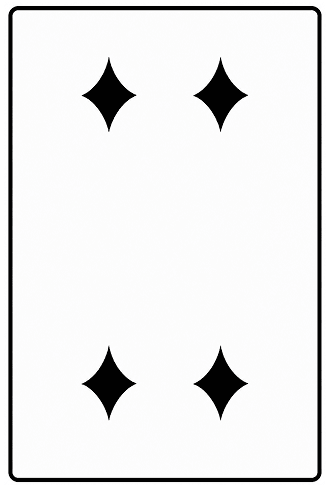
Answer
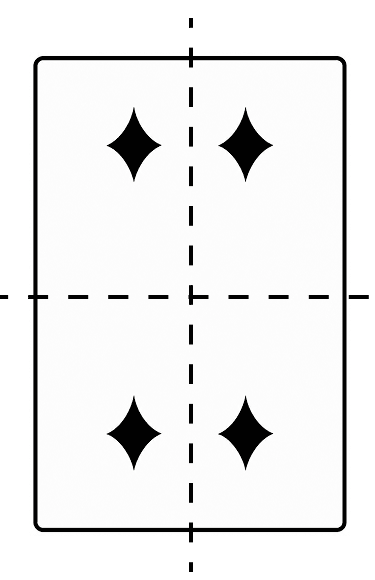
The given picture (four of diamonds) has 2 lines of symmetry, i.e., the vertical line and the horizontal line through the centre of the card.
Write the letters of the word 'ALGEBRA' which have no line of symmetry.
Answer
Let us check each letter of 'ALGEBRA':
- A → 1 line of symmetry (vertical).
- L → No line of symmetry.
- G → No line of symmetry.
- E → 1 line of symmetry (horizontal).
- B → 1 line of symmetry (horizontal).
- R → No line of symmetry.
- A → 1 line of symmetry (vertical).
∴ The letters of 'ALGEBRA' which have no line of symmetry are: L, G and R.
On a squared paper, sketch the following:
(i) A triangle with a horizontal line of symmetry but no vertical line of symmetry.
(ii) A quadrilateral with both horizontal and vertical lines of symmetry.
(iii) A quadrilateral with a horizontal line of symmetry but no vertical line of symmetry.
(iv) A hexagon with exactly two lines of symmetry.
Answer
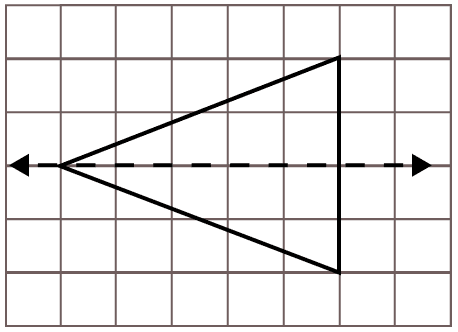
(i) An isosceles triangle drawn 'sideways' (with its axis of symmetry horizontal) is a triangle with a horizontal line of symmetry but no vertical line of symmetry.
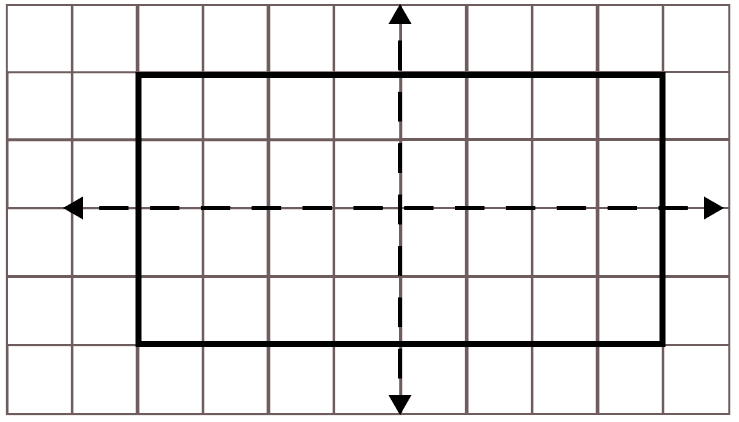
(ii) A rectangle is a quadrilateral with both horizontal and vertical lines of symmetry.
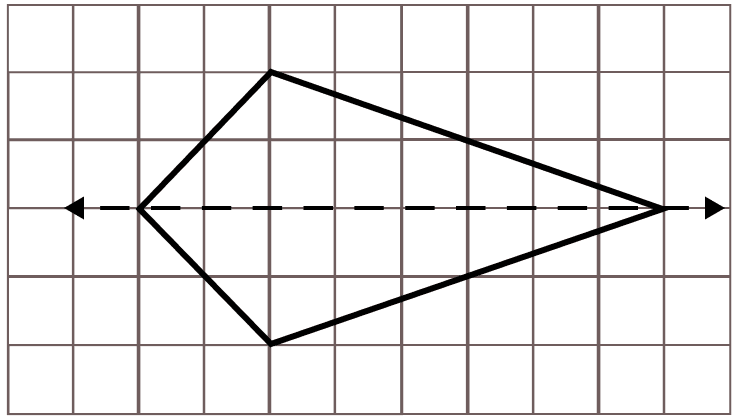
(iii) A sideways kite can be drawn with a horizontal line of symmetry but no vertical line of symmetry. The horizontal line divides the kite into two equal mirror-image halves, but a vertical line does not divide it into two equal halves because the left and right parts are unequal.
(iv) An elongated (non-regular) hexagon is a hexagon with exactly two lines of symmetry — the horizontal line and the vertical line through its centre.
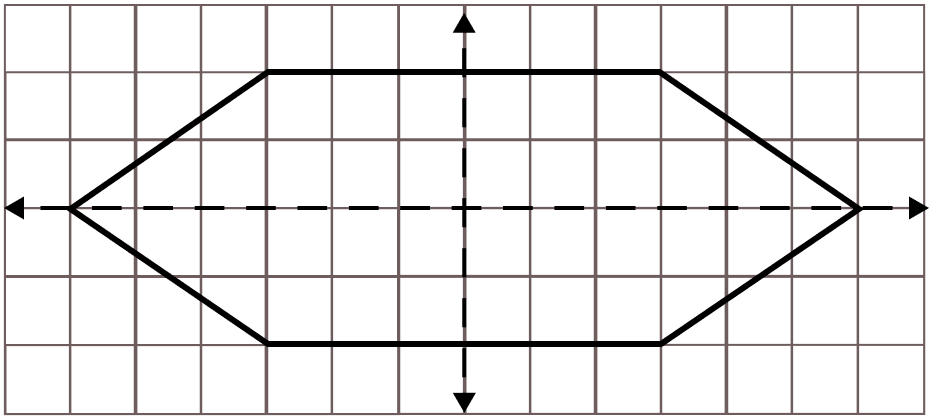
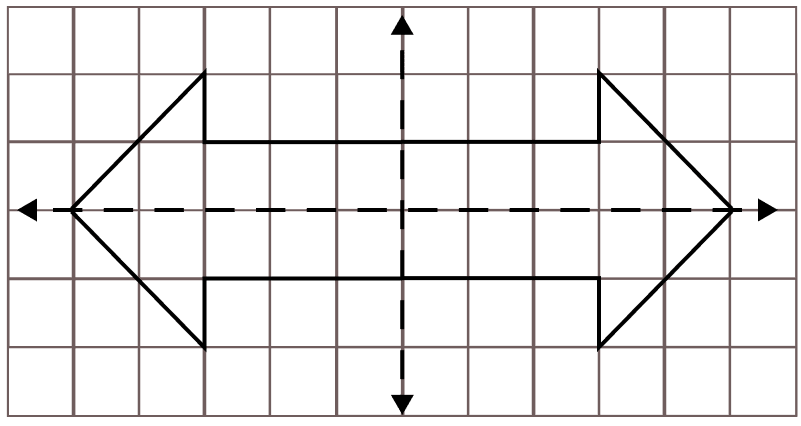
Copy the following figure on a squared paper and complete each figure such that the resultant figure is symmetrical about the dotted line (or lines):
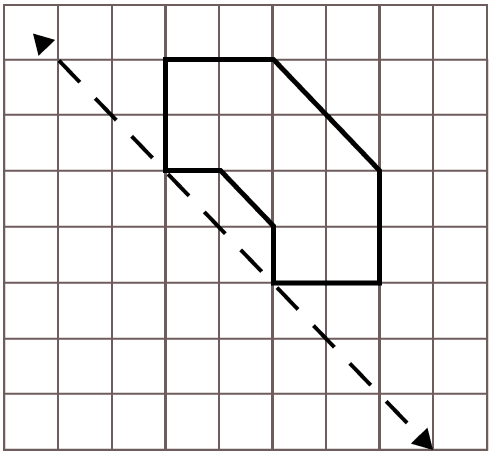
Answer
To complete each figure, we draw the mirror image of the given portion in each dotted line so that the resultant figure is symmetrical about the given line(s).
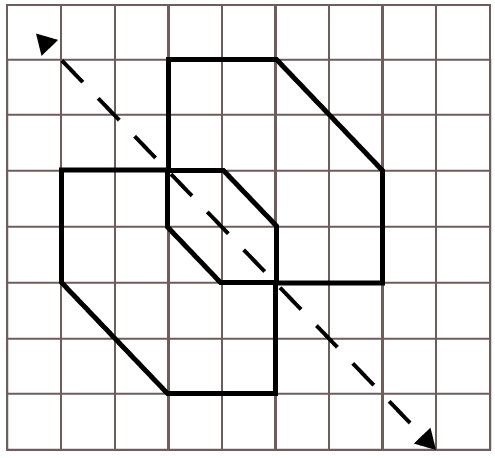
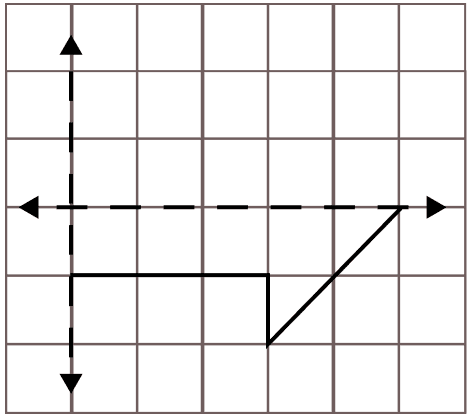
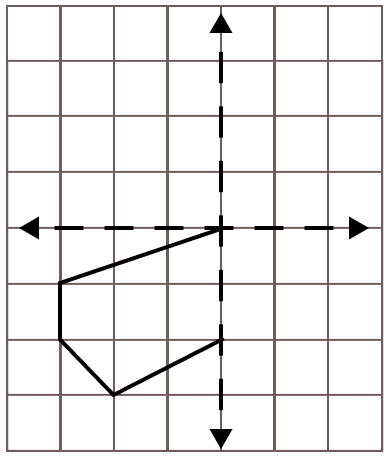
Copy the following figure on a squared paper and complete each figure such that the resultant figure is symmetrical about the dotted line (or lines):
Answer
To complete each figure, we draw the mirror image of the given portion in each dotted line so that the resultant figure is symmetrical about the given line(s).
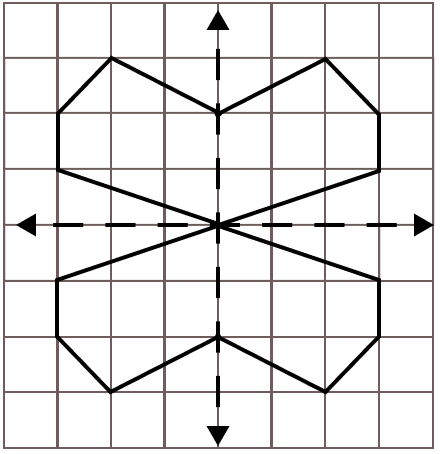
Copy the following figure on a squared paper and complete each figure such that the resultant figure is symmetrical about the dotted line (or lines):
Answer
To complete the figure, we draw the mirror image of the given portion in each dotted line so that the resultant figure is symmetrical about the given line(s).
State whether the following statement is true or false. Justify your answer:
"A straight line dividing a figure into two identical parts is necessarily a line of symmetry."
Answer
False.
Justification — A line of symmetry must divide a figure into two coincident parts that are mirror images of each other. Two parts of a figure may be identical (congruent — same shape and size) without being mirror images of each other.
For example, the diagonal of a parallelogram divides it into two congruent (identical) triangles, but if we fold the parallelogram along this diagonal, the two triangles do not coincide. So the diagonal is not a line of symmetry of the parallelogram.
∴ A straight line dividing a figure into two identical parts is not necessarily a line of symmetry.
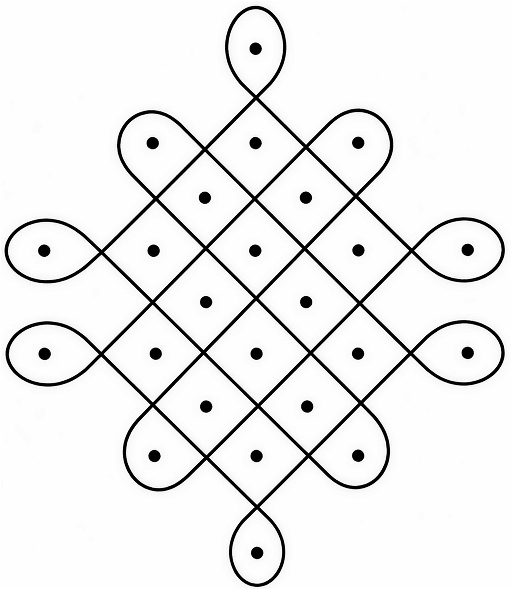
Kolam patterns often have beautiful bilateral symmetry (i.e., vertical or horizontal symmetric). How many lines of (reflection) symmetry can you draw for the adjoining Kolam design?
Answer
The given Kolam design is symmetric about both its vertical and horizontal axes.
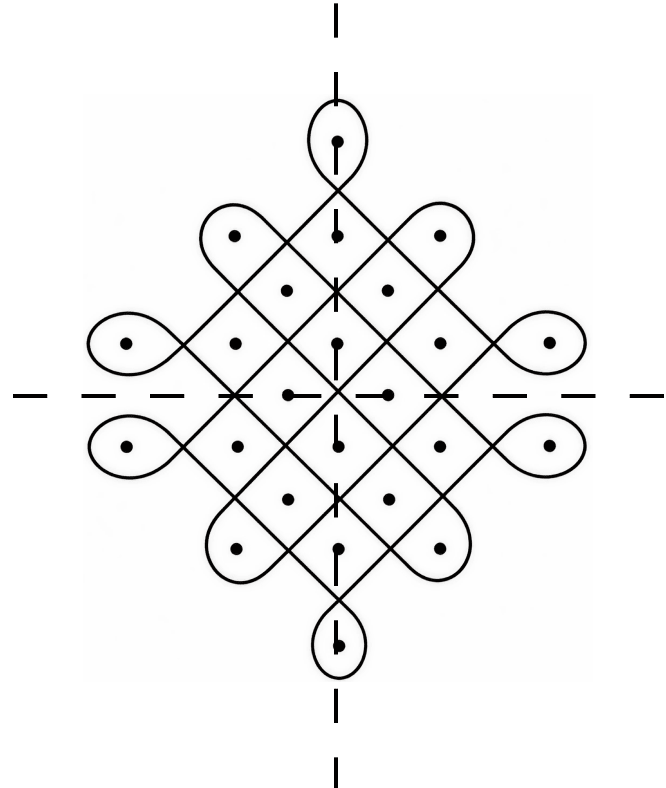
∴ The given Kolam design has 2 lines of symmetry.
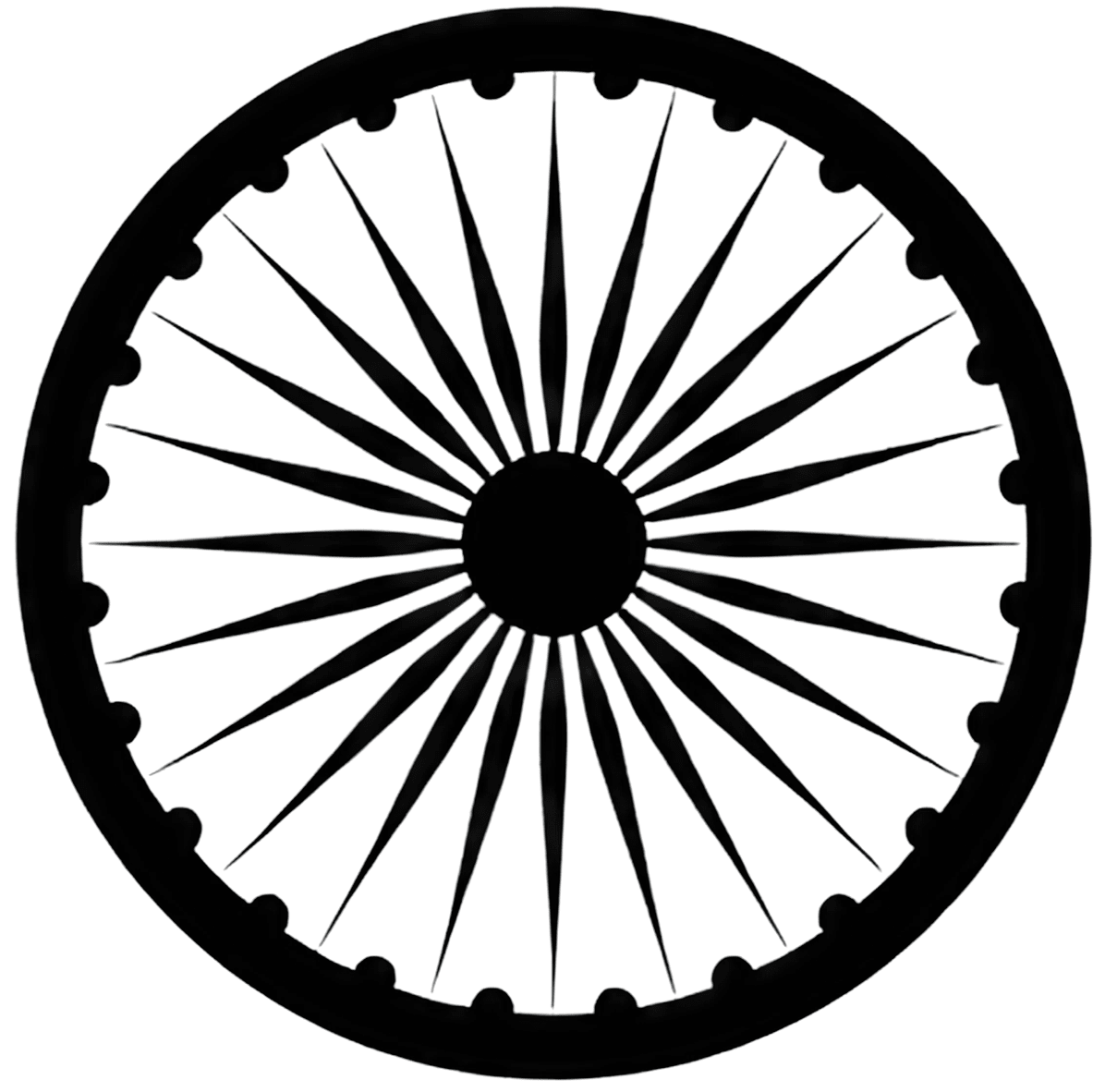
How many lines of symmetry does Ashoka Chakra have?
Answer
The Ashoka Chakra has 24 equally spaced spokes. Each line passing through the centre and any pair of diametrically opposite spokes is a line of symmetry.
∴ The Ashoka Chakra has 24 lines of symmetry.
While old Parliament design was inspired by Chausath Yogini Temple, the new Parliament building has a beautiful triangular design.
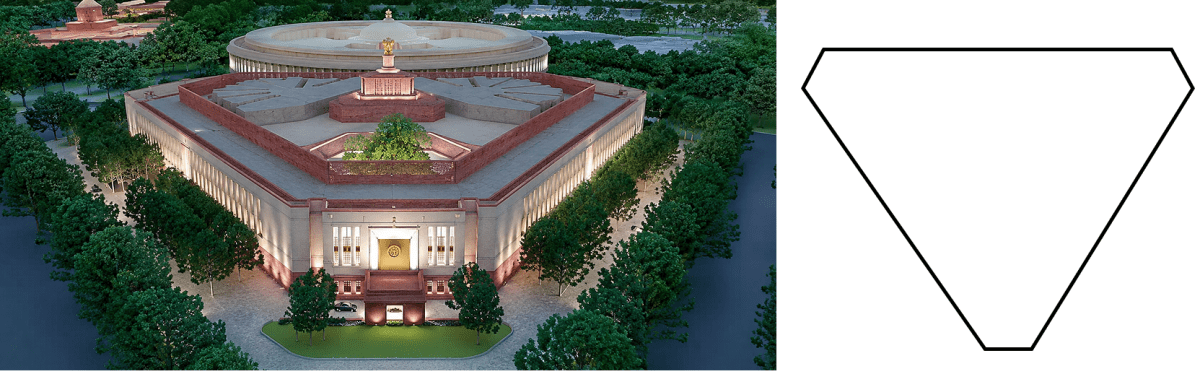
Does the outer boundary of the picture have reflection symmetry? If so, draw the lines of symmetries. How many such lines can be drawn?
Answer
Yes, the outer boundary of the picture has reflection symmetry.
It has 3 lines of symmetry because the image based on equilateral triangle.
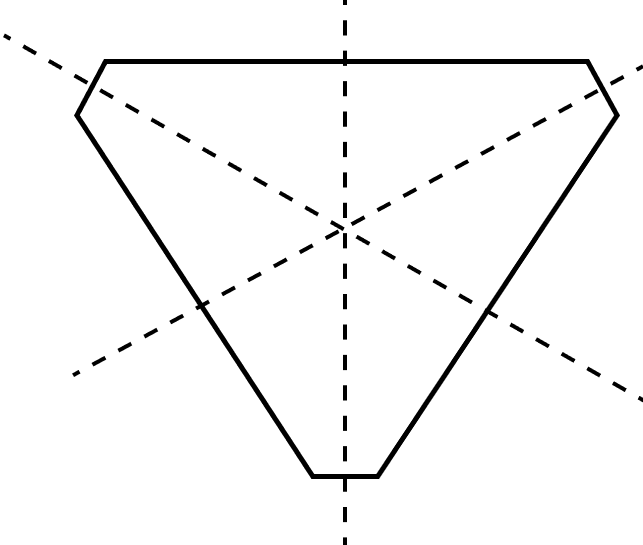
∴ The outer boundary has 3 lines of reflection symmetry.