Mathematics
Assertion (A): ABCD is a square. E is mid-point of side AB and F is mid-point of side DC. If DA = 16 cm, the area of triangle COF is 32 cm2. Reason (R): EF is ⊥ to DC and OF = 1/2 EF = 1/2 DA = 8 cm. Area of COF = x CF x OF 1. A is true, but R is false. 2. A is false, but R is true. 3. Both A and R are true, and R is the correct reason for A. 4. Both A and R are true, and R is the incorrect reason for A.
Related Questions
Statement 1: ABCD is a quadrilateral whose diagonal AC divides it into two parts, equal in area.
Statement 2: It is not necessary that the quadrilateral ABCD is a rectangle or a parallelogram or rhombus.
Both the statements are true.
Both the statements are false.
Statement 1 is true, and statement 2 is false.
Statement 1 is false, and statement 2 is true.
Assertion (A): PQRS a parallelogram whose area is 180 cm2 and A is any point on the diagonal PR. The area of triangle ASR = 45 cm2.
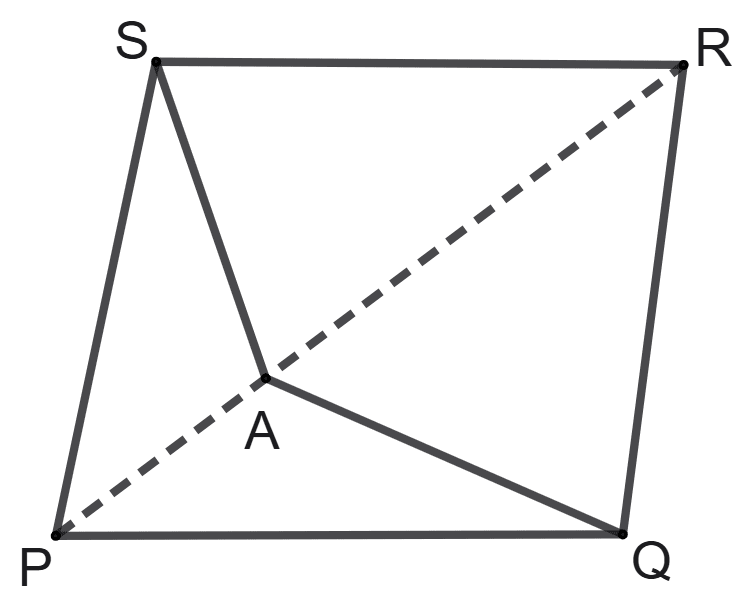
Reason (R): A is not the mid-point of diagonal PR.
A is true, but R is false.
A is false, but R is true.
Both A and R are true, and R is the correct reason for A.
Both A and R are true, and R is the incorrect reason for A.
ABCD and BCFE are parallelograms. If area of triangle EBC = 480 cm2, AB = 30 cm and BC = 40 cm; Calculate :
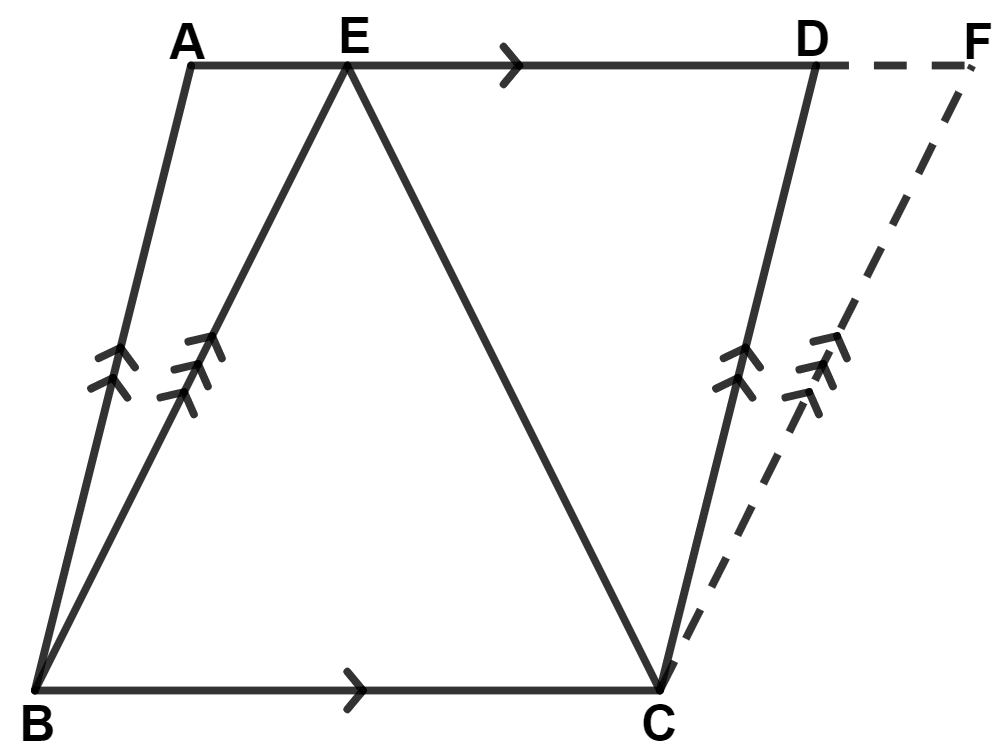
(i) area of parallelogram ABCD;
(ii) area of the parallelogram BCFE;
(iii) length of altitude from A on CD;
(iv) area of triangle ECF.
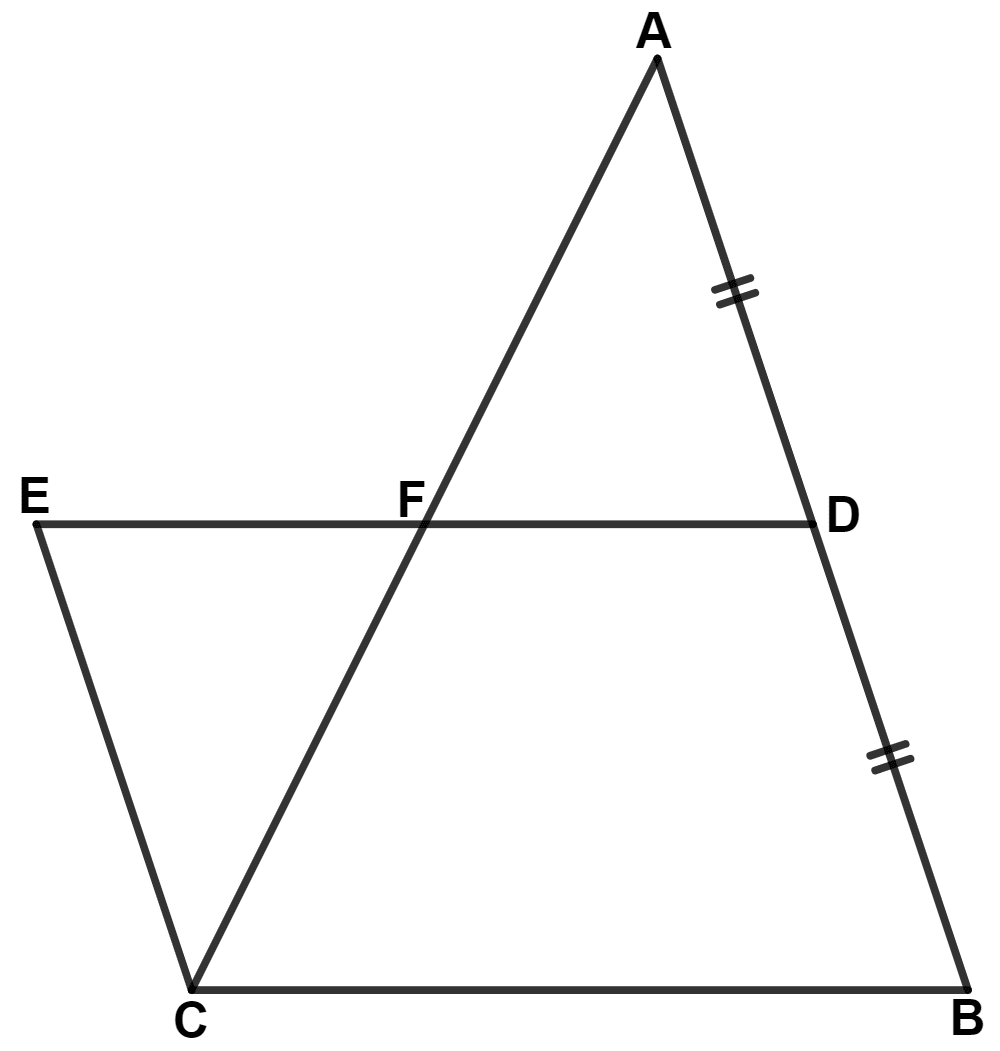
In the given figure, D is mid-point of side AB of △ ABC and BDEC is a parallelogram.
Prove that :
Area of △ ABC = Area of // gm BDEC.