
History & Civics
The heroism of the Indians was revealed by the courage of Subash Chandra Bose and the Indian National Army. With reference to this, answer the following questions:
(i) Mention any three objectives of the Forward Bloc.
(ii) Mention any three contributions of Subash Chandra Bose.
(iii) Who was the founder of the Indian National Army? Mention any three of its objectives.
Forward Bloc & INA
4 Likes
Answer
(i) Three objectives of the Forward Bloc are:
- Forward Bloc's immediate objective was liberation of India with the support of workers, peasants, youth and other organisations.
- After attaining independence, Forward Bloc would work for the establishment of a Socialist State through reorganisation of agriculture and industry on socialist lines.
- After attaining independence, Forward Bloc would work for the establishment of a Socialist State through abolition of the Zamindari system.
(ii) Three contributions of Subash Chandra Bose are:
- He led the freedom struggle outside India as the Supreme Commander of the INA. He set up the Provisional Government of Free India in Singapore.
- He declared war on Britain and the USA and acquired its first stretch of territory in India when Japan handed over Andaman and Nicobar Islands.
- The INA gave a tough fight to the British forces in the Assam hills and succeeded in capturing Ukhrul and Kohima. However, the surrender of Japan in the Second World War sealed the fate of the INA. The INA set an inspiring example of patriotism.
(iii) Netaji Subhash Chandra Bose was the founder of the Indian National Army. Three objectives of INA are:
- To organise an armed revolution and to fight the British army with modern arms.
- Since it was not possible for the Indians to organise an armed revolution from their homeland, this task must be assigned to the Indians living abroad, particularly on Indians living in East Asia.
- To organise a provisional government of Free India in order to mobilise all the forces effectively.
Answered By
1 Like
Related Questions
The Indian Nationalists described the Great Uprising of 1857 as the First War of Independence. With reference to this, answer the following questions:
(i) Mention any three policies used by the British to expand their political power in India.
(ii) The Revolt of 1857 is also known as the Sepoy Mutiny. Mention any three military causes which led to the uprising.
(iii) Mention any four economic causes of the Revolt.
Look at the picture given below and answer the following questions:
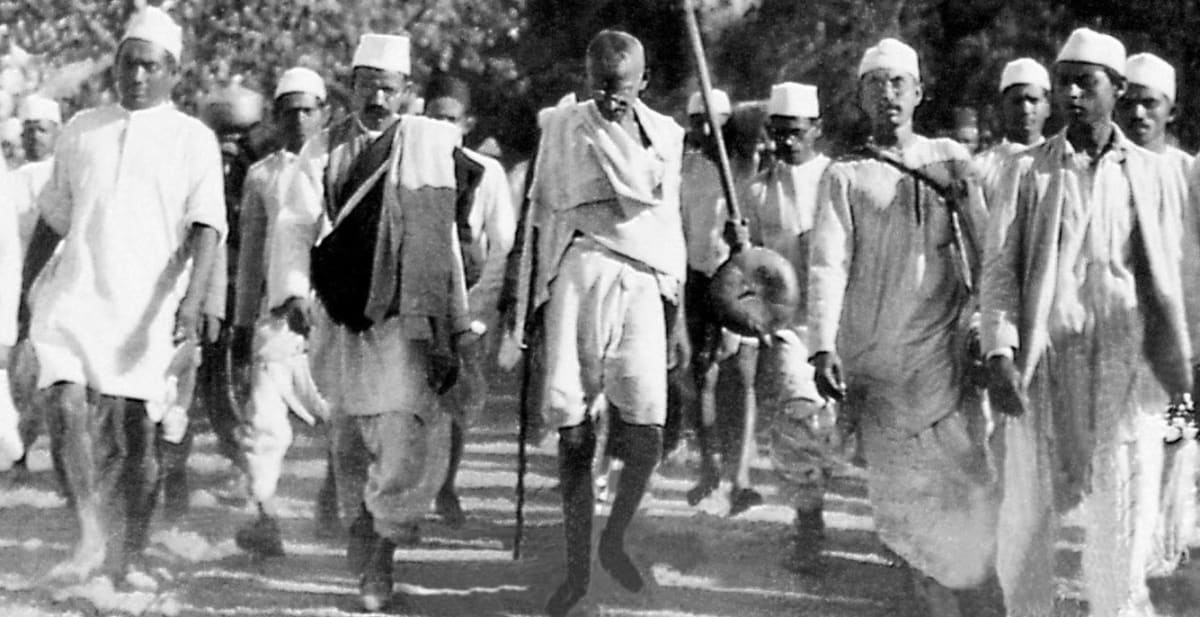
(i) Name the march being led by Gandhiji in the above picture. Which movement did this march launch?
(ii) What were the three causes of the Non-Cooperation Movement? Name the incident which led to the suspension of this movement.
(iii) Mahatma Gandhi and Lord Irwin signed a pact in 1931. Mention any two conditions that the Congress agreed to and two conditions that the British Government agreed to according to this pact.
The world wars marked a turning point in the history of the world. With reference to this period, answer the following questions:
(i) Mention any three similarities between the ideologies of Fascism and Nazism.
(ii) State the three consequences of the Second World War.
(iii) Mention any four causes of the Second World War.
The United Nations Organisation aims to maintain international peace. With reference to its organs and agencies, answer the following:
(i) What is the composition of the Security Council? What is the term of the non-permanent members?
(ii) Mention any three functions of the General Assembly.
(iii) Give the full form of UNESCO. Mention any three of its functions.